
Super Bowl Shield: Ranking the Top 25 Offensive Lines in Super Bowl History
The stage is now set for Super Bowl 50. The Denver Broncos and Carolina Panthers have successfully navigated the rocky road to the championship and soon will become the 99th and 100th NFL teams to step onto a Super Bowl field.
Having 100 teams take part in the big game also means we've had 100 different offensive lines pave those paths to the championship. Without the benefit of a strong offensive line, there's a good chance that each of these 100 teams would have fallen short of greatness.
Sure, the big guys up front are often overlooked, especially when you're talking about the legends of Super Bowl history. Yet they are truly deserving of as much recognition as any championship gun-slinger, pass-catcher or ball-carrier.
Would guys such as Terry Bradshaw, Joe Montana and John Elway have reached championship immortality without the reliable protection of their offensive lines? Would names such as Terrell Davis and John Riggins be entrenched in Super Bowl lore without strength in the trenches? Probably not.
Today, we're going to recognize those great blockers and protectors of the modern era and count down the top 25 offensive lines in Super Bowl history. These units will be judged on a variety of factors, including regular-season production, Super Bowl production and player accolades. However, they will all have one thing in common.
They will all be among the 100 offensive lines to reach the NFL's big one.
25. New Orleans Saints, Super Bowl XLIV
1 of 25
Starting Lineup
LT: Jermon Bushrod
LG: Carl Nicks
C: Jonathan Goodwin
RG: Jahri Evans
RT: Jon Stinchcomb
Why the Line Stands Out
This memorable offensive line helped the long-suffering fans of the New Orleans Saints finally taste greatness with a win in Super Bowl XLIV.
This group paved the way for a 4,388-yard passing season, with 34 touchdowns, from quarterback Drew Brees. The line, which was rated fourth overall in run blocking by Pro Football Focus, also helped running backs Mike Bell, Pierre Thomas and Reggie Bush combine for 1,837 yards rushing. Brees was sacked just 20 times in the regular season.
Right tackle Jon Stinchcomb and right guard Jahri Evans were eventually named to the 2010 Pro Bowl.
In Super Bowl XLIV, the Saints line faced the Indianapolis Colts and their formidable pass-rushing duo of Robert Mathis and Dwight Freeny. Yet Brees was shielded by his line, and the Colts pass rush was rarely a factor.
Indianapolis produced 34 sacks in the regular season but reached Brees only once in the big game. He finished the game with 288 yards passing and two touchdowns. The running game wasn't a big factor in the Super Bowl, as New Orleans rushed just 18 times. However, Brees' 32-of-39 performance was phenomenal.
The Saints went on to win convincingly, 31-17.
24. San Francisco 49ers, Super Bowl XLVII
2 of 25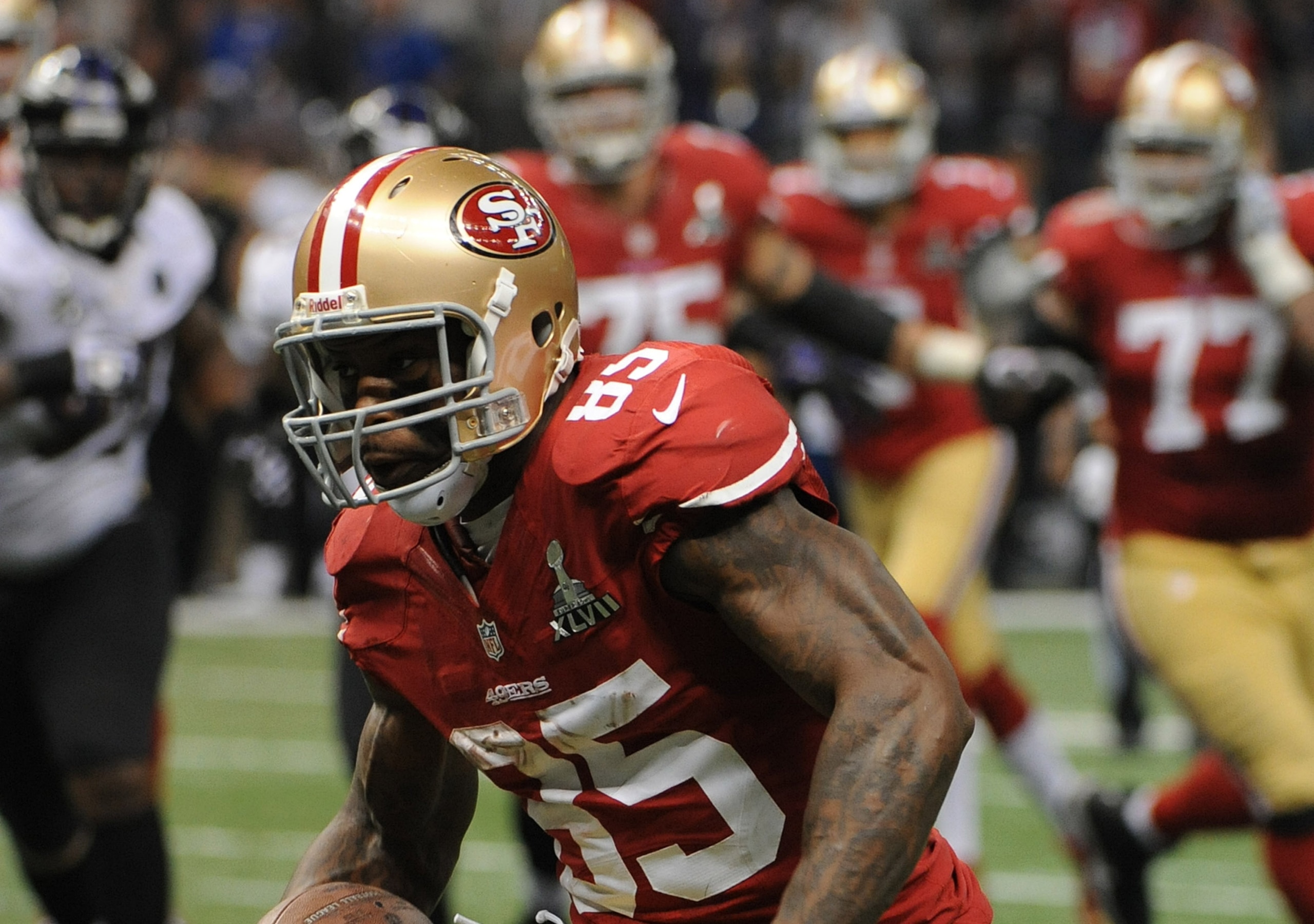
Starting Lineup
LT: Joe Staley
LG: Mike Iupati
C: Jonathan Goodwin
RG: Alex Boone
RT: Anthony Davis
Why the Line Stands Out
The San Francisco 49ers line from the 2012 season makes our list as one of the top run-blocking lines of the past decade. This is a group that catapulted a 1,214-yard year and helped the team average an impressive 5.1 yards per rush in the regular season.
Pro Football Focus rated the group first overall in run blocking for the season.
This group also deserves credit for having to protect two very different quarterbacks over the course of the regular season and playoffs. Veteran Alex Smith started seven games for the 49ers before a concussion opened the door for second-year signal-caller Colin Kaepernick.
Despite blocking for two quarterbacks with differing styles of play, the 49ers finished the season rated ninth overall in pass blocking by Pro Football Focus.
It was Kaepernick who started Super Bowl XLVII, and the 49ers line allowed him to lead an impressive offensive effort in the close loss. Kaepernick passed for 302 yards against a strong Baltimore Ravens defense in the game, while the 49ers totaled 182 net yards of rushing offense. Unfortunately, the Ravens proved to be the better team and went on to win the big one 34-31.
Joe Staley and Mike Iupati were both named starters in the 2013 Pro Bowl.
23. Indianapolis Colts, Super Bowl XLI
3 of 25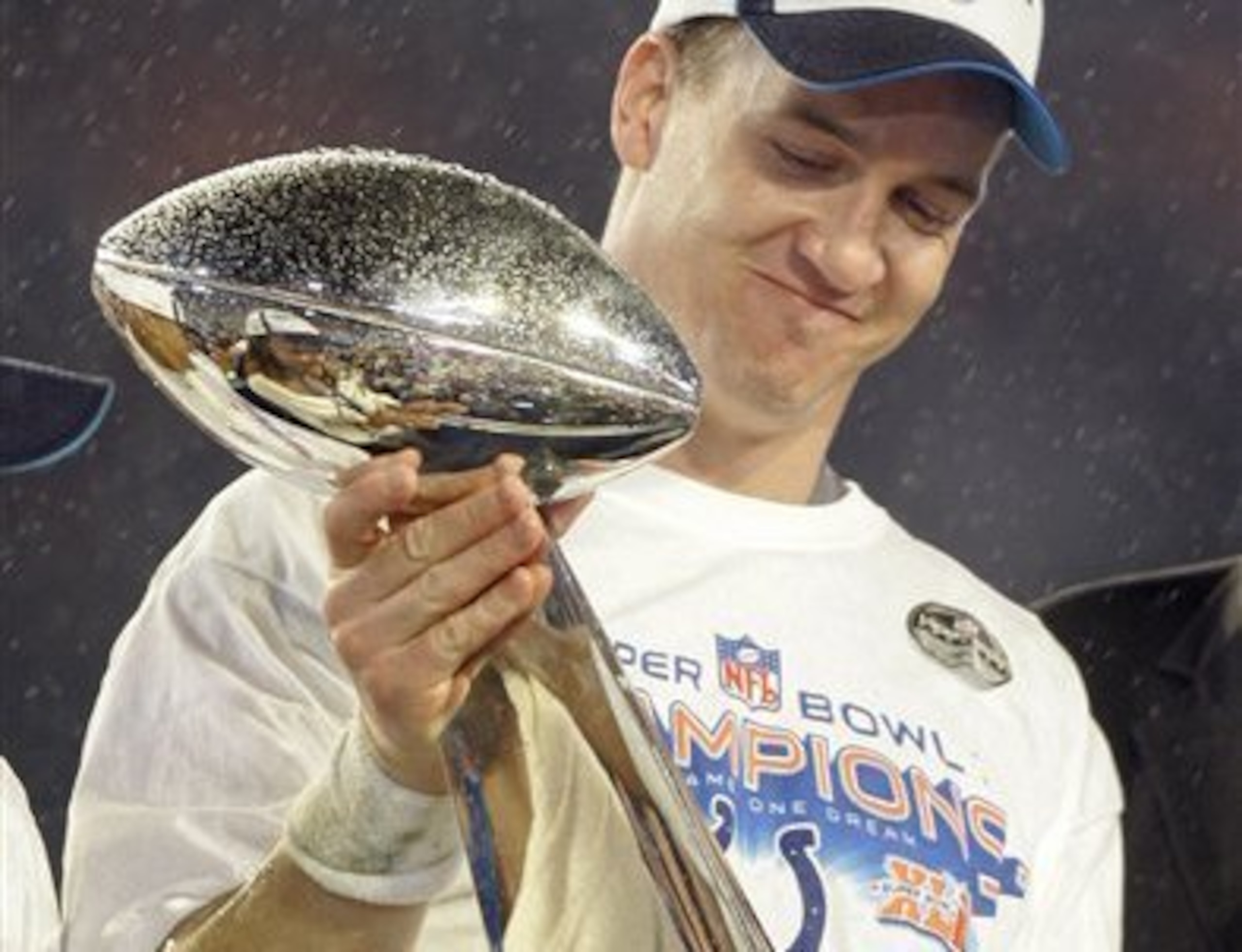
Starting Lineup
LT: Tarik Glenn
LG: Ryan Lilja
C: Jeff Saturday
RG: Jake Scott
RT: Ryan Diem
Why the Line Stands Out
With Peyton Manning heading toward what might ultimately be his final NFL game, it's only fitting to recognize the offensive line that helped deliver his lone Lombardi Trophy. Anchored by Pro Bowlers Tarik Glenn and Jeff Saturday, this group led Manning to a stellar 2006 season and eventually a victory in Super Bowl XLI.
Saturday, who was inducted into the Colts Ring of Honor this past season, was an especially important piece of this line, though he definitely credits the guys beside him.
"To all of these guys that I had a chance to play beside, it’s just an incredible honor and I hope they understand how much they meant to me," Saturday said, per Allie Stoneberg of ESPNFrontRow.com. "Without them, I’m just another guy who got a chance and played for some years."
Manning passed for 4,397 yards and 31 touchdowns in the regular season, while running backs Joseph Addai and Dominic Rhodes combined for 1,722 yards rushing and 12 touchdowns.
Indianapolis faced a standout Chicago Bears defense in Super Bowl XLI but managed to come out on top thanks to Manning's up-front protection. The Chicago defense produced 40 sacks in the regular season but got to Manning only once.
Manning finished the Super Bowl with 247 yards and a touchdown. Addai and Rhodes combined for a whopping 190 yards rushing with a score.

22. Seattle Seahawks, Super Bowl XL
4 of 25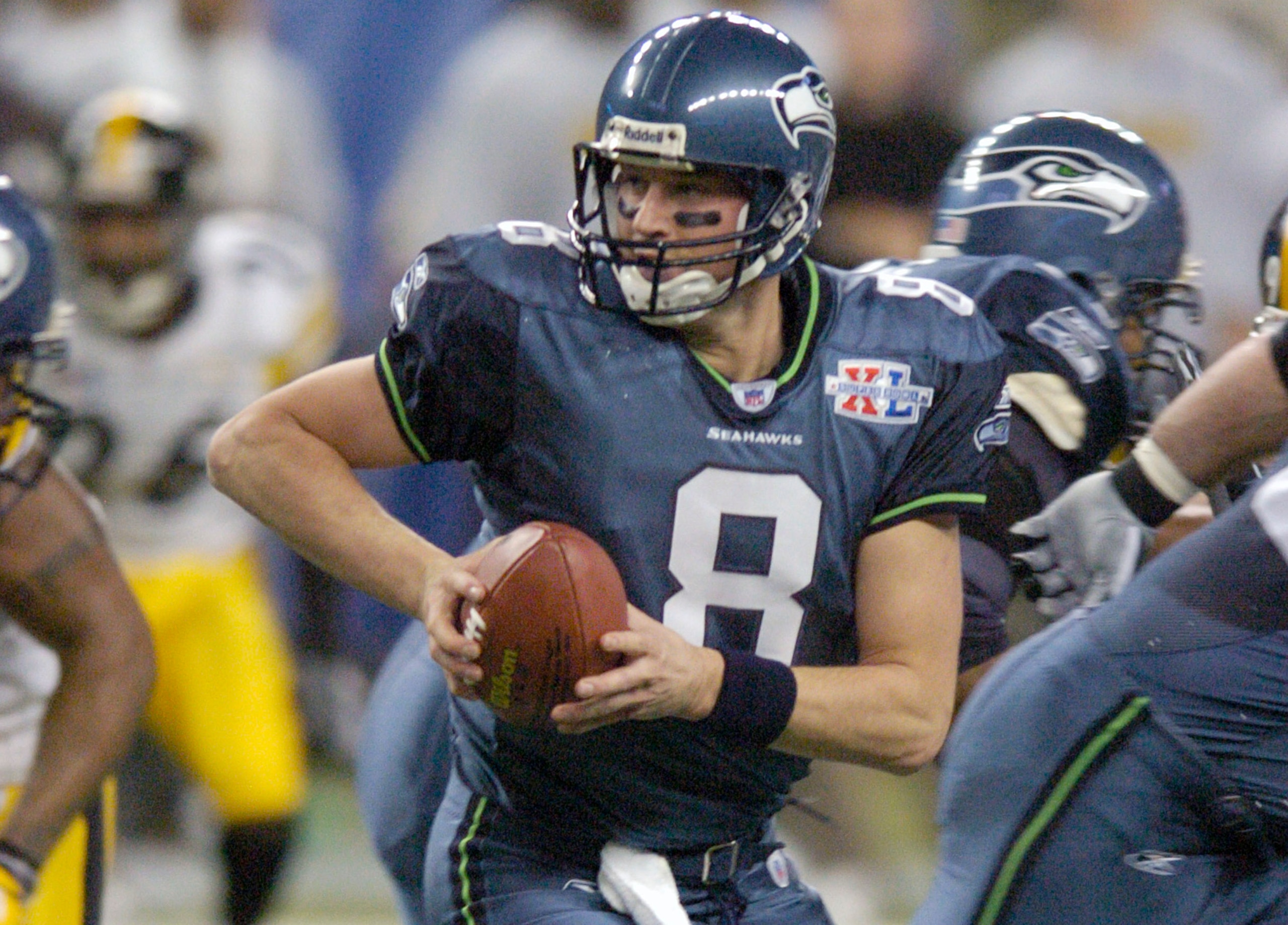
Starting Lineup
LT: Walter Jones
LG: Steve Hutchinson
C: Robbie Tobeck
RG: Chris Gray
RT: Sean Locklear
Why the Line Stands Out
For most, Super Bowl XL is known more for its questionable officiating and for Ben Roethlisberger's first championship than anything the Seattle Seahawks accomplished. However, Seattle fans don't look at the game the same way.
This was the first time the Seahawks reached the Super Bowl, and the team couldn't have made the milestone happen without this standout offensive line.
Highlighted by future Hall of Fame tackle Walter Jones, this group paved the way for a tremendous 1,880-yard rushing season by Seahawks legend Shaun Alexander. The running back tied a record (that was later broken by LaDainian Tomlinson) that season with 27 rushing touchdowns. This shield also helped journeyman quarterback Matt Hasselbeck to a Pro Bowl season.
Jones and guard Steve Hutchinson joined Hasselbeck in the 2006 Pro Bowl. Center Robbie Tobeck was named as an alternate. Seattle scored a league-high 28.2 points per game during the 2005 season.
Unfortunately, scoring was hard to come by in Super Bowl XL. Though the line surrendered only three sacks and helped produce 20 first downs and 396 yards of net offense, the Seahawks scored a mere 10 points.
The Pittsburgh Steelers ended up winning the Super Bowl 21-10 and claimed their fifth Lombardi Trophy in the process. Still, this Seahawks line remains one of the best lines of the new millennium.
21. Baltimore Ravens, Super Bowl XXXV
5 of 25
Starting Lineup
LT: Jonathan Ogden
LG: Edwin Mulitalo
C: Jeff Mitchell
RG: Mike Flynn
RT: Harry Swayne
Why the Line Stands Out
The 2000 Baltimore Ravens team was the one that brought the franchise its first-ever Lombardi Trophy.
Sorry, Cleveland Browns fans.
Though this team wasn't exactly known for its offensive prowess. the blocking unit does deserve its due. The group had to deal with protecting two different starting quarterbacks in the regular season—Tony Banks and Trent Dilfer—and had to block for a rushing attack that everyone knew was coming.
However the Baltimore line still ensured running back Jamaal Lewis had enough room to rumble for 1,364 yards in the regular season. The Ravens finished with a 12-4 record.
Baltimore entered the postseason as a wild-card team and had to go through the Denver Broncos, Tennessee Titans and Oakland Raiders before meeting the New York Giants in Super Bowl XXXV.
The Giants didn't prove to be much of a challenge in the big game, thanks to the Ravens legendary defense and, of course, this offensive line. Dilfer passed for 153 yards and a touchdown, Lewis ran for 102 yards and another score, and the Ravens went on to win 34-7.
Starting left tackle Jonathan Ogden was named to his fourth Pro Bowl in 2001. Several years later, he would be voted as the first Raven in the Pro Football Hall of Fame.
20. New England Patriots, Super Bowl XLII
6 of 25
Starting Lineup
LT: Matt Light
LG: Logan Mankins
C: Dan Koppen
RG: Stephen Neal
RT: Nick Kaczur
Why the Line Stands Out
The New England Patriots might not have won Super Bowl XLII, but their offensive line definitely deserves credit for helping the team win every single other game it played in the 2007 season.
This was the season in which Patriots quarterback Tom Brady torched the rest of the league, passing for 4,806 yards and 50 touchdowns. He couldn't have put up these numbers without the protection of a true standout offensive line. Despite attempting a whopping 578 passes in the regular season, Brady was only sacked 21 times.
New England didn't run the ball with frequency during the 2007-08 season (Laurence Maroney led the team with 835 yards), but the line made sure the offense was efficient when it did. Pro Football Focus rated the Patriots line first overall in run blocking for the year.
Given the statistical greatness Brady and Co. produced that season, this line would be higher on our list had the team actually won the Super Bowl. Unfortunately, the line surrendered five sacks to the New York Giants in the big game, and the Patriots suffered a three-point loss.
Three of the five members of this line were awarded Pro Bowl honors for their efforts. Logan Mankins and Matt light were named starters in the Pro Bowl in 2008, while center Dan Koppen was voted in as a backup.
19. Minnesota Vikings, Super Bowl IV
7 of 25
Starting Lineup
LT: Grady Alderman
LG: Jim Vellone
C: Mick Tingelhoff
RG: Milt Sunde
RT: Ron Yary
Why the Line Stands Out
The Minnesota Vikings might not have won Super Bowl IV, but the offensive line that paved their path there certainly deserves a spot on our list.
The 1969 Vikings earned an NFL-best 12-2 regular season record and also led the NFL (this was the last year the NFL and AFL were separate) with 379 total points scored. Quarterback Joe Kapp passed for 1,726 yards and 19 touchdowns and was named to the 1970 Pro Bowl.
Running backs Dave Osborn, Bill Brown and Oscar Reed combined for 1,466 yards and 11 scores in the regular season.
Unfortunately, Minnesota's success came to an end in Super Bowl IV. The Vikings bested the Dallas Cowboys and the Cleveland Browns in the playoffs but couldn't quite match up with the Kansas City Chiefs. Kapp passed for 183 yards but tossed two touchdowns. The team averaged just 3.5 yards per carry.
In the end, Super Bowl IV went to the Chiefs, with a score of 23-7.
Center Mick Tingelhoff and right tackle Ron Yary anchored this venerable line, and both currently reside in the Pro Football Hall of Fame. Tingelhoff and left tackle Grady Alderman were named to the 1970 Pro Bowl.
18. Dallas Cowboys, Super Bowl VI
8 of 25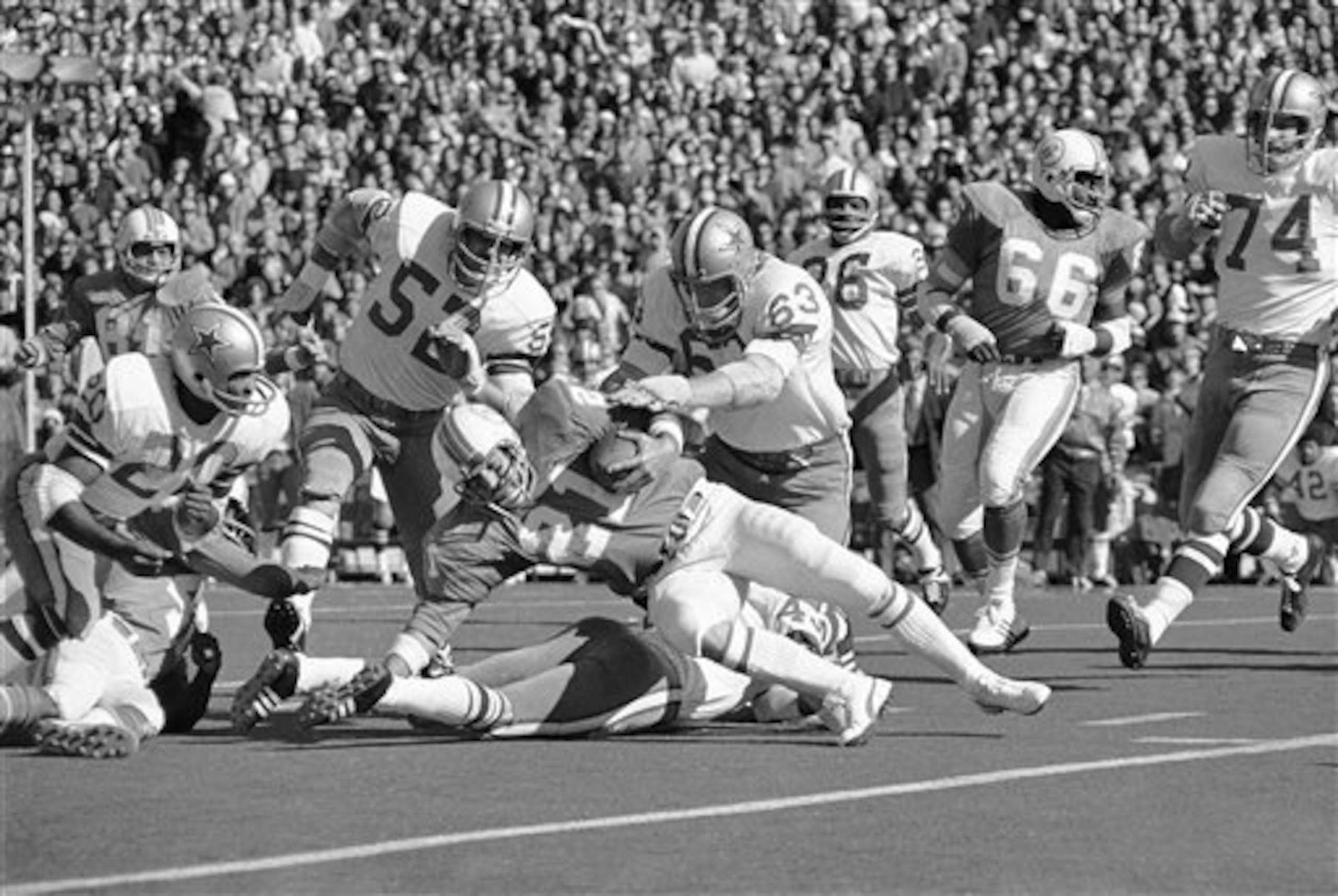
Starting Lineup
LT: Tony Liscio
LG: John Niland
C: Dave Manders
RG: Blaine Nye
RT: Rayfield Wright
Why the Line Stands Out
The Dallas Cowboys have earned a reputation in recent years as a team with a strong offensive line. However, a tradition of strong Dallas lines dates all the way back to the team's first Super Bowl victory, which came after the 1971 season.
Though the season opened with a bit of a quarterback controversy, Roger Staubach eventually settled in as the starter and went on to lead the league with a passer rating of 104.8. He finished with 1,882 yards passing, 343 yards rushing and 17 total touchdowns.
Running backs Duane Thomas and Walt Garrison also had strong seasons in 1971, combining for 1,222 yards and 12 touchdowns on the ground. Obviously, they can thank the guys up front for their success.
Headlined by future Hall of Fame tackle Rayfield Wright, this line helped clear a path all the way to Super Bowl VI. Future Hall of Famer Forrest Gregg was also with the unit in the regular season, his last in the NFL, though he wasn't a full-time starter.
The Cowboys had appeared in the Super Bowl a year earlier but were defeated by the Baltimore Colts 16-13. Things were different this time around.
Thanks in large part to some top-notch protection, the Cowboys were able to handle a very good Miami Dolphins team. Staubach passed for 119 yards and two scores, while Garrison, Thomas and Calvin Hill combined for 194 yards and a touchdown on the ground. Staubach was only sacked twice, and Dallas averaged an impressive 5.3 yards per carry as a team.
Dallas won Super Bowl VI by the score of 24-3 and claimed what would become the first of many Super Bowl victories.
17. St. Louis Rams, Super Bowl XXXIV
9 of 25
Starting Lineup
LT: Orlando Pace
LG: Tom Nutten
C: Mike Gruttadauria
RG: Adam Timmerman
RT: Fred Miller
Why the Line Stands Out
The 1999 St. Louis Rams were unpredictable, explosive and virtually unstoppable on offense. At the time, they really were the "Greatest Show on Turf."
The Rams couldn't have achieved their greatness without the help of a stellar offensive line. Anchored by Pro Bowlers Orlando Pace and Adam Timmerman, this line helped St. Louis to an unexpectedly successful 13-3 season.
First-year starter and former arena standout Kurt Warner passed for 4,353 yards ad 41 touchdowns during the regular season. He was sacked just 29 times in 499 passing attempts. Running back Marshall Faulk was even more lethal, rushing for 1,381 yards, catching 87 passes for 1,048 yards and scoring 12 total touchdowns.
Faulk remains only one of two players (along with Roger Craig) to have both 1,000 yards rushing and 1,000 yards receiving in the same season.
This line opened a hole right up to Super Bowl XXXIV, where the Rams faced the Tennessee Titans.
Against Tennessee, Warner passed for an outlandish 414 yards and two touchdowns on a 23-of-45 passing performance. He was not intercepted and was only sacked once. Faulk added a mere 17 yards rushing but hauled in five receptions for 90 yards. The Rams went on to win 23-16.
Warner was named Super Bowl MVP, and he still holds the record for most passing yards in a Super Bowl. He couldn't have done so without the help of some truly elite pass protection.
16. Cincinnati Bengals, Super Bowl XXIII
10 of 25
Starting Lineup
LT: Anthony Munoz
LG: Bruce Reimers
C: Bruce Kozerski
RG: Max Montoya
RT: Brian Blados
Why the Line Stands Out
In recent years, the Cincinnati Bengals have become a bit of a punchline due to their penchant for losing in the opening round of the playoffs. In the 1980s, however, Cincinnati reached the big game twice.
Cincinnati's offensive line of the 1988 season was a strong one, and it nearly helped deliver a victory in Super Bowl XXIII.
During the regular season, this group helped quarterback Boomer Esiason pass for an impressive 3,525 yards with 28 touchdowns. It also helped produce a 1,239-yard rushing season from running back James Brooks.
Esiason went on to earn NFL MVP honors for the 1988 season.
Future Hall of Fame left tackle Anthony Munoz anchored this unit, even though he wasn't protecting the blind side of the left-handed Esiason. The 11-time All-Pro is widely regarded as one of the best offensive linemen to ever play the game. He and guard Max Montoya were both named to the 1989 Pro Bowl.
Unfortunately, the success Munoz and Co. had in the regular season couldn't be replicated in the postseason. Esiason was sacked five times, and Cincinnati averaged just 3.8 yards per rush in the team's second Super Bowl battle with the 49ers.
Still, the Bengals were nearly good enough to win the big one that January. It took an 11-play, 92-yard drive, and a Joe Montana touchdown pass with just 39 second remaining, for the the 49ers to come out on top.
15. San Francisco 49ers, Super Bowl XXIV
11 of 25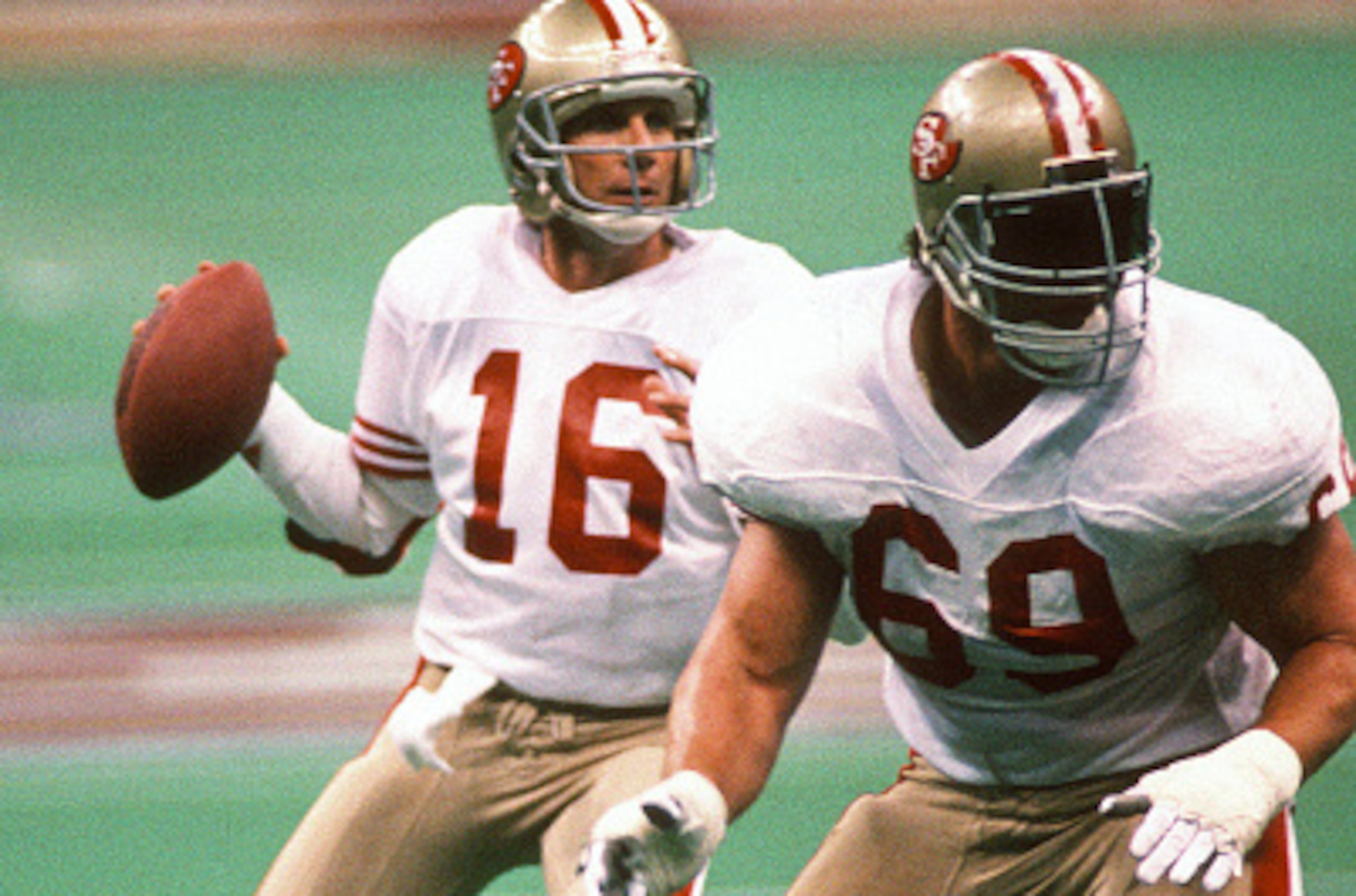
Starting Lineup
LT: Harris Barton
LG: Bruce Collie
C: Jesse Sapolu
RG: Guy McIntyre
RT: Bubba Paris
Why the Line Stands Out
The San Francisco 49ers have had plenty of good offensive lines over the years and more than a few Super Bowl teams. However, the 1989 season was a statement year for both.
The 49ers dominated the NFL landscape in the regular season, finishing with a league-best 14-2 record. Quarterback Joe Montana won NFL MVP honors after throwing for 3,521 yards and 26 touchdowns. His final passer rating of 113.4 was a record at the time.
Not to be completely outdone, running back Roger Craig rushed for a solid 1,054 yards and nine scores of his own.
Though the 49ers might have dominated in the regular season, they were an absolutely unstoppable force in Super Bowl XXIV. The lambasted the Denver Broncos 55-10 and made the entire ordeal appear relatively easy.
Montana passed for 297 yards and five touchdowns on a 22-of-29 performance. At one point, he completed a record 13 consecutive attempts, and he did not throw an interception. Backup Steve Young even got in on the fun, going 2-of-3 for 20 yards. The 49ers line surrendered just one sack.
Craig did his damage on the ground, too, producing 69 yards and a score.
This was the most lopsided victory in Super Bowl history. It couldn't have happened without a strong offensive line, though only guard Guy McIntyre was recognized with Pro Bowl honors.
14. Buffalo Bills, Super Bowl XXV
12 of 25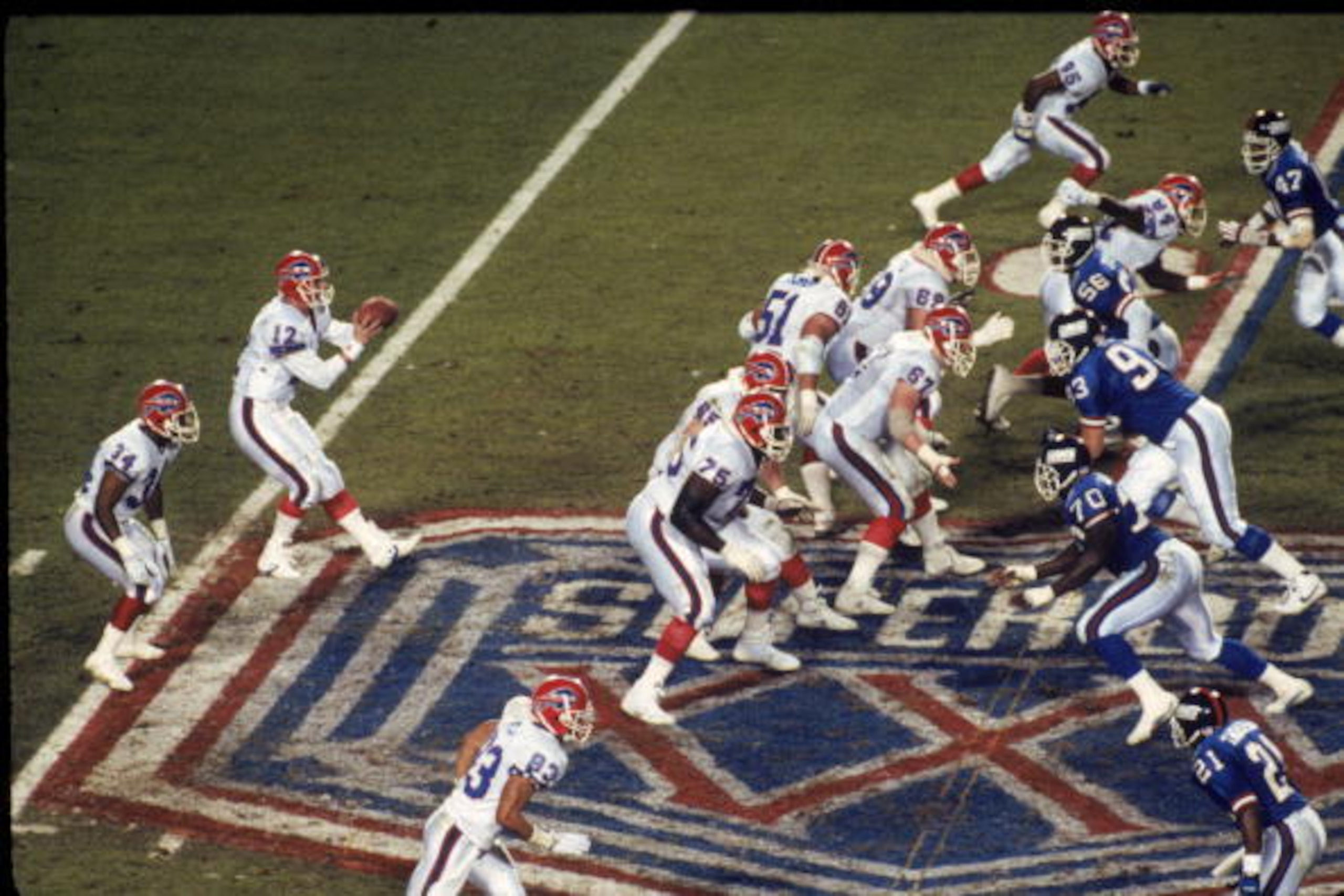
Starting Lineup
LT: Will Wolford
LG: Jim Ritcher
C: Kent Hull
RG: John Davis
RT: Howard Ballard
Why the Line Stands Out
Most fans know the Buffalo Bills as the team that lost four consecutive Super Bowls in the early 1990s, but the fact that Buffalo didn't win a Lombardi Trophy shouldn't take away from the greatness of this team. After all, making the title game four times in a row is just an incredible accomplishment.
The highlight of the Bills teams of the early '90s was quarterback Jim Kelly and Buffalo's no-huddle K-Gun offense. The no-huddle attack routinely kept opposing defenses off balance and allowed Kelly to pass for 2,829 yards in the regular season. It also created the perfect springboard for running back Thurman Thomas, who finished the 1990 season with 1,297 yards rushing.
The K-Gun offense couldn't, and wouldn't have worked without a talented (and well-conditioned) offensive line. The 1990 unit was anchored by Pro Bowl tackle Will Wolford and Pro Bowl center Kent Hull.
Buffalo navigated its way through the Miami Dolphins and the Los Angeles Raiders to earn a spot in Super Bowl XXV, its first of four straight Super Bowl appearances.
However, this was as close as the Bills would get to winning a Super Bowl. Buffalo gave the New York Giants everything they could handle but ultimately lost when Scott Norwood's potential game-winning kick sailed wide right. The Bills were in position to win with that kick with eight seconds to play in regulation.
Thomas rushed for 135 yards and a touchdown, while Kelly passed for 212 yards with just a single sack. Unfortunately, the Bills lost to the Giants 20-19 in the most heartbreaking of fashions.
13. Los Angeles Raiders, Super Bowl XVIII
13 of 25
Starting Lineup
LT: Bruce Davis
LG: Charley Hannah
C: Dave Dalby
RG: Mickey Marvin
RT: Henry Lawrence
Why the Line Stands Out
Though its offensive line wasn't quite as dominant as the group that was blocking back in Oakland, the Los Angeles Raiders of 1983 still possessed one heck of a unit.
This was the group that cleared the path for a title in Los Angeles. It also cleared some big holes for running back Marcus Allen, who finished the regular season with 1,014 yards rushing and nine touchdowns. Quarterback Jim Plunkett finished with 2,935 yards passing and 20 scores.
These Raiders finished the regular season with a 14-2 record and then blew through the Pittsburgh Steelers and the Seattle Seahawks to reach Super Bowl XVII. The prize was a date with the Washington Redskins, who had won the previous year's Super Bowl.
What Raiders fans got in the big game was one of the most dominant rushing performances in Super Bowl history. Allen rushed behind his powerful line to the tune of 191 yards and two touchdowns on just 20 carries. The highlight of his performance was a wild 74-yard run during which he was forced to cut back and find a hole in the middle of the line.
Allen's big day couldn't have happened without a standout blocking group.
Plunkett also performed well in the game, passing for 172 yards and a touchdown with no interceptions and just three sacks. Los Angeles went on to pound the Redskins 38-9.
12. Pittsburgh Steelers, Super Bowl XIII
14 of 25
Starting Lineup
LT: Jon Kolb
LG: Sam Davis
C: Mike Webster
RG: Gerry Mullins
RT: Ray Pinney
Why the Line Stands Out
The Pittsburgh Steelers team of the 1978 season wasn't the first team to deliver a Super Bowl victory for the franchise. However, it was the franchise's first championship team to boast a truly special offensive line.
This group was headlined by future Hall of Fame center Mike Webster and helped provide the Steelers with one tremendous season. It was a tremendous season for quarterback Terry Bradshaw, who passed for 2,915 yards and 28 touchdowns. He also won the NFL MVP award. Star running back Franco Harris finished the regular season with 1,082 yard rushing.
Bradshaw was sacked just 21 times in the regular season, 10 fewer times than he was brought down in Pittsburgh's Super Bowl season of 1975. This, despite the fact that the iconic quarterback attempted 82 more passes in 1978.
In Super Bowl XIII, the Steelers faced off with Roger Staubach's Dallas Cowboys, and the two teams engaged in an offensive firefight.
Bradshaw passed for an incredible 318 yards passing in the Super Bowl with four touchdowns. His mark of 318 yards, at the time, was a new Super Bowl record.
Harris rushed for 68 yards with a touchdown, and the Steelers went on to win 35-31. Bradshaw was named MVP of the game, and the Steelers became the first franchise in NFL history to win three Super Bowls.
11. Green Bay Packers, Super Bowl I
15 of 25
Starting Lineup
LT: Bob Skoronski
LG: Fuzzy Thurston
C: Bill Curry
RG: Jerry Kramer
RT: Forrest Gregg
Why the Line Stands Out
The offensive line of the 1966 Green Bay Packers was the first line to ever win a Super Bowl, but that isn't the only reason the group makes our list.
This bulldozing blocking unit helped produce an MVP season for Packers legend Bart Starr, who finished the regular season with 2,257 yards passing and 14 touchdowns. The group also paved the way for the running back trio of Jim Taylor, Elijah Pitts and Paul Hornung. The three-headed rushing attack produced 1,298 yards rushing.
This line was led by future Hall of Famer Forrest Gregg. He and left tackle Bob Skoronski were named to the 1967 Pro Bowl.
The Packers dominated in the inaugural Super Bowl, thanks in large part to the big boys in the trenches. Starr shredded the Kansas City Chiefs for 250 passing yards and a pair of touchdowns. Taylor and Pitts combined for 101 yards rushing and three more scores.
The 1966 season marked the fourth time in the decade that the Packers won the NFL championship. However, this was the franchise's first Super Bowl and is the reason why the league's champion is now awarded the Lombardi Trophy.
That's right, Vince Lombardi was the man who coached this line to the pinnacle.
10. Washington Redskins, Super Bowl XXII
16 of 25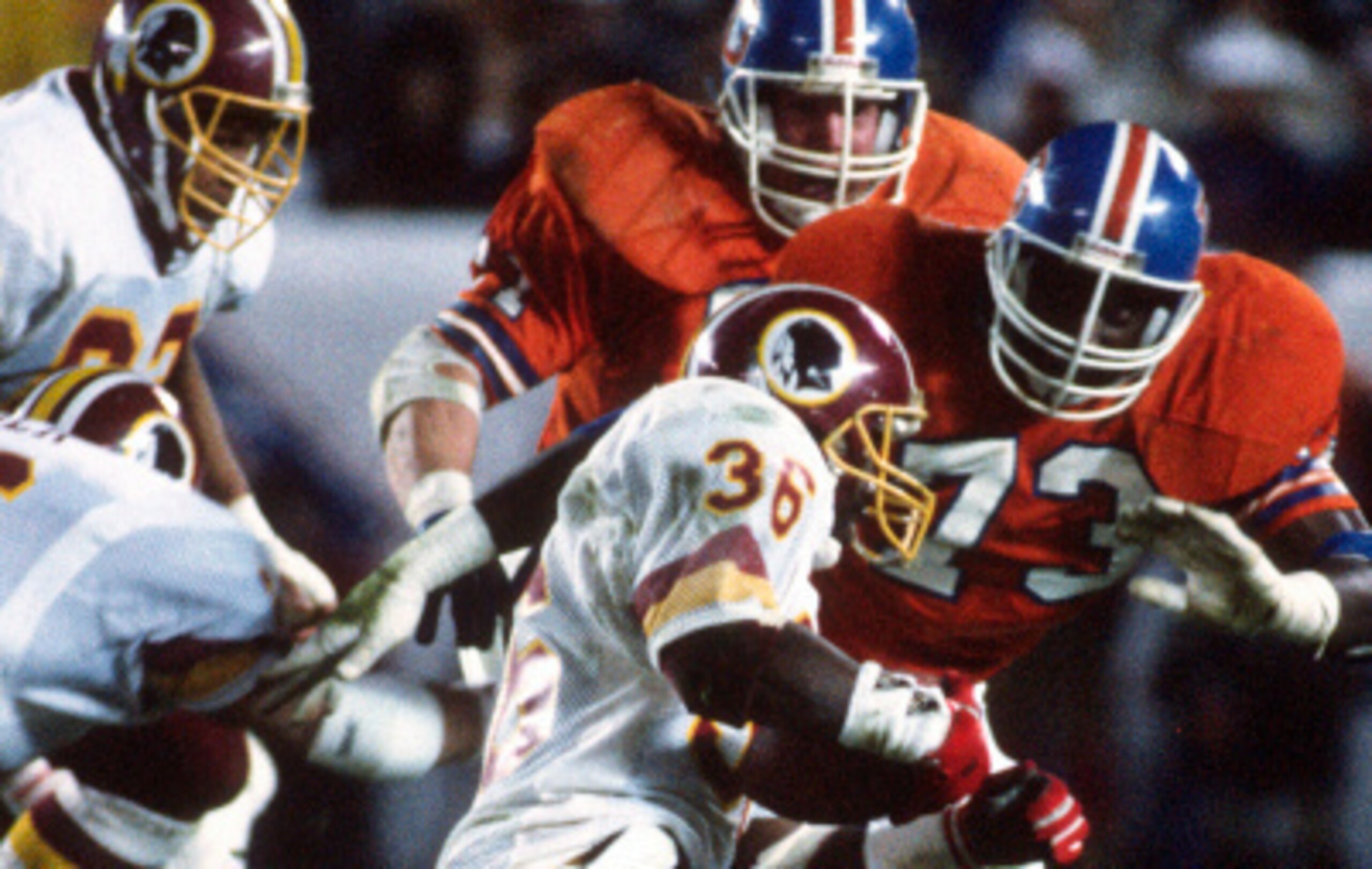
Starting Lineup
LT: Joe Jacoby
LG: Raleigh McKenzie
C: Jeff Bostic
RG: R.C. Thielemann
RT: Mark May
Why the Line Stands Out
An incarnation of the infamous "Hogs" of Washington Redskins lore, the starting line for Super Bowl XXII helped produce one of the most dominant postseason performances in league history.
This group helped the Redskins cap off a strike-shortened 1987 season with an 11-4 record. A number of different players took the field during the regular season because a handful of games were played with replacement players. However, the Redskins as a team averaged 4.2 yards per rush and surrendered just 27 sacks on the year.
The team finished first in the NFC East and went on to beat both the Chicago Bears and Minnesota Vikings in the playoffs. This team makes our list, though, because of its performance in the big game.
Joe Jacoby, Jeff Bostic and Co. helped steamroll the Denver Broncos in the Super Bowl. Running back Timmy Smith, who had just 126 yards rushing in the regular season, rumbled for 204 yards and two touchdowns against the Denver defense.
Quarterback Doug Williams passed for 340 yards and four touchdowns while being sacked a mere two times. Washington went on to win the game 42-10.
Future Hall of Fame guard Russ Grimm was also a member of the offensive line, though he did not start in Super Bowl XXII.
9. Oakland Raiders, Super Bowl II
17 of 25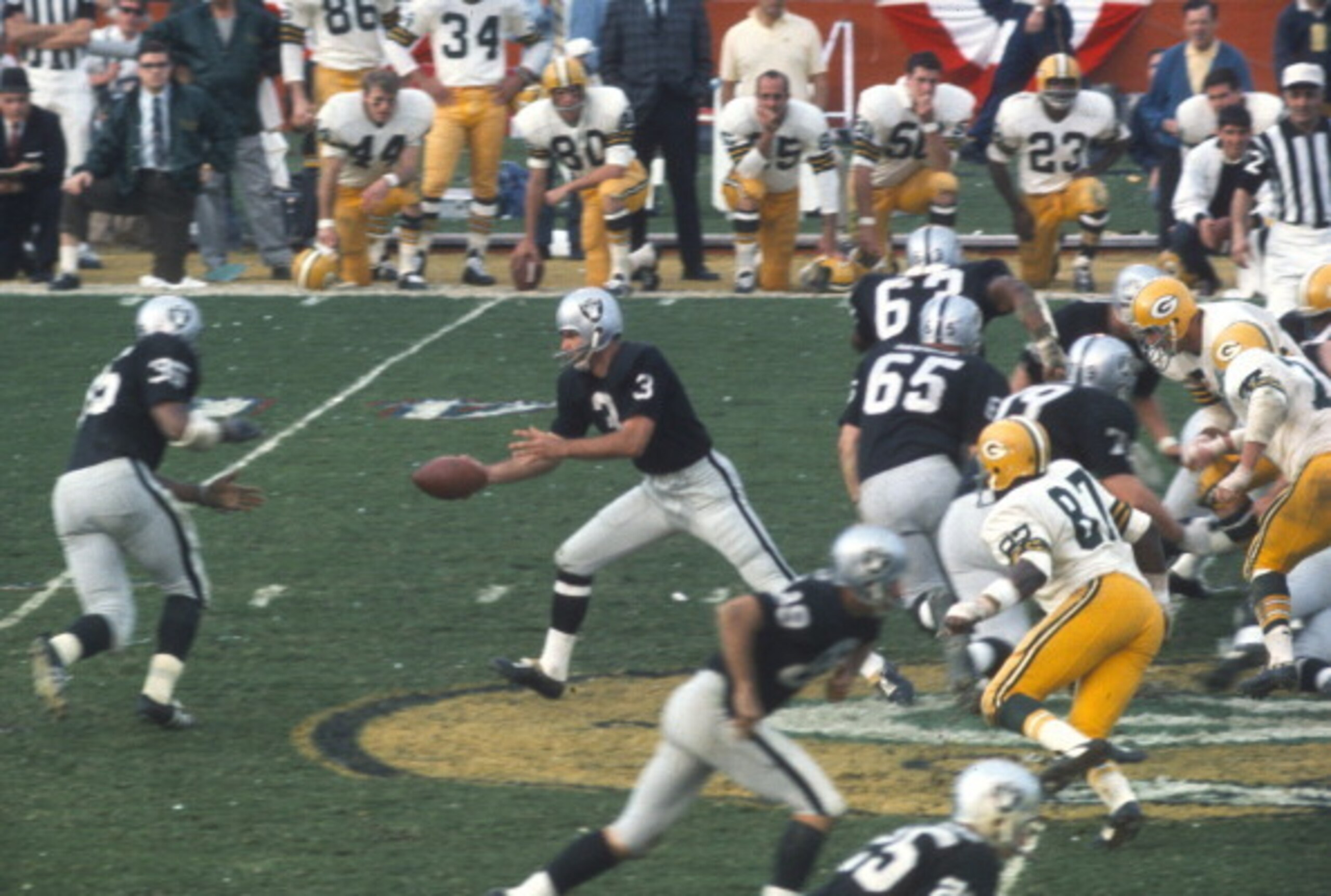
Starting Lineup
LT: Bob Svihus
LG: Gene Upshaw
C: Jim Otto
RG: Wayne Hawkins
RT: Harry Schuh
Why the Line Stands Out
The Oakland Raiders might just now be making their way back to pro football relevance, but in 1967, the team was a force in the American Football League. Oakland won the AFL and earned a shot at the NFL's Green Bay Packers in Super Bowl II.
The 1967 season saw The Mad Bomber Daryle Lamonica put up an incredible 3,228 yards passing with 30 touchdowns. The season also saw Raiders rushers Hewritt Dixon and Clem Daniels combine for 1,134 yards and nine touchdowns.
Neither feat would have been possible without the protection of this potent offensive line, anchored by future Hall of Famers Gene Upshaw and Jim Otto. Though not Hall of Famers themselves, Guard Wayne Hawkins and tackle Harry Schuh both made multiple appearances in the AFL All-Star Game during their careers.
Unfortunately, the Raiders weren't yet good enough to bring home the big one. This line helped Lamonica pass for 208 yards and two touchdowns and allowed the Raiders to rush for a whopping 5.4 yards per carry in the Super Bowl. However, the defense simply couldn't contain the Green Bay Packers.
Bart Starr led Green Bay to a 34-point victory and the franchise's second consecutive Super Bowl.
8. Denver Broncos, Super Bowl XXXIII
18 of 25
Starting Lineup
LT: Tony Jones
LG: Mark Schlereth
C: Tom Nalen
RG: Dan Neil
RT: Harry Swayne
Why the Line Stands Out
The Denver Broncos offensive line of Super Bowl XXXIII is a memorable one, because it is the line that helped quarterback John Elway ride off into the sunset with his second consecutive Lombardi Trophy. However, the group was also (obviously) one of the top blocking units in both the 1998 regular season and in the championship game.
Led by Pro Bowlers Mark Schlereth, Tom Nalen and Tony Jones, this line helped spring running back Terrell Davis to an incredible 2,008-yard season on the ground.
The group also helped Elway earn Pro Bowl honors while allowing him to be taken down by opposing defenders only 18 times. In the regular season, the future Hall of Fame quarterback completed 59.0 percent of his passes, threw 22 touchdowns to 10 interceptions and posted a passer rating of 93.0.
Both Elway and Davis shined in Super Bowl XXXIII thanks to their protection up front. Davis scampered for 102 yards on 25 carries against the Atlanta Falcons while also catching two passes for 50 yards. Elway threw for 336 yards and a touchdown, as the Broncos went on to win 34-19.
Elway was not sacked in the game—the last he would ever play in the NFL.
Nalen and Schlereth were both nominated for the Pro Football Hall of Fame's 2016 class, though neither player is a finalist. Davis, one of the guys these men blocked for, is.
7. Dallas Cowboys, Super Bowl XXX
19 of 25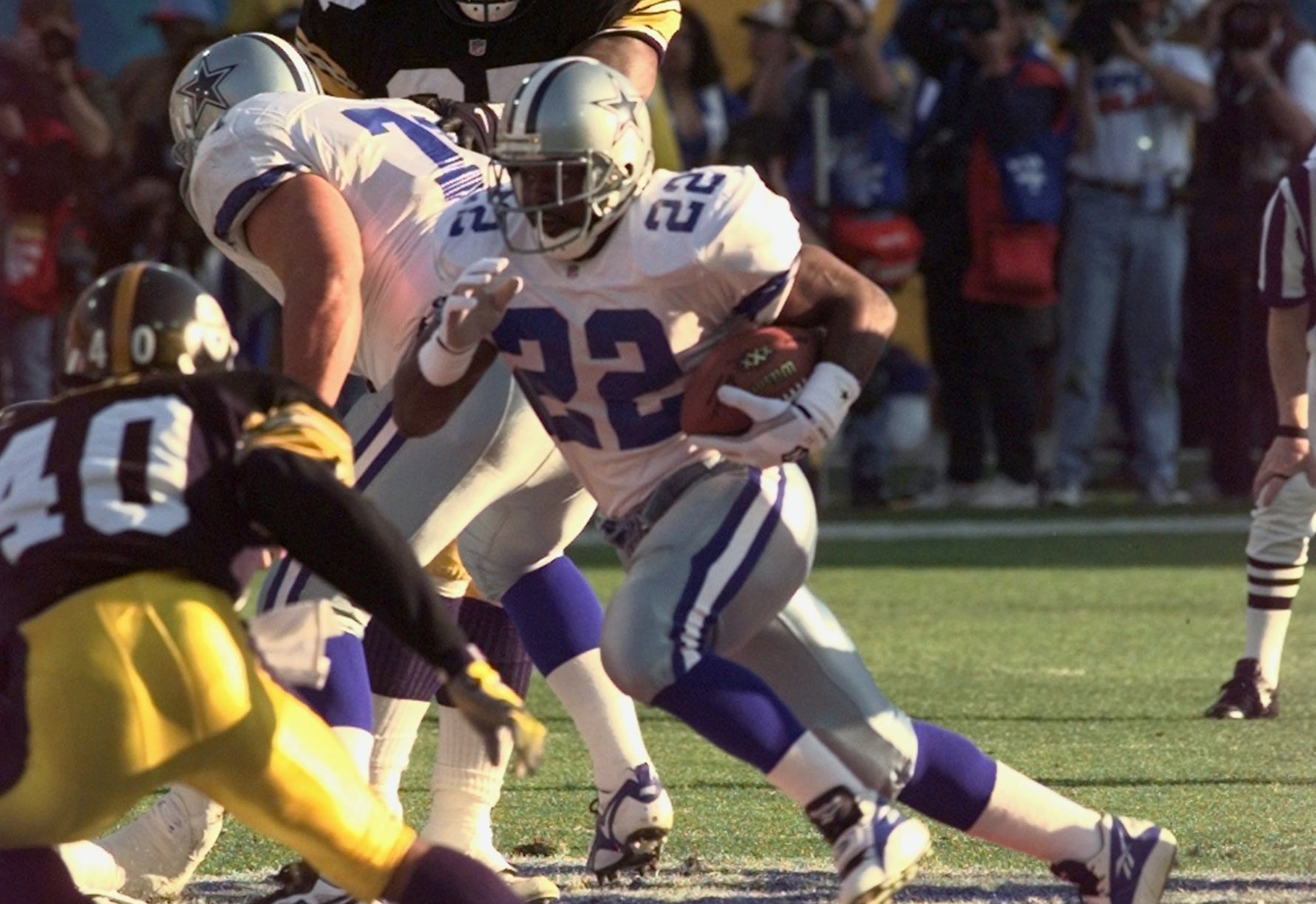
Starting Lineup
LT: Mark Tuinei
LG: Nate Newton
C: Derek Kennard
RG: Larry Allen
RT: Erik Williams
Why the Line Stands Out
We've mentioned one standout Cowboys line already in our list, but now we're getting to the big one. This is the famed "Great Wall of Dallas" line of the 1990s.
The Cowboys were the team of the early '90s, winning three Super Bowls in a four-year span. They couldn't have done so without the help of the maulers in the trenches. Though no single member of the line came across as truly special, the combined group certainly was.
Legendary Cowboys quarterback Troy Aikman said the following of the group in an interview with KTCK-AM 1310, according to SportsDayDFW:
"It was a collection of some pretty good players that, as a whole, was better than the sum of its parts. And they all had their own unique story and personality, which made it—the personality part of it really made it enjoyable during the week leading up to those games, and I think that’s what we all miss the most.
"
Aikman passed for 3,304 yards during the 1995 season, while Emmitt Smith rushed for an incredible 1,773 yards and 25 touchdowns. The Cowboys went on to beat the Pittsburgh Steelers in Super Bowl XXX, their last of the three '90s Super Bowls.
This was really the last incarnation of the Great Wall of Dallas and one that included the addition of future Hall of Famer Larry Allen. He, guard Nate Newton and center Ray Donaldson—who missed the Super Bowl because of a broken ankle—were named to the 1996 Pro Bowl.
6. Pittsburgh Steelers, Super Bowl XIV
20 of 25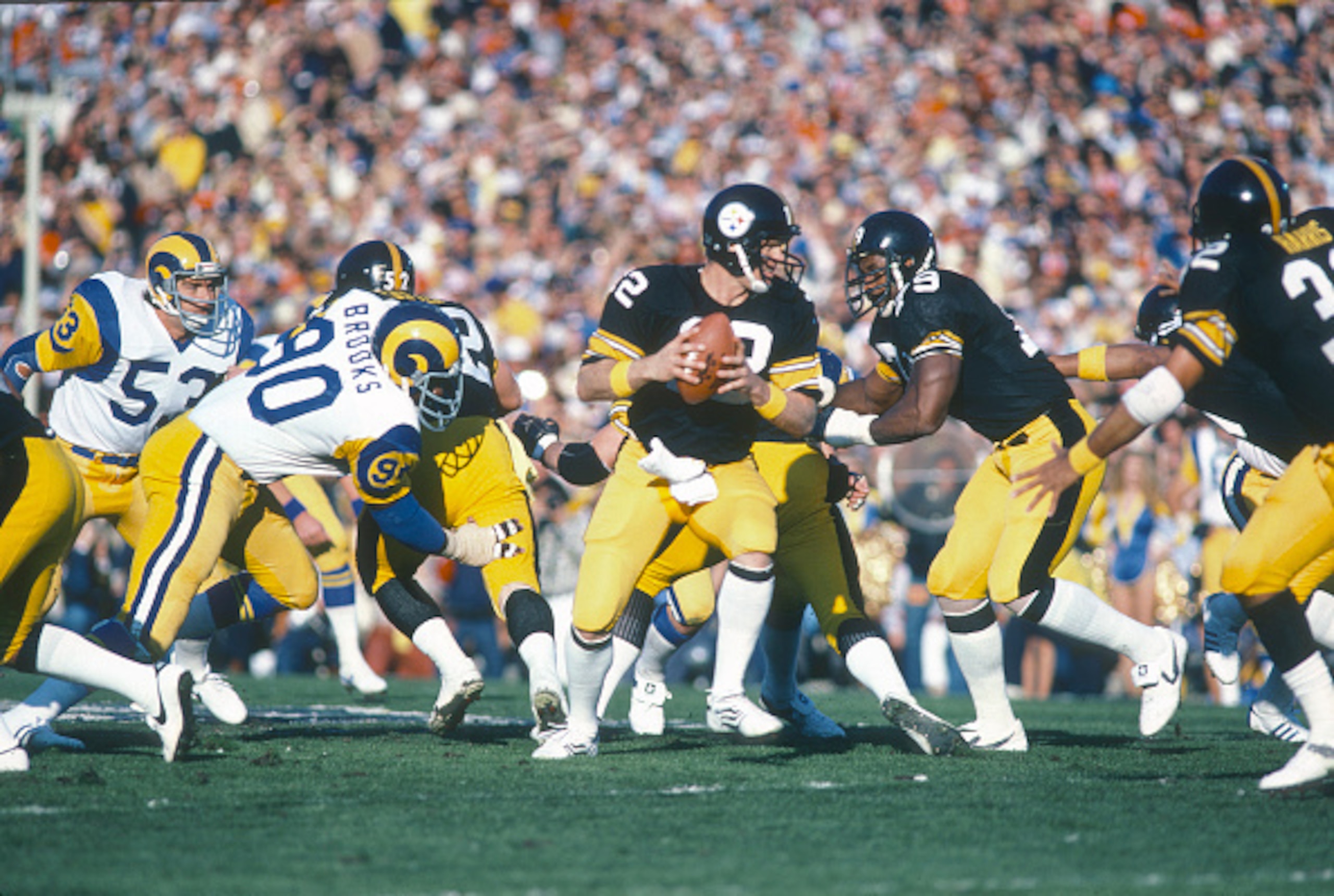
Starting Lineup
LT: Jon Kolb
LG: Sam Davis
C: Mike Webster
RG: Gerry Mullins
RT: Larry Brown
Why the Line Stands Out
The offensive line of the 1979 Steelers was nearly identical to the standout group that won the Super Bowl a year earlier. The only change for Super Bowl XIV was the introduction of Larry Brown at right tackle.
This version of the group was even more dominant as a unit and yielded an even more impressive Super Bowl victory. Though Terry Bradshaw didn't win another league MVP award, he did pass for an impressive 3,724 yards with 26 touchdowns. Franco Harris and Sidney Thornton combined for 1,771 yards.
The Steelers led the NFL in the 1979 season with an average of 391 offensive yards per game.
In Super Bowl XIV, this Pittsburgh team met the Los Angeles Rams. Bradshaw turned in another strong performance, passing for 309 yards and two touchdowns. However, he also tossed three interceptions this time around, and the Steelers entered the fourth quarter with a two-point deficit.
Thankfully, Bradshaw's protection held, and Pittsburgh battled back to score 14 unanswered points in the fourth. Bradshaw was not sacked in the game. Harris rushed for 46 yards, including the game's final score. The Steelers defeated the Rams and took home their fourth Lombardi Trophy.
5. Denver Broncos, Super Bowl XXXII
21 of 25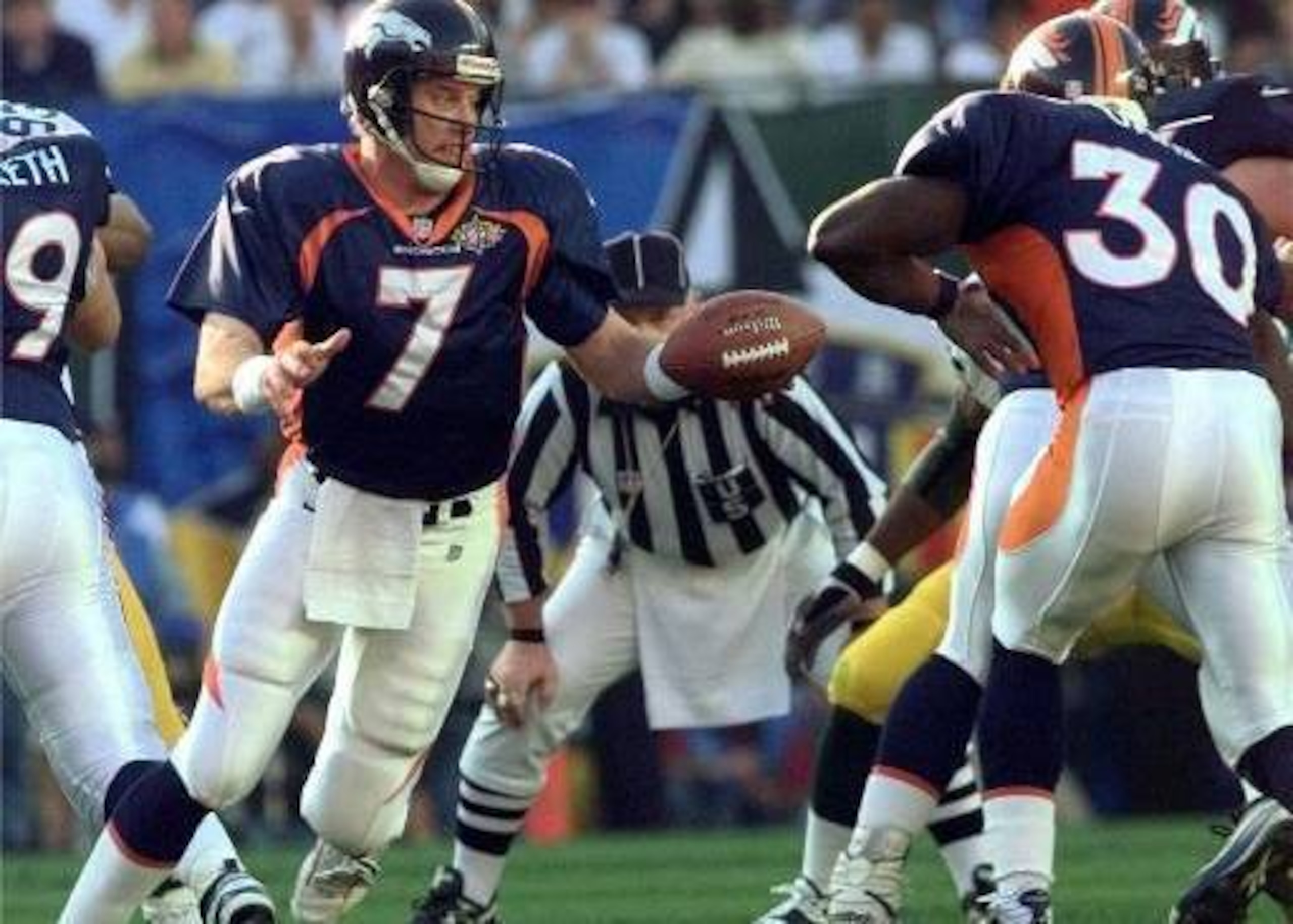
Starting Lineup
LT: Gary Zimmerman
LG: Mark Schlereth
C: Tom Nalen
RG: Brian Habib
RT: Tony Jones
Why the Line Stands Out
We've already mentioned the impressive offensive line that helped deliver John Elway's second Super Bowl victory, but the line that produced his first was even more dominant.
In addition to standouts from the 1998 season such as Schlereth, Nalen and Jones, the 1997 line also featured future Hall of Fame tackle Gary Zimmerman. This group helped Elway to a Pro Bowl season—he passed for 3,635 yards and 27 touchdowns—and helped Terrell Davis to an incredible 1,750-yard rushing season.
Elway, Davis and Nalen were all named to the 1998 Pro Bowl.
In Super Bowl XXXII, the Broncos went head-to-head with Brett Favre's Green Bay Packers. However, Denver didn't attempt to engage in a quarterback duel. Elway passed the ball a mere 22 times, completing 12 of those attempts for 123 yards.
Instead, the Broncos unleashed Davis behind their powerful offensive line in order to control both the tempo and the game. Davis finished with 157 yards rushing and three touchdowns.
As was the case in the following Super Bowl, though, the line didn't allow Elway to suffer a sack. Considering this Packers defense featured future Hall of Famer Reggie White, this was a strong accomplishment.
Because this was Elway's first Super Bowl win in four tries, Broncos owner Pat Bowlen held up the Lombardi Trophy after the game and proclaimed "this one's for John."
Bowlen would have never gotten the chance to make this memorable statement without one of the greatest offensive lines in league history.
4. Washington Redskins, Super Bowl XVII
22 of 25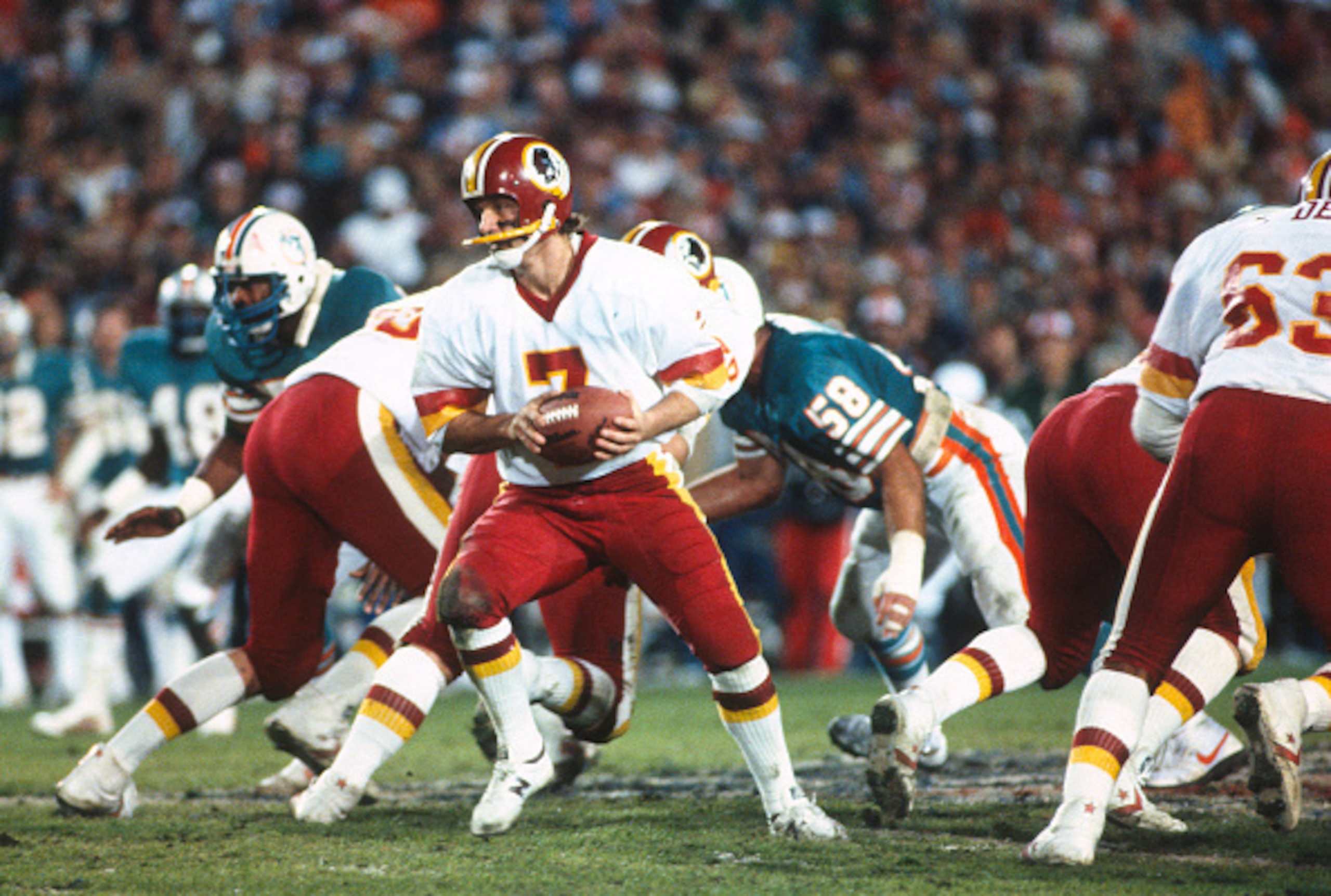
Starting Lineup
LT: Joe Jacoby
LG: Russ Grimm
C: Jeff Bostic
RG: Fred Dean
RT: George Starke
Why the Line Stands Out
This is another version of the Washington Redskins' "Hogs" offensive line, and it ranks a bit higher on our list because this is the version anchored by guard Russ Grimm.
Grimm was essentially the heart and soul of the unit and a future Hall of Famer. Left tackle Joe Jacoby is a finalist for the Hall's 2016 class. These two headlined an impressive group that laid the foundation for an even more impressive season.
The 1982 Redskins went 8-1 in a strike-shortened season but still managed to produce eye-catching numbers. Quarterback Joe Theismann passed for 2,033 yards with 13 touchdowns. This means he averaged nearly 226 yards passing per game. John Riggins rushed for 553 yards in the regular season.
Washington worked its way through the Detroit Lions, Dallas Cowboys and Minnesota Vikings in the playoffs to meet the Miami Dolphins in Super Bowl XVII. This is the team that had defeated the Redskins back in Super Bowl VII.
Washington's line would help pave the way to victory this time around. Despite facing a 17-10 halftime deficit, the Redskins never gave up on the running game, and rode Riggins to victory. He finished the game with 166 yards and a touchdown and was named MVP. Theismann passed for 143 yards and two scores.
Washington picked up its very first Super Bowl victory behind the Hogs' shield, winning 27-17.
3. Oakland Raiders, Super Bowl XI
23 of 25
Starting Lineup
LT: Art Shell
LG: Gene Upshaw
C: Dave Dalby
RG: George Buehler
RT: John Vella
Why the Line Stands Out
In addition to helping the Oakland Raiders earn a 32-14 victory in Super Bowl XI, this line employed two Hall of Fame linemen who helped produce a stellar 1976 season.
This group launched fullback Mark van Eeghen to a 1,012-yard season, while helping quarterback Ken Stabler earn a Pro Bowl nomination. Stabler passed for 2,737 yards and 27 touchdowns during the regular season while only suffering 19 sacks. He was sacked only twice in the Super Bowl, going 12-of-19 for 180 yards and a score.
Running back Clarence Davis combined with van Eeghen to produce 210 yards rushing in the big game.
This unit was anchored on the left side by future Hall of Famers Art Shell and Gene Upshaw. Both men would continue their football legacies after their playing careers—Shell as a coach, and Upshaw as a pivotal member of the players' union.
"Upshaw bridged the modern game with the NFL 'old school,' which embraced a phrase that [former commissioner Pete] Rozelle popularized but isn't heard much anymore: 'For the good of the game,'" Kevin Spain of NOLA.com wrote shortly after Upshaw's death in 2008.
Upshaw and Shell will both be remembered for their off-field contributions (Shell later coached the Raiders to three playoff appearances). On the field, they were a marvel. The duo combined for 14 Pro Bowl appearances, and this line combined to spearhead one of the most memorable teams in Raiders history.
2. Dallas Cowboys, Super Bowl XXVII, Super Bowl VIII
24 of 25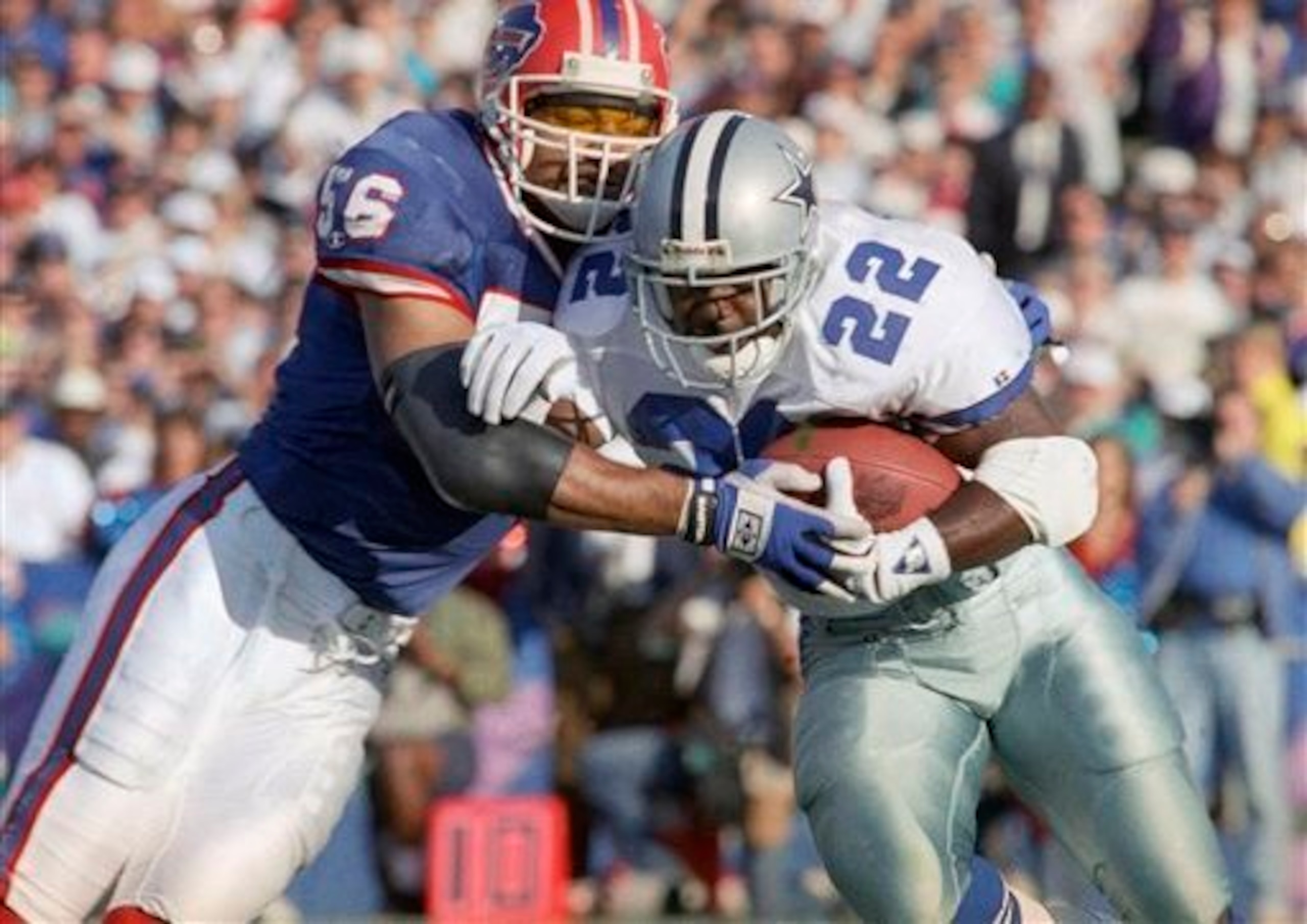
Starting Lineup
LT: Mark Tuinei
LG: Nate Newton
C: Mark Stepnoski/John Gesek
RG: John Gesek/Kevin Gogan
RT: Erik Williams
Why the Line Stands Out
Alright, we're going to cheat here just a little bit by combining the 1992 and 1993 Cowboys into one group. Both of these lines paved the way for extremely successful seasons, and both cleared the path for Super Bowl victories over the Buffalo Bills.
The only difference between the two groups is that guard John Gesek was moved over to center to replace Mark Stepnoski for the playoffs in 1993 because of a knee injury. Kevin Gogan then took Gesek's place at right guard.
This was the Great Wall of Dallas at the height of its powers, and the evidence is in the history books. Troy Aikman passed for 3,445 yards in 1992 behind this group while only suffering 23 sacks on 473 passing attempts. He passed for 3,100 yards the following season.
Running back Emmitt Smith racked up 1,713 yards rushing and 18 touchdowns in 1992. A year later, he rushed for 1,486 yards.
The Cowboys demolished the Bills in Super Bowl XXVII, taking a 28-10 halftime lead and rumbling on to win 52-17. However, in Super Bowl XXVIII, Dallas found itself down 14-6 at the half and in need of a comeback.
According to Smith, it was the play of the offensive line and the six straight rushing plays after the half that led the charge.
"That right there was the defining moment in that Super Bowl," he said, per Nate Davis of USA Today.
Dallas went on to win Super Bowl XXVII, 30-13, earning its second Lombardi Trophy of the '90s. Without this tremendous group of blockers, the Cowboys' era of dominance in that decade may never have been.
1. Miami Dolphins, Super Bowl VII, Super Bowl VIII
25 of 25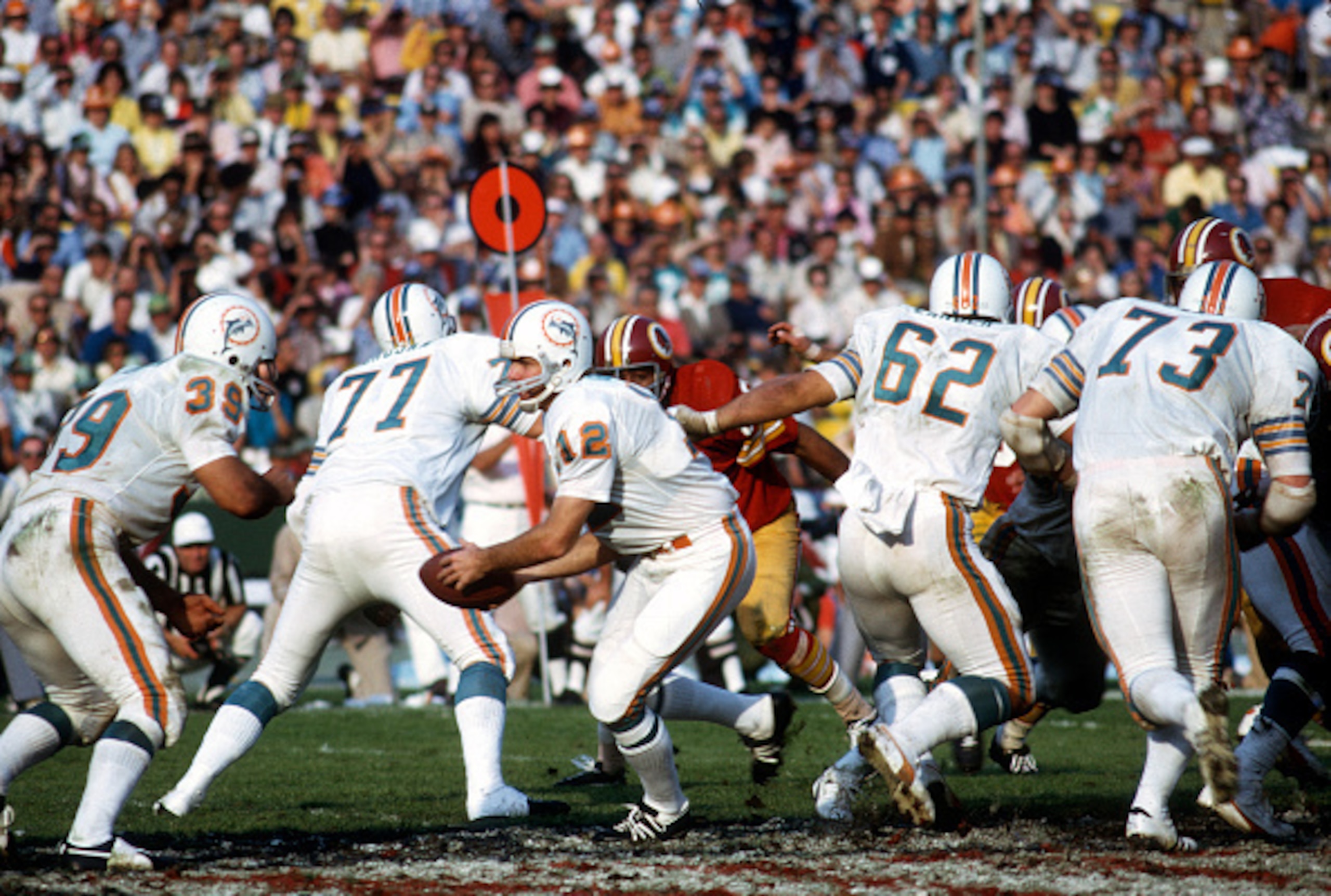
Starting Lineup
LT: Wayne Moore
LG: Bob Kuechenberg
C: Jim Langer
RG: Larry Little
RT: Norm Evans
Why the Line Stands Out
OK, so you might accuse us of cheating a little bit here too, but we're really not by counting the Miami Dolphins offensive lines of 1972 and 1973 as the same group—since, after all, the Dolphins had the same starting five in back-to-back Super Bowls.
The '72 Dolphins are, of course, famous because they managed to run the table and go 17-0. They remain the only NFL team to finish with an undefeated record and win a Super Bowl, though their coach from the era might not have minded if this year's Panthers team equaled the feat.
According to Joe Person of the Charlotte Observer, Don Shula actually called the Panthers in the regular season to let them know he was disappointed they had lost. This is because his son, Mike, is Carolina's offensive coordinator.
This line helped Larry Csonka and Mercury Morris combine for 2,117 yards rushing and 18 touchdowns in 1972. The duo rushed for 1,957 yards a year later.
The Dolphins beat the Washington Redskins 14-7 in Super Bowl VII. The game was highlighted by a 112-yard rushing performance by Csonka. He and Morris combined for 179 yards rushing and two touchdowns in Super Bowl VIII, and Miami went on to win 24-7 over the Minnesota Vikings.
Right guard Larry Little and center Jim Langer are both in the Pro Football Hall of Fame. Yet, there's no denying that all five of these blockers helped to produce back-to-back Super Bowl wins and perhaps the most impressive two-season run of any NFL team in history.
Because of this, the Dolphins line of Super Bowl VII and Super Bowl VIII earns our No.1 ranking.
.jpg?w=2560 "Colts Vikings Football")
.jpg?w=2560 "World Series Gm. 4 Highlights 🎬")