

What Is Bayern Munich's Best Centre-Back Partnership?
Some of history's greatest football teams have been defined by their centre-back partnerships. Alessandro Nesta and Fabio Cannavaro, Steve Bruce and Gary Pallister, Alessandro Costacurta and Franco Baresi: These pairs are remembered in history as key to the success of their teams.
Bayern Munich have an excellent team and considerable squad depth right now. Yet at the same time, it's not exactly clear what their best centre-back pairing is.
A coach known for stressing midfield and attack, Pep Guardiola rotated his lineup 99 consecutive times for a spell that ended late this fall. Very often, his changes were to his defence. Sometimes, he's used three centre-backs; otherwise, he's used two. He's even resorted to using David Alaba or Xabi Alonso in central defence. So the question has to come up: What is Bayern's best centre-back partnership?
TOP NEWS

Final Men's Ballon d'Or Rankings 📊
Highlights and Viral Moments 🍿

J-Dub Suffers Gruesome Injury
Although it's noteworthy that there is a gestalt aspect to defensive partnerships (it's possible that two good defenders will form a better partnership than one good defender and one who is world class), among the options at Bayern, Jerome Boateng has to be included in the best defence.
The 27-year-old has been one of the few constants in the starting XI, featuring in all but one game during the fall campaign. And he's emerged this season as perhaps the best and most complete centre-back in the game.
Physically, Boateng has few peers. He stands a towering 6'3 ½" and is indomitable in the air. For his position, he's quite quick on his feet, making a high-line defence a viable option for Bayern. And he has the raw physical strength to outmuscle even the most powerful strikers.
In summary, whenever the ball is played forward, Boateng is rarely far from it and should be favored to win it.
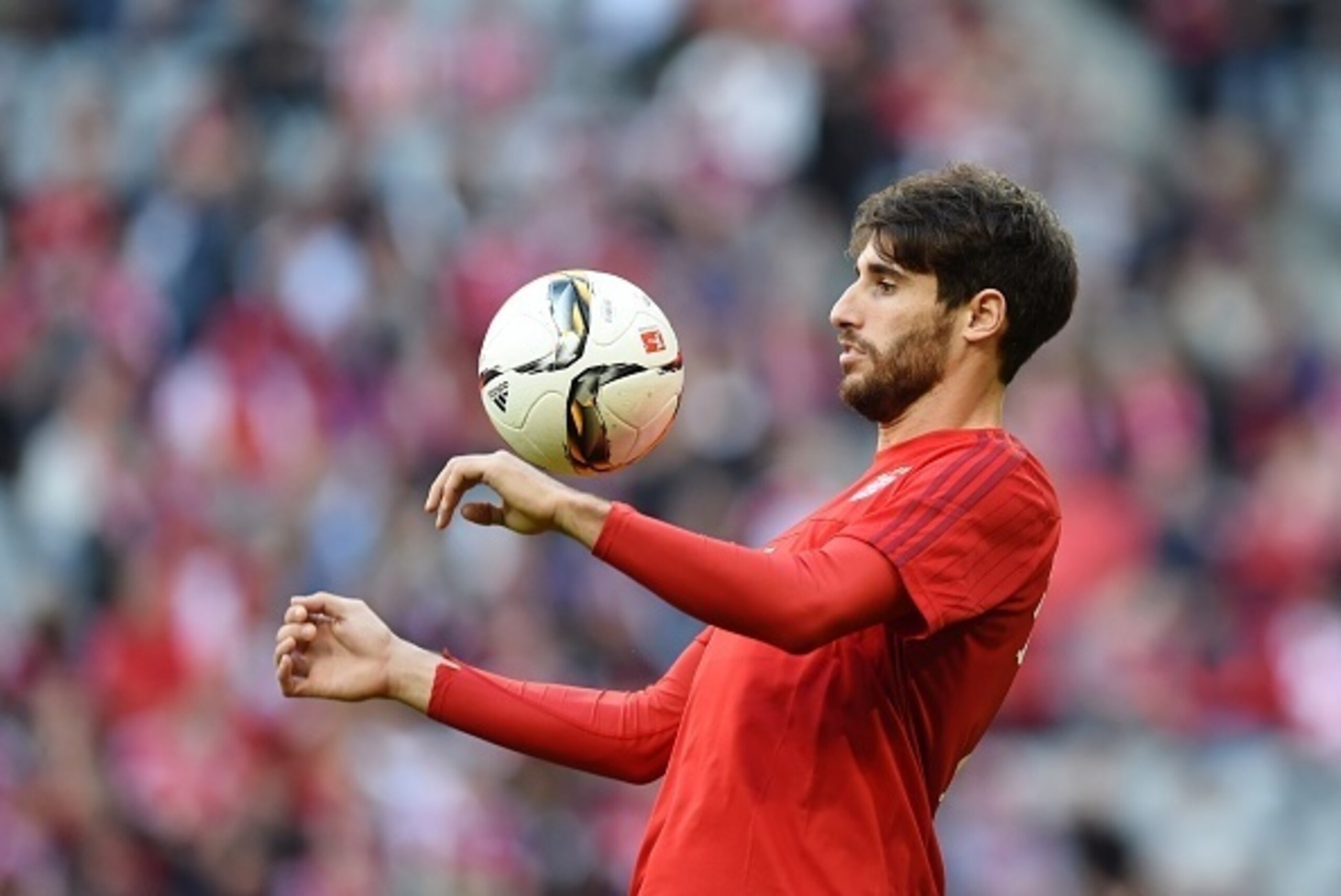
In terms of his tackling and tracking, Boateng has developed into a very effective defender. He's capable of the occasional howler, but in general, he keeps his focus and does quite well.
The only caveat that can be made is that he sometimes is a bit too reliant on his athletic superiority, which can cause problems in the event that he overestimates himself. Slower, weaker defenders play on narrower margins and need to be a little sharper.
The final factor to Boateng's game, and a key to determining Bayern's best defensive partnership, is his ball play. The 27-year-old was always good with the ball at his feet, and even in his early years played often at right-back. He never had the agility to be a great dribbler, but his passing game is quite refined.
Actually, it was his long-range deliveries that assisted two goals against Borussia Dortmund in October, and Boateng has a very respectable tally of four assists in all competitions overall this season. And although he hasn't scored yet, he is a decent threat on goal from long distance.
With Boateng established, there remains the question of who can partner him.
In the Bayern team, there are three options: Mehdi Benatia, Javi Martinez and Holger Badstuber. The latter may have been competitive a few years ago, but his continuous injuries have transformed him into a player that simply is not reliable at present. He may yet rediscover the quality that made him a starter in the German national team, but for the time being, he is not of international class.
That leaves Benatia and Martinez, two players of very different qualities.
In a back three, Martinez is a great option as a sweeper. His training as a midfielder makes him perfect for the role of distributor, and the fact that he didn't spend his entire youth learning how to play in defence is masked by the fact that he has two natural, trained defenders playing with him.
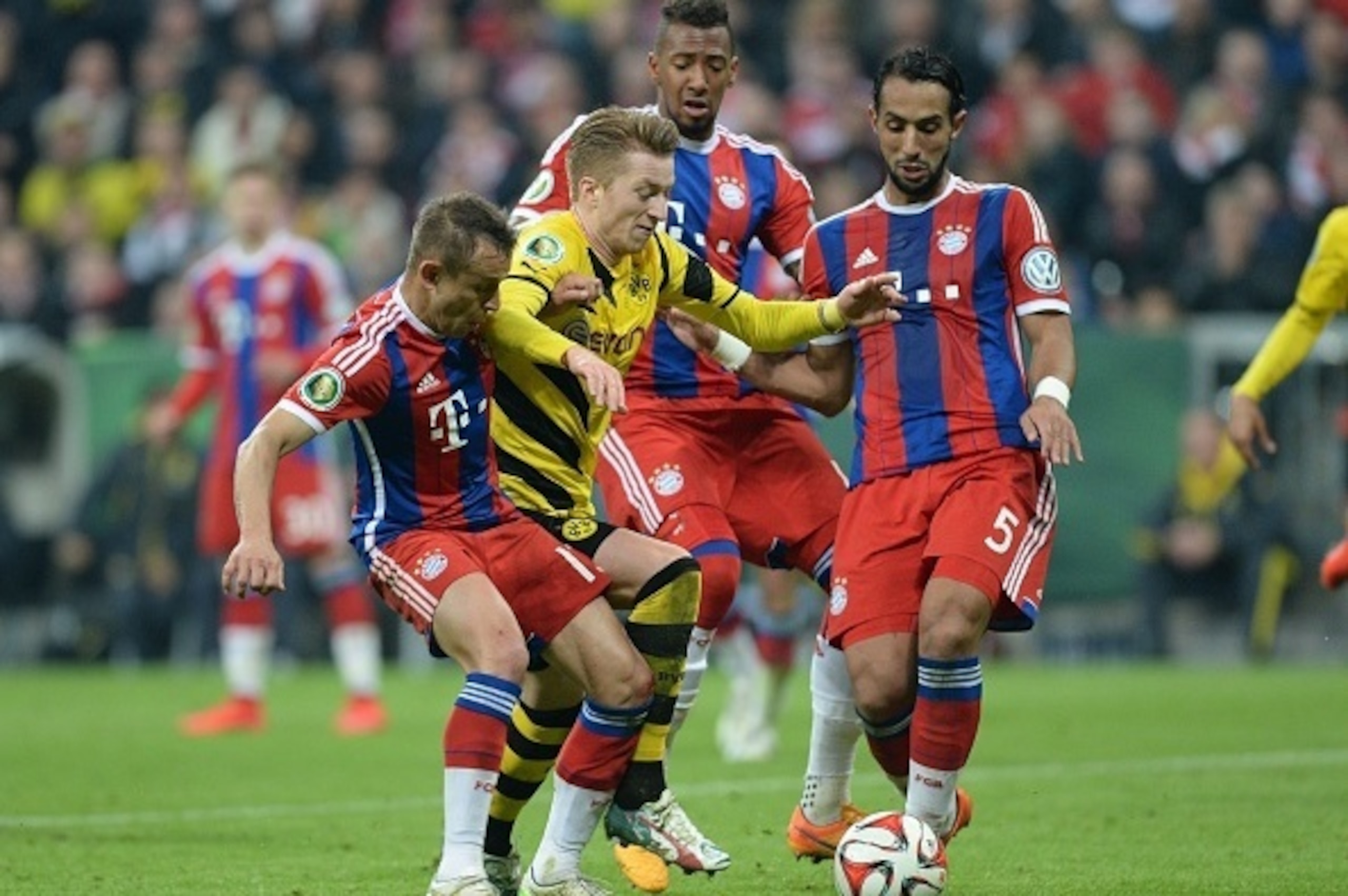
In a back two, though, Martinez has some weaknesses. His ability to man-mark isn't the most refined, and although he is powerful and tall, he isn't exactly the most fleet-footed defender in the world. As such, he can be exposed. But in possession, it must be said that he's a very good option. And his ability on set plays is brilliant; his goal against Schalke in November was a crucial one for Bayern.
That leaves Benatia, a player who—due to injuries—has only played (according to Transfermarkt) 608 minutes this season. The Moroccan may have been on the pitch for the debacle that was a 3-1 loss to Borussia Monchengladbach, but so was Boateng. That aside, he's played quite well, as he did in the previous campaign.
Benatia is a pure defender; he's not great on the ball, and his strengths are in defending. He has pace on a par with that of Boateng and is the same height (6'3") as Martinez. But he's stronger than the Spaniard and extremely tenacious in his defensive duties. He's the most aggressive defender in the Bayern team, and his marking and tackling technique are superlative among his team-mates.
Although Martinez is a good alternative, Benatia is the kind of player Bayern would want to use against an elite striker. He's the better defender, and what he lacks on the ball can be covered by Boateng.
A few years ago, a player like Martinez may have been a better option, but Boateng truly has developed into a quality player in the role of "quarterbacking" play from the back.
Form and fitness of course play a key role in who plays in the current Bayern team, and frequent injuries to Badstuber, Benatia and Martinez have meant that Guardiola has rarely had a choice. But if Bayern are facing a top team, he'll want to have Boateng and Benatia fit to start as his centre-back pairing. On form, they may be the world's best.
.jpg?w=2560 "Rams Raiders Football")


.jpg?w=2560 "Rodgers Iced Out on Plane 💎")

.jpg?w=2560 "🚨 Week 8 AP Top 25 Poll")
.jpg?w=2560 "Fantasy Waiver Wire Stars 🤩")
.jpg?w=2560 "Packers Safety Slams Refs 🤬")
