
The Complete Guide to UFC Fight Night 81: Dillashaw vs. Cruz
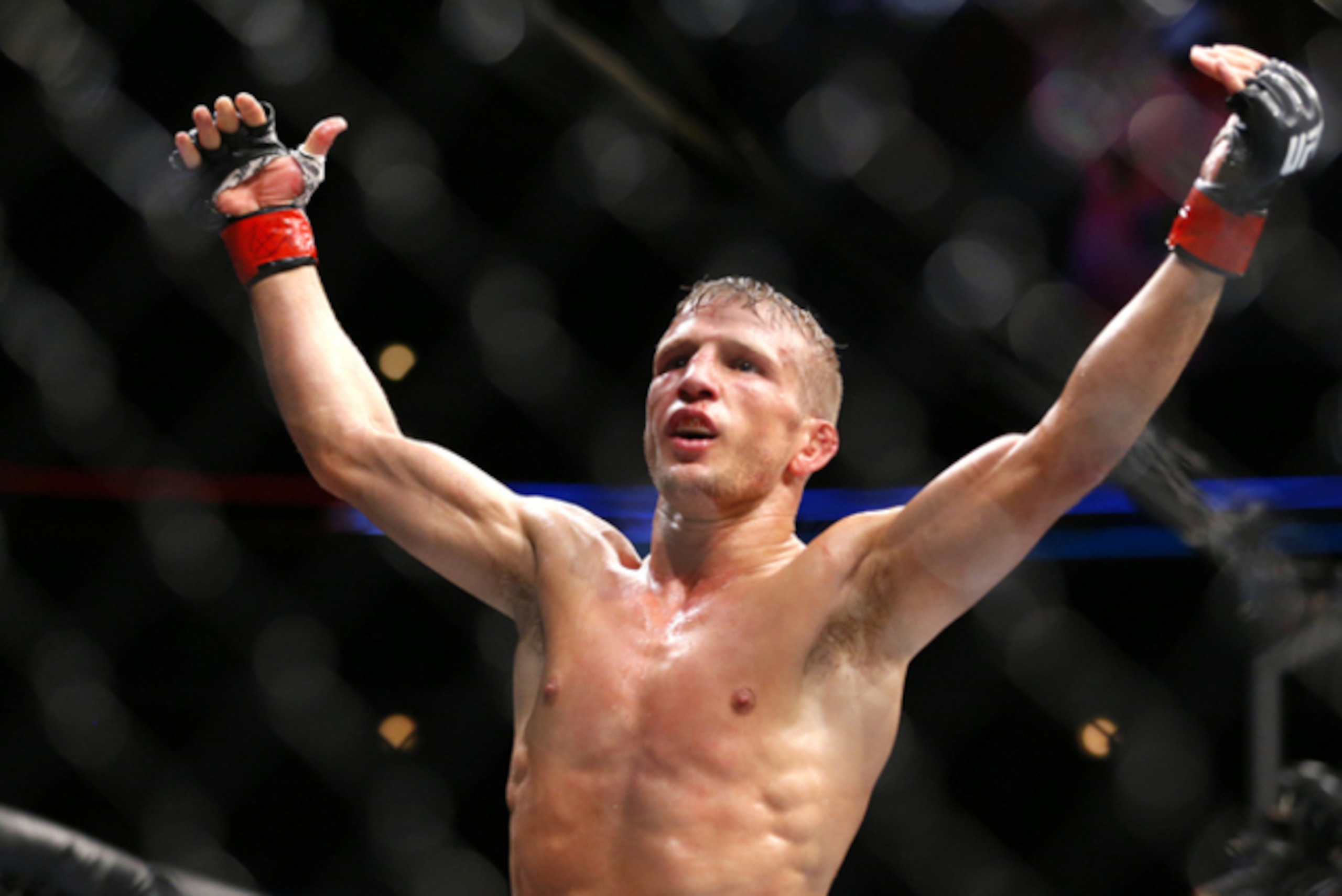
The UFC heads to Boston and Fox Sports 1 on Sunday night for a fight card meant to take advantage of the advertising boost provided by the NFL playoffs. In the main event, which figures to be the best fight the promotion has ever put on the network, former bantamweight champion Dominick Cruz looks to regain the belt he never actually lost against reigning titleholder T.J. Dillashaw.
It's hard to overstate what a great fight this is. Cruz was a revolutionary fighter in his prime, and he pioneered both the mastery of transitions and the confusing footwork that many fighters now use extensively. Dillashaw, for example, began using that style of movement when preparing Urijah Faber for a title rematch with Cruz that never came.
The fight has several different compelling narratives: old school versus new; former champion versus the current one; Cruz's attempt to make a comeback from a series of devastating injuries; and one more iteration of the ongoing feud between Cruz and Faber, though the last has lost some sting since Dillashaw's departure from Team Alpha Male.
The bantamweight division has waited a long time for this, and there's little chance the bout will disappoint. It's a fascinating fight in the cage, and the implications are every bit as intriguing.
The rest of the card is excellent. Former lightweight champion Anthony Pettis takes on Eddie Alvarez in a barnburner of a co-main event with huge implications in a division that now includes Conor McGregor. Travis Browne and Matt Mitrione will put on a heavyweight banger, and the main card opens up with a fun lightweight scrap between Ross Pearson and Francisco Trinaldo.
The undercard was outstanding until a couple of weeks ago, but injuries and visa issues have removed much of the appeal. The highlight is a great matchup between Daron Cruickshank and Paul Felder on Fight Pass.
Let's take a look at each individual matchup, complete with breakdowns and predictions for the entire UFC Fight Night card.
The Fight Pass Prelims
1 of 6
Light Heavyweights
Francimar Barroso (17-4; 2-1 UFC) vs. Elvis Mutapcic (15-3; 0-0 UFC)
A low-level light heavyweight battle opens the show on Fight Pass. Brazil's Francimar Barroso was scheduled to face the debuting Abdul-Kerim Edilov, a relative of Chechen leader Ramzan Kadyrov, but Edilov pulled out and Iowa's Elvis Mutapcic stepped up a weight class on short notice to replace him. In his most recent outing, Barroso defeated Ryan Jimmo after landing a monstrous shot to the groin.
Barroso is thoroughly unspectacular. He has some power in his hands and does solid work from top position but is an abysmal offensive wrestler and is mostly content to grind away in the clinch. Mutapcic has big power in his hands, efficient defense and generally solid wrestling skills.
Unless Barroso can simply grind this out in the clinch through his substantial size advantage—the Brazilian is a big light heavyweight and Mutapcic isn't a big middleweight—the American should eat him up on the feet. The pick is Mutapcic by knockout in the third round.
Bantamweights
Rob Font (11-1; 1-0 UFC) vs. Joey Gomez (6-0; 0-0 UFC)
Joey Gomez steps up on late notice to replace Patrick Williams against Rob Font in what should be an exciting bantamweight scrap. Font debuted 18 months ago with a devastating knockout win over George Roop; for his part, all six of Gomez's wins are by first-round knockout.
Both men are strikers. Font is a great athlete with big power in his hands, and he combines forward-moving punching combinations with sharp kicks. Boxing is the strength of Gomez's approach, and he throws an educated jab and crisp, clean combinations with his hands.
Font is thicker and hits a little harder, though his long layoff is a concern. The pick is Font by decision.
Featherweights
Charles Rosa (10-2; 1-2 UFC) vs. Kyle Bochniak (6-0; 0-0 UFC)
Boston's Charles Rosa draws his second late replacement as Kyle Bochniak makes a short-notice debut in place of Augusto "Tanquinho" Mendes, who replaced Jim Hettes. Rosa has sandwiched losses to Yair Rodriguez and Dennis Siver around a submission win over Sean Soriano, while Bochniak won a fight less than two weeks ago on an AXS TV card.
Rosa is a fun, aggressive fighter with a kick-heavy arsenal on the feet, solid takedowns and an attacking submission game on the mat. He's an abysmal defensive fighter, though, and is hittable on the feet and easy to drag to the mat. Bochniak is aggressive and has power in his strikes to go along with opportunistic submissions.
While Bochniak is promising, this is Rosa's fight to lose, and he should find an opportunity to sneak in a choke in a scramble. Rosa by submission in the second round is the pick.
Light Heavyweights
Ilir Latifi (11-4, 1 N/C; 3-2 UFC) vs. Sean O'Connell (17-6; 2-2 UFC)
These middle-of-the-road light heavyweights meet in a potentially fun matchup. Ilir Latifi lost to the debuting Jan Blachowicz in October 2014 but got back on track in July with a first-round knockout over Hans Stringer. Sean O'Connell has won two in a row—a fight of the night honor over Matt van Buren and a first-round finish of Anthony Perosh.
Latifi is reasonably well-rounded. He has power in his hands and an increasing amount of craft on the feet, but the meat of his game lies in his strong takedowns, top control and submissions in transition. O'Connell is a come-forward banger who relies on his durability, cardio and strong clinch game.
This is probably Latifi's fight to lose. He's a better athlete, a more technical wrestler and has more power in his strikes, and that combination should get it done. Latifi by decision is the pick.
Lightweights
Paul Felder (10-2; 2-2 UFC) vs. Daron Cruickshank (16-7, 1 N/C; 6-5, 1 N/C UFC)
The UFC's decision to step up its Fight Pass game has led to an excellent headlining bout as lightweight action fighters Paul Felder and Daron Cruickshank meet in what promises to be an exciting scrap.
Philadelphia's Felder won a pair of fights in impressive fashion to begin his UFC tenure but has since dropped consecutive competitive decisions to Edson Barboza and Ross Pearson. Cruickshank, a native of Wayne, Michigan, has lost two in a row by submission to Beneil Dariush and then James Krause.
Cruickshank will probably be cut with a loss, and while Felder likely has a little more leeway, he too is close to the edge. Either way, it should be a barnburner of a fight between two talented strikers.
Felder is a smooth, technical striker. A crisp jab gauges the distance at range and draws out a response from his opponent, and then the skilled counterpuncher goes to work with single shots and combinations. Flashy spinning kicks, sharp stepping knees and vicious elbows in the clinch make up the rest of his arsenal, and he has the takedown defense to make his game work.
The Michigan native mostly prefers to strike as well. He has a background in traditional martial arts, and it shows in his yen for throwing ax, side and a variety of spinning kicks in addition to a steady diet of punching combinations and round kicks. He mixes things up with the occasional takedown.
This is an intriguing matchup that's closer than the minus-260 line on Felder indicates. Cruickshank is tricky and talented and works at a pace that could give Felder problems. It's more likely, however, that the crisper Felder finds room for his counters and beats up Cruickshank in the clinch.
The pick is Felder by decision.
The Fox Sports 1 Prelims
2 of 6
Featherweights
Maximo Blanco (12-6-1, 1 N/C; 4-3 UFC) vs. Luke Sanders (10-0; 0-0 UFC)
Resurrection Fighting Alliance champion Luke Sanders steps in on short notice and moves up to 145 pounds to face the dangerous Maximo Blanco in place of Dennis Bermudez. Blanco has been up and down but is now riding a three-fight winning streak, the most recent a knockout over Mike de la Torre in July.
Sanders isn't great at any one thing, but he's strong, athletic and a master of transitions. Big takedowns, top control and a knack for sneaking in shots as his opponent stands up or breaks the clinch are his specialty. Blanco is a great athlete and a lethal striker with strong wrestling to boot but consistently makes boneheaded decisions in the cage.
The 5'8" Blanco will be bigger and is both more technical and more dangerous on the feet, but Sanders, 5'6", is durable and should be able to weather the storm. Sanders by decision is the pick.
Lightweights
Chris Wade (10-1; 3-0 UFC) vs. Mehdi Baghdad (11-2; 0-0 UFC)
After Mairbek Taisumov failed to get a visa, French-Algerian and The Ultimate Fighter 22 competitor Mehdi Baghdad comes in on short notice to face New York's Chris Wade. The American is 3-0 in the UFC, the most recent win a decision over Christos Giagos in June. Baghdad came up short against Julian Erosa on TUF, and prior to that he was the RFA lightweight champion.
Wade is a wrestler first and foremost. Although he's getting better at range, with increasingly smooth combination work, the core of his approach is a strong clinch game that features takedowns and grinding control. Baghdad is a pure striker and a good one. His low kicks are vicious, and his clinch knees and elbows are dangerous, but he often slips into periods of inactivity.
The American should take this handily. While Baghdad's clinch game could be a problem, it's more likely Wade gets him to the floor, works him over and grinds it out before grabbing a choke. Wade finishes it by submission in the second.
Light Heavyweights
Tim Boetsch (18-9; 9-8 UFC) vs. Ed Herman (22-11, 1 N/C; 9-7, 1 N/C UFC)
Given that both fighters have 17 UFC bouts under their belts, it's strange that they have yet to meet, but here we are. Tim Boetsch and Ed Herman are both coming off losses and need a win to maintain their long and productive runs in the promotion; Dan Henderson knocked out Boetsch in June, while Derek Brunson finished Herman a year ago. Both fighters' losses came inside the first round.
Boetsch's game is all about his physicality. He has some pop in his hands at range but does his best work in the clinch, where he hits strong throws and dirty boxes nicely. Herman is glacially slow on the feet but durable and willing to throw. He, too, is strong in the clinch and is a submission threat on the mat to boot.
This is Boetsch's fight to lose. He's stronger, faster and a bit better at range, while it should be no worse than a wash in the clinch. Boetsch takes it by decision.
Welterweights
Patrick Cote (22-9; 10-9 UFC) vs. Ben Saunders (19-6-2; 7-3 UFC)
Veteran welterweights meet as Canada's Patrick Cote draws the American Ben Saunders in a fun matchup at 170 pounds. Cote is on a nice late-career run at the moment and has won two in a row over Joe Riggs and Josh Burkman. Since returning to the UFC in August 2014, Saunders has piled up three consecutive wins, the most recent an entertaining decision over Kenny Robertson.
The Canadian has rounded out his game nicely. He used to rely entirely on his powerful right hand and still does so more than he probably should, but takedowns, a craftier jab and better instincts on the counter make him more of a threat. Saunders is a rangy, active striker with hard kicks, sharp knees in the clinch and a wicked guard.
This should come down to volume, and Saunders simply does more than Cote. The Canadian's power is a concern, and Saunders is neither defensively slick nor terribly durable, but it's more likely that he outpoints Cote.
Saunders by decision is the pick.
Ross Pearson vs. Francisco Trinaldo
3 of 6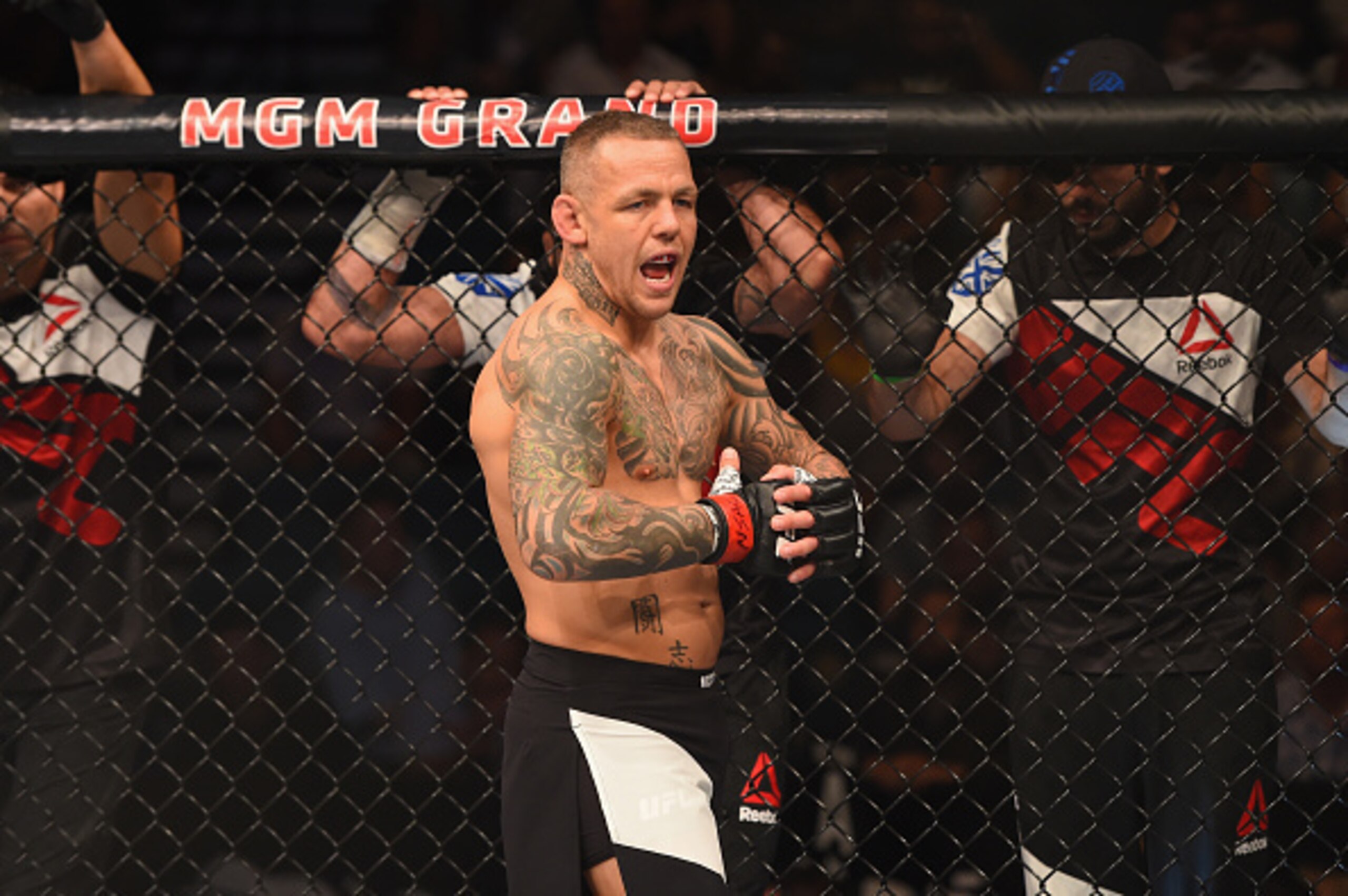
Lightweights
Ross Pearson (18-9, 1 N/C; 10-6, 1 N/C UFC) vs. Francisco Trinaldo (18-4; 8-3 UFC)
Veteran strikers meet in a sneaky-good matchup at 155 pounds. Ross Pearson won The Ultimate Fighter: U.S. vs. U.K. back in 2009 and has been a promotional staple since then, notching 17 fights under the UFC banner. He has alternated wins and losses of late, taking a decision from Paul Felder after losing one to Evan Dunham.
Francisco Trinaldo was a competitor on the first season of TUF Brazil and is on a roll at the moment, racking up four straight wins. He knocked out TUF Nations winner Chad Laprise in August and TUF Smashes winner Norman Parke in May.
The winner isn't exactly in the title hunt in the stacked lightweight division but will cement his place as an action-fighting gatekeeper and likely take home a post-fight bonus check.
Pearson is a smooth and technically sound striker. Although he throws the occasional kick, his hands are the centerpiece of his approach. A stinging jab at range helps to score, gauge the distance and draw out a response, and once he has his opponent reacting, Pearson is in business.
The Englishman specializes in working in the pocket and uses his crisp, consistent head movement to load his hips for his preferred counters. His right hand is dangerous, and he excels at changing levels and dropping it as his opponent throws high. The left hook, however, is Pearson's money punch. He excels at throwing it after a body shot or as a counter to his opponent's right hand, and it packs a wallop.
All of these are available as full-beat counters, as when he changes levels and rolls under his opponent's strikes; as half-beat counters, when he slips and then returns; or same-time counters as his opponent throws.
There are weaknesses to this approach, though. Pearson is accurate but doesn't throw all that much volume, particularly if his opponent isn't active. The fact that he likes to operate in the pocket means he's there to be hit, even if his head movement and other defense is solid.
The rest of Pearson's game is steady. He defends takedowns well and can hit the occasional single or double of his own when the mood strikes, which isn't often. From top position he mostly looks to control.
The 37-year-old Trinaldo is just now coming into his own as a fighter. An exceptional athlete with quickness and big power in his hands, it has taken the Brazilian a while to polish and craft his game into something competitive at the higher levels of the division. Under the tutelage of Andre Dida, he has become a much more technically sound and therefore dangerous striker.
The southpaw probes with a consistent jab and then picks his spots to commit to a hard straight left or overhand. He does an excellent job of hiding slashing low kicks behind his hands and steps into them for extra power and good defense. While not a defined counterpuncher, he's happy to exchange in the pocket, and his power makes him lethal there.
Trinaldo's improvements don't boil down to any one thing. He takes cleaner angles, picks better shots and is more efficient with his mechanics.
Although he's only an average wrestler both offensively and defensively, the Brazilian is a monster from top position. His ground striking packs brutal power, he passes smoothly and can hit an array of topside submissions, with a preference for the arm triangle.
Betting Odds
Pearson -150, Trinaldo +130
Prediction
While Trinaldo's power and increasing craft is a concern, Pearson should be the more technically sound striker, and he has the superior wrestling skills. The Brazilian should give him plenty to work with on the counter as well, which should make Pearson's occasional lack of volume less of a problem.
The pick is Pearson by exciting and competitive decision.


Travis Browne vs. Matt Mitrione
4 of 6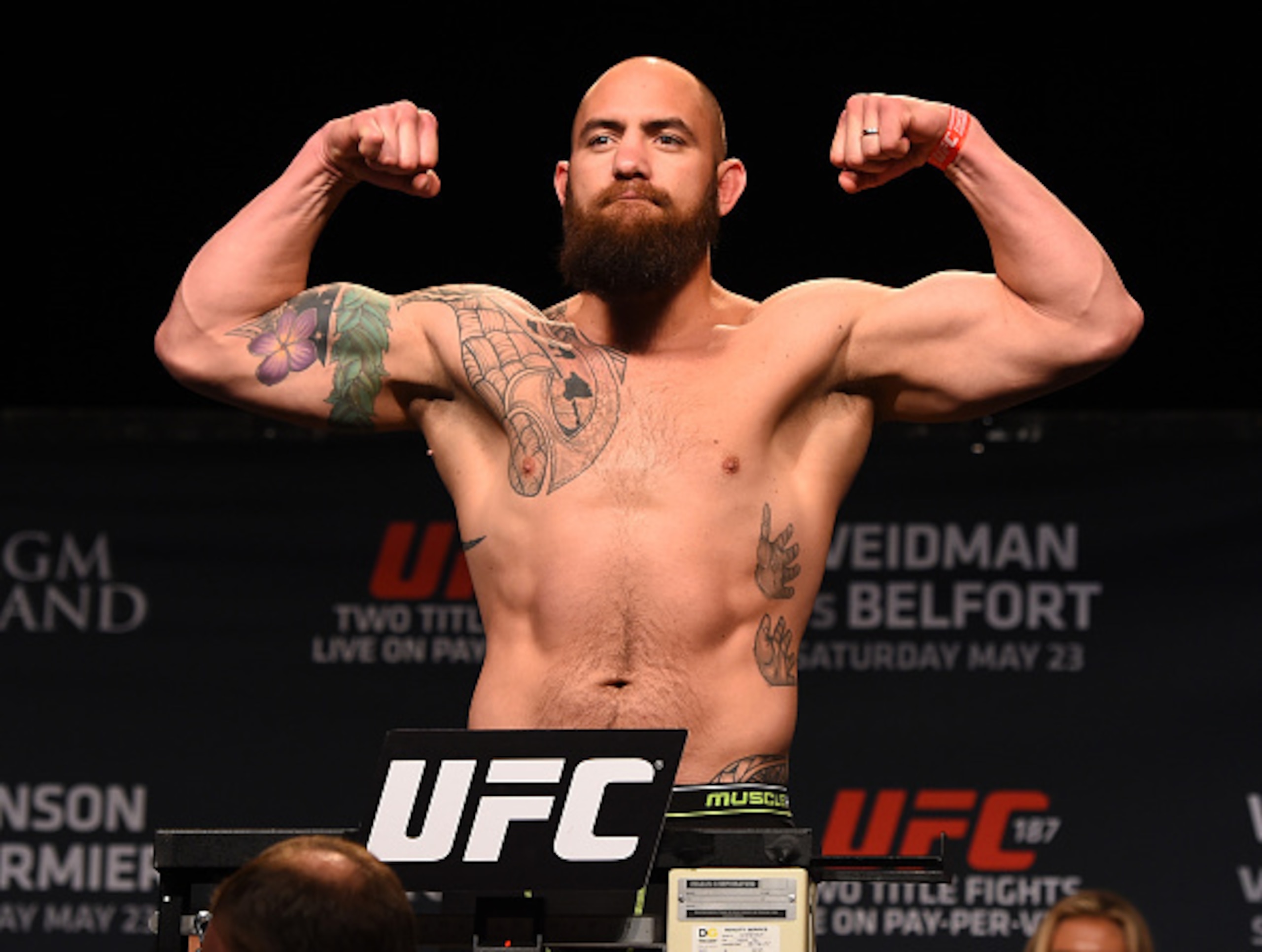
Heavyweights
Travis Browne (17-3-1; 8-3-1 UFC) vs. Matt Mitrione (9-4; 9-4 UFC)
Veteran heavyweights meet in what promises to be a banger of a matchup. Travis Browne has hit a wall against the division's elite, sandwiching losses to Fabricio Werdum and Andrei Arlovski around a one-sided win over Brendan Schaub. Matt Mitrione had a three-fight winning streak that culminated in a knockout win over Gabriel Gonzaga snapped by Ben Rothwell in June.
Neither fighter is likely to compete for a title, but this is the kind of slugfest that keeps heavyweights in the UFC year in and year out.
Mitrione is essentially a pure striker. The former NFL player is an outstanding athlete who moves smoothly on his feet, constantly circling, angling and looking for the southpaw's outside angle, where his lead foot is outside his opponent's. This shortens the distance for Mitrione's potent straight left and disguises his right hook.
Those two punches are Mitrione's bread and butter, along with a right jab he could stand to use more often. He almost always throws in combination and works at a great pace, while a crushing left kick plays off the threat of his hands. All of his strikes carry fight-ending power.
That's essentially the extent of Mitrione's game. His defensive wrestling has generally been excellent, but he offers nothing from his back and is vulnerable to submissions in transition.
Like Mitrione, Browne is a serious athlete and physical specimen who prefers to strike. The 6'7" Hawaiian works behind a long jab that he mixes between the head and body and then follows with a right hand that carries vicious force. As time has passed, he's added more craft to his game, including some acumen on the counter. Hard round kicks and the occasional more exotic strike provide some variety.
In general, however, Browne is a slugger, and when the going gets tough he's willing and able to simply throw bombs. His power and length serve him well there, and he's been quite durable. He isn't a defensive mastermind, however, and relies on his power and athleticism rather than serious technical craft.
The clinch was formerly a weak spot for Browne, but he has grown increasingly strong there, with nice knees and the ability to break off and create space when he wants to. He has historically excelled at defending takedowns, especially against the fence, and can land vicious elbows as his opponent tries to get him to the mat.
The occasional takedown of his own and a powerful if limited top game round out Browne's arsenal.
Betting Odds
Browne -150, Mitrione +130
Prediction
Browne is bigger, longer, packs more power and is likely more durable, but Mitrione is a little sharper technically. This is a coin-flip, as are many heavyweight fights, but the pick is Browne by knockout in the first round.
Anthony Pettis vs. Eddie Alvarez
5 of 6
Lightweights
Anthony Pettis (18-3; 5-2 UFC) vs. Eddie Alvarez (26-4; 1-1 UFC)
Former lightweight champion Anthony Pettis returns to action for the first time since losing his title to Rafael dos Anjos last March. He draws former Bellator lightweight champion Eddie Alvarez, who has had mixed results since arriving in the UFC 15 months ago.
Prior to losing his belt to dos Anjos, Pettis had been on a five-fight winning streak, the last four inside the distance. He finished Joe Lauzon with a head kick and then eviscerated Donald Cerrone's liver before hitting a slick armbar on Benson Henderson to win the title and guillotining Gilbert Melendez in his lone defense. Dos Anjos pummeled him badly over five rounds, however, and Pettis is now at a crossroads.
Alvarez entered the UFC with hype behind him after a long and productive career around the world. Cerrone took a clear but competitive decision in Alvarez's promotional debut, however, and his return engagement was a tight and somewhat underwhelming decision win over Melendez.
The winner will have a good claim on a money fight or potentially even a title shot. The UFC would love to book Anthony Pettis against Conor McGregor whether the Irishman loses to or beats Rafael dos Anjos, and both men winning would be a bigger fight. For Alvarez, this is a chance to prove he truly belongs among the world's elite lightweights.
Pettis has lethal finishing ability on the feet and on the ground. While his defeat at the hands of Rafael dos Anjos exposed some substantial issues with his game, Pettis' dedication to fight-ending offense hasn't changed, and he remains dangerous, extremely athletic and dynamic.
Striking is Pettis' wheelhouse. He's a defined out-fighter whose game revolves around landing brutal kicks at range, and the rest of his arsenal exists to make that happen. A low-output fighter who rarely wins on volume, Pettis works out of both stances at range, flicking out kicks and then dropping hard punching combinations when his opponents try to pressure.
When the moment is right, Pettis unloads a series of potent kicks to the body or a well-timed and disguised high kick. Few in MMA are better at setting up their preferred kicks, and he delivers them with unreal speed and power. The occasional spinning kick and flying knee add some variety to his arsenal.
The problem with all of this is footwork. Pettis relies on the ferocity of his kicks and punching combinations to get his opponent's respect and create space and doesn't have the tight, precise movements necessary to keep his back off the fence when pressured. Moreover, his head movement and defense are somewhat lacking.
In short, aggressive opponents who are willing to eat a shot or two have given him problems his entire career. This is a fundamental issue with Pettis' game. It's unlikely to go away, but luckily there are few fighters who can exploit it.
Wrestling isn't his strongest suit, but he's an above-average defender of takedowns and can hit the occasional single and double when the mood strikes. He rarely looks to be in the clinch and is generally good at escaping.
On the mat, Pettis is an aggressive submission threat. He looks to lock in a choke or armbar the second his back hits the floor, and failing that, attempts to create a scramble. His submission chains are creative and ultra-quick, and he excels at creating space and getting to dominant positions in transition.
On the downside, strong top-control grapplers have controlled him, and he's better in short bursts than in extended grappling scenarios.
Alvarez is versatile, skilled and experienced. Boxing is the strength of his game, and his quick, powerful hands work in smooth combinations. He throws a crisp, lovely jab that he mixes up to the head and body, and that serves to pull his opponent's hands out of position and gauge the distance. Sequences of power punches follow, again shifting between the head and body for the sake of variety and attrition.
Although he likes to exchange in the pocket from time to time and has the power to hurt his opponent when he chooses to do so, Alvarez mostly likes to stick and move on the outside. His footwork is smooth and he takes solid angles, but he relies on that for defense; his head movement comes and goes, and in general he's hittable. While he has only been knocked out once, many opponents have dropped him.
The occasional kick at all levels adds some variety, but Alvarez mostly throws hands. He works at a good if not outstanding pace.
The rest of Alvarez's game ranges between solid and excellent. He's a good clinch fighter and dirty boxer, extremely competent as a defensive wrestler and hits the occasional single and double to mix things up. The knee tap is his best takedown, and he does an excellent job of using his strikes to set up his shots. From top position, he mostly controls and looks to land a few hard shots.
Betting Odds
Pettis -345, Alvarez +285
Prediction
As the betting odds indicate, this matchup favors Pettis by a substantial margin. While Alvarez is a technically sound and dangerous striker, he doesn't have the kind of aggressive pressure game that has troubled the former champion in the past. With space to operate in the middle of the cage, there's little question as to who is more dangerous.
While Alvarez's wrestling game could give Pettis issues, this mostly profiles as a striking matchup, and in that scenario it's hard not to favor Pettis. Alvarez's ability to recover when dropped has historically been outstanding, but that can't last forever.
The pick is Pettis by knockout in the second round.
T.J. Dillashaw vs. Dominick Cruz
6 of 6
Bantamweight Championship
T.J. Dillashaw (12-2; 8-2 UFC) vs. Dominick Cruz (20-1; 3-0 UFC)
Former bantamweight champion Dominick Cruz returns to action with a shot at regaining the title he never lost. T.J. Dillashaw now holds the belt after winning it against Renan Barao, whose interim championship had been upgraded to the full belt after yet another Cruz injury postponed the planned unification in February 2014.
Cruz finally got back in the Octagon in September 2014 and destroyed the durable veteran Takeya Mizugaki in 61 seconds. Prior to that, he defeated Demetrious Johnson in the longtime flyweight champion's last bout at 135 pounds in October 2011. Urijah Faber fell to him in July of that year in Cruz's first UFC appearance. Scott Jorgensen and Joseph Benavidez were the former champion's two victims in his WEC title defenses.
Dillashaw was the runner-up on The Ultimate Fighter 14, falling to the punches of John Dodson at the show finale. Since then he has developed into one of the most diverse and dangerous fighters in the sport under the close tutelage of Duane Ludwig.
The champion captured the title from Barao in May 2014 in one of the biggest upsets in MMA history. Defenses against Joe Soto and Barao again intervened, but now he'll take on Cruz in a long-awaited matchup.
This is the best possible fight in the bantamweight division right now. Moreover, it offers Cruz a chance at reclaiming what was once his after one of the worst stretches of injuries any fighter has ever seen. It's old school vs. new school and former champion vs. current champion. It doesn't get any better than this.
It's been so long since Cruz has fought more than a brief stretch that there are some misconceptions floating around about his game. Dynamic lateral movement, stance-switching and unpredictable footwork are Cruz's hallmarks and what he's best known for, and with good reason, but he's not primarily a striker. Instead, the former champion is a master of the transition, and his footwork is one constituent part of that.
The primary purpose of Cruz's movement is defensive. He's a pure out-fighter who never, ever wants to be in the pocket and frankly can't understand why anyone would want to be. He darts in and out, landing a crisp jab, darting right hand or chopping kick and then exits while moving his head.
Long combinations would give his opponent opportunities to counter, and Cruz rarely throws more than one or two strikes at a time before getting out of the way.
Because he's so focused on entering on an angle and then getting out, there isn't much pop behind Cruz's strikes. He often overreaches and his body weight is moving in a different direction than the strike, which robs him of power. That isn't really the point, though; instead, Cruz is looking to pile up volume and wear his opponent down.
The confusion Cruz's footwork and movement generate serve to open up the real meat of his game. He's big, strong and a skilled technical wrestler. His ability to draw out half-hearted counters and find clean angles allows him to get deep onto his opponent's hips with ease, and from there he chains together slick sequences of singles, doubles, knee taps, trips and throws in the clinch.
Straightforward top control isn't Cruz's game. After getting his opponent onto the mat, the former champion generally lets him move, and then tries to pass to a dominant position or land a hard series of strikes in the scramble. When his opponent tries to wrestle, Cruz hits him; when his opponent defends the strikes, Cruz goes back to wrestling.
It's a potent combination, and it's the meat of Cruz's game. If forced to strike, Cruz's movement and rhythm can be timed and countered, and quick opponents can force him straight back toward the fence. When the different pieces of his game work together, however, Cruz is nearly unstoppable.
In many ways, Dillashaw's game resembles his opponent's. This similarity is mostly superficial, though. While Dillashaw employs the same kind of confusing lateral movement, stance-switching and constant search for advantageous angles, he's far more offensively focused, dangerous and active as a striker.
While their footwork looks similar, Dillashaw uses it in a far more diverse fashion. Like Cruz, he can use it to escape and stay out of danger, but he's more likely to use his stance-switches to cover distance quickly as he attacks and forces his opponent toward the fence.
He keeps moving in the pocket, constantly searching for small angles from which to maintain a devastating pace. If his opponent tries to pressure, Dillashaw is happy to escape, but instead of resetting as Cruz would, he plants his feet and unloads a hard counter combination from either stance.
Combinations of five, seven or even 10 or more strikes are common. He picks them organically, working around, under and through his opponent's guard. A tapping series of left or right jabs draws his opponent's gloves forward, and then Dillashaw drops a hook around the side and follows with a low kick. He works all three levels at one of the quickest paces in the sport.
Because his footwork is so good and so versatile, Dillashaw is always in range to land something. He never has to leap in to close the distance; a short step suffices. When you don't have to waste time rushing in, there are far more opportunities to land volume. If that weren't enough, he also has solid pop in his strikes and can finish with a sneaky high kick at any time.
Although he rarely uses it, Dillashaw is an accomplished wrestler. Despite his relative lack of size, he's surprisingly strong in the clinch and controls well against the fence. He has never officially been taken down in a fight, and his command of distance and angles makes it difficult to get a clean shot on his hips. If planted on the mat, his momentum never stops as he hips out and gets back to his feet.
Clean, well-timed doubles, singles and knee taps form the majority of his takedown arsenal. He isn't much of a control specialist on the mat, instead preferring to let his opponent move and then looking to take the back in transition. Mat wrestling was his specialty in college, and that combines beautifully with a scramble-oriented grappling style in MMA.
In sum, Dillashaw is a dangerous fighter with legitimate finishing skills on the feet and on the ground who works at one of the best paces in the sport.
Betting Odds
Dillashaw -140, Cruz +120
Prediction
Dillashaw is, in many ways, an updated and upgraded version of Cruz. Their footwork and movement is similar, but Dillashaw both throws more volume and is much, much more dangerous on the feet. Cruz's strength in transitions was revolutionary and ahead of the game in 2011 but is now more or less standard fare in every elite MMA gym.
Cruz has torn both ACLs and his groin. For a fighter who depends so much on his movement and ability to keep a pace, that's disastrous. Sixty-one seconds against the skilled but limited gatekeeper Mizugaki more than 15 months ago isn't enough to be sure that Cruz can still make his game work against elite opposition.
And make no mistake: Dillashaw is elite opposition. It's unlikely that Cruz could win a pure striking matchup, so he'll need to use his takedowns to freeze Dillashaw and limit his ability to throw combinations. The only problem with that strategy is Dillashaw's wrestling acumen and his own skill in the transitions, where he's no slouch.
Cruz will have to be perfect for 25 minutes, given that he probably isn't going to find a way to finish Dillashaw. That's a tall order against the younger, less worn, more active fighter who isn't going to get tired. The pick is Dillashaw by 49-46 decision.
All odds via Odds Shark.
Patrick Wyman is the Senior MMA Analyst for Bleacher Report and the co-host of the Heavy Hands Podcast, your source for the finer points of face-punching. He can be found on Twitter.

.jpg?w=2560 "Texans-Mixon Released Football")
.jpg?w=2560 "2 NFL Officials Suspended")
.jpg?w=2560 "Viral Rams Coach Vid 🖕")



.jpg?w=2560 "Mahomes' Wife Trolls Kubiak 💀")