
Biggest Takeaways from the Minnesota Vikings' Week 13 Loss
Hurting on defense and mostly noncompetitive on offense, the Minnesota Vikings were roughed up by the visiting Seattle Seahawks in Week 13—losing by a 38-7 final at TCF Bank Stadium on Sunday afternoon.
After 12 games, the Vikings are now 8-4.
Sunday's highly anticipated matchup was a disaster from start to finish, as the Seahawks jumped out to a 21-0 lead at halftime and eventually held a 35-0 advantage in the fourth quarter. It took a Cordarrelle Patterson kickoff return for a touchdown for the Vikings to avoid a shutout.
Minnesota was outgained by 308 yards in a game that was rarely competitive.
Here are a few takeaways from the Vikings' Week 13 loss to Seattle.
One-Dimensional Offense
1 of 5
The Vikings are frighteningly one-dimensional on offense. It's the one thing keeping a good Minnesota team from being a great one.
Take away No. 28, and you've stopped the 2015 Vikings. It's really that simple.
When Adrian Peterson rushes for fewer than 98 yards this season, Minnesota is averaging just 11.8 points, with one win in five games.
“Give credit to Seattle," Peterson said, via the team's official site. "They did a great job of coming in and forcing us to do things differently.”
Peterson rushed for just 18 yards. The passing game couldn't pick up the pieces, as quarterback Teddy Bridgewater threw for only 118 yards on 28 attempts. The Vikings didn't score on offense, failing to reach the red zone in a game for the first time this season.
Peterson is having a great year, but good teams can scheme him out of games. Not having a counterpunch on offense is killing the Vikings against the best of the best in the NFL.
Difficult to Judge the Defense
2 of 5
The Vikings gave up season highs in points (38), total yards (433), rushing yards (171) and first downs (25). Seattle averaged 6.6 yards per play, converted nine of 13 third downs and scored touchdowns on three of its first four red-zone trips.
It was hard to recognize the Vikings defense on Sunday, probably because a few of the most important faces weren't on the field.
Nose tackle Linval Joseph didn't play, and linebacker Anthony Barr and safety Harrison Smith left the game with injuries. It wouldn't be difficult to argue that Minnesota's three most important defenders in 2015 have been Joseph, Barr and Smith. Take away that trio, and everything falls apart.
The Seahawks averaged 4.8 yards per rush, while rookie Thomas Rawls rushed for 101 yards. The Vikings managed just one sack on Russell Wilson, who gained 325 total yards and produced four scores.
The Vikings defense didn't play well enough to win on Sunday. But that's what happens in the NFL when you take away a unit's most important player at every defensive level.
Vikings Fighting Penalties and the Officials
3 of 5
The Vikings didn't lose on Sunday because of officiating. Referees are never the root cause for a 31-point loss. However, the group wearing black and white did Minnesota no favors.
A first-half sack of Russell Wilson was wiped away because of a ridiculous unnecessary roughness penalty on Brian Robison. It was probably a four-point call, as the Seahawks eventually scored a touchdown. Later, officials twice flagged the Vikings on phantom offensive pass-interference penalties.
Overall, Minnesota finished with nine penalties for 95 yards. Over the last three games, the Vikings have tallied a crazy 26 penalties for 258 yards. Flags happen, but it's tough to play winning football with that many mistakes.

.jpg?w=2560 "Rams Raiders Football")
Teddy Regressing Behind Vikings O-Line
4 of 5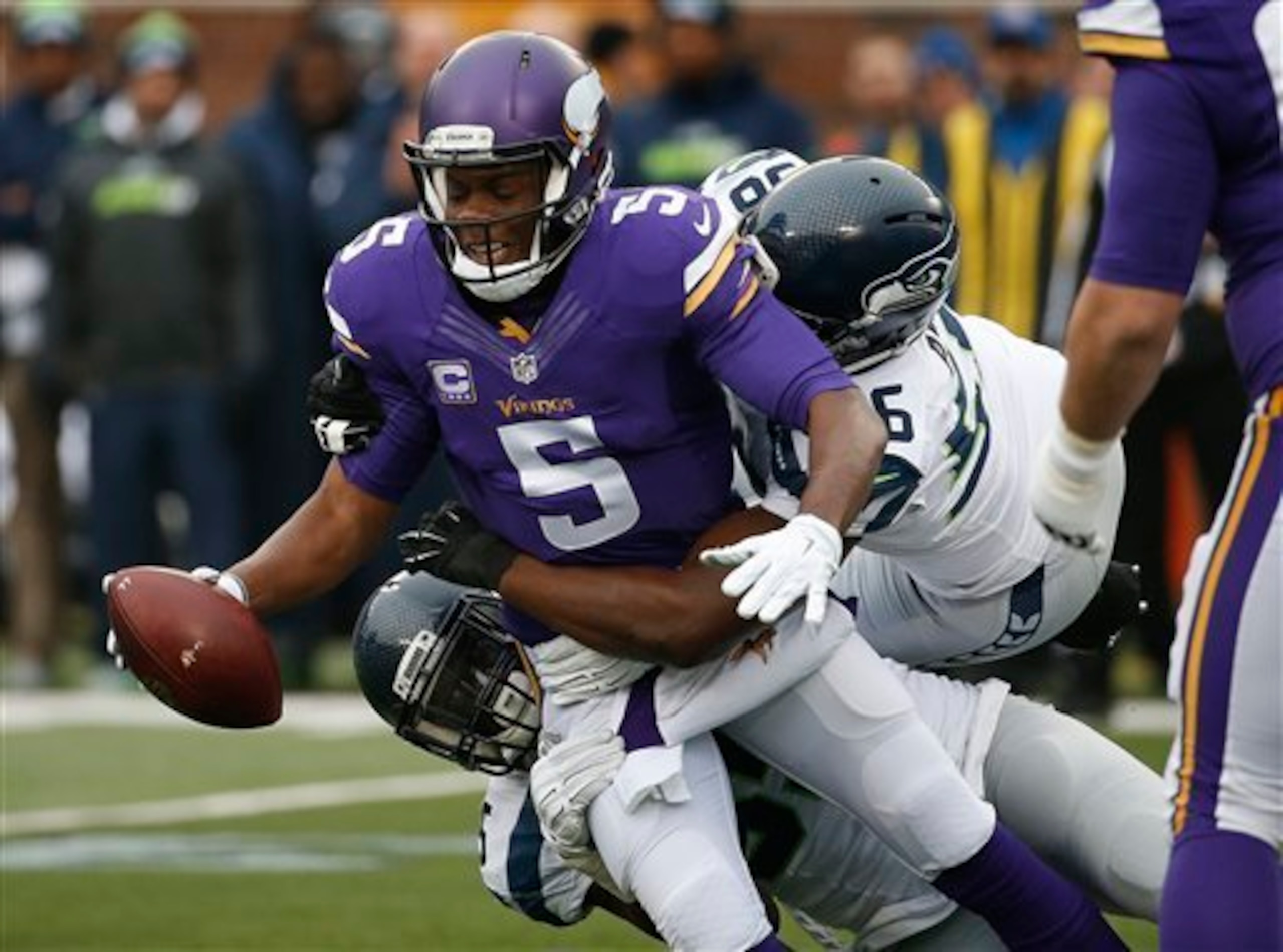
It sure looks like second-year quarterback Teddy Bridgewater is regressing, and it's not difficult to blame his offensive line.
Bridgewater was sacked four more times on Sunday, bringing his season total to 34. He's been hit relentlessly this season, with a handful or more resulting in his needing extra time to get off the turf. The cumulative effect of all the sacks and hits is taking its toll.
Bridgewater has always been a conservative player, but he's checking down more and more. On Sunday, he averaged less than five yards per attempt, with just one completion over 20 yards. Those are unacceptable numbers, especially in a game where the Vikings trailed from start to finish.
With the team currently constructed around him, Bridgewater needs to be a game manager. He's not at a point where he can drop back to pass 40 times and win the Vikings a high percentage of games. The problems up front have certainly played a role in his stunted progression as a passer.
Facing Reality
5 of 5
Regardless of Sunday's result, eight wins with four games to play represents an incredible 12-game mark for the Vikings.
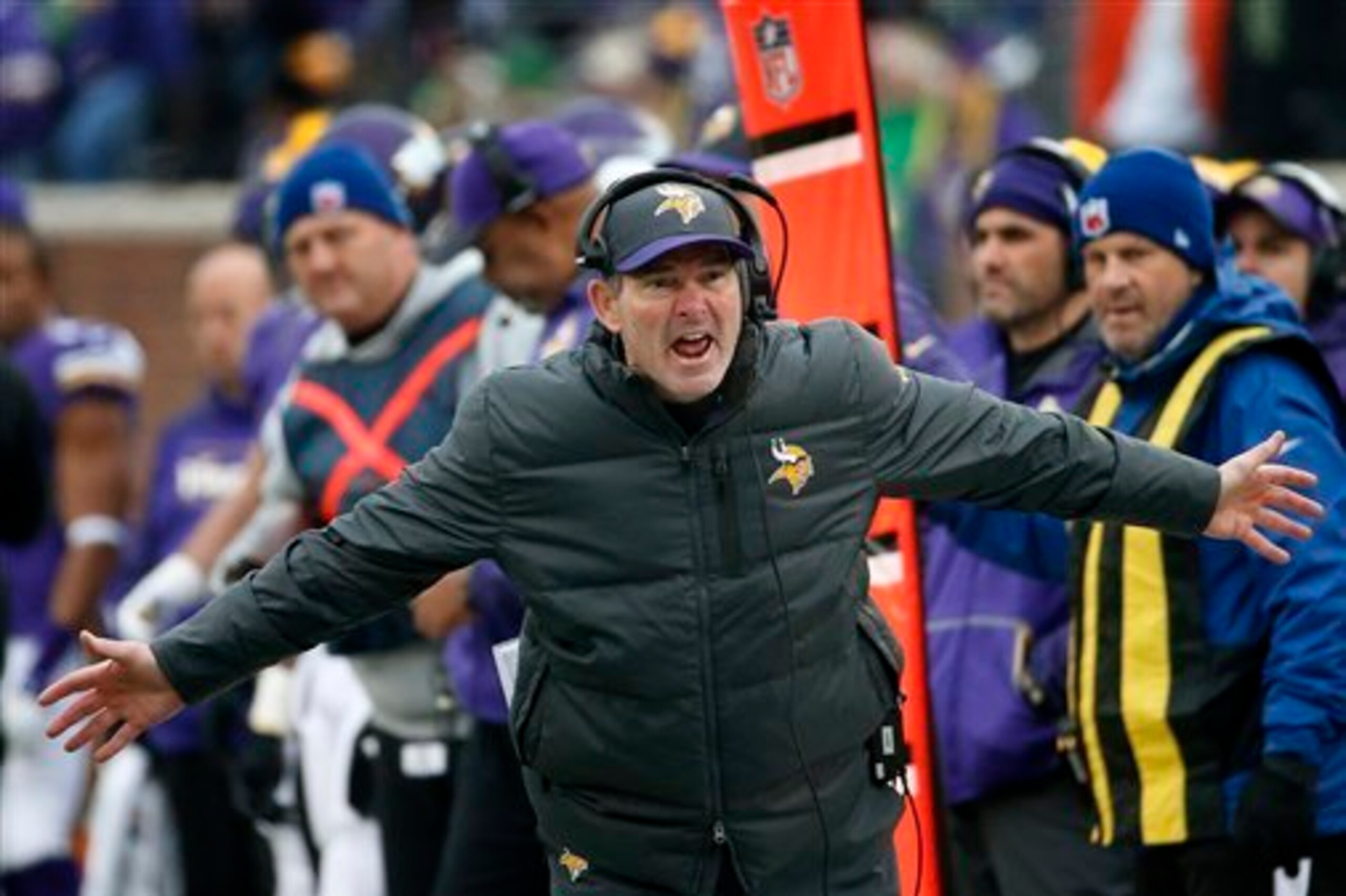
However, it's certainly possible that Minnesota's hot streak during October and November morphed expectations beyond what is currently practical for Mike Zimmer's team.
With Adrian Peterson and a stifling defense (when healthy), the Vikings have proved capable of beating up and bullying less talented opposition. Yet the divide between Minnesota and the NFL's top teams is growing more and more obvious.
Over back-to-back home games against the two participants in last season's NFC Championship Game, the Vikings lost by a combined score of 68-20. The Minnesota offense scored just one touchdown over that stretch, and it came in the first quarter of the Green Bay Packers' 30-13 win. The two losses also produced the only two weeks in which the Vikings allowed at least 30 points in a single game this season.
It's time to face reality: The Vikings are almost certainly one of the six best teams in the NFC, but that doesn't mean they are ready to compete with the best teams in the conference. Flying to Arizona on Thursday—especially with Linval Joseph, Anthony Barr and Harrison Smith all hurting—will likely provide another dose of this reality.
.jpg?w=2560 "Steelers Saints Football")


.jpg?w=2560 "🚨 Week 8 AP Top 25 Poll")

