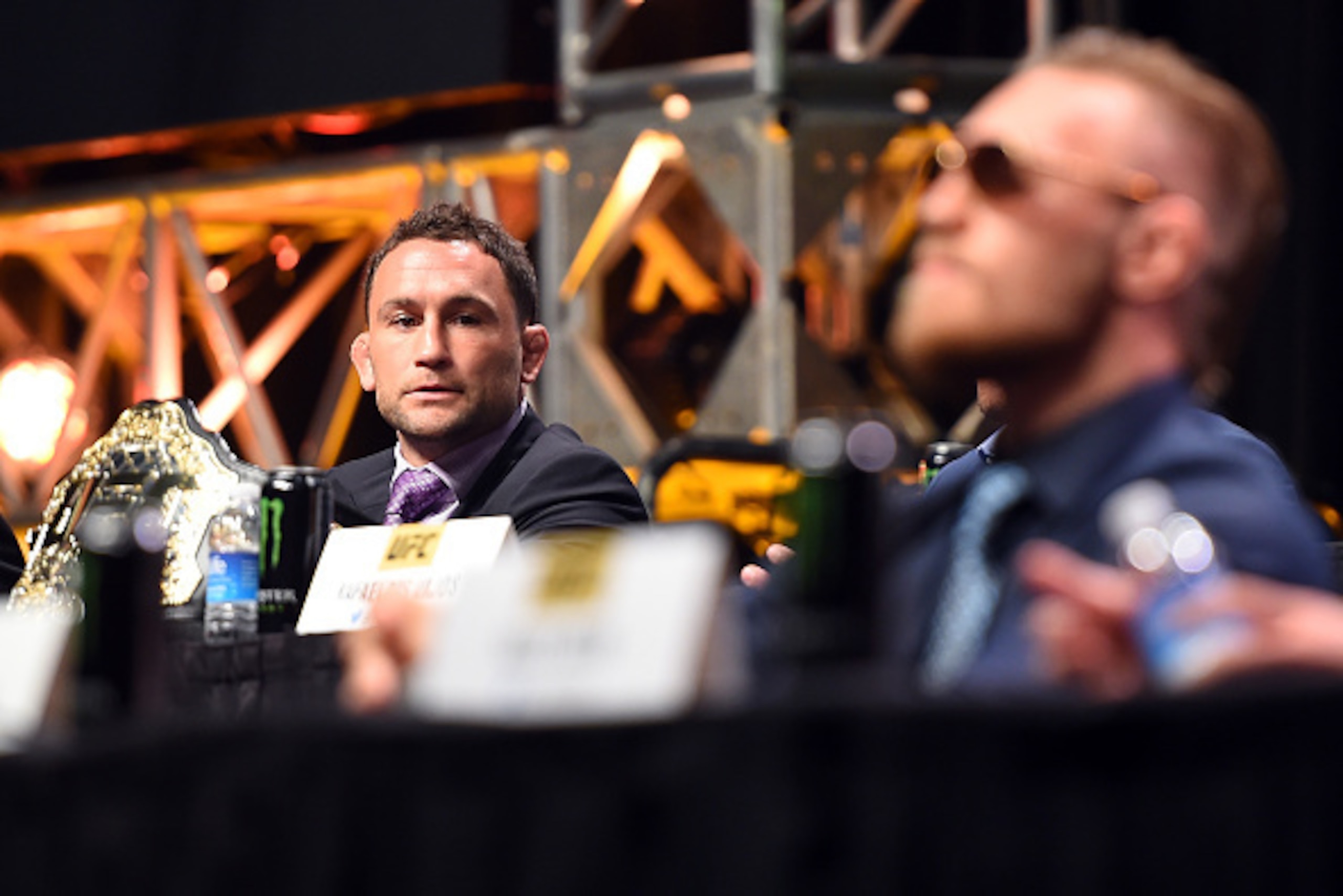

The Complete Guide to UFC Fight Night 80 and the Ultimate Fighter Finale
While UFC 194 has received most of the attention in the lead-up to this outstanding week of fights, the UFC Fight Night on Fight Pass on Thursday and The Ultimate Fighter 22 Finale on Friday both offer an array of outstanding mixed martial arts action.
Thursday's card consists mostly of young, up-and-coming fighters. Unusually for the UFC, which is generally good about creating win-win scenarios regardless of who emerges victorious, it features a number of matchups in which the promotion has a vested interest in one side winning. The card is full of A-sides and B-sides, and it will be better for the UFC's future if the A-sides win.
In the main event, Paige VanZant takes on Rose Namajunas in an outstanding strawweight bout that will christen the next potential star at 115 pounds. Teen-aged phenom Sage Northcutt gets a soft step up against Cody Pfister and Canadian TUF winner Elias Theodorou fights Thiago Santos.
The co-main event features Michael Chiesa in a great fight against Jim Miller. Blue-chip bantamweight prospect Aljamain Sterling gets a chance to prove himself against Johnny Eduardo on the prelims, which are likewise stacked with great young talent.
The Ultimate Fighter 22 Finale is less stacked. The main event, however, is one of the two or three best fights of the weekend: Former lightweight champion and featherweight challenger Frankie Edgar takes on three-time featherweight top contender Chad Mendes in what should be a fantastic fight with serious implications for the future of the division. If he wins, Edgar will undoubtedly get the next shot at the belt.
Tony Ferguson takes on Edson Barboza in Friday's co-main event. Khabib Nurmagomedov was originally scheduled to face Ferguson, but a rib injury led to his replacement with Barboza. Ferguson has won six straight and is a legitimate threat to win the title, and the matchup with the talented Barboza should produce fireworks. An action fight between Joe Lauzon and Evan Dunham adds additional interest.
There are simply too many fights between these two cards, even leaving aside the yet-to-be-announced Ultimate Fighter matchups, to cover them all in depth. Instead, I've selected the eight most promising fights to explore fully and provided quick picks for the rest.
Let's dive into a cornucopia of interesting violence.
Quick Picks for the Other Fights
1 of 9
Quick Picks
UFC Fight Night 80
Kailin Curran (3-2; 0-2 UFC) vs. Emily Kagan (3-2; 0-1 UFC)
Hawaii native Curran takes on Jackson-Winkeljohn product Kagan in a solid strawweight bout. Curran is a better athlete and has more tools; she wins by decision.
Zubaira Tukhugov (17-3; 2-0 UFC) vs. Phillipe Nover (11-5-1; 1-3 UFC)
Chechnya's Tukhugov is a serious talent with legitimate skills everywhere. Nover, a finalist on The Ultimate Fighter 8, is a solid striker with an improved wrestling and grappling repertoire. Tukhugov is a potentially elite talent at 155 pounds; he wins by decision.
Danny Roberts (11-1; 0-0 UFC) vs. Nathan Coy (14-5; 0-0 UFC)
England's Roberts makes his UFC debut after a 20-month layoff and a move to the Blackzilians against American Top Team's Coy in an interesting welterweight scrap. The Englishman is a former boxer and a serious athlete with a nice southpaw striking game, while Coy is a grinding wrestler. The pick is Roberts by knockout in the first round.
Andreas Stahl (9-1; 0-1 UFC) vs. Santiago Ponzinibbio (20-3; 2-2 UFC)
Stahl, a native of Sweden, takes on Argentinian (by way of Brazil) Ponzinibbio, who was set to be a finalist on the second season of The Ultimate Fighter: Brazil, in a good fight at 170 pounds. The Swede is a credentialed wrestler who can strike reasonably, while Ponzinibbio is big, strong, athletic and dangerous everywhere. The pick is Ponzinibbio by decision.
Antonio Carlos Jr. (5-1; 2-1 UFC) vs. Kevin Casey (9-3, 1 N/C; 1-1, 1 N/C UFC)
24-year-old Carlos Jr. won the third season of TUF: Brazil, and is one of the most promising young middleweights on the roster. He draws Casey, who is now in his second run with the promotion. Carlos Jr. is every bit as good a grappler and a developing striker. The pick is Carlos Jr. by knockout in the third round.
Omari Akhmedov (15-2; 3-1 UFC) vs. Sergio Moraes (9-2; 3-1 UFC)
Jiu-jitsu world champion Moraes steps up on short notice to replace the injured Lyman Good against Dagestan's Akhmedov, who trains out of Jackson-Winkeljohn in Albuquerque. Akhmedov's power, combination striking and excellent wrestling chops should win this for him. The pick is Akhmedov by decision.
Tim Means (24-7-1; 6-4 UFC) vs. John Howard (23-11; 7-6 UFC)
Albuquerque's Means takes on Boston's Howard in a solid welterweight matchup. Despite Howard's reputation as a striker, he's mostly a grinder in the clinch and from top position, while the pressure-oriented Means is a nasty finisher who works at a quick pace. The pick is Means by decision.
The Ultimate Fighter Finale
Joby Sanchez (7-1; 1-1 UFC) vs. Geane Herrera (8-1; 0-1 UFC)
The youthful Sanchez, a Jackson-Winkeljohn product, has real talent and could vault up the flyweight ranks with his well-rounded game and athletic gifts. Herrera is a physical specimen, but the various pieces of his game don't fit together into a coherent whole. The pick is Sanchez by decision.
Gabriel Gonzaga (16-10; 11-9 UFC) vs. Konstantin Erokhin (9-2; 0-1 UFC)
Russian power-puncher Erokhin takes on the venerable Gonzaga in a decent heavyweight scrap. Erokhin has ridiculous, absurd power in his hands, but his takedown defense is iffy and he doesn't throw much volume, while Gonzaga remains a great finisher but one who's clearly past his prime. The pick is Erokhin by knockout in the first round.
Tatsuya Kawajiri (34-8-2; 2-1 UFC) vs. Jason Knight (14-1; 0-0 UFC)
This was supposed to be the coming-out party for uber-prospect Mirsad Bektic, but the Bosnian-American suffered an ACL injury and was replaced by Knight on short notice. The venerable Kawajiri should be able to grind out a win in the clinch and from top position against the talented submission artist; Kawajiri wins by decision.
Ryan LaFlare (11-1; 4-1 UFC) vs. Mike Pierce (17-6; 9-4 UFC)
LaFlare looks to move past a loss to Demian Maia against Pierce, who returns from a two-year layoff, in a good welterweight scrap. Both are excellent wrestlers, but LaFlare throws more volume on the feet and is a better athlete. He wins by decision.
Aljamain Sterling vs. Johnny Eduardo
2 of 9
Bantamweights
Aljamain Sterling (11-0; 3-0 UFC) vs. Johnny Eduardo (27-9; 2-1 UFC)
Sterling is the brightest prospect in the new generation of up-and-coming bantamweights. The former Division III wrestler has taken up residence under the guidance of Matt Serra and Ray Longo on Long Island, and is developing into a lethal and well-rounded young fighter.
He has rolled through his three UFC opponents, taking a decision from Cody Gibson in his debut before finishing Hugo Viana and the ultra-durable Takeya Mizugaki last April.
The 26-year-old New York native will face Brazil's Johnny Eduardo, a veteran of nearly two decades as a fighter who had his first bout when Sterling was in second grade. He has fought infrequently since entering the promotion, falling to Rafael Assuncao in August 2011 but then defeating Jeff Curran and Eddie Wineland. This will be his first fight since May 2014.
Eduardo is a dangerous veteran, but this fight is more or less intended to give Sterling a stiff challenge as he climbs the bantamweight ranks. A win here will position the American for a potential top-contender matchup, assuming he re-signs with the promotion after this bout.
Sterling is a serious talent with great athleticism and a dangerous, diverse and creative game. He moves well at range, constantly switching stances in order to set up angles. Kicks follow punches and vice versa in smooth, creative combinations and he has a gift for landing sneaky counter hooks from both stances. Fundamentals are a strong suit, and he consistently moves his head after he throws.
Although he's not really a pressure fighter, a steady diet of front, round and spinning kicks forces his opponent toward the fence, where Sterling does his best work.
While he's become a solid striker, Sterling's bread and butter remains his stifling wrestle-grappling game. He has a variety of clean entries, preferring reactive shots and to cover his level changes with strikes. Once in on his opponent's hips, he's absolutely relentless, chaining singles, doubles and trips in combinations. If the takedown fails, he's happy to grind against the fence and wear his opponent down.
When the fight hits the mat, Sterling really goes to work. He doesn't need to get his opponent all the way down to capitalize, as he has an exceptional move to the back from a variety of setups, especially the front headlock. From top position he's a monster, with smooth passes, a heavy base and vicious power in his ground strikes.
Getting to the back, whether in a scramble or more traditional positional advancement, is his specialty. Once there he's a slick finisher, using strikes to set up the rear-naked choke.
Eduardo, who works as one of the striking coaches at Jose Aldo's Nova Uniao camp, is a pure striker, and a skilled one with speed and power that belie his advanced age.
He's defensively sound and constantly pulls his head off the centerline, which sets up his counters. The Brazilian rarely leads with anything other than low kicks, of which he throws a steady and punishing diet, and he does his best work after his opponent throws at him.
He packs real power in his shots and places them with great accuracy. The straight right is his weapon of choice, and he has a nice left hook as well. On the downside, he throws little volume and is uncomfortable doing anything other than countering.
Strong takedown defense powers Eduardo's striking game. He sprawls well, and in Nova Uniao fashion, has a gorgeous limp-leg and head pressure combination against single-leg takedowns. The clinch is a strong suit, and he throws hard knees in close quarters. That is essentially the extent of his game.
Betting Odds
Sterling -700, Eduardo +500
Prediction
Those are wide betting odds, but they accurately reflect prevailing opinion of Sterling's potential. If this turns into a pure striking match, Eduardo will probably tear up the American, but there's no reason to think Sterling would be content to have that kind of fight.
Despite Eduardo's strong takedown defense, Sterling will eventually drag Eduardo to the ground, and from there the Brazilian has little to offer. The pick is Sterling by submission in the second round.
Elias Theodorou vs. Thiago Santos
3 of 9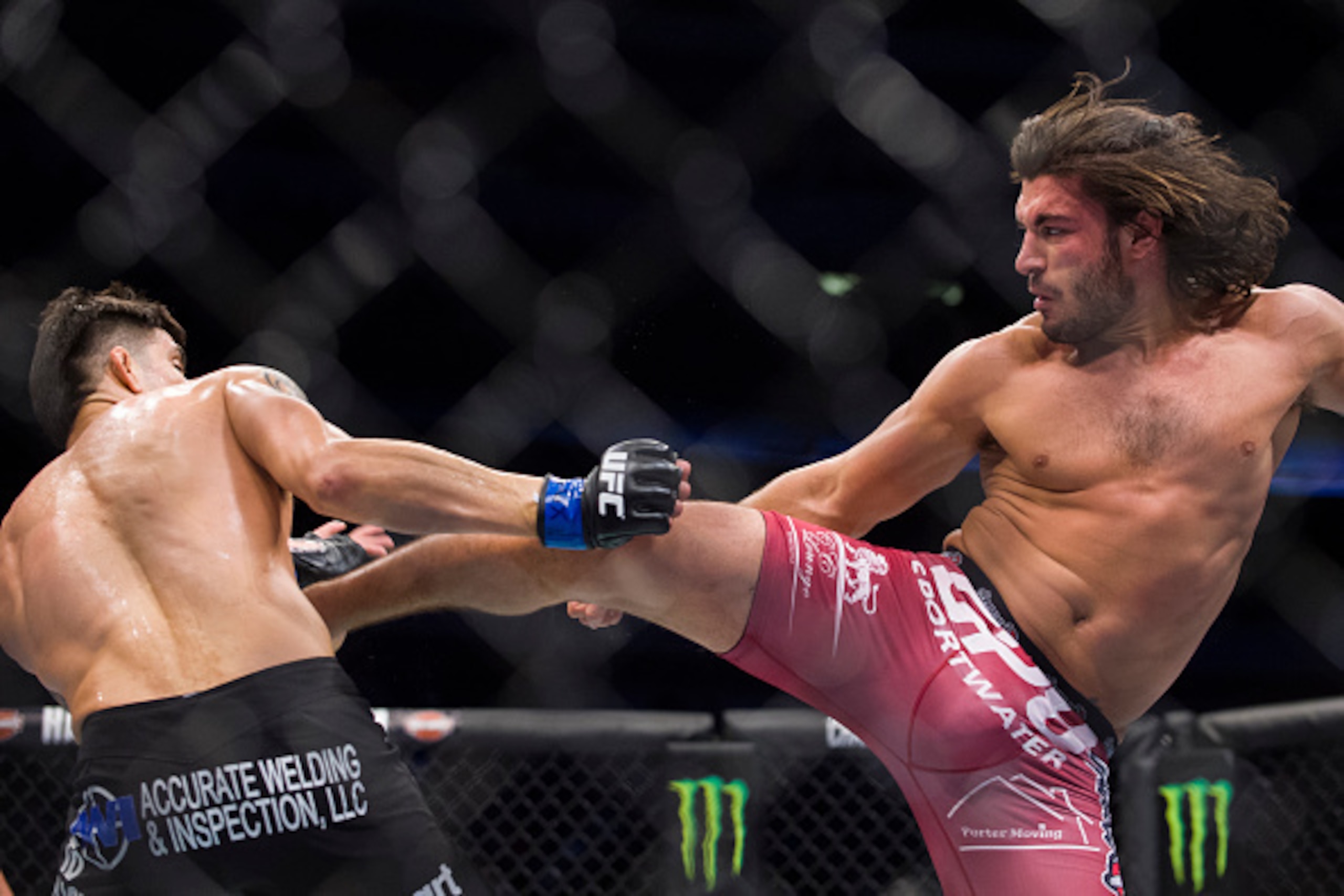
Middleweights
Elias Theodorou (11-0; 3-0 UFC) vs. Thiago Santos (11-3; 3-2 UFC)
Theodorou emerged victorious from The Ultimate Fighter: Nations in 2014, and since then has blossomed into one of the UFC's brightest prospects in the thin and aging middleweight division. The Canadian is good-looking and savvy about his marketability, and impressive wins over Bruno Santos and Roger Narvaez have put him at the front of the line in terms of future value.
He draws Brazil's Thiago Santos, a talented striker who now trains out of American Top Team. Santos' UFC career has been up and down, but he has put losses to Cezar Ferreira and Uriah Hall in the rear-view mirror with consecutive first-round knockouts over Andy Enz and Steve Bosse.
Santos is a live underdog, but this fight is essentially designed to give Theodorou a soft step up and a challenge against a dangerous striker. With a win here, Theodorou would cement himself as a potential future star and put himself in line for a top-15 opponent in his next outing.
The Canadian is big, strong and athletic, and his physicality forms the basis of his game. He's an aggressive range striker who does his best work moving forward behind punching combinations and vicious kicks, but his repertoire is somewhat limited and he's a bit hittable, especially on the counter.
Theodorou's strikes mostly serve as a cover to bring him into the clinch, where his strength and endless cardio come into play. He excels at using his head and an underhook to pin his opponent against the cage for minutes at a time and then unleashing a steady stream of punches, elbows and knees that wear his opponent down. Hard combinations consistently follow clinch breaks as well.
Wrestling is another strong suit for the Canadian. He has a great reactive shot, uses strikes to cover his level changes and beautifully finishes his singles and doubles, particularly against the fence.
On the ground, Theodorou never lets up. He works passes and allows his opponent to move under him, maintaining control between top position, wrestling rides when his opponents try to scramble, the front headlock and then back again. He drops a steady stream of ground strikes all the while and packs real power.
Santos is a pure striker, and a talented one. He's not exceptionally large for the division but he has long limbs, great speed and big power.
Kicking is his strong suit. The capoeira expert switches stances constantly, and tosses out a steady stream of round, front and spinning kicks to maintain the distance as he circles and moves at range. Feints and mixing up locations allows him to land them cleanly, and all of them pack serious force.
While he's a powerful puncher, Santos' technique is lacking: His head is always on the centerline and his chin rises as he throws. Additionally, his punches and kicks are entirely separate parts of his arsenal, and he rarely blends them together with any effectiveness.
That's essentially the extent of Santos' game. He works at a relatively slow pace and relies entirely on his length and movement for defense, which makes him hittable when his opponent is in range.
That consistent movement and length make it difficult to get a clean shot at Santos' hips for takedowns, and that's the strongest piece of his defensive wrestling game. He's not an elite defender of takedowns, however, and he offers nothing on the mat.
Betting Odds
Theodorou -250, Santos +210
Prediction
Santos is the better striker, but he's at a disadvantage everywhere else. The real question here is whether Theodorou's kicking game and pressure footwork is good enough to force Santos to the fence. If it is, the Canadian should win the fight handily. If not, he still has a decent chance of outworking the Brazilian at range, but it will be much more difficult and he runs the risk of eating a big kick.
Theodorou's pressure should suffice to get the job done as the fight wears on. The pick is Theodorou by knockout in the third round.


Sage Northcutt vs. Cody Pfister
4 of 9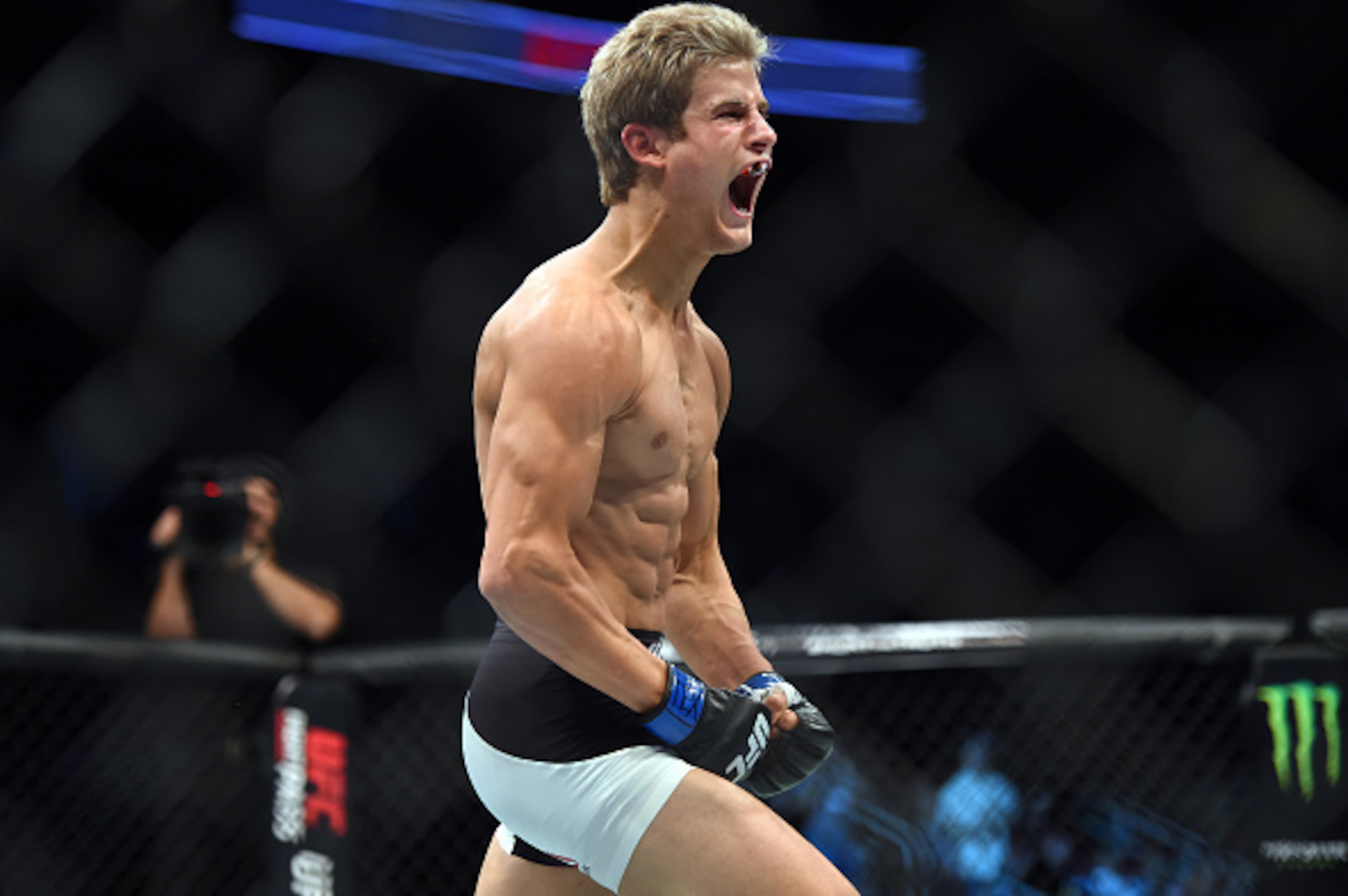
Lightweights
Sage Northcutt (6-0; 1-0 UFC) vs. Cody Pfister (12-4-1; 0-1 UFC)
The UFC has high hopes for 19-year-old Sage Northcutt, who debuted with an impressive victory over Frank Trevino in October and capped off the 57-second win with a standing flip that went viral after the fight. He has the look, the physicality and potentially the personality to go far in this sport, but his inexperience and youth mean that he needs to be brought along slowly.
Cody Pfister represents a small step up from his debut. The Amarillo, Texas native lost his short-notice debut to James Moontasri in February, but rebounded with a decision win over Yosdenis Cedeno in July.
There's no real point in pretending that Northcutt is anything other than the A-side of this matchup. Still, Pfister is tough and experienced, and could potentially test the younger fighter.
Northcutt is a marvel of athleticism and speed with diverse skills and outstanding killer instinct. He's raw, but in terms of physical potential and the outlines of his skills, there's a great deal to like about him.
The former sport karate champion has a slick striking arsenal. He regularly throws front-leg side kicks and uses them nicely to disrupt his opponent's movement and rhythm. When he lets go with a round kick, it packs brutal power. He's not a skilled boxer, but he's fundamentally sound and packs some pop.
On the downside, he doesn't look especially comfortable in exchanges, his skills are fairly limited and he doesn't seem to react well to getting hit, which makes sense for someone who doesn't spar at all.
Northcutt rarely looks to strike for long, though, and the most impressive piece of his game is his ability to transition. He punches well into the clinch and uses his strikes to cover his takedown attempts, especially against the cage. Wrestling is a strong suit, and he finishes doubles and trips nicely. He has a great sense for sneaking in punches and knees in transition as well.
On the mat, Northcutt is a bombing striker with great posture and big power. His specializes in finding the back, both in scrambles and in extended sequences. Strikes open up the rear-naked choke, and if he can't snag that he'll look for a neck crank instead.
Pfister is aggressive and durable, if not powerful or particularly fast on his feet. He's a pressure fighter who does his best work pushing his opponent back toward the fence, and his cage-cutting footwork is solid and more technical than you might expect. A consistent jab and one-two covers that forward movement.
At heart, though, Pfister is a wrestler. His strikes serve mostly to give his opponent something to worry about as he pressures and to disguise his entries for his shots, which are solid and generally well timed. The double is his specialty, and he has a decent single as well. He finishes technically as well, turning the corner nicely to plant his opponent on the mat.
From top position, the Texan is more relentless than dangerous. He can maintain top position and land some shots, but passing isn't his strong suit, and he mainly relies on transitioning to the back as his opponent tries to get back up. He offers little from his back, and his takedown defense isn't bulletproof.
Betting Odds
Northcutt -1250, Pfister +800
Prediction
There are good reasons to doubt Northcutt over the long term, namely the facts that his father seems to exercise such a substantial influence on his training, that he doesn't spar in training and that he left Tristar after only a few weeks. He isn't going to fulfill his enormous potential training at small gyms in Katy, Texas.
With that said, he should handle Pfister. The physical mismatch here borders on the absurd: Northcutt is off the charts athletically, while his opponent is below average relative to the division. Still, Pfister's durability makes this interesting, and it's unlikely that Northcutt simply runs through him. It'll take a while, but the younger fighter's takedown game and scrambling should be the difference.
The pick is Northcutt by submission in the second round.
Joe Lauzon vs. Evan Dunham
5 of 9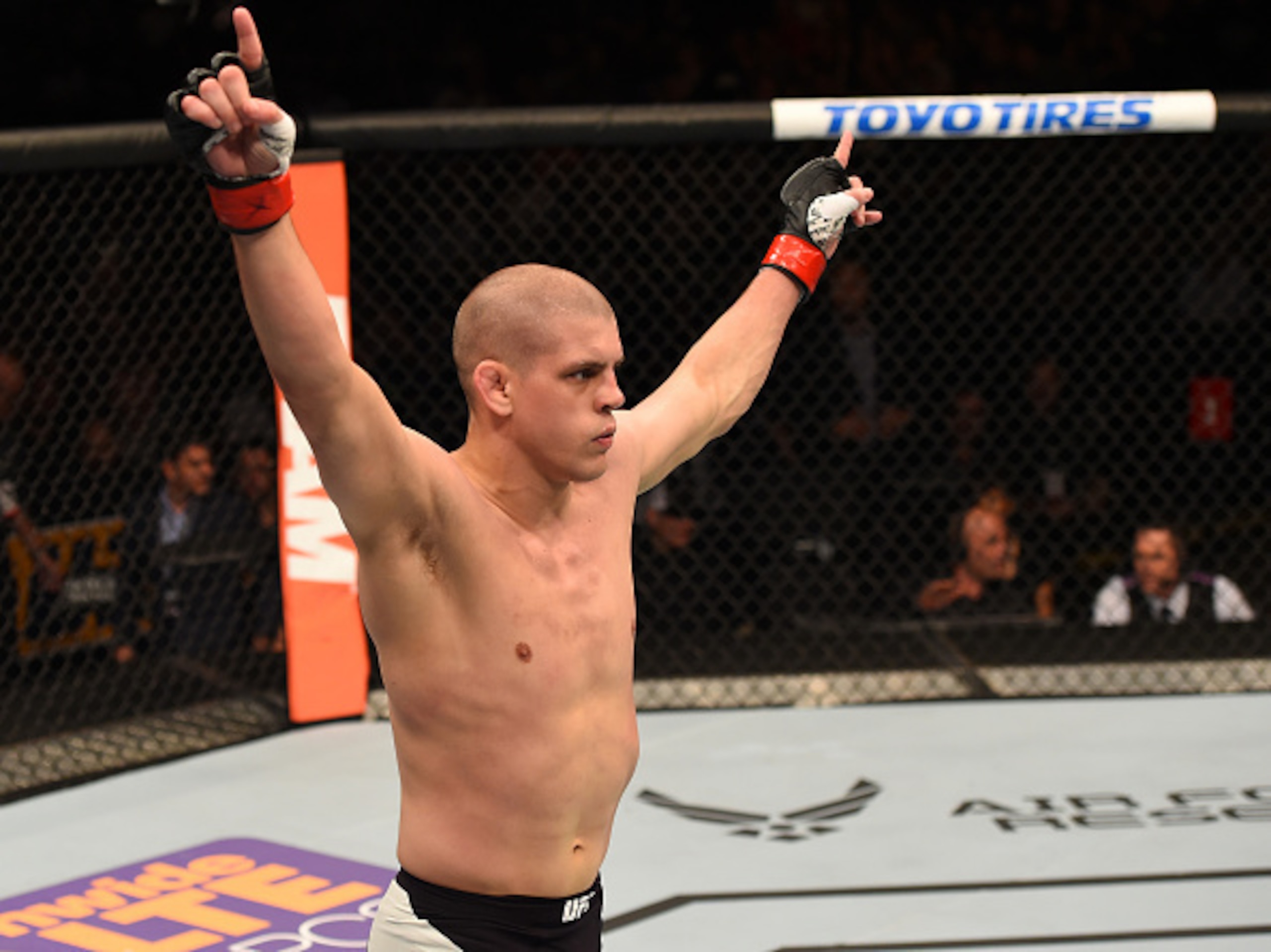
Lightweights
Joe Lauzon (25-10; 12-7 UFC) vs. Evan Dunham (16-6; 9-6 UFC)
Veteran action fighters Lauzon and Dunham, who have combined to win 17 post-fight bonuses, meet in what should be an exciting lightweight matchup. Massachusetts' Lauzon rebounded from a rough knockout loss to Al Iaquinta with a first-round finish of Takanori Gomi in July, while Dunham has won two in a row, the most recent a stifling decision over Ross Pearson.
Both Dunham and Lauzon have established themselves as gatekeepers who can put on a fun fight, and since neither is ever going to challenge for a title in the ultra-deep lightweight division, wins and losses aren't as important to the future course of their careers as they are for other fighters. What matters is the bonus check and the name value of their next opponent, and an impressive win would ensure that.
Aggression defines Lauzon's game in every phase. While not especially known as a striker, he packs real power in his hands, and throws sharp combinations as he moves forward. He excels at punching his way into the clinch and covering his takedown attempts with strikes, showing a clear understanding of transitions.
Lauzon is a mean clinch fighter with good control, potent knees and slashing elbows in close quarters. He's also a powerful wrestler and has a gift for the big takedown, particularly with his doubles.
Once the fight hits the mat, Lauzon really goes to work. He does his best work in transitions and is particularly good at finding his way to the back using a wide array of set-ups as his opponent tries to scramble back to his feet. Vicious ground strikes open up passes and submissions as he works from the top, and Lauzon is always looking for a fight-ending armbar or choke.
There are two problems with this approach. First, Lauzon is an offense-first fighter, and is lacking defensively everywhere. He's not hard to hit on the feet, his takedown defense is only average and his aggressiveness on the mat leaves him open to being hit, having his guard passed and getting submitted. Second, his frenetic pace wears him down quickly, and he has progressively less to offer as the fight continues.
Dunham has a diverse and technically proficient game both standing and on the mat. The southpaw has a rangy striking game built on his consistent right jab and left kick, and while he's not a terribly hard striker, he does string together nice combinations and works at an outstanding pace.
While he's competent on the feet, Dunham really stands out in the clinch and as a wrestler. He excels at grinding his opponent in the fence and working him over with short punches and knees. When Dunham shoots for a takedown, it almost always leads to a clean, technical chain that he finishes skillfully.
The ground is Dunham's world. He's excellent in transition, and doesn't need to get his opponent all the way to the mat to capitalize by jumping on the back. His work from the top is methodical and technical, and he uses his strikes to open up passes and eventually submission attempts.
Betting Odds
Dunham -190, Lauzon +165
Prediction
There are two likely outcomes here. Either Lauzon finishes the Dunham early, likely with a submission, or Dunham grinds out Lauzon for a decision. The latter seems more likely. Dunham is durable enough to eat Lauzon's shots and savvy enough to survive on the ground until the Massachusetts native inevitably gasses.
Dunham's high-output striking game, grinding clinch work, technical chain-wrestling and smooth work on top should wear Lauzon down even faster. The pick is Dunham by clear 29-28 decision with the possibility of a late finish.
Jim Miller vs. Michael Chiesa
6 of 9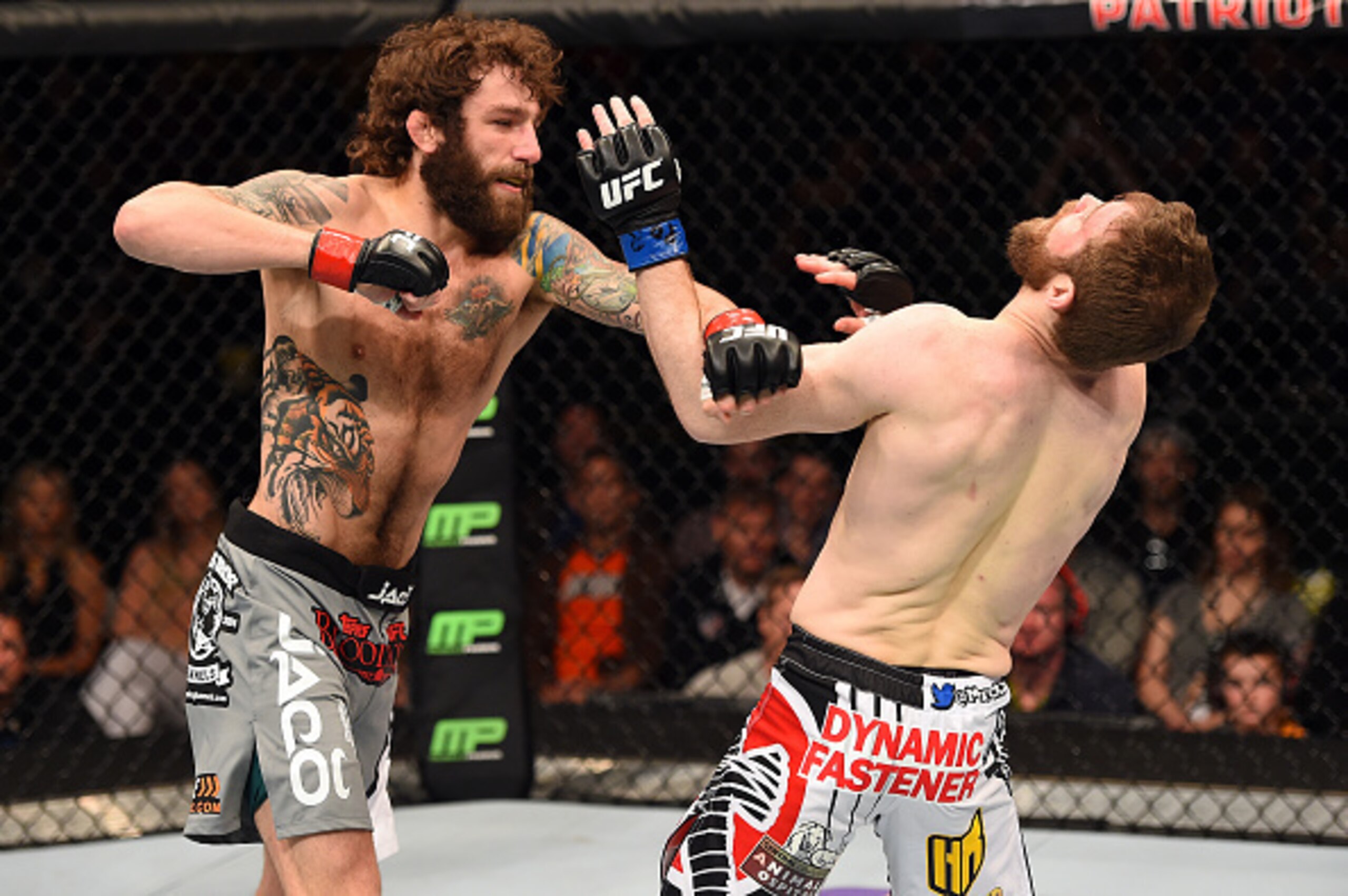
Lightweights
Michael Chiesa (12-2; 5-2 UFC) vs. Jim Miller (25-6, 1 N/C; 14-5, 1 N/C UFC)
The winner of The Ultimate Fighter Live back in 2012, Washington native Chiesa is coming into his own in the UFC's deepest and most difficult division. He defeated Al Iaquinta to win the show, and most recently rebounded from a cut stoppage loss to Joe Lauzon by beating Mitch Clarke in April.
He faces the veteran Miller, who steps into the Octagon on the 21st occasion on Thursday night. The influx of dynamic talent at 155 pounds in recent years has dropped Miller out of the elite, but he remains tough and skilled. His July decision win over Danny Castillo halted a two-fight losing streak to Beneil Dariush and Donald Cerrone.
Miller has settled comfortably into the role of gatekeeper to the elite—he's currently tied for 14th in the UFC's rankings— and for him a win here would cement that status while possibly giving him a shot at someone ranked comparably. If victorious, Chiesa would undoubtedly get the opportunity to prove himself against an elite opponent in his next outing.
Chiesa is a rangy (6'1") and sneaky-athletic lightweight. The southpaw is a decent striker, with a cracking left kick and straight left accompanied by a solid jab, and he's surprisingly potent and dangerous in exchange. Aggressiveness and durability are his strong suits, and despite his willingness to throw and ability to score at distance, his striking mostly serves to bring him to close range.
The Washington native's wheelhouse is the clinch. His height and long limbs give him great leverage and control in the tie-ups and create openings to land sharp knees and elbows. He has a slick arsenal of trips, lateral drops, throws and hip tosses as well.
On the ground, Chiesa's specialty is getting to the back. He's fine on top, with solid passes and surprisingly powerful strikes, but he really excels at letting his opponent scramble under him. When he tries to get back to his feet, Chiesa pounces, sinking in the hooks and initiating a long period of ground control. He's a surprisingly vicious striker from the back, and uses them to open up the rear-naked choke.
Miller can do everything reasonably well at this point in his career. The southpaw is a solid striker with some pop in his strikes and strings together decent combinations. He doesn't throw much volume, however, and he isn't terribly crafty.
As a wrestler, Miller shoots a good double and single and defends reasonably well. He's more focused on creating transitions than getting his opponent down at any cost, though, and is perfectly happy as long as he and his opponent are scrambling together. The front headlock is a particular strength.
Miller is particularly adept at using submission attempts in transition to sweep. He has a nasty guillotine and kimura, both of which often lead him directly to top position. Once on top, he passes nicely, hits good ground strikes and hunts aggressively for submissions. He isn't afraid to give up position; while this nose for the finish makes him dangerous, he also ends up stuck on the bottom for extended periods.
Betting Odds
Chiesa -120, Miller +100
Prediction
This is an even fight and a fascinating matchup. Both love to grapple and do their best work in transitions, are solid but not outstanding takedown artists and are perfectly willing to let their hands go on the feet.
Chiesa has a slight edge, though. He's younger, has a longer frame and is making substantial improvements from fight to fight. That should be enough for him to find small advantages over the course of the bout. The pick is Chiesa by narrow decision.
Tony Ferguson vs. Edson Barboza
7 of 9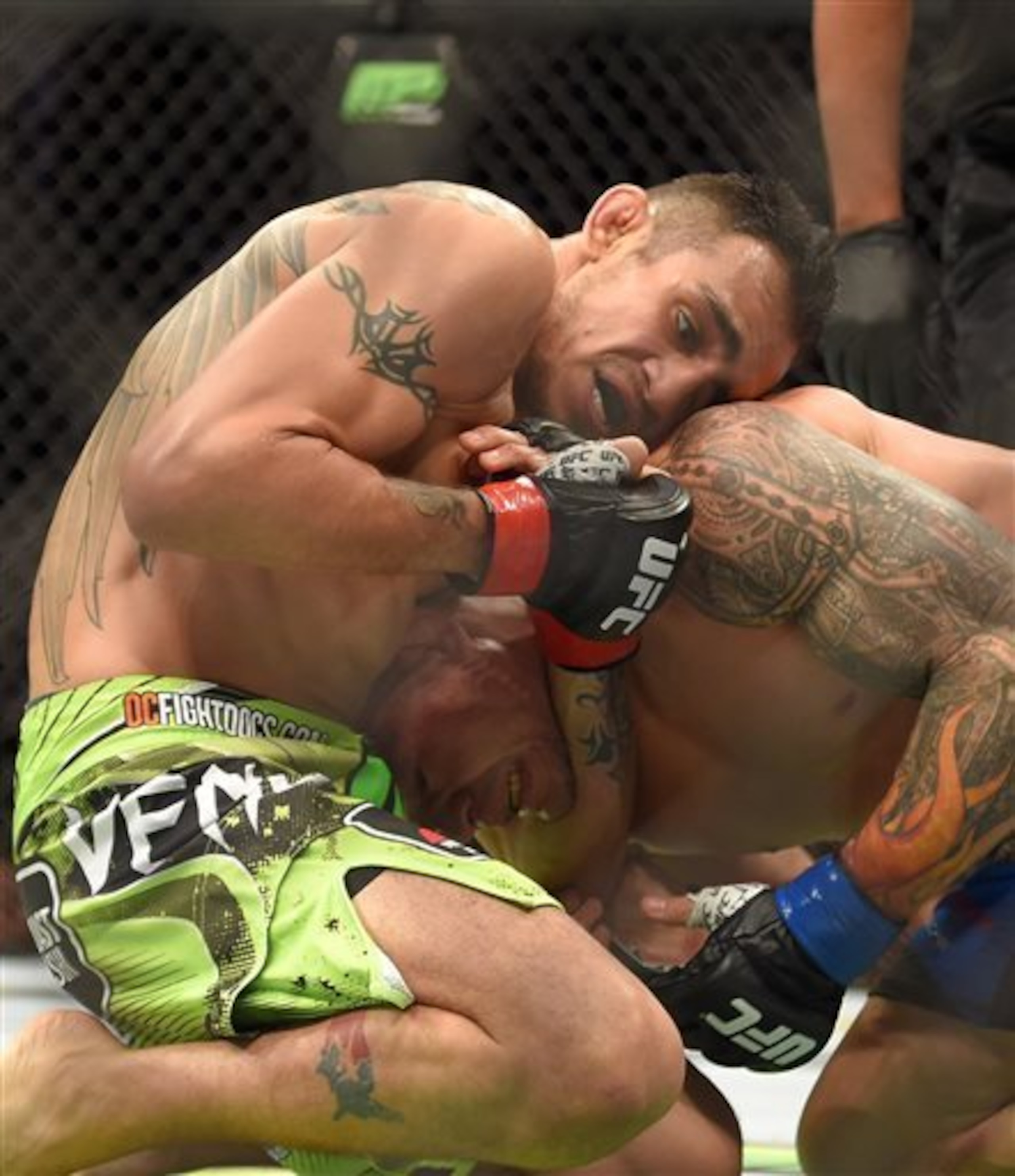
Lightweights
Tony Ferguson (19-3; 9-1 UFC) vs. Edson Barboza (16-3; 10-3 UFC)
Despite compiling a sterling 9-1 record in the UFC, including six in a row on his current streak, The Ultimate Fighter 13 winner Ferguson is flying under the radar in the stacked lightweight division. He was supposed to face the undefeated Khabib Nurmagomedov here, but an injury to the Russian led Brazilian striker Edson Barboza to step up on late notice.
This is a crackerjack of a matchup between two rising young fighters. Ferguson is on an incredible run, with his most recent victory a dominating decision over Josh Thomson in July. Barboza finally seems to be coming into his own after five years in the UFC, and rebounded from a close loss to Michael Johnson with a decision over Paul Felder in July.
Ferguson is an unorthodox and creative fighter. He's extremely athletic and has a long, rangy frame, both of which he puts to use in interesting ways. Striking is his wheelhouse, but he's more than capable everywhere.
On the feet, Ferguson switches stances constantly and uses a strange, herky-jerky rhythm that's difficult to time. He tosses out a steady diet of kicks to set the range, preferring a snapping front kick to the body and cracking round kicks to the legs and torso.
A long, piercing jab and slick boxing skills used to form the basis of Ferguson's approach, but he has moved away from that in his last several fights. When the mood strikes, however, he sits down on hard punching combinations, and he is quite technical exchanging in the pocket. The occasional elbow adds some variety.
Pace and defense are both real strengths for Ferguson. He throws an exceptional volume of strikes and rarely goes more than a few seconds without letting something go. His head is constantly moving, and while his chin gets high from time to time, he takes very few shots even when exchanging in the pocket.
Lest we forget, Ferguson was also a college wrestler, and as with his striking he has an unorthodox game. He has a "funky" style, which is a technical approach made famous in MMA by Ben Askren. Essentially, it means rolling with your opponent's pressure rather than meeting pressure with pressure, which shows up in Ferguson's game as rolls with his opponent's shots.
Ferguson is almost impossible to take down, and he makes it his goal to grab the front headlock as he defends. From that position he's lethal, with a slick guillotine, d'Arce and exceptional move to the back. He rarely shoots for takedowns of his own, preferring to counter-wrestle and work on the mat.
On the mat, Ferguson might be a little too willing to give up position for submissions, but the former wrestler is exceptionally dangerous even from his back. Triangles, armbars and sweeps all come in sequence, and he's willing to go for leg locks as well. His athleticism helps make him an exceptional scrambler, and he excels at finding various ways of getting to the front headlock.
Barboza is essentially a pure striker, and one blessed with incredible speed and power. He's an out-fighter by nature, preferring to spend all of his time at long punching or kicking distance.
This is both a strength and a weakness. When working at his preferred range, there are few who can compete with him, but he has almost nothing to offer outside that space.
At range Barboza is extremely dangerous. He flicks out a crisp, consistent jab to set the distance, and then fires off a brutal and potent series of kicks. His left switch kick is lethal, and his right low kicks are some of the most powerful in the sport. He sits down on hard punching combinations from time to time, and they too are dangerous. When pressured, he launches a series of counterpunches to dissuade opponents.
His lateral movement has drastically improved, and it's much more difficult to pin him against the fence than it once was. The tendency to stop and watch his work after throwing has mostly disappeared as well. Defensively, Barboza is rarely there to be hit, and his head movement is reasonably solid if not outstanding. He works at a steady and consistent pace, though not necessarily a blazing one.
A pure striking game requires excellent takedown defense, and Barboza has it. He sprawls well in open space and is difficult to take down against the cage. He offers little in the clinch or on the ground, however, aside from the ability to escape back to his preferred range.
Betting Odds
Ferguson -165, Barboza +145
Prediction
This is a tough matchup for Ferguson, but one he should win. The American simply has more tools to work with, more ranges at which he's comfortable and more ways of winning the fight. Even at range, Barboza's wheelhouse, Ferguson is dangerous. His edge in output could allow him to outwork the Brazilian even if the entire fight takes place at Barboza's preferred range.
There's no reason to think Ferguson will be totally content to kickbox at distance, though. He'll more likely try to pressure, something he's done with success in the past, and he holds a substantial edge in exchanges, the clinch and on the mat. The pick is Ferguson by competitive but clear decision.
Paige VanZant vs. Rose Namajunas
8 of 9
Strawweights
Paige VanZant (6-1; 3-0 UFC) vs. Rose Namajunas (3-2; 1-1 UFC)
Two of the UFC's brightest strawweight prospects meet in the main event of Thursday's Fight Pass event. VanZant was initially scheduled to face Joanne Calderwood, but the Scotswoman suffered an injury several weeks ago, and Namajunas stepped up on short notice to face the surging VanZant.
Namajunas fought for the initial UFC strawweight title last December after running through the competition on The Ultimate Fighter 20. She came up short against the much more experienced Carla Esparza, but rebounded with a dominant submission win over Angela Hill in October. It's easy to forget that she's only 23 years old and has been a professional for less than three years.
The 21-year-old VanZant has gotten a hard push from the UFC, and they seem to believe that she'll be a marketable fighter moving forward. She defeated Kailin Curran in her promotional debut, took a decision from Felice Herrig in April and then beat Alex Chambers in a softball matchup in September.
The winner here will officially be the next big thing at strawweight, a division that's still in the process of sorting itself out. For VanZant, a title shot might well be in the offing, while Namajunas would likely need to win one or two more.
VanZant, who trains at Team Alpha Male in Sacramento, is a relentlessly aggressive pressure fighter. She has improved as a striker, and grows increasingly effective at using punching combinations and kicks to cut off her opponent's movement and force her backwards toward the fence. She's tremendously hittable, however, and almost never pulls her head off the centerline.
For the most part, VanZant's strikes serve to get her into her wheelhouse, the clinch. She's surprisingly strong despite her youth and relative lack of size, and uses the fence, underhooks and head pressure effectively to pin her opponents in place.
Once she has her hands on her opponent, VanZant drops a steady stream of knees, elbows and short punches. She's not a terribly hard striker on a shot-for-shot basis, but her pace and tendency to attack the body wear her opponents down over the course of the fight. Hip tosses and trips give her a takedown threat in addition to her strikes.
VanZant's top game is frenetic. She isn't hard to shake off, nor is she difficult to take down, but she's happy to scramble and her athleticism means she usually ends up in an advantageous position. As in the clinch, she drops a great volume of strikes, which set up basic but effective passes. Armbars and passes to the back for the rear-naked choke are her favorite.
Namajunas is an athletic and dynamic young fighter with finishing skills everywhere. Aggressive and technically sound striking is her wheelhouse, and the combination of a fantastic work rate, quick hands and some pop make her dangerous. She consistently tosses out punching combinations, hides her high kicks behind them and mixes in the occasional flying knee and spinning strike for good measure.
If she can't keep the fight at range, Namajunas is generally happy to end up in the clinch. She does an excellent job of covering her entries and trip takedowns with strikes, and once inside has a vicious arsenal of short punches, knees and elbows.
The former title challenger's main weakness is her takedown defense, particularly against shot takedowns. She relies heavily on her athleticism and ability to scramble, which leaves her open to chained attempts and opponents who can capitalize on her giving up her back as she tries to get up from the mat.
Namajunas is essentially a sprint grappler. She looks for lightning-quick submissions or back-takes both on top and from her back, and if she can't get them right away then she'd prefer to disengage and try again. This means that she can be ground down from top position and isn't the smoothest, most technically sound grappler. Essentially, aggressiveness covered up her flaws, at least until the Esparza fight.
Make no mistake, however: Namajunas is lethal on the mat, particularly from top position.
Betting Odds
VanZant -190, Namajunas +165
Prediction
VanZant is the favorite here, but unless she has drastically improved her striking defense, the hype train is about to come to a screeching halt. Namajunas can match VanZant's athleticism and exceed her speed, and her combination striking is tailor-made to carve up the hittable VanZant. Moreover, VanZant lacks the shot takedowns that have troubled Namajunas in the past.
Namajunas will stick and move behind sharp combinations and either outpoint VanZant to a decision or, more likely, pour on shots until she capitalizes on a hurt opponent with a submission. The pick is Namajunas by submission in the second round.
Frankie Edgar vs. Chad Mendes
9 of 9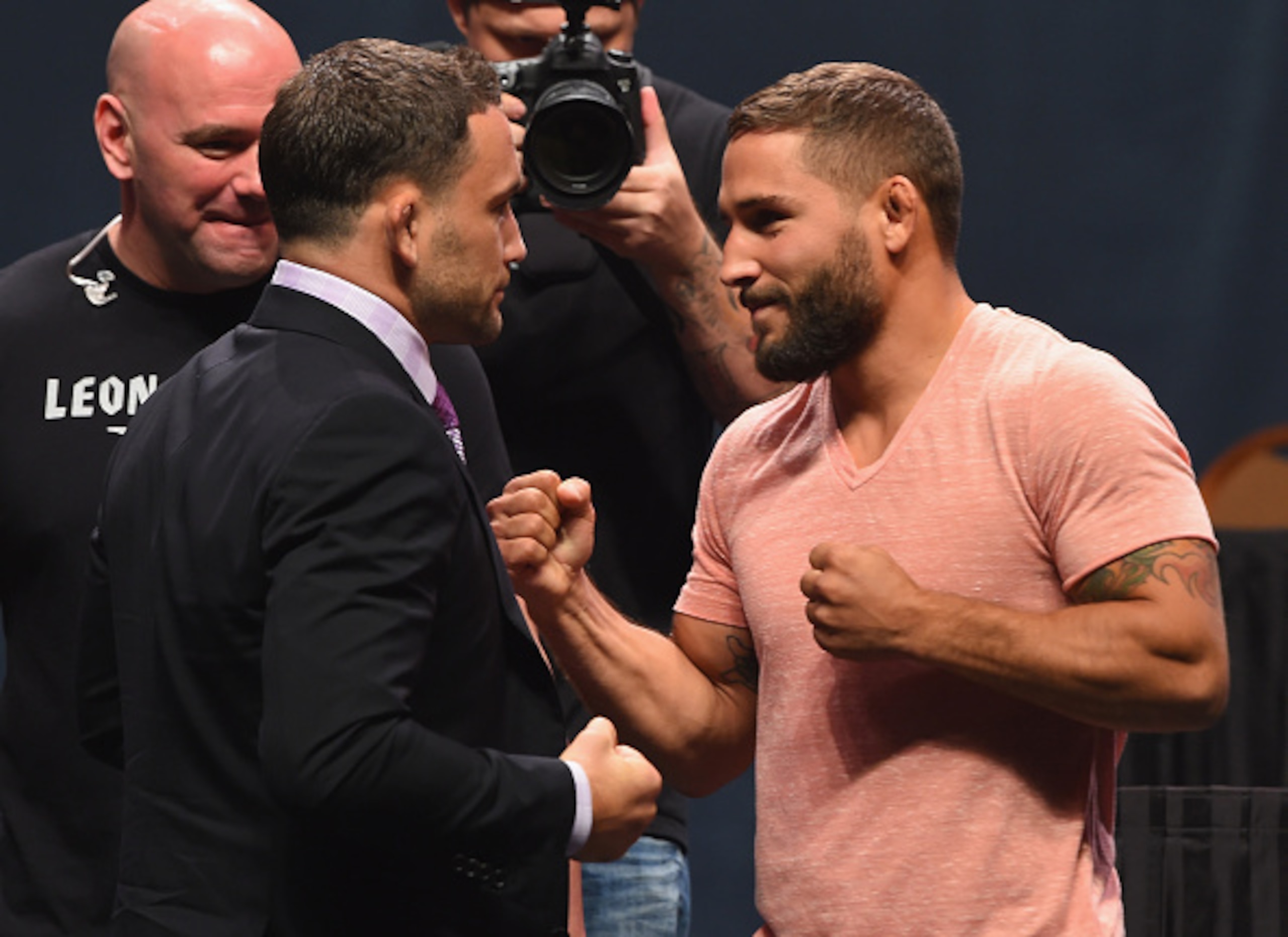
Featherweights
Frankie Edgar (19-4-1; 13-4-1 UFC) vs. Chad Mendes (17-3; 8-3 UFC)
The UFC booked an outstanding featherweight matchup as The Ultimate Fighter Finale's main event as a backup plan in case either Jose Aldo or Conor McGregor went down with an injury in UFC 194's main event. With the two title contestants healthy, the alternative plan looks to be a barnburner.
Edgar is the former lightweight champion and featherweight title challenger. He went on a rough stretch after his epic title fights with Gray Maynard, dropping decisions in a pair of fights to Benson Henderson and then to 145-pound kingpin Aldo. Since February 2013, however, he's won four in a row, all of them impressively.
Charles Oliveira, BJ Penn, Cub Swanson and Urijah Faber have all fallen to the former champ, and he stands on the cusp of another well-earned title shot.
Mendes has been one of the best featherweights in the world for years. The Californian lost a competitive decision to Aldo last October, but rebounded with a first-round finish of Ricardo Lamas in April. He took the interim title bout with Conor McGregor on two weeks' notice last July, and fought well before falling under the Irishman's unrelenting onslaught in the second round.
If Mendes wins, he's likely no more than one or two wins away from another title shot, though his pair of losses to Aldo and one to McGregor makes that less likely. If Edgar wins, he will have strung together five consecutive wins at the top of the division, and it'll be difficult to deny him another shot at the belt.
Edgar is a tremendous transitional fighter, and one of the best in MMA history at using the 25-minute length of a five-round fight as a weapon. He layers his game as the fight progresses: The angles and level changes he shows early turn into entries for takedowns as the fight goes on, and early takedowns turn into openings to land strikes later.
The New Jersey native moves consistently at range, showing his opponents a bewildering variety of footwork, pivots and angles. He does so more efficiently and intentionally than he did early in his career, however, when he often seemed to be moving for the sake of movement.
The jab is a constant for Edgar. He pumps it ceaselessly, often with less intention of landing it than feeling out the distance and covering his forward or lateral movement. Combinations are his strong suit, and he routinely strings together three to five shots. That work with his hands sets up his steady diet of low kicks, and his consistent targeting of the body and legs wears down his opponent over the course of the fight.
Pace and volume are thought to be strengths of Edgar's game, but this is overstated. He certainly makes his opponent work through his movement, but he doesn't actually throw all that much in comparison to fighters like Conor McGregor.
The same is true of his defense: His consistent head movement makes him seem much sounder than he actually is, and he relies on distance to avoid most shots. Counters have consistently been a problem for him, and while he's been exceptionally durable, his chin won't last forever.
Only a few fighters in MMA blend striking and wrestling better than Edgar. He excels at covering his attempts with strikes and angles, which gives him exceptional entries onto his opponent's hips. His finishes are clean and technical, and executed with shocking strength that belies his lack of size. Singles, doubles and knee-taps are his go-to takedowns, and he chains them beautifully once he's in on the hips.
The biggest improvement in Edgar's game over the last several years has been to his top game. He struggled to hold down his opponents at lightweight, but at 145 pounds his base has been unshakably strong. His pressure from the top is exceptional, and he's impossible to shake from the half guard, where he simply pounds away for rounds at a time.
Takedown defense was a problem for Edgar at 155 pounds, but at featherweight nobody has succeeded in getting him to the floor. He offers little from his back, though he scrambles well and is difficult to hold down.
Mendes is an exceptional physical specimen with great speed and athleticism. He has developed into a fine striker over the last several years, and is now one of the premier punchers at 145 pounds.
Counters are Mendes' specialty. He circles and cuts angles at range, moving laterally and tossing out hard low kicks while he gauges distance and timing. When his opponent commits, he responds with a full array of options, including pull counters as he steps back and same-time or half-beat counters when he sees the right trigger. All of his shots carry vicious power, and he's exceptionally accurate with his placement.
Defense is another strength. Mendes has great sense of the distance and timing, moves his head well and is rarely there to be hit. He consistently takes an angle and steps off immediately after he throws.
On the downside, volume can be a problem. He doesn't jab, and he goes through long periods where not all that much happens. Additionally, quicker-paced opponents like Conor McGregor can overload him with too many strikes to effectively counter.
Mendes is easily the best wrestler at featherweight. His takedown defense is borderline-supernatural; he's even shucked off perfect shots that place his opponents in on his hips with their hands clasped.
Offensively, he shoots one of the most explosive and technical blast doubles in the sport. His drive is incredible, and he finishes with authority. He has great timing and finds clean entries for his shots, and if his initial shot fails he chains his attempts beautifully. Mendes' repertoire is everything you'd expect from someone who nearly won a Division I title.
Despite his wrestling pedigree, Mendes isn't a dedicated grappler. He uses his takedowns mostly as a change of pace, to set up strikes or catch a breather on the feet rather than to look for extended periods of time on top. When he wants to, however, he controls reasonably well, can land hard shots and has the same acumen with the front headlock that characterizes his Alpha Male teammates.
Betting Odds
Edgar -165, Mendes +145
Prediction
There are two likely outcomes here. In the first, Edgar sticks and moves his way to a decision, outpointing Mendes on the feet and outworking him over five hard-fought rounds. In the second, Mendes flattens Edgar with a counter or two and either gets the knockout or rides a couple of big moments to a tight decision.
The first seems slightly more likely, which explains the betting line in Edgar's favor. Mendes struggled to keep pace with Conor McGregor in July and tired quickly, though that was a short-notice fight and the Irishman made a concerted effort to target Mendes' body with his considerably greater power. It seems reasonable to assume that Edgar will try to do the same thing.
The x-factor here is Mendes' defensive wrestling. Much of Edgar's game—feints, angles and level changes—relies on his ability to use the threat of his takedowns to distract from his striking and vice versa. That isn't going to scare Mendes, and even if Edgar can get him down there's little chance he'll be able to hold Mendes on the mat. Without viable takedowns, Edgar's striking becomes much less effective.
While the head points to Edgar as the favorite, the gut points in Mendes' direction. He's an accomplished counterpuncher and Edgar has always been hittable on the counter; this will be in the small cage, which cuts down Edgar's margin for error as he sticks and moves; and the former champion is 34, with a ton of mileage. The pick is Mendes by close decision.
Patrick Wyman is the Senior MMA Analyst for Bleacher Reporter and the co-host of the Heavy Hands Podcast, your source for the finer points of face-punching. He can be found on Twitter.
Betting odds via Odds Shark.
.jpg?w=2560)



.jpg?w=2560 "2 NFL Officials Suspended")

.jpg?w=2560 "Viral Rams Coach Vid 🖕")