

Australia vs. New Zealand, 3rd Test: Date, Time, Live Stream, TV Info, Preview
Mitchell Johnson is out, the pink balls are in, the floodlights are on and New Zealand need to beat Australia in order to square the series. Let's...play...night cricket!
The inaugural day-night Test begins in Adelaide, Australia, on Friday and, with a new ball and unfamiliar conditions, the scene is set for a potential thriller.
Read on to see how the two sides are shaping up for this historic clash.

.jpg?w=2560 "Rams Raiders Football")

Date: Friday, November 27, 2015
Time: 2 p.m. local (3:30 a.m. GMT)
Venue: Adelaide Oval, Adelaide, Australia
Live Stream and TV Info: Channel Nine (Australia), Sky Sport (New Zealand), Sky Sports (UK), Super Sport (South Africa), Willow TV (USA—subscription required)
Weather: According to the BBC's weather department, the opening couple of days could be relatively cool with temperatures dropping as low as 57 degrees Fahrenheit in the evening. However, things should heat up as the match progresses.

The story so far...
Australia inflicted an emphatic 208-run win over visitors New Zealand at Brisbane in the opening Test of this series and, with the hosts posting 559, things were looking similarly bleak for the visitors after the first couple of days at the WACA.
However, an incredible innings of 290 from Ross Taylor, backed up by the relentless Kane Williamson, helped the Black Caps secure a draw and replenish their confidence banks in the process.
In fact, as reported by ESPN Cricinfo's Melinda Farrell, New Zealand's coach Mike Hesson claimed it was a psychological victory for his side.
And now, with the teams entering the unknown of pink-ball Test cricket played under floodlights, anything could happen at Adelaide.
What is all the fuss about day-night cricket?
It may be an exciting spectacle for fans, but the prospect of playing Test cricket at night has been met with a mixed response by players and pundits.
Some, such as former England skipper Michael Vaughan, have said it's a positive step for the future of the format:
And India's Test captain Virat Kohli told Reuters (h/t the Sydney Morning Herald) it is a "landmark occasion" and "a step towards improving the excitement and the popularity of Test cricket".
However, others aren't overly thrilled at the prospect, as per Mitchell Starc's comments in the New Zealand Herald:
"I'm yet to be convinced.
It's definitely not a red ball. It doesn't react anything like the red ball, in terms of swing and the hardness of it.
It goes soft pretty quickly. I didn't see a huge amount of reverse swing (in last year's Shield game) and I don't think it swung from memory too much until the artificial light took over.
Personally, I couldn't see the thing at night on the boundary. I couldn't see the ball so I'm not sure how the crowd are going to see it.
"
Current Aussie batsman Adam Voges and former captain Ricky Ponting have also expressed doubts about the innovation's impact on cricket's tradition and statistics.
Day-night cricket has been played sporadically since the early 1950s, but it wasn't until Kerry Packer's controversial World Series Cricket that the concept entered the mainstream in 1977.
Since then, it has become a regular feature of cricket, with many ODIs culminating in the evening and the Twenty20 format particularly suited to being contested under lights.
But the strategies of Test cricket are different to the limited-overs formats, with the movement of the ball, rather than the volume and velocity of runs, often the key ingredient to deciding a game.
And, while a handful of first-class games have been used as Guinea Pigs, the research has been far from in-depth.
How will the pink ball react? Will the pink leather deteriorate quicker than the classic red model? What is it like facing a new ball under lights? Will the evening dew affect the surface?
These questions and more will be answered shortly.
Australia in pole position
It’s almost impossible to lose a Test if you score over 500 in your first innings, and a repeat of this feat, for the third consecutive game, would all but secure the series for Steven Smith's men.
Given that, the day-night conditions should aid bowlers, and this could prove more difficult than at Brisbane and Perth. However, the Baggy Greens’ batsmen are clearly in form.
The top six, which looked so fragile in the Ashes, have filled their boots to score eight tons in total already, with the rampaging David Warner contributing three himself.
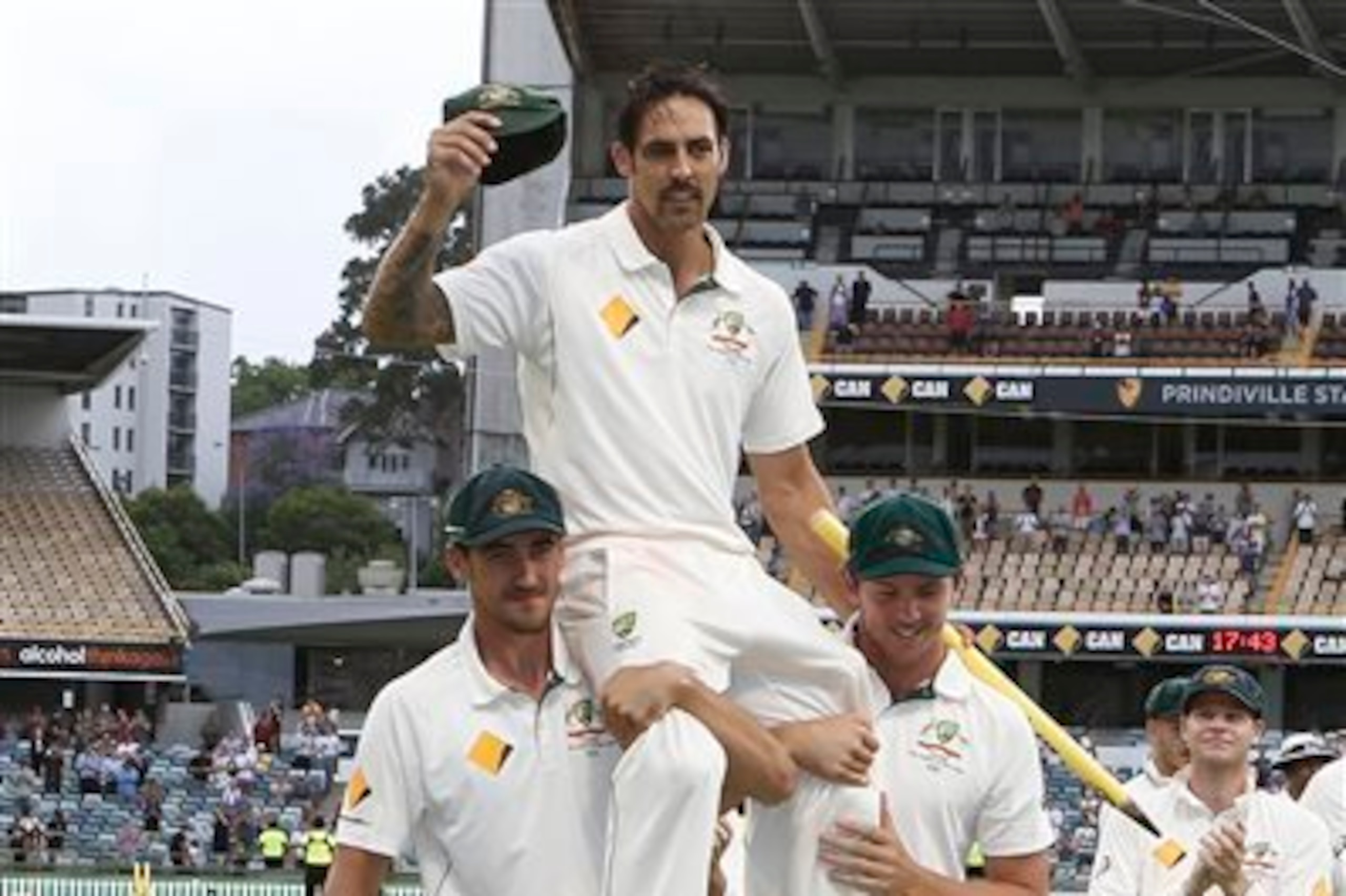
With the ball, things aren't quite as settled, and the departure of Mitchell Johnson opens up the opportunity for change in the bowling attack.
James Pattinson’s pace perhaps makes him the most obvious replacement, but if there's a hint of grass on the wicket, the nagging line and length of Peter Siddle could see him get a look.
Additionally, the presence of spinner Steve O’Keefe hints at a rare dual-slow-bowler attack should the pitch suggest turn.
Of course, the Baggy Greens don’t need to win this game in order to clinch the series. However, given the magnitude of the occasion and additional attention, their mentality will be to attack from the off.
What do New Zealand need to do?
Apart from a brief moment at Perth where they secured a marginal first-innings lead, since losing the toss at the Gabba, the Kiwis have been behind the eight-ball throughout this series.
The main issue is, despite their stellar new-ball partnership of Trent Boult and Tim Southee, New Zealand have managed to take just 24 Australian wickets in total so far.
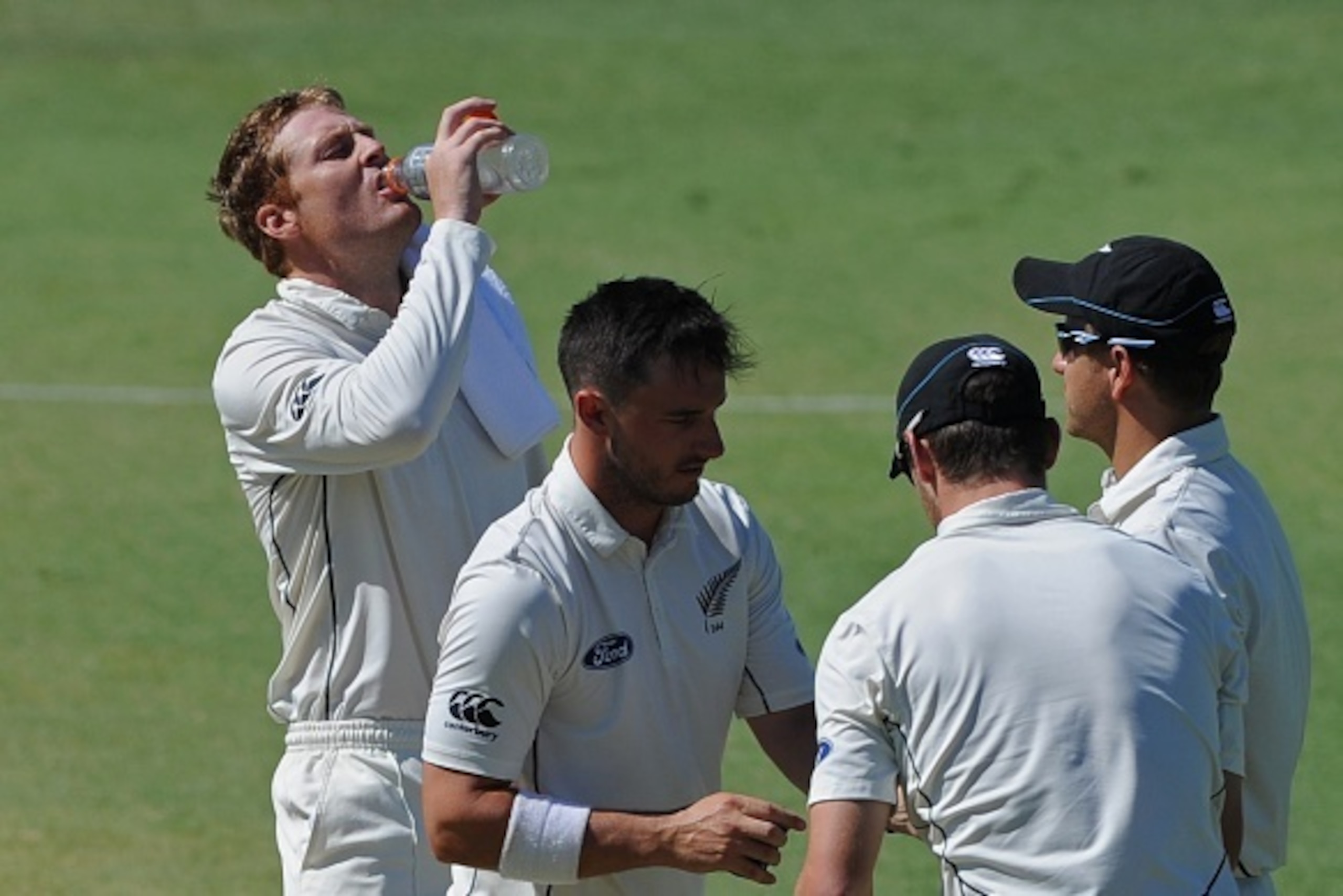
And apart from Southee, all of their bowlers have been expensive, going for at least 3.7 runs per over with Mark Craig's off-breaks proving particularly costly (438 runs from 86 overs).
Except for Ross Taylor and Kane Williamson, run scoring has also been difficult.
While that pair have recorded 352 and 397 runs, respectively, apart from a solitary Brendon McCullum effort, no other batsman has managed to score a half century.
With conditions in Adelaide likely to be more conducive to bowling, the Black Caps' pacemen should, at least, have a chance to improve their numbers, and taking early wickets will be crucial.
Test form (latest left-to-right)
Australia: DWWLLWL
New Zealand: DLWLWWW
Squads
Australia
Mitchell Johnson's sudden retirement and Usman Khawaja's injury has opened the door for Shaun Smith and James Pattinson to resume their international careers, while one-Test veteran Steve O'Keefe has also been called up.
Steve Smith (captain), David Warner, Joe Burns, Shaun Marsh, Adam Voges, Mitchell Marsh, Peter Nevill (wicketkeeper), Mitchell Starc, Nathan Lyon, Josh Hazlewood, Peter Siddle, James Pattinson, Steve O'Keefe.
New Zealand
The Kiwis are sweating on the fitness of Trent Boult, who has been struggling to shake off a back injury, but the rest of the squad are available for selection.
Brendon McCullum (captain), Martin Guptill, Tom Latham, Hamish Rutherford, Kane Williamson, Ross Taylor, James Neesham, BJ Watling (wicketkeeper), Luke Ronchi (wicketkeeper), Mitchell Santner, Tim Southee, Doug Bracewell, Mark Craig, Matt Henry, Trent Boult.
Key Players
Australia
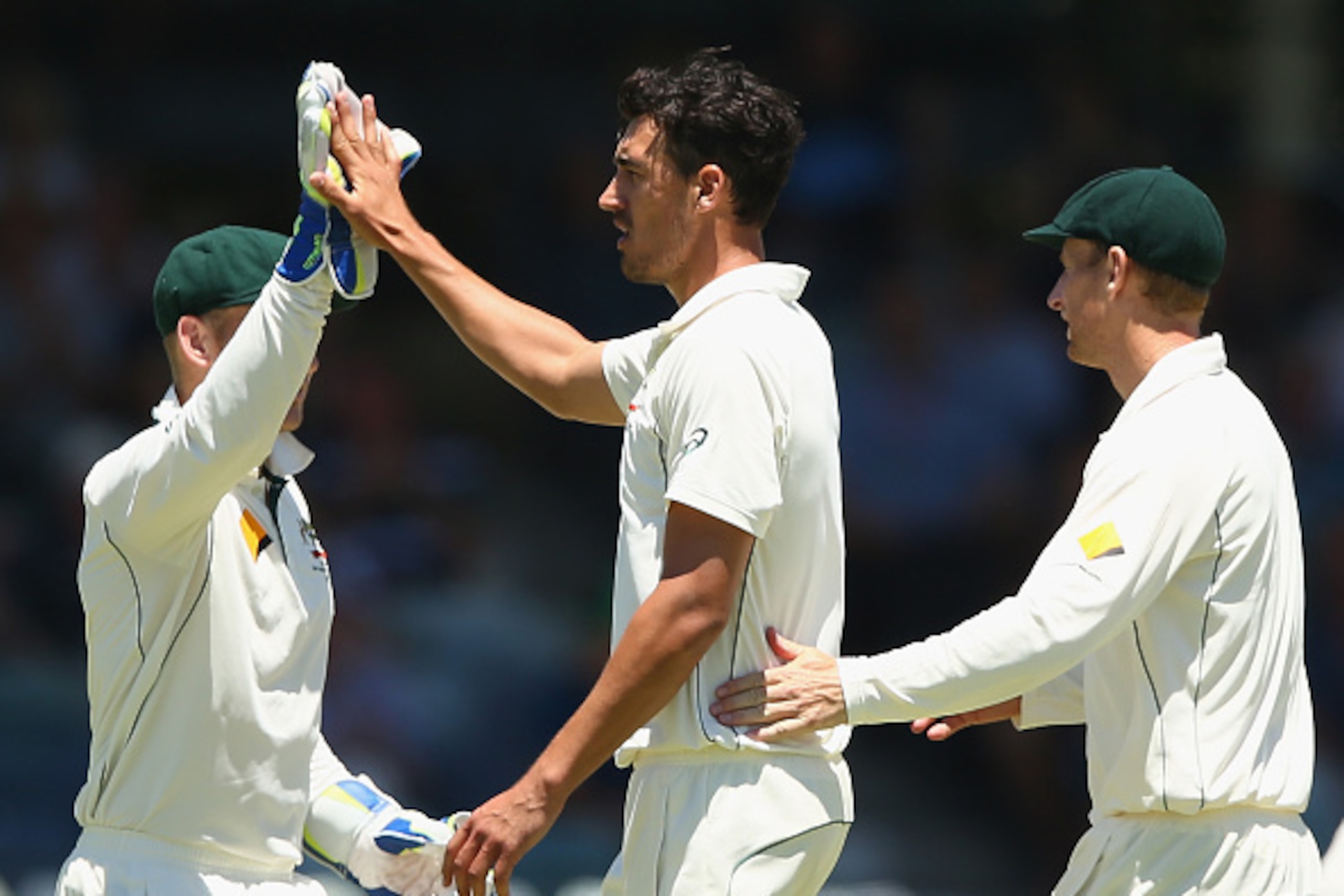
With Mitchell Johnson hanging up his pads, the time is right for his namesake Mitchell Starc to take the Australian attack by the horns and make it his own...if he hasn't already, that is.
The left-arm paceman has claimed 10 wickets in this series at an average of 27.80 and has 43 scalps in the bag for the calendar year so far.
New Zealand
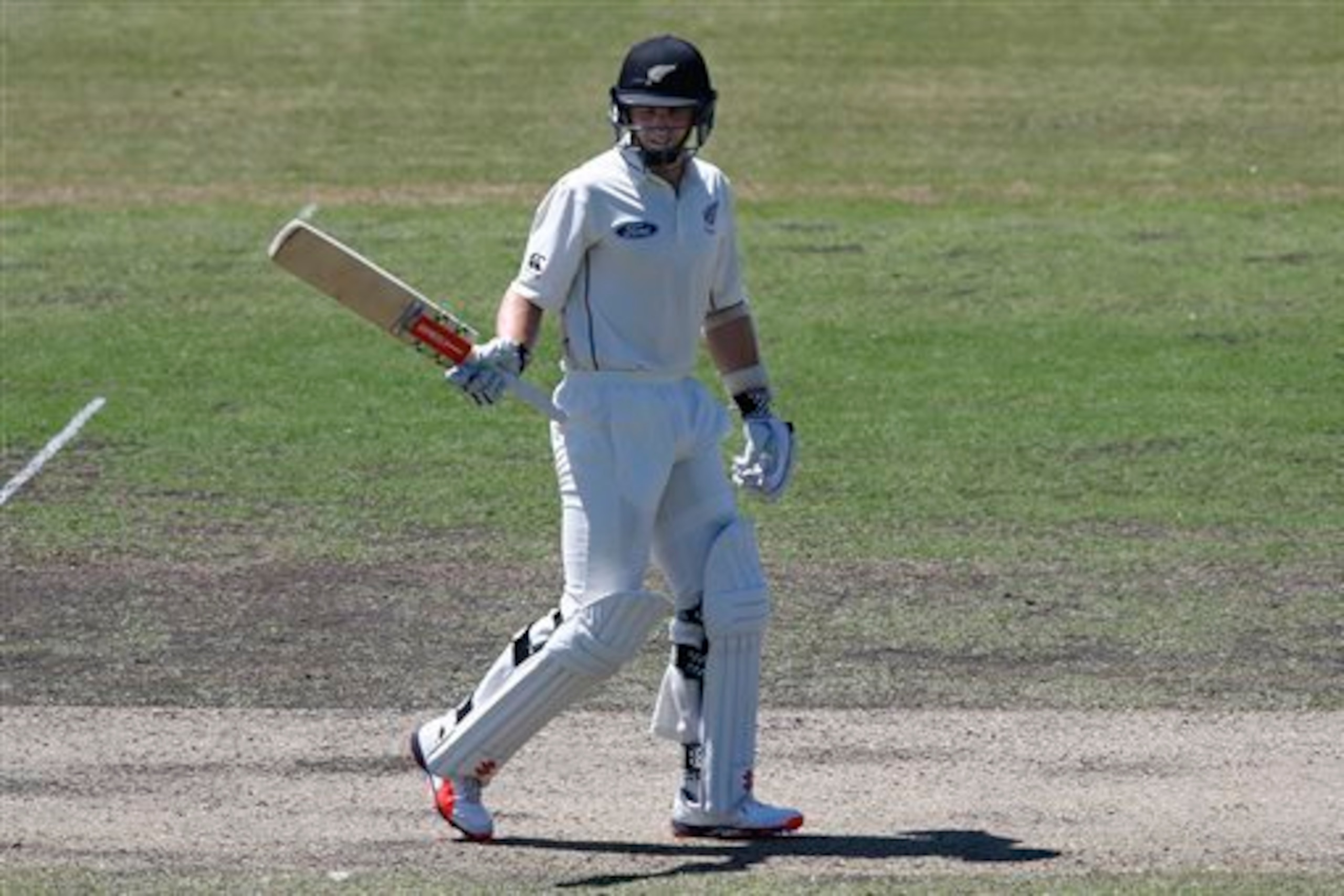
As England found out in the summer, Kane Williamson is a difficult man to get out, and the right hander has held New Zealand together with 397 runs from just four innings.
The 25-year-old, who tends to rely on timing and placement rather than brute force, is in the form of his life and currently averages 109.12 per innings in 2015.
Who will win?
New Zealand have beaten their Tasman Sea neighbours only eight times in the entire history of Test cricket, and they haven't won a five-day encounter Down Under since the famous 1985/86 series.
But, given the uncertainty of the conditions, the lack of Mitchell Johnson, and the confidence they took from their Perth fightback, the Kiwis might not get many better chances to square a series than now.

.jpg?w=2560 "Steelers Saints Football")

.jpg?w=2560 "🚨 Week 8 AP Top 25 Poll")
.jpg?w=2560 "Packers Safety Slams Refs 🤬")

.jpg?w=2560 "Fantasy Waiver Wire Stars 🤩")