

Tactical Analysis of Euro 2016's Play-off Winners
The UEFA Euro 2016 play-offs have concluded, producing four teams that will contest the summer tournament in France next year: Sweden, Republic of Ireland, Hungary and Ukraine.
The two-legged affairs gave us a good opportunity to run the rule over the four sides one last time, hinting at each country's style of play, tendencies and go-to formation.
Ahead of the enticing group-stage draw, set to take place on December 12, we give you the lowdown on the tournament's last four entrants.


.jpg?w=2560)
Sweden
Sweden defeated Denmark in a two-legged Scandinavian derby to progress to the Euro 2016 finals, riding on the coattails of a rather familiar name: Zlatan Ibrahimovic. His three goals—one in Stockholm, two in Copenhagen—ensured his nation ended up on the right side of a 4-3 aggregate thriller.
Both sides, given the chance, prefer to play reactive, counter-attacking football, but Sweden won the right to do so by scoring first in both games. It allowed Sweden manager Erik Hamren to lean on his preferred 4-4-1-1 system—slamming two rows of players in behind the ball—and pick the opponents off on the break.
The big talking point during Sweden’s qualifying campaign has been the role, and position, Zlatan has played. A team who play in such a reactive fashion need pace on the break, but their talismanic striker has never offered that and can’t now at 34 years of age. Zlatan has clear strengths and clear weaknesses, and it’s been up to Hamren to carve a side around him.
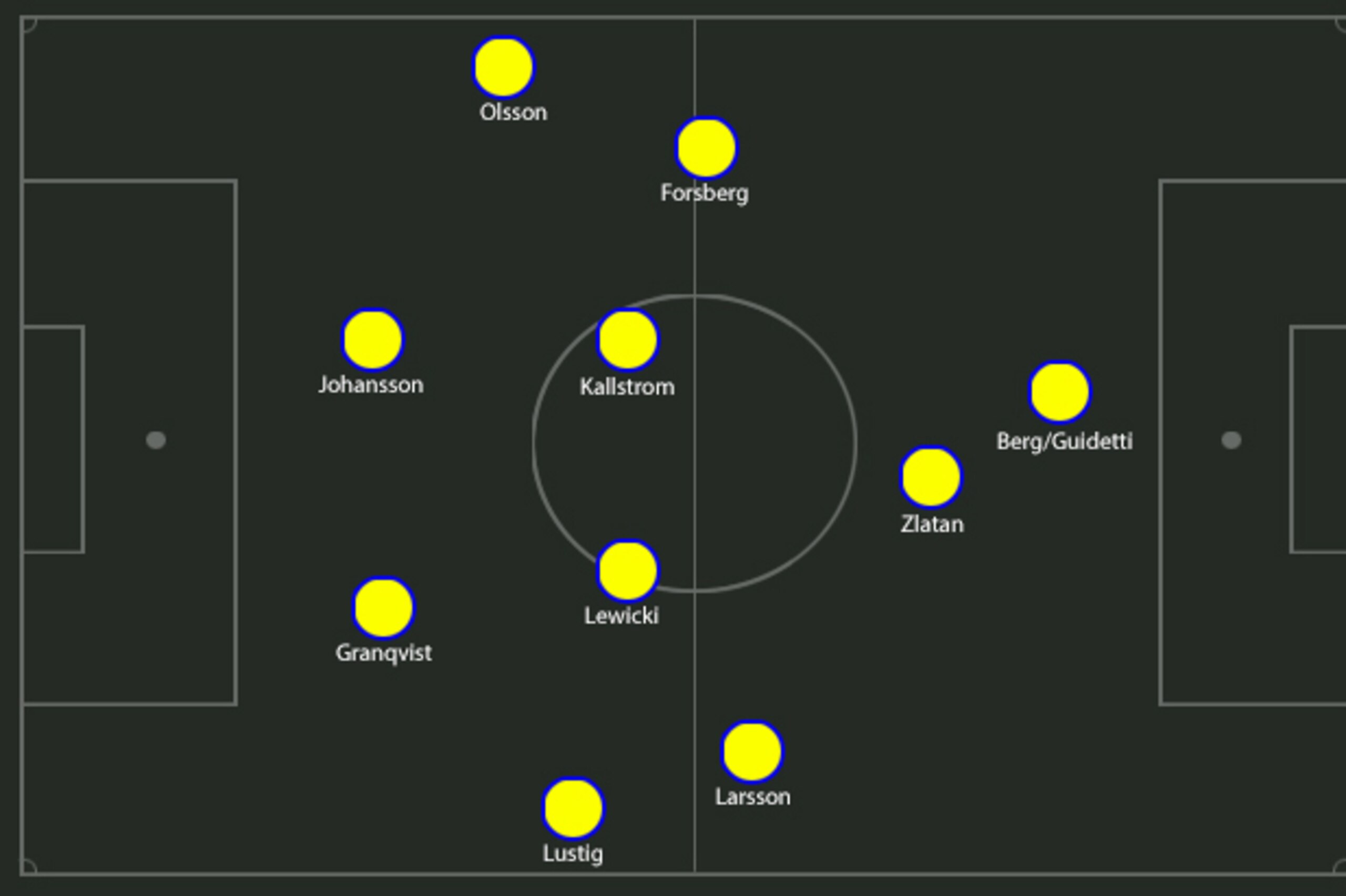
He has done so by allowing Zlatan to drop in and become part-playmaker—much in the way he does for Paris Saint-Germain’s big games, dropping in and allowing a strike partner to breach the space he leaves. In the French capital it’s Edinson Cavani; on the international stage it’s been Marcus Berg—although his position is under threat from John Guidetti, despite a lack of starts for Celta Vigo.
Oscar Wendt is Sweden’s best left-back, but he doesn’t subscribe to Hamren’s workmanlike system and is not considered for selection. Martin Olsson is therefore played instead, despite being considered the weak link in the team.
It’s strange to see a Sweden side haunted by a paucity of defensive options—it is usually their forte—and that even extends to the centre-back position, where star quality is lacking. They haven’t produced an Olof Mellberg for a while.

They make up for it with a team ethic—an attitude all of the stronger historical Sweden sides boasted. The 4-4-1-1 template is used at youth level, breeding familiarity with the system, and this senior side draws parallels with this summer’s under-21 team, who won the European Championships.
Oscar Lewicki has found a home in central midfield playing almost the same role he did during the summer for the youth team, while fellow victors Oscar Hiljemark, Patrik Carlgren, Filip Helander, Alexander Milosevic and Guidetti were on the bench for the Denmark play-off. They’re integrating talent superbly.
The one downside to Hamren’s system is that flair is, by and large, absent. Zlatan is placed in alongside nine outfield warriors, and there isn’t room for another of his ilk. It leaves the likes of Erkan Zengin, exciting as they are, without a role to play other than super-sub saviour.
Republic of Ireland
Another side who boast impeccable team spirit are the Republic of Ireland, who overcame a strong Bosnia and Herzegovina outfit in Dublin on Monday night 2-0 (3-1 aggregate).
“Ireland have the cohesion and spirit of a club team, and that raises the collective level of the team to one above so many other sides that notionally should be better than them,” said Miguel Delaney on WhoScored.com after the brilliant play-off win.

Martin O’Neill has rebuilt his managerial reputation by doing what he does best: motivating, cajoling and praising his players to the moon and back. As Delaney notes, the Ulsterman uses the word “special” constantly when referring to his team’s efforts and achievements.
Anyone who watched Ireland at Euro 2012 will know what to expect, and it’s not altogether too dissimilar to Sweden’s approach: reductive, counter-attacking football that relies on a workmanlike quality of organisation and structure.
James McCarthy is beginning to replicate his Everton form in the centre of Ireland’s midfield; Jeff Hendrick and Robbie Brady have formed a deadly bond on the left; and the outlets up top—be it Shane Long or Jonathan Walters—remain potent.
The Boys In Green have two roaring full-backs but play directly to their forward outlet when possible to gain territory as quickly as they can. Walters has been “clutch” for Ireland and enjoys playing off the right, where he can bully full-backs and play a sort of auxiliary wide-target-man role.
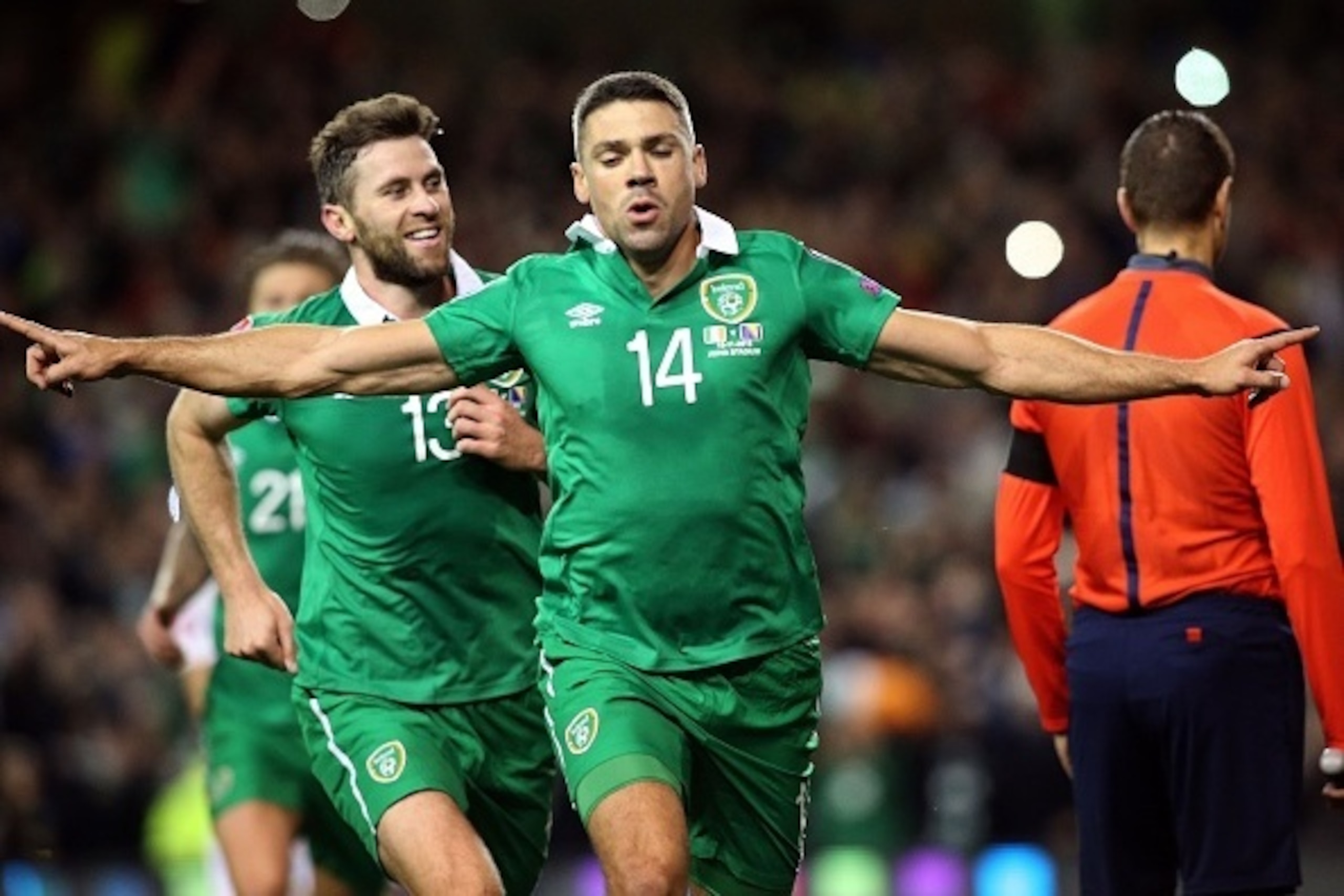
Long’s presence in the channels, and his pace over the top, can cause any side headaches, but he’s been plagued by injuries at Southampton and rarely plays enough first-team football to be considered fit. It’s a problem for O’Neill, with 32-year-old Ipswich striker Daryl Murphy the other choice.
Despite lacking possession, Ireland consistently fashion two or three good chances on goal per game. It’s up to them to maintain a high conversion rate—and they often do—making them a real pain to play against.
O’Neill’s XI for the second leg against Bosnia featured three Championship players and West Ham United’s reserve goalkeeper, while the visitors boasted Edin Dzeko, Senad Lulic, Sead Kolasinac and Miralem Pjanic, yet the Boys In Green still emerged victorious.
Hungary
Hungary overcame a technically superior Norway in the play-offs, relying on much of the same qualities Ireland did to beat Bosnia and Herzegovina; though, they were no doubt helped by the fact their opponents matched up poorly from a tactical perspective.
The Scandinavians boast very little in terms of striking talent and were forced to play an attacking midfielder up front in both legs—alongside a centre-forward in the first leg and alone as the spearhead of a five-man midfield in the second.
Hungary sat deep and soaked up the pressure, their centre-backs rarely coming under duress despite their opponents managing 65 percent possession in the first leg and 63 percent in the second. On the occasions Norway did force a way through or pick a pass, the defence caved in—showing an extremely soft, and alarming, centre.
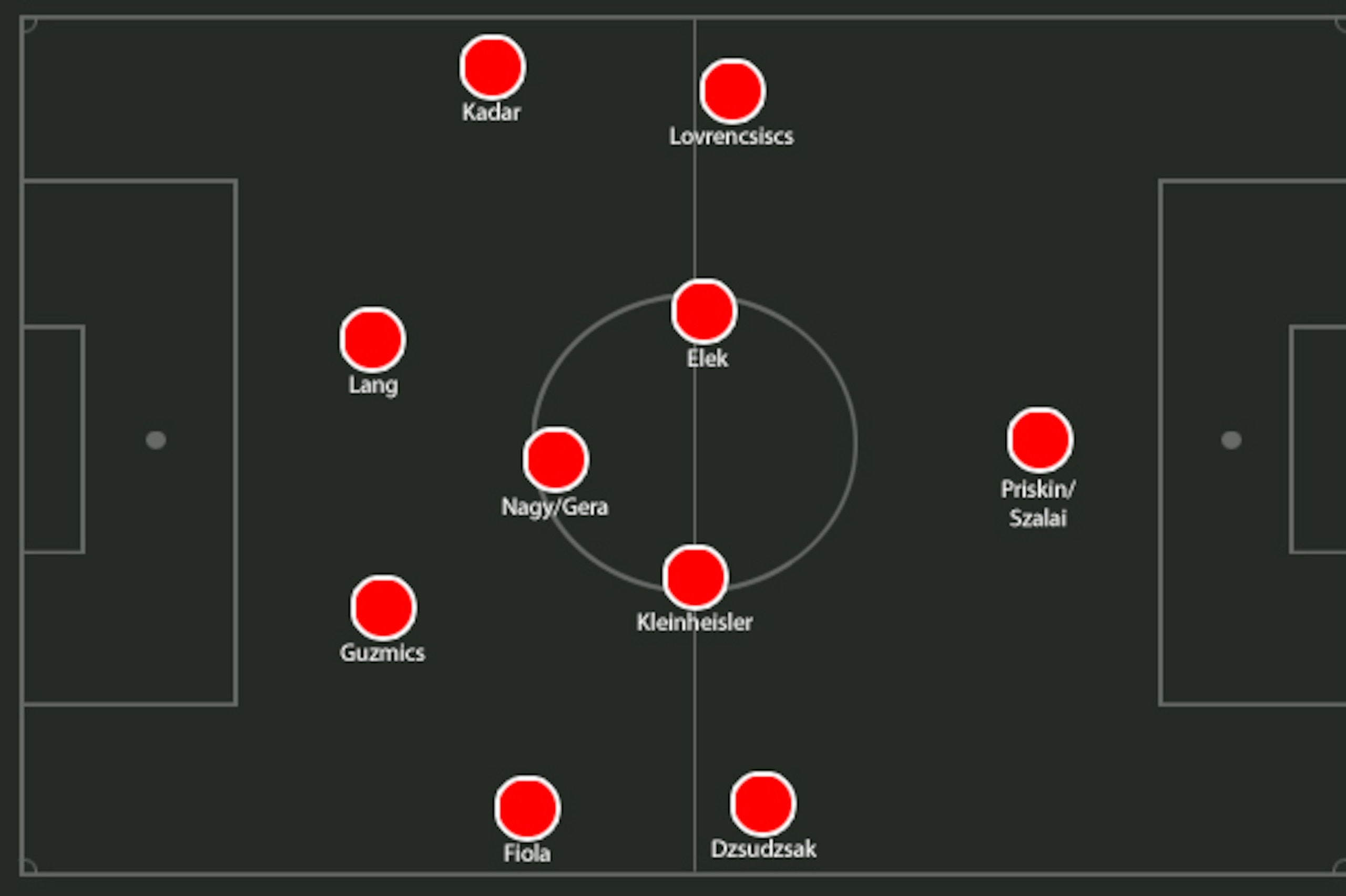
The "Nemzeti Tizenegy" (National Eleven) fired early balls out of defence to right-winger Balazs Dzsudzsak, asking him to travel with it and fashion shooting/crossing chances. Tamas Priskin ran in behind a high defensive line, attempting to split the centre-backs and latch onto longer punts, and Laszlo Kleinheisler—a 21-year-old who won his first two national caps in these two play-off games—was allowed to thrust forward, breaking beyond and entering the box to mop up any chances.

Missing the influential Zoltan Gera due to suspension, Hungary leaned on five-cap Adam Nagy in holding midfield, slotting him into the anchor role in a 4-1-4-1 formation. His tenacious, aggressive presence did enough to put off Norway’s pretty passers—Martin Odegaard included—and disrupt their rhythm.
Expect this to be the foundation for their tournament performances. The team are already being hailed as heroes after reaching their first finals since 1986, but the Magical Magyars they are not.
Kleinheisler and Nagy are interesting, late options who have emerged. Manager Bernd Storck will have been fairly happy with the veteran presence in midfield as they entered the play-offs, but Nagy’s bite and Kleinheisler’s opportunism could give them a surprise edge in France.
Ukraine
Ukraine are the anomalous side in among the four play-off qualifiers; they’re the only team who are actually happy to play with the ball if required.
True, they prefer to be reactive—in truth, almost every side other than Spain prefer to be reactive now—but they’re far more capable in possession than the three aforementioned outfits here.

Ukraine’s approach to football has barely changed since the last European Championships; they still rely on wing wonders Andriy Yarmolenko and Yehven Konoplyanka to pierce opposing defensive structures and find the back of the net.
Konoplyanka’s direct, hard running makes full-backs wilt—just ask Glen Johnson—while Yarmolenko is a freakishly tall wideman who, like Jonathan Walters, can act as an auxiliary target man when necessary.
The Yellow-Blue’s use of Yarmolenko is different to Ireland’s use of Walters, though. Rather than pump it forward 50 yards to him, they move forward more steadily through midfield and then switch the play from left to right, allowing their beast-like wideman to bring the ball down and isolate a full-back.

Having two dangerous wingers stretches opponents and forces them to double up on both sides. If they had a striker at the same level, they might be able to exploit the resulting space, but for a long time, they’ve lacked cutting edge from a central position.
As a result, Mykhaylo Fomenko’s men huff and puff but at times fail to make the breakthrough. They’re a nightmare to play against—a true banana skin—but won’t be trusted to make a huge impact.
.jpg?w=2560 "Rams Eagles Football")
.jpg?w=2560 "Texans-Mixon Released Football")
.jpg?w=2560 "Bijan's INSANE 1st Half 🤩")

.jpg?w=2560 "2 NFL Officials Suspended")

