

The Complete Guide to UFC Fight Night 78: Gastelum vs. Magny
On Saturday, the UFC returns to Mexico for the second time in 2015 for the finale of the second season of The Ultimate Fighter: Latin America. The promotion has invested heavily in Mexico, hiring a PR firm that specializes in the market to help push its rising stars to the Spanish-speaking audience.
Two of those stars, Kelvin Gastelum and Henry Cejudo, form the backbone of this event. In the main event, Gastelum takes on Neil Magny, who steps up on short notice to replace the injured Matt Brown. The original fight was one of the most anticipated of the fall, but the matchup with Magny might be even more relevant for the division, as it pits two of the best young welterweights against each other.
Cejudo, a gold medalist in freestyle wrestling at the 2008 Olympics, takes on Brazil's Jussier Formiga in the third fight on the main card. This is a likely title eliminator for the flyweight division, with the winner set to receive a shot at 125-pound kingpin Demetrious Johnson. The stakes for Cejudo are even higher: He has a great opportunity to further entrench himself as a rising star in the Mexican market.
The co-main event features aging warhorse and winner of the first season of The Ultimate Fighter, Diego Sanchez, in a fight against longtime featherweight staple Ricardo Lamas. This could be the end of the line for Sanchez, and fighting in Mexico is something both he and the UFC have wanted for a long time.
The rest of the card is somewhat underwhelming. One of the two TUF: Latin America finals, the lightweight bout between Horacio Gutierrez and Enrique Barzola, features a pair of promising young fighters in what should be an interesting matchup. The welterweight final is less promising.
A lightweight bout between The Ultimate Fighter 8 winner Efrain Escudero, who's now in his third stint with the promotion and served as one of the coaches for this season of the show, and Brazil's Leandro Silva opens the main card. It's a forgettable matchup but presumably has some appeal to the audience.
The jewel of the preliminary card is a bantamweight matchup between Mexico's Erik Perez and France's Taylor Lapilus. Both men are young strikers with big upside, and this profiles as a potential fight of the night. The other six preliminary bouts are forgettable, though a lightweight matchup between Valmir Lazaro and Michel Prazeres could be fun.
Let's take a look at each matchup.
The Fight Pass Prelims
1 of 7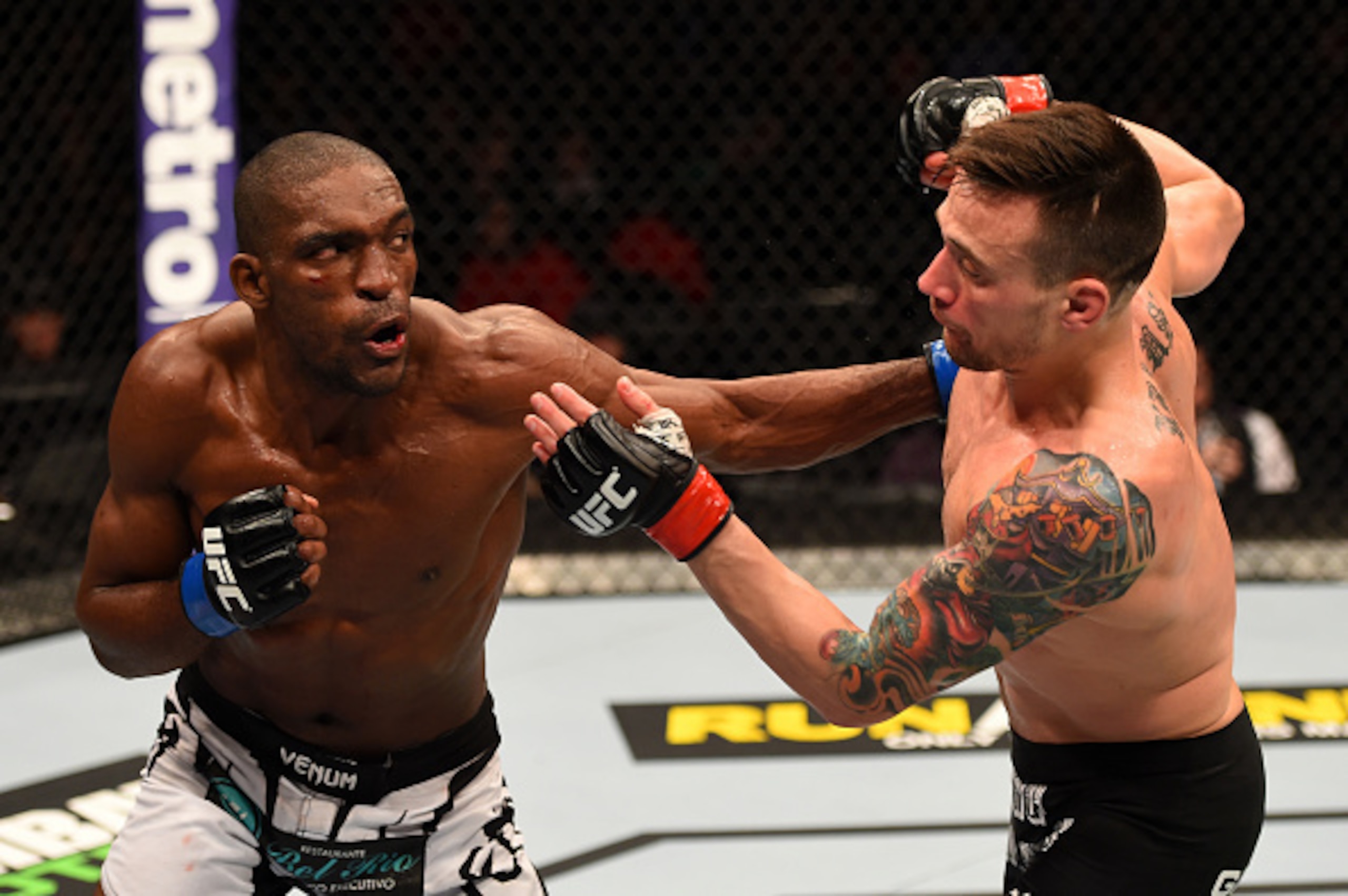
Lightweights
Valmir Lazaro (13-3; 1-1 UFC) vs. Michel Prazeres (18-2; 2-2 UFC)
Brazilian lightweights meet in the first bout on Fight Pass. Lazaro, a product of the famed Nova Uniao team, rebounded from a loss to James Vick in his UFC debut to defeat James Krause in February. Prazeres lost a clear decision to Kevin Lee in February to fall to 2-2 in the promotion.
Lazaro is a slick striker with outstanding takedown defense. He works behind a punishing jab, counters beautifully in the pocket and strings together smooth punch-kick combinations. Power isn't his strong suit, but he works at a great pace.
By contrast, his opponent is a grinder. Prazeres is built like a muscular bowling ball, and his game centers on his strength. He wings powerful hooks at range, but those mostly serve to cover his clinch entries, from which he likes body-lock trips and takedowns. From top position he passes smoothly and has an unshakable base.
If Prazeres can get Lazaro to the floor, he should have an advantage. The Novia Uniao product relies on his ability to scramble, and Prazeres is excellent at shutting down those escapes. In general, however, Lazaro's height, range and output on the feet should be enough. The pick is Lazaro by decision.
Lightweights
Cesar Arzamendia (7-1; 0-0 UFC) vs. Polo Reyes (3-1; 0-0 UFC)
The Ultimate Fighter: Latin America 2 semifinalists meet in a probable loser-leaves-town matchup. Arzamendia, a native of Paraguay, defeated Oliver Meza before falling to finalist Enrique Barzola. Reyes hails from Mexico and knocked out Christhian Soto in the elimination round. He lost to Horacio Gutierrez by knockout in the semifinal round.
Arzamendia is a physical specimen with great size and power. He owns well-rounded skills, with solid combination boxing on the feet that blends seamlessly into a vicious clinch game focused on barrages of knees. His takedown defense is proficient, and he has a nice chain of submissions from the front headlock.
Reyes is a striker by trade and a pretty good one. He throws excellent punching combinations on the feet both moving backward and on the counter, and he punctuates them with a left kick to the head or body. His takedown defense is generally competent.
This should be a wild fight. Both fighters prefer to strike, work at an outstanding pace and have good power. Arzamendia is the favorite and seems a little more athletic and diverse. The pick is Arzamendia by submission in the second round.
Welterweights
Vernon Ramos (3-0; 0-0 UFC) vs. Alvaro Herrera (8-3; 0-0 UFC)
Mexico's Herrera, who fell in the elimination round to Hector Aldana, gets another shot against Panama native Ramos, who made it to the semifinals against Erick Montano.
Herrera is a solid fighter. He's awkwardly effective on the feet, but the real meat of his game lies in decent takedowns and strong top-control grappling. Ramos is mostly a striker who throws decent punch-kick combinations, but he can hit the occasional takedown and work some top control.
Neither fighter really stands out. Ramos is the favorite at minus-165, but his poor defense and worse chin make it difficult to be terribly confident in him. Still, he seems like the better and more promising fighter. The pick is Ramos by decision.
The Fox Sports 1 Prelims
2 of 7
Featherweights
Gabriel Benitez (18-4; 2-2 UFC) vs. Andre Fili (14-3; 2-2 UFC)
This is a solid featherweight matchup. Team Alpha Male's Fili hasn't quite lived up to expectations in the UFC, alternating wins and losses and most recently finding himself on the wrong end of a Godofredo Pepey triangle in March. Benitez, a veteran of The Ultimate Fighter: Latin America, has come on strong since his run on the reality show. He defeated Clay Collard by one-sided decision at UFC 188 in June.
Fili is talented but inconsistent, and he's much better offensively than defensively in each phase. He is an aggressive and dangerous striker with real pop in his hands who loves to leap in with combinations, but he's hittable. His takedown arsenal is explosive and features a strong double, but he's not a strong defensive wrestler. A violent top game gives him options on the ground, but he struggles to maintain position.
Benitez, a native of Mexico, is a striker by trade. The southpaw is aggressive and explosive and relies on a powerful straight left and a crushing left kick that he fires early and often. He's limited elsewhere, however. Stuffing takedowns isn't his strong suit, and his aggressiveness tends to put him in bad spots on the mat.
Matchmaker Sean Shelby put together a barnburner between two aggressive and dangerous fighters. Fili is bigger and more diverse, but Benitez might be the better pure striker.
The American's explosive takedowns and scrambling ability should be the difference in a fun, back-and-forth fight. The pick is Fili by decision.
Bantamweights
Alejandro Perez (15-6; 1-1 UFC) vs. Scott Jorgensen (15-11; 4-7 UFC)
Perez meets Jorgensen in a battle of bottom-tier bantamweights. The winner of The Ultimate Fighter: Latin America, Perez was ignominiously choked out by Patrick Williams in only 23 seconds in June. He draws the veteran Scott Jorgensen, who has lost seven of his last nine, in an attempt to get back on track. Jorgensen fought for the WEC bantamweight title in December 2010 but has been on a brutal run since then.
The Mexican is well-rounded with crisp hands, solid kicks and some measure of wrestling skill. He isn't a great athlete, though, nor does he stand out in any particular area.
Jorgensen, a former wrestler at Boise State, is a durable gatekeeper. He works behind a crisp and consistent jab on the feet and boasts strong takedowns and good top control.
Unless Perez has made huge strides, he doesn't have the athleticism or the well-rounded skills necessary to compete on this level. The pick is Jorgensen by grinding decision.
Welterweights
Hector Urbina (17-8-1; 1-0 UFC) vs. Bartosz Fabinski (12-2; 1-0 UFC)
The American Urbina meets Poland's Fabinski in a mediocre welterweight matchup. Urbina was a competitor on The Ultimate Fighter 19, where he was defeated by Cathal Pendred, and debuted in the UFC with a win over Edgar Garcia. Fabinski defeated Garreth McLellan in his first UFC appearance in April.
Urbina is slow and plodding but also aggressive, durable and reasonably skilled. He flings hard hooks and low kicks at range, but the real meat of his game lies in a serviceable double-leg takedown and decent top control. He has a solid front headlock series of chokes as well.
Fabinski is a big, physical grinder. He has a background in judo and a wide array of takedowns, including trips, throws and more traditional shot takedowns. The clinch is a strong suit, with sharp elbows and knees in tight. Working on the mat is his specialty, and he mixes control with positional advances and the occasional submission.
This favors Fabinski by a greater margin than the betting line (minus-190) might indicate. He's bigger, stronger, more physical, a better athlete and a more effective grinder. The pick is Fabinski by decision.
Bantamweights
Erik Perez (14-6; 4-2 UFC) vs. Taylor Lapilus (10-1; 2-0 UFC)
France's Lapilus steps up on short notice, replacing Damian Stasiak, to face Mexico's Perez. Prior to The Ultimate Fighter: Latin America and the rise of Yair Rodriguez, Perez was considered Mexico's best bet for an elite UFC fighter, but losses to Takeya Mizugaki and Bryan Caraway set him back.
The 23-year-old Lapilus has won both of his UFC outings, taking a decision from Rocky Lee and then knocking out touted prospect Yuta Sasaki in July.
Perez prefers to strike, with smooth, high-output punching combinations and particular skill on the counter. He mixes in the occasional kick and dangerous stepping or flying knees. While he's at his best on the feet, Perez also owns strong takedowns as a change of pace.
The Frenchman has flown under the radar despite a pair of wins, and he's a seriously talented young fighter. A southpaw striker by trade, he's an aggressive pressure fighter with good cage-cutting footwork, a great work rate and some power in his hands. He's a handful in the clinch and boasts outstanding takedown defense.
This is my pick for fight of the night. While Perez will likely try to mix in some takedowns, it should mostly take place on the feet and in the clinch, and it's a surprisingly close matchup at striking range. Perez is a little bigger and more dangerous, while Lapilus is a bit smoother and more technical. It will be a minor upset, but the pick is Lapilus by close decision.
Efrain Escudero vs. Leandro Silva
3 of 7
Lightweights
Efrain Escudero (24-9; 5-5 UFC) vs. Leandro Silva (18-3-1, 1 N/C; 2-2, 1 N/C UFC)
The Ultimate Fighter 8 winner Efrain Escudero is now in his third stint with the UFC, and his profile has never been higher after a coaching gig on the second season of The Ultimate Fighter: Latin America. He takes on Brazil's Silva in a solid lightweight matchup.
Neither fighter is likely to make a run at the top of the division; Escudero is coming off a win over Drew Dober, while Silva took a decision from Lewis Gonzalez in his last outing. Still, it could be a fun fight, and the crowd in Monterey will be behind Escudero.
The American is a meat-and-potatoes fighter with limited athletic talents but good technical skills in every phase. He's mostly a boxer on the feet, with a consistent jab and a surprising gift for setting a rhythm and changing speeds with his punching combinations. Power isn't his strong suit, but he can crack a bit, and he's willing to exchange in the pocket.
Escudero was a junior college wrestler, and he's still reasonably competent in that aspect. He has a nice, well-finished double and solid takedown defense, while on the mat he controls nicely from top position and can threaten with submissions. Scrambles are a problem for him, however, and he has a bad habit of giving up dominant positions and submissions in the transitions.
Like Escudero, Silva is highly competent but somewhat unspectacular. He works at a slow pace on the feet, throwing strikes in ones and twos with a preference for a crushing left kick. The focus of the Brazilian jiu-jitsu black belt's game lies in the wrestling and grappling phases.
Despite his lack of wrestling pedigree, Silva is a suffocating wrestler with a diverse array of takedowns. He chains together singles, doubles, trips and throws into a steady, grinding stream that's difficult to stuff forever. On the mat, the Brazilian works strong top control and has a knack for finding the back in transitions.
Betting Odds
Silva -140, Escudero +120
Prediction
If this stays standing, it's Escudero's fight to lose. He's a more technical striker and works at a much faster pace, which should allow him to win on volume even if he doesn't land a big shot. If Silva can get Escudero to the mat, however, the American will be in trouble. He has a terrible habit of getting his back taken in transition, and Silva excels at that.
The former scenario seems more likely, though. In a fight mostly contested on the feet, the pick is Escudero by decision.


The Ultimate Fighter: Latin America 2 Finals
4 of 7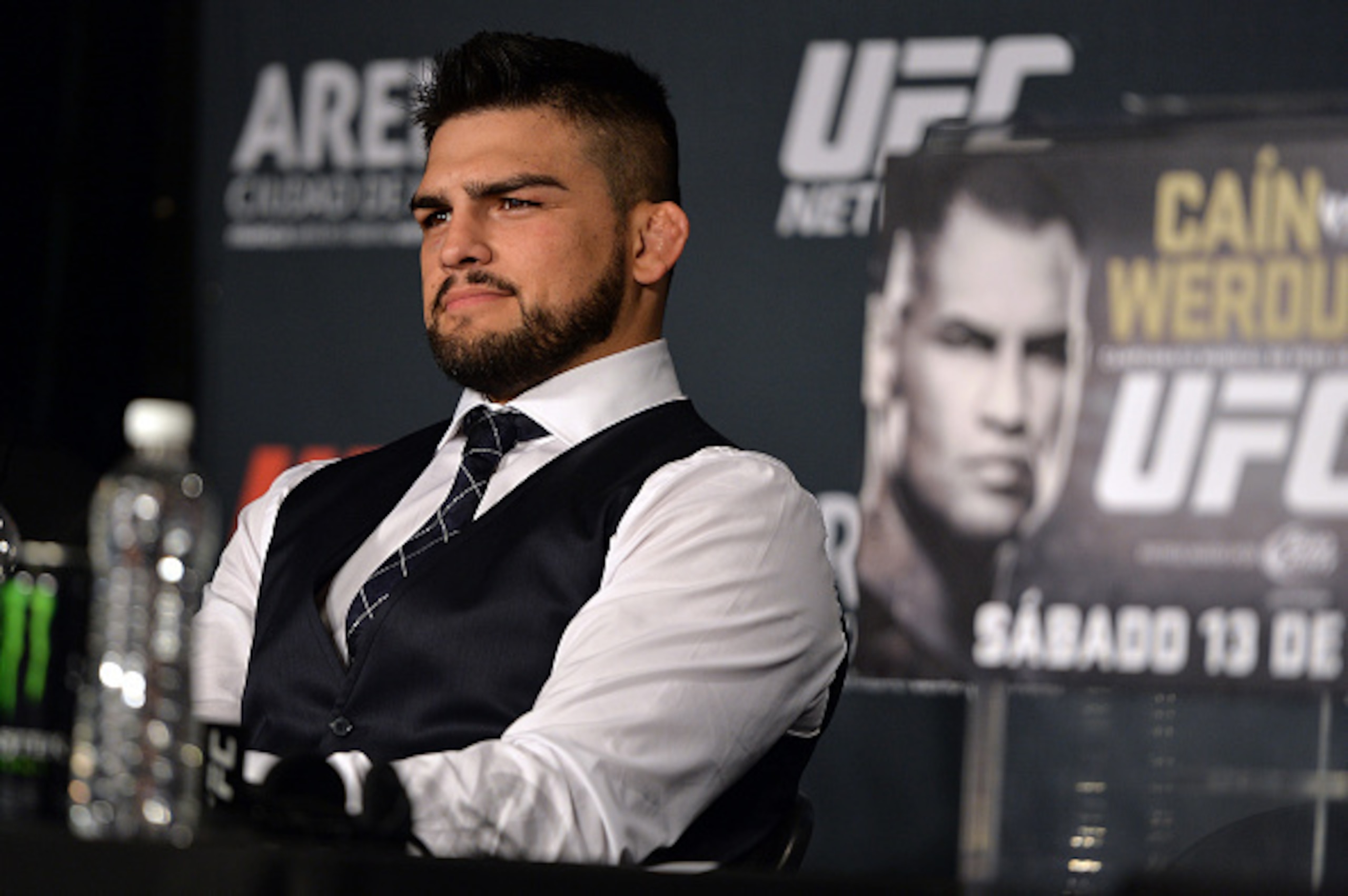
Lightweights
Horacio Gutierrez (2-1; 0-0 UFC) vs. Enrique Barzola (10-2-1; 0-0 UFC)
Mexico's Gutierrez takes on Peru's Barzola in the lightweight final. Gutierrez got through a tough fight with Danny Salas in the elimination round despite a sprained ankle and then brutally knocked out Polo Reyes in the semis. Barzola too had a tough fight in the elimination round, defeating Jonathan Ortega, and then he came back from a hard first round to finish Cesar Arzamendia in the semifinals.
Gutierrez is a promising young fighter. He's a fantastic athlete with great speed and big power in his hands. Clean, technical punching combinations are his specialty, and he often punctuates them with hard kicks. His takedown defense is competent, and he has good instincts to scramble. He works at a great pace, but his relentless aggressiveness makes him hittable.
Barzola is well-rounded, aggressive and athletic but small for the division (5'7"). He has some wrestling skills and puts together solid chains of singles, doubles and knee taps, while on the mat he drops bombing ground strikes and mixes in submissions. On the feet he's a decent counterpuncher and strings together quick punch-kick combinations, but he's far too hittable for comfort.
This should be a violent fight. Gutierrez is the favorite at minus-150, and that seems a bit light; he's much bigger, just as fast and hits much harder, and he's the better technical striker as well. The pick is Gutierrez by knockout in the second round.
Welterweights
Erick Montano (6-3; 0-0 UFC) vs. Enrique Marin (8-2; 0-0 UFC)
The welterweight final consists of Mexico's Montano against Spain's Marin. The welterweights don't have as much long-term promise as the lightweights, but they could still end up as solid fighters in the division.
Montano can strike a bit at range, with decent combinations and good power, but he does his best work in the clinch and especially on the ground. He's a surprisingly solid wrestler, and once the fight hits the mat he has a knack for finding the back and finishing with a choke.
Marin isn't a great athlete, but he's well-rounded and dangerous. He has a fondness for elbows both at range and in the clinch, and while he's not a great wrestler, he's lethal on the mat in both extended grappling scenarios and scrambles.
The Spaniard is the favorite at minus-185, and that seems about right. He can match Montano for skill at range and in the clinch, while on the ground he's a much sounder grappler. The pick is Marin by submission in the first round.
Henry Cejudo vs. Jussier Formiga
5 of 7
Flyweights
Henry Cejudo (9-0; 3-0 UFC) vs. Jussier Formiga (18-3; 4-2 UFC)
2008 Olympic freestyle wrestling gold medalist Cejudo returns to action with big stakes on the line. A victory over Chico Camus in June moved him to 3-0 in the UFC, and with his marketability in Latin America and slick skills in the cage, the promotion would be happy to slot him into a title bout with Demetrious Johnson. The champion is dominant, but he doesn't sell, and there's every reason to think Cejudo would.
To get to that point, however, Cejudo needs to get past Brazil's Jussier Formiga. The former Tachi Palace champion came into the UFC with a lot of hype as perhaps the best flyweight on the planet, but knockout losses to Joseph Benavidez and John Dodson cooled that talk. He's on a solid run now, though, with three consecutive wins of his own.
If Cejudo wins, the title bout is a foregone conclusion. If Formiga pulls off the upset, he'll probably get the shot, but it's less certain. Either way, the stakes here couldn't be higher for either fighter.
Despite a wrestling pedigree strong enough to win him the gold in Beijing, Cejudo has largely relied on his striking repertoire in the UFC. He was an Arizona Copper Gloves champion as an amateur boxer, which gave him a base with which to work when he moved to MMA full time.
The gold medalist is a freakish physical specimen with great speed and explosiveness. He leaps forward into hard punching combinations, following a crisp jab with a long cross and a hard left hook. Potent kicks to the head or body often follow his punches. While he doesn't generally look to exchange in the pocket, Cejudo does own a nasty counterpunching arsenal.
In-and-out movement is the former Olympian's strong suit, and he is rarely there to be hit. He does have a bad habit of occasionally stopping in front of his opponent after throwing, however, and he's quite hittable then.
While he's become a solid range striker, the real strength of Cejudo's game on the feet lies in the transitions. He excels at punching his way into the clinch or covering a quick takedown attempt with strikes and then firing off a hard punching combination, slashing elbow or sneaky kick on the break. The clinch is a strong suit, and he's happy to grind against the cage to eat up time.
As one expects from his pedigree, Cejudo is an incredible wrestler. He has a full arsenal of takedowns, from explosive doubles to single-leg lifts to outside trips to body-lock throws, and he chains them all together beautifully. He rarely hangs onto a takedown attempt for longer than necessary and is happy to let it go in order to land a few strikes while his opponent's hands are down.
Thus far, the Olympian's takedown defense has been impenetrable. He's nothing special from top position, but he does pack some power in his ground strikes. As in the striking-to-wrestling transitions, Cejudo is fantastic at landing punches and knees on the way to the ground or while his opponent is getting back to his feet.
Formiga is a world-class grappler who has become a fine all-around mixed martial artist. As a striker, he's up-and-down; at his best, he works behind a crisp one-two, punches his way into the clinch and throws a beautiful and powerful counter right that he occasionally follows with a hard left hook.
At his worst, he circles and cuts angles but throws little volume, and he gives away rounds on activity. Over-reliance on the straight right is another problem, and he often seems to forget that he can throw anything else.
The Brazilian is an excellent wrestler, with good shot takedowns and strong trips in the clinch. He doesn't need to get his opponent all the way to the ground, however, because his specialty lies in the scrambles.
Formiga is one of the best in the world, if not the best, at getting to the back and finishing with the rear-naked choke. He has an almost infinite variety of setups, ranging from standing back-takes on the feet to moving from the front headlock to the back in transition to a multitude of options from half guard, side control and the mount.
The rest of the Brazilian's grappling game is likewise excellent, with strong control on top, smooth passes and surprisingly hard ground strikes. No opponent should feel comfortable tangling with him on the mat for more than a few seconds.
Betting Odds
Cejudo -470, Formiga +375
Prediction
This is Cejudo's fight to lose. He's a vastly superior athlete, something that troubled the slower Formiga in his losses to Dodson and Benavidez, and Cejudo has the stellar takedown defense to ensure that this stays on the feet and in the clinch.
If this is mostly a striking bout, Cejudo has a massive edge. He's not necessarily a better technician, but his aggressiveness and volume will make it nearly impossible for Formiga to win a decision. The Brazilian's best hope is to find Cejudo's back in a scramble or from the clinch, and that seems like a slim possibility against the Olympian. The pick is Cejudo by wide decision.
Ricardo Lamas vs. Diego Sanchez
6 of 7
Featherweights
Ricardo Lamas (15-4; 6-2 UFC) vs. Diego Sanchez (25-7; 14-7 UFC)
Diego Sanchez is the last active fighter left in the UFC from the landmark first season of The Ultimate Fighter, but it's now obvious that he's well into the down slope of his career. He's coming off a "win" over Ross Pearson that most tabbed as the robbery of the year in 2014, and it's been a staggering five years since his last uncontroversial victory, a decision over Paulo Thiago in October 2010.
With few options left at either 170 or 155 pounds, Sanchez attempts to drop to featherweight to salvage the final part of his career. He draws former title challenger Lamas, who is looking to get back on track after a devastating first-round knockout loss to Chad Mendes. Prior to that, Lamas had won two in a row and was nearly back in the title conversation.
For Sanchez, a loss here is essentially the end of the road, and it would be downright ghoulish for the UFC to continue booking him. Lamas, on the other hand, is still a viable property in the increasingly stacked featherweight division, and a win here would set up potentially big bouts with the many rising stars at 145 pounds.
Lamas' game is defined by athleticism and opportunism. He is exceptionally quick, light on his feet and powerful, and he can end a fight at any time on both the feet and the ground. If he can't create an opening or if he's not fighting an opponent who makes mistakes, such as Jose Aldo, then Lamas can look surprisingly average. When he's on, however, he can finish anybody in the division in the blink of an eye.
The Cuban-American is a smooth striker. He moves fluidly at range, constantly switching stances and changing the direction of his circular movement before planting his feet to throw a hard kick or to leap in with a potent one-two. His jab is crisp and consistent, and he throws a diverse array of round and spinning kicks without telegraphing. All of his strikes pack real power, but his work rate isn't consistent.
Despite his pedigree as a Division III competitor, Lamas doesn't utilize his wrestling all that much. He shoots for the occasional takedown, mainly authoritative double-legs, but he has often struggled to defend his opponents' shots and relies on his ability to scramble or threaten with submissions.
Lamas is inconsistent but lethal on the mat. He excels in transitional spaces, particularly from the front headlock, where he utilizes a sharp guillotine choke and slick back-takes. Capitalizing on a knockdown with a choke is a particular specialty. From top position he has brutal ground strikes, solid passes and the occasional submission, namely an arm-triangle choke.
The best parts of Lamas' game, namely his killer instinct and eye for capitalizing on mistakes, are hard to quantify and explain; he's just dangerous everywhere.
Sanchez isn't the youthful powerhouse he once was, but he's still a serviceable and highly aggressive fighter. On the feet, the southpaw throws a powerful left round kick and mixes in the occasional spinning kick with solid straight lefts. He's quite hittable, however, and his legendary cardio doesn't actually translate into consistent volume on the feet. Inaccuracy is a serious problem.
The best part of Sanchez's game is his craft in impressing the judges. He has made a habit of flurrying in the last 10 or so seconds of every round, flinging wild punches in an attempt to leave the judges with the impression that he's done more than he actually has over the course of the round.
Wrestling was long the core of Sanchez's game, though he still leans on it less than he used to. While not a tremendously skilled technician, his relentless chains of singles and doubles have sufficed to get down many opponents over the years, particularly against the fence. He struggles to set up his shots with strikes, however, and has a bad habit of shooting from too far away.
From top position, Sanchez is dangerous. He passes smoothly and has real power in his ground strikes when he postures, and his control can be suffocating. Scrambling is another strong suit.
Betting Odds
Lamas -590, Sanchez +445
Prediction
Those odds are surprisingly wide. It's easy to foresee a scenario here in which Sanchez uses his size to grind out a win against the cage and from top position, particularly considering the fact that Lamas' takedown defense has never been impenetrable.
On the other hand, Lamas will have an enormous speed advantage, and his power is probably sufficient to dent Sanchez's legendary chin. It wouldn't be surprising for Lamas to rock Sanchez and jump on a submission to finish, but the more likely scenario involves Lamas sticking and moving at range and piling up volume. The pick is Lamas by decision.
Kelvin Gastelum vs. Neil Magny
7 of 7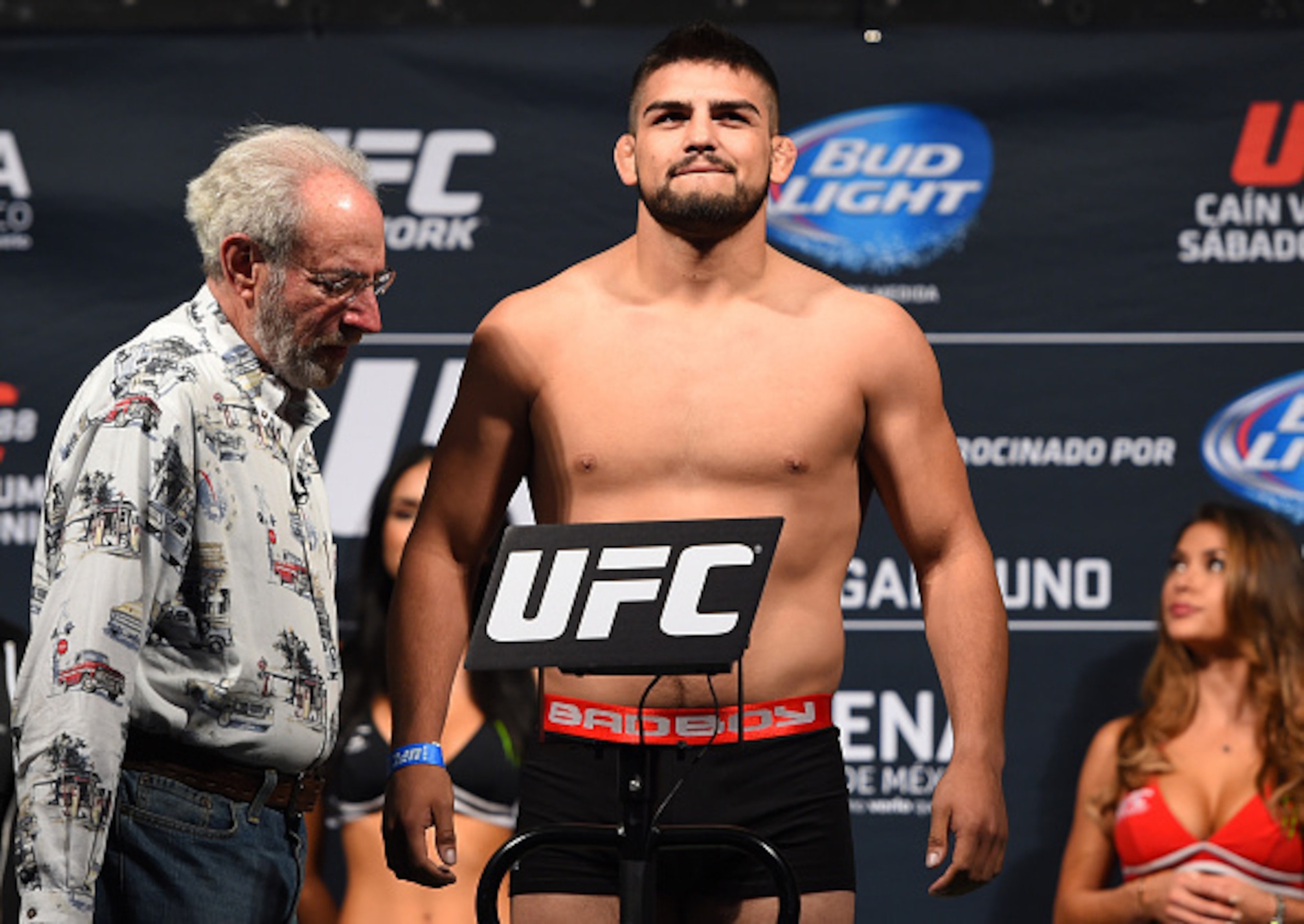
Welterweights
Kelvin Gastelum (11-1; 6-1 UFC) vs. Neil Magny (16-4; 9-3 UFC)
Magny steps up on short notice to replace the injured Matt Brown against Gastelum, who served as one of the coaches on The Ultimate Fighter: Latin America 2. This will be the busy Magny's fifth fight of 2015. He has been off for three months since defeating Erick Silva in August, which was only three weeks after a one-sided loss to Demian Maia.
Gastelum is attempting to return to welterweight after a one-fight stint at middleweight in which he brutalized a past-his-prime Nate Marquardt. Prior to that, he missed weight badly against Tyron Woodley in January and had to be hospitalized. Frankly, Gastelum shouldn't have been fighting that night, and it showed in a lackluster decision loss.
This is Gastelum's chance to prove that he can safely make 170 pounds. Brown would have been a big-name win for the Ultimate Fighter 17 winner, but Magny is a stiff test in his own right, and a win here would put Gastelum in line for an elite opponent.
For his part, Magny has dominated the lower levels of the division, and a victory over a promising fighter such as Gastelum would officially announce his arrival as a serious talent.
Gastelum is aggressive and dangerous. He is essentially a pressure fighter who does his best work moving forward with the goal of pinning his opponent against the fence. To accomplish this goal, he fires off a consistent right jab from the southpaw stance, which he follows with a sharp straight left or left kick. The right hook is probably his best punch, and he could stand to throw it more often.
There's nothing flashy about Gastelum's striking repertoire, which consists almost entirely of those four strikes, but he's quite effective for several reasons. First, he's explosive and quick, which makes it difficult to get away as he moves forward. Second, he never gives his opponent space, which allows him to throw a great deal of volume. Finally, he's willing to stay in the pocket and exchange if his opponent fires back to try to keep him away.
The rest of Gastelum's game is limited in terms of variety but equally effective. He shoots an explosive, well-timed and authoritatively finished double, and his takedown defense has been good.
On the mat, Gastelum controls well from the top and lands hard ground strikes. He excels in scrambles and transitions and has a lightning-fast move to the back from the front headlock, where he immediately looks to sink in the rear-naked choke.
Magny is huge for the division at 6'3" and uses his height and reach to his advantage in every phase. On the feet, he works behind a crisp, rangy jab that he doubles and triples with regularity. His right hand is long, and he does an excellent job of moving it around his opponent's guard. Pace is a strong suit, but he's less of a combination striker than someone who fires off a steady diet of one and two shots at a time.
He is the classic out-fighter who never wants to be in the pocket. Constant movement and stance-switching give Magny space to operate and to fire off that jab and his long kicks, and if he can't keep his opponent away, the Colorado resident is happy to dive into a tie-up.
The clinch is Magny's best area. His height and length give him incredible leverage, and he effortlessly controls his opponent against the fence, where he can work short punches and knees before hitting a trip or throw. His takedown defense has generally been solid, but it's not impenetrable.
On the mat, Magny passes smoothly and has a rock-solid base. He's difficult to shift once he establishes position and generates surprising force in his ground strikes. Those strikes serve to set up his array of top-side submissions, which include the kimura, arm triangle and a competent move to the back.
Betting Odds
Gastelum -300, Magny +250
Prediction
This is Gastelum's fight to lose. Magny's height and length give him an edge at range, but he's not terribly effective at using those tools to keep aggressive opponents at distance, and he isn't a good enough counterpuncher to make them pay for coming in. These deficits match up poorly with an aggressive pressure fighter like Gastelum.
Magny's size advantage disappears with his back to the fence. If he can stay out of the clinch, Gastelum should be able to unload hard combinations, and even if Magny forces a tie-up, Gastelum is more than competent there.
Gastelum's aggressiveness and pressure should be the difference here. The pick is Gastelum by knockout in the third round.
Patrick Wyman is the Senior MMA Analyst for Bleacher Report. He can be found on Twitter.
All betting odds via Odds Shark.

.jpg?w=2560)


.jpg?w=2560 "Viral Rams Coach Vid 🖕")

.jpg?w=2560 "Injury-stricken Seahawks signing veteran RB")
