Formula 1 Its Own Worst Enemy with 2015 United States GP Qualifying Cancellation
The signs, literally, were there.
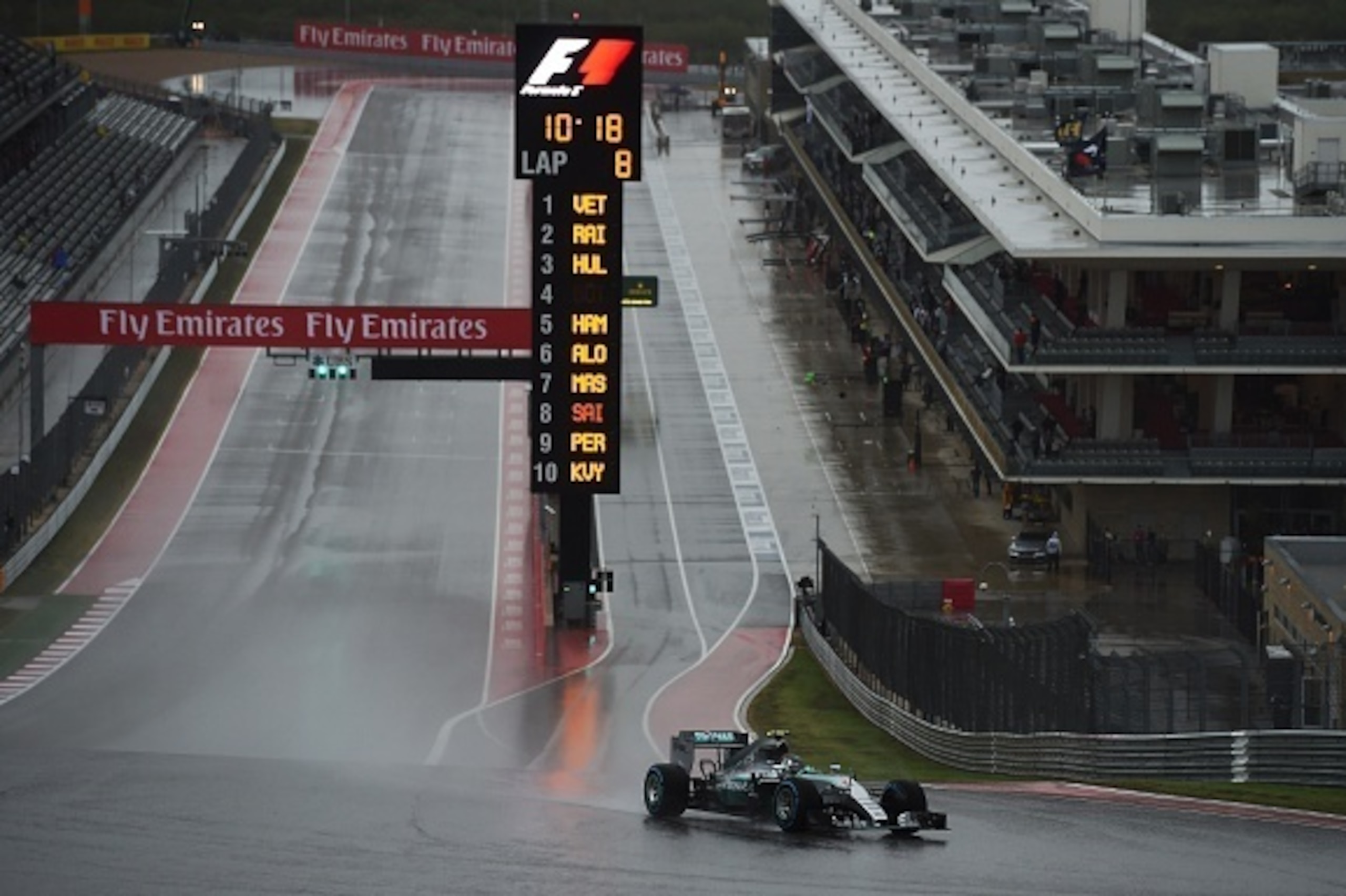
"ATTENTION," shouted the big screens at the Circuit of the Americas on Friday afternoon, minutes after the second free-practice session ahead of the United States Grand Prix had been cancelled due to torrential rain. "STORMS ARE STILL IN THE AREA."
And sure enough, 24 hours later, the dark-grey skies hanging over Austin, Texas, had shown no signs of shifting.

.jpg?w=2560 "Colts Football")


Formula One had been here before, of course: In 2004 and 2010, qualifying for the Japanese GP was moved from Saturday to Sunday as a result of heavy rain, and the same occurred as recently as the first round of the 2013 campaign in Australia.
On each occasion, the sport had wandered blindly into the eye of the storm, its organisers unable—or just plain unwilling—to remould the weekend's timetable in order to sidestep the worst of the weather.
But this time—as Hurricane Patricia pounded the local area—F1 and the FIA, its governing body, had demonstrated a willingness to do whatever was necessary.
As reported by F1 journalist Adam Cooper, the FIA had pinpointed 7 a.m. local time as the moment to decide whether to reshape the Saturday schedule, bringing both the third practice session and qualifying forward by an hour in an effort to squeeze them in somewhere.
If qualifying took place when planned, give or take 60 minutes, great. But if it was postponed or, at worst, didn't take place at all?
It would be a shame, but hardly an event-defining disaster.
The race stewards would, as Cooper noted, compose a grid based on practice times and championship placings. Or, perhaps, driver numbers, using an excuse to jumble up the order and lay the foundations for an exciting, back-to-front race at a time the sport is eager to reinvigorate grand prix weekends.
After years of reactive, rather than proactive, decisions under the assumption F1 could take on nature and win, it seemed the authorities were operating with foresight, leadership and—dare we say—decisiveness, preparing an answer for every possible eventuality.
Yet when the time came to make the big decision, this newfound common sense was overthrown by the same old selfishness and the desire for the show to go on.
A short period after the paying public were warned via the track's official Twitter account to bide their time when travelling to the venue, FP3 began in a grim ghost town.
Each of the 20 drivers, in the belief their fastest lap could dictate their starting position, took to the track over the course of the 60-minute session. But rather than pushing to the limit and improving their times, their main objective was simply to keep their cars pointing in the right direction in marginal, ever-worsening conditions.
While some, such as Nico Hulkenberg and Carlos Sainz Jr., two extremely impressive wet-weather drivers, relished the conditions and the sense of opportunity, Nico Rosberg and Sebastian Vettel—two of only three men to win a race in 2015, driving the best cars on the grid—were fortunate to complete the session.
Rosberg, just one of many to lose control, shattered his front wing after aquaplaning off the circuit in the early stages, and when Vettel spun twice in succession as the rain intensified, it was obvious the track was in no fit state.
But by that point, it was too late. The opportunity had passed. The carrot had been dangled in front of the locals, who were presumably threatening to knock down the doors at that stage, and the show, whatever that now involved, had to go on.
And so in the spectators came, wearing their ponchos and wrestling with their umbrellas, to see what?
To see Sainz and Max Verstappen playing 10-pin bowling with cans of Red Bull, before cramming their respective fathers into their cars. To see Daniel Ricciardo and Daniil Kvyat dancing hand-in-hand. To see one bunch of mechanics break-dancing in the pit lane as another group rowed their way along it.
And to see the safety car insult their intelligence, making a number of meaningless treks onto the circuit—all in the name of assessing the conditions, you understand—before the inevitable call came to postpone qualifying until Sunday morning.
While the FIA deserve a certain degree of praise for giving qualifying a chance to go ahead as planned, the very fact the decision was made around eight hours later than it should have been saw F1, a decade on from the infamous six-car race at Indianapolis, tumble into yet another hole on American soil.
Indeed, the numerous delays—ensuring the drivers' minds were a million miles away from where they needed to be when the FIA finally admitted defeat—were all the more surprising when you consider that a non-stop, action-packed Sunday is exactly what F1 needs in a region where it still struggles to make a meaningful impact.
As noted by the Times' Kevin Eason, the race organisers, in an effort to increase interest, offered an "Ultimate Sports Weekend Package" deal ahead of the grand prix, allowing spectators to attend the University of Texas football match on Saturday before experiencing the witchcraft of F1 on Sunday.
With qualifying and the race taking place on the same day, F1—had it acted swiftly and smartly—would have had the chance to make an imprint on a nation's consciousness, luring new fans to a sport they might never have given a second thought.
But on what should have been a weekend of celebration, when a three-time world champion is likely to be crowned, F1 instead finds itself again making amends, ruing another missed opportunity and its latest PR disaster in a market it has always wanted to crack.
The signs, as we say, were there. But F1 is set to pay the price for ignoring the writing on the wall.
.jpg?w=2560 "NFL Paris Football")

.jpg?w=2560 "Malik Beasley Negotiating Plea Deal (AP)")