
How the TMO Could Have Changed 5 of Rugby's Greatest Moments
Let’s forget for a moment the instinctive human error that has elevated Craig Joubert into the company of Edward Longshanks.
Let’s forget, too, the fact he was also accused of some of the worst refereeing ever seen that denied France the 2011 World Cup.
TOP NEWS
.jpg?w=2560 "Titans Giants Football")
OBJ Calls Out Giants After Release

Pic of LeBron's Helicopter Commute 🚁
Aaron Boone Calls Out Yankees Catcher 🗣️
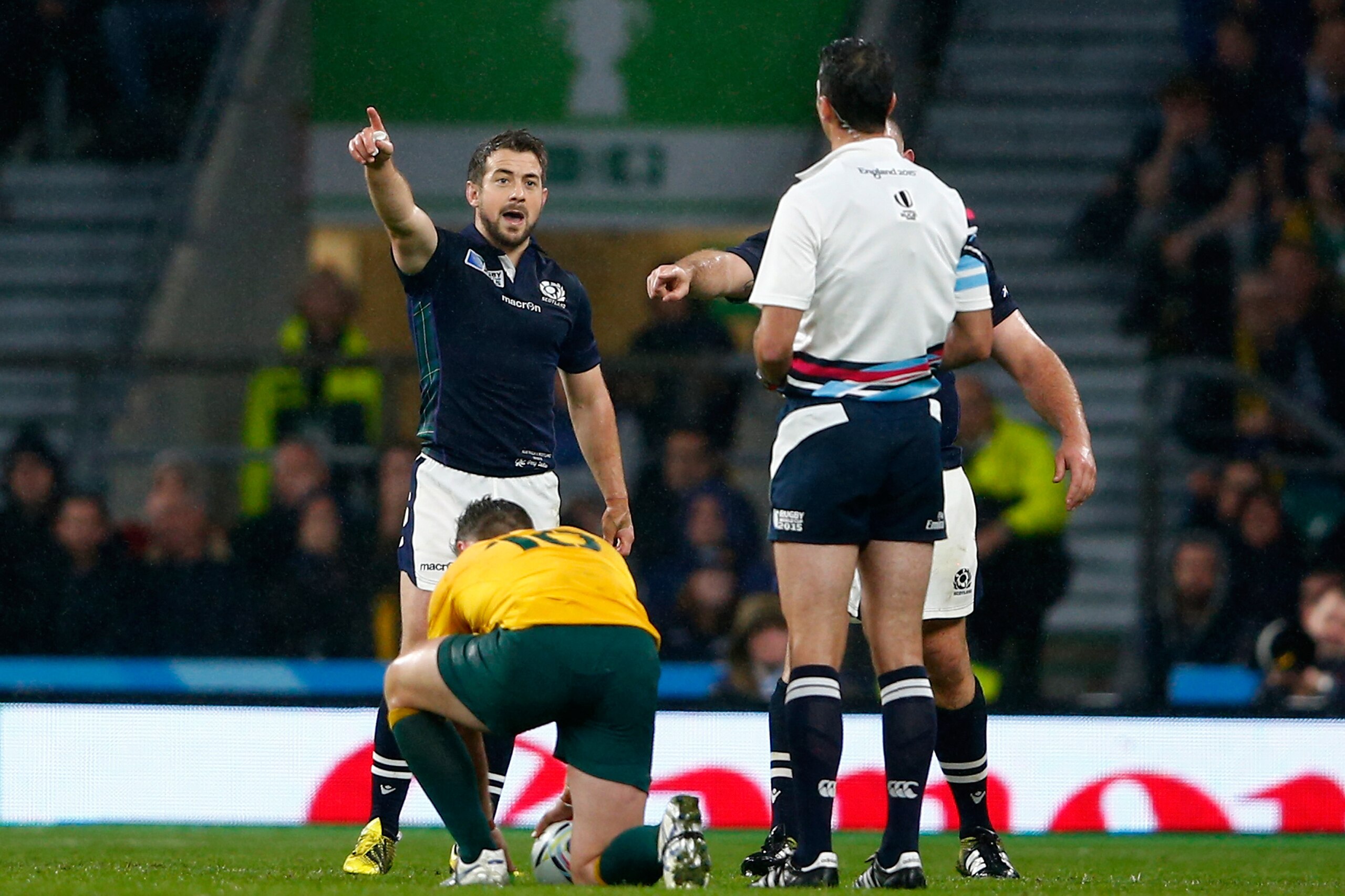
And let’s try to forget the sprint to get out of Dodge on Sunday once he ended the Rugby World Cup 2015 quarter-final between Australia and Scotland.
He was wrong. We know that because his bosses have publicly said so—which he must have been thrilled with. And he was wrong to do his best Usain Bolt impression at the final whistle, too.
But it doesn’t change a thing.
In a strange twist, the whole affair has centred around the fact that we all wanted him to use the Television Match Official to get that decision right, and the fact is, he wasn’t permitted to do so.
Many of us have carped all tournament about the number of referrals to the TMO in this World Cup, and yet when it has really meant something, we all wanted the man with his finger on the replay button to take charge.
There is no problem with the TMO highlighting acts of foul play or judging whether the ball has been properly grounded in the act of scoring. Or is there?
How many great moments in the game’s history would have been scrubbed off or altered by the TMO?
The course of rugby as we know it may well have taken a different path had video technology been around at the time these five moments occurred.
1. Gareth Edwards, Barbarians vs. New Zealand, 1973
The greatest try ever scored or one of the most blatant forward passes ever missed? Both.
Speaking at a dinner some years ago, Scott Quinnell regaled the audience with the story of how he sat his son down in front of the footage of that try, in which Quinnell’s father, Derek, delivers the final pass.
“That was a forward pass though wasn’t it?” his son enquired, as his old man revelled in the feats of his own father. The answer, Steele, is yes.
The TMO would have called that move back and ruled it out. In fact, he may even have asked the referee to penalise a New Zealander for that high shot on JPR Williams earlier in the build-up.
2. To'o Vaega, Western Samoa vs. Wales, 1991
The Rugby World Cup’s first genuine shock came in 1991 when Western Samoa defeated Wales to all but knock them out at Cardiff Arms Park, Wales.
But today, the winning try would never have been awarded. Even now, the grainy footage shows clearly on the replay that a Welsh hand got to the ball first in the in-goal area.
Back then, the benefit of the doubt was instinctively given to the attacking player, and referee Patrick Robin's arm shot straight into the air to signal the try without giving it a second thought.
It was obvious to all, including the Guardian's Robert Armstrong, who wrote:
"There can be no doubt that Monsieur Robin's ill-construed decision presented the Samoans with a winning initiative that they never relinquished.
It was a monumental error.
[...[
"I was three yards away and I clearly saw Robert put his hand on the ball first," said the Wales captain, Ieuan Evans. "The referee was way back on the 22."
"
3. Tony Stanger, Scotland vs. England, 1990
The 1990 Five Nations decider at Murrayfield, Scotland, has gone down in rugby folklore.
Set against a backdrop of boiling political and social tensions, the desire of the Scots to put one over on the auld enemy was at an all-time high.
The whole day has been captured brilliantly in Tom English’s book The Grudge, in which both John Jeffrey, Scotland’s fearsome flanker, and coach Jim Telfer, state that Tony Stanger’s winning try was nothing of the sort.
Telfer is quoted: “Every time I’ve seen it I think, ‘Look at that, the most famous try in the history of Scottish rugby and he didn’t get it down.’”
At the very least, this would have been sent upstairs.
The replay from behind England’s try line suggests Stanger may well never have had control of the ball as he hurtles into the in-goal area.
4. Serge Blanco, Australia vs. France, 1987
One of the World Cup’s greatest-ever tries belongs to Serge Blanco.
The French full-back dived in at the corner to win a pulsating semi-final against hosts Australia at the Concord Oval.
But if you relive the whole passage of brilliant play again, there are two things today’s TMO would be casting his eye over.
The first is the pick-up in midfield by back row Laurent Rodriguez. At the very best, that ball hits his foot rather than the turf as he battles to scoop it into his arms.
And the second is Blanco’s finish. A fine, flying dive it most certainly was, but we would have more angles today to be able to take a look at whether he made contact with either the touchline or the corner flag before grounding the ball.
5. Abdel Benazzi, South Africa vs. France, 1995
The 1995 World Cup semi-final between hosts South Africa and France would likely have been called off had it been held on any other nation on earth.
The storm that engulfed Kings Park in Durban had teams of staff with brooms sweeping waves of water off the playing surface to get the game on.
The hosts had no choice. On the head-to-head disciplinary records of both sides, it was the Boks who had the longer rap sheet, and that would have seen them go out in the event of the game being cancelled.
But play they did, and win France should have.
Late in the game, Andre Joubert made a dog’s breakfast of a high, hanging kick just a few yards in front of his own try line, and French back row Abdel Benazzi gathered it and slithered over the line. Or not, as Welsh referee Derek Bevan decided.
The whistle blower immediately judged the effort to be short, and a scrum five metres out was awarded. The South Africans regathered possession and saw the game out.
The controversy did not end there.
At the post-tournament banquet, South African rugby union president Louis Luyt singled the official out for his performance and called him up on stage to award him an expensive gold watch.
That followed Luyt's remarks that the Springboks were the first true champions, having been excluded from the first two World Cups.
Bevan, his fellow officials and many players walked out, per the Guardian: "'It was something I could have done without,' Mr Bevan said. 'It came out of the blue: I have no idea why he singled me out. It could be misconstrued, and if that is the case, it leaves a bitter taste.'"

.jpg?w=2560 "Saints Lions Football")

.jpg?w=2560 "Report: Baker May Miss Up to 6 Weeks")