
The 10 Most Important Numbers to Know for the 2015-16 College Basketball Season

Without numbers, how could we possibly know or quantify what important things are happening in the world of college basketball?
Statistics, scores, records and rankings are simple numbers that fuel all conversations and feed into complex numbers such as Ratings Percentage Index (RPI) and strength of schedule (SOS). These in turn become the driving force of the tournament seeding process that helps us finally crown one national champion.
Whether you loved or hated your math classes, there's no getting away from numbers in college hoops, so you might as well embrace them.
With that in mind, we've compiled a list of the 10 most important numbers to know in advance of the start of the 2015-16 season.
We all know which number is actually most important, though: 23 more days until the regular season begins!
The Number 30
1 of 10
The NCAA finally caved on a few key matters in the past calendar year.
No, we aren't any closer to student-athletes getting paid more than a scholarship for annually making millions of dollars in revenue for their schools, but the NCAA did decide to give up trying to convince us that the round of 64 is actually the second round of the NCAA tournament. When the sites for future tournaments were announced this past November, they were thankfully labeled as the first- and second-round locations.
The much bigger change, though, and the one you'll probably hear about three dozen times per game for the first two months of the season is the reduction of the shot clock from 35 to 30 seconds.
It was just one of several rule changes enacted this summer, most of which were aimed squarely at a decade's worth of complaints about the glacial pace of play in college basketball. Prepare yourself for a lot of in-season and postseason commentary on whether the game has actually improved, and expect the reduced shot clock to be the central focus of those arguments.
More than just the number of seconds on the shot clock, 30 is also roughly the number of hours in ESPN's tipoff marathon. Beginning at 5:30 p.m. ET on Monday, Nov. 16, with Connecticut vs. Ohio State in women's hoops and ending around midnight on the East Coast when Kansas and Michigan State wrap up their men's battle, the marathon is packed with enticing games.
For an early look at potential top-five draft picks, LSU's Ben Simmons, Utah's Jakob Poeltl, Duke's Brandon Ingram and Kentucky's Skal Labissiere (if cleared to play) will all be on display in the marathon. And for those of us with the tournament bubble permanently on the brain, Tuesday's nine-hour stretch of Stephen F. Austin vs. Northern Iowa, Valparaiso vs. Rhode Island, Alabama vs. Dayton and Colorado vs. Auburn is about as juicy as it gets in November.
The Number 2,000
2 of 10
Earlier this summer, we took a look at the players most likely to reach 2,000 career points this season. It's not exactly the 500 home run club for baseball, but only a dozen or so players hit the mark each year, making it quite the inevitable achievement for such mid-major studs as Evansville's D.J. Balentine, Louisiana-Lafayette's Shawn Long and Northwestern State's Jalan West.
But while those players look to put the finishing touches on something four years in the making, the Big Ten is seeking its first national championship in more than a decade-and-a-half.
The year 2000 was a lifetime ago. When Michigan State won the Big Ten's last title, some people were just starting to clear out their Y2K bunkers. Sony's Playstation 2 was barely one month old, and we were still 19 months away from needing to factor TSA screening into our travel plans. Long story short: It has been a hot minute since this conference was on top of the college basketball world.
Even though Maryland is only entering its second season as a member of the Big Ten, the Terrapins are the ones most likely to put an end to that drought. They debuted at No. 3 in the coaches poll and are one of six teams that might be the favorites to win the title, depending upon whom you ask.
Melo Trimble is the name everyone will remember from last season, but it won't be long before freshman Diamond Stone comes to be regarded as the second half of possibly the best inside-outside duo in the nation. Mark Turgeon also has Rasheed Sulaimon, Robert Carter and Jake Layman to round out a pretty doggone solid starting five.
If Maryland falls short, however, Michigan State, Indiana and Purdue should also be in the mix for a No. 4 seed or better in this year's tournament.
In related news, the Pac-12 has not won a national championship since Arizona cut down the nets in 1997. That conference isn't represented among the six 2016 title favorites, but Arizona and California are both very much in that second tier of teams that should make the Sweet 16 and could conceivably win it all from there.
The Number 6
3 of 10
BYU's Kyle Collinsworth made history last season. He recorded six triple-doubles in the span of 24 games, tying the NCAA record for triple-doubles in a career—previously held by just LSU's Shaquille O'Neal and Drexel's Michael Anderson.
If you're primarily a fan of the professional game, six triple-doubles probably doesn't sound like much. That's a slightly better-than-average three-week stretch for Russell Westbrook. But in a version of the game with eight fewer minutes, much less scoring and drastically fewer reliable shooters to pass to, it's pretty insane what Collinsworth was able to accomplish—less than one year removed from surgery to repair a torn ACL, no less.
And yet, his record could be in jeopardy this season.
Providence's Kris Dunn averaged 15.6 points, 7.5 assists and 5.5 rebounds last season. He only recorded one triple-double, but he had six other games with at least seven in all three of those categories. He also averaged 2.7 steals per game, so in a perfect storm, he could even join Tennessee-Martin's Lester Hudson on the "list" of the only players in NCAA history to record a quadruple-double.
Meanwhile, LSU has a pair of triple-double threats. Freshman Ben Simmons will likely surpass UCLA's Kyle Anderson and Iowa State's Royce White for the unofficial honor of best point forward in recent history, and teammate Tim Quarterman had one regular-season triple-double against Ole Miss and nearly posted another (17 points, nine rebounds, seven assists) in the NCAA tournament loss to NC State.
Don't sleep on Michigan State's Denzel Valentine or Iona's A.J. English, either. The latter averaged better than 20 points, five assists and five rebounds per game last season. The former put up 14.5 points, 6.3 rebounds and 4.3 assists per game last year and should be headed for an uptick in assists with Travis Trice out of the picture.
It's going to be a fun year for checking box scores on a nightly basis. If daily fantasy sports are still kind of legal in some states when the season begins, these are the guys who will get you points in all sorts of ways.
The Number 27
4 of 10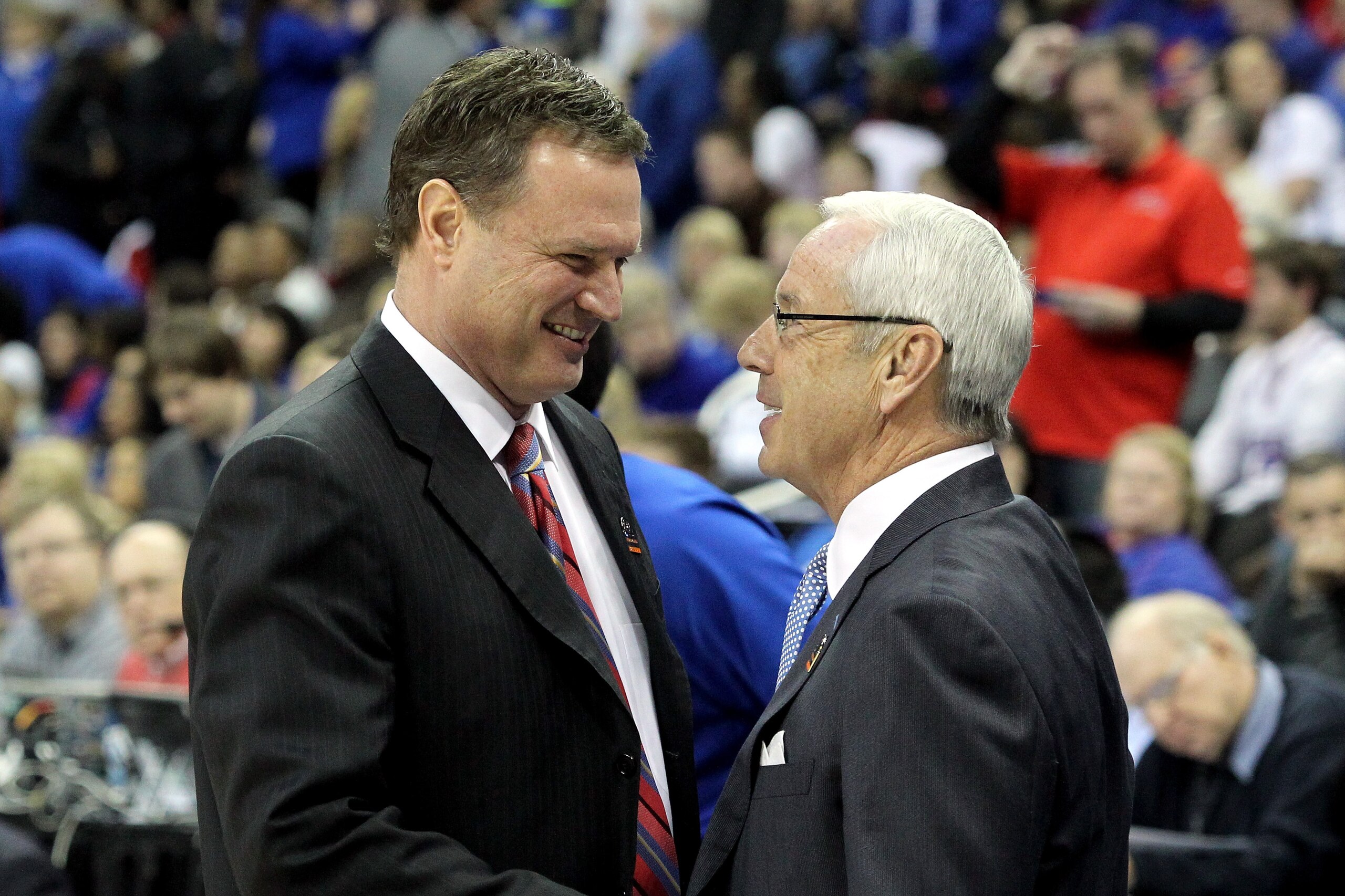
You may have heard that Kansas has been on a bit of a roll lately.
This past season, the Jayhawks won their 11th consecutive Big 12 regular-season title, adding another notch to one of the most impressive belts since John Wooden's UCLA Bruins destroyed everyone and everything in the '60s and '70s.
They quietly have another streak going, though, and this one might be even more noteworthy.
Dating back to 1990, Kansas has made 26 consecutive NCAA tournament appearances. Not once has that streak been in any danger of snapping, either. In 10 of those seasons, the Jayhawks earned a No. 1 seed. Only twice did they fail to earn a No. 4 seed or better, receiving a No. 6 seed in 1999 and a No. 8 seed in 2000.
Assuming hell doesn't freeze over and pigs don't fly, Kansas will be dancing for a 27th straight season, tying the all-time record set by North Carolina from 1975-2001.
And, oh by the way, Bill Self and company will probably wind up winning a 12th straight Big 12 title in the process of earning another very strong seed in March.
The Number 9
5 of 10
It has been quite the hit-or-miss year for legendary active college basketball coaches.
Mike Krzyzewski won the 1,000th game and fifth national championship of his career, while John Calipari orchestrated the first 38-0 start in NCAA history, sent an army to the NBA and was inducted into the Hall of Fame.
At the other end of the spectrum, Jim Boeheim and Larry Brown are both facing suspensions for their roles (or lack thereof) in violations at their respective schools, and only time will tell what will become of Rick Pitino in the aftermath of the prostitution allegations that seem to develop a new wrinkle every few days.
We'll save the Louisville drama for another day and simply note that Brown is slated to miss the first nine games for postseason-ineligible SMU and that Boeheim is supposed to be suspended for the first nine games of Syracuse's ACC schedule, though he is reportedly appealing to have it mirror Brown's sentence of missing games in November instead of January, per ESPN's Andy Katz.
In brighter nine news, both the ACC and Big Ten could be in the running to send nine teams to the NCAA tournament.
With SMU out of the picture, the AAC is almost certainly getting one fewer bid than it would have with the Mustangs. The Missouri Valley Conference is likely a one-bid league this year, and the West Coast Conference could follow suit if BYU struggles to replace three key departed seniors. The Atlantic 10 should be a bit weaker without Shaka Smart leading VCU. Even the Big East could be facing a down year if Creighton and Marquette are unable to bounce back from last year's basement dwelling.
Yet, the selection committee is required to send 68 teams to the tournament, and the ACC and Big Ten are very deep. The 10th-best team in each conference is arguably Syracuse and Northwestern, respectively, and they both have, at worst, a pretty reasonable shot at dancing. We'll see how things shake out during the early-season tournaments, but it's hardly a stretch to put the over/under for combined number of tourney bids from these two conferences at 16.5.
The Number 0
6 of 10
As noted on the previous slide, it has been a pretty scandalous year in the world of college hoops.
In addition to the big stories at Louisville, SMU and Syracuse, a former academic adviser at UCLA recently accused the school of academic fraud, and San Diego State is reportedly under investigation for, among other things, possible improper benefits provided to prospects. Neither is a full-blown scandal just yet, but throw in the fact that neither Kentucky's Skal Labissiere nor Kansas' Cheick Diallo has yet been cleared to play this season, and it sure seems like there has been a nonstop rumble of issues around the country for the past six months.
Yet, somehow, there has been essentially zero news coming out of North Carolina.
Heading into the offseason, the impending ramifications of the Wainstein report were the biggest and most crucial unknown in the nation. As the early declarations, transfers, late signings and coaching carousel slowed down and the college basketball community sought to pinpoint potential title contenders, expectations for this talented North Carolina roster remained extremely contingent on news that never really developed.
Yes, the university received a notice of allegations, but by waiting nearly three months to respond with two more findings of their own, the Tar Heels were able to reset the clock to the point where it now seems highly unlikely that they will face any sort of 2016 postseason ban.
As a result of the rather quiet offseason, the Tar Heels enter the 2015-16 season as one of the favorites to win the national championship.
It might not be much fun to root for this team for the ensuing decade, but at least Roy Williams and company may be feasting on one heck of a final meal before what could be a death sentence.
The Number 510
7 of 10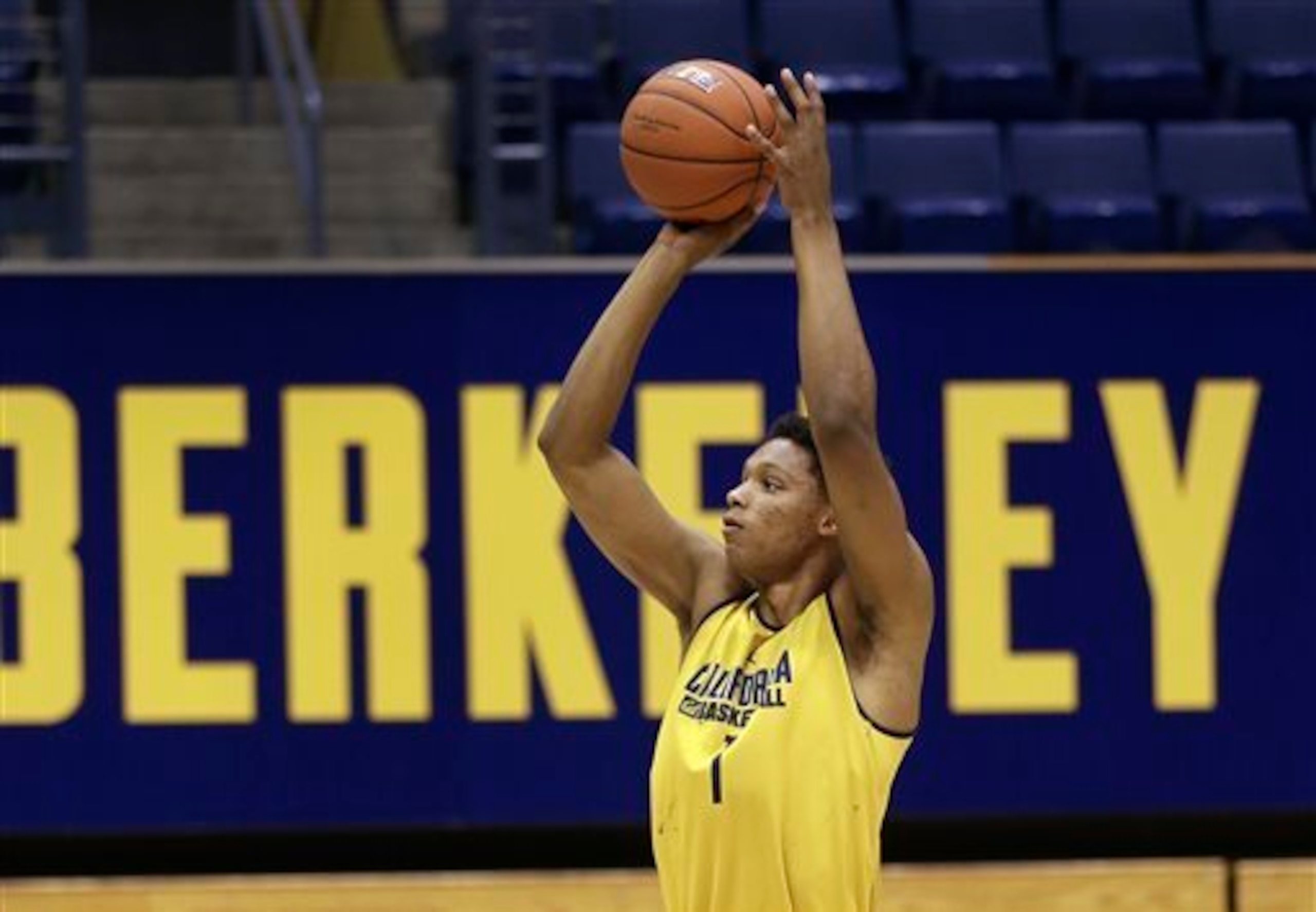
By and large, we have the highest expectations for teams that were very highly regarded at the end of last season. Maryland leapfrogged a lot of teams to get into the conversation for No. 1, but every single team in the top 12 of the first coaches poll of 2015-16 also finished in the top 15 of the final AP poll of the 2014-15 season.
And then there's the team that hails from the 510 area code.
After winning 10 of their first 11 games and knocking on the door of the polls, the Golden Bears proceeded to drop off the face of the earth, losing 14 of their final 22 games. They weren't even competitive in most of those games, either. In three tries against Arizona, Cal lost by a combined score of 245-161 and never came closer than a 22-point margin of defeat.
How in the world is that team ranked No. 14 in the country, you ask?
Simple: Cuonzo Martin was the only coach to sign two of the top nine freshmen in the country, as ranked by 247Sports.com.
With the addition of Jaylen Brown and Ivan Rabb, and the return of Tyrone Wallace, Jabari Bird and Jordan Mathews, California—which has neither advanced to the Sweet 16 since 1997 nor competed in the Elite Eight since 1960—has a legitimate shot at winning the national championship.
The Number 11
8 of 10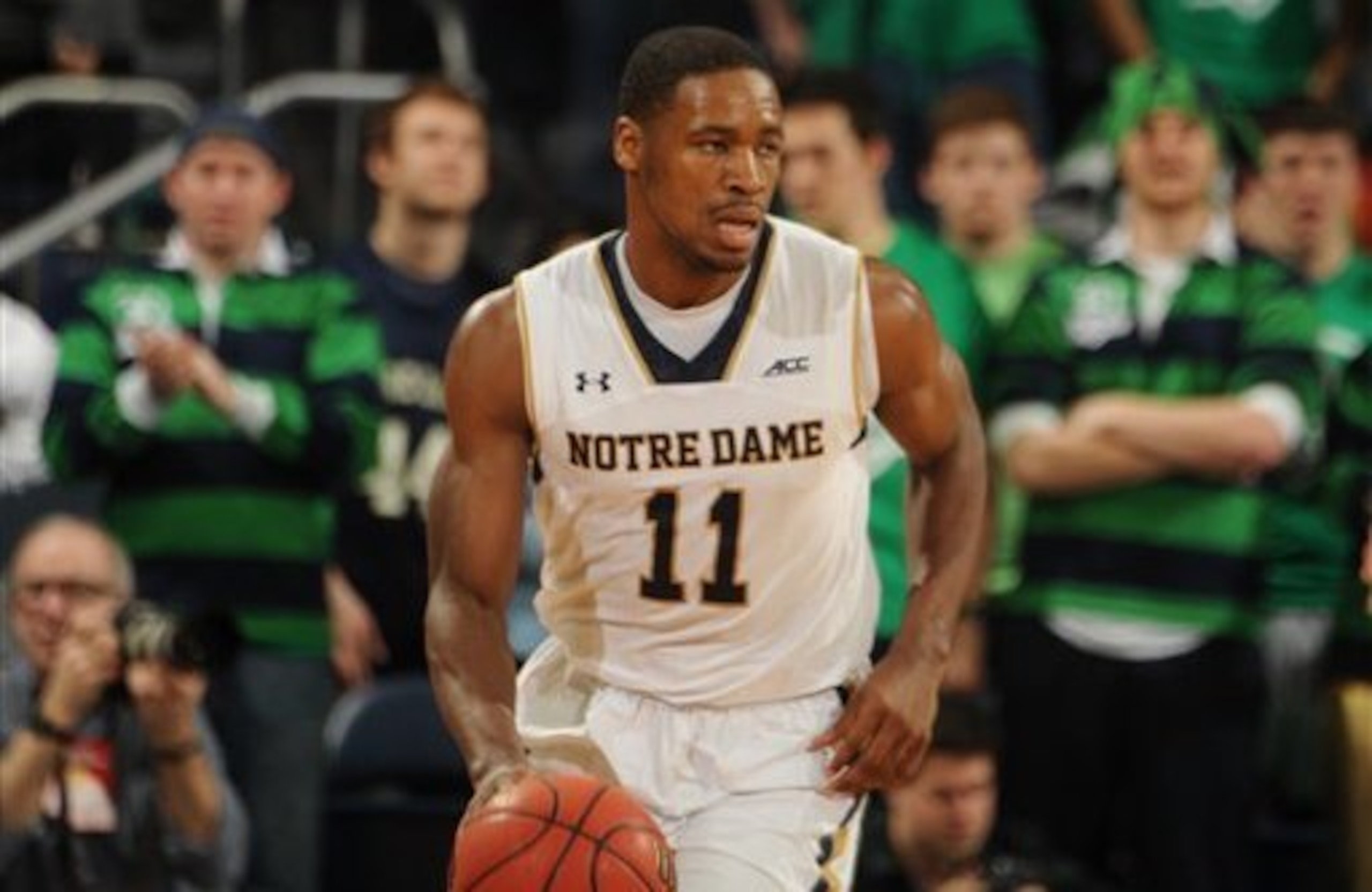
Even including zero and double zero, there are only 37 options for jersey numbers in college basketball. This already finite number is made even smaller by most players not wanting to wear something in the 40s or 50s. As a result, it's hardly uncommon for a bunch of the nation's top players to all don the same number.
This year, the magic number is 11.
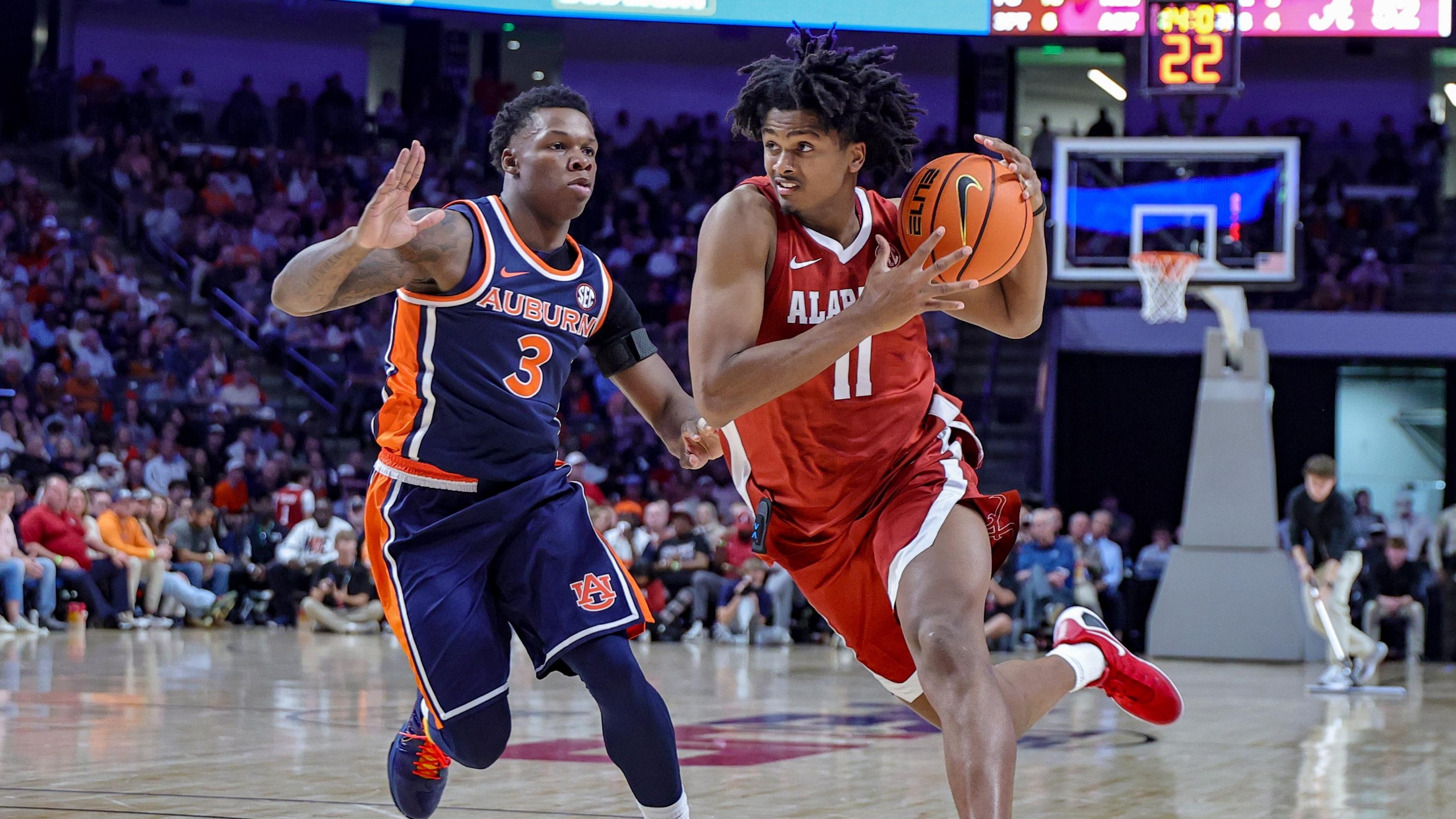
Notre Dame's Demetrius Jackson, Iowa State's Monte Morris, Indiana's Yogi Ferrell and Arizona's Allonzo Trier will be sporting 11s as quite possibly the best backcourt player on their respective top-20 rosters. We'll also have North Carolina's Brice Johnson and Gonzaga's Domantas Sabonis looking slim in their 11s in the paint for potential title contenders.
Trier probably won't declare for the draft after this year, but the other five players just listed could all be in the NBA in 2016.
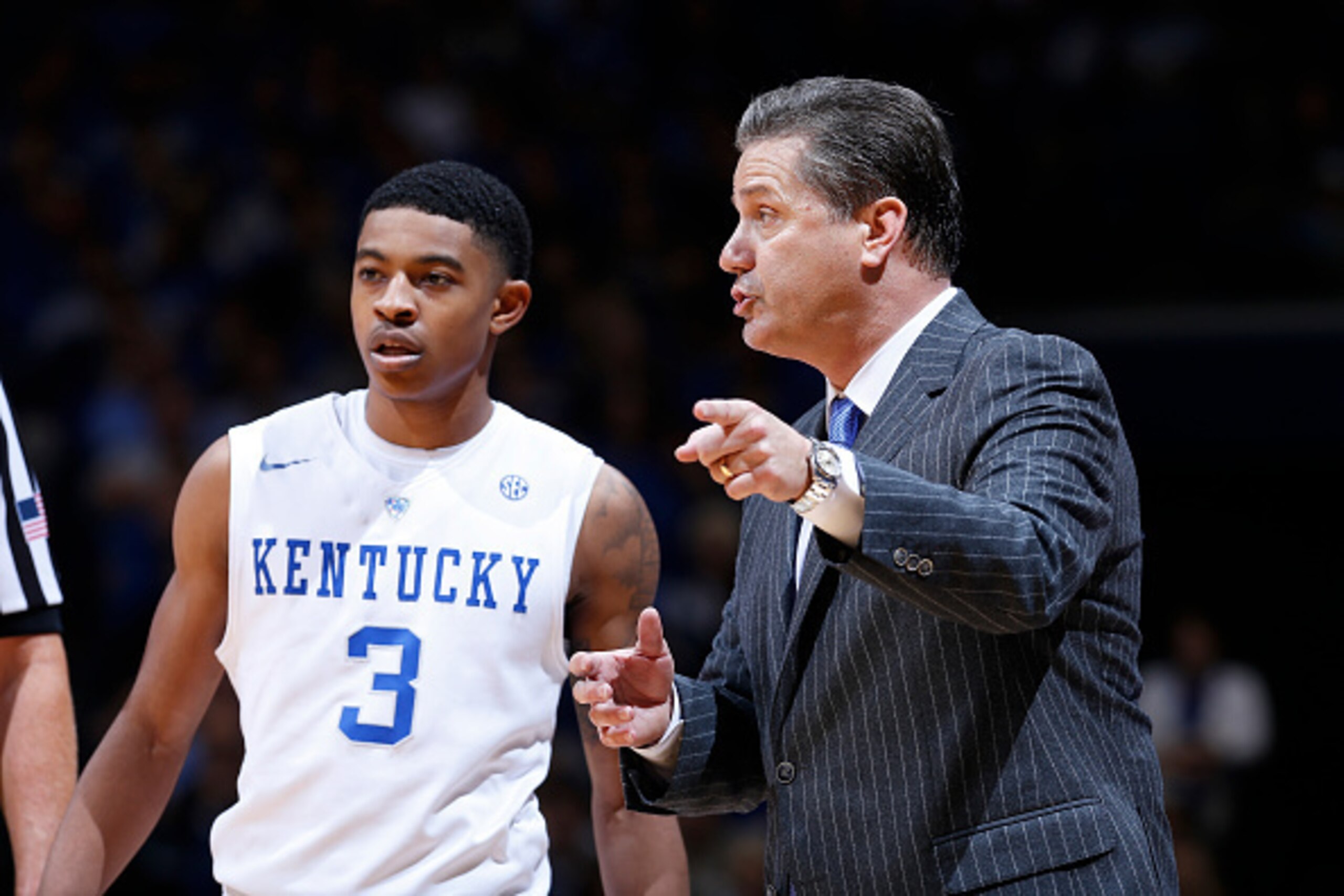
If your eyes get tired of watching players wearing No. 11, No. 3 is a great backup choice. Providence's Kris Dunn, Duke's Grayson Allen, Kentucky's Tyler Ulis, California's Tyrone Wallace and Villanova's Josh Hart will all be rocking treys in their quest for Wooden Award recognition.
The Number 40
9 of 10
It's extremely unlikely to be as loud as the past two seasons, but there will inevitably be some amount of 40-0 talk again this season. Don't expect much in the preseason, but when January rolls around and we can count on one hand how many undefeated teams remain, that's when we start arguing over who will last the longest and how likely that team is to actually survive another 10 weeks with a perfect record intact.
At the beginning of this month, I projected the first loss of the season for what were then regarded as the 20 best teams in the country. Both then and now, I don't see a particularly likely loss on Wichita State's schedule. Perhaps the only game that the Shockers won't have at least a 60 percent chance of winning is the possible AdvoCare Invitational championship game against Notre Dame, and even that's a coin-flip game if it happens.
That doesn't mean I think Wichita State will go undefeated, but if forced to project one team to do so, it's hard not to at least see the possibility of the Shockers getting to 35-0 for the second time in three years.
Whether it's Fred VanVleet and Ron Baker or someone else, though, we'll eventually be made very aware of the fact that this year is the 40th anniversary of the last undefeated national champion (Indiana in 1976). And after coming so close in back-to-back years, perhaps it's our destiny to finally see a team win 40 games exactly 40 years after the Hoosiers last ran the table.
Probably not, but it's fun to dream.
The Number 2
10 of 10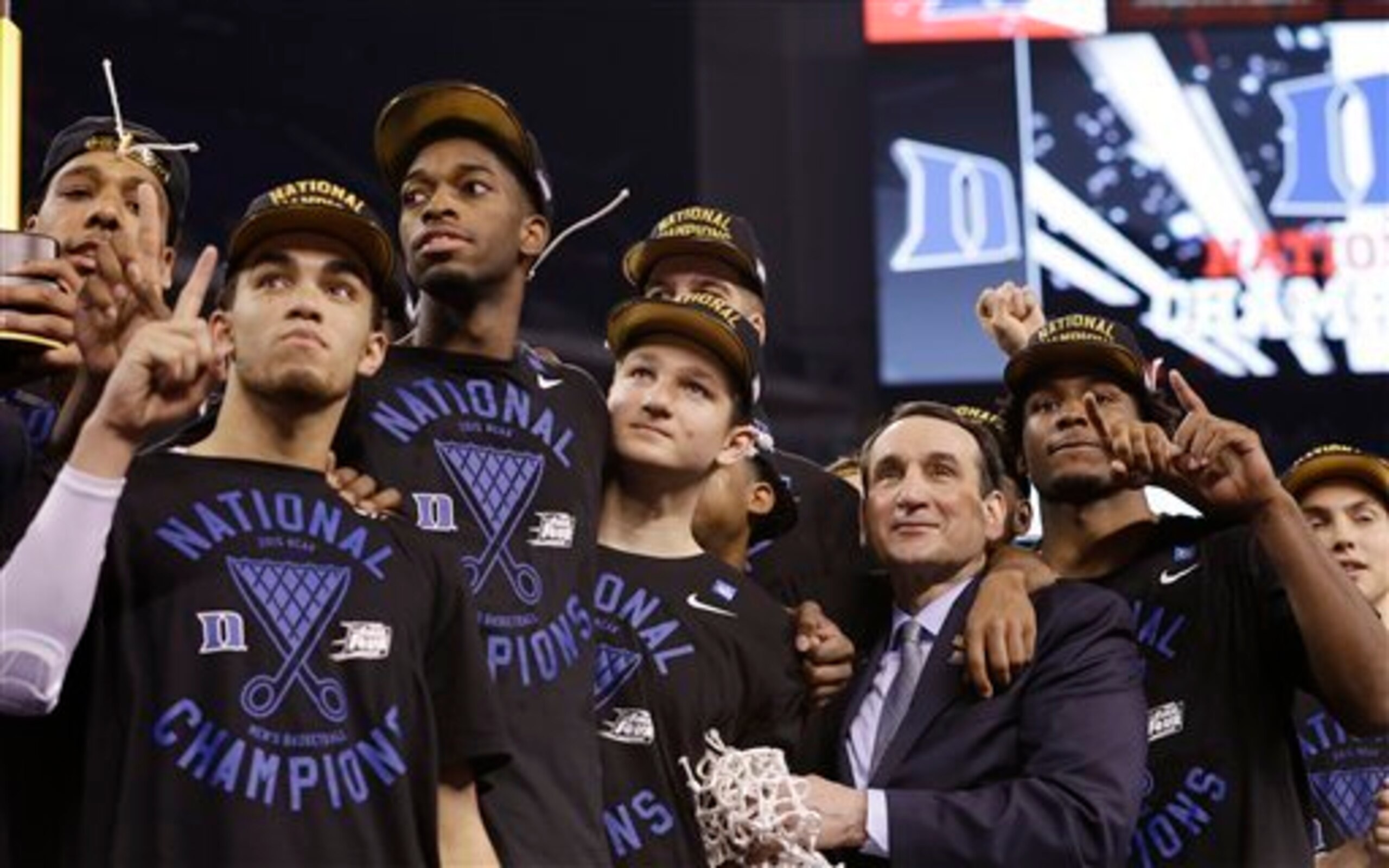
In the more than 40 years since Notre Dame ended UCLA's 88-game winning streak in 1974, there have been just two instances of a school winning back-to-back national championships: Duke in 1991 and 1992, and Florida in 2006 and 2007.
Quite the opposite of the norm in today's game, those teams remained nearly identical from one year to the next. Of the six players who scored at least six points per game on Duke's 1991 championship team, five returned to lead the 1992 championship team in scoring. Similarly, Florida got back all seven players who scored at least 150 points on the 2006 title team. They all scored at least 200 points the following year, as well.
To put things lightly, this year's Blue Devils are not in the same boat. If we include the 7.5 points per game that Rasheed Sulaimon averaged before being dismissed from the team, Duke lost all five of its players that scored at least 6.2 points per game.
We have certainly seen that it's possible to do well with a roster full of 5-star freshmen. However, four decades of history don't exactly bode well for Duke's shot at a repeat. This team will be extremely good but perhaps not quite national championship good.
In Duke's stead, the coaches poll spit out two title favorites. Kentucky and North Carolina tied for the top spot with Duke still very well-respected at No. 4.
Kerry Miller covers college basketball for Bleacher Report. You can follow him on Twitter: @kerrancejames.


.jpg?w=2560 "Jonathan Taylor Landing Spots")
.jpg?w=2560 "NFL House in Paris Closes for Protests (AP)")

.jpg?w=2560 "Trevon Diggs Cut by Seahawks")