

Analysing Cesc Fabregas' Early Season Form for Chelsea
Were Cesc Fabregas a technology company, he would be Nokia.
A once-proud institution with an established history of success and innovation, the Finnish company was a market leader. Now it lags behind its main rivals.
Bigger, more savvy players have come on the scene, and Nokia have been squeezed out.
TOP NEWS
Sullivan, Hall Lead USMNT to Big Win 💥
.jpg?w=2560 "Titans Giants Football")
OBJ Calls Out Giants After Release

Pic of LeBron's Helicopter Commute 🚁
Fabregas' blip hasn't been as prolonged—or as dramatic—but some sections of the Chelsea crowd are now beginning to question his influence at Stamford Bridge.
The player we thought we knew has disappeared. From being the master of the assist in 2014/15, this season he has picked up just one in Chelsea colours.
Indeed, Fabregas' decline has been mirrored by his teammates' struggles. Without the Spaniard in the same devastating form we saw in the first half of Chelsea's title-winning campaign, Jose Mourinho's side just hasn't looked the same.
Chelsea are laboured in attack these days, playing without the zip that saw them punish opponents when at their formidable best.

Without Fabregas dictating play and controlling games, they look predictable.
We only need to see the opening nine games of this season to see that much. Teams have worked Chelsea out, they've worked Fabregas out, and it's stifled the reigning Premier League champions.
What's been alarming is how often Chelsea have been forced to play games on the back foot for much of the current campaign.
Mourinho's men have been dominated across the pitch, and it seems to have stemmed from their frailties in the centre.
We can point to Branislav Ivanovic's poor form on the right side of defence as a contributor to that, but being swamped in the pivot, Chelsea have been destabilised.
Teams have attacked them right at the heart of the midfield, and it's sent shock waves elsewhere, causing panic in the ranks.
For Fabregas to perform sitting deeper, he needs to enjoy possession more than he has this season. He can certainly ill afford to be playing more defensively, tracking players in the way opponents should be doing to him.
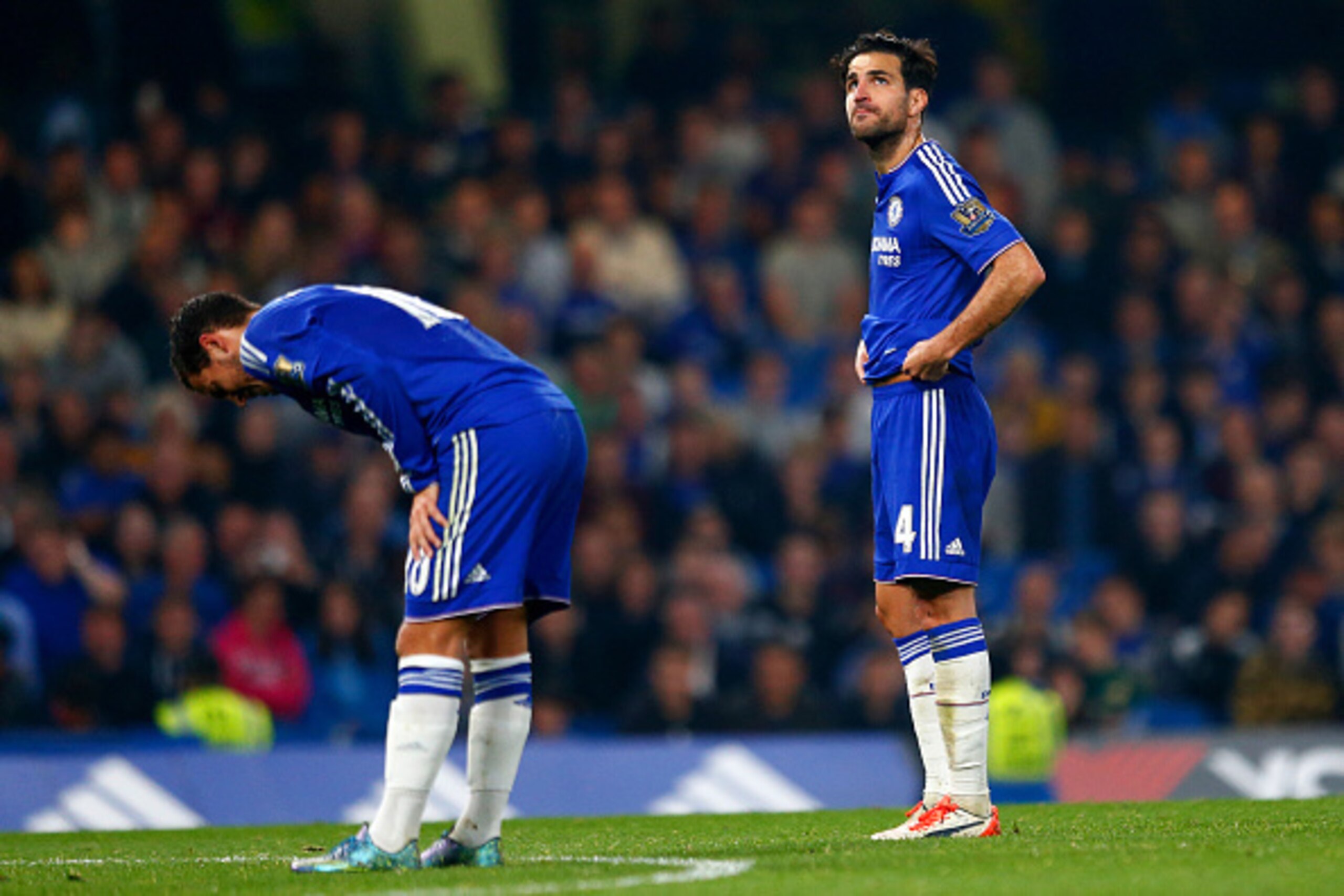
Mourinho didn't sign Fabregas for what he can offer Chelsea at the back; it was with his creativity in mind. Chelsea were rewarded for that pre-2015, but since the turn of the year, he has dropped off significantly.
If we look at his stats, it says it all.
Before January 2015, Fabregas had picked up 13 assists in the Premier League for Chelsea. We're now in October, and the Spaniard is shy of even half of that total with just six.
Sure, assists don't tell us the full story, but it's a big part of Fabregas' game that has gone south.
When it comes to the chances he has created for Chelsea, we're seeing a similar pattern emerge. Fabregas averaged 2.73 chances per game last season, which has fallen dramatically to 1.88 in the present.
Given how Chelsea have struggled this term, that's to be expected. They're not testing teams in the way they were, being forced to play more football in their own half. But to be so severe, it's where the concern remains.
Perhaps more troubling is how Mourinho's deploying Fabregas in a different role.
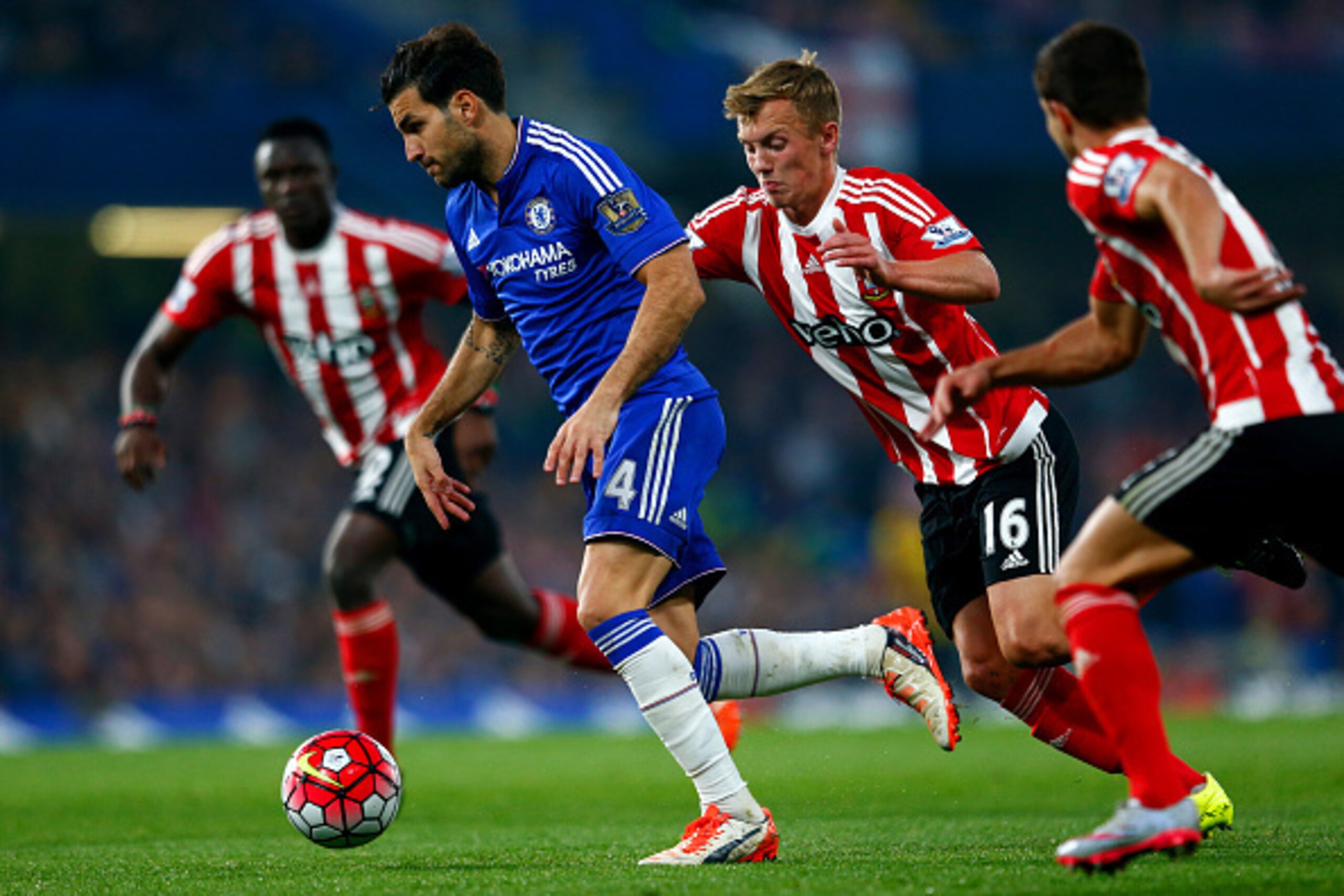
When Chelsea lined up against Aston Villa this weekend, the expectation was that Ruben Loftus-Cheek would be in the pivot given the absence of Nemanja Matic, playing alongside Ramires to give the team its defensive base in front of the centre-backs.
That would have then released Fabregas in that familiar role from early in his career as the advanced creative source.
Not so. It was Loftus-Cheek who played effectively as Chelsea's No.10, leaving Fabregas to focus on more defensive duties.
In his press conference after the game, Mourinho reflected on the Spaniard's performance when he explained why Eden Hazard had been omitted from the team.
Mourinho's thinking was that Hazard had to be sacrificed in order to give Chelsea a more solid look in midfield, substituting style for substance.
"To have performances like Ramires and Fabregas controlling totally the centre of the pitch, it was just a tactical decision [not to play Hazard], leaving super quality on the bench, but bringing tactical discipline and hoping that the team would be solid," Mourinho explained.
The concern for Fabregas here is that Mourinho's viewing him as a defensive solution for Chelsea right now.

Why should he be worried? Because he shouldn't be as that.
Forcing Fabregas to play such a restrictive defensive role in Chelsea's midfield is only going to shackle him. And it's not his game.
Of Chelsea's midfielders, he has the worst tackle statistics, this season losing an incredible 72 per cent of his one-on-one duels.
When that's happening in the middle of the pitch, where teams are most vulnerable, it's no wonder Chelsea have been shipping goals at a rate just shy of two per game.
It was only when Fabregas was moved further forward after the interval against Aston Villa—Matic replaced Loftus-Cheek—that we were reminded of how talented a player he is.
It was Fabregas who sent Diego Costa away for Chelsea's second in the game—the goal that eventually killed Villa off.
Admittedly, the game was naturally more stretched in the latter stages, which gave way to Fabregas being able to find more pockets of space and possession, helping him control the flow of the game. Yet that's where his strengths lie.
His form hasn't been what it was when he first joined the club, although he has been the victim of circumstance.
Chelsea have regressed to a similar point from when Mourinho returned in the summer of 2013. Two years ago, Mourinho set his team up not to lose matches, to build a foundation from where they could develop into the side that stormed to the championship.
It's what we're seeing now, although the view is much more short-termist. Mourinho's trying to save Chelsea's season—potentially his job with it—and Fabregas is being asked to perform in a way we haven't seen him at any stage of his career.
It's no wonder things haven't looked as positive for him.
Until we see the perspective change at Stamford Bridge, we can't expect to see Fabregas anywhere near his best.
Garry Hayes is Bleacher Report's lead Chelsea correspondent. All quotes were obtained firsthand unless otherwise noted. Follow him on Twitter @garryhayes

.jpg?w=2560 "Rap: Lions, LaPorta End Contract Talks")

.jpg?w=2560 "Report: Baker May Miss Up to 6 Weeks")