Lovable Losers Everyone Cheers For
Pity is rare currency in sports. Fans understand the brevity of success and can always feel the lingering sting of failure—when the other guy loses, it’s hard to be sympathetic when he is ultimately part of the reason that sting never goes away. But some teams and individual competitors simply transcend the status quo and become something else altogether—in their respective sports and as a part of pop culture. And it’s not because of unprecedented success but rather a history of failure.
These lovable losers have suffered late-season collapses, long-standing mediocrity, financial woes, personal shortcomings, bad luck and other assorted cruelties that have neutered any sense of danger in the eyes of most fans. While some appear to be emerging from the darkness, others seem to only get worse over time.
What they all share is a special place in sports—they’re losers who have suffered in ways that are too cathartic for fans to not find endearing.
These are the lovable losers everyone cheers for.
Toronto Raptors
1 of 10
The Toronto Raptors are a great example of a sports franchise that manages to be fun, even if the actual team is bad far more often than good. Since joining the NBA for the 1995-1996 season, the Raptors have seven postseason appearances and have finished above .500 the same number of times. Though mediocrity won’t be good enough in perpetuity, the team has managed to be awesome in so many other ways.
First, there’s the mascot and its manifestations. The crimson red velociraptor is almost too conceptually absurd to like, but whether it’s tumbling down the steps of the Air Canada Centre, eating a cheerleader or tearing an Achilles, the Raptors deserve love for the mascot alone.
Second, a failure to win doesn’t mean the team hasn’t put an array of talented and exciting players on the court, including Vince Carter and Chris Bosh.
John Daly
2 of 10
People adore a fun-loving ne’er-do-well, even if the same eccentricities that turned a talented pro golfer such as John Daly into a likable spectacle have long crossed the threshold from "goofy" to "kind of upsetting."
Daly’s PGA career will be defined by his larger-than-life personality (and amazing fashion choices) rather than his successes as a golfer—a dynamic that makes him both lovable and a loser.
Could he have been a lovable winner? At this point, the question is likely irrelevant.
Kansas Jayhawks
3 of 10
Despite a track record of mediocrity in the Big 12, the Kansas Jayhawks flirted with success when former head coach Mark Mangino led the school to two consecutive winning seasons in 2007 and 2008—winning the conference in 2007 and losing just once.
This accomplishment was not enough to keep Mangino from resigning in 2009 (thereafter, he was accused of mistreating players) after finishing 5-7. When he was winning, Mangino’s health was as big a story as the Jayhawks' run.
For much of the history of the school’s football program, Kansas has been bad...real bad. And it’s hard not to feel bad for the Jayhawks—especially when the powers think the solution is Charlie Weis. Building a consistent winner is an uphill battle under ideal circumstances.


.jpg?w=2560 "Colts Football")
Winnipeg Jets
4 of 10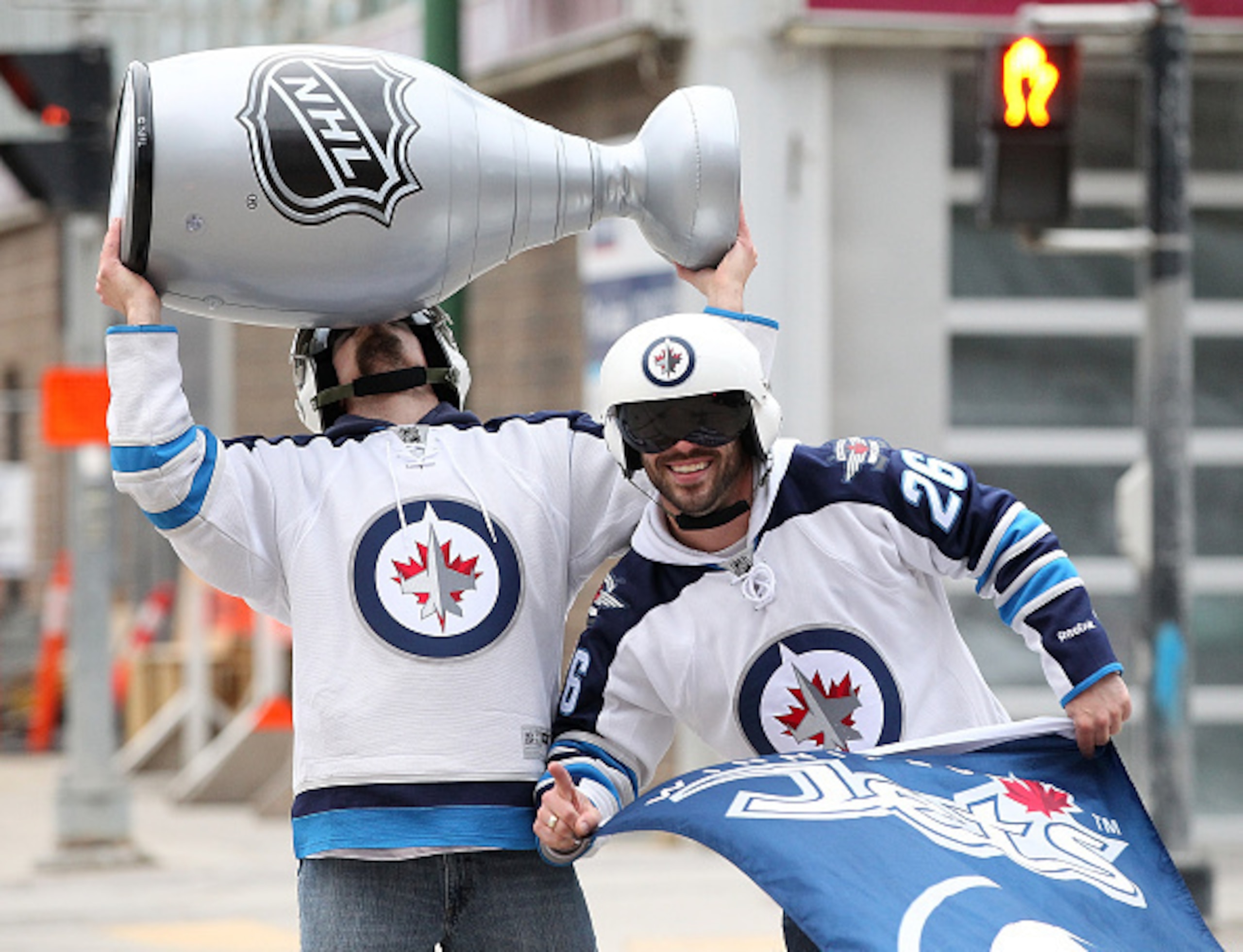
It’s not often in pro sports that a franchise essentially dies but later is resurrected to nearly universal, polite applause—a kind of "Isn’t that nice?" sentiment, without prejudice.
But, that’s exactly what happened when the Jets popped into existence again in Winnipeg after the Atlanta Thrashers folded up the tent following the 2010-2011 NHL season.
The original Jets bolted Winnipeg for Phoenix in 1996, becoming the Coyotes. When the NHL returned to Winnipeg in 2011, no group of hockey fans was easier to cheer for—even if it just inherited a very bad organization formerly known as the Thrashers.
Jacksonville Jaguars
5 of 10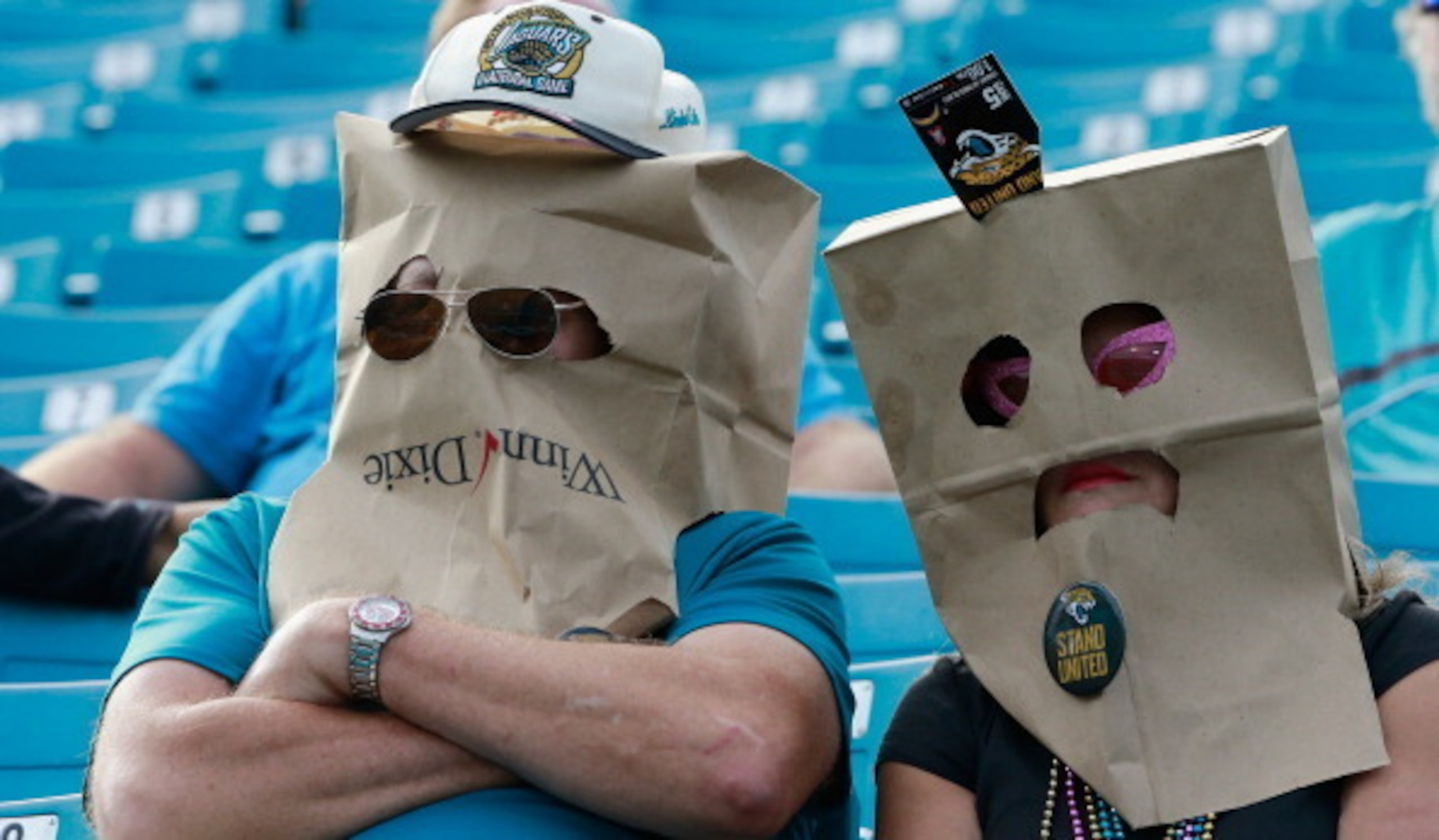
In an era when the NFL is described as a league remarkable for both its popularity and parity, it’s hard to view the failures of the Jacksonville Jaguars as being the product of any force outside the franchise itself. This is especially true considering the fact the same system allowed the team to hit the ground running, earning playoff appearances in four of its first five years of existence.
The Jaguars have been so hapless as to seemingly relinquish any angst among rival fans—potential relocation coupled with assorted blunders and generalized dysfunction have essentially rendered the team a "dead franchise walking." Instead of piling on, we just want the team and its fans to be OK.
New York Mets
6 of 10
In the case of the New York Mets, success has been a little less elusive compared to other "losers" on this list, but the club’s status as the other, much less popular and successful MLB team in New York makes much of the world a kind of vicarious cheer section.
The Mets' inability to master the alchemy of turning piles of money into consistent success, coupled with some of the more spectacular collapses and free-agent disasters, makes the franchise an easy choice.
Draped in the shadow of the Yankees—the team with 27 world championships and many timeless players such as Babe Ruth and Derek Jeter—the Mets’ failures are never overlooked or under-analyzed.
Detroit Lions
7 of 10
As NFL teams cycle between varying levels of success and failure, one franchise has remained a safe place, where the average fan can reassess his expectations and appreciate all the good times, even when his favorite team is struggling. And that safe place is the Detroit Lions. Currently disintegrating amid a 0-5 start to the 2015 season, the Lions give football fans a reliable vantage point for a reality check.
With 11 playoff appearances and zero playoff wins since the merger of the NFL and AFL, the Lions have given the rest of us the greatness of Barry Sanders, the tradition of pro football on Thanksgiving and a long track record of failure.
Kansas City Royals
8 of 10
When the Kansas City Royals pushed the mighty San Francisco Giants to the brink in Game 7 of the 2014 World Series, the world—outside a pocket of Giants fans—was essentially standing united with the underdogs.
Since the great George Brett led the Royals to their only World Series Championship in 1985, the franchise had become a symbol of inequity of Major League Baseball, failing to qualify for the postseason again for nearly three decades.
But, the sad symbols suddenly looked formidable. After earning a second consecutive postseason appearance in 2015, the Royals are proving to be a franchise capable of achieving success in a new era.
Cleveland Browns
9 of 10
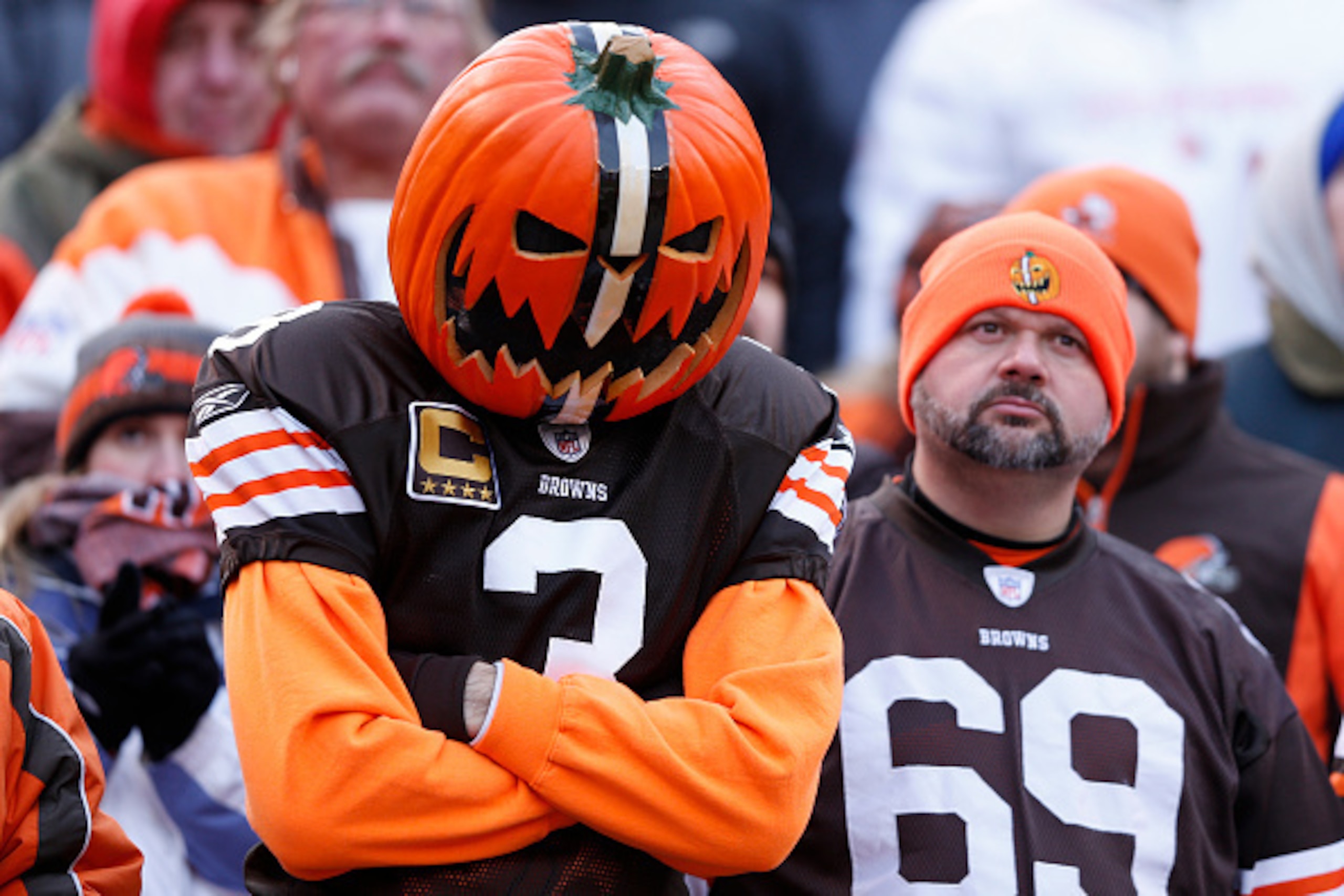
If you love pro football—its rich history and its contributions to the greatest moments in sports—then you can’t help but feel for the city of Cleveland.
The Browns were an almost elemental form of football: Jim Brown barreling down the field, punishing would-be tacklers; the hardscrabble, dedicated fans. Before Art Modell packed up the franchise and moved to Baltimore, the Browns were a team that had failed to win a championship in the modern era, but they were also consistently good—a fact underscored by the success of the Baltimore Ravens.
Since the resurrection of the Browns, the new incarnation has been...well...bad. Comically bad. So bad that when owner Jim Haslam bought the Browns in 2012, his mere connection to the division rival Pittsburgh Steelers was reason enough for excitement, until his legal troubles and strange approach to personnel decisions made his stewardship very much orthodox in the Browns’ universe.
Chicago Cubs
10 of 10
Maybe this is the year the Chicago Cubs exorcise their demons and win the World Series for the first time since winning consecutive championships in 1907 and 1908. If that happens, perhaps a new era is upon us and the club’s dedicated but tortured fans will find themselves rooting for a true contender.
But until that actually happens, those same fans—as well as anyone fascinated by what will become of the Cubs—are just waiting for the latest strange and cruel twist to dash their hopes again.
The Cubs are the quintessential lovable loser because the franchise marries spectacular, long-standing failure with historic relevance and moments that will forever be a part of pop culture. Most importantly, the Cubs are easy to pull for—to appreciate. And when something as bizarre as the "Bartman" moment becomes a part of the team’s larger narrative of loserdom, we can gawk at the fallout without feeling the pain.
.jpg?w=2560 "NFL Paris Football")

.jpg?w=2560 "Trevon Diggs Cut by Seahawks")