
Rugby World Cup 2015: Ranking Top Backs in Group Stage
We have seen over 2,000 points scored so far in the Rugby World Cup, with the 20 countries' backs responsible for most of them.
The playmakers and pace men have provided the highlight reels with plenty of material over the last three weeks, from end-to-end efforts and last-minute winners to set-play moves pulled off with surgical precision.
But ranking a cool-headed fly-half who plots his way through an error-free 80 minutes against a flying wing who fills his boots with easy run-ins against tournament minnows is no easy task.
So we must simplify our criteria in the search for the 10 best men we have seen wearing jerseys nine to 15.
This list, therefore, has been selected based on one question, and one question only. Who has raised the roof highest in the World Cup so far?
Here are the 10 men who have had the world talking.
10. Mike Brown
1 of 10
Not many England players finished the tournament with credit in the bank, but Mike Brown was one of them.
Two tries on opening night earned him the man of the match against Fiji, and he was also a constant threat to Wales and Australia in a team struggling for direction.
Brown, in harness with Anthony Watson and Jonny May, was the one true positive England could take from their dismal campaign.
He now has 43 caps and is an example of the sort of player who, in four years' time, would have the sort of experience needed in many key positions if a team wants to win a World Cup.
The problem is he is already 30, and may be well out of the picture by then. England, effectively, have this next cycle to find a player quickly who can match his aggression, assuredness and attacking verve, and then get him capped as many times as possible before getting on the plane to Japan.
Good luck with that.
9. Bryan Habana
2 of 10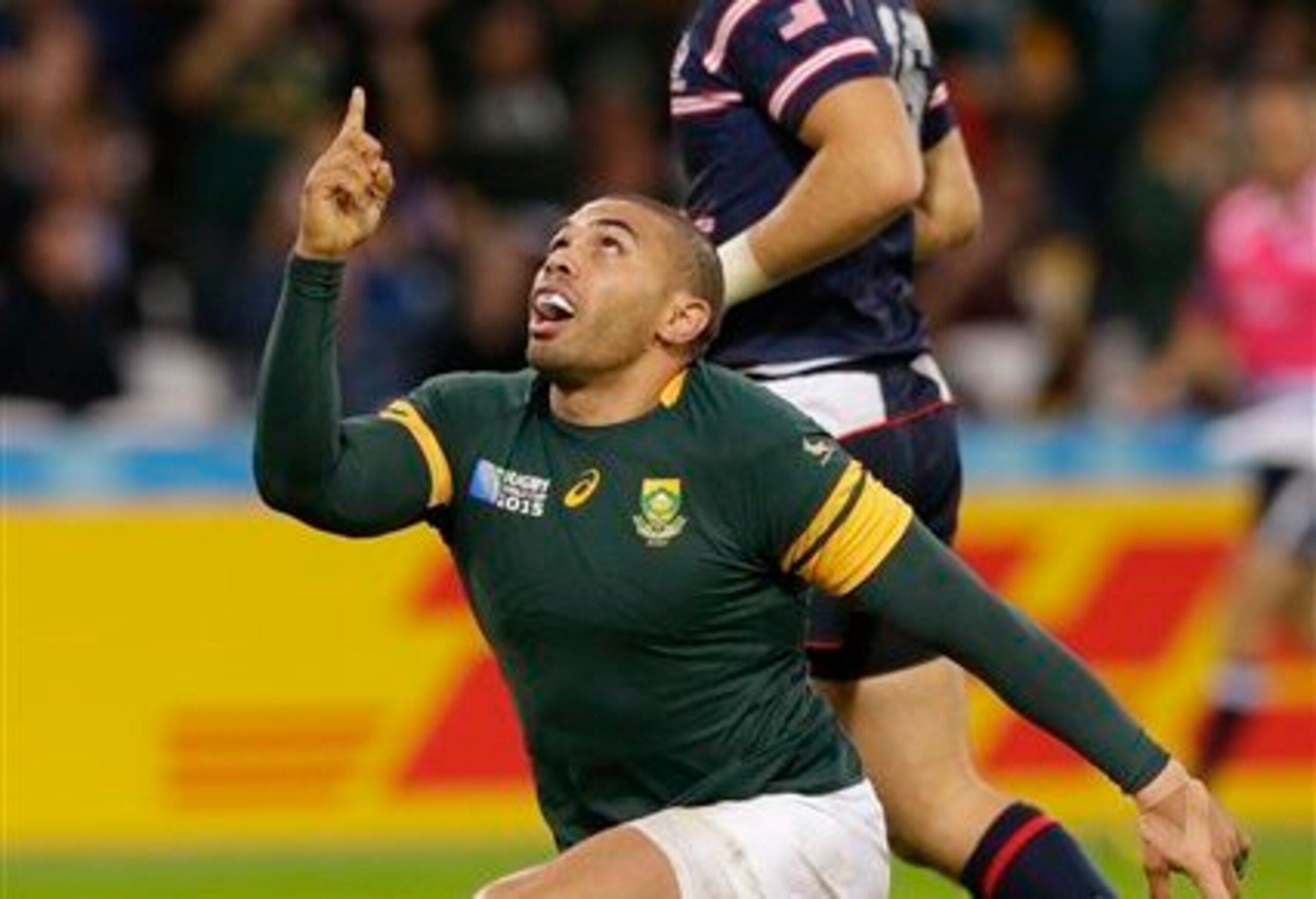
We said at the start of this selection that it's hard to measure the merits of a winger running in tries for fun against poor opposition.
And although three of Bryan Habana's five tries in the pool stage came against a worn-out, white flag-waving USA, we should take a moment all the same to note the achievement.
Habana's treble took him level with Jonah Lomu on 15 World Cup tries.
Each of those scores was relatively easy, but we had also seen that the old-stager can still turn the power on when required with a robust try against Scotland to add to his first of the competition against Samoa.
Habana, 32, will fancy his chances of making that World Cup record his own when he faces Wales in the quarter-finals.
8. DTH Van Der Merwe
3 of 10
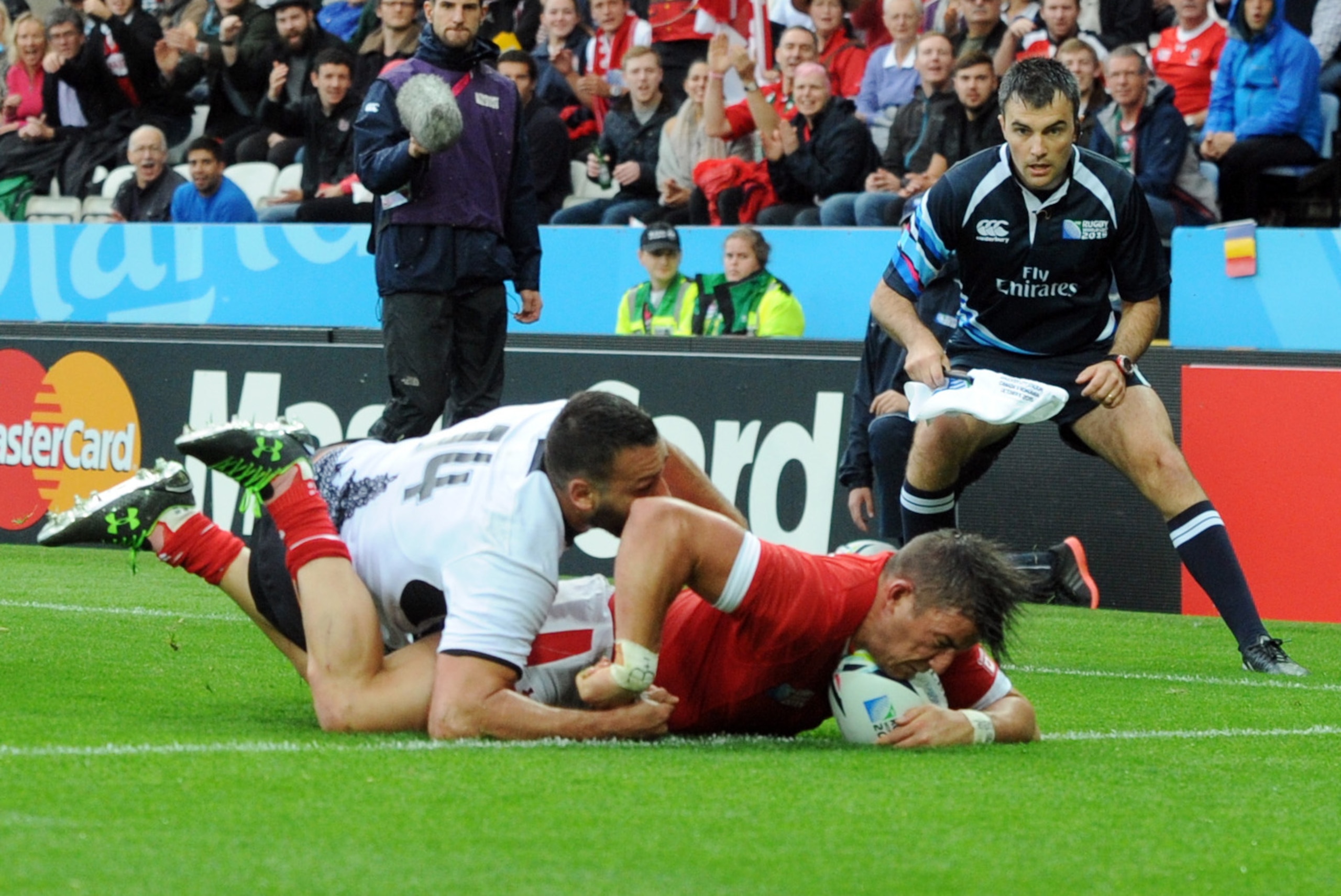
Canadian left wing DTH van der Merwe proved his potency with a series of live-wire displays in his four games.
The South African-born speedster’s best try was the breathtaking effort constructed from inside his own 22 against Italy, when he got free down the touchline before finding a colleague inside him, and intelligently tracking his pass to take the return and send Elland Road into a frenzy.
The 29-year-old scored in every game of Canada's campaign, but tries were not the only currency the Scarlets man traded handsomely in.
He ranked highly across the board for carries, offloads and metres gained, per Sport24.

.jpg?w=2560 "Colts Football")

7. Dan Biggar
4 of 10Dan Biggar wins the award for biggest "cojones" of the pool stage.
The Welsh No. 10 was immaculate with the boot as Wales and England knocked lumps out of each other at Twickenham.
It was the tournament's first real crunch encounter, and it needed a cool head to steer Wales through the contest, especially when their players began dropping like flies.
Having clawed their way back through Biggar's penalties and Gareth Davies' try, it was down to the Ospreys man to seal the win with a monstrous penalty from the halfway line.
It was right on the edge of Biggar's range, but it was straight and long enough to give Wales the lead and send the 25-year-old into Welsh rugby folklore.
It's worth remembering that, had Leigh Halfpenny been fit for this tournament, Biggar wouldn't have had the job of kicking for goal at all.
6. Nehe Milner-Skudder
5 of 10We’ve seen plenty of electricity from New Zealand’s Nehe Milner-Skudder, described perhaps best by the Telegraph's Mick Cleary as a "low-slung, turbo-charged menace."
The wing has scored four tries and also had a hand in creating others, getting himself involved in the play and looking immediately comfortable in his new international surroundings.
The most pleasing aspect for a lot of observers is that the 24-year-old is something of a throw back to the days of smaller wings, who relied on pace and guile rather than bulk and strength to bamboozle defenders.
After a brace against Tonga in New Zealand's final pool match, which also saw him set Ma'a Nonu up for a try on his 100th cap, the New Zealand Herald's Patrick McKendry wrote:
"Little man, fast feet, big confidence - Nehe Milner-Skudder has almost certainly won the No. 14 jersey for the All Blacks' quarter-final next weekend... At 90kg he is one of the smallest wings at this World Cup, but with his two tries and excellent all-round performance against Tonga at St. James' Park, he is showing that bigger isn't necessarily better.
"
He already has one man-of-the-match gong in his locker after two tries against Namibia, a game in which he created another two.
Milner-Skudder now comes up against France, a country who long ago jettisoned the idea of small, tricky men out wide in favour of big brutes.
Quite what they will make of this newcomer will be anyone's guess.
5. Matt Giteau
6 of 10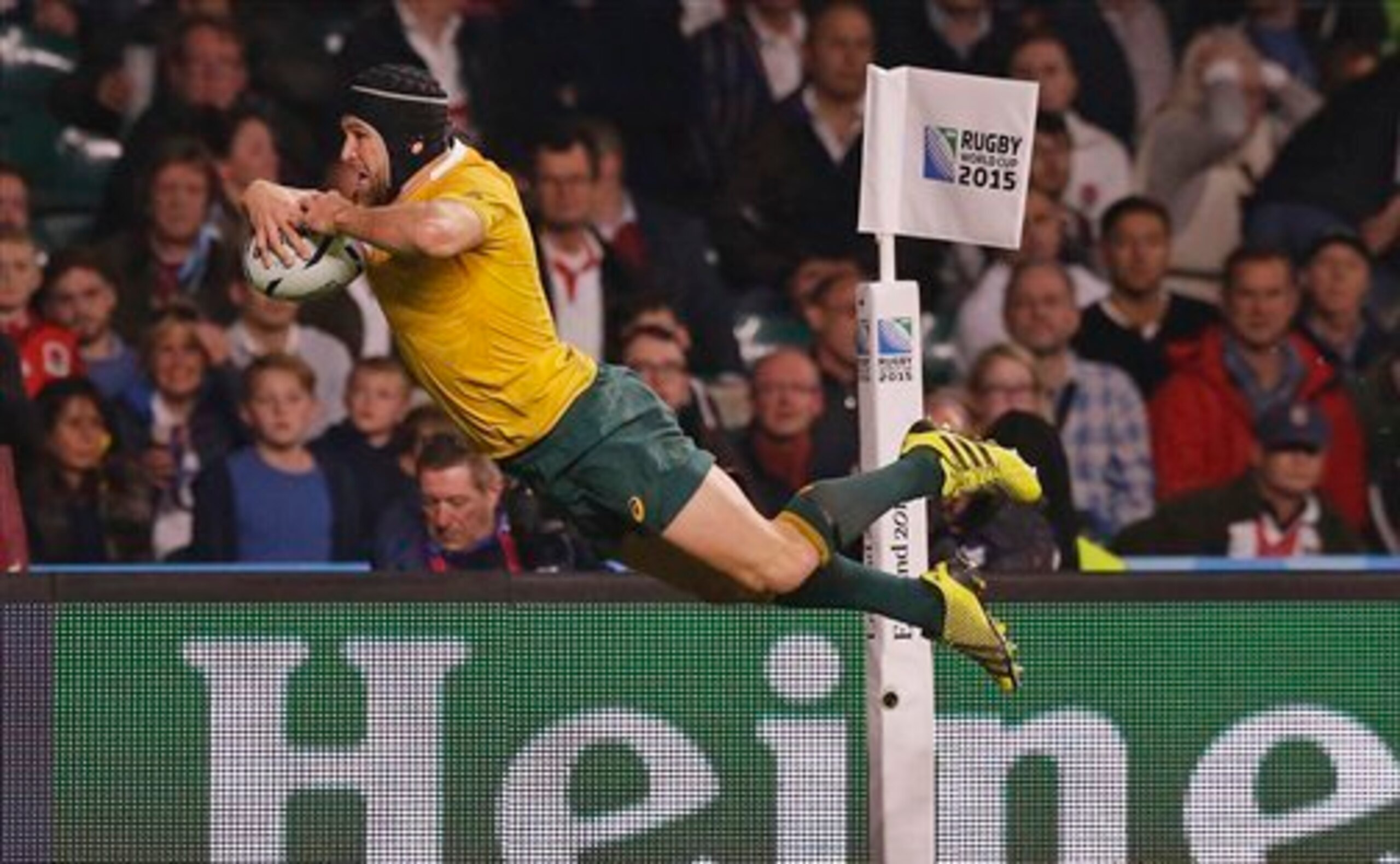
It was the best—and easiest—decision to make for Michael Cheika to bring back Matt Giteau for this tournament.
What team on earth would not re-open the door to a man of his calibre with 90-plus caps? Well, there might be one.
Giteau has been the silk lining to this impressive Australian side. He complements Bernard Foley with his ability to clear his lines off either boot and is the best "second" playmaker any team possesses.
His try against England was easy given the mismatches that put him away down the right flank, but you've still got to finish them.
Against Wales, the 33-year-old was also a willing body in the impenetrable gold wall that repelled the Welsh as they tried to smash their way through the 13 Australians still on the field, and filled in for Will Genia at scrum-half while he served his sin bin.
What England would give for a No. 12 with a skill set like Giteau's.
4. Sonny Bill Williams
7 of 10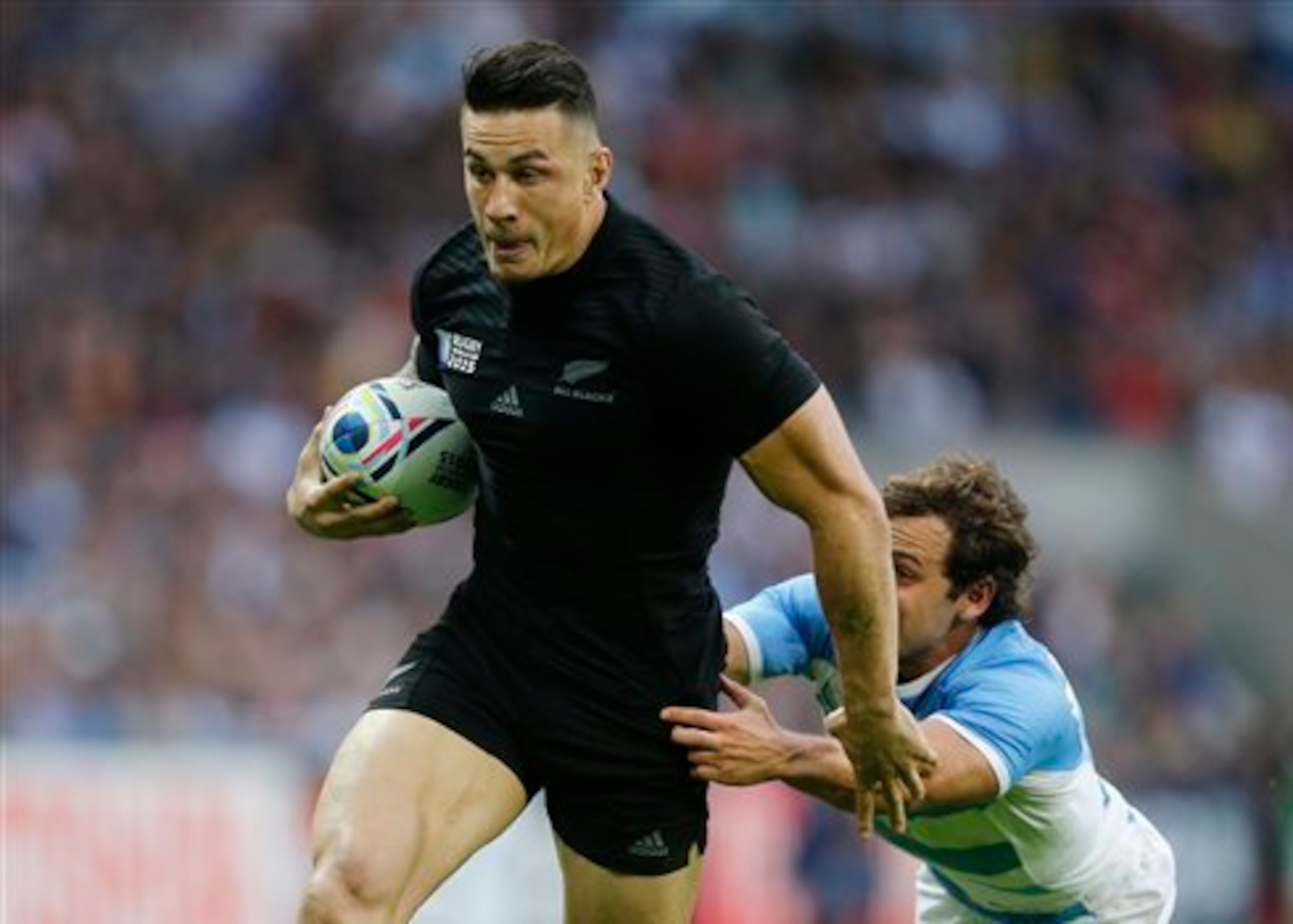
Sonny Bill Williams has made a strong case for Steve Hansen to rupture the All Blacks midfield pairing of Ma’a Nonu and Conrad Smith.
The former rugby league man, 30, has showcased his imperious offloading ability during the pool stages, which he allies with awesome strength.
His pass for Malakai Fekitoa’s score against Namibia was rugby poetry, but his biggest impact came off the bench in New Zealand's first outing against Argentina.
They were struggling to take a firm grip on the game against a rugged Pumas defence, and trailed 13-9 at half-time, but Williams' introduction changed all that, per Gregor Paul in the New Zealand Herald:
"The bench more than played its part... and no one more so than Sonny Bill Williams. A sad shadow of his usual self the last time he wore black, he was the man around whom the All Blacks built their revival. He was direct, strong and measured, using his offload well.
"
It may be tempting for Hansen to retain Williams as an impact player, given the effect he had on that last 20 minutes at Wembley, rather than start him from the outset.
Whichever option he chooses, France will know the Chiefs man will need to be observed closely.
3. Ayumu Goromaru
8 of 10One of the undoubted stars of 2015, Japanese full-back Ayumu Goromaru barely put a foot wrong for the Blossoms.
The full-back made some crucial tackles, some searing breaks, scored a fine try and was one of the best goal-kickers of the pool stages.
He will be best remembered for the try against South Africa, when he was on the end of a brilliantly worked move that ended with the 29-year-old diving over in the corner. But his goal-kicking was also immaculate in that game, ending with 24 points.
In the next game, after a criminally short four-day turnaround, Goromaru was heroic in defence, saving a certain try with a textbook corner-flag tackle on Scotland's Tommy Seymour.
He kicked a further four penalties and two conversions in a comprehensive win over Samoa and was again pivotal in Japan's third win, with 13 points in a 28-18 win over the USA.
That took him to 58 for the tournament, and cemented his place as his country's all-time leading points scorer.
But there is more to his story than that unerring boot, inspired by Jonny Wilkinson.
Goromaru couldn't even get into the squad for the 2011 World Cup, per ESPN, and has undergone a reintegration under Eddie Jones that not even the wily old Australian could have thought would go this well.
Sport24 perhaps summed up the rise of the Blossoms' No. 15 best:
"Not that many people, even inside Japan, had heard of Ayumu Goromaru before the World Cup started. Yet by the end of the pool phase the Japan fullback was a national hero and a name known to rugby fans across the globe.
"
2. Santiago Cordero
9 of 10
When you consider the man Santiago Cordero replaced in the Pumas squad for this World Cup, you realise the polar opposite style of player Argentina now have zipping up and down their right wing.
Manuel Montero, 6'4" and 17 stones, wrecked knee ligaments for the second time in early summer, per ESPN.
His size and power had proved deadly weapons for the Pumas, but they now had a man some nine inches shorter and five stones lighter in his place.
In footballing terms, it’s a bit like swapping Andy Carroll for Theo Walcott.
The amazing thing, given his electrifying displays so far in this tournament, is that Cordero was on the verge of settling for life as a Sevens specialist, per the Sydney Morning Herald.
Now he is set to terrorise the Irish defence in a 15-a-side World Cup quarter-final, after three tries in the pool stages that have left no one in doubt about the threat he poses.
Cordero exploded into this World Cup with a double against Georgia that any of the world’s greatest pace merchants would have been drooling over.
The first came as the 21-year-old launched himself off his wing to take an inside pop from the back of a lineout and sidestepped the last Georgian defender to score.
The second was the best solo effort of the whole group stage, as Cordero spun away from a tackler on half-way and set off with three more chasers towing caravans behind him.
His last opponent was evaded the way a Saturday shopper swerves past an oncoming pushchair.
Cordero, who plays for Regatas in Argentina, was at it again against Tonga, this time using his pace to attack from a re-start before feeding his colleagues who finished the move off. He bagged a score of his own in that game, too.
The world now knows who this little man with the jet packs in his boots is, and it would be no surprise to see him playing for one of the big sides in Europe before long.
1. Bernard Foley
10 of 10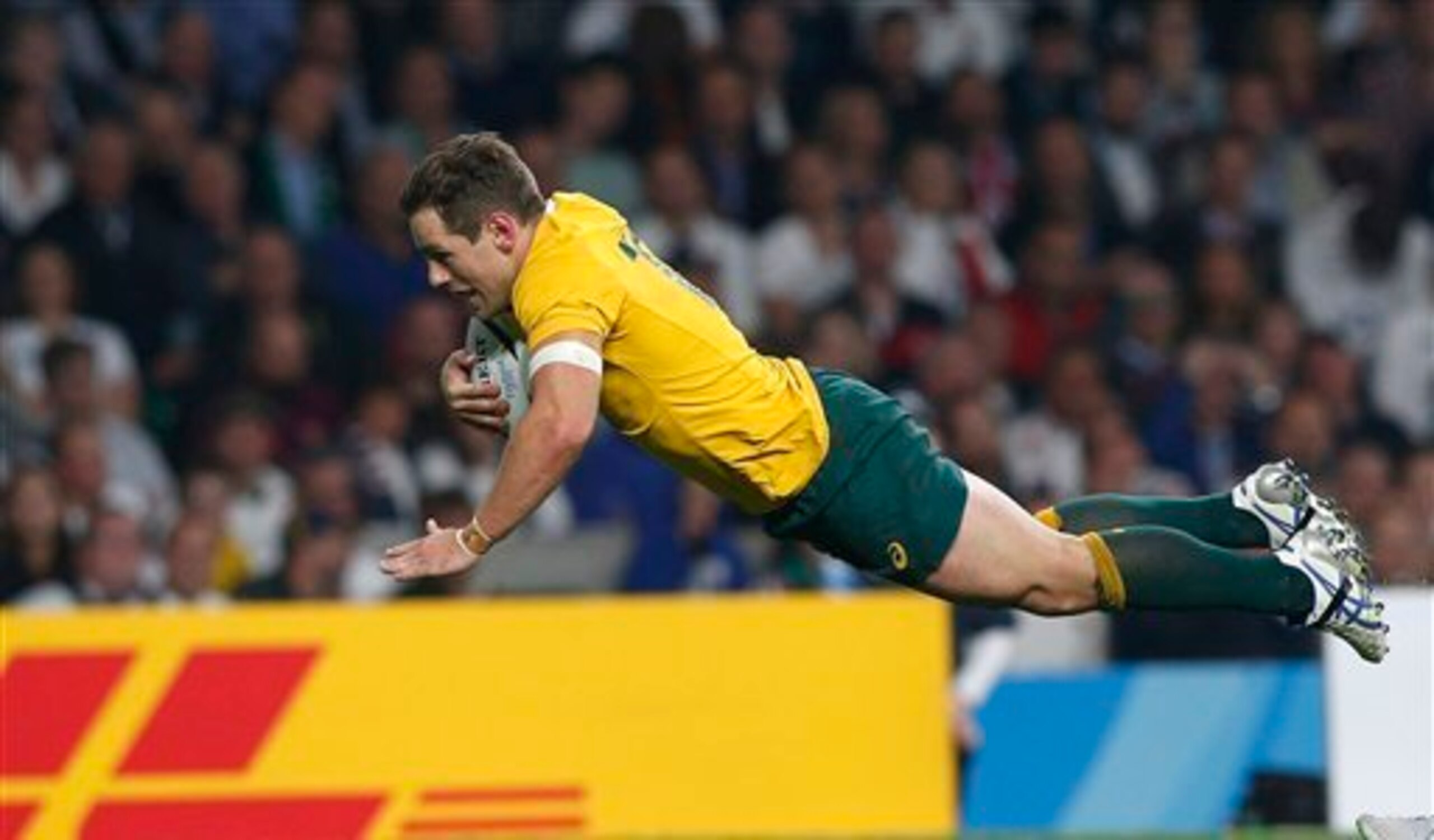
Australia’s pivot Bernard Foley has firmly taken hold of the shirt previously contested by Quade Cooper, James O’Connor and, occasionally, Kurtley Beale.
Foley, known so well by his coach Michael Cheika, who has nurtured him at the Waratahs, now looks to the manor born as a Test No. 10.
The 26-year-old sliced England apart twice for a double at Twickenham, and his goal-kicking thus far has been of the highest order.
After he scored 28 points in Australia's 33-13 demolition job on the hosts, the Guardian's Rajiv Maharaj wrote:
"Has Australia finally produced a world-class fly-half in Bernard Foley, a 10 who could go on to share the same revered status as great Wallabies playmakers such as Stephen Larkham, Mark Ella and Michael Lynagh?
It’s hard to recall a more complete fly-half performance in recent times, and certainly not one on such a big stage with high stakes against top tier opposition, the host nation of the Rugby World Cup no less.
"
Foley has some way to go before sharing billing with the legends mentioned above, but he has certainly set out on the right path. He earns top spot in this ranking after two icy-veined displays in the Pool of Death.
.jpg?w=2560 "NFL Paris Football")


.jpg?w=2560 "Malik Beasley Negotiating Plea Deal (AP)")