

Nico Rosberg Is Down but Not Quite out After 2015 Russian Grand Prix
The 2015 Russian Grand Prix could have set up a tense and exciting fight for the Formula One world championship.
It could have relaunched Nico Rosberg's title bid, given a boost to him and his fans and raised the hopes of neutrals who wanted the battle for the crown to go all the way down to the wire.
After qualifying on Saturday, that outcome seemed more likely. And when Rosberg calmly defended from Lewis Hamilton into Turn 1, it was starting to look closer to a certainty that the German would win from pole, cut Hamilton's lead to a mere 41 points and head to Austin, Texas, for the U.S. Grand Prix with momentum on his side.
TOP NEWS
.jpg?w=2560 "Titans Giants Football")
OBJ Calls Out Giants After Release

Pic of LeBron's Helicopter Commute 🚁

🚨 Week 5 AP Top 25 Poll
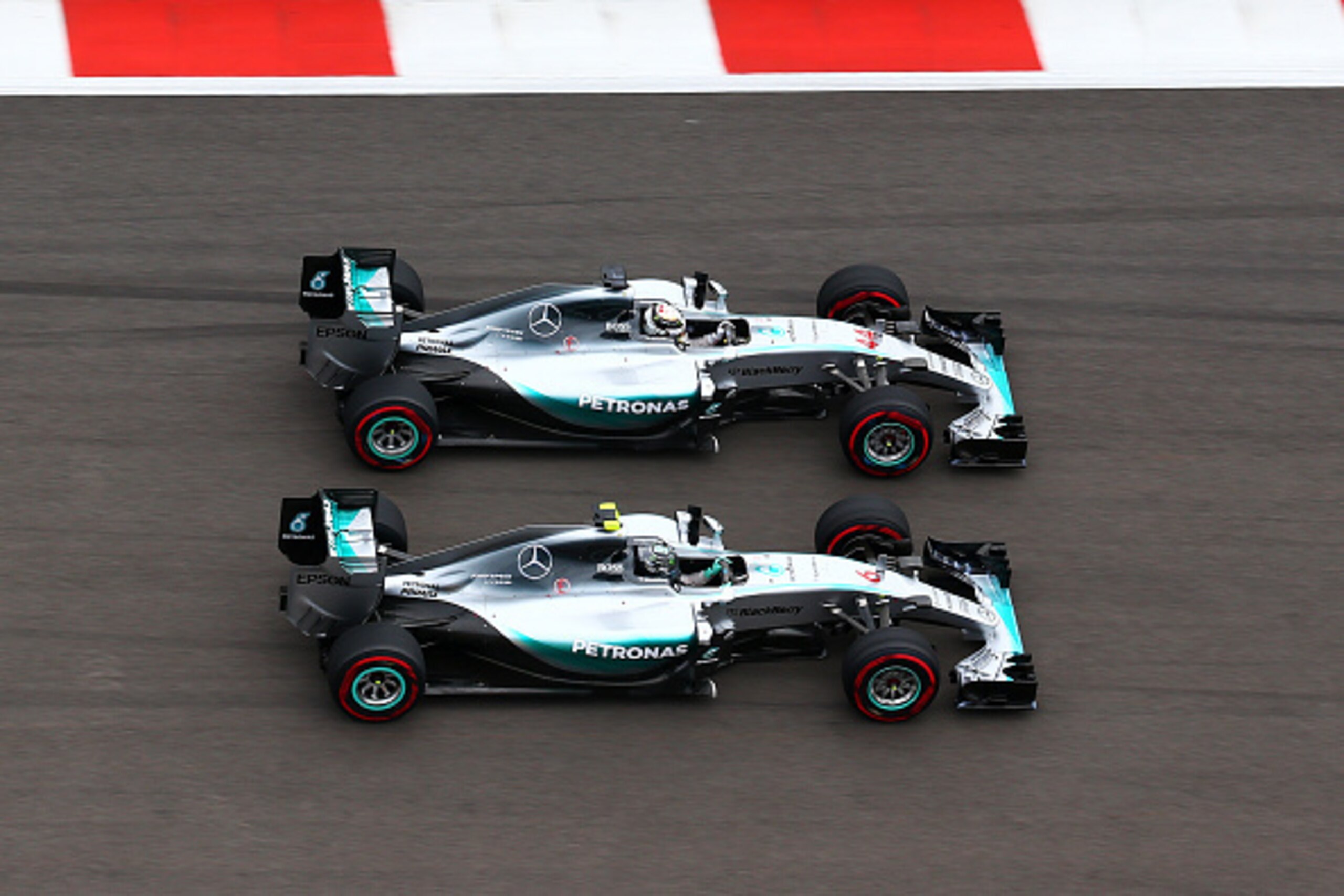
But it was not to be. An issue with the throttle pedal put Rosberg out of the race, with Mercedes later revealing a failed throttle damper was the culprit.
It was the cruellest blow for Rosberg, and neutrals the world over will have held their heads in their hands. As the chequered flag fell, a scenario that would have seen Rosberg take seven points off Hamilton had swung to one in which the championship leader took 25 points off his rival.
The prospective 41-point gap was up to 73 points with only 100 left to fight for, and to add insult to injury, Sebastian Vettel kicked Rosberg down to third in the standings.
The desperation was evident in Rosberg's body language as he exited the car, and though he tried to retain a positive outlook, he sounded subdued when he was interviewed on Sky Sports F1's live race coverage.
And the pain will have been all the more intense because of the four remaining races, three are at circuits on which Rosberg has proved he is fully capable of seizing the upper hand.
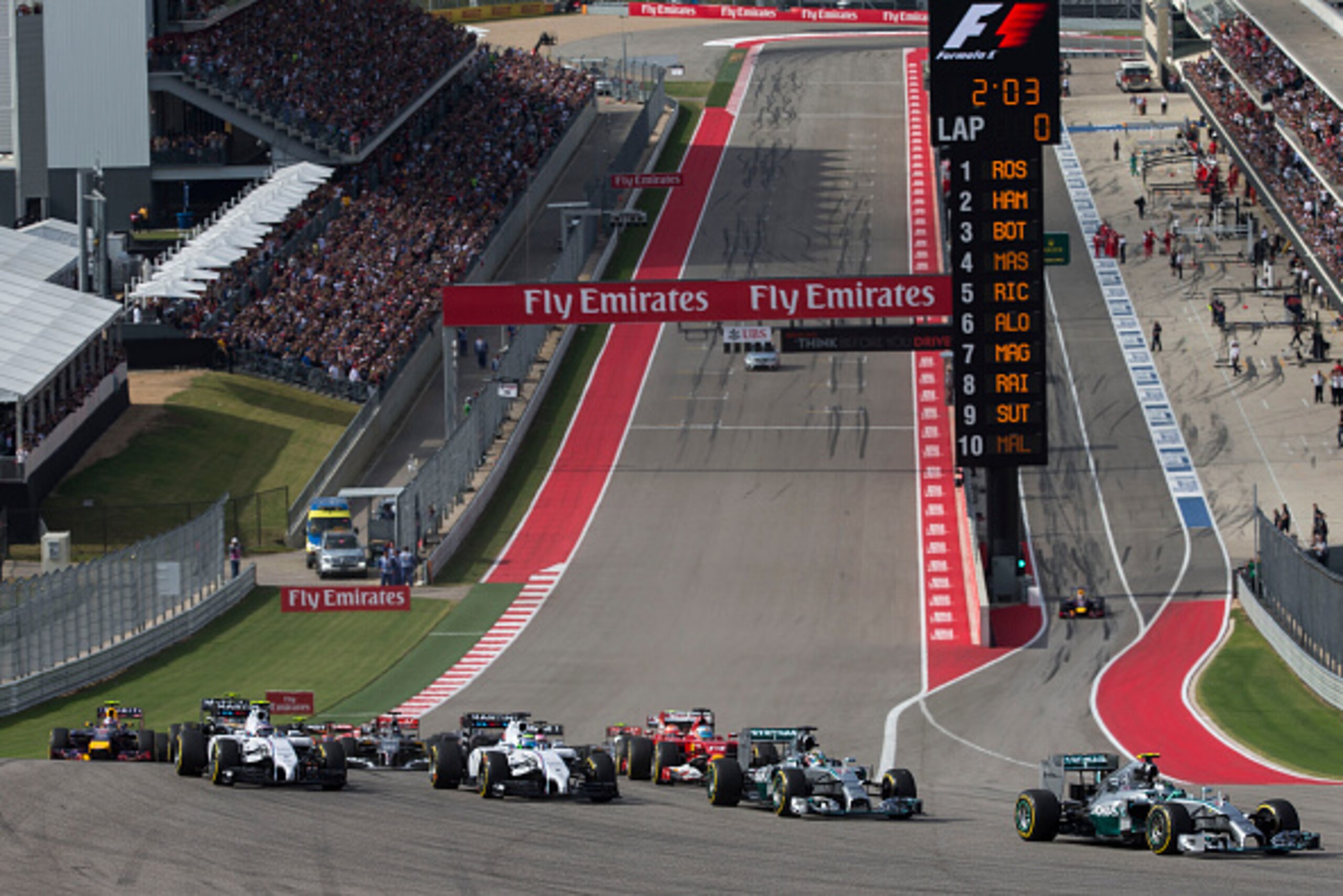
His qualifying performance at the Circuit of the Americas in 2014 earned him pole position, four-tenths clear of Hamilton in second. The German was far cleaner than his British rival when both pushed to the limit, and he got off the line well, leading into Turn 1.
But as has so often been the case in 2015, Rosberg's race craft let him down. It should always be hard to overtake an identical car with tyres of a similar age, but Hamilton got his rubber working better after the first round of stops and was in DRS range of Rosberg as the two W05s entered the back straight on Lap 24.
Rosberg then made two key errors. The first was operational—he later told Sky Sports he'd made a mistake in deploying his hybrid energy at a critical moment.
The second was a simple driving error. With Hamilton homing in, Rosberg stayed on his normal line, only making a half-hearted defensive feint at the last second when it was already too late.
Would Hamilton have got past in the end regardless? Maybe, but not on that lap and, given how Rosberg's pace improved a few laps later, perhaps not at all.
Rosberg's race craft has been better in 2015. A repeat of his great Saturday from last season would have given him a great opportunity on race day.
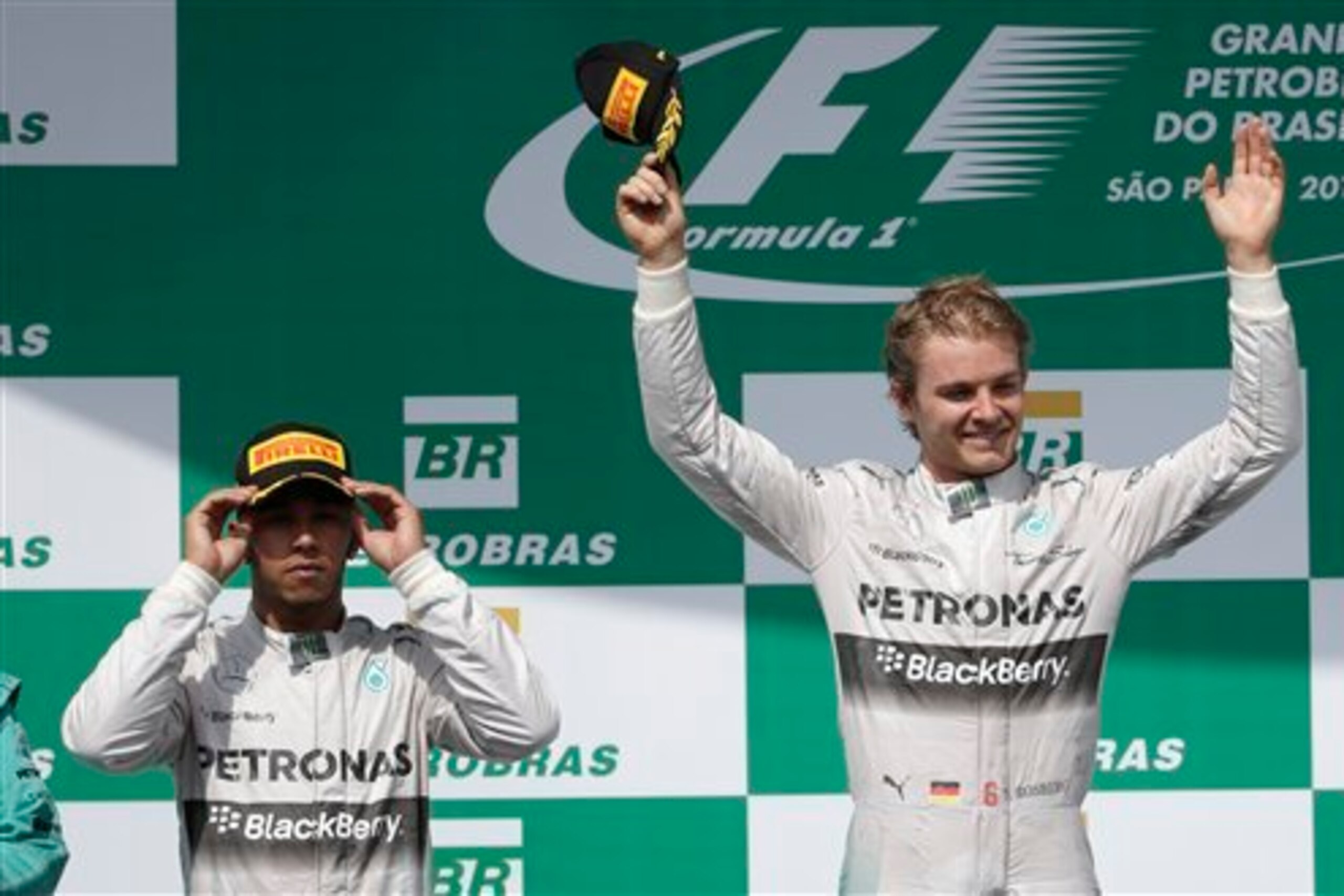
The Autodromo Hermanos Rodriguez, the venue for the Mexican Grand Prix, is an unknown for everyone. But on November 15, the F1 circus lands in Sao Paulo—and Interlagos is one of only two circuits on the modern calendar, the other is the Red Bull Ring, at which Hamilton has raced but never won.
His record there reads more like that of an aspirational midfield driver than a two-time world champion. He was seventh in 2007, fifth in 2008, third in 2009 and fourth in 2010. A pair of retirements accounted for the 2011 and 2012 races, and he could only manage ninth in 2013.
Last season, Rosberg won from pole, comfortably withstanding everything Hamilton could throw at him. Hamilton was quicker over a long run, but he was also lucky to get away with a big error—his spin on Lap 28 could very easily have put him out of the race.
The raw statistics are not kind to Hamilton—he was taken out of the lead in 2012, having qualified on pole and set the fastest lap—but if he has a bogey track, Interlagos is it.
Again, Rosberg could have capitalised.

The season will end in late November at the Yas Marina Circuit in Abu Dhabi—a track at which Rosberg has never been outqualified. And when his car has remained healthy, he has never finished behind a team-mate, either.
Last season, he dominated qualifying, taking pole by a margin of four-tenths of a second. Hamilton was closer to the time of third-placed Valtteri Bottas than he was to the lap of one minute, 40.480 seconds produced by Rosberg.
That familiar story was told in the race: Hamilton got a better start, led into Turn 1 and was never challenged thereafter. But had Rosberg got off the line well—and not developed the ERS failure that saw him fall to 14th—it would have been a very different race because, despite its long straights, overtaking at the Abu Dhabi circuit is not easy.
Especially not in equal machinery. Another golden opportunity.
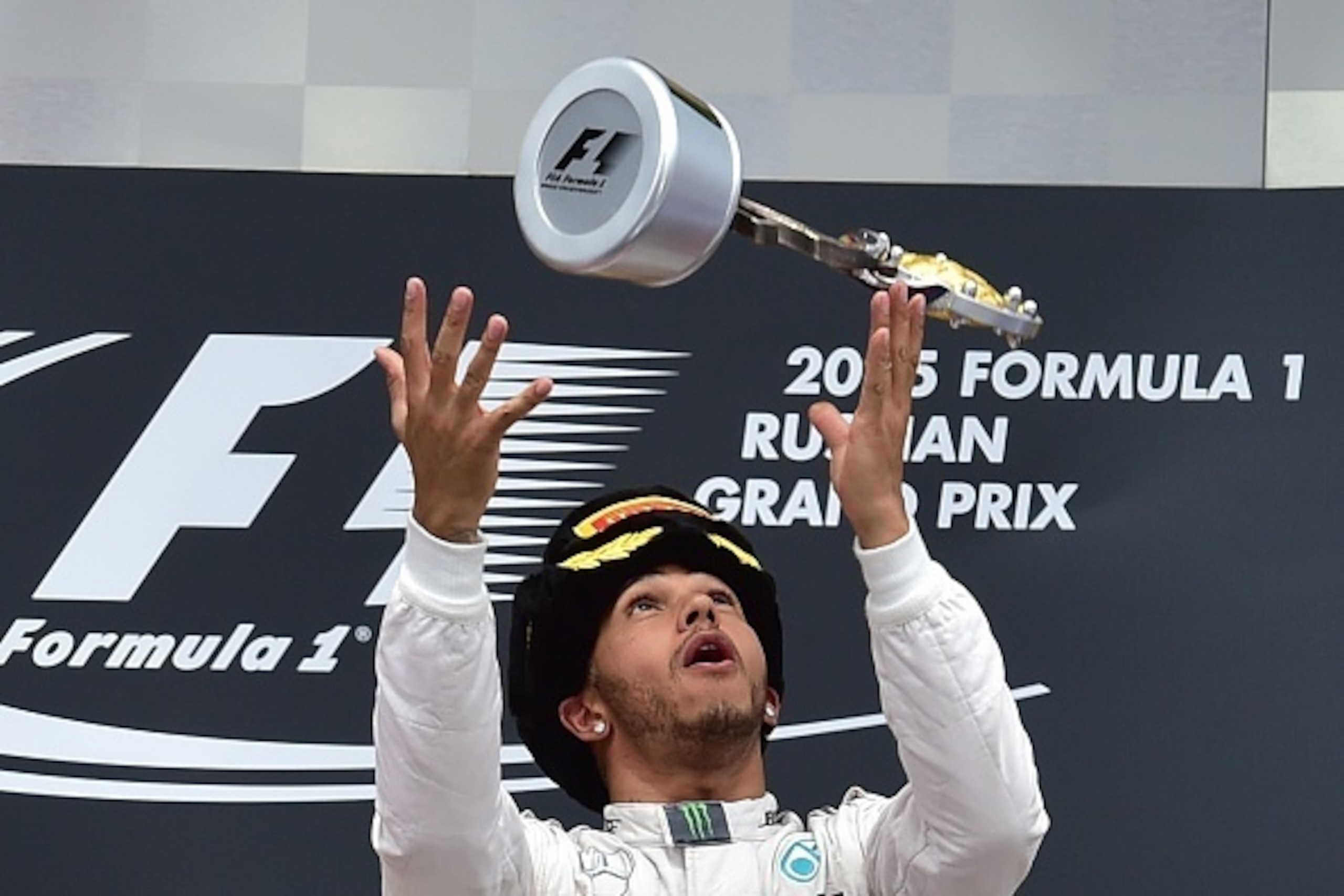
Maybe none of that really matters now. Hamilton's 73-point lead means he needs just 27 points from the remaining races to be absolutely certain of taking the title.
Realistically, to stand any chance at all, Rosberg needs to win all the remaining races. He needs to convert the potential to be quicker over a single lap—which he has, certainly at three of the remaining four venues—into cold, hard pole positions.
He then needs to get off the line well and, at the very least, have sufficient race pace to keep his team-mate behind.
To top it off, he needs Hamilton to fail to score on at least two occasions and be off the podium at least once. Even the most optimistic Rosberg fan wouldn't put a penny on that happening.
But then, no one in their right mind would have taken a punt on a faulty throttle damper ending Rosberg's race in Sochi, and history tells us that no championship lead, however dominant it may look, is entirely secure.
The fat lady is completing her breathing exercises, exchanging final pleasantries with the composer and getting ready to stride out onto the stage. Maybe she's even wondering what her post-finale bouquet will smell like.
But for a very good reason, she isn't singing just yet.

Cast your mind back to 2007, when Kimi Raikkonen recovered from being 17 points behind—with only 20 left to play for—to win the 2007 world title. No fan could forget the unlikely, bizarre circumstances that allowed the Finn to snatch the crown for Ferrari.
And Hamilton won't have forgotten, either—he was the man Raikkonen overhauled. Relative to the Finn, the then-rookie needed to score just four points from two grands prix, something he'd achieved in 14 of the 15 races before he arrived in China for the penultimate round.
No driver could have asked for an easier task, but he retired in an absurd manner from one race and only scored two points in the other. Would a similar run of misfortune for Hamilton—perhaps a first-corner tangle in Austin and a reliability issue in Mexico City—be any less likely?
If you're a neutral, a Rosberg fan or even a Hamilton fan who'd rather see their man take the title in dramatic fashion, don't despair.
Luck, probability and the form book say there's only going to be one outcome.
But they said the same thing in 2007, and look what happened then.
.jpg?w=2560 "Saints Lions Football")

.jpg?w=2560 "Report: Baker May Miss Up to 6 Weeks")