Gut-Wrenching Sports Fails That Most Deserved Mulligans
There are virtually infinite examples of gut-wrenching losses in sports. There are fewer, however, that resulted from one heartbreaking incident players had no control over.
Now, this is not, "If we hadn't gotten that ridiculous holding penalty in the first quarter, we would've won!" No, this is more like, "The ref who was standing right there missed an obvious call that would've given us the ball at the 1-yard line, down three points, with less than two minutes in the game," for example.
Players don't deserve do-overs if they just flat-out messed up. Sometimes athletes make mistakes or botch a play. It's a bummer for them, but it's part of the game. These are not that.
A do-over is not an actual thing in sports, but if it was, these 15 devastating instances would have warranted one for the player, coach or, most often, the referee. The higher the stakes of the situation, the more deserving of a mulligan they were.
Note: The Roy Jones Olympic robbery was so egregious, the referees don't even deserve a do-over. That was just flat-out appalling and wrong.
Toledo vs. Syracuse, Wide Left
1 of 15At stake: A regular-season game.
In 2011, Syracuse beat Toledo 33-30 in overtime, but without one horrendous missed call, the game probably would not have made it out of regulation.
Late in the fourth quarter, Syracuse scored a touchdown to go up 29-27. Kicker Ross Krautman missed the extra point wide left, but somehow the officials (even after a review) called it good, making the score 30-27. A Toledo field goal tied it up and sent the game to overtime, where Syracuse kicked a field goal for the win.
Why it deserved a mulligan: This was a nonconference game without major implications, but the extra point definitely missed wide left.
Per Jerry Hinnen of CBS Sports, Big East coordinator of football officiating Terry McAulay later said in a statement, "After studying the videos of the Syracuse extra point attempt at 2:07 of the fourth quarter, we have concluded that the ruling on the field that the kick passed between the uprights was incorrect, and that the replay official made an error in failing to reverse that ruling."
Jim Schwartz's Challenge Flag
2 of 15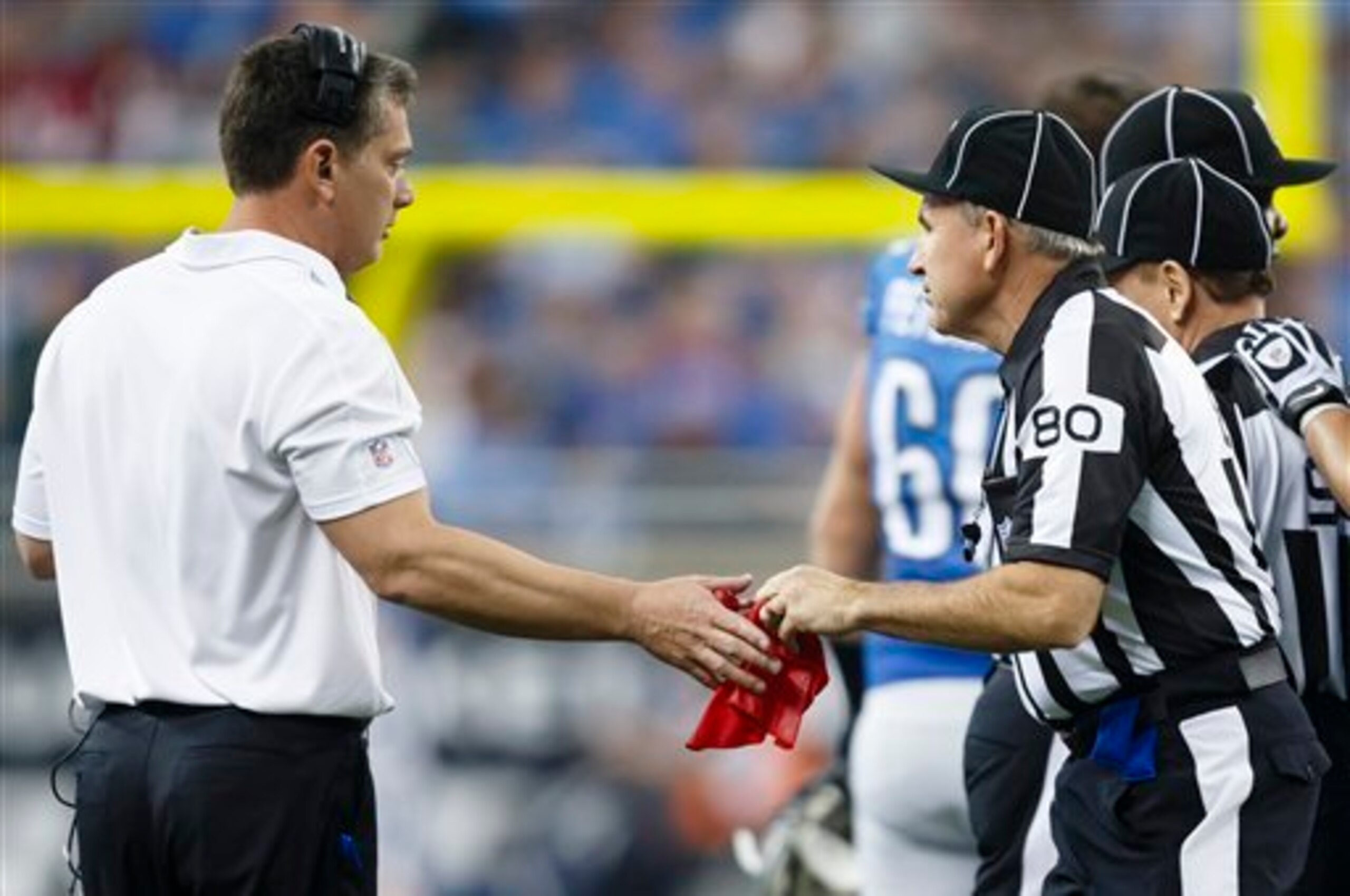
At stake: For the Houston Texans, momentum, and for the Detroit Lions, a chance to stop the bleeding.
In 2012, if a coach threw a challenge flag on a scoring play (all of which are automatically reviewed), it resulted in an unsportsmanlike conduct penalty, eliminating the chance for any review. (The rule has since been changed.)
That's just what happened to then-Detroit Lions head coach Jim Schwartz. During that year's Thanksgiving game, Houston Texans running back Justin Forsett scampered for an 81-yard touchdown against the Lions in the third quarter.
He was down after eight yards, so the play would almost certainly have come back, had Schwartz not hastily thrown a challenge flag. The Lions lost in overtime.
Why it deserved a mulligan: Players should not be punished for the mistakes of their coaches.
Lions vs. Seahakws, 'Monday Night Football'
3 of 15
At stake: An early-season win, and for the Detroit Lions, not going 0-4.
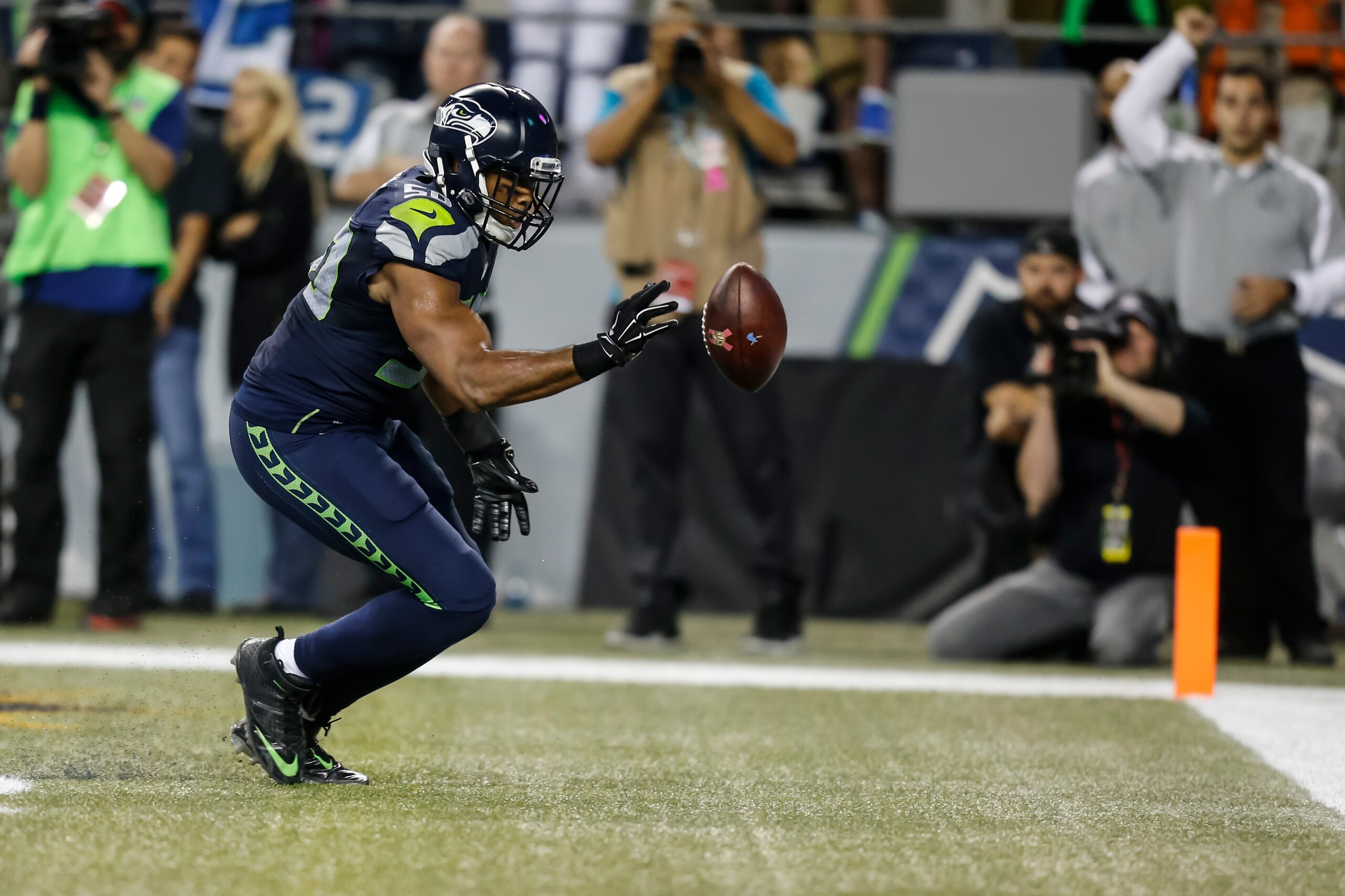
The Lions are no strangers to gut-wrenching moments. Most recently, the NFL admitted to a mistake by officials that might have cost the team a win over the Seattle Seahawks on Monday Night Football.
Down 13-10 with just a few minutes remaining, Detroit drove down the field. At the 1:51 mark, Lions wide receiver Calvin Johnson caught a pass and barreled toward the end zone. He looked destined for six until Seahawks safety Kam Chancellor punched the ball out of his grasp near the 1-yard line. The ball flew out the back of the end zone, but not before Seahawks linebacker K.J. Wright intentionally batted it in that direction.
Why it deserved a mulligan: As it turns out, intentionally smacking a ball out of the end zone is illegal. The play should have resulted in a Lions first down instead of the Seahawks touchback that was called.
.jpg?w=2560 "Titans Giants Football")

'Golden Gate' and the Replacement Refs
4 of 15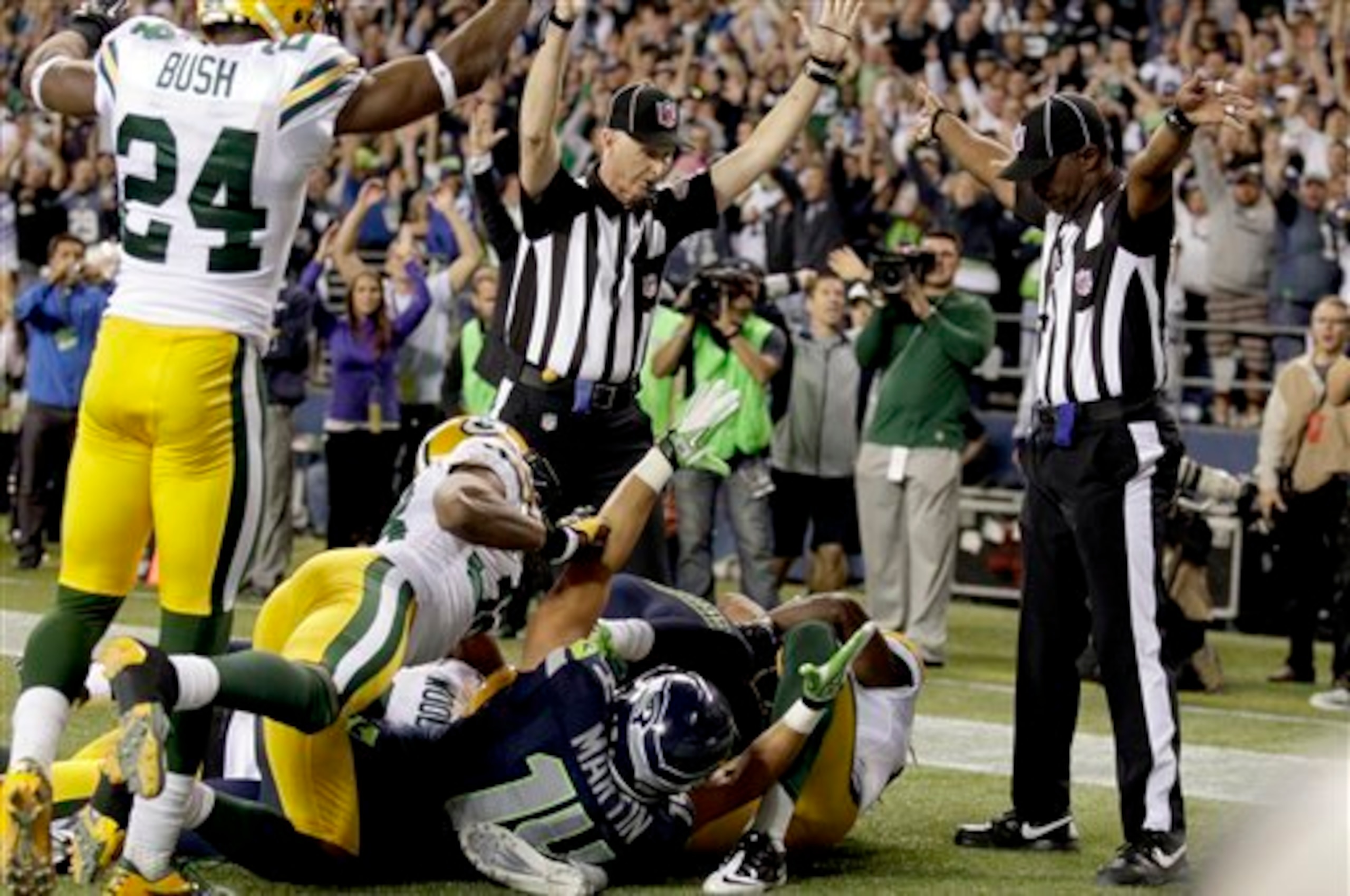
At stake: An early-season win for two good teams.
The Seattle Seahawks seem to have good luck on controversial Monday Night Football plays. In 2012, the Green Bay Packers led the Seahawks 12-7 with eight seconds remaining. On fourth down from the Packers' 24-yard line, Russell Wilson launched a pass into the end zone.
The result was a struggle for the ball between Seattle wide receiver Golden Tate and Green Bay safety M.D. Jennings. It looked a lot like a Jennings interception, but the two replacement referees gave conflicting signals. After a lot of confusion, a ruling of touchdown was upheld. The Seahawks won, 14-12.
Why it deserved a mulligan: Though the NFL released a statement supporting the ruling, many believe Jennings had possession of the ball. At minimum, the confusion among referees on the field of play should have warranted a do-over (if they existed, of course).
Thanksgiving Coin Toss
5 of 15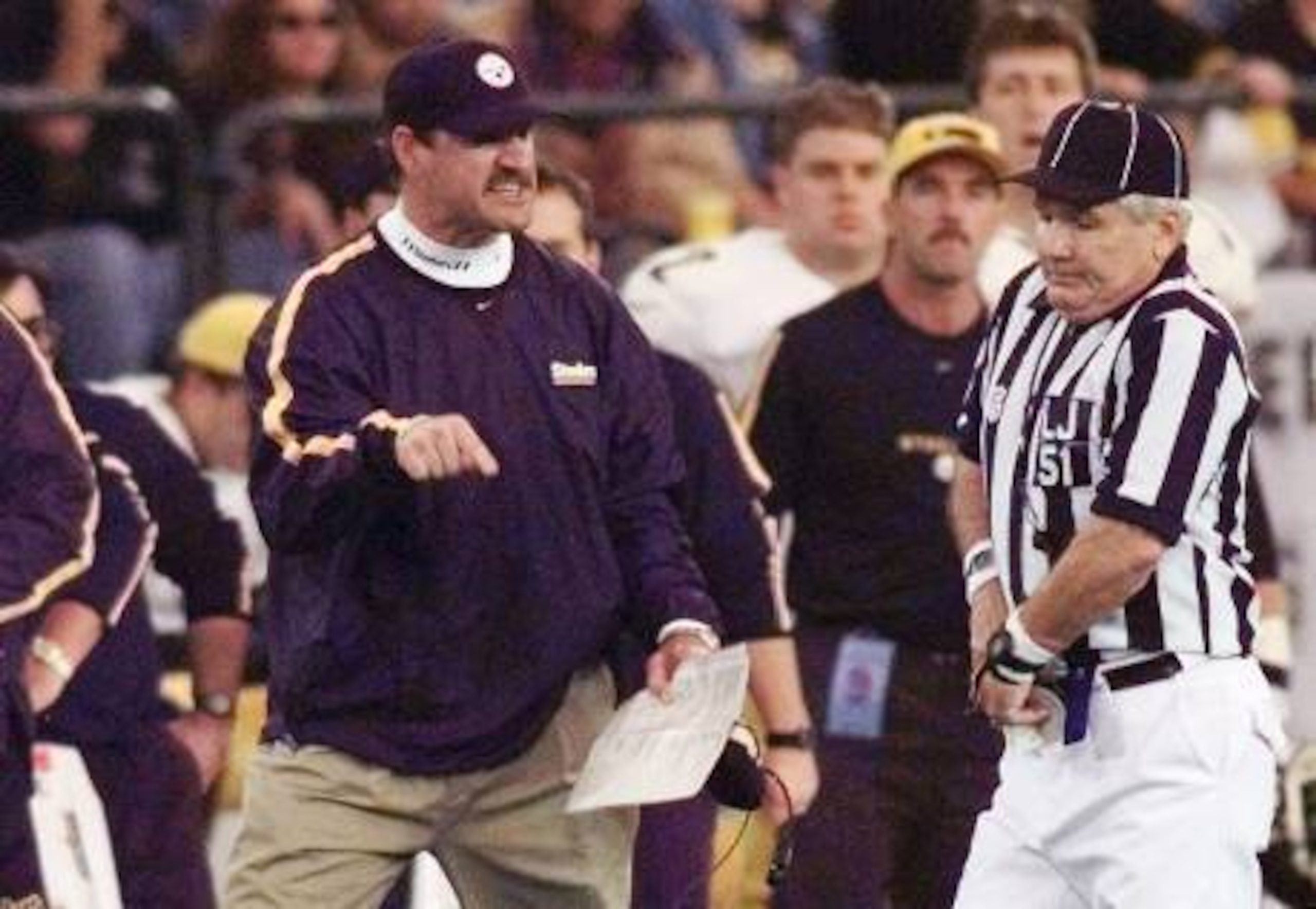
At stake: A win on Thanksgiving Day.
On Thanksgiving Day 1998, the Detroit Lions and Pittsburgh Steelers played to a 16-all tie at the end of regulation. The coin toss preceding overtime has since become the subject of much scrutiny and debate.
Steelers running back Jerome Bettis said he called "tails," but referee Phil Luckett said he heard "heads-tails," and he went with the first word he heard. The Lions got the ball and scored on their first overtime possession.
Why it deserved a mulligan: Per the New York Times, Bettis said, ''I did not say 'heads-tails.' That is a lie. That's a bald-faced lie.'' Assuming you believe Bettis, this obviously warranted a do-over.
The Stanford Band
6 of 15At stake: A conference win, bragging rights.
"The Game" is always a big deal for fans of California Berkeley and Stanford, but the 1982 matchup was particularly memorable.
Stanford trailed 19-17 late in the fourth quarter, but quarterback John Elway drove the team into field-goal range. Kicker Mark Harmon nailed a 35-yarder to put the Cardinal up 20-19 with four seconds to play.
Unfortunately for Stanford, its band mobbed the field early. Cal was able to return the ensuing kickoff for a game-winning touchdown through a series of unlikely laterals made possible by the chaos on the field. The Bears won 25-20.
Why it deserved a mulligan: Granted, it was Stanford's own band that screwed this one up, but it certainly wasn't the fault of any Cardinal player.
'Bush Push'
7 of 15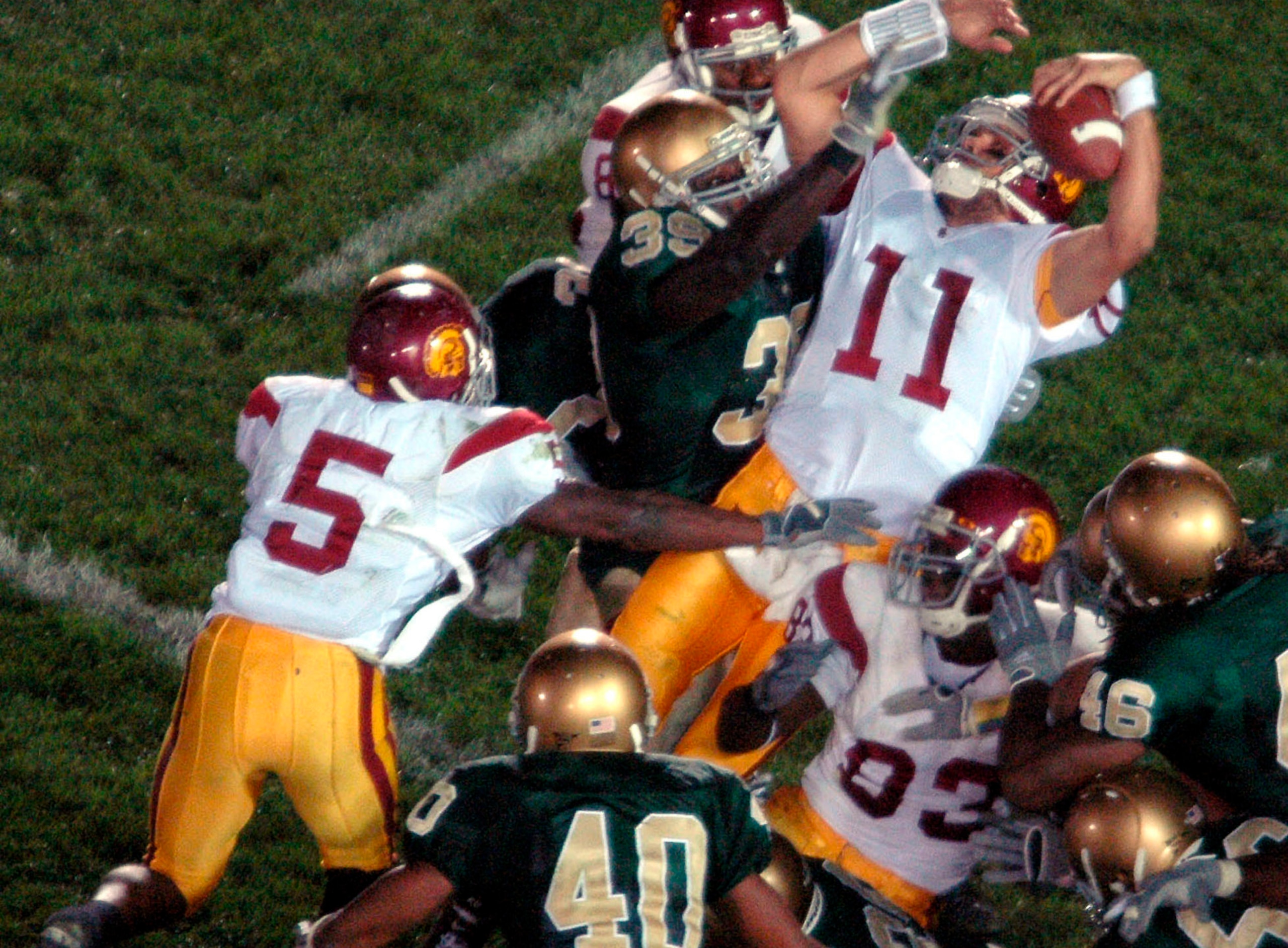
At stake: USC's undefeated season.
In 2005, USC was undefeated going into its annual meeting with rival Notre Dame. The Fighting Irish led by three with seven seconds remaining, and the Trojans had the ball at the ND 1-yard line.
Instead of going for the tie, USC went for the win and called a quarterback sneak. QB Matt Leinart made it into the end zone, but only with the help of a push from USC running back Reggie Bush.
Why it deserved a mulligan: That's not allowed. According to Gary Klein of the Los Angeles Times, in a subsection of the NCAA football rule book called "Interfering for or Helping the Runner or Passer," Article 2.b. states, "The runner shall not grasp a teammate; and no other player of his team shall grasp, push, lift or charge into him to assist him in forward progress."
The play should have resulted in a five-yard penalty.
Cardinals vs. Braves, Infield Fly Rule
8 of 15At stake: Advancement to the National League Division Series.
In 2012, the Atlanta Braves met the St. Louis Cardinals in the first year of the do-or-die MLB Wild Card Games. It would also be the last game for legendary Brave Chipper Jones.
With one out in the eighth inning, the Braves trailed 6-3 as shortstop Andrelton Simmons came to the plate. He popped up to what can only be described as left field, and two Cardinals failed to make the catch after some miscommunication. Instead of a bases-loaded, one-out situation, the Braves found themselves with two outs after umpire Sam Holbrook cited the infield fly rule.
The rule is intended to discourage infielders from dropping pop-ups on purpose in order to orchestrate double plays. To see it called on such a play was certainly odd.
Why it deserved a mulligan: The Cardinals went on to win the game. Jayson Stark of ESPN.com reported then-Braves catcher David Ross said, "It stinks, man. It stinks for Chipper that that's how this is going to be remembered. It stinks that the first-ever Wild Card Game is going to be remembered for an infield pop-up blunder. That's not good."
'Hand of God' Goal
9 of 15At stake: Trip to the World Cup semifinals.
Argentina defeated England 2-1 in the 1986 World Cup quarterfinal matchup. The first goal, scored by Diego Maradona, came off about as clear a handball as anyone will ever see. Still, the goal stood, and Maradona scored another before it was said and done to ensure victory for the Argentinians.
Why it deserved a mulligan: Even Maradona knew he got away with one. He famously said after the game that the goal was "a little with the head of Maradona and a little with the hand of God," via Jennifer Macey of abc.net.au.
Colorado's Fifth Down
10 of 15
At stake: For Colorado, keeping a possible championship run alive.
In 1990, the Colorado Buffaloes beat the Missouri Tigers 33-31. That's not why the game is notable, however. It's notable for the last score, a Colorado touchdown that happened on fifth down. The officials mistakenly allowed the Buffaloes five tries on their final drive, and they scored on the last play of game. The home Missouri fans were not pleased, bringing down the goalpost afterward.
Why it deserved a mulligan: Not only was Missouri cheated out of a win, but Colorado went on to win a share of the national championship.
Armando Galarraga's (Im)Perfect Game
11 of 15
At stake: A perfect game.
In 2010, then-Detroit Tigers pitcher Armando Galarraga stood one out away from tossing a perfect game against the Cleveland Indians.
With two outs in the top of the ninth, Galarraga got Cleveland infielder Jason Donald to ground out to first, only...umpire Jim Joyce called Donald safe. Joyce later admitted the mistake and apologized to Galarraga.
Why it deserved a mulligan: There are only 23 perfect games recorded in the MLB history books, but there should be 24. Galarraga didn't need the do-over here; Joyce did.
1980 Stanley Cup Final
12 of 15
At stake: For the New York Islanders, a Stanley Cup, and for the Philadelphia Flyers, a Game 7.
In 1980, the Islanders led the Flyers three games to two in the Stanley Cup Final. They also led 2-1 in Game 6 when Duane Sutter put in the go-ahead goal. The problem was, the officials missed an obvious offside call.
The game ultimately went to overtime, where the Islanders won 5-4 to clinch the Cup.
Why it deserved a mulligan: Sutter's goal wasn't the last of the game, so it is hard to argue direct causation as it relates to the game outcome. However, it is possible the Stanley Cup could have gone to a different team if that call had been made correctly.
Don Denkinger Calls Jorge Orta Safe
13 of 15At stake: For the St. Louis Cardinals, a World Series title, and for the Kansas City Royals, a Game 7.
The Royals last won a World Series in 1985, possibly thanks in part to umpire Don Denkinger.
The Cards led the series 3-2 and were up on the Royals 1-0 in Game 6 in the bottom of the ninth. Royals designated hitter Jorge Orta appeared to be out at first on a ground ball, but Denkinger called him safe. The Royals went on to score two runs on a walk-off single to win the game. They took the series with a 11-0 route in Game 7.
According to MLB.com, Denkinger said years later, "I'm obviously reminded constantly that I made a mistake. You know what? I was an umpire for more than 30 years in the Major Leagues. I know I made a lot of mistakes. That one was just blown out of proportion."
Why it deserved a mulligan: This was a play instant replay proponents often referenced as evidence for their cause. Denkinger himself admitted he missed the call.
Germany vs. US World Cup Handball
14 of 15At stake: A trip to the World Cup semifinals.
If ever the U.S. men's national soccer team needed a redo, it was in the 2002 World Cup quarterfinal.
Germany led 1-0 as the U.S. lined up for a corner kick in the 50th minute. U.S. defender Gregg Berhalter got a shot off, but the ball was partially deflected by the German keeper. Still, the ball spun out and a defender's hand was the only thing that stopped it from crossing the goal line. No handball was called, and Germany went on to win, 1-0.
According to Simon Borg of MLSsoccer.com, U.S. midfielder Claudio Reyna said, "I took the corner and I had an angle that I could see it. And my reaction is that, 'If I saw it, the referee had to see it.' It's pretty clear that it could've changed the whole game with a penalty and a red card. It's something we'll never forget."
Why it deserved a mulligan: The U.S. played extremely well, won the shot battle 11-6 and was very much in the game. Like Reyna said, a called handball there could have changed the game.
1972 US vs. Soviet Union Gold Medal Basketball Game
15 of 15
At stake: An Olympic gold medal.
When the U.S. men's national basketball team played the Soviet Union for the Olympic gold medal in 1972, it had never lost an Olympic game, according to Frank Saraceno of ESPN.com.
After two free throws, the U.S. led 50-49 with one second remaining. What followed was a lot of confusion and a lot of controversy.
The Soviets inbounded but then claimed to have called a timeout between free throws, so officials added two seconds to the clock. After the second inbound, play was stopped to signal a problem with the clock—it had never started to run. On the third inbound, the Soviets put down a layup and won the game.
The U.S. protested the game's result (unsuccessfully), and the team members never claimed their silver medals.
Why it deserved a mulligan: A timeout that may or may not have been phantom, along with a clock malfunction, cost the U.S. a gold medal. The problem here was, the Soviets got too many do-overs.

.jpg?w=2560 "Saints Lions Football")

.jpg?w=2560 "Report: Baker May Miss Up to 6 Weeks")