Many college basketball stars would be great on any roster, but others like Virginia's Anthony Gill and North Carolina's Brice Johnson seem to tap into their full potential by playing in the perfect system.
At a lot of big-name programs, the style of play is so deeply ingrained that there's virtually no debate over what type of players will thrive. Shot-blocking big men work wonders at Connecticut, Kansas, Kentucky and Syracuse. Three-point shooting guards are always welcome at Duke, Notre Dame and Villanova. Louisville loves turnover-forcing perimeter players and Wisconsin bakes its bread with guards who never turn the ball over.
All over the country, there are players who do a few things very well for a team that seems to always have a player who does those exact things very well. We've put together a list of 10 star players who are arguably at their best because of the team they are on and whose teams wouldn't be anywhere near as good without them.
Players on the following slides are listed in alphabetical order by last name.
Honorable Mentions
1 of 11
Allonzo Trier, Arizona
Arizona always ranks pretty well in free-throw rate, but the Wildcats were particularly adept at getting to the charity stripe this past season with Stanley Johnson, Rondae Hollis-Jefferson, Brandon Ashley and Kaleb Tarczewski each accounting for more than 150 free-throw attempts. An aggressive slasher who finishes well through contact, look for freshman shooting guard Trier to slide seamlessly into this offense.
Chinanu Onuaku, Louisville
Montrezl Harrell did the majority of the work in Louisville's frontcourt last season, but try not to be surprised when Chinanu Onuaku explodes as a sophomore.
He didn't get many opportunities to score, but he was very efficient with the shots he did take (61.6 FG%) and was a great offensive rebounder and defensive shot-blocker. The big man even recorded 26 steals, displaying active hands for one of the top turnover-forcing defenses in the country. Early in the season, we'll marvel over his new approach to free-throw shooting, but he could be an outright star by the end of the year.
Amida Brimah, Connecticut
We elected to exclude Brimah because he was in last year's top 10, but after ranking second in the nation in block percentage and sixth in two-point percentage, he's very much worthy of mentioning. Connecticut has had more than its fair share of shot-blocking centers over the past decade-plus, but Brimah might be the most efficient of them all.
Jevon Carter, West Virginia
2 of 11
When Eron Harris, Terry Henderson and Remi Dibo all chose to leave West Virginia during the 2014 offseason, it seemed like a foregone conclusion that the Mountaineers would fall to pieces. They still had one more year of Juwan Staten, but the best asset of the 2013-14 team that compiled a modest 17-16 record was three-point shooting and Staten wasn't much of a shooter. Rather, the three departing players accounted for more than 72 percent of the team's made three-pointers, so it was pretty difficult to envision a 25-win season.
Little did we know that Bob Huggins would completely revamp his defensive philosophy, opening the door for freshman Jevon Carter to assume the role of Briante Weber 2.0.
Carter finished the season ranked ninth in the nation in steal percentage, but he had some absolutely ludicrous ratios midway through the year. After 18 games, Carter had recorded 39 steals and 34 assists against just eight turnovers. He wasn't nearly as effective/efficient once Big 12 teams started to crack the full-court pressure—WVU averaged 12.7 steals per game in those 18 contests and just 8.6 over the next 14—but he'll still enter the 2015-16 season regarded as one of the best defensive weapons in the country.
Will he develop on offense, though?
With Staten out of the picture, Carter almost certainly becomes a full-time starter and very likely assumes the role of primary ball-handler. He had a couple of nice scoring outbursts last season—particularly the 25-point game against Baylor at the end of February—but he shot just 17.8 percent from the field over the course of West Virginia's final six games, recording 12 assists and 12 turnovers in the process.
Carter doesn't need to score 10 points per game to make an impact, but it would be huge if he could put up something in the vicinity of 140 assists and 100 steals with just 50 turnovers.
Kyle Collinsworth, Brigham Young
3 of 11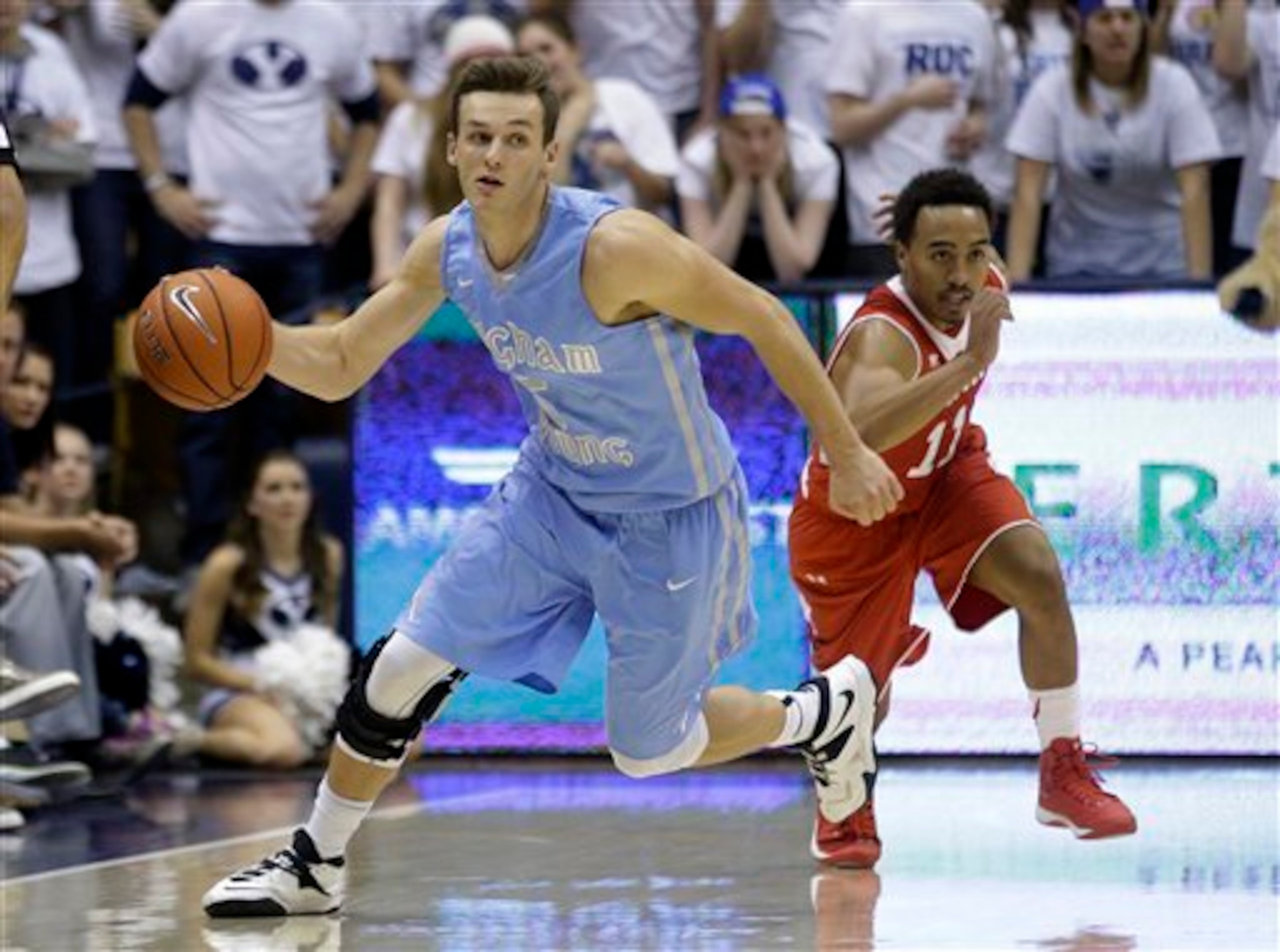
Simply put, one does not match the all-time record for career triple-doubles in a span of just over three months while playing in anything other than the perfect system for him.
Kyle Collinsworth is a very gifted athlete. He's not much of a shooter, but he passes, rebounds and defends so well that he can usually get a few easy buckets per game while opponents are busy worrying about all the other ways he can beat them.
That said, playing at BYU has been like a bonus multiplier for him.
With an incredible scoring sidekick like Tyler Haws, assists have been exceptionally easy to come by. For every great pass that only Collinsworth could make, there were at least a couple of buckets that only Haws could sink. Factor in a pace of play that has ranked top 10 in the nation for four straight years and a strength of schedule that is hardly on par with that of Duke or Kansas, and it's hardly a mystery how Collinsworth is able to put up big numbers.
Don't get me wrong, he'd be really good anywhere. There's a reason he's the only one on the roster flirting with triple-doubles on a nightly basis. But like Steve Nash with the "Seven Seconds or Less" Phoenix Suns, playing for the Cougars really helps elevate him to one of the nation's best players. Even without Haws by his side this season, look for Collinsworth and BYU to continue putting up big numbers with help from Chase Fischer and Nick Emery.
Jack Gibbs, Davidson
4 of 11
Davidson has always been pretty reliant on the long ball, taking at least three out of every eight field-goal attempts from beyond the three-point arc in each of the past 14 years. The Wildcats really kicked that up a notch this past season, ranking ninth in the nation in percentage of shots attempted from downtown with a mark of 45.6 percent.
Surely, much of that increase can be attributed to an undersized roster in a more challenging conference. Even their two primary frontcourt players (Peyton Aldridge and Oskar Michelsen) each attempted more than 100 triples this past season.
Even with the addition of 6'10" freshman Dusan Kovacevic and the return of 6'9" Jake Belford (who attempted 10 three-pointers in just six games last season), don't expect much to change. Davidson is still relatively undersized and still has a plethora of good three-point shooters—the best of which is junior guard Jack Gibbs.
Though Tyler Kalinoski was the team's primary shooting guard, Gibbs rarely shied away from an open look, averaging 6.8 three-point attempts per 40 minutes over the course of the season. He was particularly trigger happy after his return from a torn meniscus, increasing that rate to 8.6 per 40 minutes while converting on 43.9 percent of attempts in his final nine games.
Gibbs is also Davidson's top defender and the primary reason the Wildcats fared so well in assist percentage (28th in the nation at 60.9) and turnover percentage (second in the nation at 12.3). If they're going to win another conference title, he'll be the biggest factor.
Anthony Gill, Virginia
5 of 11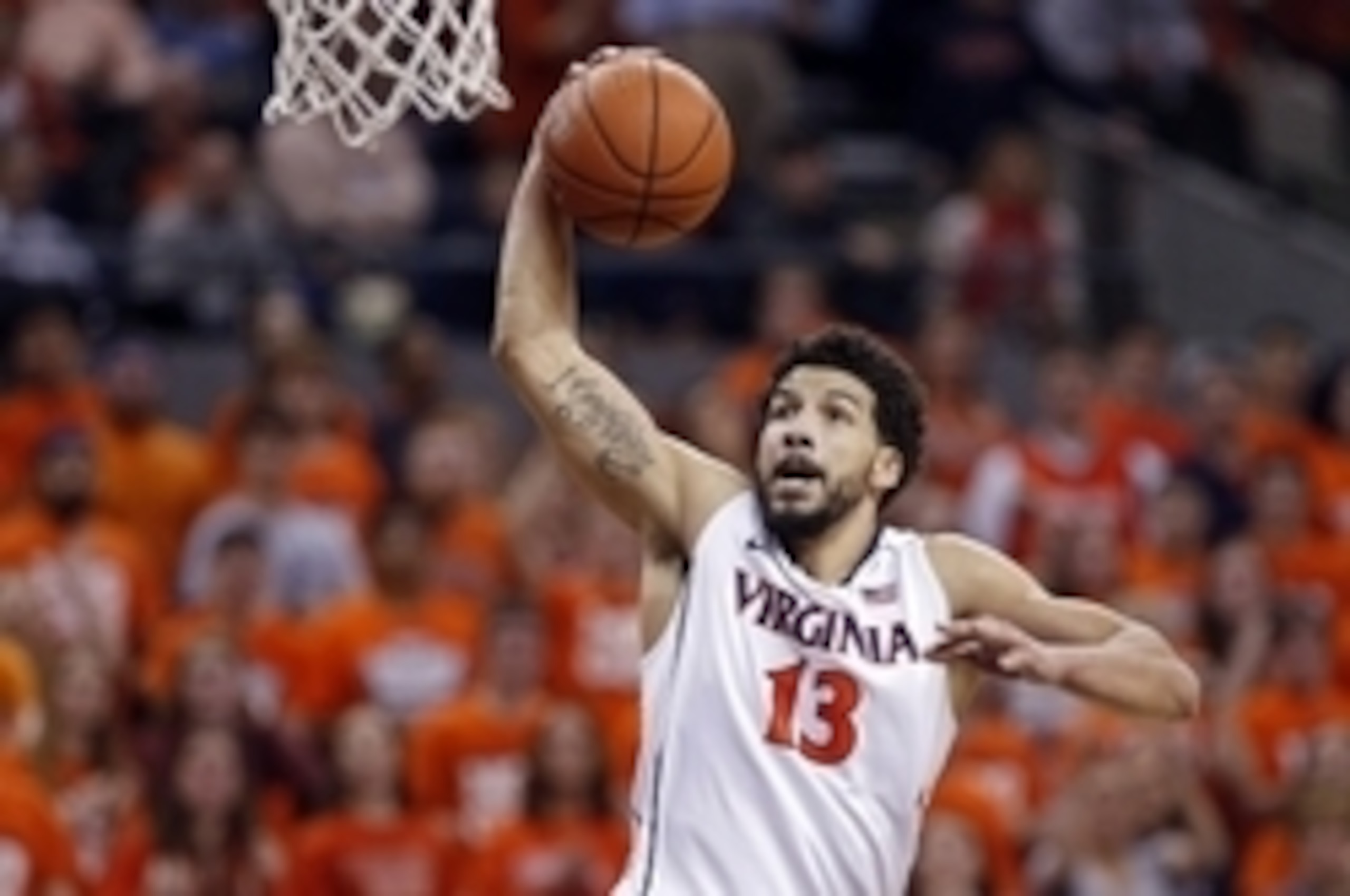
Most of the players on the list got here because of one specific attribute in which both the player and his team excel. Summarizing the example we just covered, Davidson usually attempts a lot of three-pointers and Jack Gibbs is an accurate, high-volume, three-point shooter. Ipso facto, Gibbs is in the perfect system.
In Anthony Gill's case, it's a little bit of everything. Power forwards who can take a hit, rebound and defend well while converting at a high rate on their two-point attempts are pretty much a staple at Virginia at this point. Mike Scott was that guy at the beginning of Tony Bennett's tenure, then it was Akil Mitchell, Darion Atkins and now Gill.
It's not about raw athleticism or big numbers, but rather the efficiency. KenPom and Sports-Reference.com numbers have firmly entrenched themselves in college basketball analysis, but not everyone understands the numbers and even fewer accept them as grounds for consideration for national awards—not much unlike sabermetrics in Major League Baseball until these past few years.
Per-game numbers are deceptive. Per-100 possessions numbers tell a much better story of how much value a player adds to his team. So just to hammer home how well Gill and Virginia fit together, let's take a look at his per-100 possessions numbers from last season compared to those of the three frontcourt players named finalists for the 2015 Wooden Award.
Gill: 31.4 points, 17.5 rebounds, 127.3 O-rating, 86.7 D-rating
Jahlil Okafor: 34.9 points, 17.1 rebounds, 119.9 O-rating, 95.4 D-rating
Frank Kaminsky: 37.6 points, 16.4 rebounds, 129.6 O-rating, 92.6 D-rating
Willie Cauley-Stein: 21.6 points, 15.6 rebounds, 119.8 O-rating, 80.0 D-rating
We're not necessarily saying he should have won the award, but it's crazy that Gill was never even listed on any of the Wooden watch lists during the season. As the driving force of the Cavaliers' attempt at three straight ACC titles, you can count on him getting some serious consideration this year.
Demetrius Jackson, Notre Dame
6 of 11
There are quite a few things that Notre Dame does better than most teams on a near-annual basis. The Fighting Irish rarely turn the ball over, rarely commit fouls and typically shoot quite well from three-point range, all of which adds up to one of the most consistently efficient offenses in the country.
Despite losing a pair of crucial players in Jerian Grant and Pat Connaughton, Notre Dame should still be in great shape with Demetrius Jackson running the show. He shot 42.9 percent from three-point range while committing 1.7 turnovers and 2.2 personal fouls per 40 minutes. Jackson actually led the Fighting Irish in Box Plus/Minus and just barely finished behind Grant for the honor of highest O-rating among starters.
His playing time and efficiency were higher than ever over the final few weeks of the season. Jackson was on the court for 340 of Notre Dame's final 365 minutes, playing at least 37 minutes in every game in March aside from the 14-point home win over Clemson. He recorded an O-rating of 128 or better in seven of his last nine games.
Prior to the season-ending loss to Kentucky, Jackson averaged 14.4 points, 3.6 assists, 3.5 rebounds, 1.9 steals and 1.5 turnovers per game in the month of March. He shot 65.9 percent from two-point range and 44.8 percent from three-point range during that stretch.
Typically, when you see numbers like those for a prolonged period of time, they're posted during the nonconference portion of the season against the likes of Binghamton and Coppin State. Jackson did it during the most high-pressure portion of the season and should only get better this year as the primary ball-handler in an offense he was born to run.
Brice Johnson, North Carolina
7 of 11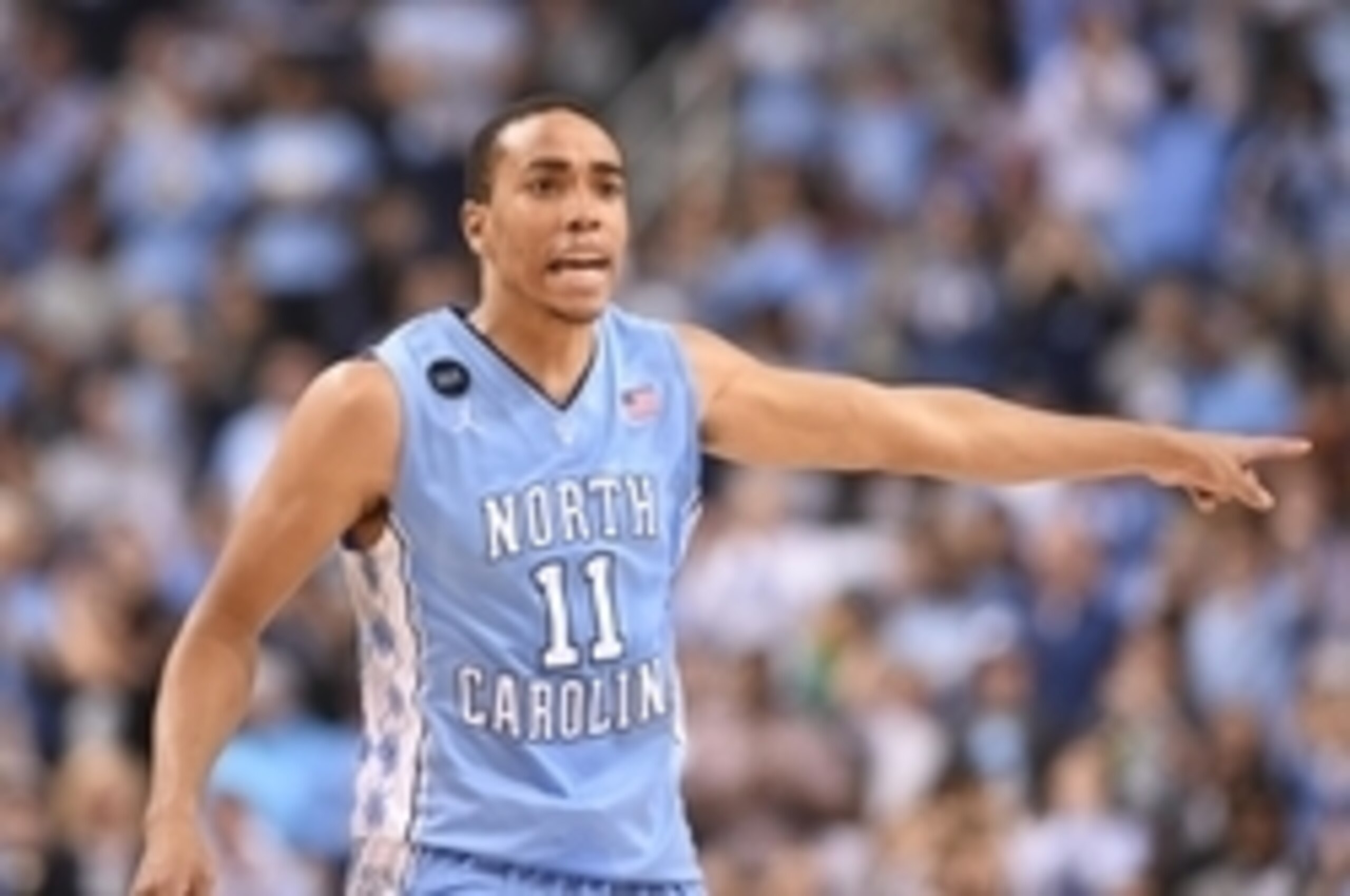
In 12 seasons under Roy Williams, the Tar Heels have played efficient, uptempo basketball that relies very heavily upon two-point field goals and offensive rebounds.
In seven of the past nine seasons, North Carolina ranked in the bottom 10 percent nationally in 3PA%, meaning that its ratio of three-point attempts to total field-goal attempts is consistently very low. The Tar Heels have also ranked in the top 10 percent in offensive rebounding percentage in 11 of the past 12 years and top 10 percent in adjusted tempo in all 12 seasons.
Long story short, a high-volume, high-percentage two-point shooter who can run the court and crash the offensive glass will fit like a glove in North Carolina's system. It's why Tyler Hansbrough, Tyler Zeller and John Henson looked so unstoppable in college before settling into a "barely above replacement level" role in the NBA.
Brice Johnson checks all of those boxes. Even though he only played 24.7 minutes per game last season, Johnson averaged 2.3 offensive rebounds and made 56.6 percent of his 9.6 two-point attempts per game. He led the team in points per 40 minutes with 20.9, and his 12.6 total rebounds per 40 minutes were enough to tie Kennedy Meeks for the team lead in that category.
It's a shame the Tar Heels are so loaded in the frontcourt. In addition to Johnson and Meeks, Isaiah Hicks and Joel James have each commanded a large chunk of playing time over the past few seasons. Were it not for those hurdles to minutes, Johnson might be chasing a 2,200-point, 1,300-rebound career this season—a plateau that no one has hit since Lionel Simmons in 1990.
Bronson Koenig, Wisconsin
8 of 11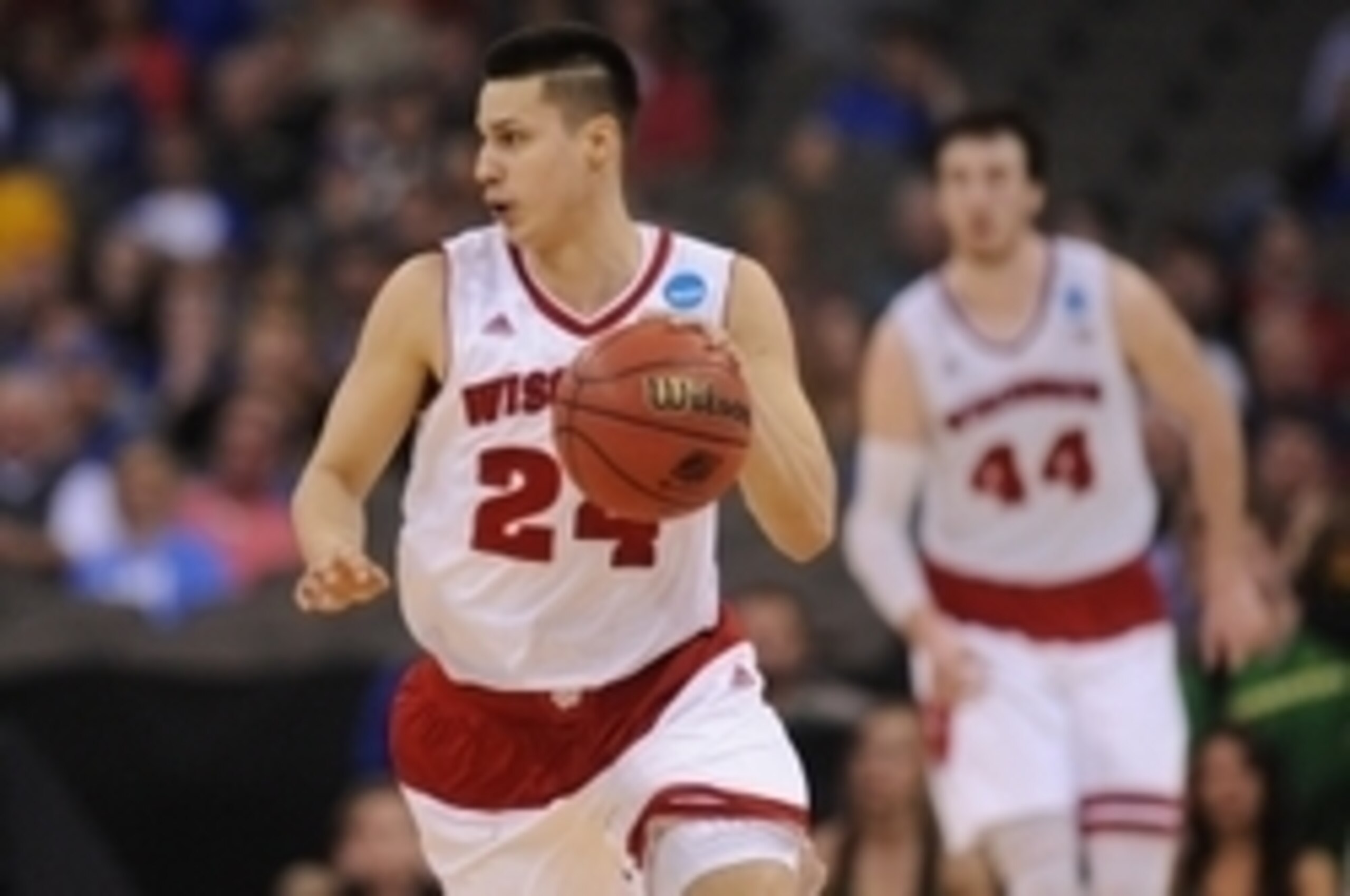
Lost in the shuffle of Frank Kaminsky's Wooden Award campaign, Sam Dekker's jump to the NBA and Nigel Hayes' emergence as an extremely versatile offensive asset, Bronson Koenig had an unbelievable sophomore year for the Badgers.
Thrust into a starting job by a Traevon Jackson injury, Koenig wasted no time in making it look like he had been groomed to run this offense. In 24 games as a starter, he shot 44.2 percent from three-point range, averaging 11.5 points and 2.7 assists per game.
The crazy part, though, was the lack of turnovers. Wisconsin has now ranked top five in the nation in offensive turnover percentage in seven consecutive seasons, but there was some concern that streak may be in jeopardy with the primary ball-handling duties falling to a sixth man whose best asset appeared to be three-point shooting.
Those fears were promptly dismissed, as Koenig committed just 26 turnovers in 835 minutes as a starter. He was even unflappable in the NCAA tournament, recording 17 assists against five turnovers in Wisconsin's six games. He didn't commit a single turnover in the Final Four game against Kentucky, nor the national championship game against Duke, despite playing 31 minutes in each contest.
Will he remain a game manager or become more of an active passer this season? It's kind of hard to believe that the starting point guard for the most efficient offense in recent history only averaged 3.1 assists per 40 minutes, but as long as Koenig can maintain a strong assist-to-turnover ratio, the Badgers should go dancing for an 18th consecutive year.
Skal Labissiere, Kentucky
9 of 11
With just barely a month remaining until the 2015-16 regular season begins, we still don't know if Skal Labissiere will be cleared to play by the NCAA. As recently as Oct. 7, Labissiere's guardian told ESPN that the future lottery pick has yet to be cleared.
Until he's actually ruled ineligible, though, we'll continue to assume that he'll be on the court when the season begins and that he'll have minimal difficulty following in the recent lineage of outstanding defensive Wildcats.
There are a lot of things that Kentucky has done quite well over the past few years, but protecting the paint is first and foremost on that list. Led by lottery picks Anthony Davis, Nerlens Noel, Willie Cauley-Stein and Karl-Anthony Towns, Kentucky has incredibly ranked top eight in the nation in both block percentage and defensive two-point field-goal percentage in six of the last seven years.
There has been no such thing as an easy bucket against Kentucky, and that trend should continue for at least one more year. At 6'11" with tons of athleticism, shot-blocking might be Labissiere's biggest asset. He's not nearly as offensively polished as Davis was, but don't be surprised if Labissiere flirts with matching AD23's 4.7 blocks per game mark from the 2011-12 season—particularly given the dearth of other options to play center on this year's roster.
Lourawls "Tum Tum" Nairn Jr., Michigan State
10 of 11
For as long as Tom Izzo has been at Michigan State, point guards have been thriving in his system. From Mateen Cleaves through Chris Hill, Drew Neitzel, Travis Walton, Kalin Lucas and Keith Appling, the Spartans have had two decades' worth of reliable ball-handlers and passers, resulting in one of the more assist-heavy offenses in the country on a regular basis.
Lourawls "Tum Tum" Nairn Jr. is ready to serve as the next name on that list.
Despite dreadful shooting percentages, the freshman became a full-time starter in mid-February. The catalyst for change was undoubtedly the very rough six-game stretch for Travis Trice in which he scored 66 points on 72 field-goal attempts as Michigan State suffered unforgivable losses to Nebraska and Illinois, but Nairn had also earned his keep with 58 assists against 21 turnovers through the first 23 games of the season.
Denzel Valentine will record plenty of assists this season, but Nairn will be expected to inherit the primary ball-handling duties from Trice, who averaged 5.1 assists per game while also attempting nearly 13 shots per game. Don't expect Nairn to put his 31.8 field-goal percentage to the test anywhere near that often, but don't be surprised if he contends for the national lead in assists per game, given the sheer number of offensive weapons he has to play with.
Kyle Wiltjer, Gonzaga
11 of 11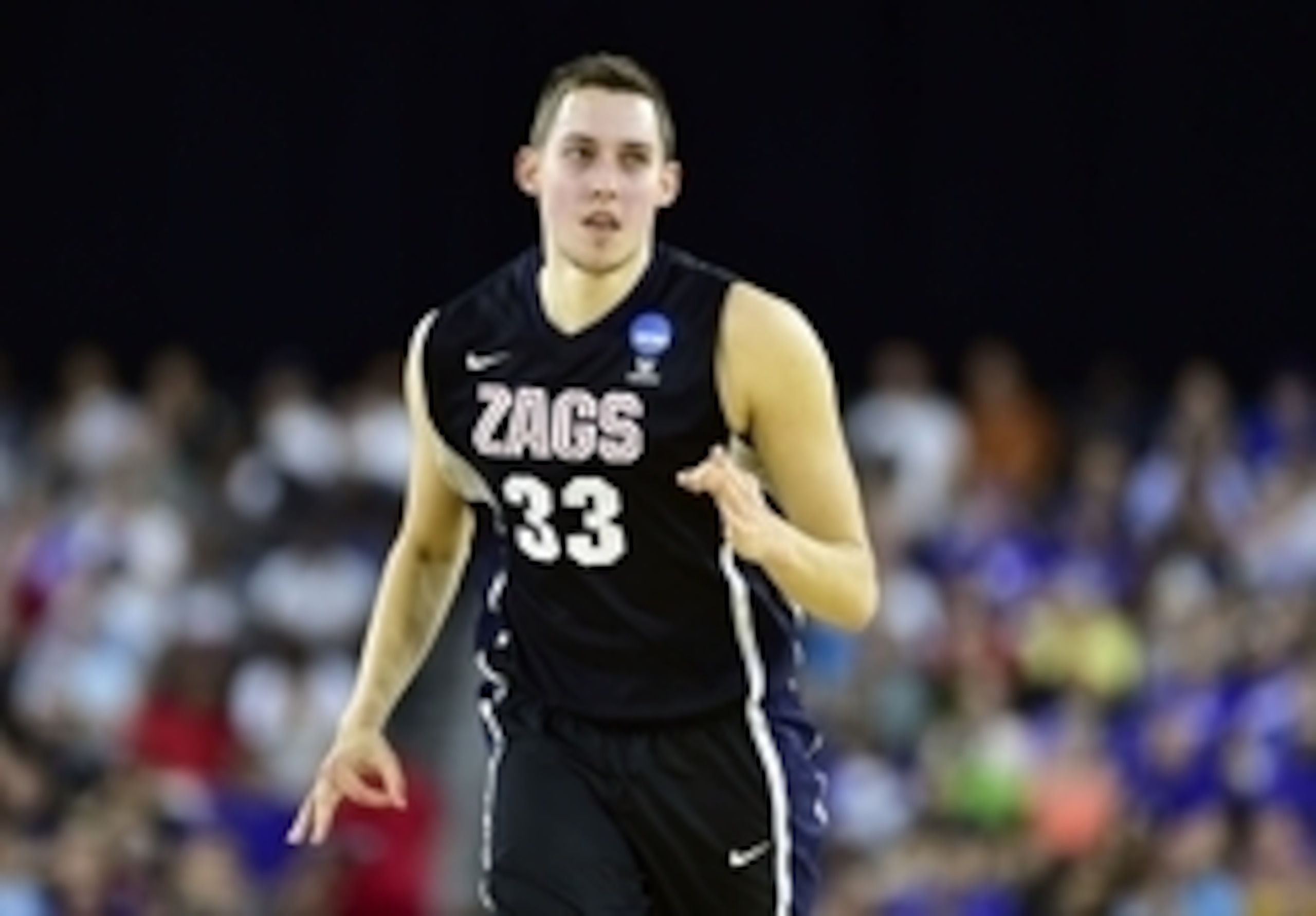
Kyle Wiltjer was good at Kentucky, but he added a post game and dropped an "o" to become a god at Gonzaga.
The telltale sign, though, that his greatness can largely be attributed to the system he's in is the fact that college basketball experts consider him a preseason favorite for National Player of the Year, but NBA draft experts don't view him as a player worth drafting. Draft Express has Wiltjer rated as the 20th-best senior in the country. ESPN's draft expert Chad Ford doesn't even have Wiltjer listed in his top 100.
In other words: Let's be sure to enjoy it while it lasts.
As a 6'10" three-point assassin on a roster with two other excellent frontcourt players, Wiltjer might be the most lethal scorer in the country this season. He shot 46.6 percent from three-point range and 57.6 percent inside the arc last year and ended up ranking fifth in the nation in win shares per 40 minutes. He also ranked eighth in the KenPom.com Player of the Year Standings. He is one of just two players in that top 10 returning this season. (The other one is Anthony Gill.)
NBA potential or not, Wiltjer is headed for a monster senior year on what should be one of the 10 best teams in the country. It's a perfect, symbiotic relationship in which he and Gonzaga both bring out the best in each other.
Kerry Miller covers college basketball for Bleacher Report. You can follow him on Twitter @kerrancejames.


.jpg?w=2560 "Jonathan Taylor Landing Spots")
.jpg?w=2560 "NFL House in Paris Closes for Protests (AP)")


.jpg?w=2560 "Trevon Diggs Cut by Seahawks")