Johny Hendricks' Failed Weight Cut at UFC 192: Let's All Share the Blame
Johny Hendricks ended his UFC 192 in the emergency room.
There were no vicious head kicks or flesh-cleaving elbows involved this time. No fighting at all, in fact. Hours before Friday's weigh-ins, Hendricks checked into the hospital with a kidney stone and an intestinal blockage, both of which are clearly attributable to a difficult weight cut.
"Hendricks vs Woodley is off the card due to Hendricks weight cut issues. pic.twitter.com/By3P6jg2FO
— Dana White (@danawhite) October 2, 2015"
Ariel Helwani of MMA Fighting was among the first to report the news.
It wasn't the first time Hendricks has struggled with his cut, which he previously said averages about 25 pounds. But it was the first time he couldn't ultimately make the 170-pound welterweight limit, and it gained him entry into a growing club of fighters with that scarlet "W" on their resumes.
The knee-jerk reaction in the wake of the announcement was to pin it all on Hendricks, and hey, that's understandable. But this blame pie can be divided up many ways, with many groups—including us fans—deserving a healthy piece.
No matter how you slice it, the discussion certainly starts with Hendricks. He put himself in this position, after all, where the extreme dehydration associated with big weight cuts thickened his blood and other various, uh, bodily things, ultimately leading to big problems.
"Dehydration makes constipation worse to the point it becomes obstruction/blockage often requiring surgery https://t.co/tr3tzMDtjr
— Dr. Johnny Benjamin (@DrJCBenjamin) October 3, 2015"
Hendricks' main problem appears to be a reluctance to learn from mistakes. At his last fight at UFC 181, he said afterward he pondered retirement because his cut was so bad. He has been open before about having a poor diet (the fact that he owns his own steakhouse probably doesn't help anything) that creates the need for these kinds of cuts in the first place.
But there's more to this boom-and-bust cycle. Per Dave Doyle of MMA Fighting, Hendricks has said that, during his college wrestling days at Oklahoma State, he inflated himself as high as 218 pounds before undertaking his cut. That leads to the kind of tough-it-out mindset that science never supported and more MMA fighters are abandoning, and it's engendered by the amateur wrestling culture where Hendricks got his combat start.
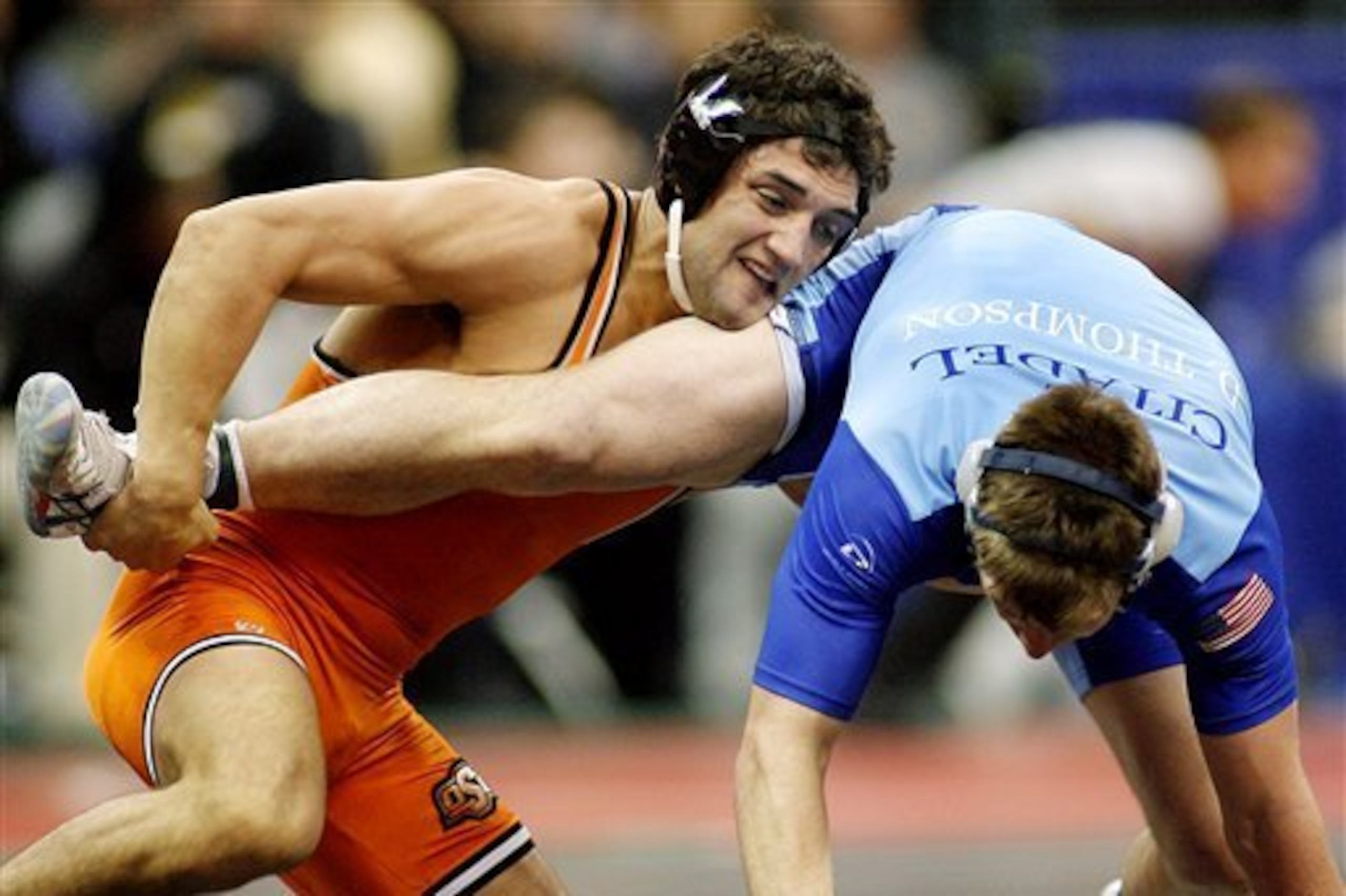
That culture should certainly continue to shoulder some accountability in the debate, seeing as how that grin-and-bear-it attitude, still so common in that sport, so frequently gives rise to these drastic, reckless cuts in MMA.
Where was Hendricks' team on this? Where were they when he dropped nutritionist Mike Dolce this spring, not long after Dolce rather presciently accused Hendricks of repeatedly "ballooning up" between fights? Hendricks said that, without Dolce, he was relying on himself and his wife to handle his diet regimen, rather than a nutritionist. No offense to anyone, but how did that work out? With Hendricks' behavioral pattern so deeply entrenched, where was the tough love among his inner circle?
Also in on the blame here is the UFC, which hasn't done much to date to curb or even acknowledge the existence of dangerous cuts. Kudos to the promotion for adopting a ban on IV rehydration—which, as it happens, took effect for the first time here at UFC 192—but if Hendricks' behavior and the comments of other fighters are any indication, it won't curtail cuts but rather make them more dangerous by taking away a prevalent means of rehydration.
Then there are the athletic commissions. Some commissions are leaders in the area, but for every California or Arkansas, there are several others who don't do much to regulate or monitor cuts or hydration levels. And of course, none of these commissions talk to one another, so even if a behind-the-curve state (like, oh, I don't know, Texas) wanted this information, there's no definite mechanism or requirement for sharing it.
"That time Texas ignored their own Regs and let Hendricks fight despite showing signs of dehydration - http://t.co/W7lnWLwyD7
— Erik Magraken (@erikmagraken) October 2, 2015"
Let's not forget about the fans. We expect bigger, want bigger. Fine. But at the same time, we can hold athletes and governing bodies to account. It's OK to care about safety. As with brain trauma, if our lust for displays of power and violence isn't tempered by a knowledge of or at least empathy for the real human dangers that attend them, we're stuck in a downward spiral, and a "don't ask, don't tell" attitude isn't the tool to pull us out.
From my outsider perspective, it seems like Hendricks hangs out around the feeding trough too much and goes through his weight cut in the old tough-it-out sort of way, fiddling through the summer only to find he ran out of warm days. He did not control his weight until it was crunch time, and like a student cramming for an exam, he found himself operating without a net.
The news also spurred UFC President Dana White to announce that Woodley may now receive the next welterweight title shot—something this fight at UFC 192 was supposed to determine. White went on to note that Hendricks is "a middleweight as of now," given this latest mishap, per Kevin Iole of Yahoo Sports.
That's a fairly mild punishment. The fact that Hendricks won't be paid is a stronger one. But in the meantime, until the combat sports culture changes and its fans and athletes start taking this more seriously, we'll have more canceled fights, more ER visits and worse.
So let's share the blame. Without coming together as a community to at least acknowledge this problem, it's probably impossible to come together as a community to work toward a solution.

.jpg?w=2560 "Jonathan Taylor Landing Spots")

.jpg?w=2560 "NFL House in Paris Closes for Protests (AP)")


.jpg?w=2560 "Malik Beasley Negotiating Plea Deal (AP)")