

Formula 1's Latest Rumours and Talk: Haas, McLaren, Closed Cockpits, More
The new Haas Formula One team are set to announce the identity of one of their drivers before the end of September—and it's almost certain to be one of two men.
Gene Haas has revealed at least one of his team's two race seats will be filled by a Ferrari reserve driver, so either Esteban Gutierrez or Jean-Eric Vergne should be back on the grid in 2016.
Also set for a return in 2016 is the Red Bull-Ferrari partnership. The two parted ways at the start of 2007 when the Austrian team switched to Renault engines; Mercedes' decision to pull out of talks means Red Bull look to have no option but to return to the Scuderia.
But Red Bull adviser Helmut Marko believes his team could still return to the top—and says beating Mercedes with a different engine will be "much more unpleasant" for the German outfit than being defeated by their own customer.
Elsewhere, McLaren are starting to worry about the financial cost of their disastrous season, Pirelli have announced its tyre compound choices for the next three grands prix and Sir Jackie Stewart has questioned whether closed cockpits are really necessary in F1.
Daniel Ricciardo, however, feels they are.
Read on for a full roundup of the top stories from the last few days.
Haas Set to Announce One Driver Soon, but It Won't Be Alexander Rossi
1 of 5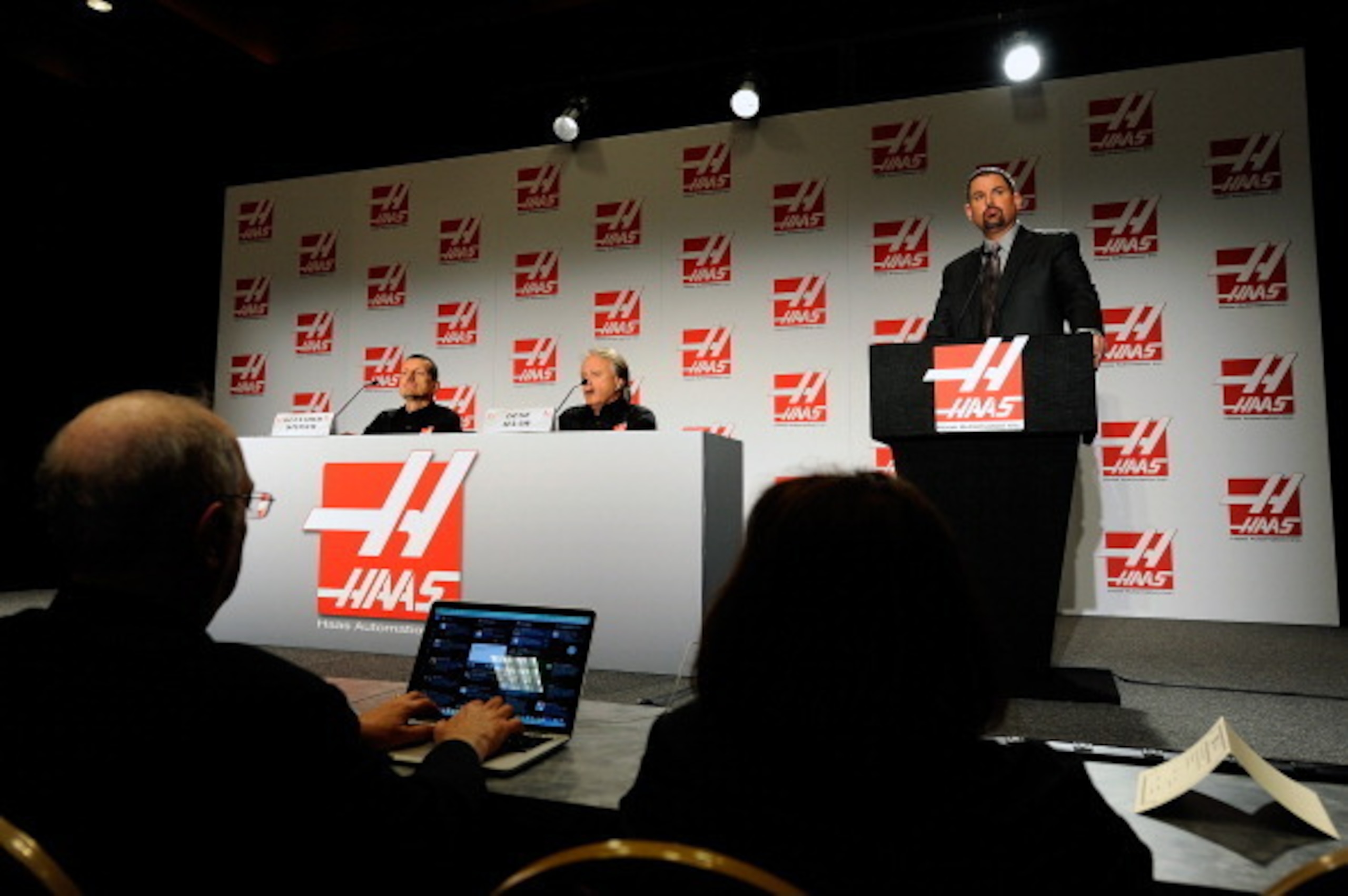
The new Haas F1 Team plans to announce the identity of at least one of their new drivers before the end of September—but American Alexander Rossi appears to be out of luck.
The GP2 race winner had been thought to be a contender for one of the highly sought-after seats at the new United States-based team. But Haas team principal Gunther Steiner has revealed he's not even under consideration.
Asked about the team's driver lineup by the official F1 website, Steiner said:
"I don’t want to drop names at this time, but we’re pretty confident that by the end of September we will announce at least one driver. We are negotiating with two of them, but nothing is done. We are very close to some drivers—and at the end of September we will come forward. It is good to get another box ticked!
"
Questioned whether one would be American, he responded:
"There is nobody out there at the moment. Yes, there are drivers in GP2 and Formula Three, but having a rookie in a new team...that is difficult for both sides. The potential of such a partnership failing is pretty high. So at the moment we’d rather not be looking at that avenue, because you are also not helping an inexperienced driver—he could be burned in one season. We are new, so we need a known quantity in the team.
"
Team owner Gene Haas had previously told the press, including crash.net, that he would ideally like an experienced man and a "young American driver."
So Steiner's words will come as a major blow to Rossi, the only American single-seat driver who appears to currently have the ability, experience and desire to make the step to F1.
But given the huge interest in the two seats among drivers with previous experience, perhaps it shouldn't come as a surprise.
The Haas team will be heavily linked to Ferrari, and Scuderia-backed Esteban Gutierrez and Jean-Eric Vergne would both welcome a return to the grid. Haas indicated to Autosport on Wednesday that "a Ferrari reserve" would definitely occupy one of his cars.
McLaren reserve driver Kevin Magnussen would take a Haas seat ahead of another year on the sidelines, while well-funded ex-Marussia racer Max Chilton told Sky Sports he has been in discussions with Haas over 2016. Autosport adds Romain Grosjean is also under consideration.
If the Renault deal to buy Lotus goes through, Grosjean is unlikely to make the switch, and Chilton himself doesn't think he has a chance.
Mexican Gutierrez's strong links to Carlos Slim's America Movil group (whose logos currently have a spot on the Ferrari) should tip the balance his way in the duel with Vergne, while Magnussen showed enough in his debut year with McLaren in 2014 to suggest he'd be a smart pick for the other seat.
Pirelli Goes Softer for Russian Grand Prix After Dull 2014 Race
2 of 5
Pirelli has announced the tyre compounds that will be provided for the next three races. The first two of the three will feature the same compounds they did in 2014.
Singapore will see the red-marked supersoft and yellow-marked soft tyres, while the white-marked medium and orange-marked hard compounds will be supplied for the Japanese Grand Prix a week later.
But Pirelli has opted to go a step softer for the Russian Grand Prix. The company supplied soft and medium tyres last year; this season it'll be supersoft and soft. A Pirelli press release said:
"For the Russian Grand Prix, Pirelli will nominate the P Zero Yellow soft and P Zero Red supersoft: a combination that should cope well with the wide range of corners and smooth surface offered by Sochi, hosting a grand prix for only the second time.
[...]
The asphalt has not changed significantly since its debut last year, and looking at the data from 2014, a softer step is possible.
"
The 2014 Russian Grand Prix was one of the lowlights of the season. Very little happened after the first couple of laps, and F1 Fanatic readers rated it the worst race of the year by some margin.
Autosport reported on claims that one of the primary factors behind it being so dull was a lack of tyre degradation. At the time, Pirelli denied softer tyres would have helped—but the company is at least trying a different approach this time around.
Hopefully it'll have the desired effect.
McLaren Concerned over Finances Following Dismal Year
3 of 5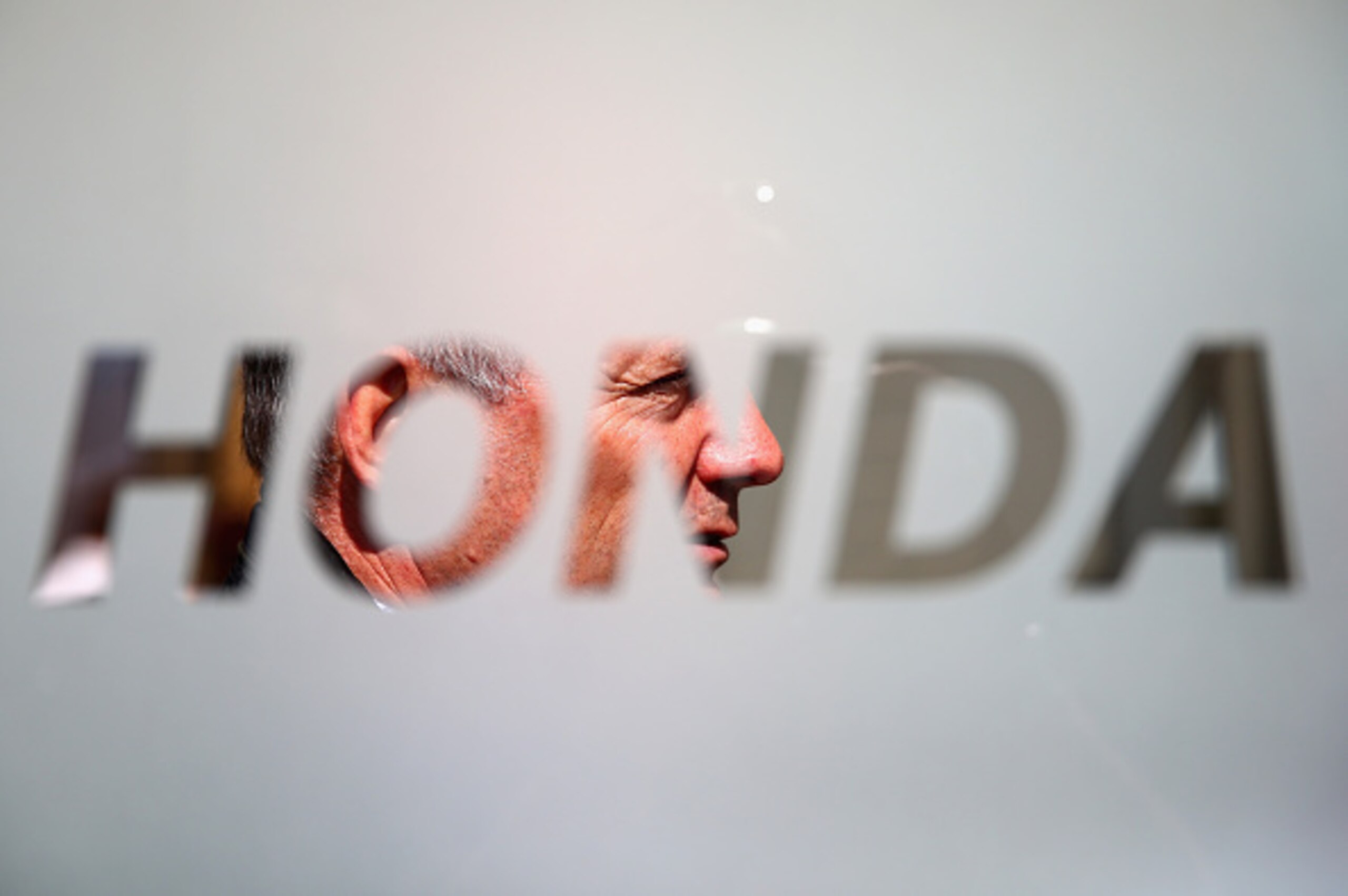
McLaren are becoming increasingly concerned that their dreadful form on the track could have a significant impact on their revenues.
The team's racing director, Eric Boullier, is quoted by Autosport saying:
"In terms of sales and revenue, if we can't finish in the same position as we did last year there is going to be a direct loss in terms of revenue because the business is driven by being in the sport.
If we can't find and bring in new sponsors then there is obviously going to be damage, which you can't quantify in millions or whatever. But it will be more difficult to bring sponsors in if we don't show we are a team on the move and get into the points quickly.
"
McLaren finished fifth in the constructors' championship in 2014; Autosport's Dieter Rencken reveals this netted them $63 million in prize money. Added to their "bonus payment," the team's total income from the sport's commercial rights holder was $126 million.
However, they lie ninth in the standings this year. Should they fail to climb the ladder in the remaining seven races, it would mean a $15 million reduction in prize money.
This in itself would not be a disaster. Though McLaren do not possess a bottomless pit of money, they do have income from their road car and applied technology subsidiaries. Honda also contribute a significant sum, not least in the form of free power units, and the team's owners aren't short of a penny or two.
But as Boullier hints, a continued lack of success may impact in other ways. Sponsors do not want to be associated with failure, and the Telegraph's Daniel Johnson reported McLaren could be set to lose two deals worth a total of £20 million ($30.7 million) at the end of the current year.
If this happens, combined with the loss of prize money, it would mean an income reduction of $45 million.
Even to a team as financially secure as McLaren, that's a significant sum of money.

Daniel Ricciardo and Jackie Stewart Disagree on Cockpit Protection
4 of 5
Daniel Ricciardo has come out in favour of F1 having closed cockpits in the future—but highly respected safety campaigner and three-time world champion Sir Jackie Stewart is not convinced.
Speaking of enclosed canopy-style cockpits, Ricciardo was quoted by the Press Association's Phil Duncan (h/t Daily Mail), saying:
"It is something I want to definitely go for—for me it is the last piece of the puzzle.
The helmets have come on a long way but unfortunately we have still seen some tragic accidents and you get to a point where you don't care about tradition any more.
I don't care if the statistics say there have only been a few [deaths] in the last 20 years. Statistics cannot predict what is going to happen in the future so now we need to ignore tradition and go for safety.
As a current driver and seeing these things happen around you in Formula One and IndyCar it hits home a lot more and you just don't care how the past has been with tradition. It is silly not to look into options now for sure.
"
Stewart, however, feels fully enclosing the driver isn't necessarily needed and hinted the drawbacks of such protection may outweigh the benefits. Speaking to Alan Baldwin of Reuters, he said:
"I don't see it as that bad. How many incidents have we had? I mean one thing was changing safety—the racetrack, the deformable structures, the cars, everything.
[The death of] Henry Surtees, and this accident that happened in America, that's two incidents. I don't think Jules's incident was anything to do with that [not having a closed cockpit].
"
He added:
"I think there's a lot of research and development has to take place. Everyone's talking about a missile hitting the thing. What if there's another accident, not with a missile coming back, and an impact?
Is it a problem that the driver might not be able to get out correctly? There's a lot of things that you have to take into consideration.
Are you going to get proper ventilation? It's a very complicated thing, it's not just a simple bubble.
And sometimes you'll be doing 280 or 300 kilometres per hour and an object comes. Is it going to damage the cell so that it can't be taken off? A driver could be trapped in it.
"
The tragic death of Justin Wilson following an accident at an IndyCar race at Pocono Raceway in August brought the issue of cockpit protection in single-seater racing back into the spotlight. Wilson was struck on the head by debris from the car of a rival who had crashed; he was taken to hospital but died the following day.
Two main methods of protecting the driver have been put forward. One involves placing a protective structure around the cockpit area to stop large items such as wheels coming into contact with the driver's head.
The Mercedes-designed "halo" concept falls into this category. The official F1 website states it will be tested by the FIA this month—but its major flaw is that it offers little protection against smaller pieces of debris, such as the spring that caused Felipe Massa's injuries at the 2009 Hungarian Grand Prix.
The other approach being looked at is a jet fighter-style canopy. This design was tested by the FIA Institute in 2011. It successfully withstood the impact of an F1 wheel fired at 225 kilometres an hour and would also provide protection from smaller pieces of debris.
However, this design could prove problematic in other types of incidents where the driver needs to quickly and safely vacate the car—and issues such as general visibility, keeping the canopy clear in the wet and driver cooling would also arise.
How such a canopy would deflect debris is also a concern.
In the wake of accidents such as Wilson's, there's always a temptation to rush into finding a solution—and on this occasion that rush is probably justified.
But Stewart, a man with a genuine love of the sport and a long track record of pushing for safety improvements, raises some very important points. The rush must be controlled—and if it's heading in the wrong direction, it must be halted.
There'll always be danger in motorsport. F1 must be careful that it doesn't, by improving safety in one area, create a new hazard somewhere else.
Helmut Marko Hopes Red Bull Can Inflict 'Unpleasant' Defeat on Mercedes
5 of 5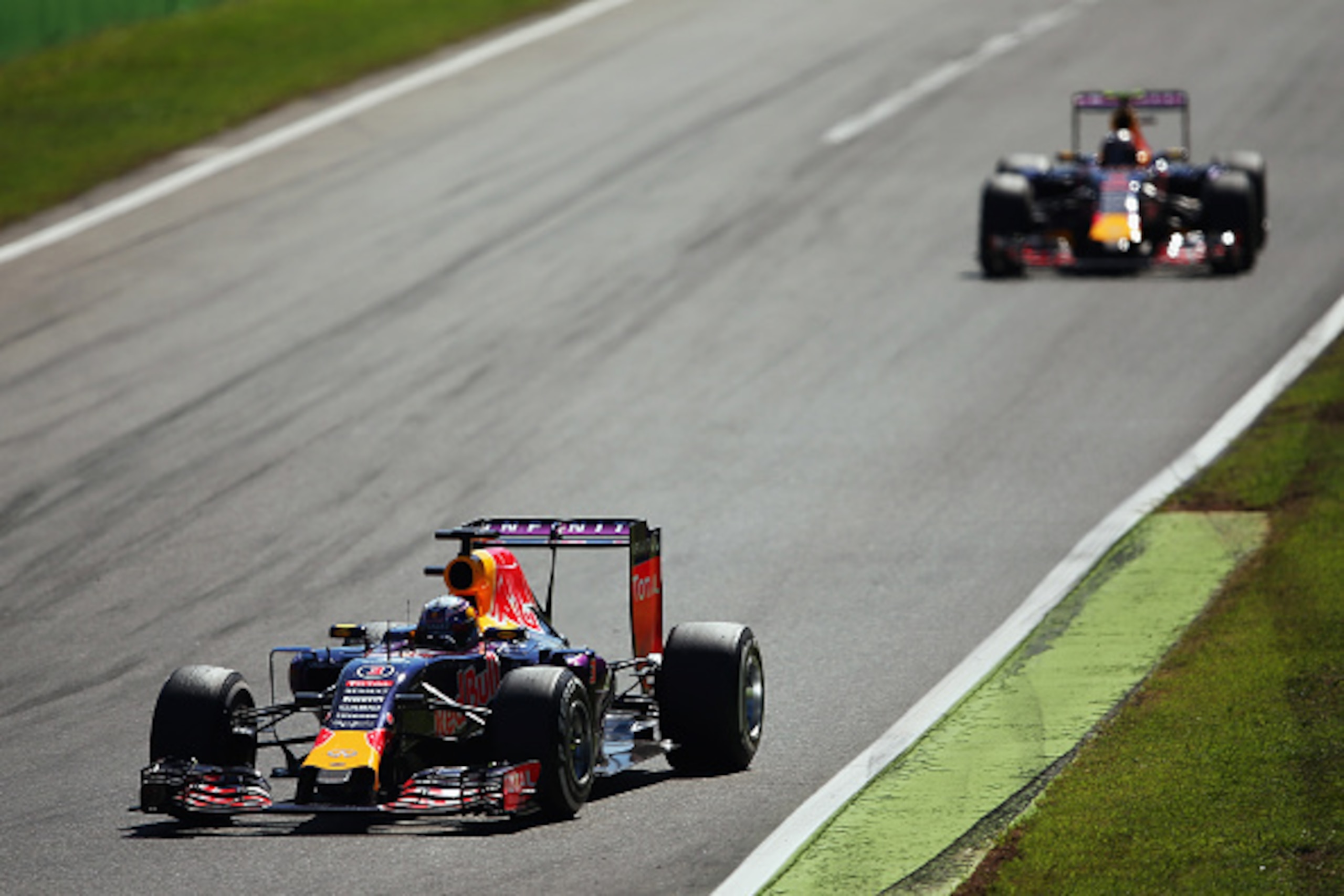
Red Bull adviser Helmut Marko has revealed discussions over a Mercedes engine supply never reached an advanced stage.
The Austrian team had been seeking a new engine supplier after deciding to cut ties with current partner Renault. However, Mercedes decided they didn't want to help out one of their closest rivals—and BBC Sport's Andrew Benson reported they were also wary of getting involved with a team that has a history of openly criticising their engine supplier.
But Marko hopes their decision to reject Red Bull comes back to haunt them. Speaking in an interview with Speedweek (h/t motorsport.com for the English translation), Marko said:
"The talks with Mercedes came to an end even before we went into details.
There were specific requirements but we did not reach a point at which we would have been able to discuss them in detail. Now let's see what engine we will use.
Perhaps we will be able to beat them [Mercedes] with the new package. Then it will be much more unpleasant than if we had managed to do that with a Mercedes engine.
"
Red Bull have been backed into a corner after seeking an end to their Renault deal without having concrete plans in place for the future. The only realistic option left on the table appears to be a customer Ferrari deal.
Per Fox Sports, Red Bull owner Dietrich Mateschitz indicated back in June that his team had no interest in following such a route.
But now it seems they have no choice, and Manor look set to benefit. If Renault buy Lotus and come to an agreement with Mercedes to terminate their engine supply deal, Sky Sports reports the minnows are keen on replacing them as the German team's third customer.
McLaren had better watch their backs...




.jpg?w=2560 "Weather Channel Trolls Texans-Titans 💀")
.jpg?w=2560 "Grading WWE Raw 🔠")