
Italian Grand Prix 2015: Winners and Losers from Monza Race
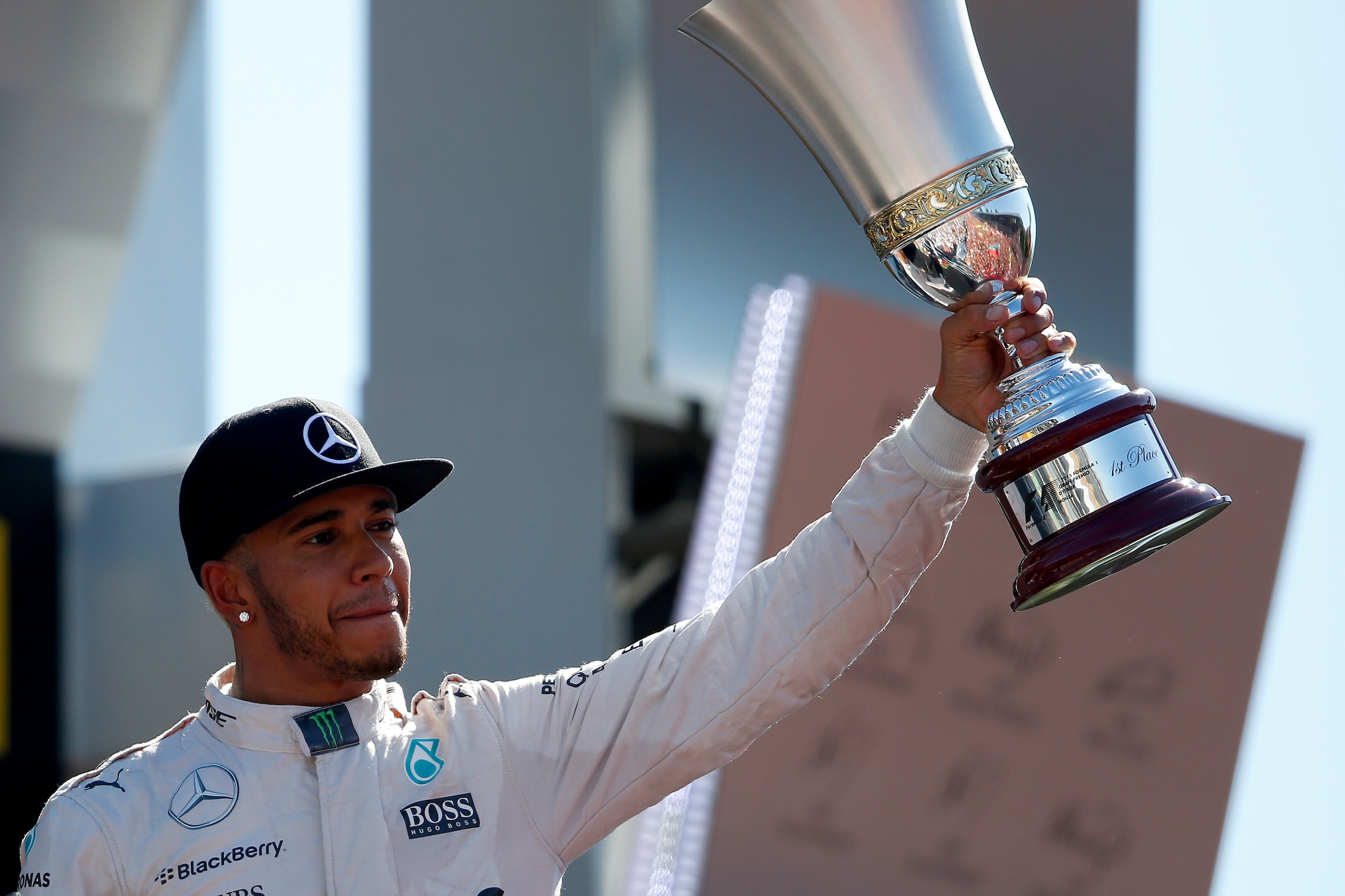
Lewis Hamilton claimed his seventh win of the 2015 Formula One season in Sunday's Italian Grand Prix at Monza.
In years to come, the record books will suggest this was a win like any other, with the reigning world champion converting yet another comfortable pole position into yet another easy victory.
But it wasn't quite as simple as that.
It never is simple in F1, of course, and it was only after Hamilton received his winners' trophy and sprayed the celebratory champagne that his victory came under threat, with his Mercedes team under investigation for tyre-related infringements.
The Silver Arrows were eventually let off, yet the episode seemed to reveal much about Mercedes' state of mind having established themselves as the sport's dominant force over the last 18 months.
While Hamilton added 25 points to his tally, his team-mate and championship rival, Nico Rosberg, was left to reflect on the 15 points he lost after his engine expired just two laps from the chequered flag while the German was running in third place.
Rosberg's first retirement of the season led to a bittersweet feeling within the Mercedes garage, but there were contrasting emotions up and down the pit lane at Monza.
Here are the winners and losers from the Italian GP.
Winner: Lewis Hamilton
1 of 8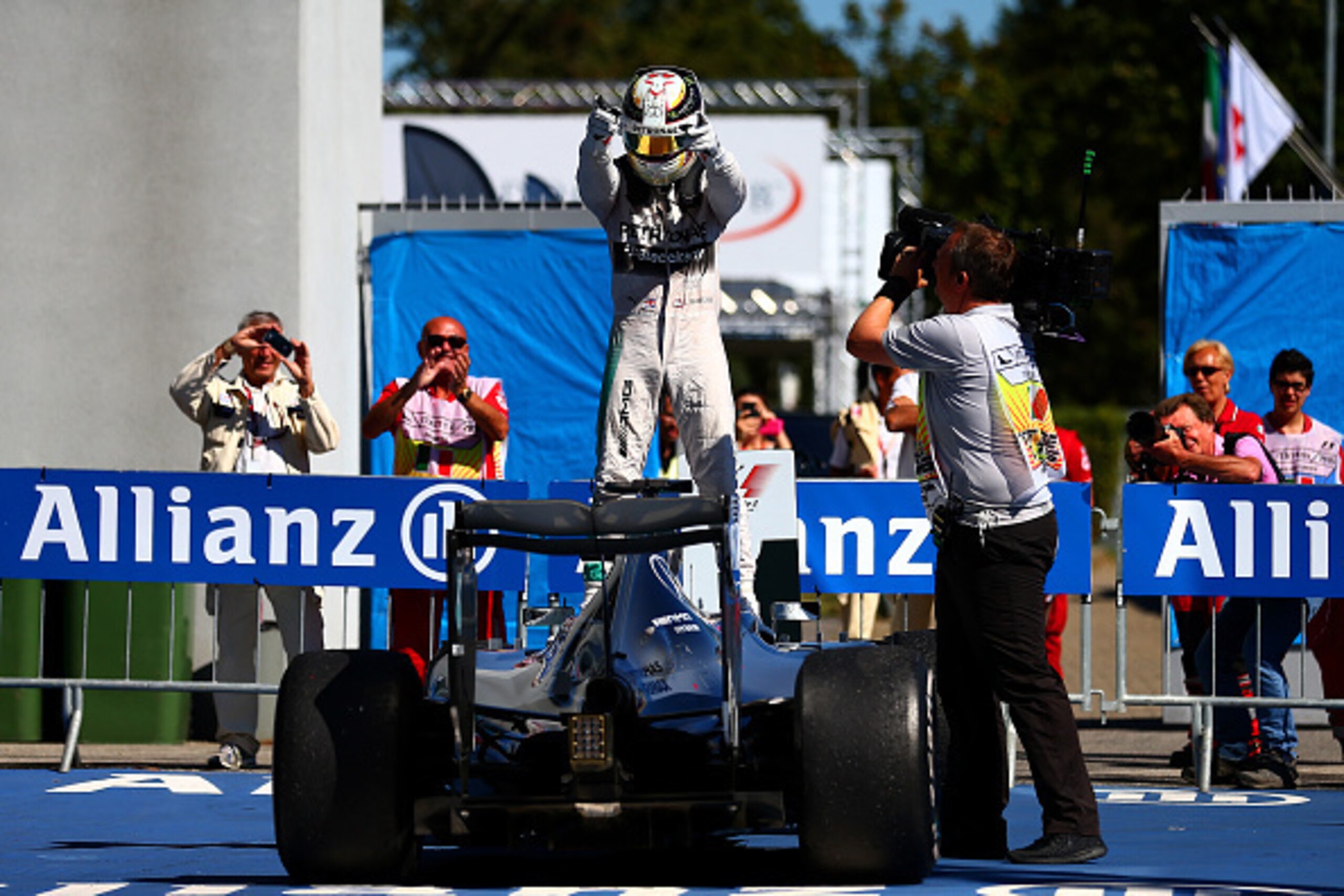
Following Nico Rosberg's engine change ahead of qualifying, which saw the German revert to an older unit after an issue with his new-spec powertrain, Lewis Hamilton would have started the Italian GP with a huge doubt lingering at the back of his mind.
If his new engine were to develop a similar problem during the race at Monza, where 74 per cent of the lap is spent on full throttle (according to a UBS infographic), there would be no second chances, no turning back.
Despite Mercedes' official Twitter account confirming there was "no problem with the engine itself," the fear of a repeat issue would have been enough for some teams to make a compromise, ensuring the car with the heavily upgraded, untried and untested engine would survive 53 laps of the most power-dependent track of the season.
But Hamilton treated race day like any other and effectively secured his seventh win of the season during the first stint by breezing away from Sebastian Vettel, who was unable to mount a challenge without the aid of his wing-man, Kimi Raikkonen.
Hamilton's calm response to the team's request over the pit-to-car radio—as heard over the FIA television feed—to increase his pace in the latter stages as Mercedes feared a post-race penalty was further evidence of his growth in maturity.
And it would have been unjust if Hamilton, having produced a performance of that magnitude in difficult and uncertain conditions, lost the victory due to a punishment over something as inconsequential as incorrect tyre pressures.
With an advantage of 53 points in the drivers' standings, Hamilton can now afford to retire from two races and still retain the lead of the championship. His third title, it seems, is now a formality.
Loser: Mercedes
2 of 8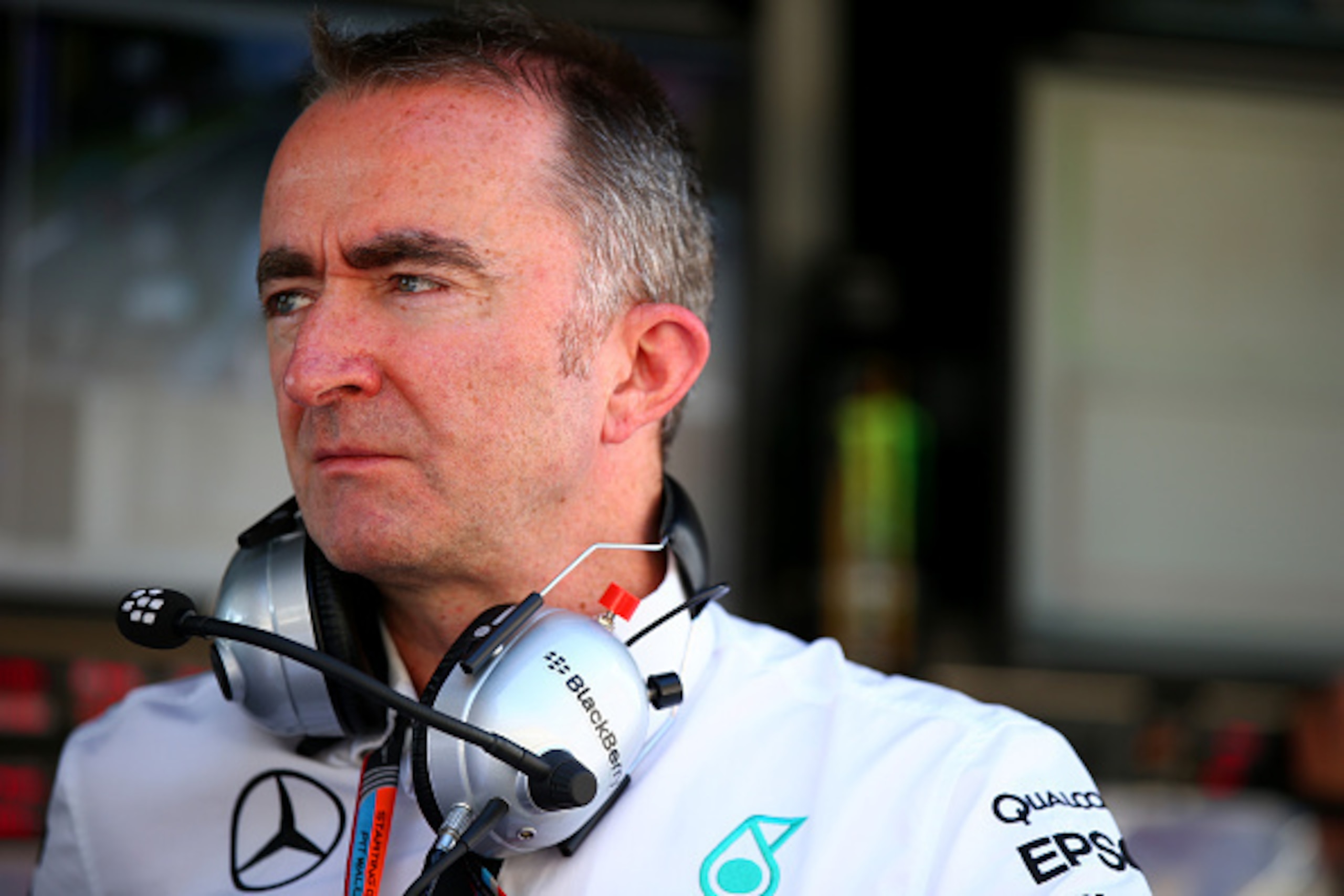
When Hamilton decided to leave McLaren for Mercedes at the end of 2012, it was not down to the latter's failure to offer him race or championship-winning machinery. Rather, it was due to their habit of ruining their driver's good work and making his life more difficult than it really ought to have been.
The car, for instance, would fail just as Hamilton appeared to be on course for a strong result, or the team would make a questionable strategic decision and leave him fighting a losing battle.
As these incidents grew ever more frequent and both parties became ever more frustrated, the trust—the crucial ingredient of any successful team-driver combination—was lost, and separation, once unthinkable, became inevitable.
And though Mercedes and Hamilton will not be reaching that stage any time soon, the Silver Arrows have in recent months shown worrying glimpses of the ineptitude that cost McLaren dear.
The team denied Hamilton a certain win when they called him to the pits for an unnecessary tyre change in May's Monaco Grand Prix, and their latest issue meant the world champion's status as the victor of the Italian GP was far from certain, even as he stood on the top step of the podium.
As reported by Motorsport.com's Jonathan Noble, a test showed Hamilton's rear-left tyre was 0.3 PSI below the 19.5 PSI guideline recommended by tyre supplier Pirelli, with the same tyre on Nico Rosberg's car 1.1 PSI under.
That left Mercedes and Hamilton facing an anxious wait during a post-race stewards' investigation, with Williams' Pat Symonds, a senior paddock figure, telling Sky Sports' television coverage of the race that disqualification would have been a suitable punishment.
However, the stewards, per the official F1 website, decided to take "no further action" having been "satisfied that the team followed the currently specified procedure" for "the safe operation of the tyres."
Although Mercedes wriggled themselves out of jail on this occasion, the fact they even found themselves in a position to be potentially excluded was concerning in itself.
Complacency and a tendency to push limits tends to affect most front-running outfits in F1—see Daniel Ricciardo's disqualification from the 2014 Australian GP—but whether this is a case of arrogance, clumsiness or just an honest mistake, Mercedes must stifle it sooner than later.
Winner: Williams
3 of 8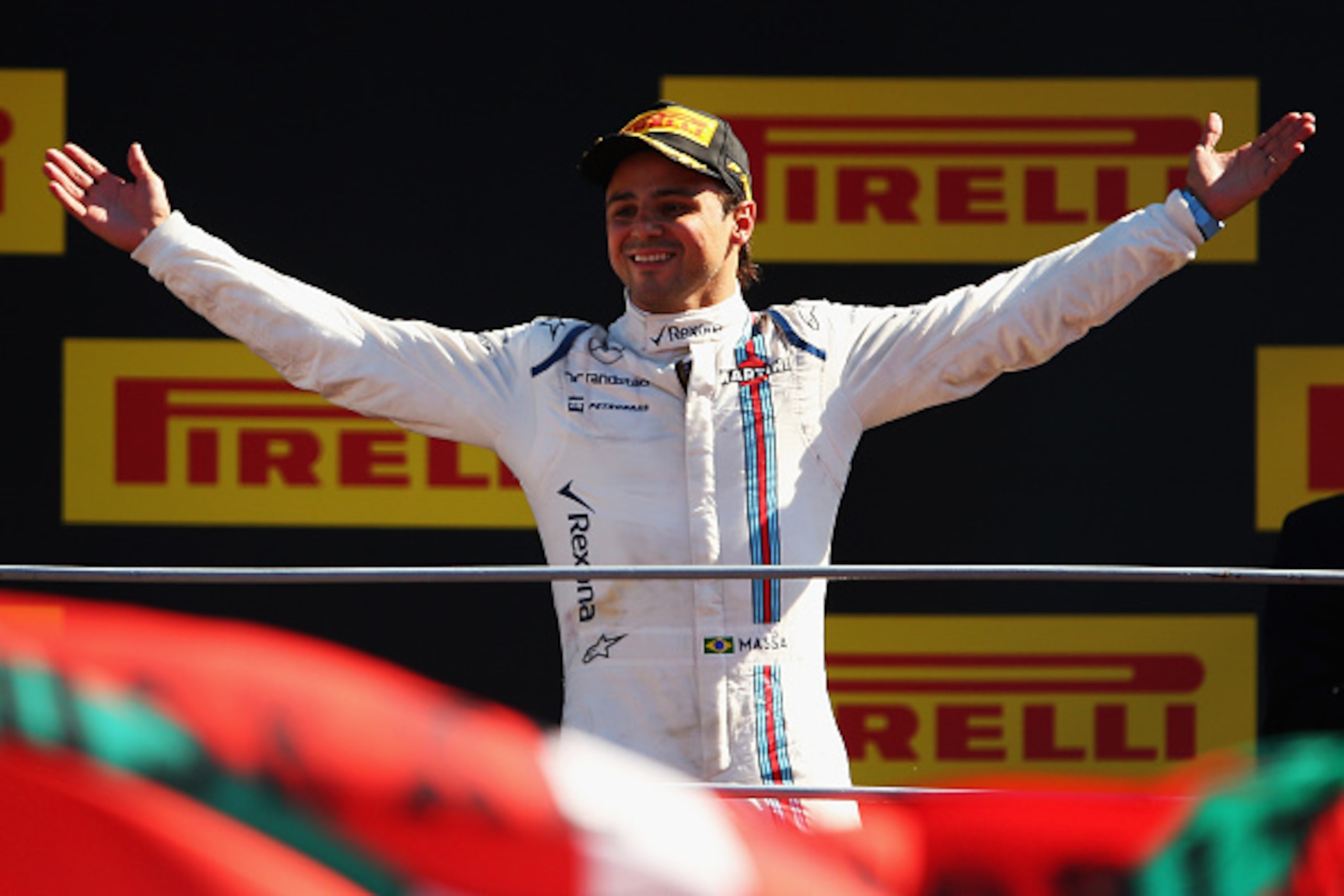
In his eight seasons as a Ferrari driver, Felipe Massa only claimed one podium finish in the Italian Grand Prix. But since moving to Williams at the beginning of 2014, the Brazilian has secured two third-place finishes in consecutive visits to Monza.
Massa's change in fortune is a reflection on how a change of environment can often reinvigorate an athlete, and his second podium of the season came at a time Williams needed it most.
With a double-podium finish at the Hungaroring and a decent showing at Spa-Francorchamps, Red Bull had cut Williams' advantage to just 53 points in the race for third place in the constructors' championship.
But with the layout of Monza exposing the RB11's lack of straight-line speed, it was vital that Williams—who were too cautious in terms of setup at Spa, where their FW37 should have been strong—took full advantage of their opportunity to get both cars into the top five for the third time in the last five races.
In what is arguably the closest inter-team battle on the entire grid, Massa outqualified Valtteri Bottas by just 0.187 seconds in qualifying, and the team-mates were only 0.361 seconds apart when those 53 laps were completed, per the official F1 website.
The drivers may be inseparable, but Williams, now with a 75-point gap, are disappearing from Red Bull's sight.


Loser: Nico Rosberg
4 of 8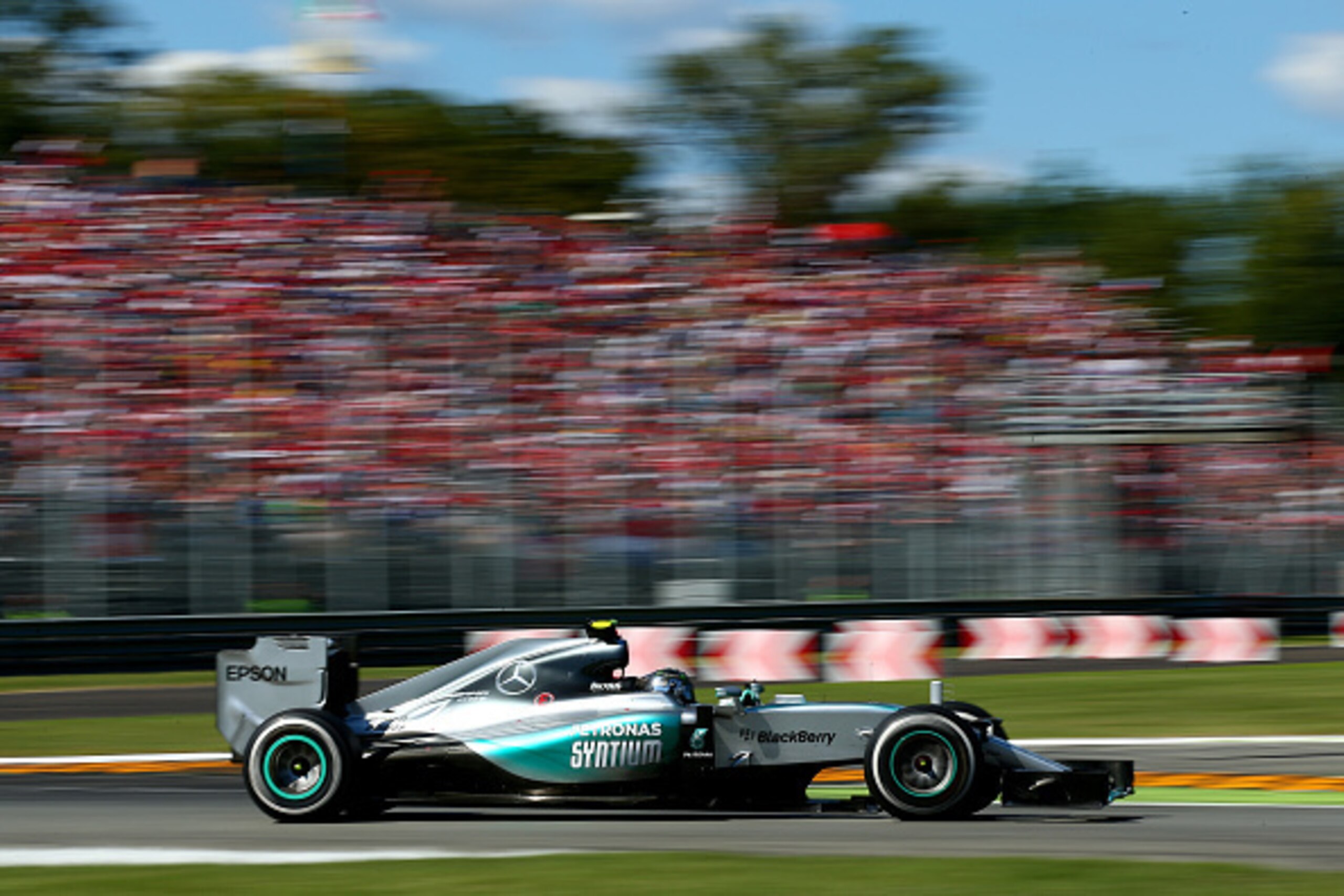
Another race, another poor getaway by Nico Rosberg.
The German has lost places off the start line in each of the last four grands prix, but his fall from fourth to sixth at the first corner at Monza can be traced back to his need to avoid the stalled Ferrari of Kimi Raikkonen, giving Rosberg excess wheelspin on a dirty stretch of asphalt.
Rosberg's recovery from the majority of those bad starts, particularly at Silverstone, has been unconvincing to say the least, but he was exceptionally aggressive in making his way through the pack in Italy, overtaking Sergio Perez at the start of Lap 2.
Brake management meant he was unable to be quite as hostile with the Williams cars, yet the decision to use the undercut technique during his only visit to the pits on Lap 18 allowed him to jump both Valtteri Bottas and Felipe Massa, despite the opposition immediately reacting to Mercedes' move.
Indeed, Rosberg seemed set to claim his customary second position in the latter stages as he pursued Sebastian Vettel, despite his lack of power due to his enforced engine change.
Rosberg told Sky Sports after qualifying that the power unit he reverted to on Saturday was participating in its sixth grand prix, and it proved to be a race too far as the No. 6 Mercedes caught fire, slowing to a halt at the second chicane with just two laps remaining.
This was one hole Rosberg couldn't quite dig himself out of.
Winner: Sergio Perez
5 of 8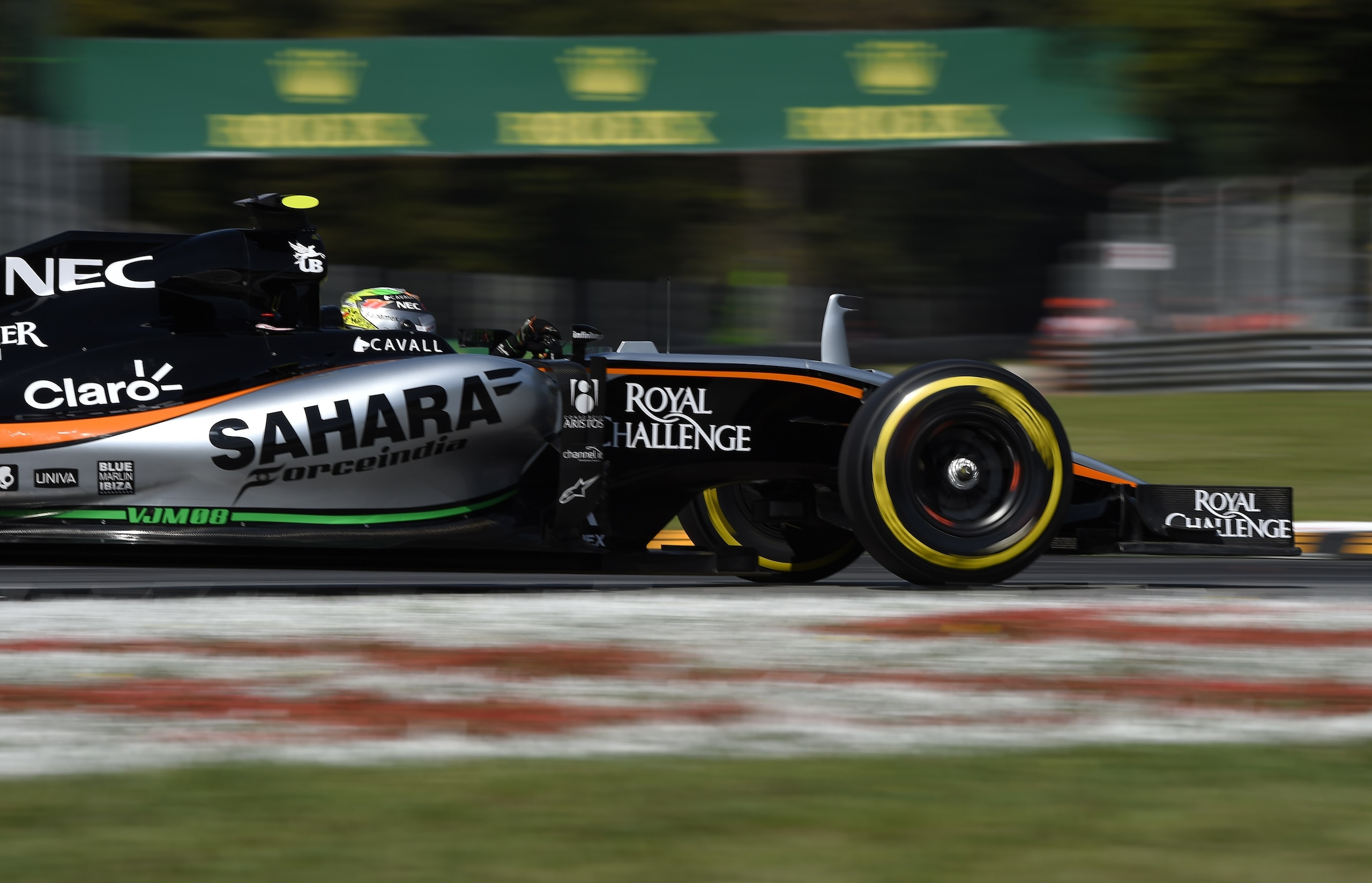
Sergio Perez has always excelled in Italy, surging from 12th on the grid to finish second in the 2012 race and producing one of his most accomplished displays of the 2014 season to claim seventh place.
The layout of the Monza circuit, as noted by F1 journalist Peter Windsor, suits his driving style, which places a large emphasis on the management of the rear tyres, and Perez performed impeccably to score points for the second race in succession for the first time in 2015.
In a Q3 session that was bound to be dominated by Mercedes, Ferrari and Williams, Perez beat Romain Grosjean, the man of the moment following his third-place finish in Belgium, to seventh on the grid by 0.428 seconds, according to the official F1 website.
That was followed by another calm, clean grand prix, leaving Perez—who avoided being lapped by Lewis Hamilton—content that he "got the maximum that was possible," as he told Force India's official website.
Perez's sixth place, combined with Nico Hulkenberg's seventh-place finish, has allowed the team to regain fifth place in the constructors' championship, with Force India now leading Lotus by 13 points.
Whisper it, but—having found the consistency to complement his speed—is Perez now emerging as Force India's No. 1 driver?
Loser: Kimi Raikkonen
6 of 8
A mistake in FP3 at the one circuit that doesn't offer second chances. A spin at the slowest corner on the track. Elimination from Q1 on Saturday, and from the opening lap on Sunday. A brave but unsuccessful strategy call. An engine problem while running second. And a technical issue in Q2.
Kimi Raikkonen had suffered misfortune, to some extent, in each of the last six races since the Monaco Grand Prix. But after qualifying on the front row of the grid for the first time since April 2013, it felt as though his luck was set to change.
Alongside Lewis Hamilton, who'd made substandard getaways in four of the previous five races, Raikkonen had a strong chance of making it to Turn 1 leading the Italian Grand Prix for Ferrari.
But he couldn't get off the line himself.
In only the second race under the new race-start procedure, Raikkonen was nailed to his grid slot as all around him hurled toward the first chicane, dropping him from second to last in an instant as the hearts of the Tifosi, without a Ferrari victory at Monza since 2010, dropped like stones.
The 2007 world champion's rapid recovery through the field—he made his way back up to ninth within seven laps—was one of the highlights of the race, and his finishing position of fifth was the best he could have hoped for given the circumstances.
Yet, as is often the case with Kimi this season, his result had to be viewed against the backdrop of what he could have achieved had he enjoyed a trouble-free afternoon.
To make matters worse, Raikkonen has now fallen behind Felipe Massa—the man he replaced at Ferrari in 2014—in the drivers' championship.
Winner: Marcus Ericsson
7 of 8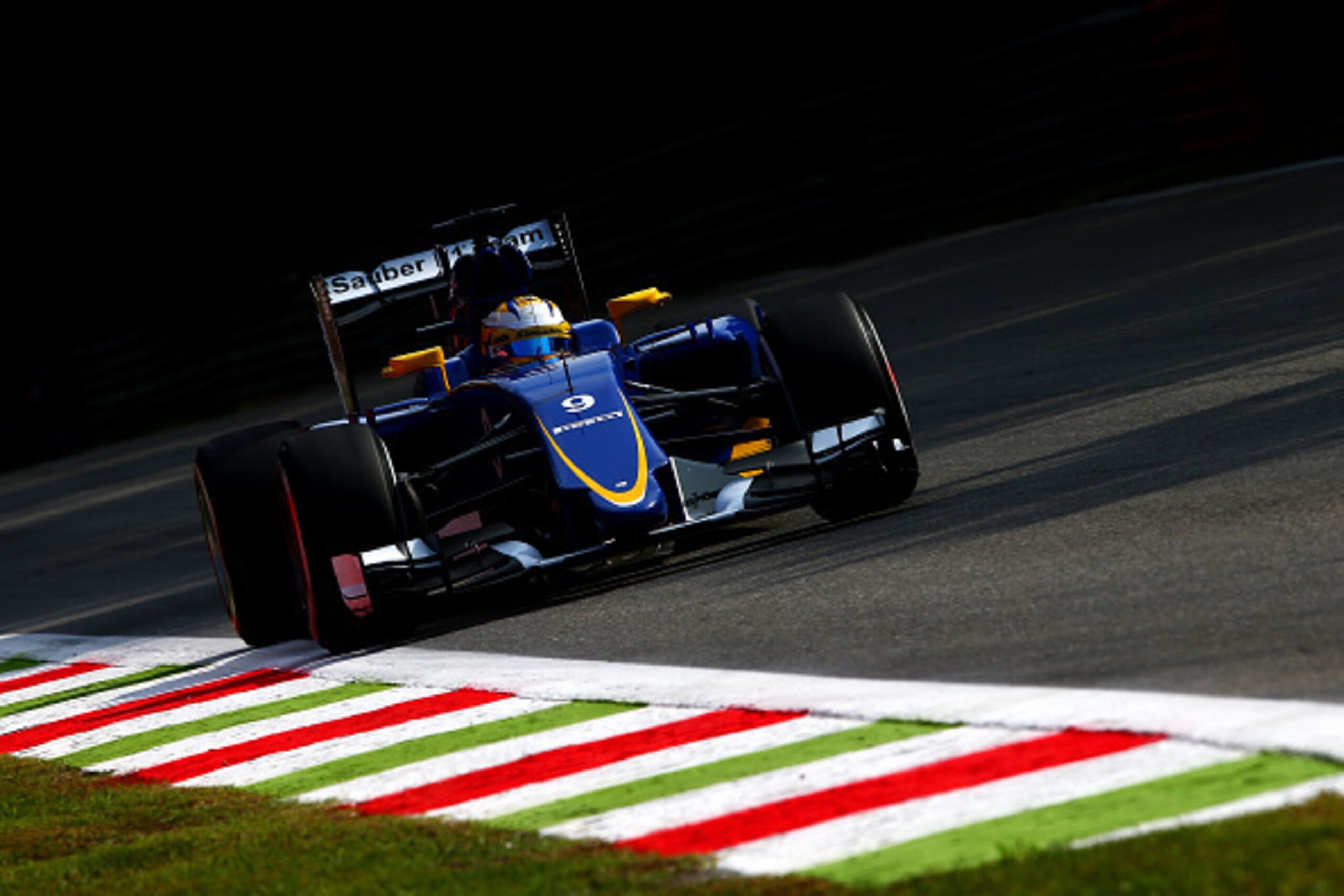
Throughout his first 18 months as a grand prix racer, it has been easy to dismiss Marcus Ericsson as just another pay driver.
His underwhelming debut season at the now-defunct Caterham outfit did little to help his reputation in 2014, and the very fact he has been outperformed by a rookie, Felipe Nasr, at Sauber in 2015 suggested the Swede is on the grid due to the pounds he provides rather than his performances.
But Ericsson is just beginning to change those perceptions.
After scoring the team's first points in two months with 10th place in July's Hungarian Grand Prix and securing the same result in Belgium, Ericsson enjoyed one of his strongest weekends to date at Monza.
He reached Q3 for the first time since China on Saturday, posting a Q2 lap that was 0.441 seconds faster than Nasr, per the official F1 website, and quick enough to deny Pastor Maldonado's Mercedes-powered E23—a car that reached the podium at Spa-Francorchamps—a place in the top-10 shootout.
The Swede was perhaps unfortunate to receive a three-place grid penalty for impeding Nico Hulkenberg in Q1, especially since both drivers eventually qualified within the top 10, but he ran solidly within the points-paying positions for much of the grand prix.
Losing eighth place to Daniel Ricciardo at the last corner of the race only added insult to injury after he was unable to pass Hulkenberg for seventh, but the 25-year-old can be satisfied with two points.
Ericsson is developing into a competent F1 driver.
Loser: Lotus
8 of 8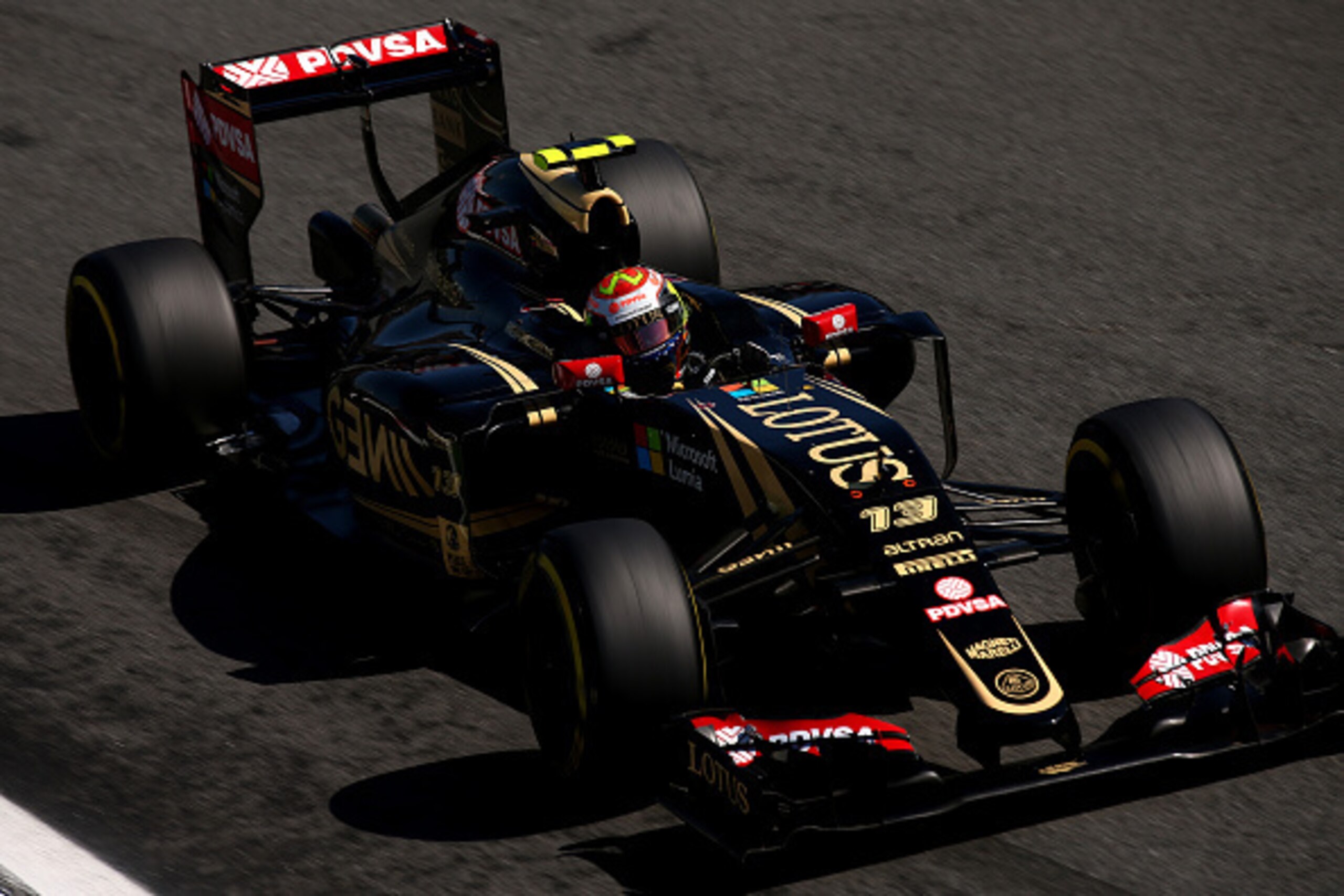
Lotus secured their first podium finish since November 2013 in the Belgian Grand Prix, where Romain Grosjean's third place gave the team a timely boost amid uncertainty over their short-term future.
But the Enstone-based outfit were brought back down to earth with a considerable thump at Monza, with both cars failing to navigate the opening lap.
Starting in eighth, Grosjean collided with Sauber's Felipe Nasr at Turn 1, while team-mate Pastor Maldonado—who has completed just one of a possible 96 racing laps since F1's summer break came to an end—was forced to miss the first chicane after making contact with Nico Hulkenberg's Force India.
After their early retirements in Australia and Britain, both Lotus cars have failed to make it beyond the opening lap for the third time this season and have again traded places with Force India in the race for fifth place in the constructors' standings.
Renault's imminent takeover of the team—F1 journalist Anthony Rowlinson tweeted that sources suggest the deal was finalised ahead of the Italian GP—means their finishing position in the championship is no longer all-important.
But the high-speed demands of Monza would have given Lotus, with their Mercedes power unit, the chance to add valuable points to their tally and maintain that sense of escapism.
A missed opportunity.
.jpg?w=2560 "Rams Raiders Football")


.jpg?w=2560 "Rodgers Iced Out on Plane 💎")

.jpg?w=2560 "Big Trade to Shake Up East 💡")