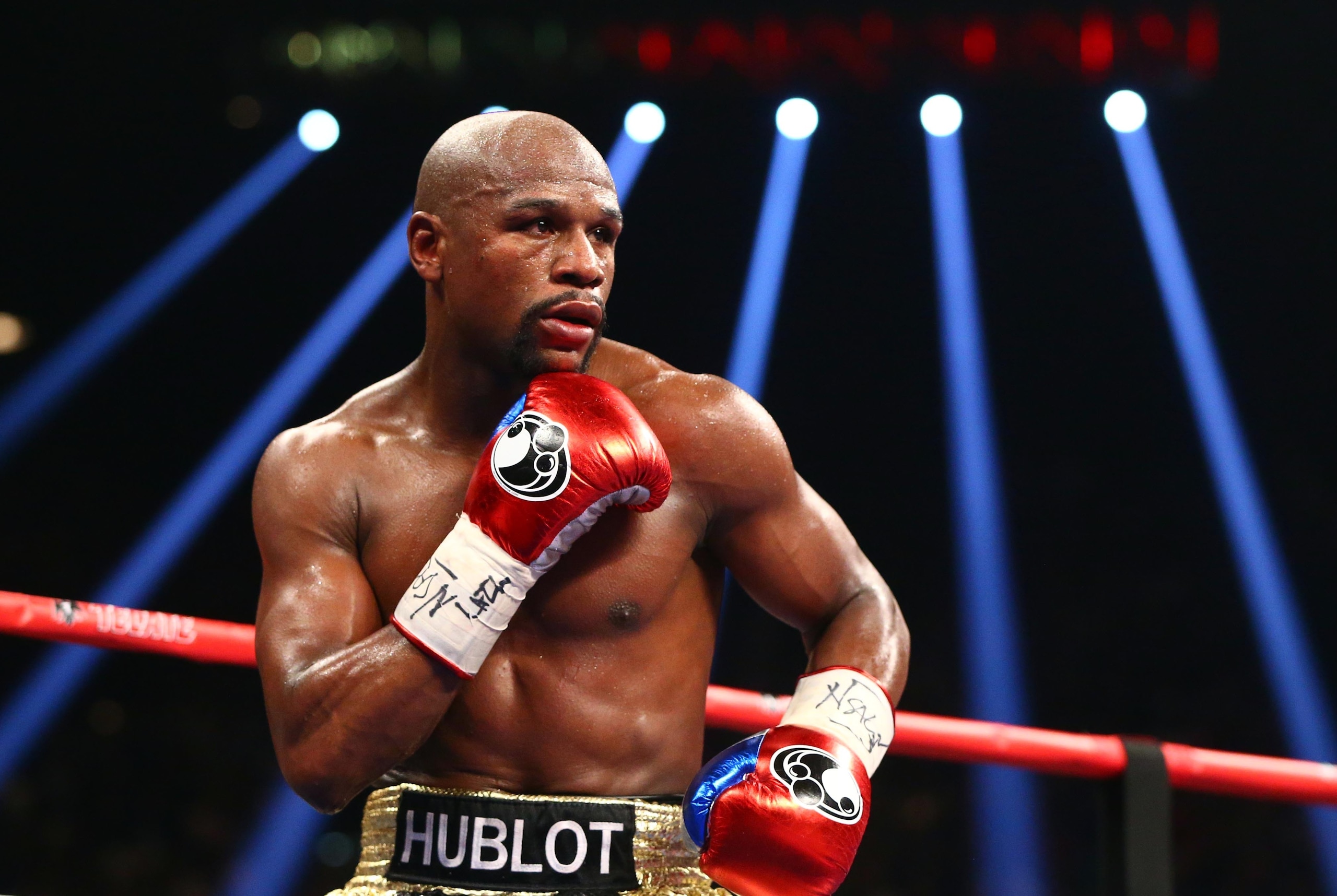

Floyd Mayweather A-Z: Everything You Need to Know About Money's Legendary Career
While the broader sports world appears willing to ignore Floyd Mayweather Jr.'s (48-0) final bid for our attention against the unheralded Andre Berto (30-3) on Saturday, it's impossible to simply write off one of the world's greatest athletes as he prepares for his last stand.
In the 19 years since his professional debut in 1996, Mayweather has established himself as a master of his craft, winning major world championships in five different weight classes and reigning as the sport's undisputed pound-for-pound king for nearly a decade. Along the way he's polarized fans and fighters alike with his brash persona, profligate spending and willingness to say whatever comes to mind.
What follows is an A-Z guide to the best boxer of our generation—with the good and the bad, the sublime and the horrific, packed together in one handy slideshow.
Have a Mayweather memory of your own to share? Hit us up in the comments.
A: Arum, Bob
1 of 26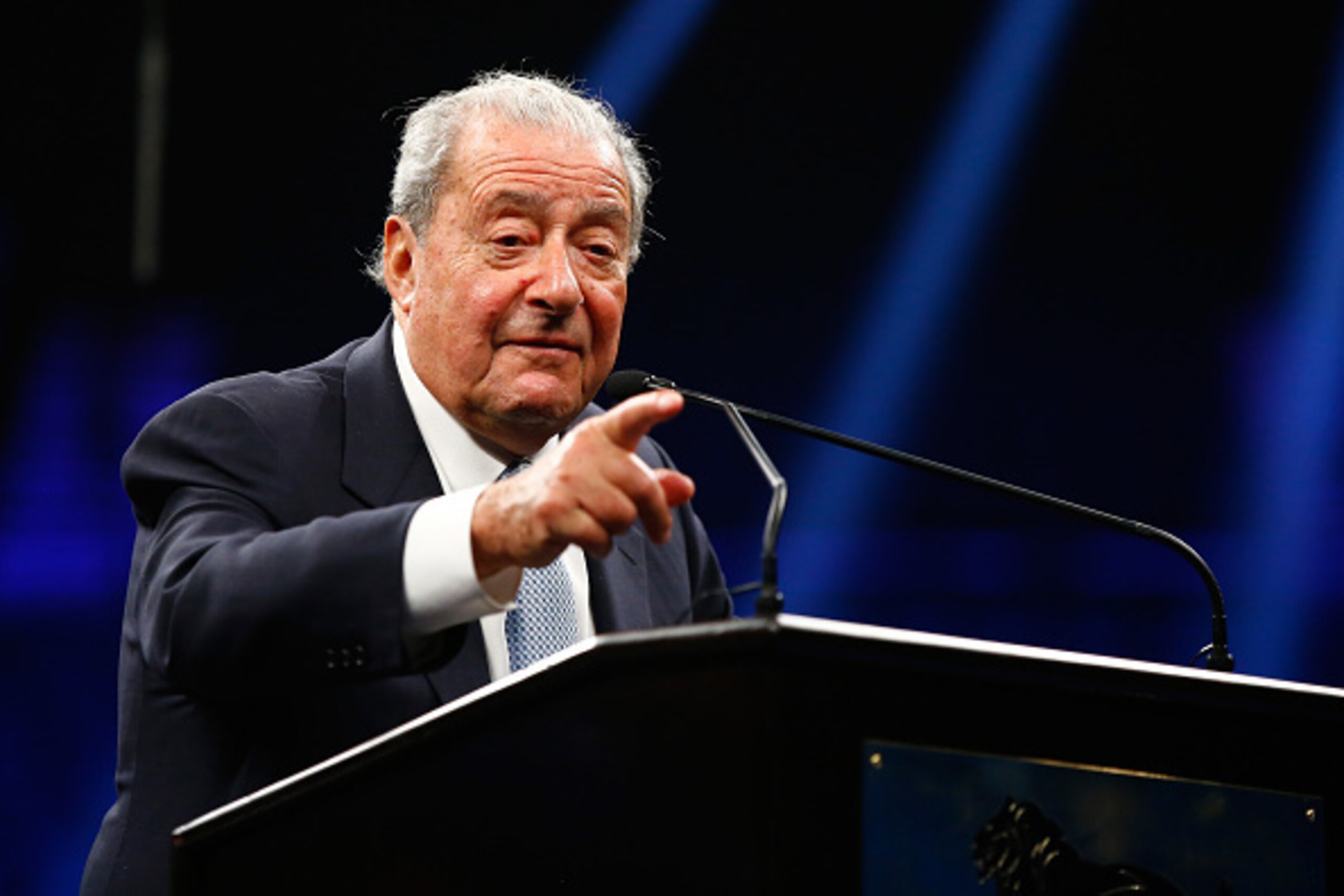
After Mayweather's demolition of the great Diego Corrales in 2001, the fight that put the former Olympian on the map, promoter Bob Arum had a clear vision of the future. And that future was bright. Surely envisioning all of the big paydays ahead for his then-24-year-old champion, Arum told the press that Mayweather was "better than Sugar Ray Leonard."
By 2006, however, the relationship between the two men had soured. Arum wanted Mayweather to fight his budding star Antonio Margarito. Mayweather had eyes only for Oscar De La Hoya.
To make matters worse, Mayweather was looking to make inroads with a new generation of African American fans. Arum, in his 70s, didn't know how to make that dream a reality.
"The big divide between Floyd and ourselves, with me, it was really the age difference,"Arum told Yahoo's Kevin Iole. "...What Floyd was talking about, which I later realized, was the hip-hop generation, which I couldn't connect to. I didn't do what Floyd asked me to do because I didn't know how."
For $750,000 Mayweather was able to buy his way out of his deal with Arum. Now his own boss, Mayweather and adviser Al Haymon reinvented his future. Within months he had his fight with De La Hoya—the first step into a brave new world.
B: Boxing
2 of 26(Warning: Video contains strong language.)
Mayweather was seemingly born to box, accompanying his father to the gym since he was practically a babe in arms. He was throwing punches and shadow boxing before he took his first steps. At every level he's been an amazing success, winning national titles as an amateur, making a strong showing as an Olympian and dominating the professional ranks like no other fighter of this era.
Sometimes, as the talking heads shout and the controversy closes in, it's easy to forget that this is, at heart, a story about athletic excellence. Mayweather is more than a pop culture icon. He's both a craftsman and an artist in the boxing ring. That is why he matters—and, whether we know it or not, that's why we care.
C: Cars
3 of 26Across America, kids and adults alike often breeze through the pages of the duPont Registry, reading longingly about the finest things money can buy. Cars are a favorite for many readers as they fantasize about a different kind of life.
I don't know if Mayweather was a reader as a kid, but I'll bet he has a copy of the registry around the house now. Endowed with hundreds of millions thanks to his fistic prowess, Mayweather's collection of vehicles has reached mythic proportions.
One Las Vegas area dealership claims to have sold him more than 100 vehicles in the last 20 years, according to the USA Today's Chris Woodyard. Once he adds them to his collection, Floyd employs an individual to maintain his Vegas fleet and keep them beautiful. Mayweather's cars aren't a hobby; they are a vocation. And no one does it better.

D: De La Hoya, Oscar
4 of 26
Oscar De La Hoya didn't have to fight Mayweather in 2007. With the Golden Boy already at the end of his Hall of Fame career as Mayweather began his ascent, fans would have forgiven him if he had demurred and left Floyd to fend for himself.
Instead, Oscar created a monster.
There's no question the De La Hoya fight made Mayweather. Before that fight, he was a pay-per-view failure, just another slick boxer seemingly destined to remain stuck firmly in the boxing niche.
Afterward, following a split-decision win, he was "Money" May—and the boxing world was never the same.
E: Ellerbe, Leonard
5 of 26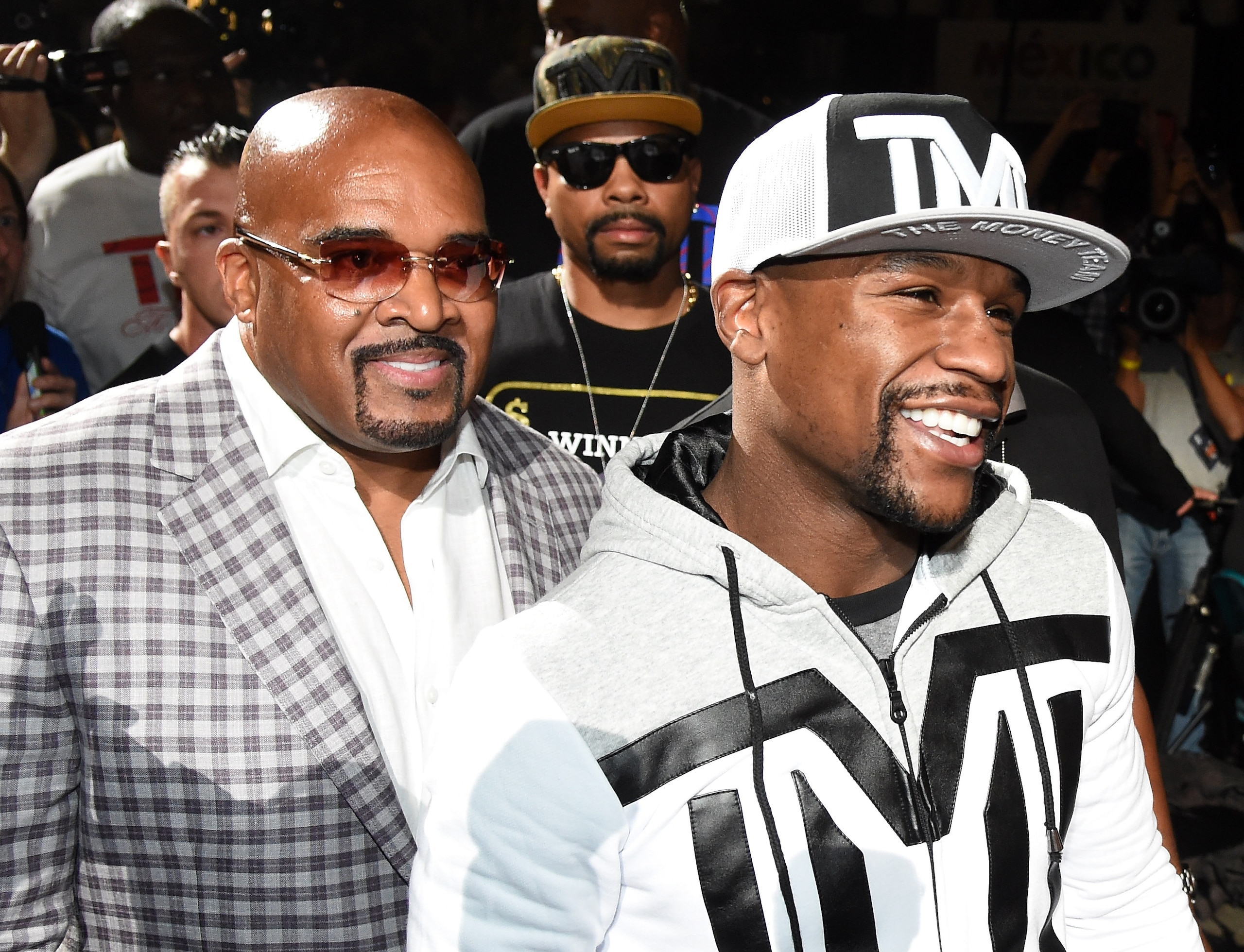
As the end of De La Hoya's career approached, the Golden Boy built an eponymous fight promotion to guarantee his future in the sport he loved. It was a brilliant success, leveraging De La Hoya's good name to attract a number of top fighters and eventually becoming an industry mainstay.
Mayweather Promotions, founded in 2007, was supposed to do the same for Floyd. Instead, it's languished. When Mayweather hangs up his gloves after this fight, his consigliere Leonard Ellerbe will have signed a grand total of zero stars capable of operating independently.
In most businesses he'd be replaced by someone who could move the enterprise forward. But Ellerbe has proved himself to Mayweather beyond the boardroom, even allegedly taking a beating when a business negotiation with rap mogul James Prince (warning: strong language) turned contentious.
Ellerbe is all but family—and for Mayweather, family matters.
F: Floyd Sr.
6 of 26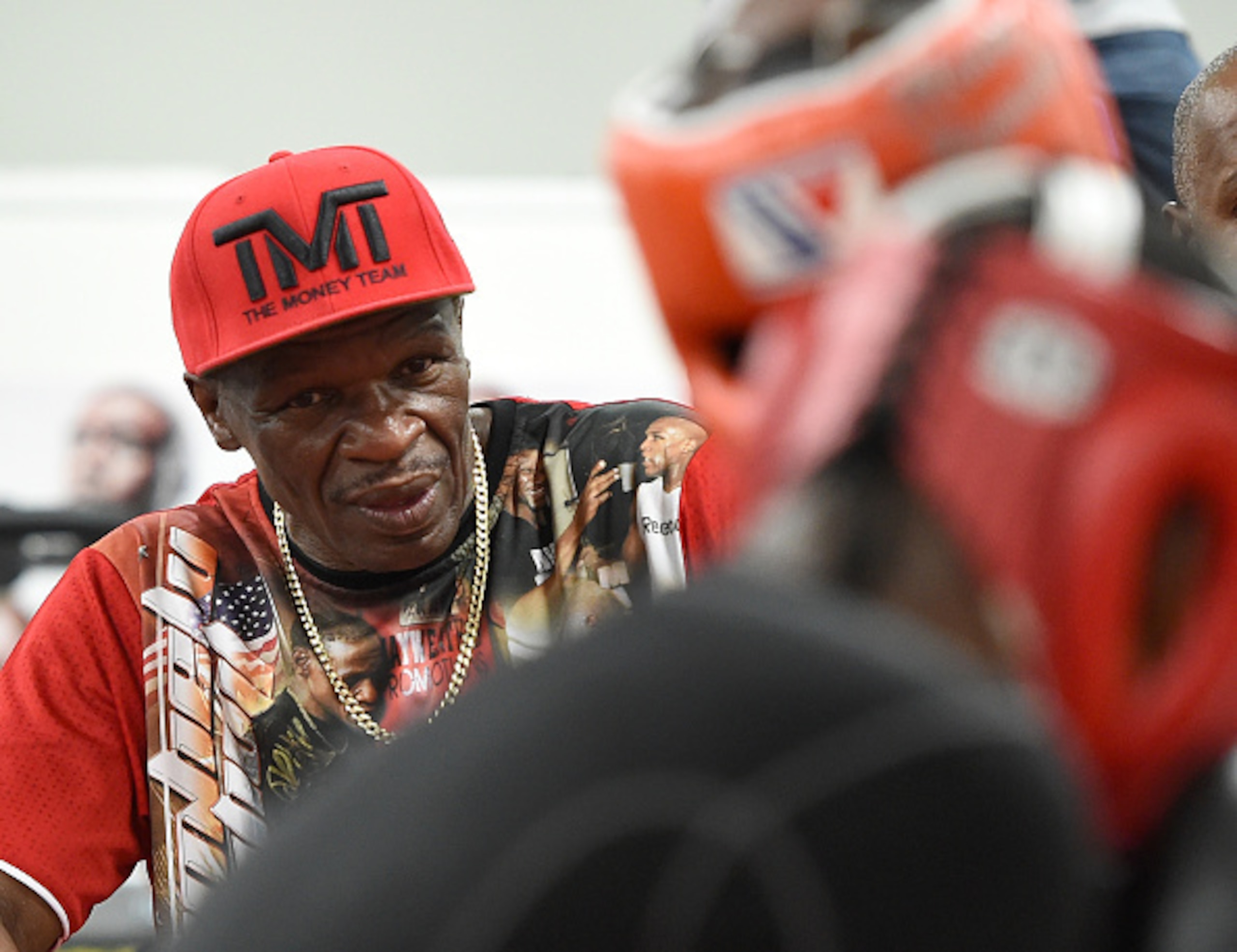
Floyd Mayweather Jr. is often presented as a virtuoso, a genius of the ring with a natural flair for fighting. That is a disservice, both to Floyd and to his trainers, notably his father, Floyd Mayweather Sr.
If his son is the best fighter of all time, Senior believes that makes him the best trainer ever. He even composed a poem for a press conference, captured by the New Yorker, explaining his place in boxing history:
"As a trainer, I’m the best
"
I must confess
All the rest
There’s no contest
I will shock your mind
I’m one of a kind
I’m the greatest trainer of all time
With moves and grooves that dance and prance
You fools better recognize who’s the man.
G: Gatti, Arturo
7 of 26
The late Arturo Gatti is beloved. He was almost the anti-Mayweather in many ways, and his epic fights with Micky Ward reinvented blood-and-guts boxing for a new generation of fans.
As those fights settle into memory and history, it's easy to forget what Gatti truly was—a lesson Mayweather himself taught a begrudging boxing world over six brutal rounds.
Gatti and Ward were brave warriors who were willing to trade their well-being for a moment of glory. Mayweather is a genius. These two things don't mix well. Maybe they shouldn't.
The gap in skill between Gatti and Mayweather was nearly immeasurable. Mayweather told anyone who would listen as much before the fight, calling Gatti a "club fighter." While Mayweather tried to make nice after the fight, by then it was too late. Never beloved, he was well on his way to being the biggest villain in the game.
H: Home
8 of 26(Warning: Video contains strong language.)
Floyd may split his time between Miami and Las Vegas, living the high life as only he can. But his roots, in the "Furniture Capital of the World" Grand Rapids, Michigan, are more modest.
Mayweather’s childhood wasn't easy. His mother Deborah fell into drug addiction. His aunt died of AIDS. His father was shot in the leg while using young Floyd as a human shield. Almost unthinkable poverty and degradation hung over everything he did like a dark cloud.
Boxing, for Mayweather, proved to be an escape from the bad hand that life had dealt him. So when you see him flaunting his wealth in absurd ways—like a collection of more than 100 expensive watches—know that things weren't always so good.
I: Illegal Drug Trafficking
9 of 26Mayweather has never been connected to recreational drugs, even in whispers. But that doesn't mean drugs haven't had an enormous impact on his life.
In 1993 his father was sentenced to five-and-a-half years in prison on a drug offense—a failed attempt at creating a better life for his 16-year-old son.
"I wanted to cry, seeing him like that," Mayweather told the New York Times. "But I was supposed to be a man. So I didn't.''
Left to navigate the world of amateur boxing alone, Little Floyd managed to earn a bronze medal at the 1996 Olympics. Senior, still incarcerated at the time, didn't see it—he wasn't able to get to a television set.
J: Judah, Zab
10 of 26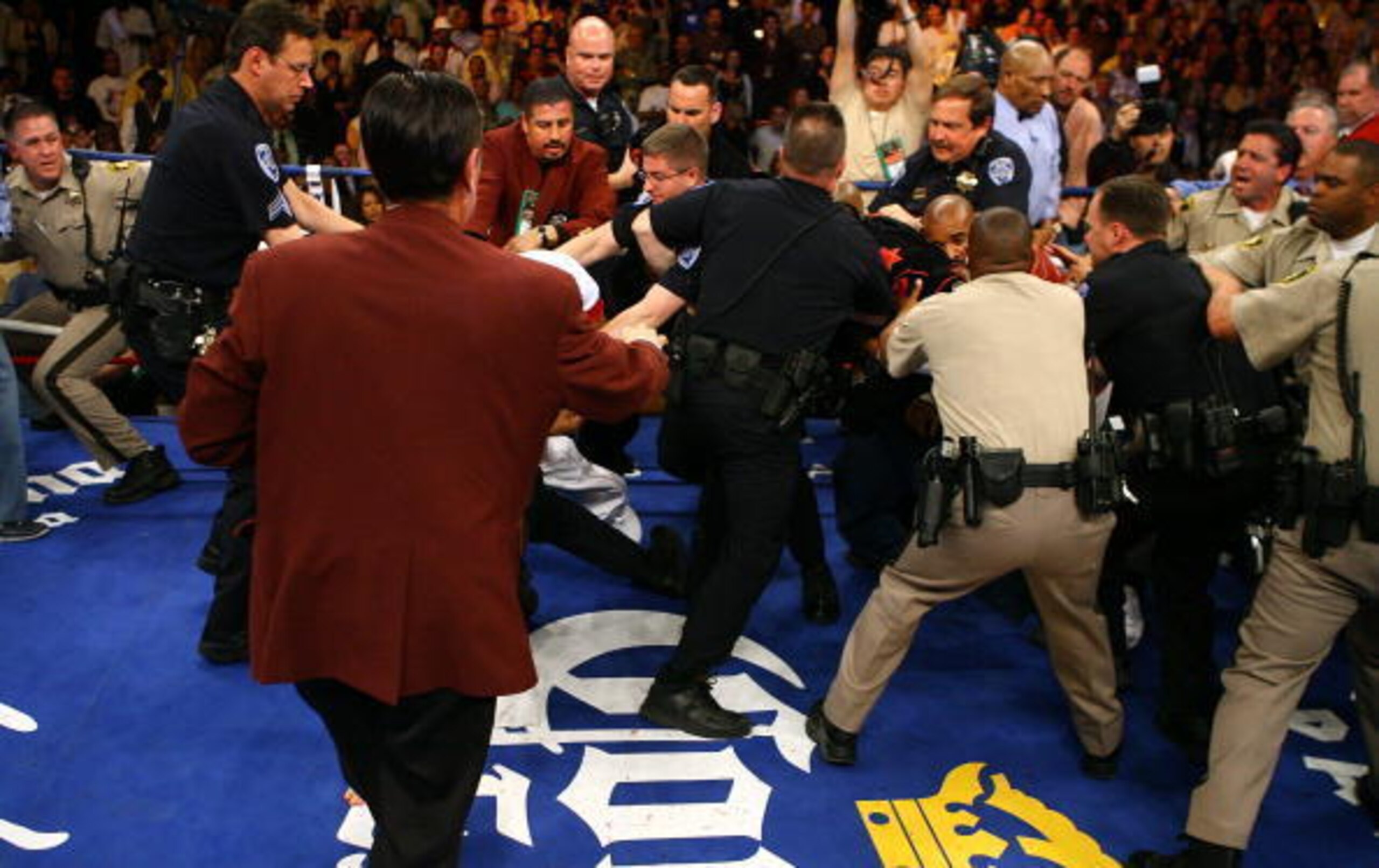
For Floyd Mayweather, looking at Zab Judah must have been very much like looking into a mirror. From the Brownsville section of Brooklyn, New York, Zab was, like Floyd, trained by his father. Judah was, like Floyd, known for fast hands and a hot temper.
But while Mayweather would ultimately rise to the loftiest heights, Judah never quite rose beyond the second tier. Judah, like many athletes who fail to reach their potential, often fought to the level of his competition. With that in mind, it should be no surprise that Judah gave Floyd one of his most competitive and difficult fights in 2006.
Though Mayweather eventually gained control, a loss of it nearly doomed his undefeated record. Toward the end of Round 10, Judah landed a low blow, which prompted Floyd's uncle and trainer Roger Mayweather to enter the ring and initiate a brawl. As the ring filled up with combatants, the fight could have easily been stopped and Mayweather disqualified.
Instead, the melee was stopped, and the fight was allowed to continue. Mayweather dodged a bullet—and Judah lost both a fight and a chance to make history in what would have been one of the most infamous endings in modern boxing history.
K: Karina
11 of 26Mayweather's fancy footwork, so important to his success in the ring, didn't quite translate to the dance floor. But though he and his partner Karina Smirnoff were eliminated early in the competition back in 2007, Dancing with the Stars was an unqualified success for Mayweather.
Unlike his appearances in the ring, Dancing with the Stars was never just about winning. He'd won the moment he was included on a mainstream show featuring ubiquitous pop culture personalities. It was a clear sign to the broader world that Mayweather had officially emerged from boxing's shrinking shadow and become a legitimate force in the culture.
L: Lineal
12 of 26
The concept of the lineal title is as old as boxing itself. And, though it's perhaps an artificial construct, it still matters. Professional wrestler Ric Flair put it best.
"To be the man," he said. "You've got to beat the man. And brother? I'm the man."
While Floyd has a long way to go in order to match Flair's 16 title reigns, he has won lineal title belts in four divisions. What that means, historically, is open to debate. Some of these lineal titles came in fights he’s often been mocked for.
Carlos Baldomir was the legitimate welterweight champion once. Really! Baldomir!
But no matter how it looks in proper context, winning a lineal title is an important line item on a resume. It puts Mayweather at the table with other all-time greats. Where he's seated, of course, boils down to personal opinion. May the arguments commence!
M: Manny
13 of 26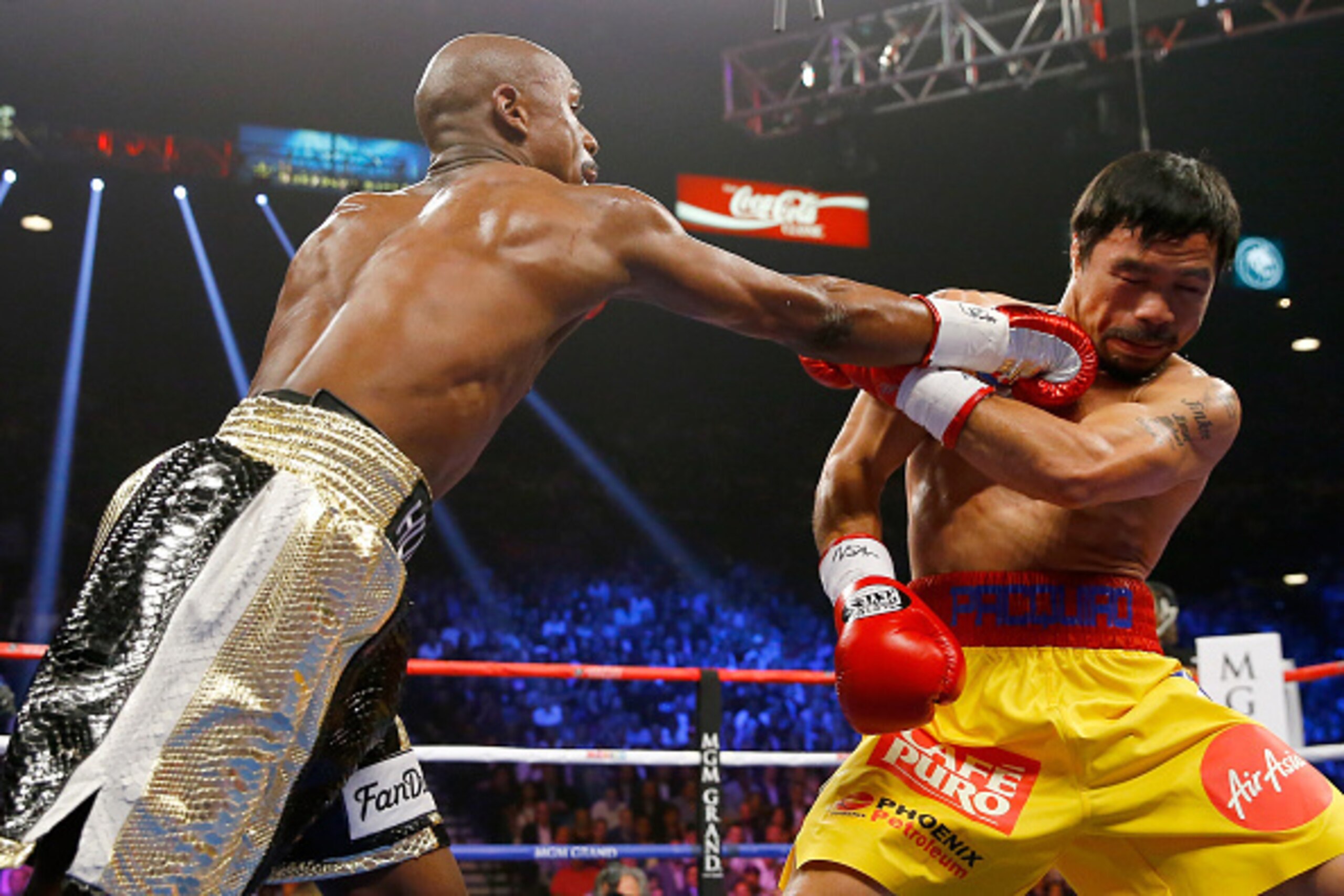
The fight of the decade, despite unprecedented economic success, still bothers boxing fans—and it should. For almost 10 years the two best fighters in the world circled each other, occupying the same space but never the same ring.
It was, in the insular world of athletics at least, a minor tragedy. And so it remains.
Sure, Mayweather finally beating Manny Pacquiao matters. It's the final stamp on his passport to greatness. It's also fraudulent—a smoke-and-mirrors accomplishment that, athletically, means very little.
Pacquiao, by the time Mayweather got his hands on him, was a ghost of the fighter he had once been. Instead of a thrilling contest between fighters at their apex, we got a bout between two fighters on the fast track to retirement.
While that's better than nothing, we deserved better. And you know what? So did they.
N: Numero Uno
14 of 26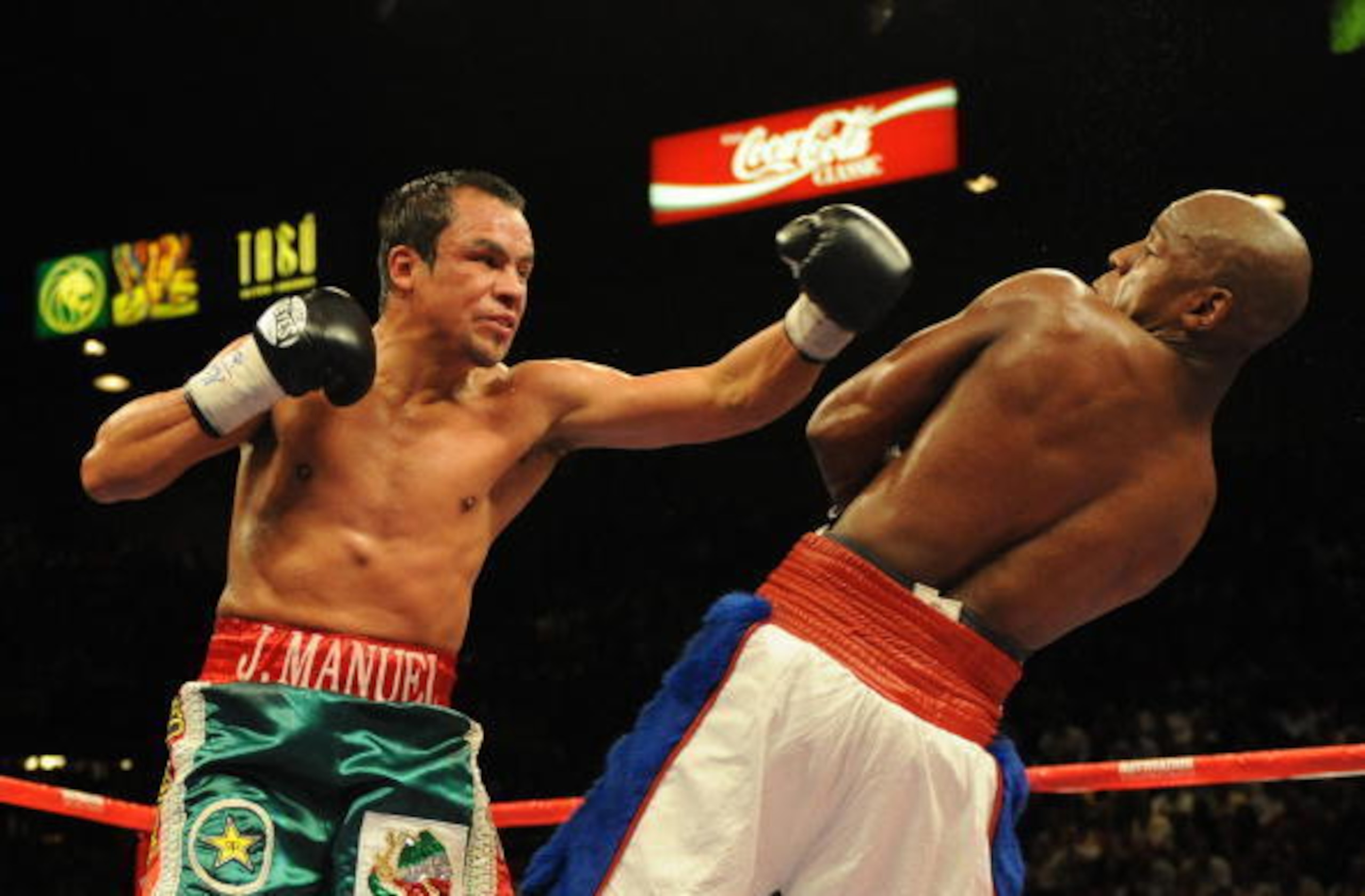
When Mayweather walks away following his bout with Berto, it won't be for the first time. After his win against Ricky Hatton in 2007, Floyd called it a career and entered his first retirement.
It wouldn't last.
Twenty-one months later he was back, returning to the ring, rust be darned, against surefire Hall of Famer Juan Manuel Marquez.
Floyd practically blanked Marquez, winning almost every second of every round. Just as importantly, it was also a huge success on PPV—Floyd's first 1 million buy event as the main star. No longer reliant on others to attract a crowd, Mayweather finally assumed a role that today seems self-evident—that of boxing's top star.
O: Olympics
15 of 26At the 1996 Olympics, corrupt judges did something no boxer has been able to do since. They beat Floyd Mayweather.
Officially, Serafim Todorov was the man who got the job done. The decision was booed by the crowd and widely derided by every observer. One disgusted American official even resigned in protest.
For Todorov, there was no happy ending. After going on to lose the final and take home a silver medal, his career entered a death spiral. He lost only his second pro bout, against a Macedonian fighter in Macedonia, and ultimately retired after just six professional bouts.
P: Puerto Rico
16 of 26On January 22, 2005, Mayweather faced one of the more nondescript opponents of his career. Puerto Rican Henry Bruseles wasn’t much of a name and wasn't ranked highly by anyone. Bruseles was, however, trained by Evangelista Cotto and was Miguel Cotto’s chief sparring partner.
Mayweather embarrassed Bruseles and won by eighth-round knockout—and may very well have killed a potential fight with Cotto at the time. The young star wasn't ready back then, and Mayweather's dismantling of his stablemate proved it.
Seven years later the two would finally meet. Unfortunately, Cotto had put a lot of wear on his tires in that time, going from rising star to falling star while Mayweather remained, well, Mayweather. Though he fared better than Bruseles had, Cotto lost a lopsided decision to The Best Ever.
Q: Quickness
17 of 26Mayweather’s hand speed is no myth. It really is phenomenal. Few fighters he’s ever faced have been able to approximate it, let alone match it.
His foot speed, however, is a different matter entirely. Floyd is considered by many casual fans to be a bit of a runner. But as the years have passed, Mayweather has generally stood his ground or even walked fighters down, no longer having the desire or ability to get on his bicycle and stay on it.
Against Cotto, Hatton and Marcos Maidana, he even ended up needing to work off the ropes. Floyd’s incredibly tight defensive posture and ability to predict how his opponent will attack have made it so tough to hit him that is just seems like he's running.
R: Reality TV
18 of 26Together with the team at HBO Sports, Mayweather reinvented how boxing is sold, blowing the previous promotional paradigm to smithereens. Through 24/7, fans were given unprecedented access, both to his training and his life.
Former HBO Sports president Ross Greenburg told USA Today:
"From the first 24/7, we knew we had a reality superstar on our hands in Floyd Mayweather. It was clear that he had not only a charismatic personality but a controversial lifestyle, and it was just scintillating television. Little did I know when we entitled it 24/7 that Floyd would have us waking up crews at 1:30 in the morning to rush out to the all-night gym to watch him work from 2 until 4 in the morning.
"
Suddenly, Mayweather was more than just the world's best boxer. He was a persona. The result was a revelation—and a creative triumph.
S: Sucker Punch
19 of 26
We've all heard the laments, whether coming from sports talk radio or retired players talking longingly about the good old days. Today's athletes, you see, are too friendly during competition, slapping hands, smiling and even hugging in a manner that makes many teeth grittingly uncomfortable.
Mayweather doesn't play that. When Victor Ortiz went for one too many bro hugs in their 2011 bout, Mayweather hit him with two punches that left the challenger on the canvas.
It was an important lesson many young boxers should take to heart. When the referee says "protect yourself at all times," he's not just whistling "Dixie."
T: TBE
20 of 26In some ways, boxing seems crushed under the weight of its history. The halcyon days of the sport produced major crossover stars, fighters as popular as any athletes alive. No one fighting today lives up to their standard. No one could.
Henry Armstrong fought 181 times as a pro. Sugar Ray Robinson stepped into the ring 200 times and Willie Pep 241. When Mayweather is measured against the best of them all, he pits his meager 48 victories against these unfathomable records.
Boxing is so different today that direct comparisons are all but impossible. Floyd, if he does retire, will likely do so undefeated, with wins against most of the top fighters of his era between 135 and 147 pounds. Whether that's enough to make him "the best ever" is a subjective question. He's provided all the answers he possibly could.
U: Uncle
21 of 26
When Floyd Senior was sent to prison, his brother, former WBC junior welterweight champion Roger "The Black Mamba" Mayweather, took over Junior's training and, with the exception of a two-year period after Floyd Sr.'s release from prison in 1998, has been the driving force behind his nephew's career ever since.
For most of Floyd’s career, it has been his uncle, not his father, heading up his corner and preparing him for battle against the best fighters in the world. That fact hasn't always sit well with Senior, who barely speaks to his brother.
In recent years, however, Floyd has tried to bring the two older men together the only way he knows how—through boxing.
"The arguments we had in the past or the differences my dad and my uncle had in the past—that's the past," Mayweather said in a 2013 conference call. "That's why we call it the past because we try to leave that in the past and focus on the future and the future should be bright. And at this point in time, everything is going the way it should go."
V: Violence
22 of 26For years Mayweather's history with violence was mostly swept under the rug—just another bad apple in a sport rotten to the core. That all changed with a 2014 article by Deadspin's Daniel Roberts.
While the press had covered his previous criminality, Roberts was the first to put it in context, showing not just a collection of isolated incidents but a pattern of misbehavior that couldn't be denied. He explained, in the starkest terms, both who Mayweather is as a person and why it matters:
"Floyd Mayweather is a misogynist. And not just a misogynist, but a batterer, and a serial batterer at that. This is a statement of fact that you will rarely see or hear from the professional boxing media, many of whom remain hopelessly dependent on the reigning box office king’s goodwill for access. It’s certainly not one you will hear from any of the assembled talking heads on Showtime, the CBS-owned cable network to which Mayweather is contractually wed. And while it may be easy enough to guess why the boxing media has been so willing to cover for Mayweather’s sins, it’s less obvious why so many others are so willing to look the other way.
"
Roberts' editorial was nothing less than a call to action. And across the blogosphere, others took note. Today it's impossible to think about Mayweather's graceful violence inside the ring without also grappling with his awful violence outside of it.
W: WWE
23 of 26
Mayweather was hardly the first boxing superstar to get involved in the colorful world of professional wrestling. From Jack Dempsey to Muhammad Ali to Mike Tyson, few top pugilists could avoid wrestling's siren song—or its easy paycheck.
Mayweather did break from tradition in one important way. In the past, the boxer mixing it up in the wrestling ring was almost always a former heavyweight champion. When Mayweather looked up at the Big Show at WrestleMania 24, boxing's transformation had never been clearer. It was a little man's sport and likely would be for the rest of its history.
X: X-Factor
24 of 26
Boxing history is littered with crafty, defense-obsessed fighters. Most famous, perhaps, was the great Willie Pep, who was said to have once won a round without throwing a single punch.
Mayweather is no Pep. When he gets hit, he always fires back, never wanting to let his opponent get any momentum. But he's most certainly a defense-first fighter in a world that doesn't typically reward that at the box office.
Somehow, despite this, he has managed to attract an audience and draw dollars.
How to explain it?
You can't. Not without invoking alchemy, witchcraft and other ancient arts. There's no reason Mayweather should be boxing's biggest star. And, yet, here he is.
Y: Yawn
25 of 26
Boxing is the art of hitting and not getting hit. It's what Mayweather does better than anyone.
Fighting is the art of trading blows in a display of machismo and pride. We may never know if he's a master of that craft as well.
Floyd is excellent at boxing. Fans, however, want to see how he does in a fight, and they’ve been disappointed repeatedly throughout the years that no one was really able to put him in one. Jose Luis Castillo came the closest, and many who’ve seen the first fight between the two men contend he was the rightful victor.
But that April 2002 fight was an aberration. Since then, except in isolated incidents, Mayweather’s ability to negate and frustrate the opposition has been unshakable. It's excellence, but excellence that comes with the harshest tag of all—boring. And it's a tag he’s never shown any interest in shaking.
Z: Zero
26 of 26
Most great athletes are defined by winning—the triumphant moment when they are definitively the better man.
For Mayweather, victory has never mattered. His emphasis for years has instead been on avoiding defeat. It may sound like semantics, but they are not the same thing.
It's a difference that explains everything—why he waited so long to fight Miguel Cotto, Shane Mosley and Manny Pacquiao—and why he's fighting Andre Berto on Saturday.
A different kind of man might have challenged Gennady Golovkin in his final bout, intent on going out with a great win. But Mayweather would prefer to go out, not in attaining glorious victory but merely by avoiding defeat.



.jpg?w=2560 "Weather Channel Trolls Texans-Titans 💀")

.jpg?w=2560 "Grading WWE Raw 🔠")