

Mercedes W06 Can Cement Status as an All-Time Great F1 Car at 2015 Italian GP
Having made it to the light at the end of the tunnel, Jenson Button knew he had a special car and was on course for a strong season. But just how special, and just how strong?
Only three days after confirming their participation in the 2009 Formula One campaign, the remains of the Honda team, Brawn GP, joined their fellow competitors at the Circuit de Catalunya for some much-needed testing ahead of the first race in Australia.
While their rivals were in the midst of their winter preparations, Brawn—as noted by Button in his book, My Championship Year—conducted an initial run of five laps of the Barcelona track to provide their lead driver with some initial impressions.
TOP NEWS

J-Dub Suffers Gruesome Injury

NFL Takeaways: J.J. McCarthy makes statement
Watch: Garrett Wilson Heated at Geno
Within two laps behind the wheel of the BGP 001, however, Button was convinced.
He "had the biggest smile on [his] face" and was reflecting on a car with "no areas" to improve. But it was not until his race engineer, Andrew Shovlin, offered the cold, hard numbers that Button could truly comprehend the potential of his machinery.
"You are six tenths quicker than anyone and they've been testing for four months," Shovlin announced, per the same source.
The story of Brawn, who won six of the first seven races to win the world championships less than a year after the team's very existence was in grave danger, is often regarded as a one-off, the closest Formula One will ever get to a fairytale.
Yet every team to have created a dominant car in the history of grand prix racing have at some point—be it in testing, practice, qualifying or in the heat of a race—experienced a moment and emotions similar to the phenomenon Button and his colleagues felt on that March morning.

The discovery of heaven on Earth, the near-perfect machine. The feeling of complete control and smug satisfaction. The sense of anticipation, excitement and opportunity.
And the comforting knowledge that the opposition, no matter what they try, will never come close.
Take, for instance, Sebastian Vettel's comfortable pole-to-flag victory in the 2011 Australian Grand Prix, after which Christian Horner, the Red Bull team boss, told BBC Sport how the RB7 chassis was running without the power-boosting KERS unit.
Two years later at Singapore, the German had the audacity to sit out the final minutes of qualifying yet still retained pole position, before pulling away from the field at a rate of more than "two seconds a lap" the following night, as reported by Sky Sports' James Galloway.
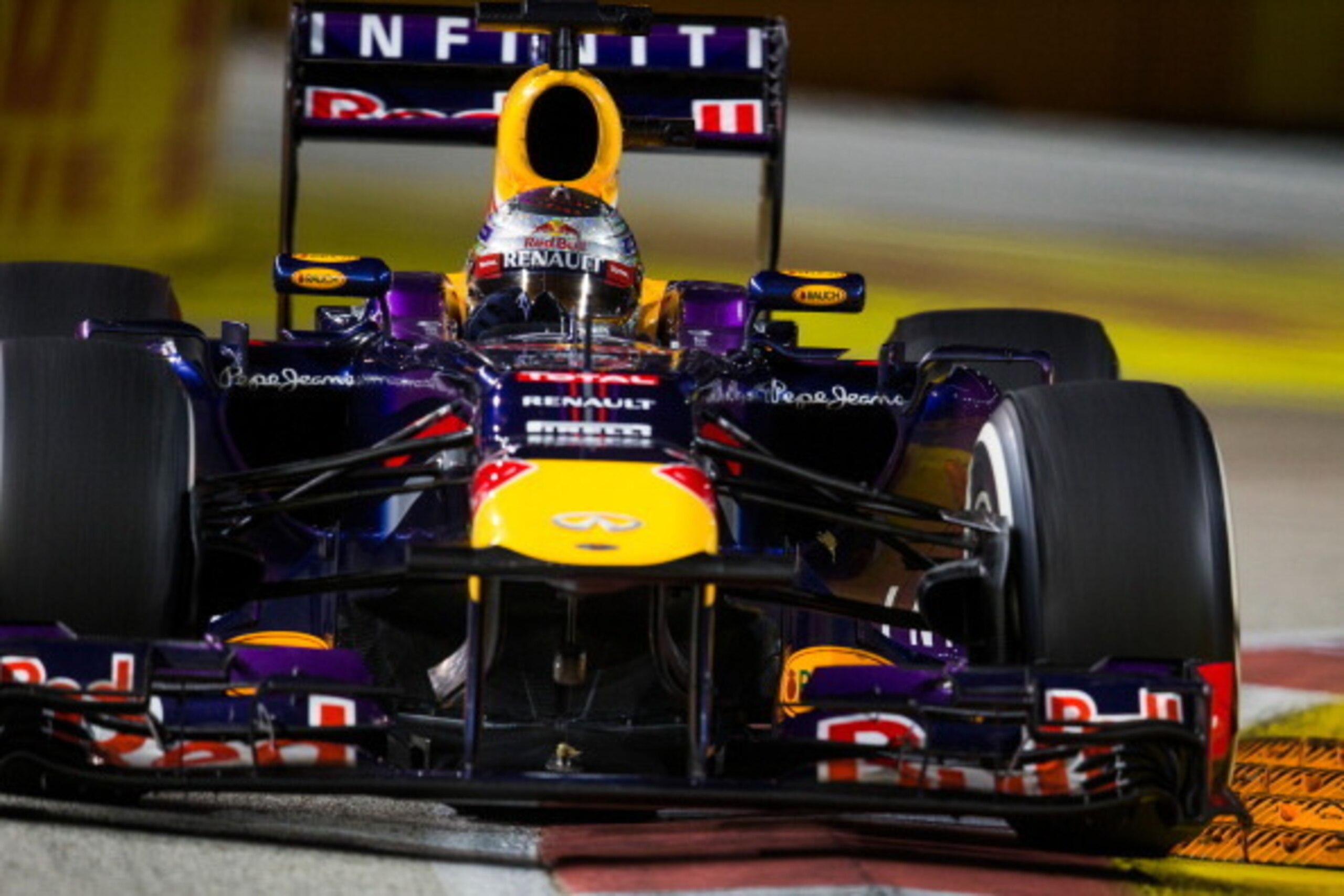
Vettel's dominance at Marina Bay was such that Giancarlo Minardi, the former team owner, speculated via his personal website that Red Bull's RB9 may have contained a system akin to traction control.
And in 2014, the true pace of the Mercedes W05 Hybrid became abundantly clear following the safety car period in Bahrain, with Lewis Hamilton and Nico Rosberg establishing a gap of 24 seconds over the remaining 10 laps, per BBC Sport, despite both drivers racing wheel-to-wheel for victory.
The W05, of course, will be remembered as one of the most dominant racing cars of this or any generation, having claimed all but one pole position and won 16 of last season's 19 races.
This year's W06, due to the stability of the technical regulations, is viewed as an evolution of the W05 and has filled the cracks left behind, with faultless qualifying and reliability records in the first 11 races of 2015.
Although it is on course to match or even surpass its predecessor's achievements, the W06—despite a number of dominant displays in winter testing and, in particular, races in Australia and Canada—has lacked a defining, take-your-breath-away performance that characterises truly great cars.
But that may be set to change at this weekend's Italian Grand Prix.
Mercedes' decision to spend all seven of their remaining engine-development tokens, as reported by Motorsport.com's Jonathan Noble, was a bold move given the power-dependent nature of the Monza circuit and the contrasting philosophy adopted by their rival manufacturers—Ferrari, Renault and Honda—who have all taken incremental steps when introducing upgrades to their respective power units.
Noble claims the significant update was made with 2016 in mind, affording the team "further scope to improve for next year."
Yet it carries a huge element of risk in an era when relatively minor changes to the design of the powertrain—as we noted after Vettel's qualifying woes in Canada, where Ferrari used just three tokens—can disturb an engine's equilibrium and (initially at least) cause more harm than good.
The Silver Arrows' bravery, then, is not only a reflection of their comfort from a championship perspective—Mercedes are currently 184 points ahead of Ferrari, while Hamilton has a 67-point advantage over third-placed Vettel—but their confidence in Mercedes High Performance Powertrains, the team's engine division, to get it right.
That confidence was translated to the track in practice, where Mercedes—using only their third engine of the season—fired the most ominous of warning signs.
In Ferrari's backyard, Hamilton's pace-setting FP1 time of one minute, 24.670 seconds, according to the official F1 website, was 1.588 seconds faster than Vettel—who couldn't get within touching distance of Rosberg despite the latter being 0.463 seconds adrift of his team-mate.
Mercedes continued their form into the second practice session, with Hamilton 0.759 seconds ahead of Vettel, per the same source, before telling the team's official website how he "didn't particularly hook up the first two sectors of the lap," adding that there is even more "pace to find."
Should the team maintain their speed advantage—and, crucially, remain reliable—there is a strong possibility that this could become a landmark weekend for Mercedes, the defining grand prix of their time at the summit of the sport.
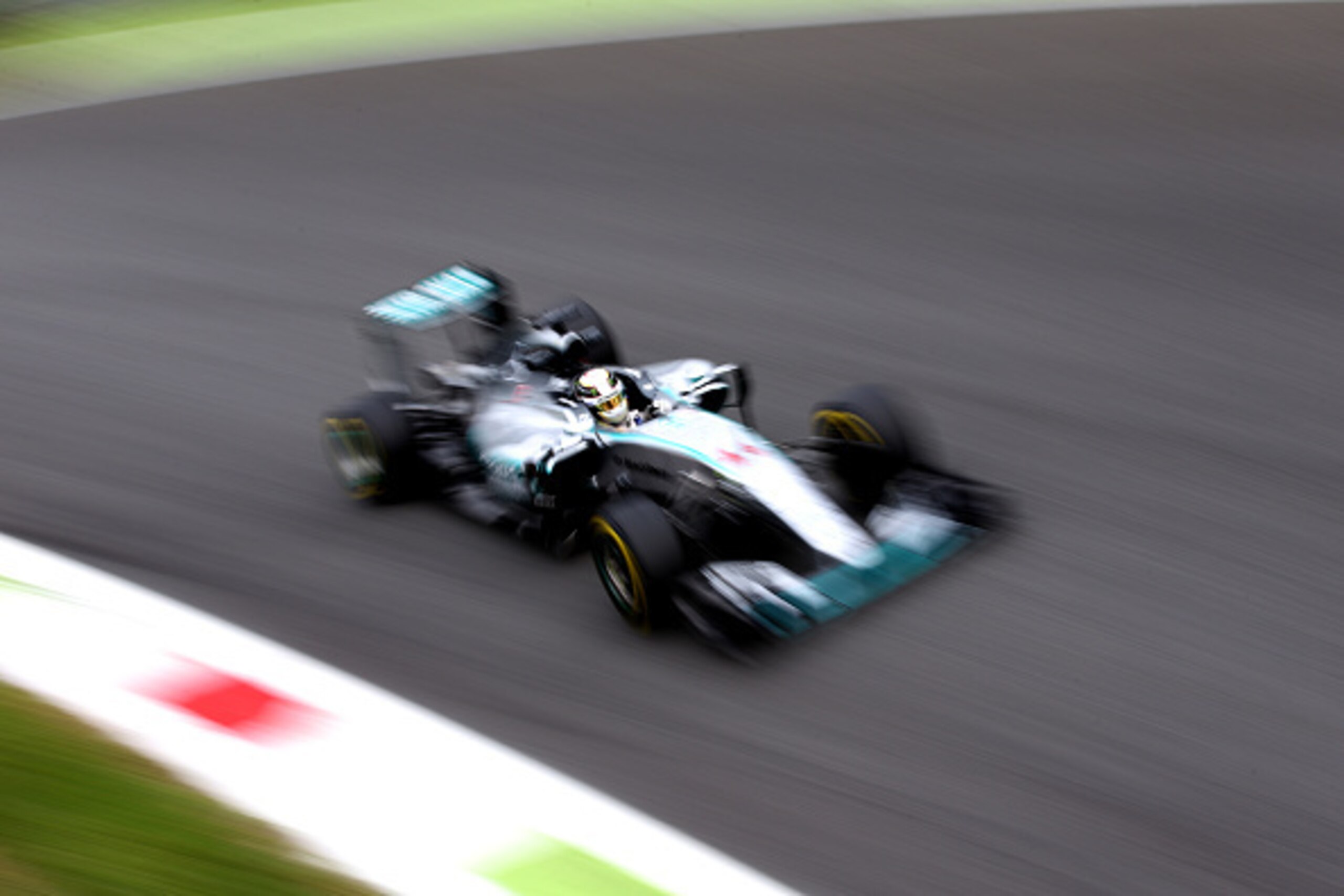
Perhaps it's because it's a continuation of last year's car, or maybe it's down to the fact that it contributed to Mercedes losing in a straight fight for the first time since 2013 in March's Malaysian Grand Prix, but the W06 seems to have spent much of its life burdened by its older brother.
At Monza, however, the W06 can step out of the shadow of its predecessor and become an all-time great F1 car in its own right.
.jpg?w=2560 "Rams Raiders Football")


.jpg?w=2560 "Rodgers Iced Out on Plane 💎")

.jpg?w=2560 "Big Trade to Shake Up East 💡")