

How Nick Saban's 2000 LSU Peach Bowl Team Helped Set Up the Alabama Dynasty
ATLANTA — Could a non-BCS bowl game played eight years prior to Nick Saban's first SEC West title at Alabama provide the foundation for the Crimson Tide dynasty?
One certainly had an impact.
Saban's first LSU team in 2000 topped Georgia Tech 28-14 in the Peach Bowl, capping off an 8-4 season that set up the Tigers for an SEC title run in 2001.
TOP NEWS

Week 5 AP Top 25 Poll 🔢

Updated CFP Bracket Projections 🔮
Top Overreactions after Week 5 of CFB Season 😧

It seems crazy considering how much Saban's coaching star has risen since, but it took a lot of work and some lobbying from Saban to get his Tigers into that bowl game in the first place.
"In 2000, [Saban] called me when he was the head coach of LSU," said Chick-fil-A Peach Bowl president Gary Stokan, who is a friend of Saban. "He said, 'Gary, we have got to get to your bowl game. It's the best bowl game we can get to, we need to start to change the culture around here.' It's the only time I met with the chancellor. Mark Emmert was the chancellor at LSU, and I met with him and Nick."
Saban wanted the Peach Bowl badly due to its unopposed New Year's Eve time slot on ESPN and its location in the fertile recruiting ground of Atlanta.
"I go back a month later to see Nick," Stokan explained, "and he says, 'Everybody that we signed this year in the recruiting class watched that game. They signed because they liked what they saw. We closed on every single one of them.' That team [that signed] was the one that helped LSU win the 2003 national championship."
Fast forward eight years, and Saban again saw opportunity knocking in Atlanta.
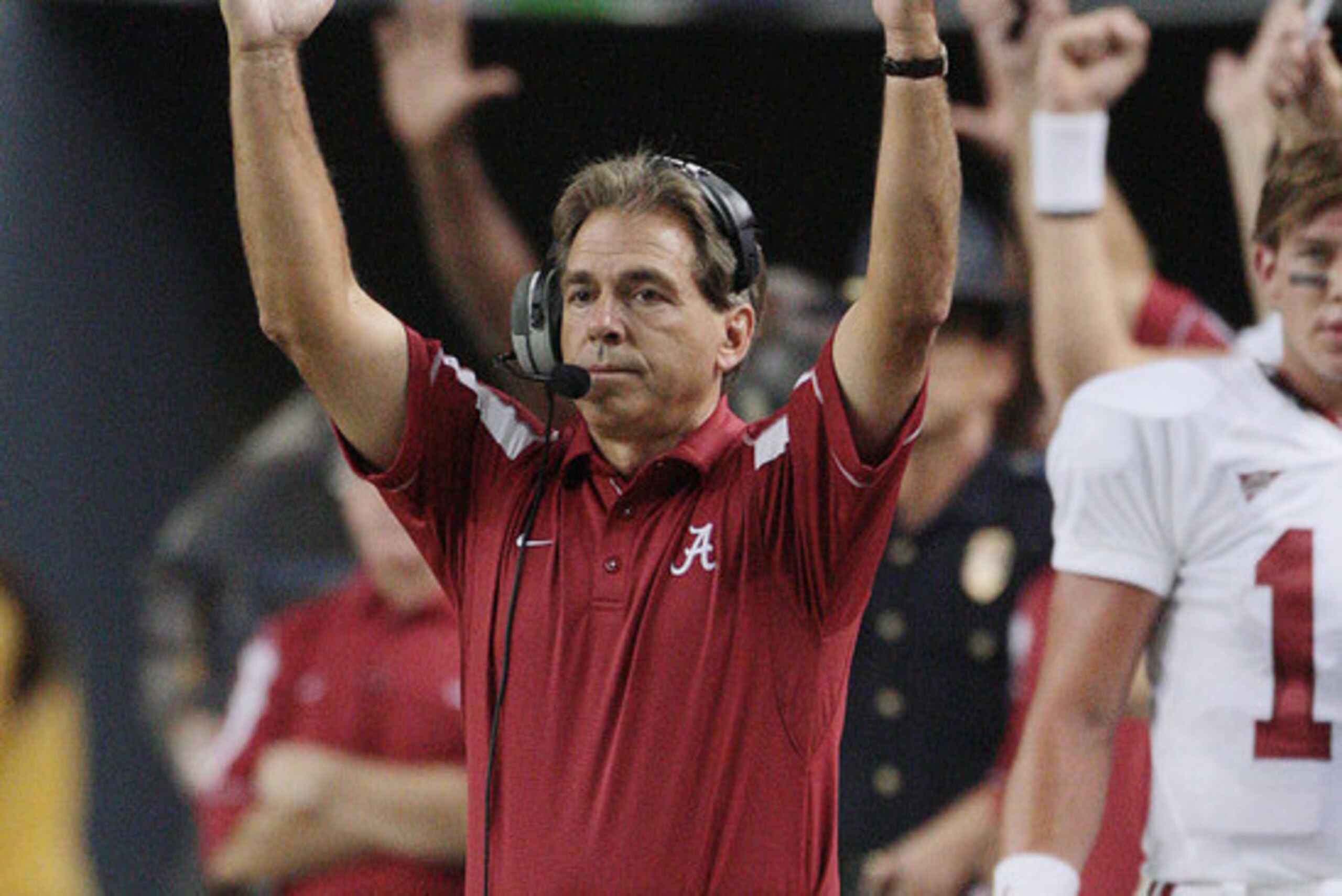
The NCAA passed legislation in 2005 that allowed schools to schedule a 12th regular-season game effective in 2006. Stokan, whose Chick-fil-A Peach Bowl was steadily climbing to become one of the more prominent non-BCS bowls due in part to the reasons Saban wanted to play in it in 2000, began brainstorming on how to capitalize on an extra game.
Because of the addition of the 12th game, the Chick-fil-A Kickoff Game was born.
But where would Stokan turn to fill the slot in 2008? He already had Clemson on board, Alabama was interested and Stokan wanted to replicate the traditional ACC vs. SEC matchup that had helped the postseason bowl game ascend to its current level.
"When I called [Nick] about 2008, I said 'Nick we're doing this kickoff game, we'd love to have you come over and play against Clemson,'" Stokan said. "He was coming off a 7-6 season and had lost to Louisiana-Monroe. He said, 'OK, I'll do it. You helped me out, I'll do it."'

Saban's reasoning was simple.
When the game was announced in January 2008, Clemson was coming off an overtime loss to Auburn in the bowl game but expected to contend for the ACC and national titles in the upcoming season. It'd be a huge test to open his second season in Tuscaloosa, but it would serve as a massive benefit to the future of the program.
"He did it for all the right reasons for Alabama—the payout and the opportunity to play a good Clemson team would help them, but he also said, 'If I can finish No. 1 in Alabama in recruiting and second in Georgia, we'll play for national championships,'" Stokan said.
Saban's 24th-ranked Crimson Tide knocked that opportunity out of the park.
They throttled No. 9 Clemson 34-10 on prime time on ABC in that inaugural Chick-fil-A Kickoff Game and set the tone for an undefeated regular season, SEC West title and a return trip to Atlanta to take on Florida in the SEC Championship Game.
"It gave us reassurance that we could contend with anyone," said former Crimson Tide quarterback and current SEC Network analyst Greg McElroy, who was a sophomore on that 2008 team. "Coach Saban was always preaching the process and the importance of preparation. We wanted to leave no doubt."
It also reassured the players that what Saban was selling was working.
"He always says, 'Everybody has sight, but very few people have vision,'" said former wide receiver Brandon Gibson, who was a redshirt freshman in 2008. "He set the vision for us and said that we'd win national championships if we did the right things and bought into the process. Beating Clemson in the way that we did, that was just the first step."
They fell to the Gators in that SEC Championship Game but kept momentum going in February by reeling in the nation's second-best recruiting class.
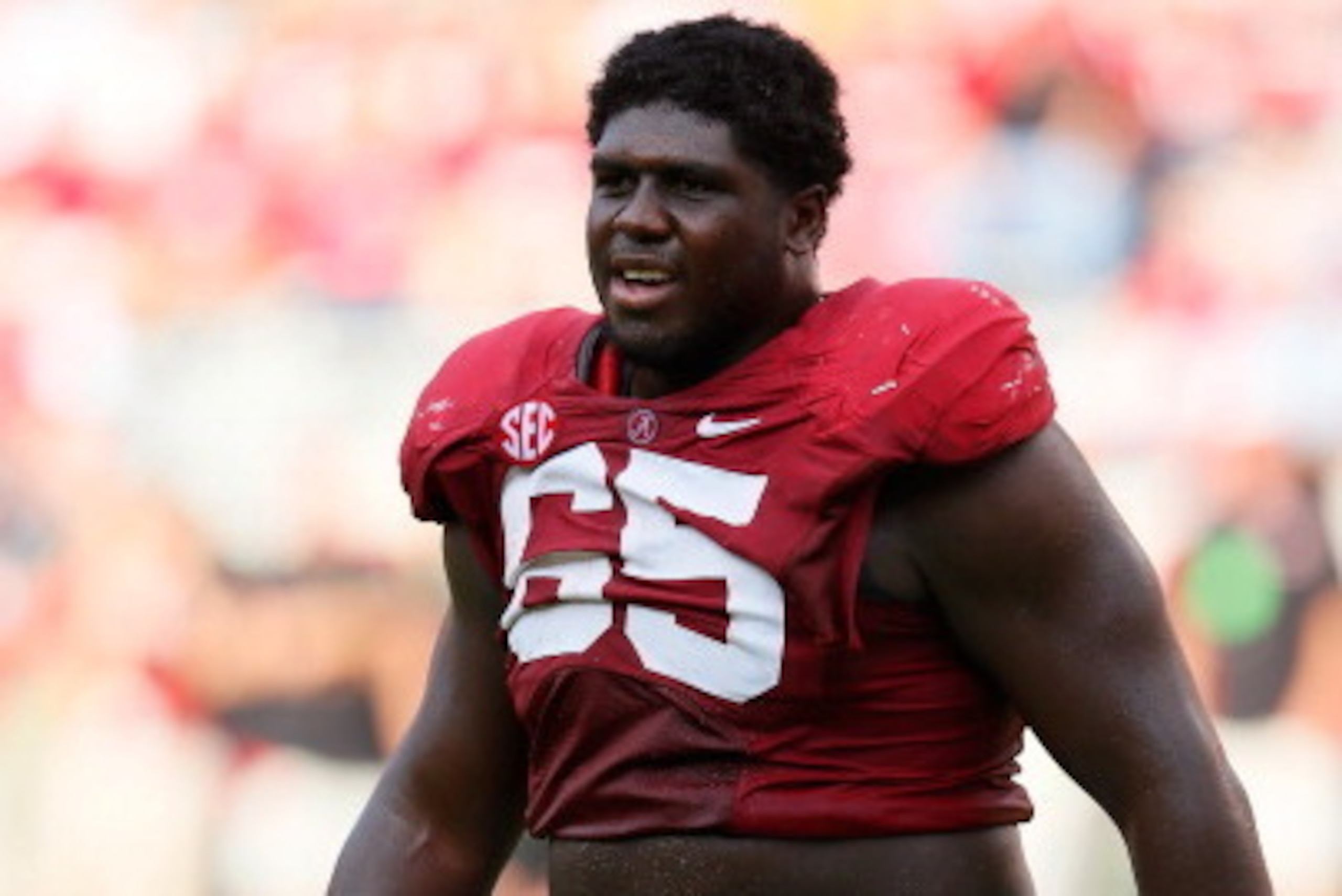
That class included offensive guard and Georgia native Chance Warmack, who was a big part of the Tide's title run. He followed it up with another stellar recruiting class the following year that included linebacker Adrian Hubbard, tight end Brian Vogler, quarterback Blake Sims and offensive tackle Austin Shepherd—all Peach State products.
"We're recruiting Atlanta because it's three hours away and they've got a lot of great football players and a lot of good football programs," Saban said in September 2008, according to Gentry Estes, formerly of the Huntsville Times. "Georgia is fourth (nationally), I think, maybe in prospects, and it's relatively close to us."
| 2008 | Atlanta, Georgia | Clemson |
| 2009 | Atlanta, Georgia | Virginia Tech |
| 2012 | Arlington, Texas | Michigan |
| 2013 | Atlanta, Georgia | Virginia Tech |
| 2014 | Atlanta, Georgia | West Virginia |
| 2015 | Arlington, Texas | Wisconsin |
| 2016 | Arlington, Texas | USC |
| 2017 | Atlanta, Georgia | Florida State |
| 2018 | Orlando, Florida | Louisville |
What seemed like a meaningless LSU vs. Georgia Tech bowl game in 2000 might not have seemed like a big deal to Alabama fans at the time, but that game proved to Saban just how big a national stage in a fertile recruiting ground is for the future of a program.
When kickoff games were reborn with the Chick-fil-A Kickoff Game in 2008, it was only natural for Stokan to offer an invitation to the man who shared the same vision to help launch the event.
Would Alabama have played in the 2008 kickoff game if Saban hadn't pleaded to receive a 2000 Peach Bowl invitation? Maybe.
But the impact of that showdown with Georgia Tech was part of what built Saban to what he has become. It played a part in a magical five-year run for Alabama between 2008-2012 in which Saban brought three national titles to Tuscaloosa and solidified his opinion that playing neutral site games in fertile recruiting territories helps the profile of his program.
It entrenched Alabama as a national recruiting power that not only still recruits very well in Georgia with recent signees like linebacker Adonis Thomas and guard Dallas Warmack, but it has also gone national with blue chippers like 5-star corner Minkah Fitzpatrick (New Jersey), 5-star quarterback Blake Barnett (California) and 5-star running back Damien Harris (Kentucky).
"To play that game in Atlanta," Gibson said, "it definitely led to some of the success we have now."
Quotes were obtained firsthand unless otherwise noted. Recruiting information courtesy of 247Sports. Statistics courtesy of CFBStats.com.
Barrett Sallee is the lead SEC college football writer and national college football video analyst for Bleacher Report as well as a host on Bleacher Report Radio on SiriusXM 83. Follow Barrett on Twitter @BarrettSallee.
_0.png?w=2560)



.jpg?w=2560 "Viral Rams Coach Vid 🖕")
.jpg?w=2560 "Injury-stricken Seahawks signing veteran RB")
.jpg?w=2560 "2 NFL Officials Suspended")

.jpg?w=2560 "Grading WWE Raw 🔠")
.jpg?w=2560 "Mahomes' Wife Trolls Kubiak 💀")

