
NCAA Tournament Expansion and the 7 Biggest Questions About the New 76-Team Format

Like it or not—and the vast majority of college basketball fans decidedly do not—March Madness just got a little madder. (As did we.)
The selection committees for both the men's and women's NCAA tournaments unanimously voted on Thursday to expand the field of 68 to 76 teams for the 2026-27 season.
And if you thought the bubble for this year's men's tournament was gross, friends, it's about to get downright ugly.
Surely, you have questions about how drastically this changes what hopefully still will be the greatest postseason tournament in North American sports, and we'll do our best to answer them.
1. What Will the New Bracket Look Like?
1 of 7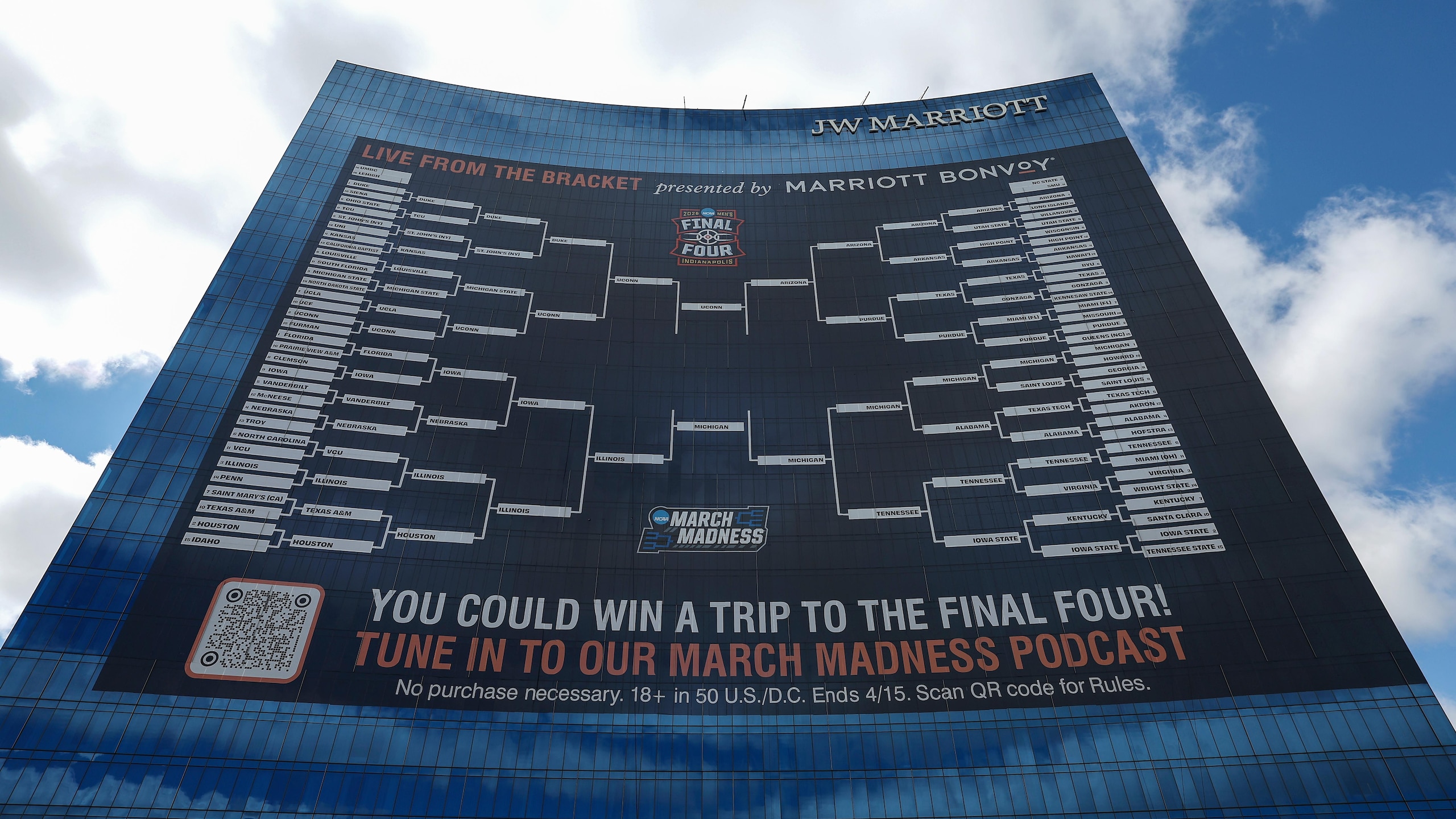
We're starting out with a softball question here, as the NCAA has already shared a sneak peek of the new bracket format.
Here's hoping you like slash marks, because there are now going to be 12 Opening Round games:
Instead of just two play-in games involving No. 16 seeds and two play-in games involving the last four at-large teams, it will now be four No. 16 seed play-in games, two No. 15 seed play-in games and six clashes between the final 12 at-large teams.
But while that bracket above shows four No. 12 seed play-ins and two No. 11 seed play-ins, that won't necessarily be the case. (There's a tiny little disclaimer on the graphic about it if you zoom in far enough.)
Remember two years ago when we had a bunch of bid thieves and the bubble shrunk to the point that both of the at-large play-in games were No. 10 seeds?
Or back in 2022 when we ended up with one at-large play-in game on the No. 11 seed line and another on the No. 12 seed line?
There will be similar variance possible with the new format, depending upon where the automatic bids end up on the overall seed list.
There could even be a super annoying scenario where it ends up being one No. 11 seed, four No. 12 seeds and one No. 13 seed.
Can't wait to sort through that wrinkle of bracketology chaos.
And if BYU is involved and we have to worry about accounting for the "No games on Sundays" factor? I might go gray and/or bald in a hurry.
2. Who Actually Wanted Expansion?
2 of 7
If you had asked 100 random college basketball fans two months ago—back when we were ankles deep in bubble talk and despising all of the options for the final few spots—if they were in favor of expanding the field, just about all of them would have said "absolutely not."
Heck, at that point, you probably would've gotten more "Please shrink the field back to 64 instead" responses than people saying "Yes, please, we need more middling power conference teams."
But it never mattered what you and I wanted.
All that mattered was what Greg Sankey, Jim Phillips, Brett Yormark and Tony Petitti wanted. And those Power Four commissioners wanted more of their teams getting into the field and more chances at revenue shares.
The NCAA is trying to spin expansion as a positive because it's more opportunity for more student athletes to experience the joy of playing in the tournament.
They've also pushed the cockamamie narrative that expansion is long overdue because of how many teams have been added to D-I over the past few decades.
But we all know it's just about increasing revenue for the big boys—in their crusade to also further expand the College Football Playoff—regardless of how much it dilutes the product.
3. Does This Expansion Increase or Decrease the Potential for Cinderella Stories?
3 of 7
Over the past two NCAA tournaments, there have been no monumental first-round upsets—nary a No. 13, No. 14, No. 15 or No. 16 seed survived into the round of 32.
Many have argued it's because of NIL and the outlandish annual free agency cycle that is the transfer portal, creating a nearly uncrossable chasm between the haves and the have nots.
But regardless of what has created that chasm, this seeding shift unfortunately makes it even wider, and less likely that we'll get any colossal first-round stunners.
(Cut to the aforementioned power conference commissioners counting all of that precious revenue while playing the world's smallest violin on their fingers.)
By adding four play-in games to the bottom of the field, what used to be the No. 13 seed line now becomes the No. 14 seed line, while some of what used to be the No. 14 seed line will now be subjected to No. 15 seed play-in games.
For example, Wright State was the No. 57 overall seed in the 2026 NCAA tournament, 12th-lowest seeded auto bid in the field. The Raiders were a No. 14 seed who almost messed around and upset No. 3 seed Virginia.
But now for 2027 and beyond, the 12th-lowest auto bid will be facing the 11th-lowest auto bid, needing to win that game for the right to deal with a No. 2 seed in the first round.
Meanwhile, those 12-over-5 upsets orchestrated by High Point, McNeese and Colorado State over the past two years? They'll be No. 13 seeds now, needing to knock off No. 4 seeds to secure a win share. (Doable, but undeniably more difficult.)
Moreover, the No. 12 seeds trying to pull off the "classic" first-round upset will generally be 18-15 major conference underachievers who finally decided to have a good week, like Texas' run to the Sweet 16 this past season.
I trust you are beginning to see why so many of us were opposed to this.
.png?w=2560 "CFB Top 25")

4. When and Where Are These Additional Games Happening?
4 of 7
The 'when' part is that Tuesday and Wednesday are about to become a more robust portion of the NCAA tournament.
Instead of one No. 16 seed play-in game at 6:09 p.m. ET and one at-large play-in game at 8:49 p.m. ET in Dayton on each of Tuesday and Wednesday, there will now be six games on each of those days, presumably with tip times staggered for something like 3:00, 4:00, 5:40, 6:40, 8:20 and 9:20 tip times.
Obviously, they won't be able to play all of those games on one court in Dayton, so there will be a second, still-to-be-determined location where half of the games will take place.
What we can safely assume about that second location is that it won't be in a corner of the country like Miami or Seattle, as it is critical for the winning teams to be able to turn around and quickly get to wherever their first-round game is being played.
My completely speculative guess is that Dayton remains one of the sites while Phoenix becomes the other. That way, there's one kind of in the northeast and one kind of in the southwest to better accommodate travel.
But we'll see what they decide to do. For all we know, they'll make Hinkle Coliseum a permanent opening round venue.
5. How Does This Expansion Change the Bubble?
5 of 7
Fundamentally, the bubble arguments will be just as spirited as they always have been.
We argued until we were blue in the face when there were 64 teams. Same goes for 65 and 68. We'll do it with 76 teams, too.
We'll just be arguing about drastically less deserving teams, because the barrier for entry into the NCAA just got a whole lot lower.
Remember that whole argument over whether 17-16 Auburn deserved to dance?
Never would have happened, because those Tigers would have been in with room to spare.
(Which, as a brief aside, could be the one legitimate benefit of expansion. More teams could be more willing to schedule aggressively, because going .500 against a top 10 type of schedule will probably be enough to dance now. But if you're skeptical that teams will actually change their stripes when it comes to nonconference scheduling, you're probably right.)
Using Wins Above Bubble as our guide here in projecting forward, instead of arguing about Auburn, Texas, Miami (OH) and SMU for the last couple of spots in the field, we would've been debating the likes of Arizona State, California and Oklahoma State—who ended up at Nos. 66, 75 and 79 on KenPom, while each finishing four games below .500 against Quads 1 and 2.
It'll be just like when the college football playoff added eight teams and went from undefeated teams getting left out to three-loss teams getting in—moving the goalposts will worsen the product, but it won't lessen the debate.
6. At Least We're Going to Get More Mid-Major At-Large Teams, Right? Right?!
6 of 7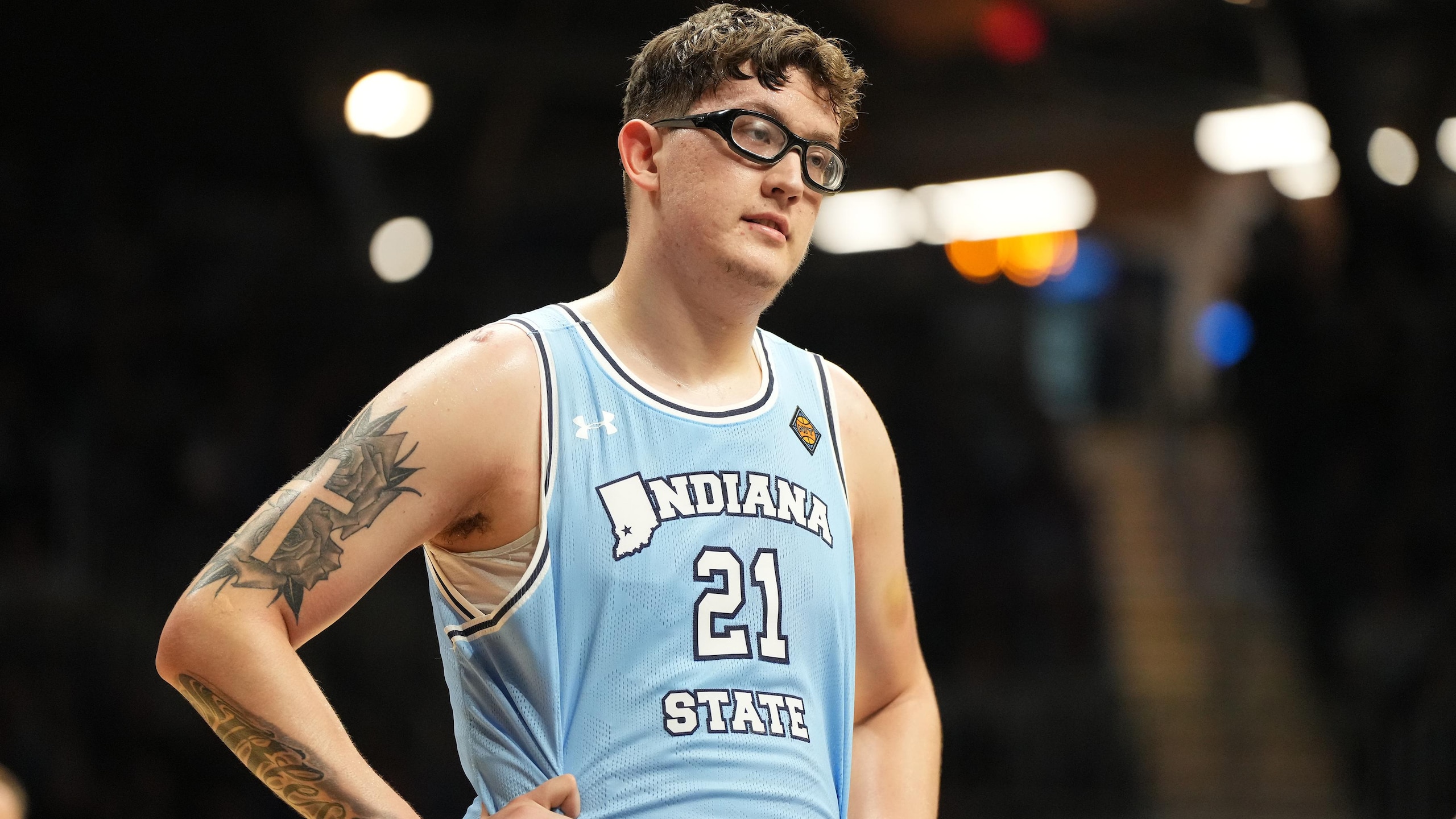
In theory, yes.
As NCAA Director of Media Coordination/Statistics Dave Worlock tweeted on Thursday afternoon, close to half of the "First Four Out" teams revealed on Selection Sunday in the 68-team era of the tournament have hailed from leagues outside of the Power Four conferences, including teams from the Ivy League, Summit League, MAAC and SoCon.
In theory, those teams would have been dancing if the field had featured 76 teams instead of 68.
But here's the problem with that theory.
"First Four Out" and "Would have been the next four teams in the field" aren't necessarily synonymous.
A more truthful definition of First Four Out is: Quartet of teams the selection committee discussed, but kept finding reasons to omit.
And, yes, for the most part, resumes which warranted legitimate consideration for 68 will make the cut for 76.
However, with the way the voting process works—with committee members ranking eight teams over and over and over again—there could be some teams who keep getting legitimately discussed, but also repeatedly kicked down the road, so to speak, because a few committee members keep putting them at the bottom of their ballots.
I would love to be proven wrong here and to see teams like 2024 Indiana State, 2025 UC Irvine and 2026 Tulsa represent nearly half of the new spots in the field on an annual basis.
My cynical assumption, though, is that we'll be treated to roughly 1.5 of those mid-majors per year, and that most of the at-large play-in games will involve...well...the thoroughly mediocre power conference teams who have been playing in that Crown tournament over the past two years.
7. So...When Will It Be Safe To Fill Out My Bracket?
7 of 7
Welcome to what might be the most annoying wrinkle of them all, and the one that could push a lot of the "I'm only watching because of my bracket pool" viewers away from even bothering to fill out a bracket anymore.
It has been problematic enough over the past 16 years to have two at-large play-in games in the field, forced to either wait a few days to fill out a bracket or just submit it without caring what happens in the opening round. (We all know most choose the latter route.)
But now there are six such games, likely to include all four of the annually trendy 12-over-5 upset options.
Do you wait until late Wednesday night or Thursday morning to submit your bracket, once the field has been whittled down to the optimal size of 64 teams?
Or do you throw caution to the wind by making your picks on Sunday night, slashes in 12 of the 32 first-round matchups be damned?
Here's hoping we're actually able to keep our freedom of choice on that front; that bracket pools don't start including these opening round games and forcing everyone to fill out their brackets by Tuesday morning.
Either way, expanding the field complicates the bracket, and I worry that this attempted money grab of adding eight games on Tuesday and Wednesday could be undone by a decrease in "casual fan" interest in the official first round on Thursday and Friday.


.jpg?w=2560 "Myles Garrett Got Warning 👀")
.jpg?w=2560 "Rookies Looking Like Draft Steals 😏")