

MLB's new robot umpires had their judgment day over the weekend, and it was no contest. They're a hit.
It's all there in the early numbers for the Automated Ball-Strike Challenge System. There were 175 challenges between Wednesday and Sunday, and 94 resulted in overturned calls. That's 94 more correct calls than there would have been otherwise.
Even more so, you could feel the success in the vibes.
TOP NEWS
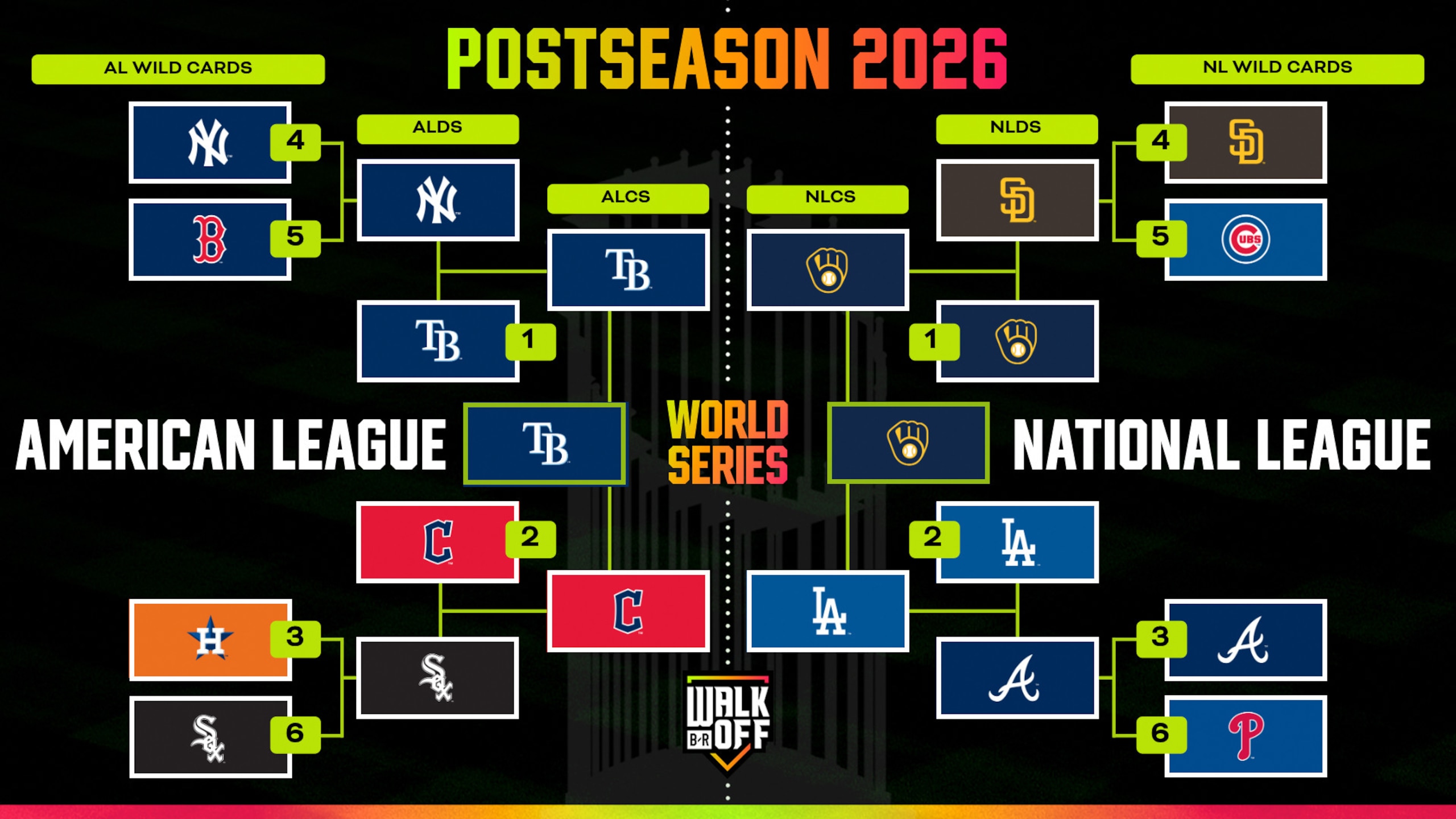
Rays to Play Brewers in World Series

A Possible Trade Made by Every Team This Offseason ⚾
Most Lopsided Trades 🥴
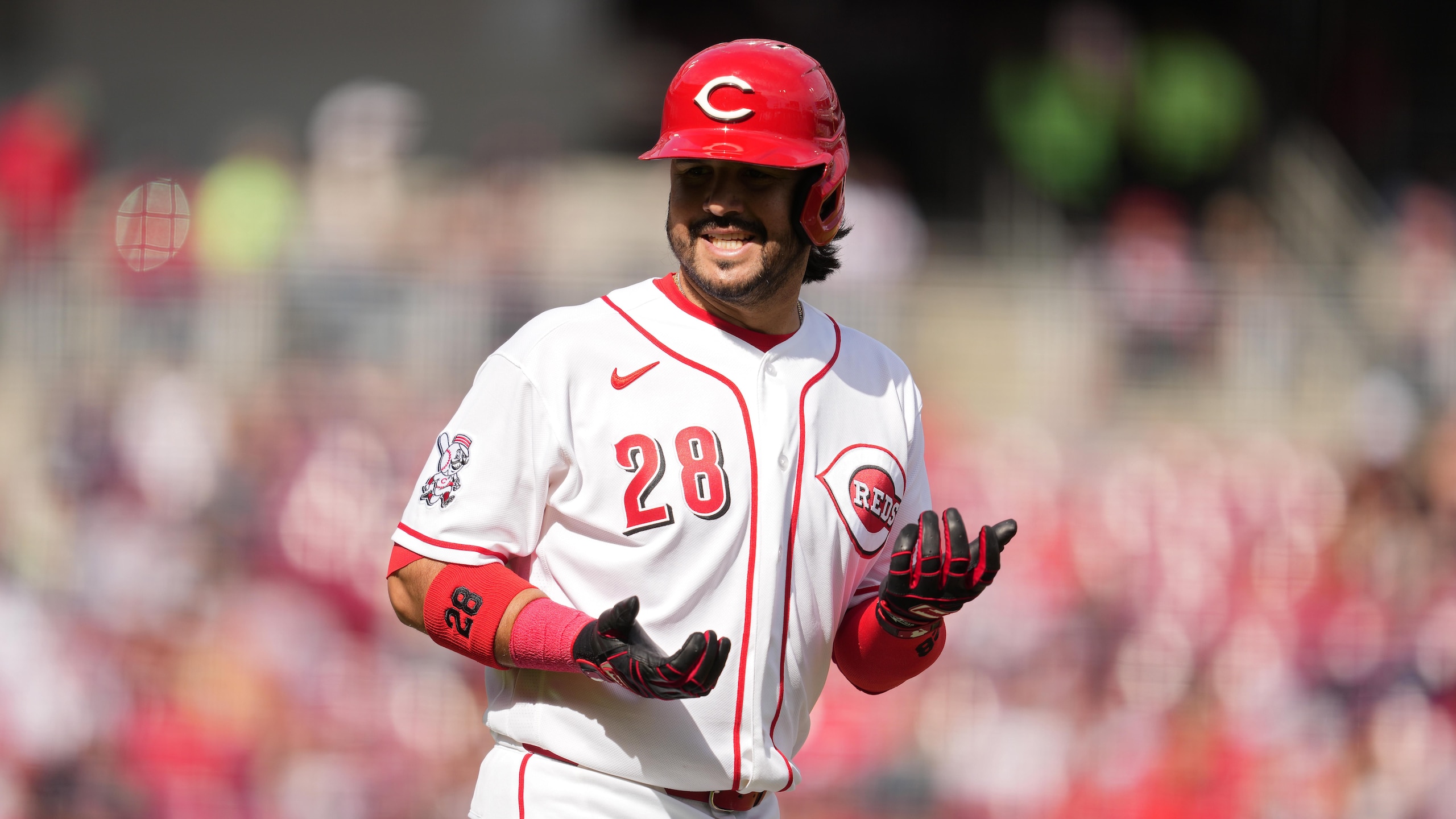
Aaron Judge winning a challenge and then homering? That ruled. Cal Raleigh winning a challenge on a pitch that clipped the zone by an angstrom? That also ruled. And nothing ruled more than Eugenio Suárez sending Great American Ball Park into a frenzy after he won back-to-back challenges at the expense of CB Bucknor:
That clip is MLB's wildest dreams packaged into one minute and 30 seconds of glory. The ABS has brought new possibilities for stakes, drama and schadenfreude, and people freakin' love it.
As a tool, though, players and teams still haven't quite mastered the ABS. Let's get into how that will happen.
Pitchers, Just Don't Do It
Out of the 175 challenges during MLB's opening weekend, here's how the success rates broke down by position:
- Catchers: 64 percent
- Hitters: 42 percent
- Pitchers: 40 percent
To be fair, there were only five challenges by pitchers, compared to 92 by catchers and 78 by hitters. If you ask Minnesota Twins manager Derek Shelton, he'll tell you that one of the pitcher challenges should not have been allowed because Baltimore Orioles closer Ryan Helsley was too slow to tap his head.
Even so, this maps perfectly onto expectations for how the ABS would play out. It's also vindication for pitchers who preemptively promised they would never challenge, such as Chris Sale.
Hitters, Know When Not to Challenge
Albeit with dramatic differences in sample sizes, it's not surprising that hitters are barely succeeding at a higher rate than pitchers on ABS challenges.
Because of how the ABS is determined, it's going to take time for hitters to unlearn their strike zones. The zones they used to intuit are gone. In their place are rigid, perfectly measured quadrangles. Especially given how many players are suddenly shorter than they used to be, those two things aren't necessarily the same.
Also, you know, the whole "only a fraction of a second to see the pitch" reality of hitting.
The onus is therefore on hitters to understand their natural disadvantage and to work with it as best they can. Timing is everything. Situational awareness is, too.
The Boston Red Sox's performance on Saturday is a perfect example of what not to do. They burned their two challenges early, when leverage was still relatively low. Moreover, anyone who knows umpires knows that Bucknor's strike zone is notoriously terrible. It was a perfect storm of strategery—and no, that's not a typo.
The Red Sox's comeuppance came later in the game, when hitters were powerless to challenge several bad calls by Bucknor. While there were obviously other factors, that was a big one in what turned into a 6-5 loss in extras.
For what it's worth, there's a different kind of test at play when an umpire is calling a good game. The Chicago White Sox and Milwaukee Brewers found this out the hard way on Sunday, going a combined 0-for-4 in challenges against Bruce Dreckman, who called the game with 94 percent accuracy.
Know When Calls Should Be Challenged
Of all the ways the ABS impacted baseball's opening weekend, probably the hardest one to foresee was how largely non-challenges would loom.
For this, we're going to pick on Raleigh.
Though he partially made up for it with his aforementioned challenge in prime-time, his inexplicable reluctance to use the ABS cost the Seattle Mariners on both sides of the ball in their opener on Thursday:
- 1st Inning, Catching: No challenge on a 2-2 slider that clipped the zone, resulting in a Chase DeLauter homer
- 8th Inning, Catching: No challenge on a 3-1 fastball that also clipped the zone, resulting in a Rhys Hoskins walk
- 8th Inning, Batting: No challenge on a 2-2 slider that missed the zone, resulting in a strikeout
The last one was especially egregious. Seattle was only down a run at the time and had both of its challenges remaining. Even if Raleigh wasn't totally sure what he saw, that's a spot where the risk/reward balance of challenging was firmly on the side of "reward."
As it was, Raleigh's strikeout stood. The Mariners didn't use either of their challenges, and they lost the game 6-4.
Everyone Is a Canary in This Coal Mine
Ultimately, it should be just a matter of time before teams get a handle on their strategies and devise flow charts that look more or less like this:
- Are You Good at Challenging? If yes, have at it.
- Are You Bad at Challenging? If yes, you'd better be desperate.
- Is the Umpire Good or Bad? Honestly, you'd better be careful either way.
It's too soon to read into the early returns for hitters, though it isn't surprising to see guys like Aaron Judge and Mike Trout near the top. It's also too soon to try to learn from the catcher leaderboard, though it is surprising to see Will Smith and Carlos Narváez toward the bottom of the pack.
Until everyone gets a feel for the ABS, the immediate threat for everyone is paralysis by analysis. The New York Yankees, for example, seemingly went a little too hard on preparation. On the hitting side, at least, that hasn't translated into good results.
No matter what happens, though, the ABS should maintain the balance that fans went head over heels for over the last few days. Even if teams get better at using it, it's doubtful it will ever become so predictable as to become boring.
As it is, the ABS might be the most exciting of MLB's big changes in recent years. The DH going universal in 2022 and the new rules that arrived in 2023 were big, but neither of those had fans hanging on every pitch like they are now.
For the first time in maybe ever, you really don't want to look away.
Stats courtesy of Baseball Reference, FanGraphs and Baseball Savant.
.jpg?w=2560 "Purdy Becomes Highest-Rated QB EVER 🤩")
.jpg?w=2560 "Grading WWE Raw 🔠")