
15 Retro World Cup Kits We'd Love to Bring Back
The March international window has arrived. And while we don't yet know who will make each nation's 26-man FIFA World Cup squad this summer, we do know what most teams will be wearing.
Host nations the United States, Canada, and Mexico, have all unveiled their new kits for the tournament, as have most other participating countries. We all have our first impressions, yet we won't really know which strips survive the test of time as the most memorable of the tournament.
Modern kits often nod to classic designs, and 2026 is no different. The United States' new home shirt is a clear homage to the 1994 home strip from the last time the Americans hosted the World Cup.
So, which kits do we wish designers would bring back? We have identified 15 of the greatest kits in modern World Cup history, with at least one selection from every tournament since 1986. Read on to see our selections.
Denmark, 1986 (Home)
1 of 15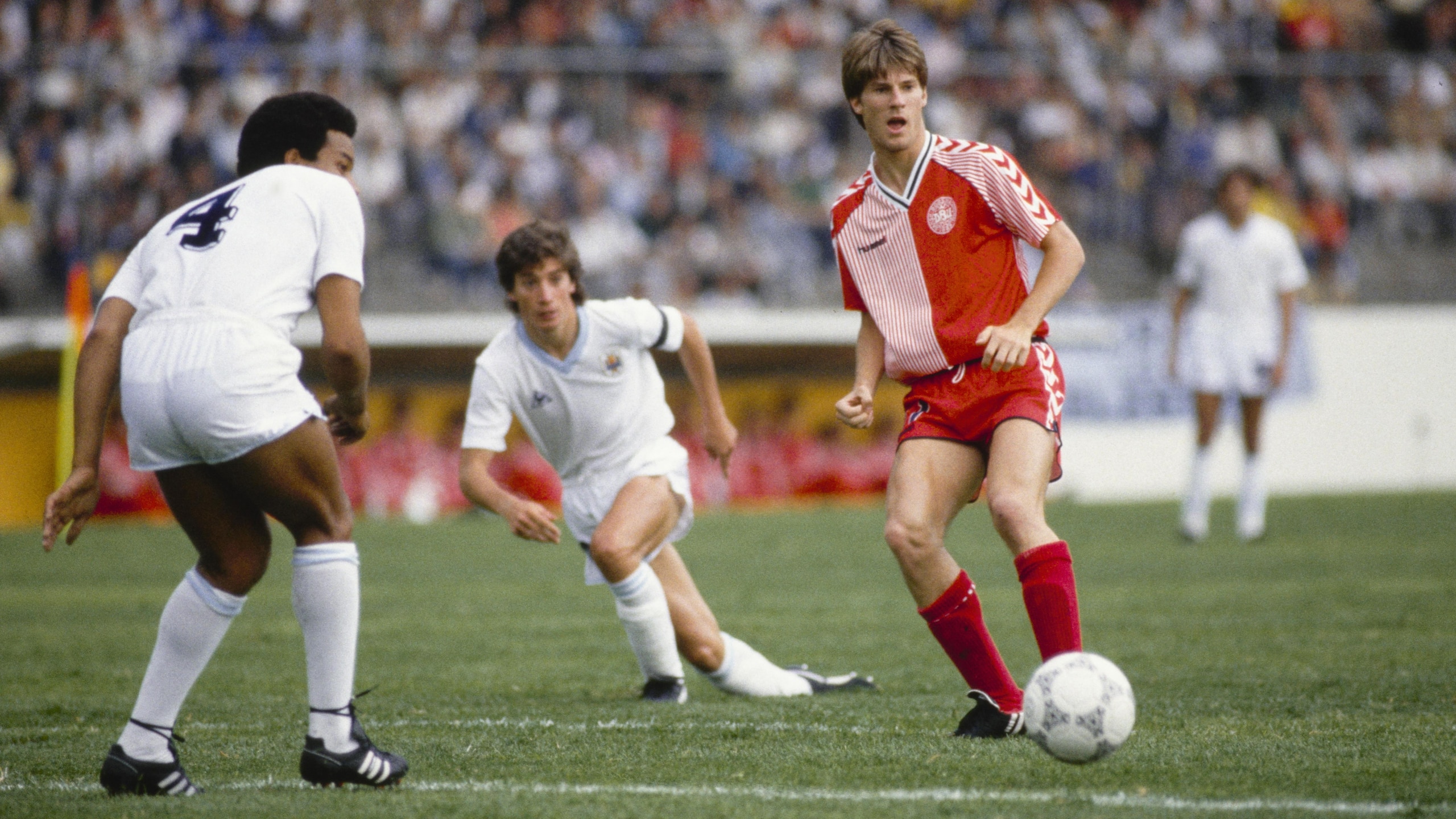
Manufacturer: Hummel
Fashion Icon: Michael Laudrup
The Denmark 1986 World Cup kits arguably helped establish the idea that a football strip could be a fashion piece, and they remain among the most legendary uniforms in World Cup history.
The home and away shirts were both made in the same template, with Hummel chevrons on the sleeves and the front split into a solid color on one half and vertical red-and-white stripes on the other. The home "reds" are probably a bit more memorable than the away "whites," though they are both very smart.
Legendary midfielder Michael Laudrup was only 22 when he donned the shirt at Mexico '86. In the process, he scored a memorable goal against Uruguay and helped the Danes top a group that included eventual runners-up West Germany.
By the time his career was over, he had worn the famous club colors of Lazio, Juventus, Barcelona, Real Madrid, and Ajax. But rarely was he more iconic than in that Denmark '86 shirt.
Canada, 1986 (Away)
2 of 15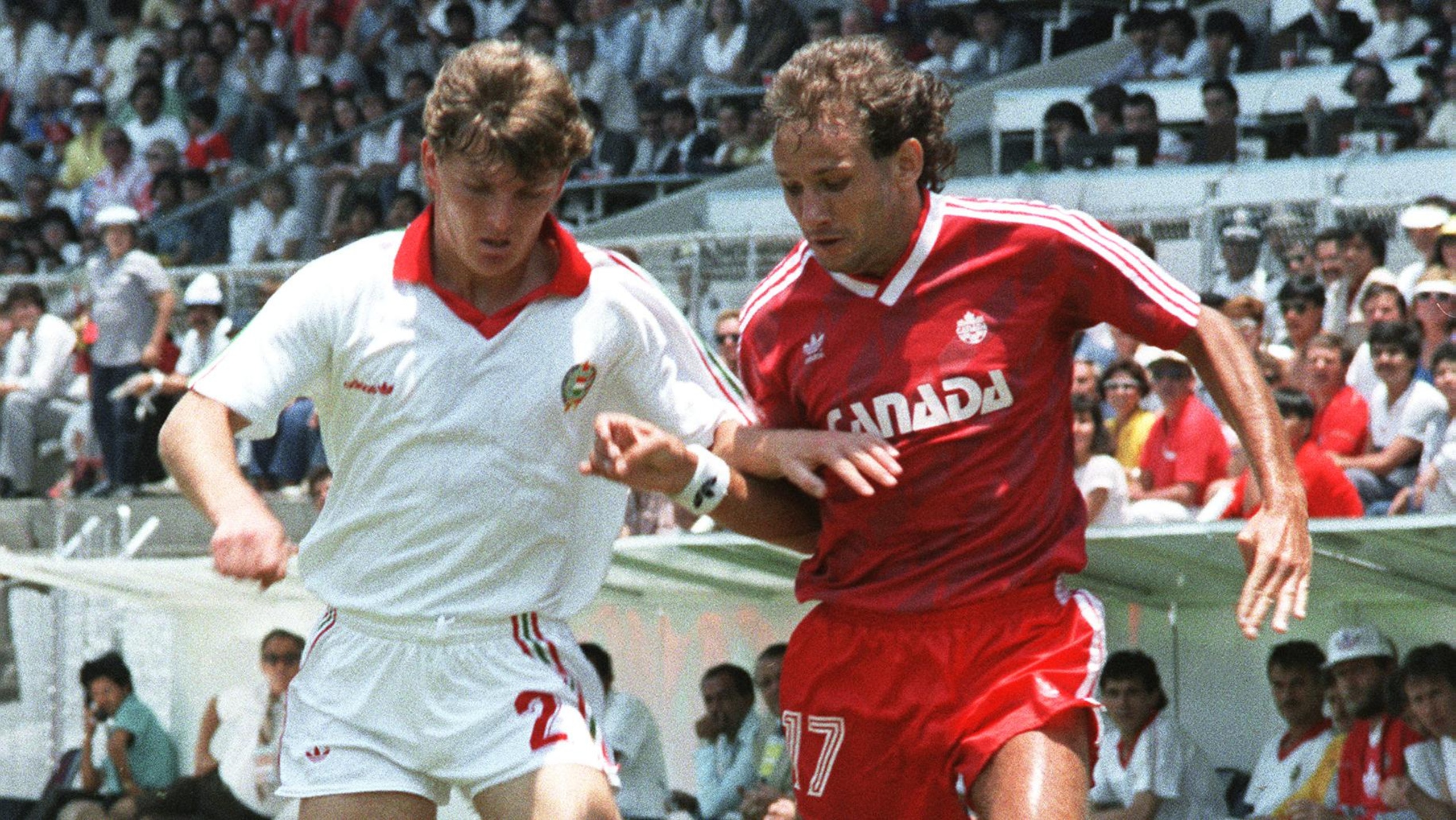
Manufacturer: Adidas
Fashion Icon: David Norman
In some ways, the 1986 Canada strip is emblematic of everything a sharp kit shouldn't be.
The jersey template (unlike Denmark in 1986) is exceedingly simple. And there's the unusual—and usually frowned-upon—spelling of the nation's name across the chest in block capital letters.
But if anything, both of Canada's Mexico '86 shirts are proof that the right font can change everything; the very geometric, blocky bold font on both transforms them from forgettable to iconic. We give the nod to the away version, a slight nod over the home whites. It's a good thing they were so memorable, as Canada wouldn't qualify for the World Cup again until 2022.
Most of Canada's side played professional indoor soccer at the time, including defensive midfielder David Norman, who was previously a mainstay with the Vancouver Whitecaps of NASL vintage. The Canucks lost all three of their group matches and exited quickly, but Norman helped a defense praised for their showing in a narrow defeat to France.
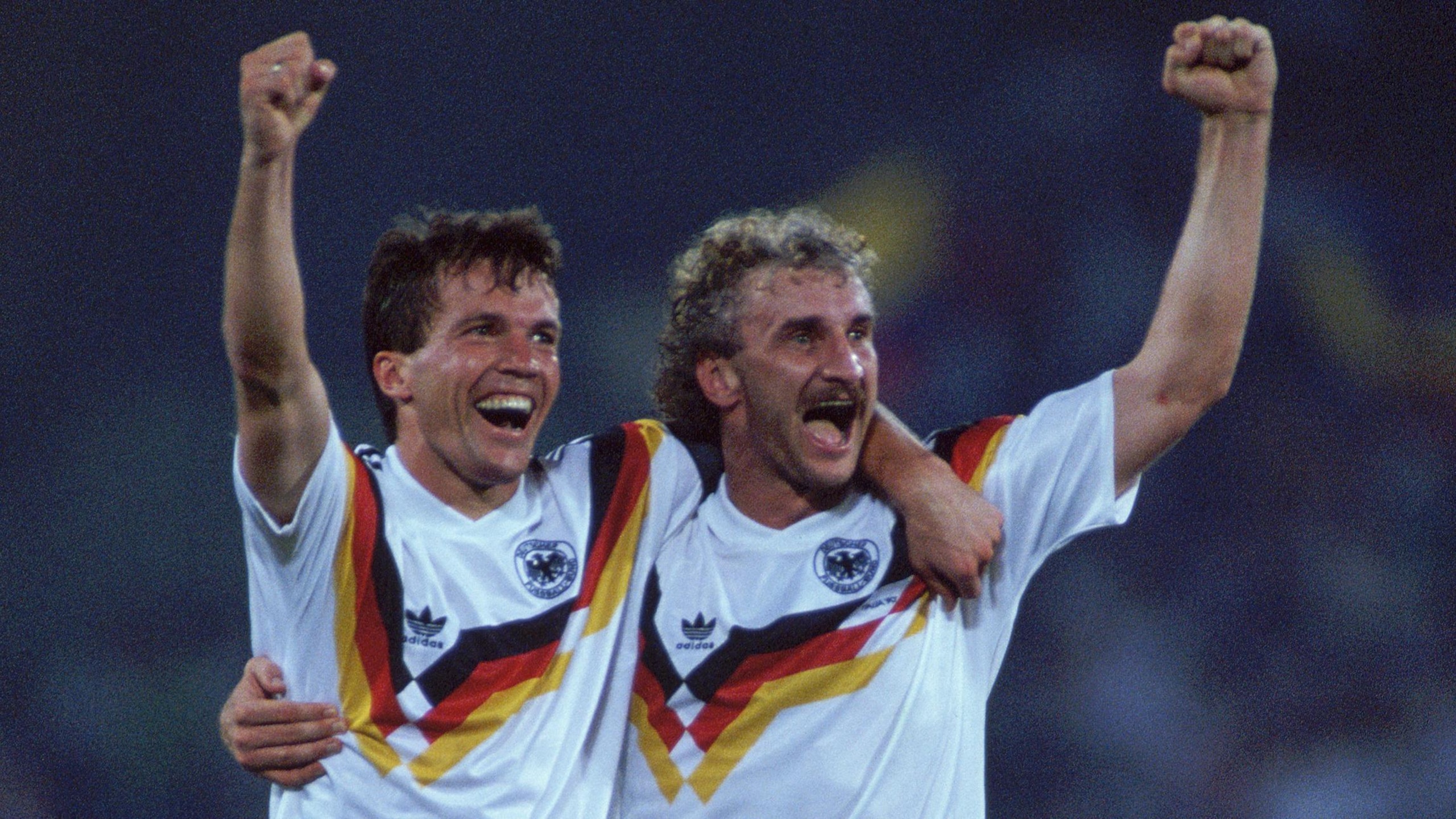
West Germany, 1990 (Home)
3 of 15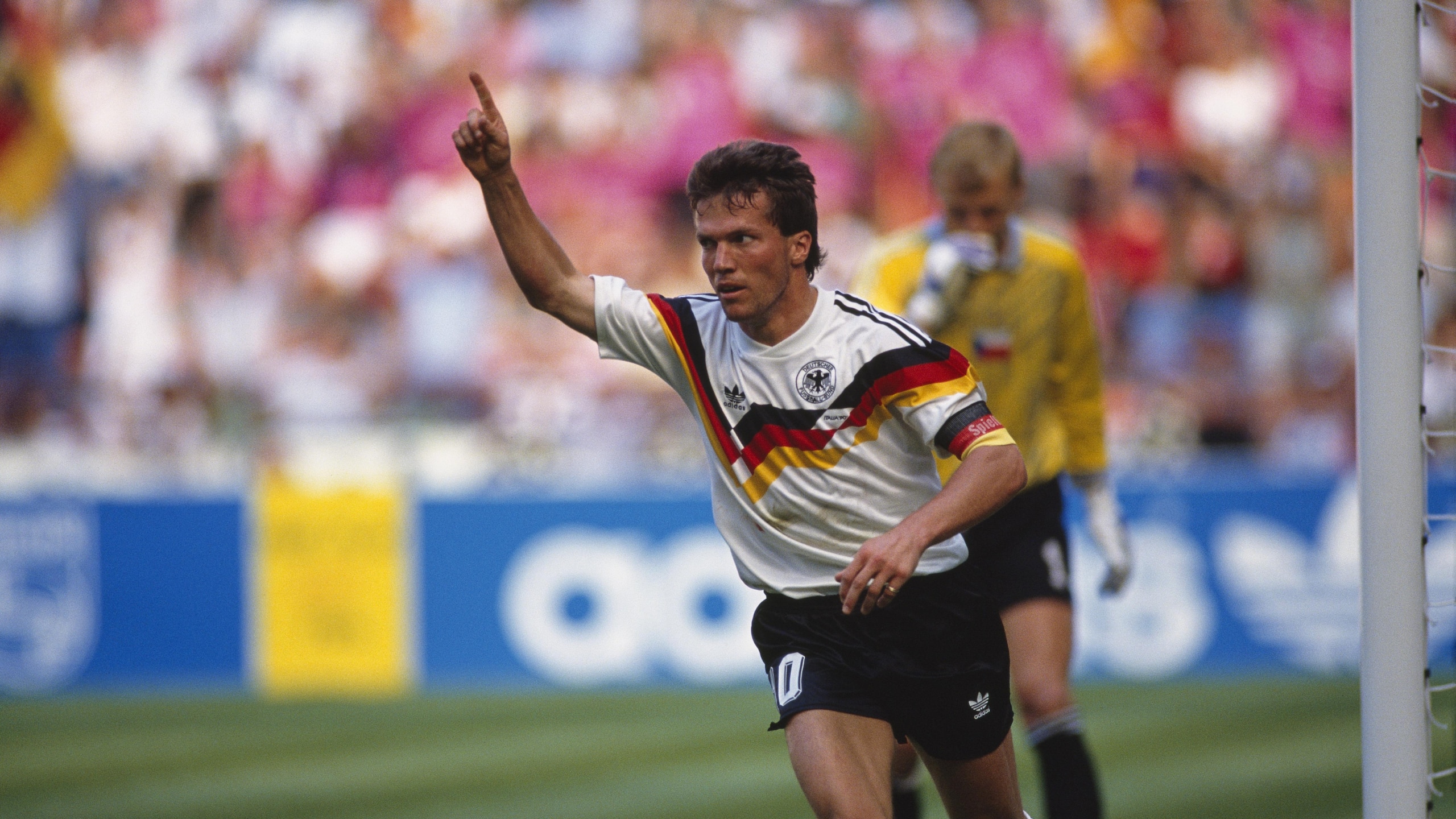
Manufacturer: Adidas
Fashion Icon: Lothar Matthäus
Never was adidas' signature three-stripe theme pulled off more exquisitely than on the home shirt of the 1990 West German side that won the nation's third World Cup. (Just look at the 2026 Germany home jersey, which is as close to a re-release of the '90 shirt as you can get.)
The German flag-inspired, geometric zigzag pattern across the chest was both completely a product of its time and a timeless piece of football iconography. And it arrived at a time when the very nature of life in Germany was changing, with its East and West soon to unify and play as one nation by the time USA '94 rolled around.
Box-to-box midfielder Lothar Matthäus wore the shirt at the height of his powers, playing in the World Cup in the nation where he played his club football for Inter Milan. In addition to a World Cup, Matthäus would also earn his lone Ballon d'Or award in 1990, and was runner-up to home nation hero Salvatore Schillachi for the World Cup Golden Ball award.
The following year, Matthäus captured his first European club trophy with Inter, the 1990-91 UEFA Cup.


England, 1990 (Third)
4 of 15Manufacturer: Umbro
Fashion Icon: Dennis Wise
The Three Lions aren't typically known for taking chances when it comes to apparel, but when they do, they hit more often than they miss. So it was with the England third jersey at Italia '90, a shirt that was fabulously popular despite not seeing the field until a year later.
The powder-blue jersey with diamond-tiled patterns beneath a navy-blue collar was praised upon release, and its popularity grew further when New Order frontman Bernard Sumner wore it in the promotional video for their World Cup anthem "World in Motion."
England would surge all the way to the semifinals, only to lose a narrow match to Germany and then another to host Italy in the third-place match. Yet the shirt would not appear until nearly a year later, worn in a Euro '92 qualifying match in Turkey.
Dennis Wise scored the winner in that encounter. It was his only goal during 21 caps for the Three Lions, all of which came after Italia '90. Still, the shirt lives on as one of the most popular in England's national team history.
Argentina, 1994 (Away)
5 of 15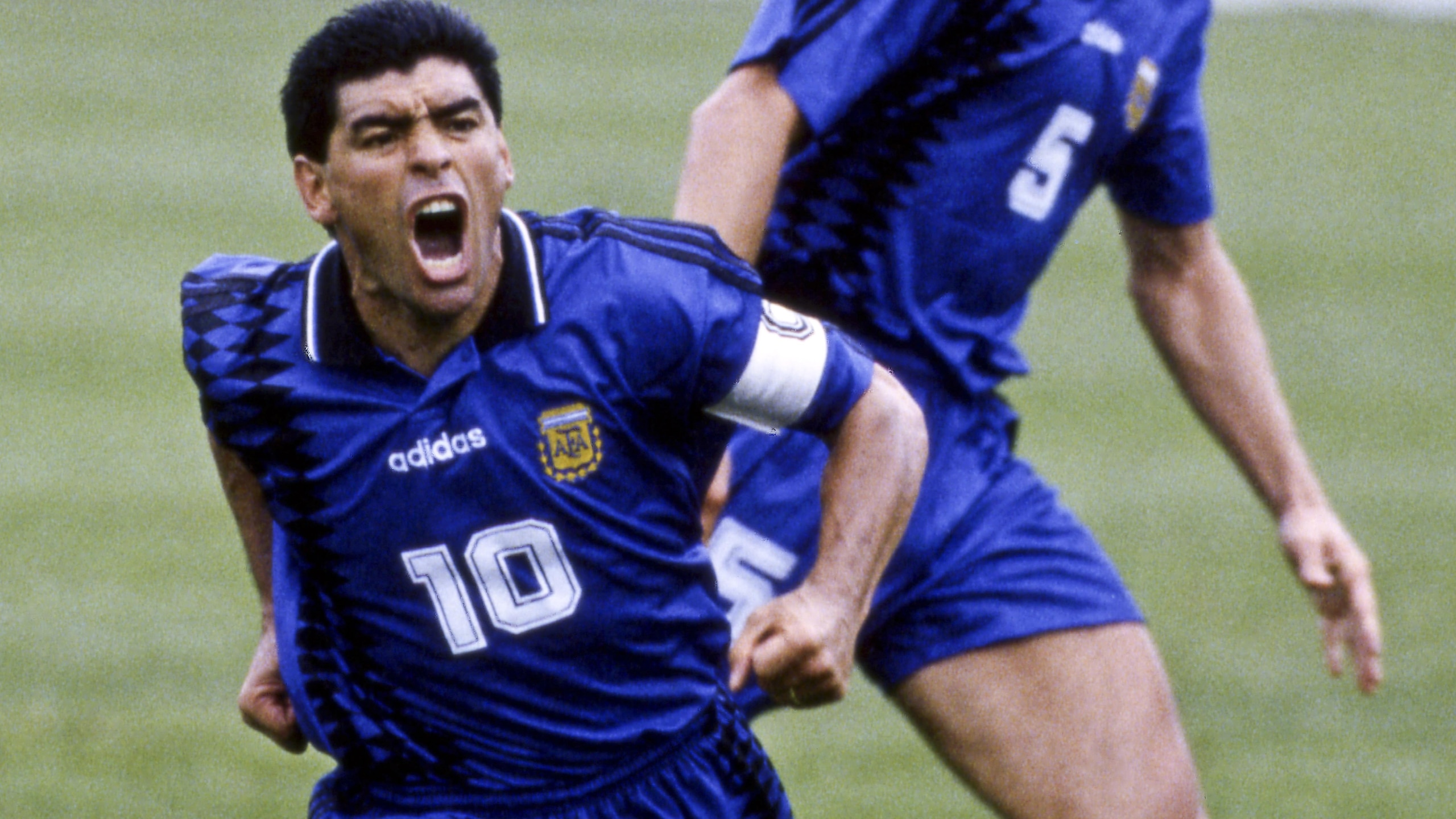
Manufacturer: Adidas
Fashion Icon: Diego Maradona
The 1994 World Cup was ultimately disappointing for Argentina, marked by the dramatic exit of Diego Maradona from the tournament after failing a random drug test. And yet this gem of an away shirt is still fondly remembered.
While the three rows of diamonds were a template used by several adidas-outfitted nations at the tournament, for Maradona's Argentina, the dark blue base and black trim embodied a man and a team whose rough edges were increasingly exposed.
To this day, it's hard not to look at the kit and recall the face of a crazed Maradona celebrating into the sideline camera after scoring at Foxborough in the group stage against Greece.
The shirt would eventually symbolize a nation whose soul had been bruised after the twin indignities of seeing their hero banned from the tournament and then losing in the round of 16 to an unfancied but talented Romania.
United States, 1994 (Away)
6 of 15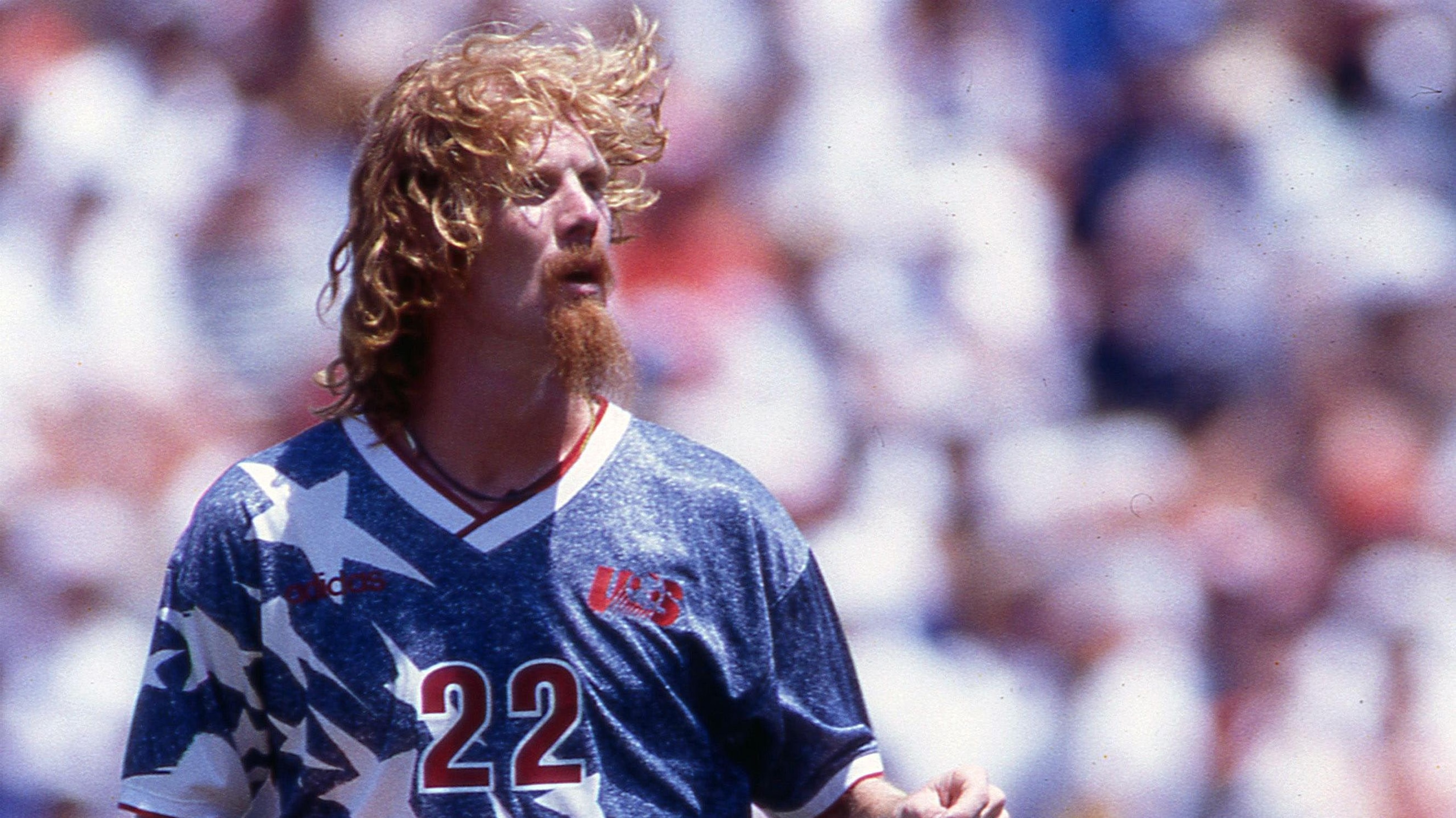
Manufacturer: Adidas
Fashion Icon: Alexi Lalas
There may have been more aesthetically pleasing United States strips, but there has never been a more quintessentially American national team uniform than the famous denim kit, to the point that Adidas has even re-released a version of it ahead of the 2026 World Cup, despite no longer being the team's kit supplier.
The top featured not only a denim blue print meant to resemble the American invention of blue jeans, but also five-pointed stars of varying sizes in tribute to the American flag. And while it was officially the away strip, it was worn in all three group matches in the tournament before the USA finally donned its other flag-inspired kit in the round of 16 against Brazil.
It's impossible not to see the jersey without picturing red-maned defender and rock musician Alexi Lalas, who symbolized a younger generation of Americans growing closer to the world's game.
Lalas had a strong tournament overall and leveraged his showing to become the first American national teamer to play in Italy's Serie A.
Jamaica, 1998 (Home)
7 of 15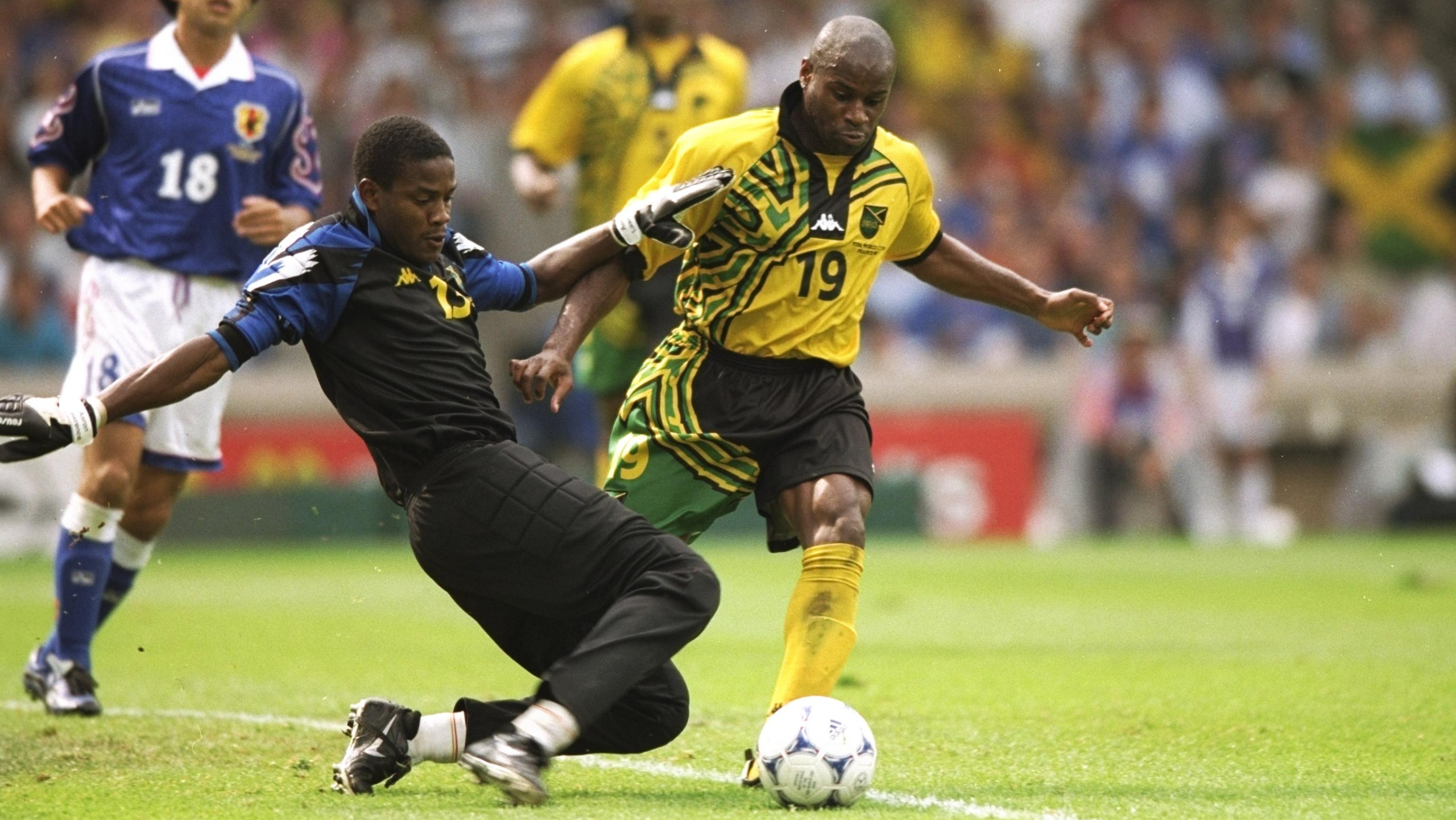
Manufacturer: Kappa
Fashion Icon: Frank Sinclair
For many, the iconic kit of France '98 was the famous Aztec shirts worn by Mexico, but in our view, it was another Concacaf entrant that took top honors.
Jamaica were in their first—and to date, only—World Cup appearance in France, and after qualifying wearing a colorful Lanzera top, they turned to another Italian supplier in Kappa for their moment in the spotlight.
The end result did not disappoint, with Kappa taking the theme of the Lanzera shirt and giving it a more detailed, modern look.
The Reggae Boyz were stocked with British-born talent of Jamaican lineage, including longtime Premier League defensive stalwart Frank Sinclair, who spent most of 15 years in the English top flight with Chelsea and Leicester City.
He played all 270 minutes of the tournament, including in the group finale when Jamaica defeated Japan 2-1 for its first World Cup points.
South Korea, 2002 (Away)
8 of 15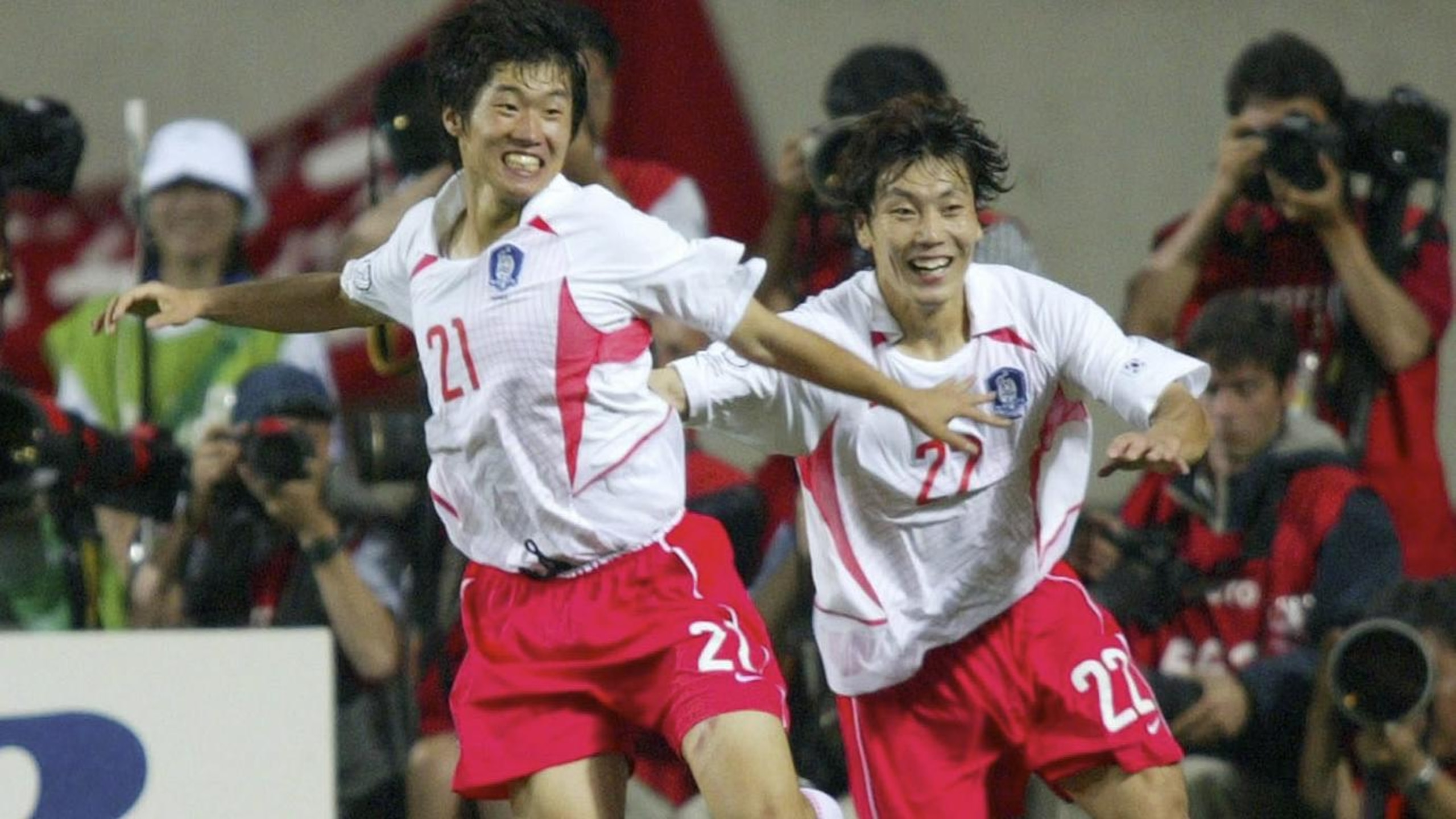
Manufacturer: Nike
Fashion Icon: Park Ji-sung
As unpredictable as the results were at the 2002 World Cup in Japan and South Korea, most of the kits left quite a bit to be desired.
Thankfully, one of the exceptions was co-host South Korea's sharp away strip.
While the shirt was still imprinted on a Nike template used for many of the manufacturer's shirts that summer, the radial pinstripes across the torso set the shirt apart from some others, just as the Korean team and its fans set themselves apart from other Asian World Cup entrants with a sensational run to the semifinals.
Then only 21 years old, midfielder Park Ji-sung played all seven matches of the tournament and 637 total minutes as the hosts twice required extra time in the knockout phase.
His impressive showing helped earn a move to Europe, where he first spent portions of three seasons at PSV Eindhoven before moving on to spend portions of seven seasons with Alex Ferguson's vaunted Manchester United.
Angola, 2006 (Home)
9 of 15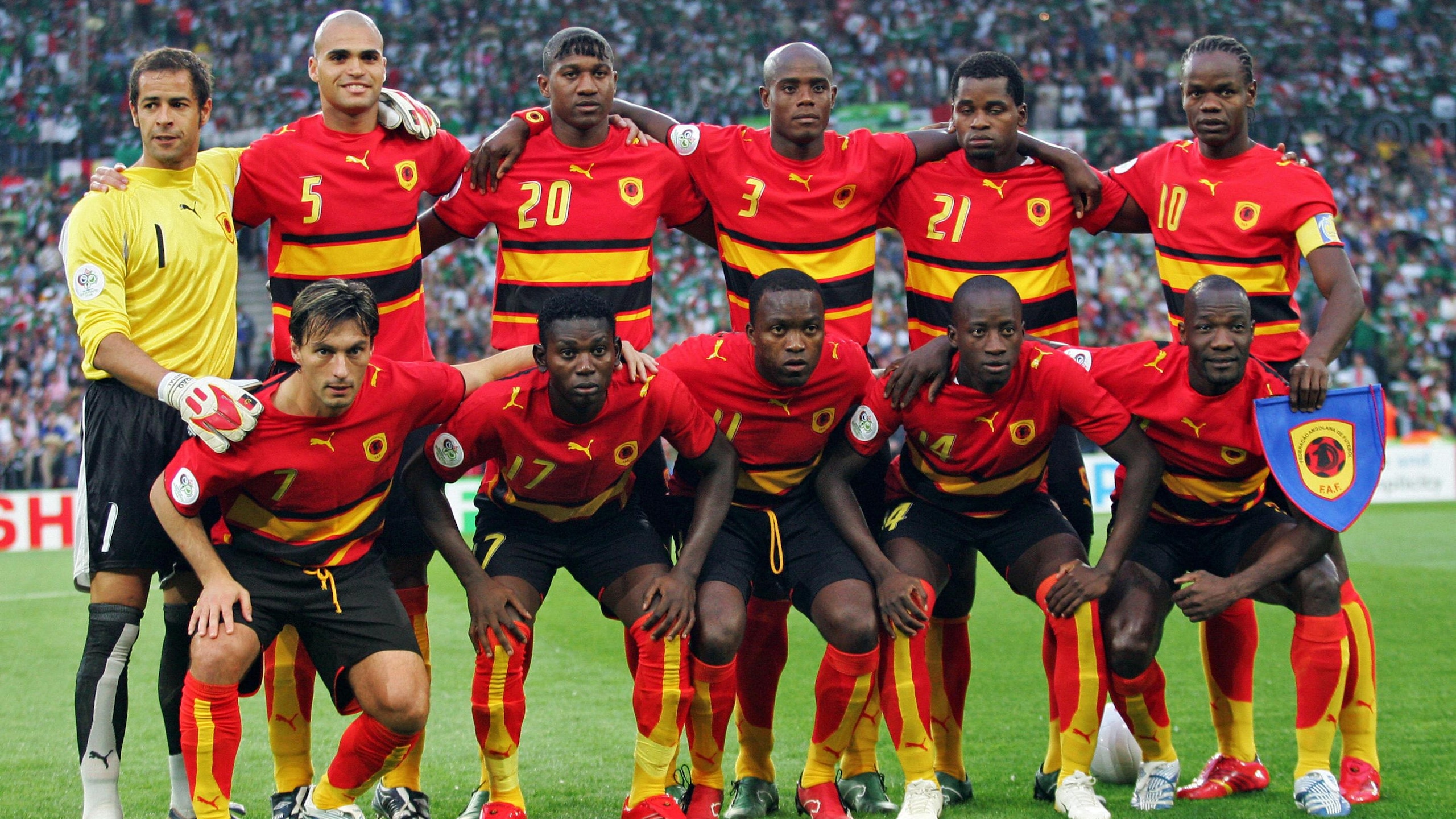
Manufacturer: Puma
Fashion Icon: Akwa
The 2006 Angola side is one of the more forgotten in World Cup history, which is a bit of an oddity considering they enjoyed a respectable performance in their tournament debut, and wore one of that year's only interesting kits.
By and large, the uniforms in the field of 32 were only slightly less conformist than in 2002. Yet Angola shied away from that urge for simplicity by keeping their customary black horizontal stripe across the chest and accenting it with additional stripes of gold. The look is almost reminiscent of a color negative version of Sampdoria's famous look in Italian football.
Akwa was the captain of Angola after a club career that saw him play mainly in the Middle East. The midfielder played all three matches of the tournament, in which the Africans earned draws against Mexico and Iran, and narrowly lost to former colonial rulers Portugal.
Spain, 2010 (Away)
10 of 15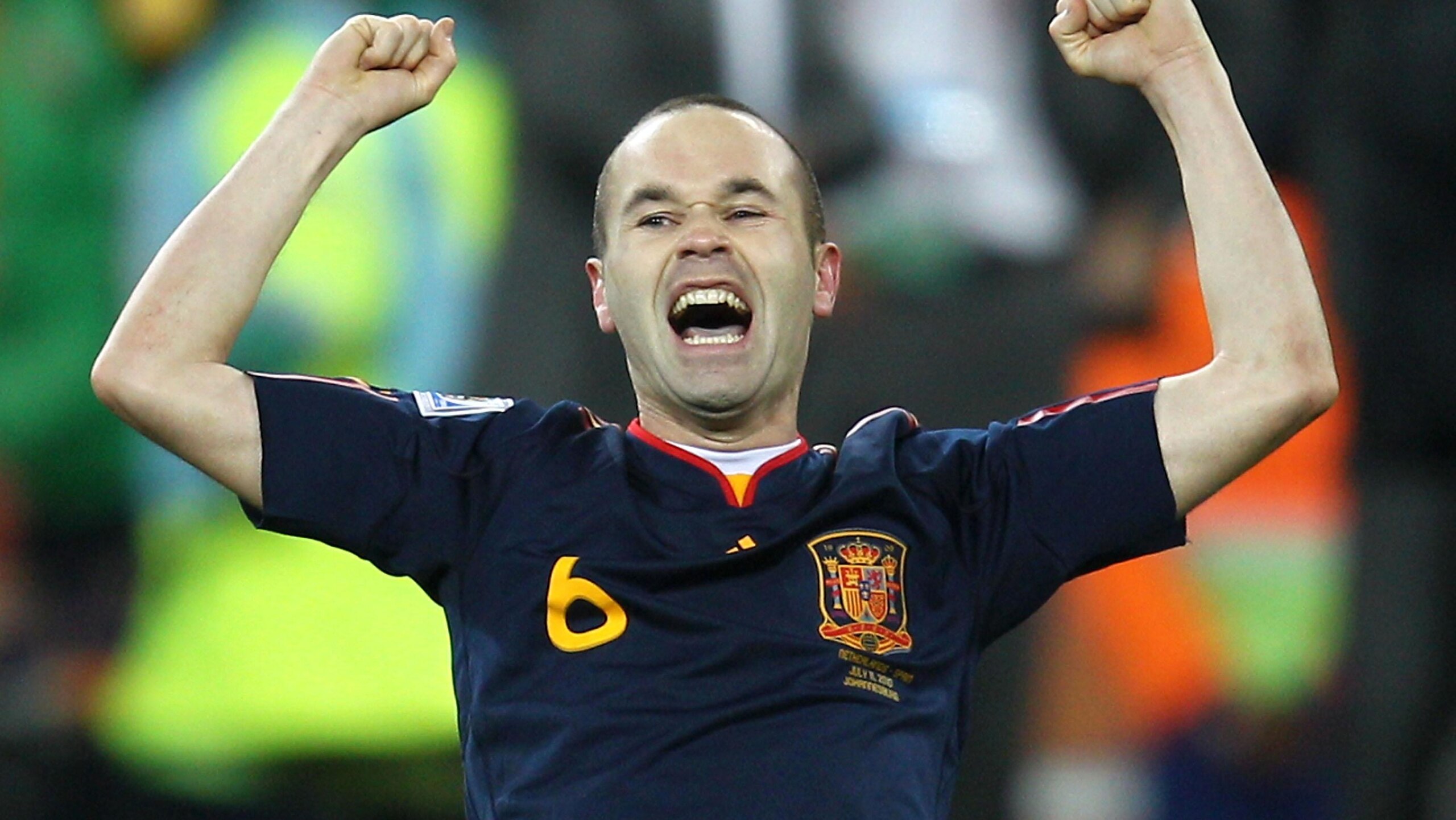
Manufacturer: Adidas
Fashion Icon: Andres Iniesta
The quality of kits ticked up considerably at the 2010 World Cup, the first ever held on African soil.
Yet it was one of the simplest that stood out in Spain's gorgeous midnight blue away number, one they wore against the Netherlands while winning the World Cup Final.
There's nothing particularly unique about the shirt design, template or font. But the way the deep blue is complemented by the burnt orange and clay-ish red made for an exceptionally elegant look that mirrored Spain's tiki-taka approach on the field.
And while there may have been flashier or more handsome players within Spain's championship side, no one was more clutch than Andres Iniesta, who scored the extra-time winner in the final to finally end his nation's long wait for a World Cup.
For that, he is one of the rare World Cup heroes who is forever remembered in his nation's change strip, similar to England's Geoff Hurst in 1966, rather than in his country's home colors.
United States, 2014 (Away)
11 of 15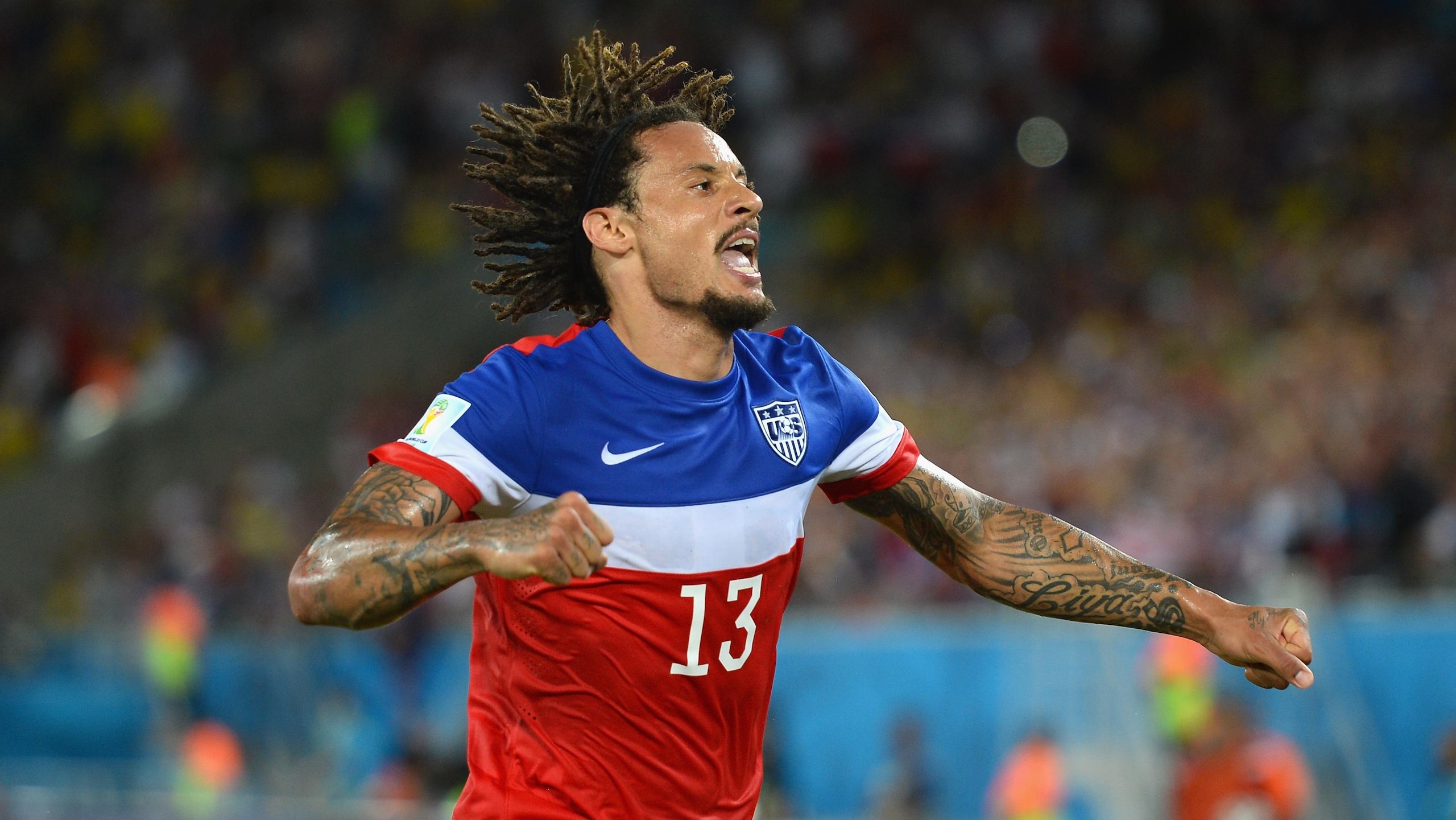
Manufacturer: Nike
Fashion Icon: Jermaine Jones
Nicknamed by American fans "The Bomb Pop Kit" for its resemblance to the popular frozen dessert, the away kit the United States wore in Brazil is among the most memorable ever worn by the Stars and Stripes.
What made the uniform particularly striking was the slightly lighter shades of red and blue Nike opted for, rather than the Navy and Crimson that are common on the Star-Spangled Banner.
It was an undeniably American look, and yet something was a little different about it—a little more daring, a little more arrogant—than the U.S. typically behaved on the World Cup stage.
They were unique times for the program, led by captivating but controversial former Germany international Jurgen Klinsmann, and infused with several German-American talents he had helped recruit.
Jermaine Jones was clearly the most important of those. Behind maybe only goalkeeper Tim Howard, he was the heart and soul of the U.S. squad. He scored an exceptional goal in the 2-2 draw against Portugal, and had an influence on American soccer beyond Klinsmann's tenure, eventually finishing his career in MLS.
Germany, 2014 (Away)
12 of 15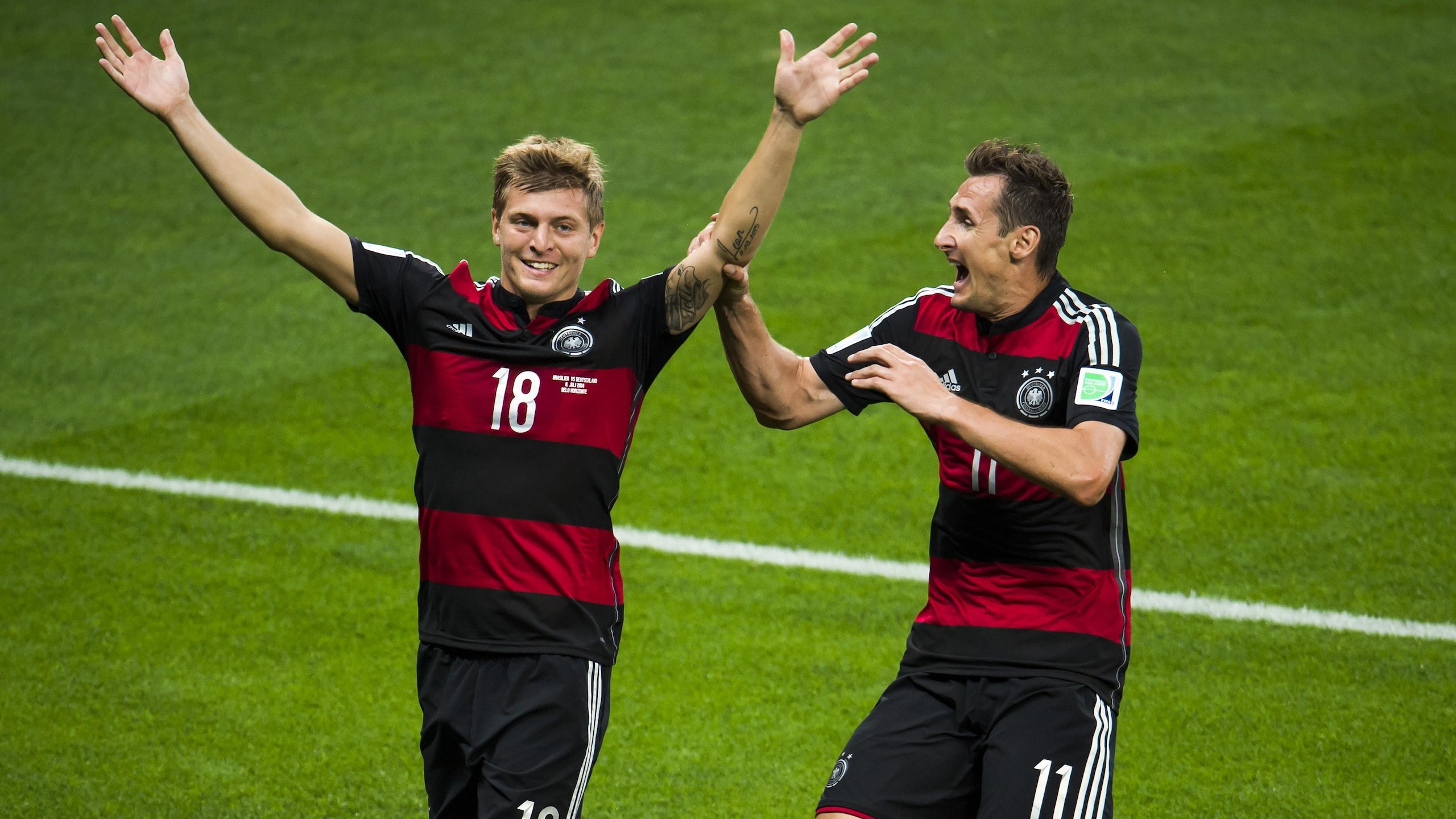
Manufacturer: Adidas
Fashion Icon: Toni Kroos
Germany has had some fetching change strips over the years, though arguably none were more intimidating looking than the 2014 away strip worn by that year's World Cup winners.
The thick black-and-red horizontal stripe pattern fit perfectly with the Germans' longstanding reputation for being physically dominant, technically efficient, and opportunistically ruthless. And it was a departure from the previously mostly monochromatic away strips, which had been green for most of the second half of the 20th century, and then either black or red in the early 2000s.
Die Mannschaft wore this jersey only twice during the tournament, but it included their signature performance: a 7-1 throttling of hosts Brazil in the semifinals, which remains one of the most shocking results in World Cup history.
Joachim Löw's team sprinted out to a 5-0 lead by halftime, with Toni Kroos striking in the 24th and 26th minutes and earning man-of-the-match honors.
Nigeria, 2018 (Home)
13 of 15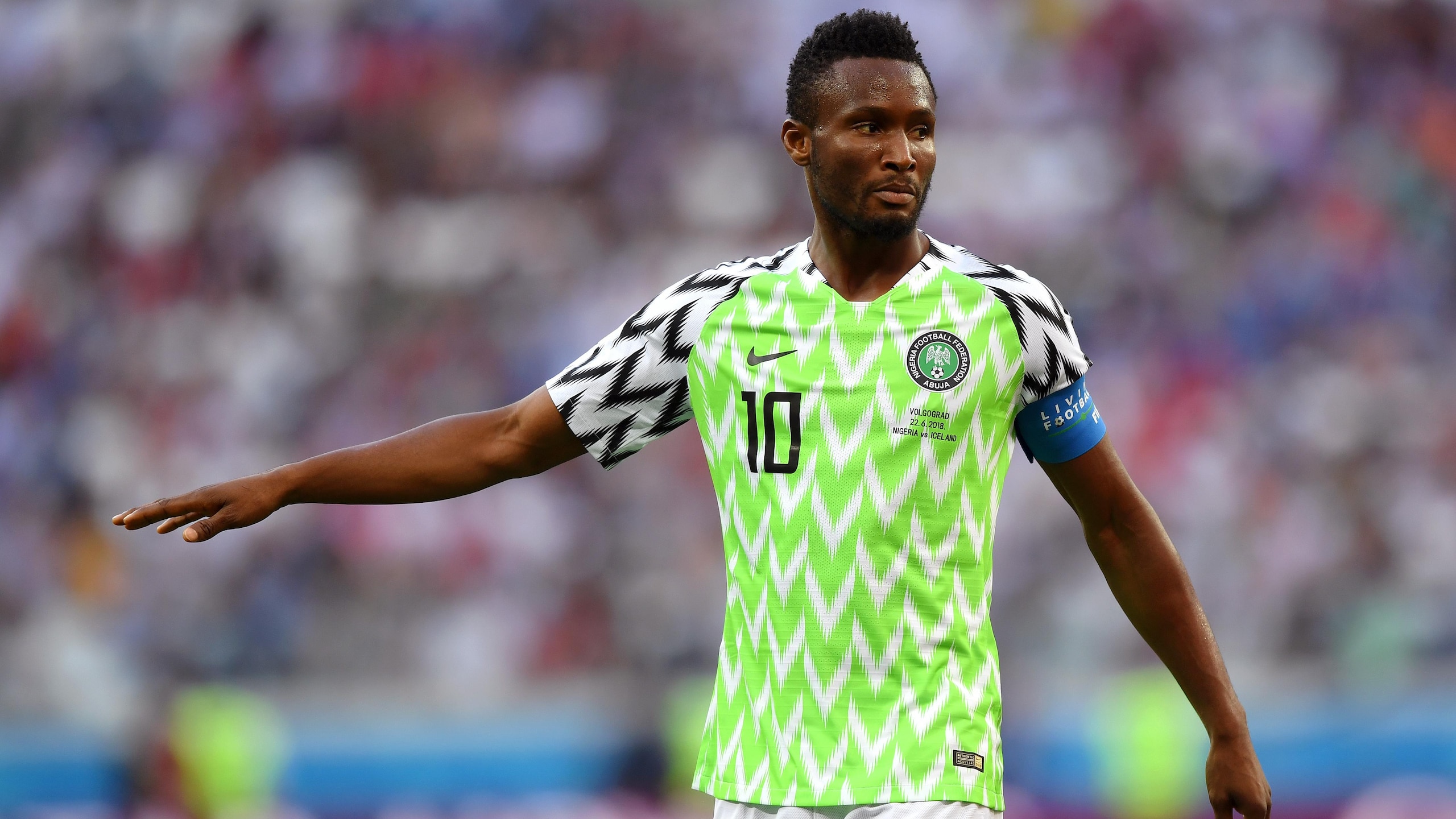
Manufacturer: Nike
Fashion Icon: John Obi Mikel
The 2018 Nigeria strip was arguably the modern equivalent of the 1986 Denmark kit, setting the standard for what a football fashion statement looks like in the digital age, selling out immediately upon release and sending the price up beyond suggested retail value.
A bit like the USA "Bomb Pop" jersey, the Nigeria top took a traditional national color — in this case, green — and turned up the shade. Unlike that United States jersey, Nigeria's 2018 design also referenced the kits the Super Eagles wore on their World Cup debut, with white-and-black sleeves that echoed their white-and-black away strip from USA '94.
Unfortunately, in 2018, the Super Eagles were drawn into a difficult group with eventual runner-up Croatia, Argentina, and debutants Iceland. A 2-1 defeat to Argentina, decided by Marcos Rojo's 86th-minute winner, saved the Albiceleste at the Super Eagles' expense.
Longtime Chelsea regular John Obi Mikel captained Nigeria in that shirt, and the performance was admirable even if the results weren't. The Super Eagles haven't qualified since, despite the expansion of African qualifying to include nine automatic berths in 2026.
Japan, 2022 (Home)
14 of 15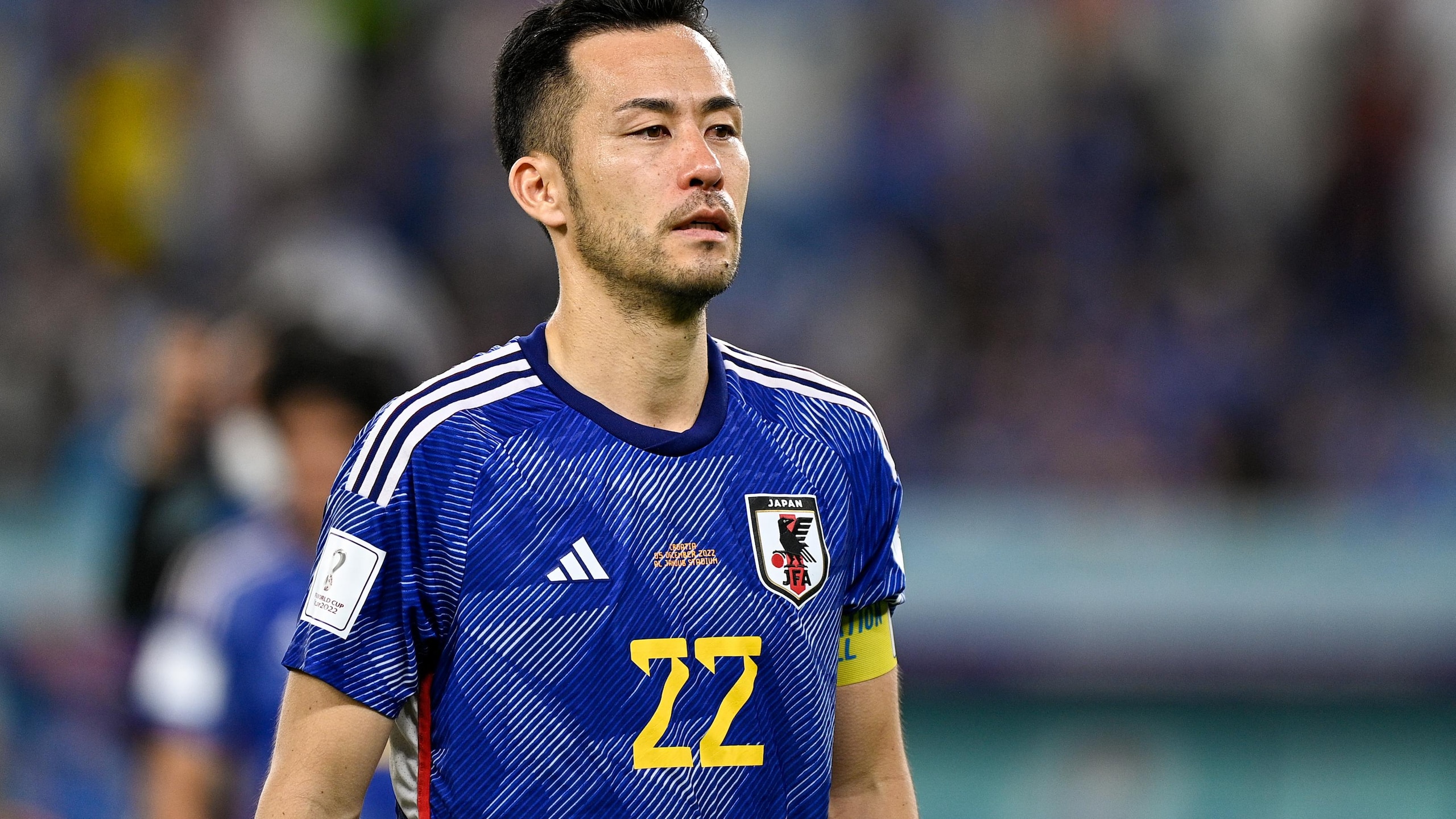
Manufacturer: Adidas
Fashion Icon: Maya Yoshida
Japan has had several sharp home World Cup kits over the years, but the 2022 shirt stands out from the others.
It starts with a very simple adidas template that is almost too understated for a game jersey. But that template is overlaid with diagonal, narrow stripes, which in turn are overlaid with an Origami-inspired pattern in a clear nod to the Japanese art form.
It also helps etch into fans' memories that Japan gave arguably their best-ever World Cup performance in Qatar. While they only matched their previous best finish of the round of 16, that came after group stage wins over world powers Spain and Germany. They were eliminated in the round of 16 on penalties by eventual semifinalist Croatia.
Captain Maya Yoshida anchored a back line that conceded only four goals in four matches, one in each match played. That included a 2-1 win over Spain in which he helped his side absorb a staggering amount of pressure while the opponents held 82% of the possession.
South Korea, 2022 (Away)
15 of 15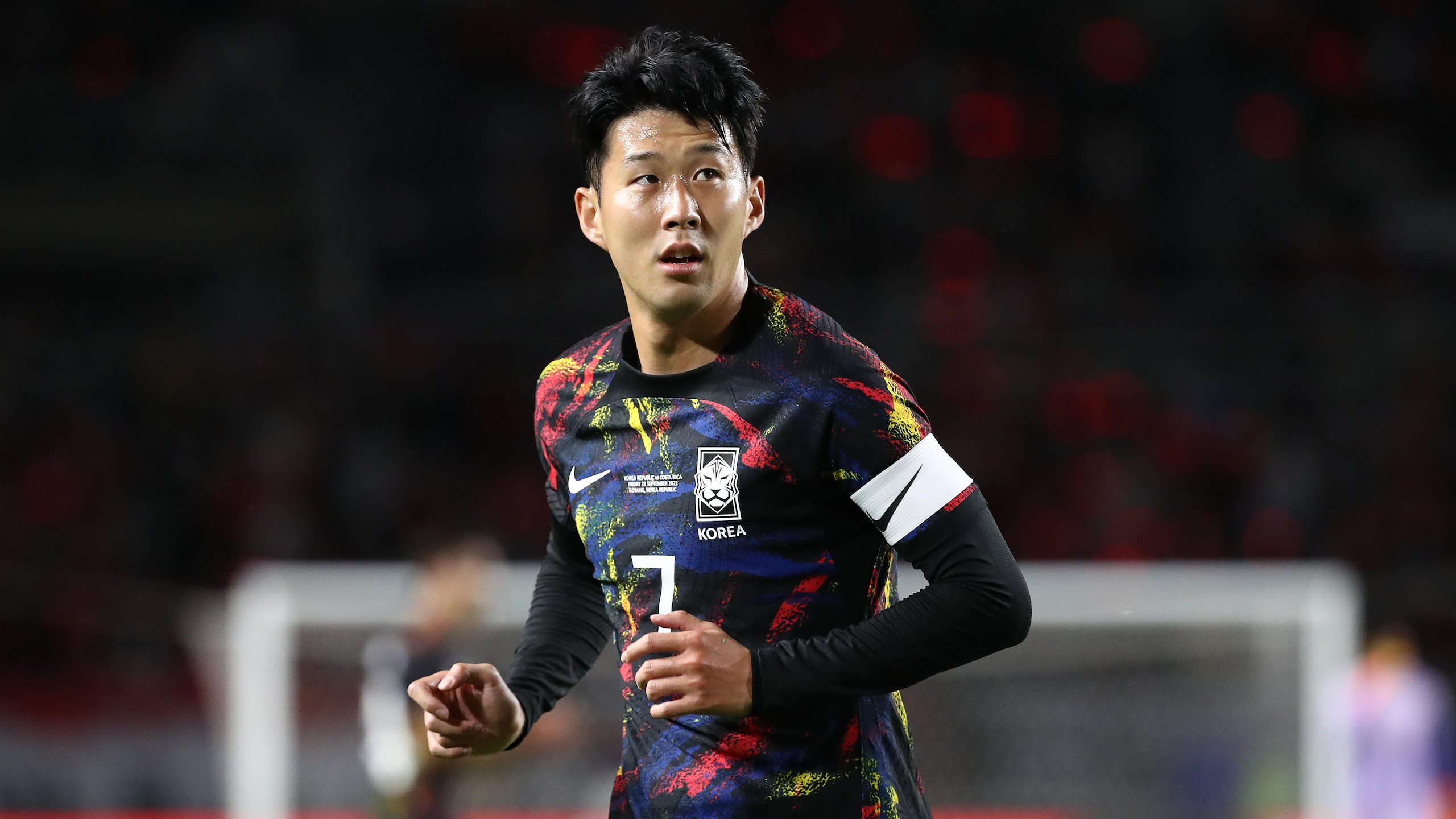
Manufacturer: Nike
Fashion Icon: Son Heung-min
This South Korea away strip got considerably less fanfare than others in Qatar, probably because it was never worn at the tournament itself. But it offered one of the most distinctive looks, in a tournament offering of uniforms where the theme seemed to be tributes to earlier-vintage uniforms.
Perhaps it's a victim of South Korea's reputation for experimentation with away strips, making the act of taking chances feel almost normal. But with a black base layer, overlaid with galactic yellow, blue, and red streaks, it is inspired by Taegeuk, the swirling symbol on the national flag that represents the balance between Heaven and Earth.
Like Japan, South Korea also emerged from a difficult group that included Portugal, Uruguay, and Ghana. And as it was four years earlier, Son Heung-min was again involved in the decisive moment of group stage play, providing the assist to Hwang Hee-chan on the late winner in a 2-1 victory over Portugal to wrap up second place.
.jpg?w=2560 "Packers 49ers Football")
.jpg?w=2560 "Viral Dan Campbell Presser 💙")
.jpg?w=2560 "Report: Steelers WR to Miss 'Weeks'")
.jpg?w=2560 "Buzz: MHJ Hired Agents for Trade")
.jpg?w=2560 "Cam Ward Says He's Not A Loser")


.jpg?w=2560 "Chargers Fall to 0-5 🤢")