
MLB The Show 26 Review, Gameplay Impressions, Videos, Features and Top Modes
Building a dynasty takes time, something developer San Diego Studio has shown in the video game sphere time and again ahead of MLB The Show 26's release.
Like any would-be contender, there have been some lean years. But The Show has been on a steady upswing for a few years now after making the full leap to new consoles.
Said leap has included mindful admissions of misses, salutes to player feedback and careful expansions of things like the card collecting mode, plus the beloved story modes.
TOP NEWS
NFL Season Shaping Up To Be Unpredictable 🗣️
.jpg?w=2560 "Texans Titans Football")
Cam Ward Says He's Not A Loser
.jpg?w=2560 "Broncos Chargers Football")
Chargers Fall to 0-5 🤢
As always for annual sports titles, though, how MLB The Show 26 layers atop the formula will decide whether it's a must-have on an annual basis, or whether it falls into the skippable "next year is our year" column.
Gameplay
Arguably the best simulation in sports gaming took some fun risks one year ago. A feature that let players essentially gamble at the plate felt fun when the pitch location was correct. Plus, a new fielding meter created skill gaps and made things a little less pre-canned and more engaging.
So, how does The Show 26 layer atop?
For one, at the plate, Big Zone Hitting is a new layer to batting. Rather than aim the PCI exactly, players can choose one zone of the plate to attack. Guess right, and there's solid contact almost guaranteed, though the end result is based around a batter's contact rating.
There's also Fixed Zone Hitting, which lets a player focus a specific zone for an entire at-bat. Useful, for example, against specific pitchers or in certain scenarios, especially when looking at the tendencies and available information.
On the mound, Bare Down Pitches is a fun strategic element added to the experience. Based around the clutch rating on a per-pitcher basis, players get to store up these special pitches and deploy them when desired.
Players still need to properly execute the pitch via meters, location and otherwise. But the feature moves things in a little more lifelike directions and offers even more control over late-game outcomes. Or, if a player so chooses, at other points in a game during major scenarios.
The game also promises an expansion of defensive attributes and ratings to better open the gap between elite fielders and otherwise. So far, it feels like the superstar players just seem more like outliers and it doesn't separate the rest of the bunch all that much.
As always, there are droves of obvious new animations to keep the experience fresh. It is, as usual, a very responsive, punchy gameplay experience with enough difficulty options and sliders to be a pick-up-and-play title or something much more competitive.
Graphics and Presentation
By now, most know what to expect from The Show in this department.
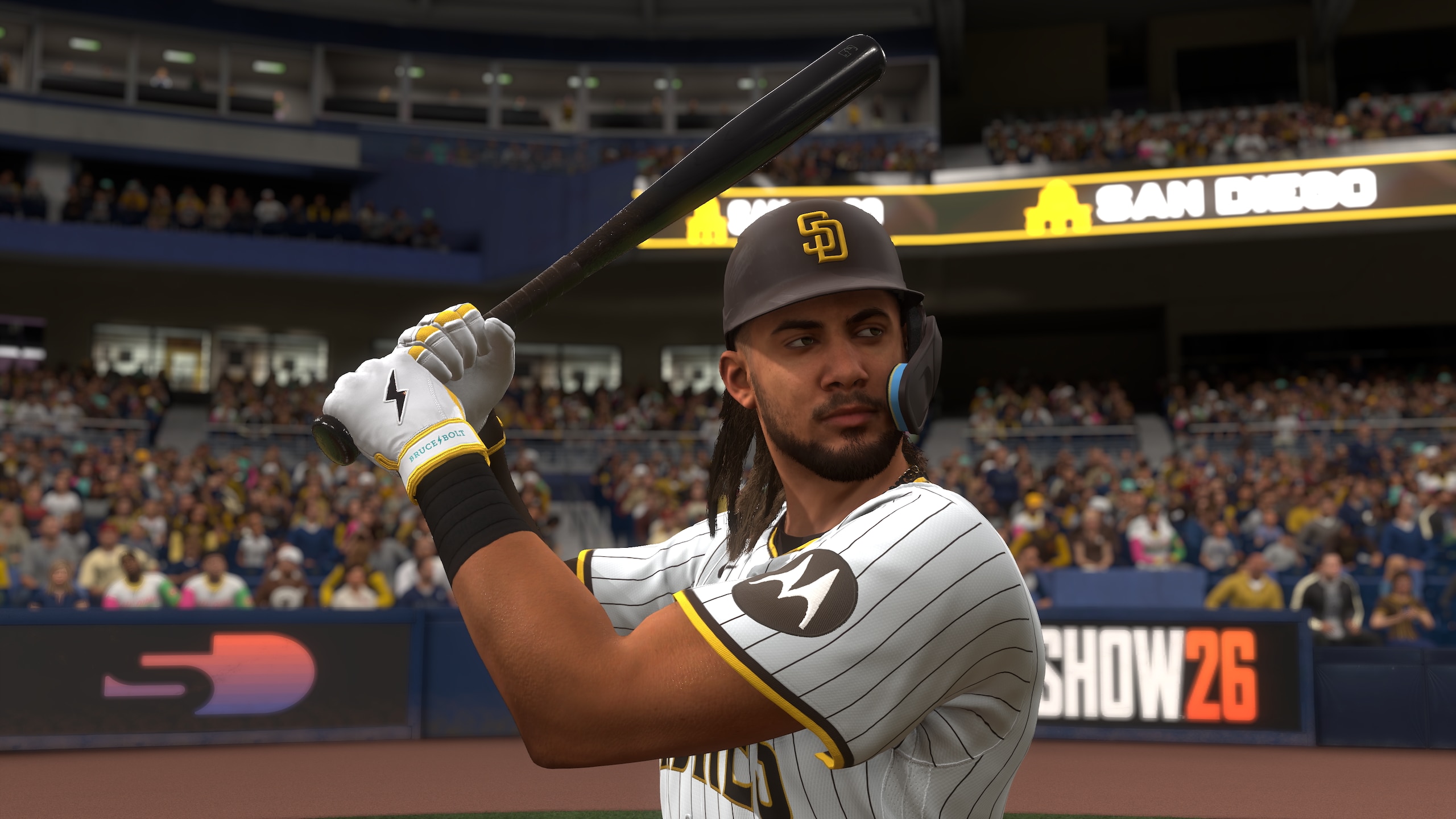
The game looks fantastic, whether it's up close on expressive individual players, or zoomed out to take in some really dense crowds and fantastic one-to-one stadiums and backdrops.
Ditto for the usual suspects like physics and lighting and shadow work, never mind the expected expansion to information charts and data around the gameplay.
Player models themselves don't appear to have changed much, but the starting point was effectively best-in-class among sports titles. Some of the new stadiums, the Tokyo Dome being a highlight, as well as the college additions, really stand out as refreshing.
On the audio side, there are highs and lows. Little details like pitch relays coming through controllers seem improved. It's generally still a very good, immersive offering on this front, but the broadcast crew of Jessica Mendoza, Boog & Singy, and Robert Flores is bound to be polarizing.
To its credit, though, this year's game does a really good job of taking a player's personal storylines and weaving them into broadcasts that, at times, can be a little surprising, in a good way.
This effort does the little things right, too, with the UI less clunky and a little more visually appealing this time out (bonus points for the Diamond Dynasty UI overhaul, too). There's also just endless droves of information on the screen (customizable, of course). It keeps expanding by the year with helpful breakdowns, such as analytics around tendencies.
Road to the Show and More
Road to the Show got a huge injection of life one year ago thanks to the expansion into the high school and college aspect of the MLB journey. The tweak to how players could apply earned points to certain skills was a cherry on top.
Naturally, The Show 26 pumps more effort into the journey players like so much.
The "Road to Cooperstown" and expansion of amateur years lets players choose how their career unfolds. They can jump straight to the big leagues from high school or charge through the collegiate route, including authentic-feeling World Series elements at that level.
It's a needed, solid ramp up of a beloved mode, especially when considering the popularity of the college world series these days and in the way it lessens the need for a college-specific video game.
A year ago, Diamond Dynasty mildly shocked with the straight-up removal of sets and seasons in exchange for a year-long schedule.
Now, a smart expansion of that introduces re-tooled mini-season and new rarity tiers in a way that feels more natural.
Little things like new captain cards in Team Affinity give players more options when it comes to overall progression through the mode.
The card-collecting mode desperately needed to get away from seasons and let players use their hard-earned cards all year. Now, being able to tweak inning length, plus a suggested reduced grind for parallel cards, all seems like a win so far.
Franchise offers up an overhauled trade system that rests in a hub now, which includes everything from rumors tracking to the moves themselves. It's a fun, immersive addition after last year's push to spice up free agency.
This game's promo on the way to release heavily touted improved trade logic, and while it feels solid right now, it's one of those things that will come to light as more players dive in and experiment.
Quality-of-life and player agency remain themes here, as players can tweak when and where they actually enter the mode and which key moments to play along the way.
Storylines returns with season four of the hyper-focused Negro Leagues effort. This time, it spotlights names like Roy Campanella and continues the strong blend of gameplay and cinematics. It is, once again, a fantastic combo of history lesson and an experience that feels like playing through a documentary.
Stadium creator, a Home Run Derby and droves of online multiplayer options again return to make one of the most robust suites in sports games. Ditto for the almost staggering number of options tucked into the menus, all within an experience that once again runs very well.
Conclusion
Some years, one could argue an annual sports title isn't a must-have thing.
With The Show 26, this isn't one of those years.
There's a trust level established between long-time players and the developers here. The requested stuff added to the game, like expanded options at the plate and a more lifelike push for Road to the Show, will once again keep it strong.
Otherwise, at a pretty basic level, The Show 26 continues the trend of serving as the best annual sports title. It's whatever a player wants it to be on the spectrum, from arcade pick-up-and-play fun to deep simulation sim. It's hard to ask for more, but history says the series will keep finding ways to improve and innovate, anyway.
.jpg?w=2560 "Lions Cardinals Football")