My Experience Coaching Hungry Hoopers with $1 Million on the Line
Dylan Murphy recalls his experience as head coach of Ants Alumni in "The Basketball Tournament," a single-elimination, winner-take-all tournament for $1 million. Murphy is an assistant coach for the Fort Wayne Mad Ants of the NBA Development League as well as a Featured Columnist at Bleacher Report.
With under eight minutes to go in the second half, the Notre Dame Fighting Alumni led Ants Alumni by seven points. It wasn’t quite time to panic, but it was certainly time to kick things into another gear.
That’s because $1 million was on the line. Played at DePaul University in Chicago, the winner of this game advanced to the final eight of “The Basketball Tournament,” a single-elimination, winner-take-all tournament originally featuring 97 teams and a slew of talent from a variety of backgrounds.
TOP NEWS
Yankees higher ups annoyed with Aaron Judge
$55 Stadium Nachos in LA 🤨
Melo Defends Angel Reese 🤝
Ants Alumni: Meet The Team
Ants Alumni is a group of former Fort Wayne Mad Ants players (most continue to play professionally overseas or for the Mad Ants in the NBA Development League), six of whom won the 2013-14 NBA D-League championship with Fort Wayne. Garrett Martz, vice president of sales for the Mad Ants, put the team together and asked myself and Kevin Bloom, another Mad Ants assistant coach, to lead the squad.
Notre Dame is TBT’s defending champion, a title that earned them a bye to a play-in game with Midwest Dream Squad. Thanks to a few clutch plays and a buzzer-beating layup, Notre Dame barely escaped to face us the very next day.
Most of their players crossed over in college and know each other well. But they were not afforded the luxury of some easier, early-round games to find a groove. TBT throws them into the fire when the competition has already been whittled down to most of the best teams.
Getting to this point wasn’t easy. Martz saved us from back-to-back-to-back games by compiling enough fan votes for a first-round bye before TBT started, but NBA Summer League commitments and various overseas tryouts trimmed our roster down to five players for the first weekend.
Although there was a big cash prize on the line, many of our players had to balance the potential of a quick payday versus playing in front of scouts at summer workouts to advance their careers in the long term.
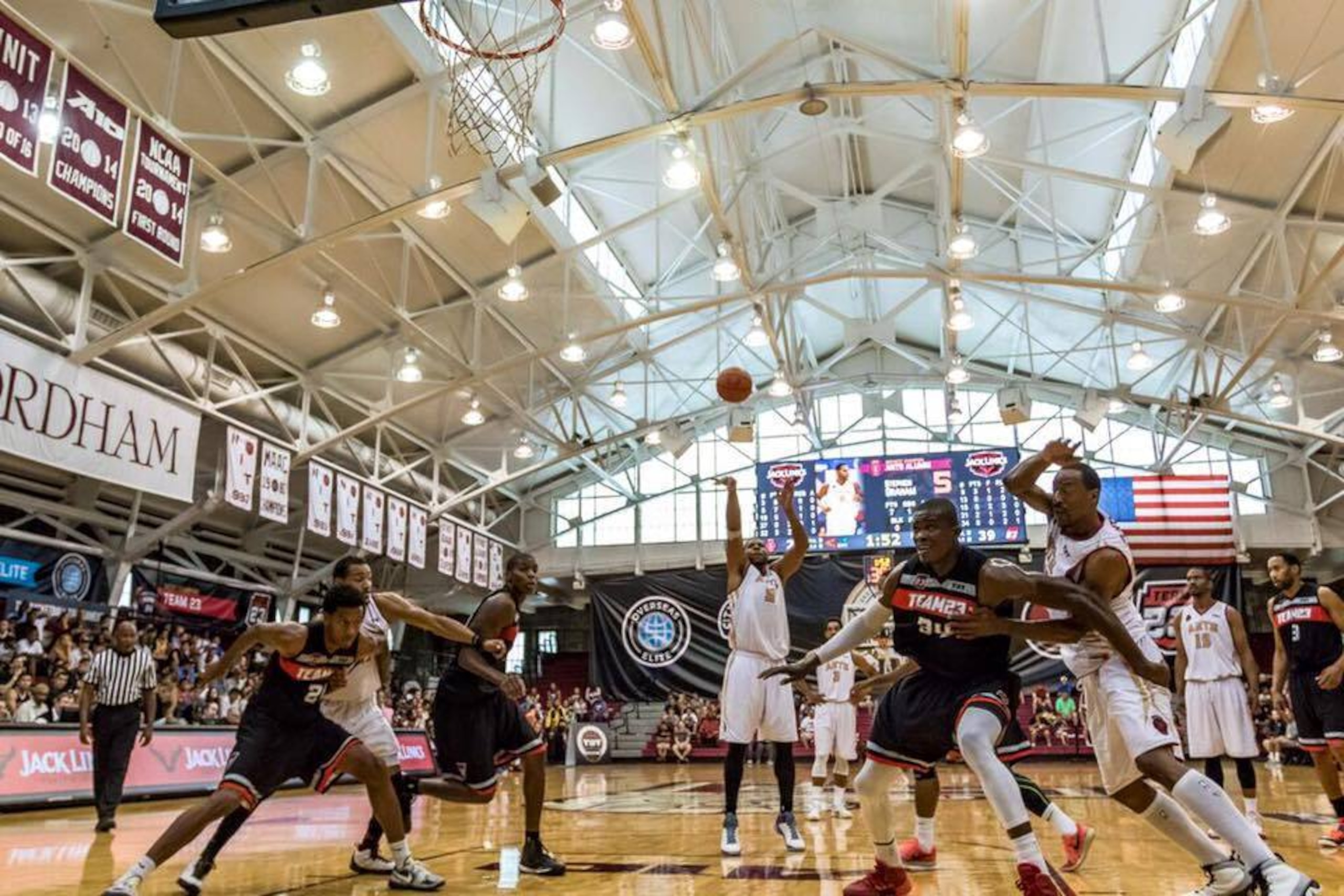
Most of our players have played all over the world—Europe, Asia, Australia, South America, the D-League and even the NBA. Though they might not be household names anymore, they were all once big-time players at major colleges. The vast majority of college basketball players don't play in the NBA. Most follow the path of our players, shuttling across the world to make a career out of playing basketball professionally.
With Anthony Harris (Miami), Rod Wilmont (Indiana), Sadiel Rojas (Oklahoma Wesleyan, former NAIA Player of the Year), Chris Porter (Auburn, and former Sports Illustrated cover athlete and SEC Player of the Year) and Will Frisby (Miami) playing every minute on two consecutive days, we managed to win comfortably against BG Taskforce before edging out a talented Houston Live team—one that featured former NBA player Mike James.
Ants Alumni vs. Houston Live (Round 3)
Coaching only five players brings its own set of unique challenges. We practiced the day before our first game to install some game-plan basics: five offensive sets, a baseline out-of-bounds play, a sideline out-of-bounds play, pick-and-roll defense and various thematic strategies.
With only one short hour to organize, we had to trim down our Mad Ants playbook (anywhere from 150-200 plays) to only a fraction of what our players are used to running.
Without the luxury of substitutions, we also had to slow the pace of the game to conserve energy. When it came to timeouts, I couldn't burn them to stop opponent runs; I had to wield them as tools for energy conservation, spacing them out every six to seven minutes to buy our players a moment of rest.
And then there was the dilemma of fouls. Put simply, nobody could foul out. In our first game, fouls were not an issue. Against stiffer competition like Houston Live, both of our bigs, Chris Porter and Will Frisby, picked up four fouls with 14 minutes to play.
The only solution to this problem was creative but dangerous: Switch Frisby, a 6’8", back-to-the-basket center, onto a 5'10" guard. Although Houston Live’s guard was able to penetrate, Frisby’s verticality made finishes difficult while the rest of the Ants remained glued to shooters.
The isolations ended up leading to poor shots and selfish play, and we were able to milk the 35-second shot clock and hang on for the win.
Ants Alumni vs. Notre Dame Fighting Alumni (Round 4)
Notre Dame was a far tougher test, but the addition of former D-League MVP Ron Howard, championship team starter Trey McKinney Jones, former NBA player Stephen Graham and athletic, rim-protecting center Tommy Smith gave us much-needed relief and flexibility.
Still, we were down seven points late in the second half. We shuffled our pick-and-roll coverage at halftime, opting to switch every ball screen from the point guard to center position instead of having our bigs drop back and our guards fight over top. Notre Dame was bombing and connecting from three-point range, and we gambled that their players were not talented enough to individually carve up mismatches.
The switching initially worked. After falling behind early, we took a lead in the second half and seemed to have everything under control. Then we turned it over, and they banged a three. We missed another shot, and they punished us with a transition layup. Another three-pointer by Notre Dame, and things were spiraling the wrong way.
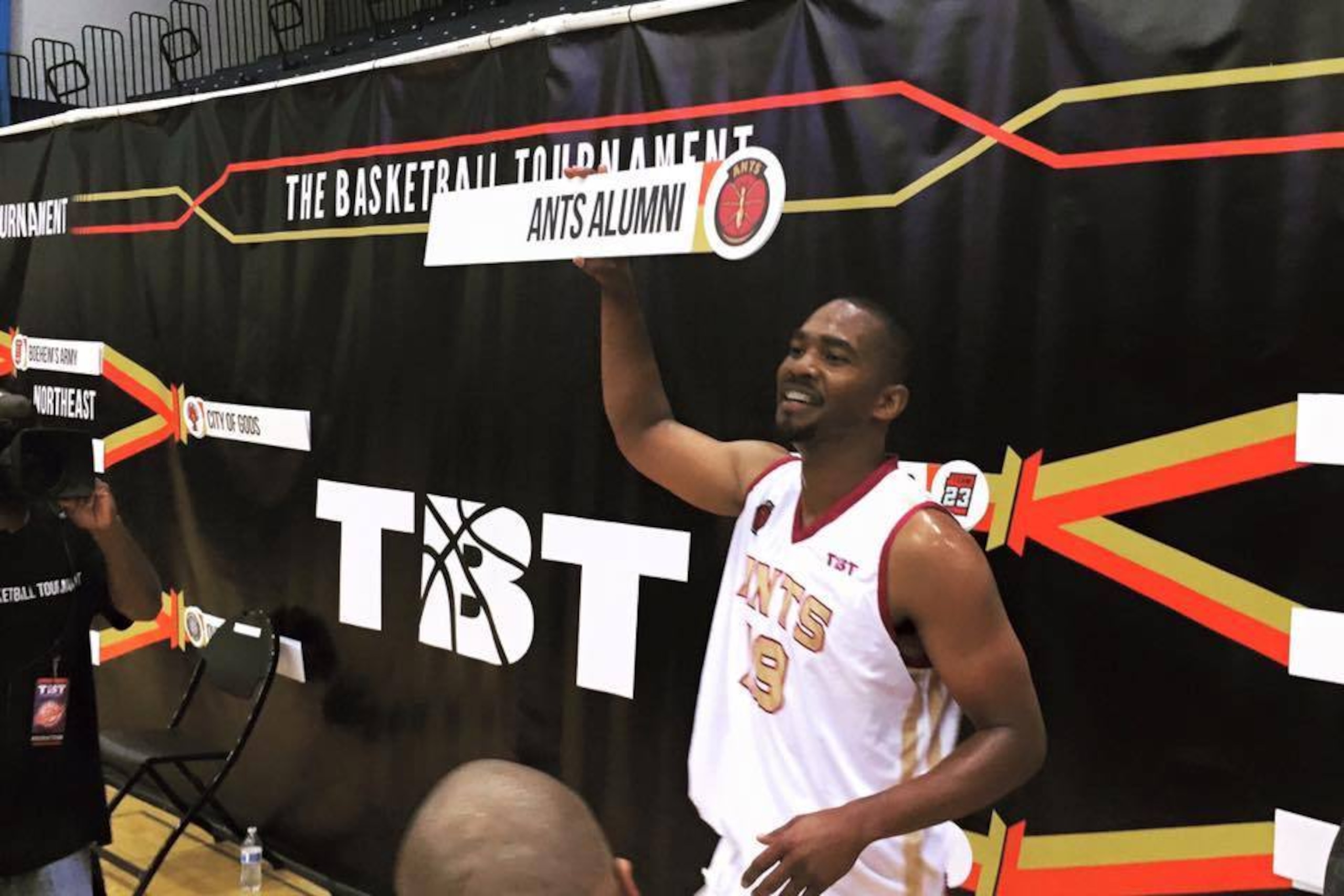
During the ensuing timeout, I didn’t hit our players with a rousing speech or try to motivate them further. Not only is that contrary to my more even-keeled sideline temperament, but professionals also don’t require such dramatics. They’ve all been through the ringer before, both as a group and individually. So I drew up a play and hammered home our “no threes” defensive message just before breaking the huddle.
Porter, our de facto captain, urged everyone to lock in and get stops. Every player knew we were now in what was effectively a straight man-to-man defense with little help. The onus was on them, individually, to shut down the men in front of them.
Not much was said in that moment. There was no bickering. There was no blaming. You could feel the energy, the desperation. The pride. Hands in. "1-2-3... Together!"
Once again, our resolve prevailed. We fought to take a late-game lead before Ben Hansbrough nailed a game-tying three-pointer to send it to overtime. The crowd, due to South Bend’s proximity to Chicago, was clearly in Notre Dame’s corner. But it had been clear in the final moments of the game that we were in control, and in overtime we pounded them to take a resounding five-point win.
The journey toward the $1 million continued on, and we could start to see the money on the horizon.
Ants Alumni vs. Armored Athlete (Round 5)
In our next game against Armored Athlete—a team that featured former Indiana University players Jordan Hulls, Will Sheehey, Christian Watford and former Cleveland Cavalier Alex Kirk, we set a tone from the get-go.
We led by as many as 15 points before they came storming back. Watford, who had been invisible most of the game, nailed three three-pointers down the stretch to keep it tight.
Late-game coaching is always a point of criticism, but until you sit in the chair, it’s hard to grasp every angle that goes into the on-the-fly decision-making.
Who do you trust to inbound the ball? Do you want to go small to spread the floor and switch cohesively on defense, or stay big to have rebounders, should you miss or need to clean up the defensive glass?
Do you have enough timeouts to stop play on a made shot and shift your lineup to a more defensive unit? Do you balance it by having a bit of both on the floor?
Who’s guarding whom? Are you going to foul on defense if you’re up three points? What are you doing on ball screens?
What’s your move if you score? What’s your move if you don’t?
It’s a whirlwind with so much going on—sometimes you only have 30 seconds to figure it out and relay the plan in a timeout)—which is why you rely on assistant coaches to fill in the gaps. Coach Bloom was critical in this regard, as he stayed in my ear with every situational consideration.

Then there's the matter of the play you’re going to run on offense. Typical end-game possessions boil down to isolations or spread pick-and-rolls. Calls for more complicated or clever actions miss a crucial piece of what’s going on: Preset routes and ball movement sometimes push the ball into the hands of a player who is not your primary offensive option.
There’s also the danger of generating a quality shot too early in the shot clock. More structured sets have multiple options, and sometimes you cannot control when the shot goes up.
While this might not seem like a problem, you don’t want to give the opponent time to respond when time is on your side. Every second counts, and particularly in college rules (which governed TBT) by which the ball cannot be advanced, time is the most valuable asset.
That’s why, with less than a minute to go in the game and Ants Alumni clinging to a slim lead, I called timeout and drew up the most straightforward play I could think of: putting two players who can create their own shot in a pick-and-roll.
With Howard running down the clock, Graham sprinted out from underneath the hoop to set a ball screen. Should the defense switch, Graham’s size would enable him to back down a smaller player in the post. Any confusion, and Howard could exploit the defense to get to the rim or pull up for his go-to mid-range jumper.
And that’s what’s also in play here as well: A coach has to consider the respective strengths of his players, the potential mismatches on the floor and the consequences of all outcomes. Howard is a marksman from the mid-range area and a capable bad-shot-maker. Even if the opponent plays excellent defense, he can still score.
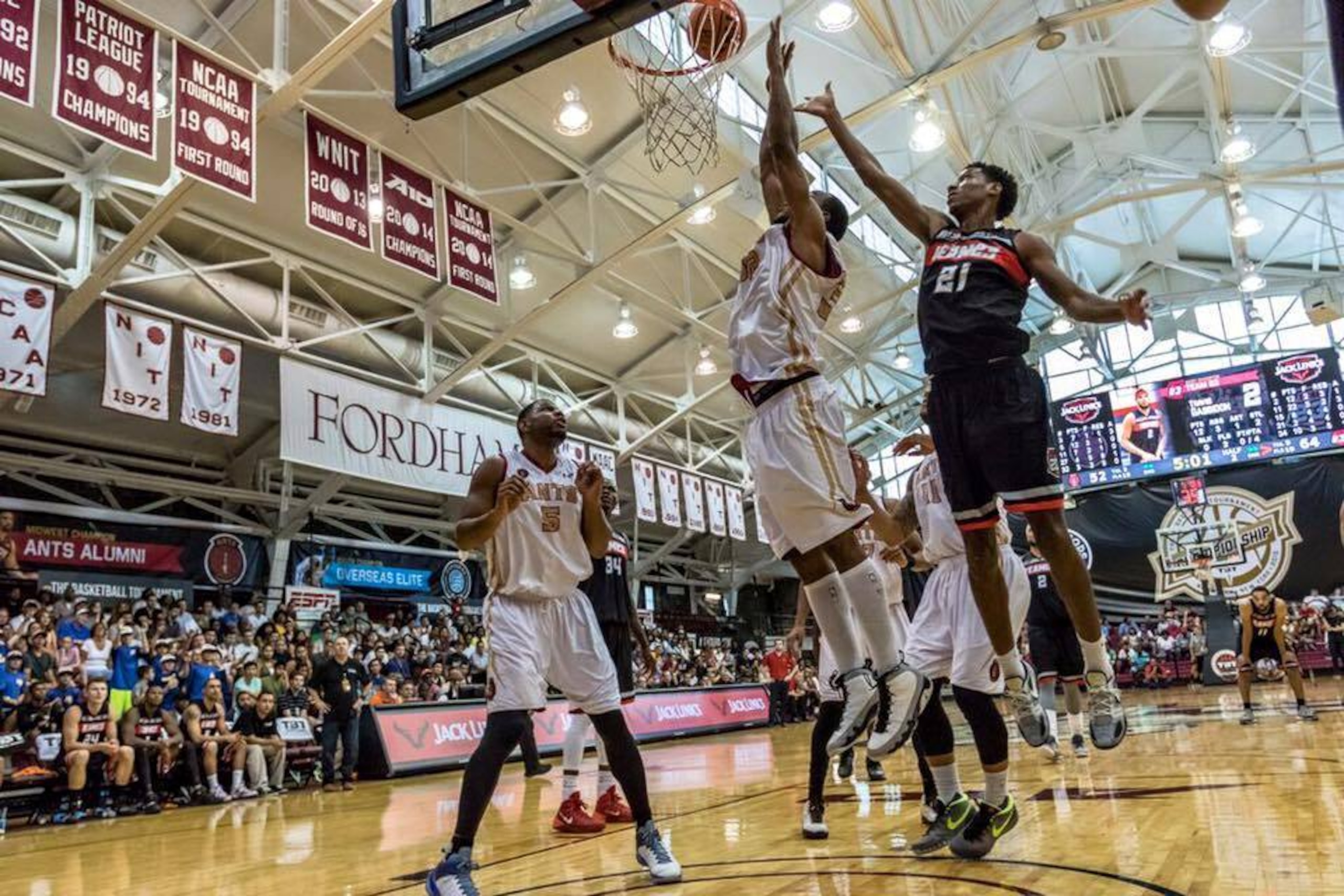
If Howard misses, at the very least, time has run down and the Armored Athlete team only has one opportunity to win the game. Shooting percentages tend to dip in late-game scenarios, meaning it’s still favorable to play defense on the last possession.
Howard ended up slicing into the lane and knocking down a high-arcing floater. Watford hit another three-pointer to cut the lead to one point, but clutch free-throw shooting from Howard and a key rebound by Graham on a potential game-tying three sealed the win.
And so TBT was down to four teams—and we were off to New York for a potential championship showdown. The prize was inching closer.
Ants Alumni vs. Team 23 (Semifinals)
Team 23, our opponent, had blown out everyone it faced. With a week to get ready, Coach Bloom and I prepared a written personnel scout and some offensive and defensive keys to our players—more in-depth scouting normally reserved for the D-League season. But with so much cash on the line, we were leaving nothing to chance.
Once again, our players’ experience in high-pressure situations came to our rescue. We came out flat, falling behind by 18 points in the first half. Davin White, Team 23’s best player, knocked down four three-pointers in the first half. Despite our bigs greeting him at the level of ball screens and doing our best to contest his shots, he extended his range far beyond the three-point line and couldn’t miss.
From a coaching perspective, the toughest part of these situations is the tactical reaction. Do you make significant lineup changes? Do you scrap the game plan? Or do you ride it out and tighten up the execution?
Especially in a single-elimination tournament, it's difficult to resist the impulse for wholesale changes. There's simply no time for things to go wrong.
Our choice fell somewhere in the middle—we knew we needed a change, but we didn't want to completely break character and show signs of panic. We kept coverages mostly the same but shifted Rojas, who had previously been guarding Team 23’s small forward, Larry Owens (a D-League player who had a brief stint in the NBA), onto White.
Rojas was our team’s best defender and pound-for-pound rebounder. It’s hard to imagine a 6'4" power forward dominating the glass, but that’s exactly what Rojas does.
The initial choice to stick him on Owens was twofold. Rojas could match his physicality in the post and be nearer to the glass should a shot go up. White, who is completely perimeter-oriented, would drag him out too far from the rim.
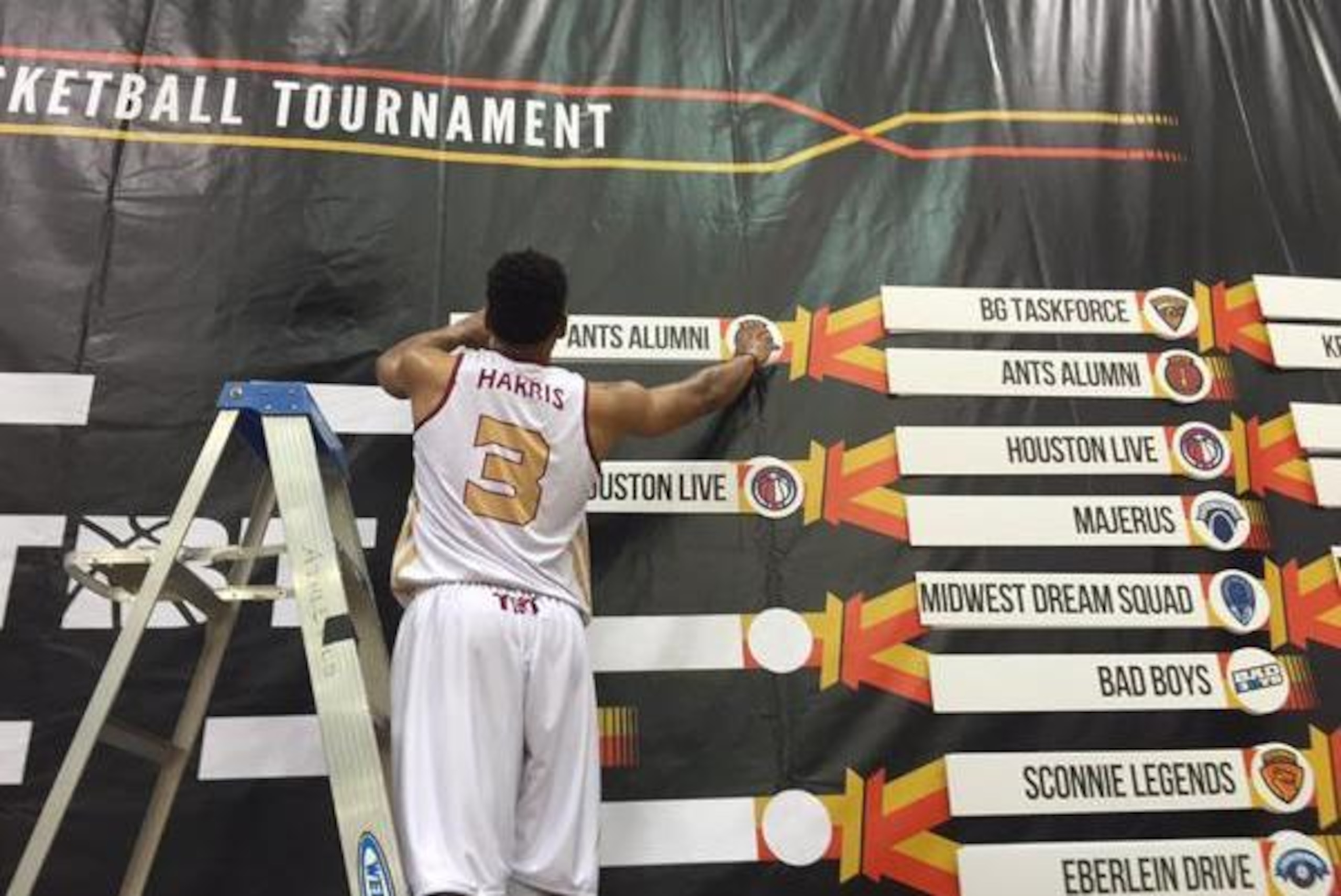
But White was having his way, so we unleashed Rojas on him. Rojas, who was arguably the fiercest competitor on either team every time he stepped on the court, answered the challenge and completely changed the game. An 18-point lead evaporated. We were down three points with all of the momentum and almost 10 minutes still to play.
Team 23, however, was full of pros as well. Most of the teams that made any type of significant run in TBT had a team of professional basketball players.
Although the NBA has most of the best talent in the world, the line between the NBA and other professional leagues—the D-League and Spain’s ACB, for instance—is pretty thin. The NBA is more about timing and opportunity, and there are certainly dozens, if not hundreds of overseas players good enough to make the back end of an NBA roster.
Sometimes a player hits his peak too late in his career; NBA teams tend to favor youth and potential. Sometimes an overseas player is probably good enough for an end-of-the-bench minimum contract but can actually make more money, have more financial security and see more minutes playing overseas.
Team 23 was not going to fold easily. They responded to our run with two free throws and a three-pointer, extending the lead back to eight. Once again, I faced a decision: stick with the lineup that helped us crawl back into the game, or bring in fresh legs to combat Team 23’s countersurge.
I opted for the latter and played small ball, hoping to get our stagnant offense going. But the game held at a 10-point edge for Team 23 until they closed it out to end our run.
We were obviously very disappointed to lose, especially with the $1 million within our grasp. But we were proud to reunite as a group, and you’ll definitely be seeing Ants Alumni in next year’s TBT.
.jpg?w=2560 "Election 2024 Julie Pace Column")