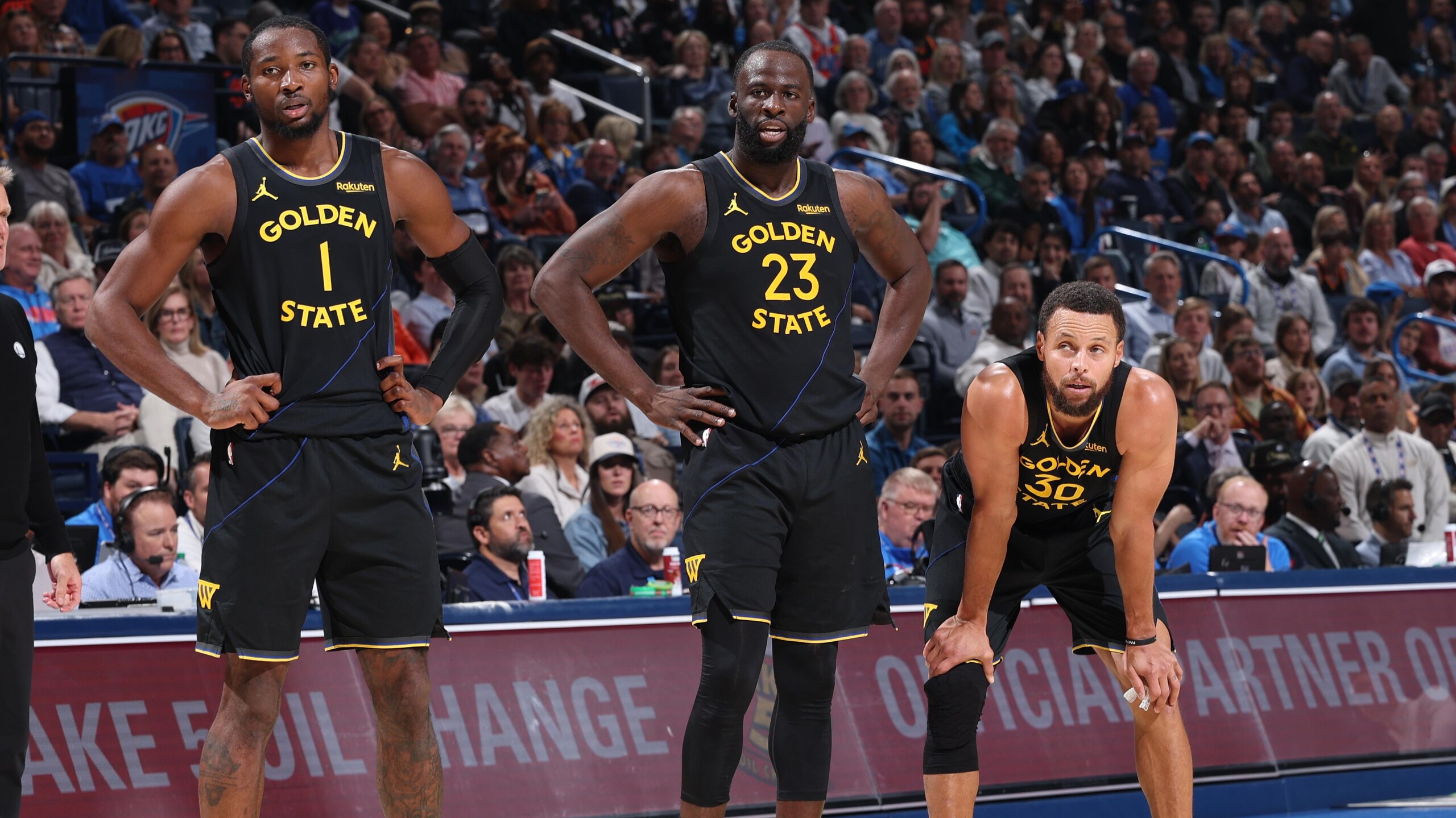

Who's Really To Blame for Golden State Warriors' Two-Timeline Disaster?
Unless you're still big on Moses Moody, we can officially declare the Golden State Warriors' much-maligned "Two Timelines" plan a flop.
The "Two Timelines" plan refers to the Golden State Warriors' (but mostly owner Joe Lacob's) intention to have it both ways. Way back in 2021, just after the Warriors drafted Jonathan Kuminga and Moses Moody in the same lottery, and about a year after they'd added No. 2 overall pick James Wiseman in the 2020 draft, it seemed like the Dubs might be able to extend what was already three championships into a much longer, San Antonio Spurs-ian dynasty.
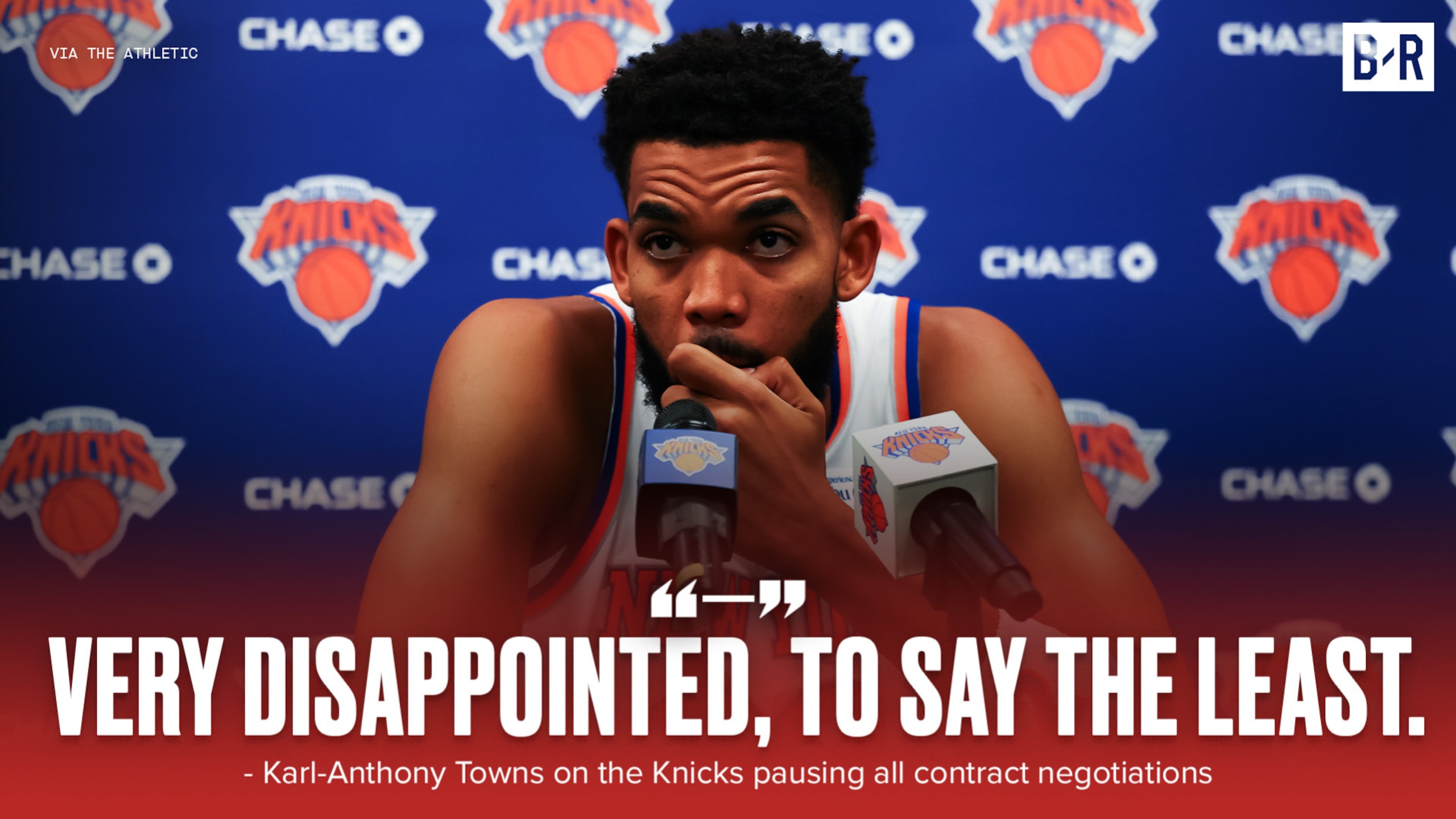

Smash cut to Wiseman being a complete bust, Moody ultimately settling in as a decent role-playing wing and Kuminga getting dealt to the Atlanta Hawks for Kristaps Porzingis' expiring salary, and it's fair to say that Timeline No. 2 didn't exactly materialize.
Yes, the Warriors added a fourth championship to their total. And yes, Kuminga and Moody both had non-trivial roles in that 2022 effort (though they were far more trivial than Jordan Poole's, despite him never really being included in the Two Timeline branding).
That 2022 title owed mostly to the vets. Stephen Curry, Draymond Green, Klay Thompson and Andrew Wiggins solved a not-quite-ready Boston Celtics team with veteran savvy and the very last drops of a decade-long Splash Brothers downpour.
What Could Have Been
Now, with Kuminga gone following years of frustration and the Jimmy Butler-less Warriors facing irrelevancy, the roads not taken loom large.
Wiseman could have been LaMelo Ball, who went one pick later. Tyrese Haliburton came off the board at No. 12 in that same class.
Kuminga, about whom Lacob gushed for the better part of a half-decade, went one pick before Franz Wagner. Both he and Moody were selected just slightly ahead of Alperen Sengün, Trey Murphy III and Jalen Johnson.
That makes it tempting to lay blame for the Warriors' current state at the feet of former GM Bob Myers and the rest of the front office. Of course, it's much easier to do that now, with the full benefit of hindsight. And it's much harder to remember what conventional wisdom said at the time.
Ball came with questions about his shooting and seriousness (not to mention fit concerns next to a 30-year-old Steph). Haliburton almost fell out of the lottery because nobody saw him as a surefire superstar. And all those bigger names taken after Kuminga and Moody drastically outperformed expectations.
Drafting is hard, and choosing the wrong players is understandable. But that doesn't absolve Golden State's decision-makers from blame.
How Careful Is Too Careful?
They're still responsible for hanging onto those "wrong" players for too long. The Dubs, with Mike Dunleavy taking over for Myers, were reluctant to move Kuminga in a deal for Lauri Markkanen two summers ago, a variation on a common theme of Golden State treating its own young players far too preciously.
The biggest misstep may not have been who the Warriors chose in those drafts or how long they held onto them, but that they chose any of them in the first place.
Since the injury-filled calamity that was the 2019 Finals, everyone has been concerned about maximizing Curry's fading prime. The best way to do that was always trading future picks and young players for ready-to-go contributors.
That seems obvious now that we're having the same conversations just ahead of Curry's 38th birthday, but listen to this 2021 snippet from Anthony Slater, then of The Athletic, and tell me it doesn't sound eerily familiar: "Kuminga may very well blossom into an All-NBA wing and Wiseman a dominant center, but even the ultimate optimist would admit that's several seasons from becoming a possibility. They need time and the Curry core doesn't have a lot of it. He's 33. Green and Thompson are 31. The window is closing."
It came much later, but just look at the impact Jimmy Butler had on Golden State after last year's deadline. He was far from a perfect fit and only came aboard because his value had cratered, but he was good enough to transform the Warriors from a .500 team to a squad that might have only been a Curry hamstring injury away from a Conference Finals.
If there's a lesson there, it's that the Warriors were always far too choosy when it came to supporting stars. Curry, Green and Steve Kerr could integrate anyone and succeed, provided the talent was All-Star-caliber or better.
Instead, the Dubs got greedy. They imagined a world where all those kids would develop within a system still defined by Curry, Green and Thompson before ascending to something like starring roles as that cohort aged out. In fairness, that's kind of what the Spurs pulled off with David Robinson giving way to Tim Duncan, followed by Duncan ceding prominence to Kawhi Leonard.
Also in fairness, the Spurs are preposterously hard to emulate. Do not attempt.
Where the Buck Stops
You win three rings and turn a laughingstock franchise into a moneymaking machine that collects banners and hits free-agency home runs like Kevin Durant, and you start to feel yourself a little.
"Honestly, this is sort of my dream," Lacob said in 2021, per Slater. "And I know this isn't popular with a lot of people. They think we ought to go get the next star. We already have the stars."
Critics will bring up Steve Kerr, who was never comfortable with letting Kuminga play the way he wanted to play. Myers, no longer with the team, naturally has to wear some of this as well. Don't forget Kuminga himself, who refused to consistently do the little things that would have earned him more playing time.
Stepping back, it's tough to argue that anything the Warriors did over the last decade-plus should be called a failure. Four championships is a spectacular achievement. Whatever blame you want to apportion to anyone in the organization for perceived mistakes should pale in comparison to the credit those same people deserve for a triumphant run.
But it should also be uncontroversial to say the man who writes the checks and gets final sign-off on the matters of greatest import, Lacob, is ultimately the one who bears responsibility when grand plans don't quite work out.
I'm betting Lacob will happily accept accountability for the results of his ambition, probably while polishing his quartet of rings and drawing up ideas on how to get a few more.
Stats courtesy of NBA.com, Basketball Reference and Cleaning the Glass. Salary info via Spotrac.
Grant Hughes covers the NBA for Bleacher Report. Follow him on Bluesky and subscribe to the Hardwood Knocks podcast, where he appears with Bleacher Report's Dan Favale.

.jpg?w=2560 "AD Trolls Bears WR on IG 😂")
.jpg?w=2560 "Viral Dan Campbell Presser 💙")
.jpg?w=2560 "Buzz: MHJ Hired Agents for Trade")
.jpg?w=2560 "Report: Steelers WR to Miss 'Weeks'")
.jpg?w=2560 "Cam Ward Says He's Not A Loser")


.jpg?w=2560 "Chargers Fall to 0-5 🤢")