
Why Super Rugby's Exodus Won't Stunt the Southern Hemisphere's Dominance
The exportation of Super Rugby's best and brightest players would, in theory, threaten to weaken the southern hemisphere's national teams, largely regarded as being the best in the world.
It's namely New Zealand, South Africa and Australia who will be hit hardest by a post-Rugby World Cup exodus of playing talent, but the trio of rugby titans have the framework in place to prolong their dominance.
European clubs will find their money-spindling could even come to damage the national teams of those countries they represent.
TOP NEWS

New NFL Power Rankings 📊
.jpg?w=2560 "Texans-Mixon Released Football")
Injury-stricken Seahawks signing veteran RB
.jpg?w=2560 "Commanders Eagles Football")
2 NFL Officials Suspended
Approaching the Problem
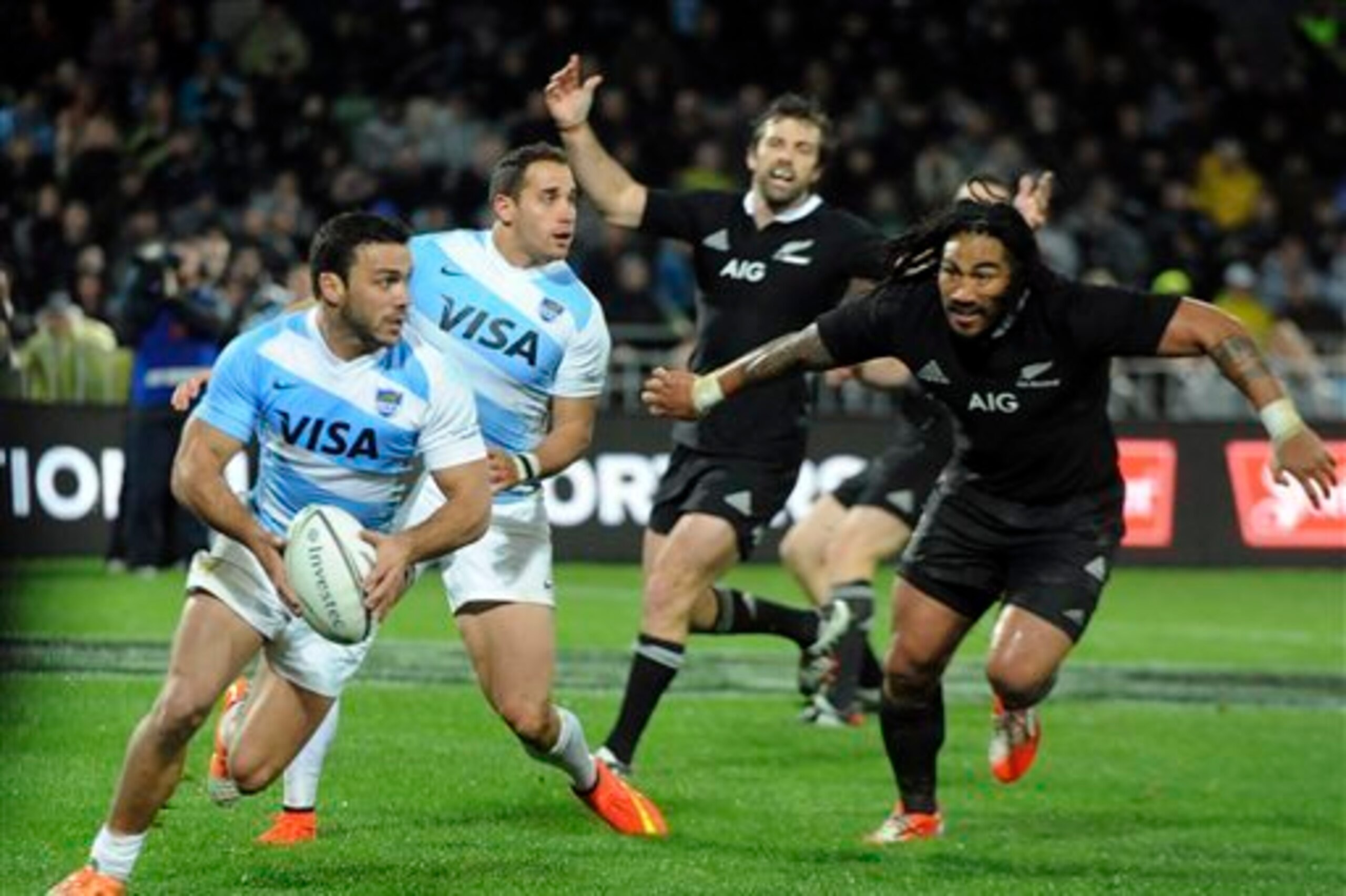
Between selection policies and the need for coaches to regularly see their stars in action, it stands to reason that the impending wave of Super Rugby departures may cripple those aforementioned international outfits to some extent.
Simon Thomas of Wales Online provides a comprehensive list of the names leaving Super Rugby in the months to come, with Ma'a Nonu, Dan Carter and Bismarck du Plessis among those leaving:
| Dan Carter | Crusaders | Racing 92 |
| Ma'a nonu | Hurricanes | Toulon |
| Conrad Smith | Hurricanes | Pau |
| Will Genia | Queensland Reds | Stade Francais |
| Colin Slade | Crusaders | Pau |
| Sekope Kepu | Waratahs | Bordeaux |
| Adam Ashley-Cooper | Waratahs | Bordeaux |
| Willem Alberts | Sharks | Stade Francais |
| Bismarck du Plessis | Sharks | Montpellier |
| Jannie du Plessis | Sharks | Montpellier |
| James Horwill | Queensland Reds | Harlequins |
This isn't a new obstacle for "the big three," however. In years gone by, fans saw household names heading for the more lucrative pastures of Europe—such as Carlos Spencer or the late Jerry Collins—but this year's upcoming departure list is grander than any seen in the past.
In particular, it's the rise of the French median in terms of spending potential that seems to be raising the bar, with Paul Williams of Rugby World highlighting the Top 14's financial allure:
One need only look to the likes of Bordeaux or the promoted Pau to see just how widespread heavy splurging now is in France, despite the need to still fall within a prescribed salary cap.
And despite this, the southern hemisphere will endure.
It seems damning to eliminate the possibility of any European nation dethroning their southern superiors, but the sad fact remains that New Zealand and their ilk have built up so much respect and momentum as a team, it's difficult to see them falling.
Former England prop and 2003 Rugby World Cup winner Phil Vickery wrote in a column for ESPN last year, detailing the need for his former side to be "perfect" against the All Blacks, admitting tactics only go so far:
"The secret to beating the All Blacks is fairly simple - it lies within you. It comes down to your belief and mentality. Tactics against the world's best team only do so much; you have to take yourself to another level of intensity and concentration to a place where you repeat everything you do perfectly.
Some teams have a defeatist mentality before they take to the field, they believe if they can keep the All Blacks down to something below a cricket score, then that is a moral victory. England do not have that mindset and each and every one of those 15 players who run out on Saturday have to truly believe they are better than their opposite number.
"
Some debate whether the pre-game ritual really deserves its place in rugby, alleging it offers too hefty an advantage to New Zealand. Admittedly, one would need to be made of stern stuff to avoid its inevitable intimidation.
That mental hurdle is something England, Ireland, Wales, France, Scotland and the rest must overcome every time they take on a team from the southern hemisphere, but is always easier said than done.
The Next Generation
There's no disputing the fact that, historically at least, those from the south side of the equator have established themselves as rugby's best. After all, England are the only northern-hemisphere nation to have won a World Cup, with the All Blacks, Springboks and Wallabies each claiming two apiece since 1987.
It was during a recent Rugby Championship clash between New Zealand and South Africa that Murray Kinsella of The42.ie agreed European representatives would struggle against such rabid quality:
It's a catch-22 situation for the big-spending powers of the northern continent, though, and international selectors may not be as pleased to see so much foreign talent arriving in the Premiership, Pro 12 and Top 14.
That's due to the fact that for the more expensive recruits to have their impact, it inevitably reduces the chances for homegrown assets to make their way through the senior ranks and make their mark.
In turn, this would see the likes of France and England in particular be forced to pick from a wider pool of clubs, with the top-placing sides presumably succeeding thanks to their influx of overseas players.
England were again impressive in this year's World Rugby Under-20 Championship—a place where young talent can't be blocked by purchased players—to impress SuperSport's Brenden Nel:
However, the transient world of rugby appears to abide by a one-way route; there's a strong possibility any up-and-coming Premiership youngster could see their progress impeded by a foreign star, but the chance of a Super Rugby prospect being stunted by a European import is slim to none.
Participation figures and rugby's prominence in each respective nation will also play a part in development moving forward.
A study conducted by Ruggerblogger, based on numbers from the International Rugby Board, around the time of the 2011 Rugby World Cup showed that rugby players in the southern hemisphere are more likely to be senior males (aged 18 and over) than their northern-hemisphere counterparts:
| England | 2,549,196 | 166,762 | 6.5 |
| France | 273,084 | 110,270 | 35.1 |
| Ireland | 153,080 | 25,440 | 16.6 |
| Wales | 50,557 | 22,408 | 44.3 |
| Scotland | 38,500 | 11,687 | 30.3 |
| South Africa | 632,184 | 109,878 | 17.3 |
| New Zealand | 137,835 | 27,374 | 19.8 |
| Japan | 122,598 | 53,001 | 43.2 |
| Argentina | 102,790 | N/A | N/A |
| Australia | 86,952 | 39,380 | 43.8 |
England's figures may be conflicted due to the fact their overall participation numbers are so far beyond that of any other nation, but New Zealand, South Africa and Australia possess a greater willingness to play the sport beyond school level.
Wales, Scotland and France buck the trend in some way, but when considering the proportionately minuscule participation numbers of the former pair in particular, their future doesn't seem as bright.
When it comes to rugby, the northern hemisphere has long been green with envy of the south, not just because the best players tend to originate from those circles, but because they can produce elite talents in bulk.
The selling structure may change for peak players, but New Zealand, South Africa and Australia will not be changing their grassroots systems soon, and therein lies the reason they'll continue to excel.


.jpg?w=2560 "Mahomes' Wife Trolls Kubiak 💀")

.jpg?w=2560 "Viral Rams Coach Vid 🖕")