
Miami's Rebuild is Complete Despite National Championship Loss, So What's Next?
MIAMI GARDENS, Fla. — The rebuild is complete.
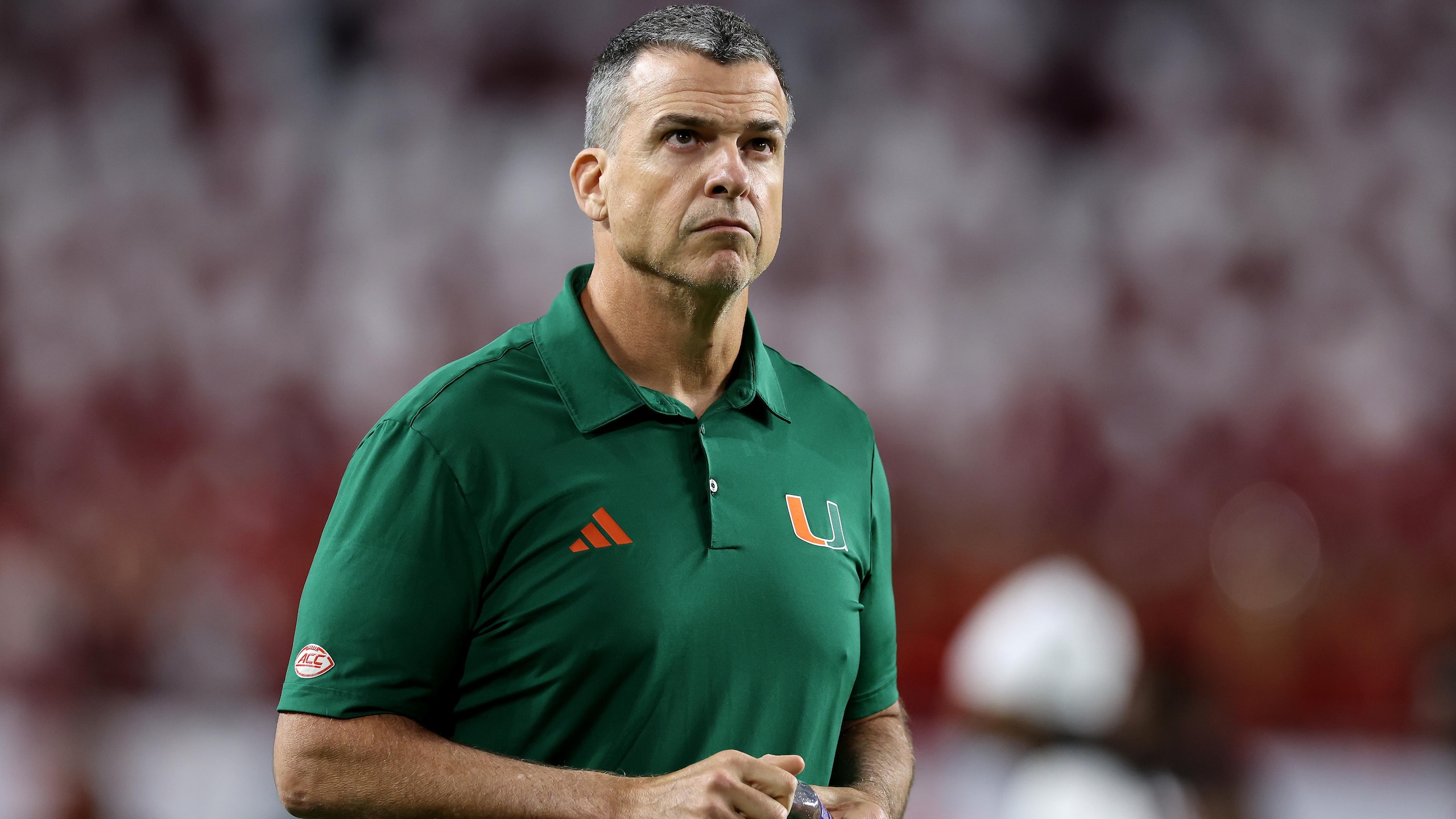
Four years ago, Mario Cristobal exited a comfortable Oregon job to embrace the most passion-fueled project of his career. The former Miami lineman and assistant coach returned to his alma mater, aiming to drag the Hurricanes out of a two-decade slump and back to the heights of contention.
Early in his tenure, it was ugly. Losing-to-Middle-Tennessee and falling-to-Florida-State-by-42 points types of ugly.
TOP NEWS

Deion Playbook Found at Hotel

Week 5 AP Top 25 Poll 🔢
Top Overreactions after Week 5 of CFB Season 😧
Cristobal had chosen to strip the program down to its metaphorical studs, instill a golden-age brand of toughness and elevate the depth of Miami's talent. While it does not excuse embarrassing results of that nature, the philosophy would require a meticulous, patient approach from all involved.
"This was a fight that had to be had," Cristobal said on Media Day before the championship game. "This was a journey with painful steps that could not be skipped, regardless of what came with it."
Monday night, the 'Canes had the opportunity of Cristobal's vision. They played for a championship in their home stadium—albeit with a crowd slightly leaned in the favor of top-ranked Indiana.
Sixty minutes later, the Fernando Mendoza-led Hoosiers tied a final ribbon on their historic, legendary ascent under Curt Cignetti. Indiana won 27-21.
Miami's rebuild, nevertheless, is complete.
The bigger challenge—become a truly consistent threat—is only beginning.
To say "any program" can reach this level would be flippant and disrespectful to the players, coaches and teams that actually do. History, however, is littered with examples of one-year wonders and short-term thorns.
Avoiding just a fleeting moment in the spotlight has always been Cristobal's goal.
"The whole intent of us when we got here was to build a program that's sustainably a contender and a championship program," he said in January 2025.
This recent campaign—thanks to a deep College Football Playoff run—validated how Cristobal wanted to craft his foundation. Miami had plenty of skill but rode a powerful offensive line and rock-solid defensive front.
Moving forward, that identity will not change. The players now will, though.
Gone are at least three blockers, including likely first-round NFL draft pick Francis Mauigoa. Also leaving are coveted NFL talent Rueben Bain Jr. and Akheem Mesidor, arguably the nation's top edge-rushing duo. Miami must replace quarterback Carson Beck, a pair of key receivers, a few linebackers, star nickel Keionte Scott and safety Jakobe Thomas, as well.
Miami has garnered much praise—or disdain—for its involvement in the transfer portal. Cristobal and his staff have routinely made strong evaluations and used the many millions at their disposal to attract that impactful talent.
But reality also shows a roster built largely the traditional way in recruiting.
Top running back Mark Fletcher Jr. has announced he'll return as a senior, and do-anything wide receiver Malachi Toney is already a superstar. Matthew McCoy and Samson Okunlola should be the starters at guard, and Miami has a heap of hand-picked talent on the offensive line. Jojo Trader has breakout upside at receiver next season, and Joshua Moore is among the quality young wideouts.
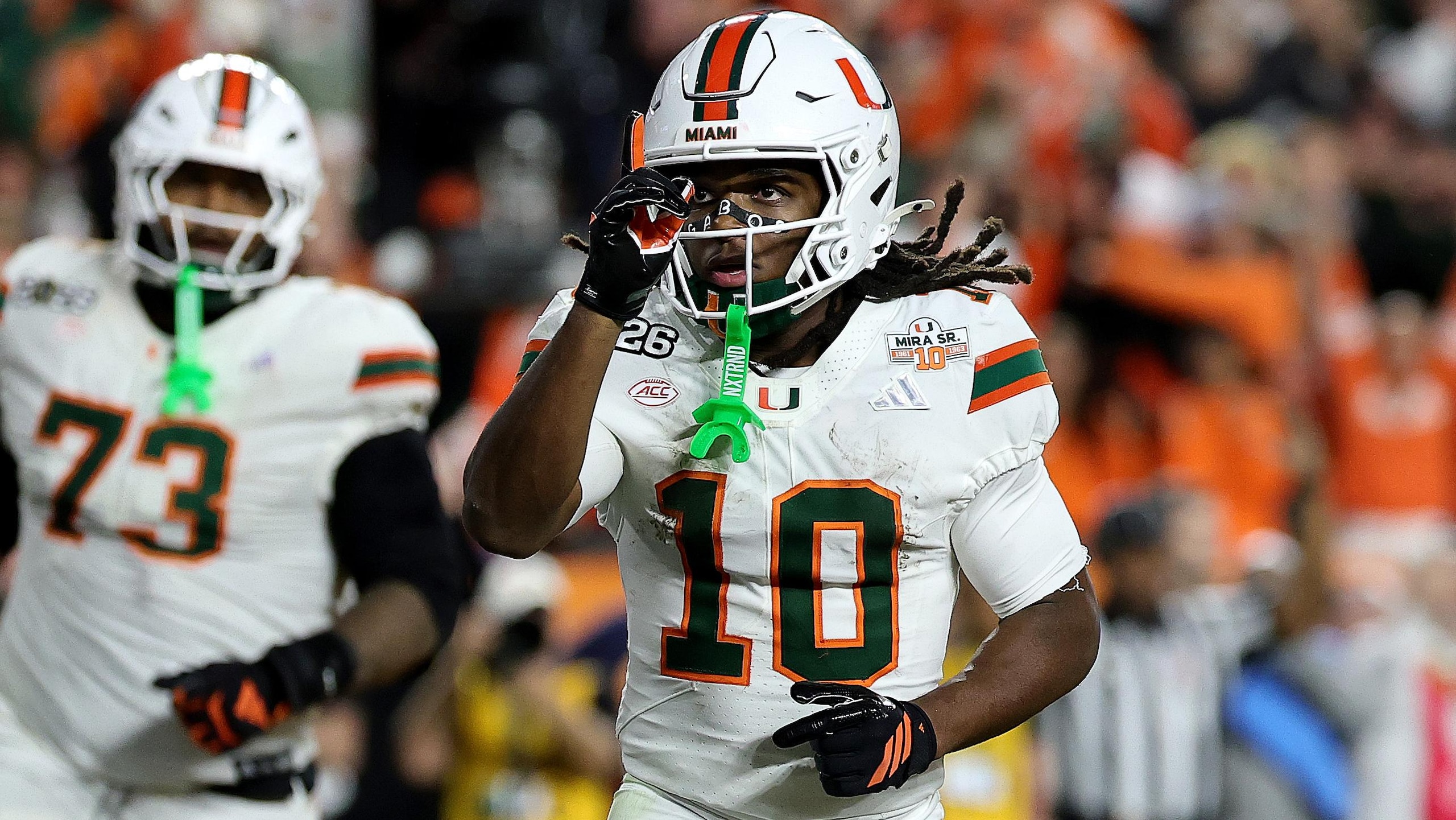
On the defensive side, the departures of Bain and Mesidor—while not something to merely dismiss—are opening the door for a new wave of stars.
Especially if the 'Canes keep D-tackle Ahmad Moten Sr., the line could be excellent again. Justin Scott, Armondo Blount and Marquise Lightfoot each worked into key rotational roles as sophomores. Raul Aguirre Jr. is an elite run-stopping linebacker, while corner OJ Frederique Jr. was a Freshman All-American in 2024 before safety Bryce Fitzgerald did the same in 2025.
As if that's not enough, a third consecutive top-15 recruiting class—one loaded with early enrollees who went along for this CFP ride—is inbound.
Yes, there are several key transfers on the team. But other than overhauling the secondary last offseason, Cristobal has pushed Miami into a position to target specific players for particular needs—in other words, quality over quantity.
That, in today's era of movement, is a sign of a healthy program.
Monday's loss is destined to sting. Between the context—a home game, a tight fourth quarter—the obvious stakes and the overall difficulty of actually making it this far, the loss is devastating.
There are no promises of another chance in the future, no matter how healthy a program is. This might've been Cristobal's only chance.
Simultaneously, it's plainly evident Miami is built to contend again.
Four years ago, Cristobal sold this vision when it was nothing more than a plan and dream. There was never a guarantee the 'Canes would hit this stage, yet they methodically rose out of 2022's ugliness and into 2025's exhilaration.
Miami fell short against Indiana.
Because of Cristobal's well-executed plan, however, the Hurricanes shouldn't be disappearing anytime soon, either.
_0.png?w=2560)


.jpg?w=2560 "NFL investigating 2 referees for separate viral exchanges")
.jpg?w=2560 "OBJ Calls Out Giants 😳")


.jpg?w=2560 "Ward Nearly Walks Out of Presser 😳")
.jpg?w=2560 "Tyreek makes another cryptic post amid Chiefs rumors")