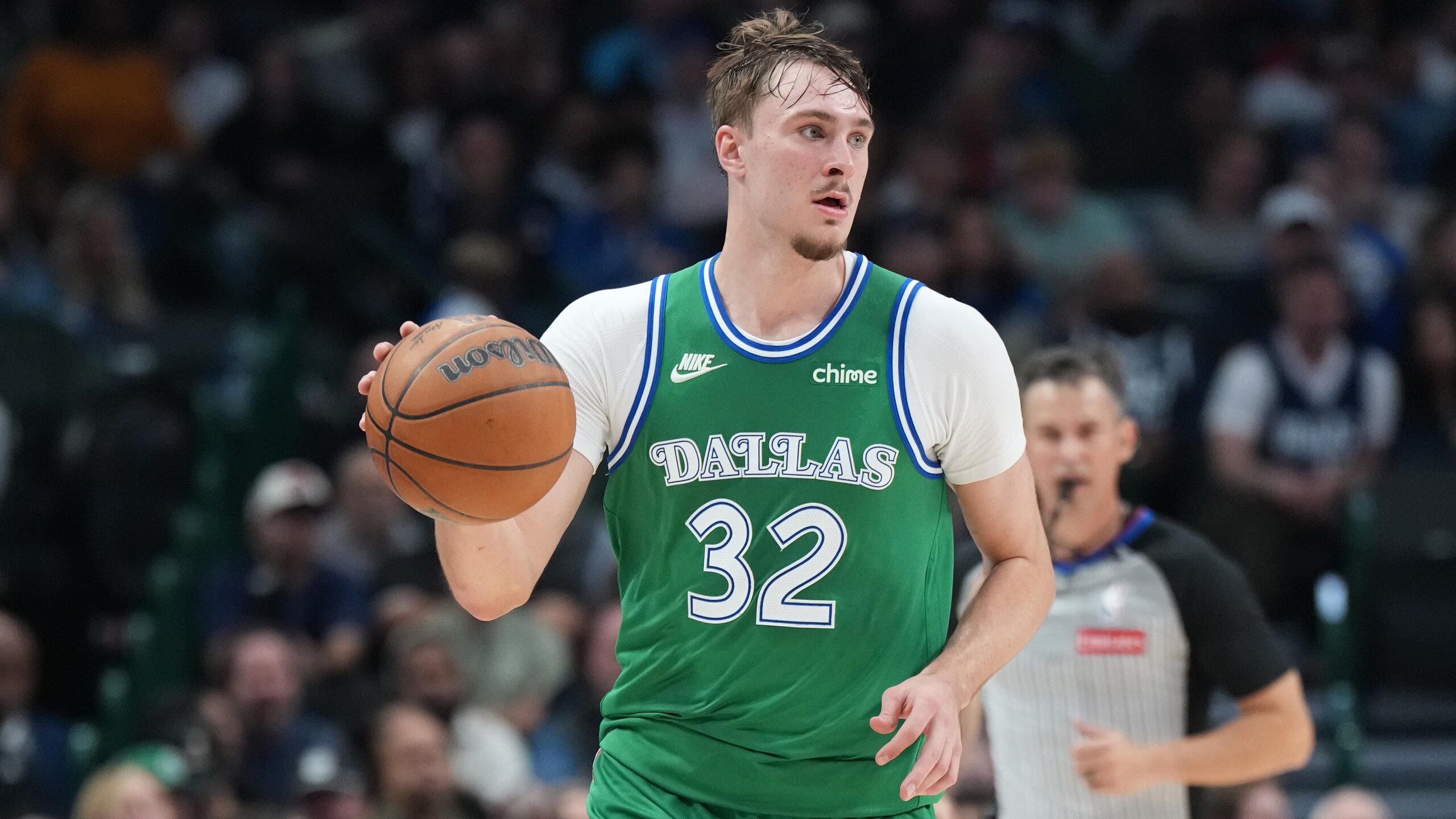

NBA Execs Discuss Where Cooper Flagg Would Be Picked in 'Special' 2026 Draft Class

Dallas Mavericks rookie Cooper Flagg may not stay the No. 1 overall pick in the draft if he were to be part of the 2026 class, according to Yahoo Sports' Kevin O'Connor.
"To put it into perspective, some executives around the NBA say that if Flagg had never reclassified and were instead part of this 2026 group, he probably would be the third pick at best but could go as low as fifth or sixth," O'Connor reported Friday. "That is how special this group could be, so the chance to acquire one of them is why we're already seeing teams bottom out so hard."
TOP NEWS

Power Ranking Every NBA Team's Starting Lineup 🔢
Luka 50 Piece in Win 🔥
Worst NBA Predictions 🫣
Flagg could have been a member of the 2026 draft class, but reclassified from 2025 into the 2024 class when he was in high school.
Flagg eventually committed to Duke and excelled throughout his lone season with the Blue Devils, leading to the Mavericks selecting him with the top choice in the 2025 draft.
The 18-year-old has shown promise to open his career in Dallas despite still searching for more consistency with his jumper, averaging 15.1 points, 6.8 rebounds, 3.3 assists and 1.4 steals per game across 12 appearances. Flagg is also shooting 42.1 percent from the field and 28.6 percent from three-point territory.
While he headlined an impressive 2025 draft class, the 2026 class appears to be even stronger.
Kansas guard Darryn Peterson was projected to be taken with the No. 1 overall pick in the latest mock draft from Bleacher Report's Jonathan Wasserman.
Peterson has showcased his contested shooting ability and defensive instincts to begin his 2025-26 campaign, averaging 21.5 points and 2.0 steals per game on 60.0/50.0/77.8 shooting splits through two contests.
Duke forward Cameron Boozer was off the board with the No. 2 choice in Wasserman's mock, and it's not hard to see why.
Boozer has looked dominant inside the arc to open his freshman season with the Blue Devils, averaging 18.3 points and 9.7 rebounds per game while shooting 55.6 percent on two-point field goals.
Meanwhile, BYU freshman AJ Dybantsa has met expectations through his first three games of the year.
Dybantsa has recorded 18.7 points, 7.0 rebounds and 2.7 assists per game. He's shot 57.5 percent from the field despite connecting on just 28.6 percent of his triples to begin the season.

.jpg?w=2560 "Mahomes Told Teammate to Leave Meeting")
.jpg?w=2560 "Rodgers Iced Out on Plane 💎")
.jpg?w=2560 "🚨 Week 8 AP Top 25 Poll")


.jpg?w=2560 "Lamar Being Out Shocked Ravens")
.jpg?w=2560 "Raiders Could Start Mendoza")