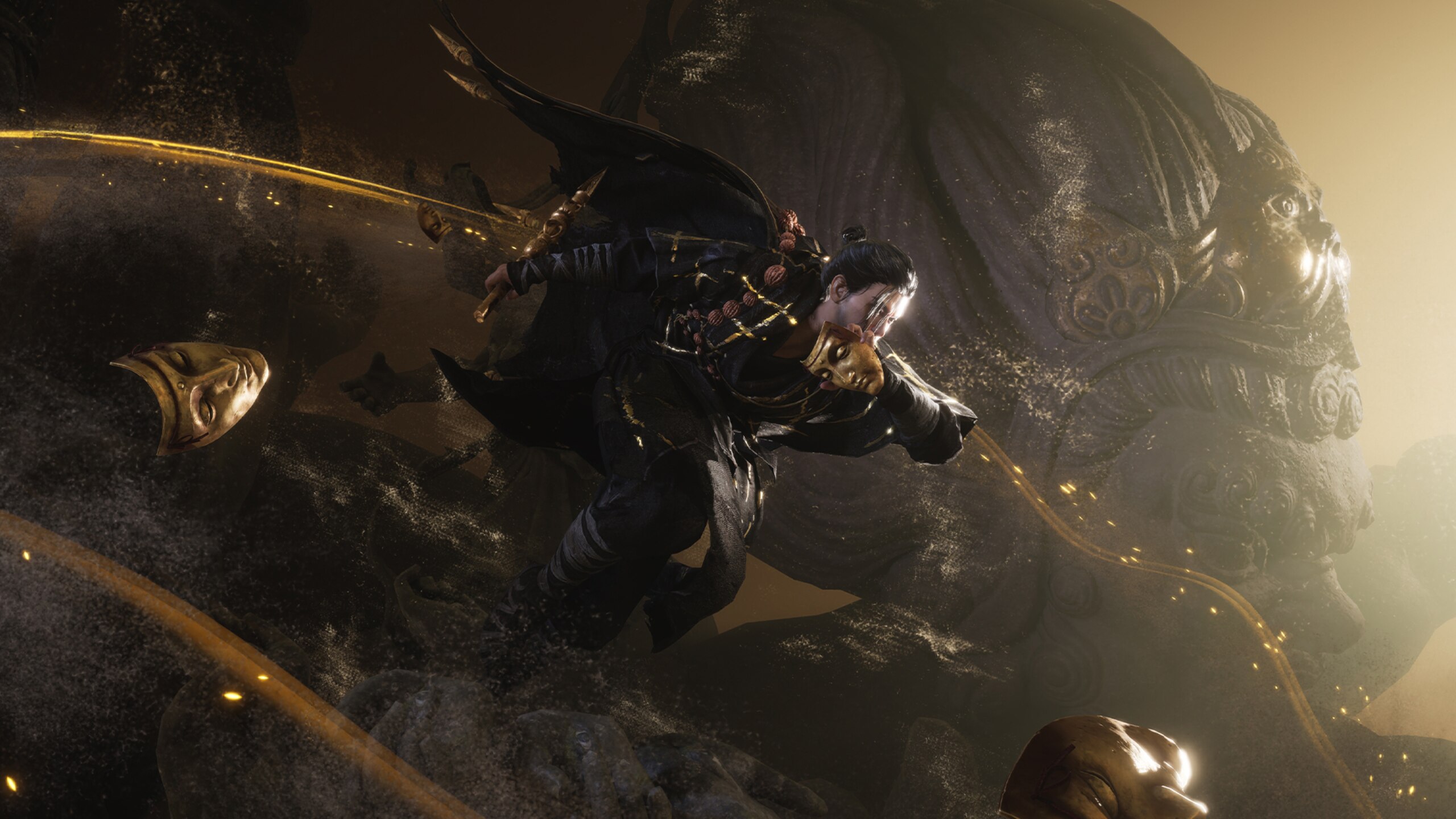

Where Winds Meet Review, Gameplay Impressions, Features and Videos
Where Winds Meet from developer Everstone Studios and NetEase has been both a long-time coming and penciled in as one of the most interesting releases of 2025.
A free-to-play online open-world RPG with a wide range of elements and backing systems, Where Winds Meet is an interesting hodgepodge of ideas that hopes to shoulder into a crowded online space with staying power.
Wuxia martial arts, a fictional genre focused on combat and righteousness, takes center stage in a massive world that blends a potentially deep singleplayer experience with near-MMO elements.
.jpg?w=2560 "Commanders Eagles Football")


Nothing if not intriguing, Where Winds Meet has a unique global backdrop, having released in China already, with some obvious inspirations and fresh ideas to explore, at an initially free entry point, no less.
Graphics and Gameplay
Where Winds Meet is impressive for its scope and immersiveness, beyond anything else in the presentation department.
Even for those with open-world fatigue, there's compelling variety here. While there's an overall foreboding tone to the world, it's hard not to appreciate the beauty found out in rural, Ghost of Tsushima-like areas and the attention to detail in cityscapes, including lifelike NPC happenings.
That's not to say other things don't impress. The lighting and shadows, expected next-generation physics and the solid-but-perhaps-not-distinct character models do their jobs well. The sound design that accompanies the flourishes of often-magical combat sounds great, too.
Simple traversal is a treat, reminiscent of those early Assassin's Creed games from generations past when the ability to grab onto stuff and scale vertically felt new and fresh. Except here, tack on fun double and even triple jumps. The ability to simply shoot up into the sky and get going places, even in settings such as these, isn't all that common. It's not necessarily as satisfying as say, web-slinging in the Spider-Man games of late, but it's certainly high up the list.
Combat features just seven weapons, but it's not a knock. They function more like classes. Think, a gear system more along the lines of a Monster Hunter game, which was blatantly a huge inspiration here, in the best way.
Beyond finding a weapon that best fits each player (want weighty damage with good range? Spear, etc.), players can dual-wield or swap at the press of a button. The fluidity of it is a plus in its favor. Hit detection can be a little wonky at times, but the standard block, parry and dodge system included feels good.
Players modify these weapons with Arts, meaning general upgrades to them or additional abilities, such as elemental modifiers or healing Arts. There are a ton of interesting combos and strategies to experiment with, especially on a location-to-location or boss-to-boss basis.
That's not to say players won't be able to find their favorite build and power through most of what the game has to offer. But it's clear some serious thought has been given to encouraging players to experiment.
As a whole, the backbone of the game feels great. Getting around the world is super fun, and while the setting and tone might imply it, there's not a Soulslike difficulty spike here. Fights can be challenging, but Where Winds Meet is very happy to tone that down in a smart way while appealing to the masses.
Story and more
Tenth-century China's Five Dynasties and Ten Kingdoms era serves as the backdrop here.
At its most basic, players assume the role of a character attempting to seize power and acclaim in the world. From there, it's a free-flowing thing as players are left to make choices in terms of factions and more.
Notably, Where Winds Meet oozes storytelling big and small at every turn. There are big-ticket items to go do. There are ample sidequests that steer player leveling and exploration, too. But even smaller dialogue choices in small towns can actually alter observed NPC behavior in notable ways.
Not to handwave the storytelling all as good, or anything, but there's an immersion factor that is impressive. In a game like this, the protagonist is the player, and it's executed really well.
Where Winds Meet should be applauded for its character creator, too, as it is one of the most in-depth, time-consuming efforts found in all of video gaming.
What's interesting is that at launch, there are regional endings to the story, but apparently not a big overarching ending. That's to come at a later date as a constantly-updating experience.
It's a live-service design decision that feels more similar to endless live-service mobile games. That's not a knock on Where Winds Meet at all, and it's an idea that is pervasive throughout the other features in the game, too.
For example, beyond simply co-op, the game has ambitions for guild wars, dungeons, raids and live-service things like battle passes. There have been suggestions about base-building elements coming at a later date, too.
For those familiar with the mobile gaming scene, this is a common rollout strategy. It could be a very, very good thing here, but those seeking a defined start and end to the story might be turned off a bit.
Things get tricky, if not confusing, when talking about how the pretty deep RPG feel can translate over to multiplayer, though. Playing a doctor-like role solo before hopping online to heal others during raids is simple enough. But there's an element of how, say, adding a bridge to a solo game impacts the multiplayer game world that remains to be seen.
There's also the spectre of monetization hanging over Where Winds Meet as a result. It's a free-to-play game, after all, so post-launch and in the months and years to come, it's hard to tell how much of the monetization will be cosmetic-only and refined to battle passes. That, or if it goes a wacky crossover route that hurts immersion, controversies games like Call of Duty and Battlefield currently grapple with right now.
Despite all this, there's a sprawling, immersive world with some great combat just ripe for expansion. And some of these things are literally just optional side content that don't impact fun combat and a pretty engaging start to the world and tale. More ways to play are typically a good thing, especially if it means keeping the game alive with support for a long time.
Given the scope of the world at times, Where Winds Meet runs reasonably well and given Netease's vast, vast live-service background, doesn't have any reason not to for a long time. As expected, there's also a nice list of options for players to tweak in the menus to personalize the experience as they see fit.
Conclusion
Where Winds Meet takes some bold chances in terms of blending modern live-service games in the MMO and mobile spaces into a cohesive package around a really focused central theme.
The result might not be for everyone, but it is profound. It straddles the hard-to-find balance between singleplayer RPG and MMO-lite things like a Destiny or Warframe better than those titles.
That said, like those titles, one has to be in the mood for this type of combat with the surrounding deep systems, too. There are better combat games and better multiplayer games, but few blend and mix as well as this.
Deep, interesting and fun, Where Winds Meet is a nice standalone effort and the latest hint of what's to come in terms of games modernization and genre blend.

.jpg?w=2560 "Chiefs Dolphins Football")

.jpg?w=2560 "Injury-stricken Seahawks signing veteran RB")
.jpg?w=2560 "Love's Body Already 'Tired'")