

Grading Logan Cooley's and 9 Recent NHL Contract Extensions
Remember about a month ago when we were daydreaming about how wild and fun next summer would be, given what the NHL free-agent class could look like? Then we went and opened our big mouths and scared everyone into signing their best players to long-term extensions.
How dare they do that to us!
The joke's on them, though, because now we get to break out big red pens and dish out grades for the signings they've made. Utah Mammoth star Logan Cooley was the latest young player to put pen to paper, and that was enough to inspire us to round up everything that's happened of late.
We're going to act fast, though, because who knows when the next star player will add their name to the list. If you've missed any of the signings we're going to talk about, we can't blame you—it's all happened so rapidly.
Logan Cooley, Utah Mammoth
1 of 10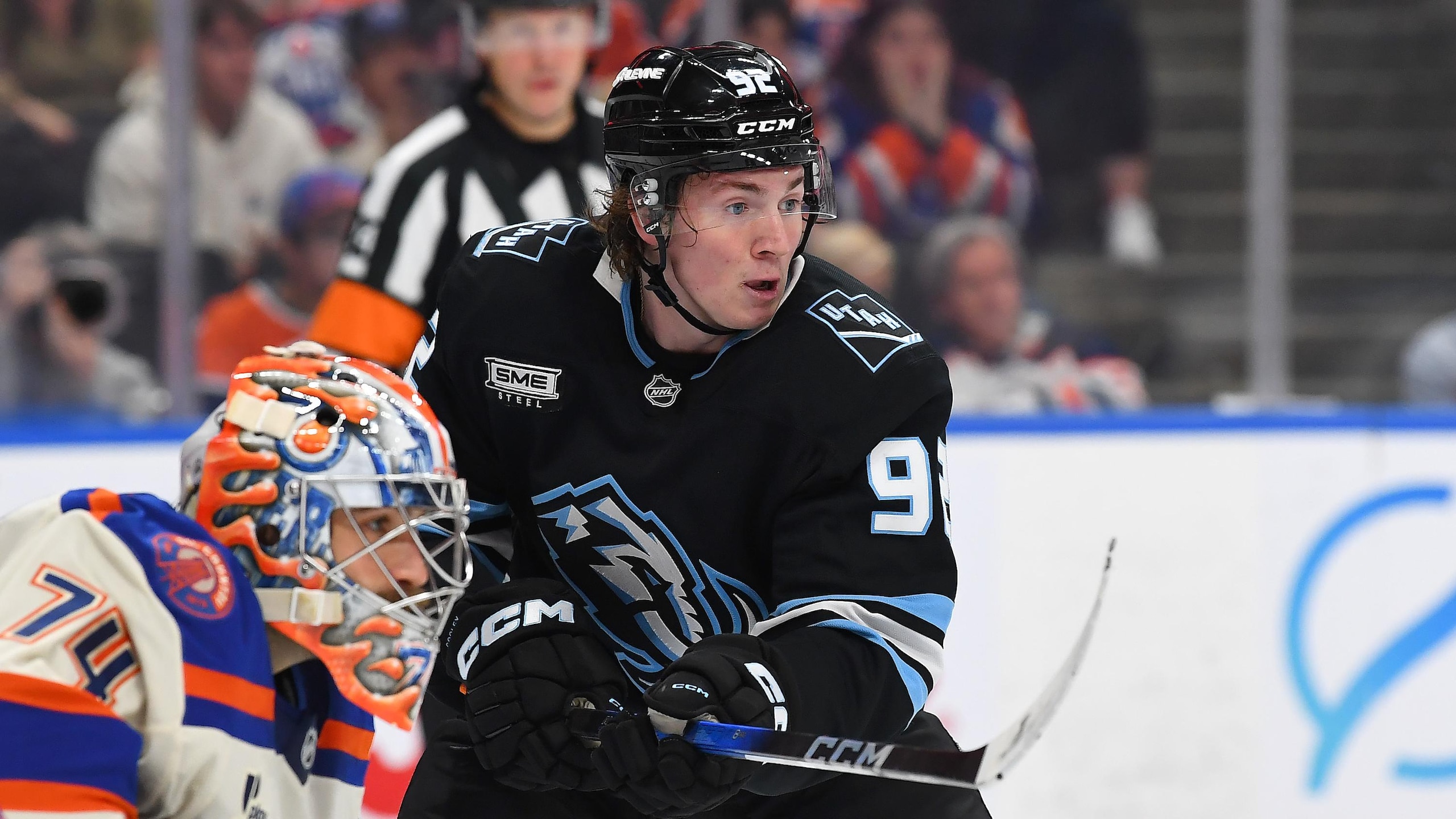
Eight years, $80 million; $10 million AAV
The fun part about an outstanding young player on a team that doesn't exactly get a lot of spotlight in the NHL is that when they sign a monster new contract, it instantly creates shock value. Logan Cooley's eight-year, $80 million extension with Utah accomplished that.
Cooley is in his third season with the Mammoth, meaning his entry-level contract will expire after this season. In his first two years, he's shown tremendous offensive growth, and he's off to a great start this season with 12 points in 12 games, including eight goals, a mark that puts him two points off the league lead.
Whether the Mammoth paid Cooley now or in the offseason, he was going to get paid. We're sure that getting eight years was important for both the team and the player, since the new CBA will only allow for seven years max when it kicks in.
That he'll check in at $10 million a year for eight years sounds like a huge number, but with the league's top players pulling down $12 to $14 million per season, this is an expensive gamble of sorts that will serve as reassurance if Cooley evolves to become one of the NHL's elite scorers.
Grade: B-plus
Martin Nečas, Colorado Avalanche
2 of 10
Eight years, $92 million; $11.5 million AAV
For a while, it seemed like Martin Nečas's path to a long-term extension was going to go similarly to how it went for the guy he was traded for last year, Mikko Rantanen. Getting an extension done in Carolina proved difficult, and there was a thought that it would go the same way with the Avalanche.
Things changed quickly this season, and they came together on a contract that will pay him $11.5 million over the next eight years.
Nečas has evolved over the past couple of years with the Hurricanes and Avalanche, and he's gone from a solid secondary scorer to a top-level scorer and playmaker. It would've been easy to say his numbers took off after playing with Nathan MacKinnon and Cale Makar in Colorado, but the big steps he took started in Carolina, where he often played alongside Jesperi Kotkaniemi.
However, Nečas has scored at an elite level twice in his career in 2022-2023 and last season. He's also never cracked the 30-goal barrier and scored 20 or more three times. They also happen to be the last three seasons.
Colorado has invested in him to be one of their top three players, and despite the production he's had the past few seasons, you wonder if he's meant to make just under what MacKinnon does ($12.6 million per year).
Grade: B-minus
Jacob Markström, New Jersey Devils
3 of 10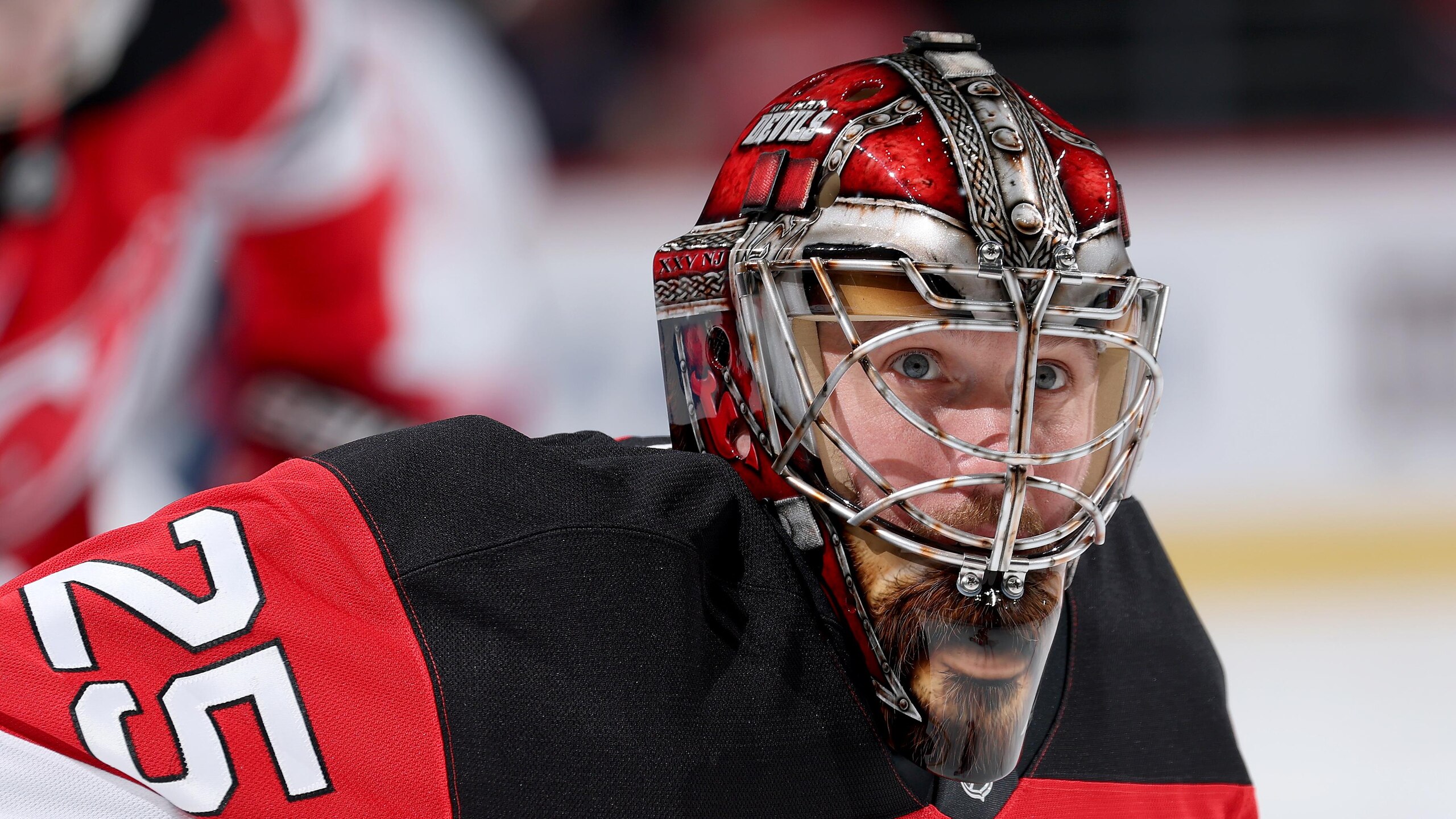
Two years, $12 million; $6 million AAV
The Devils started out this season as one of the hottest teams in the league, and they've done that while getting very average goaltending from Jacob Markström and Jake Allen.
Markström has gotten off to a slower start with a .875 save percentage in five games played (four starts). That he landed a two-year extension with New Jersey highlights what it means to teams to go with the guy you know rather than someone else you don't.
At 35 years old, Markström was once one of the best goalies in the league, but since landing in New Jersey, he's been just OK. Think back to 2021-2022 when he was a Vezina caliber goalie with a .922 save percentage and nine shutouts, and compare that to the past three years with the Flames and Devils, where he's had seasons with save percentages of .900, .905, and .892 and seven combined shutouts.
Neither the years nor the money are backbreakers for the team or the player, but you do wonder whether Markström can return to his past form or if what we've seen over the past few years is who he is now. If the Devils are going to challenge for a Stanley Cup, they're going to need him to be better.
Grade: C-minus

Lane Hutson, Montréal Canadiens
4 of 10
Eight years, $70.8 million; $8.85 million AAV
After watching the way Lane Hutson set the league on fire as a rookie last season, you knew you were seeing a guy who was playing defenseman in a new, but familiar way. After all, 5'9" defensemen aren't the norm at all, but blue liners taking control of the puck and creating offense at will has been a regular occurrence.
Hutson piled up points and gave the Canadiens a puck-mover on defense; the rest of their high-skilled group of young forwards desperately needed to take them to the next level. His speed and creativity also fit in brilliantly with guys like Nick Suzuki and Cole Caufield, leading him to take home the Calder Trophy.
Extending players after one pro season isn't something we usually see, but after Hutson burned the first year of his contract after signing out of college two years ago and then winning the Calder last year, time was of the essence to get a new deal done.
An eight-year contract is a hefty commitment in time, but locking down Hutson for that long at a rate that they hope looks like the steal of the century, not too long down the road, is something right now that looks incredible since he's picked right up where he left off last season.
Grade: A-plus
Connor McDavid, Edmonton Oilers
5 of 10
Two years, $25 million; $12.5 million AAV
Connor McDavid's extension with the Oilers is deeply fascinating.
McDavid's commitment to winning and the drive he has to win a Stanley Cup are maniacal, and we say that in a complimentary way. His brilliance is unmatched on the ice, and he deserves to be paid as such —the best player in the NHL, which he is. That he signed only a two-year extension with the Oilers should terrify Edmonton GM Stan Bowman.
McDavid will continue to be the best player in the league the next two seasons beyond this one in Edmonton, and Bowman knows it's up to him to best surround McDavid with the teammates that can help him bring the Cup back to the franchise for the first time since 1990.
That McDavid took less than he's worth to allow Bowman that financial breathing room to do it gives him no excuses to not make it happen, and if it doesn't work out that way, you can't help but think that McDavid will find somewhere else to do it by the end.
Sure, it's a team-friendly and helpful deal, but at what cost if they don't invest better in the rest of the roster?
Grade: A
Jack Eichel, Vegas Golden Knights
6 of 10
Eight years, $108 million; $13.5 million AAV
It's no surprise that Jack Eichel's extension got done in Vegas not too long after Connor McDavid got his out of the way in Edmonton, but it's also not a shock that it came in much differently.
Eichel locking up with the Golden Knights for $13.5 million a year (13 percent of their cap) is a monster deal, and given what he's done in Vegas and his importance to their roster, it checks out. He's their No. 1 center, and he's one of the 10 best scorers in the NHL. His game has evolved over the years, making him one of the best all-around players, period.
Vegas spent massively to add Mitch Marner and to get Eichel done for even more money and a higher AAV, showing where they've committed to their roster being elite. Having those two as the cornerstones means they'll be exciting and high-paced for years to come.
While there are reasons to be concerned for that kind of spending and years on a 28-year-old, this is where we remind you that the cap is only going up and Vegas doesn't operate the same way as any other team in the NHL.
Grade: A
Thomas Harley, Dallas Stars
7 of 10
Eight years, $84,696,000; $10,587,000 AAV
Of the future RFAs the Dallas Stars needed to get extensions done, Thomas Harley was the guy we seemed to focus on less compared to Jason Robertson, but Harley's importance to their blue line is massive.
For years, Miro Heiskanen has held it down on defense, but Harley's emergence as a high-end puck mover and two-way threat gives the Stars a true dynamic duo to roll with. Averaging more than 20 minutes per game and seasons of 47 and 50 points the past two years, Harley's extension is as much a reward for what he's shown to be as it is an investment in what he can still evolve into.
There are reasons to be a bit leery of this contract when it comes to the cap health of the team, given how much they've paid Mikko Rantanen and the lucrative long-term extensions previously signed by Heiskanen, Roope Hintz, and Wyatt Johnston. But that has nothing to do with what they're getting out of Harley. To keep elite players, you have to pay them, and that's what GM Jim Nill did.
Grade: A
Jake Walman, Edmonton Oilers
8 of 10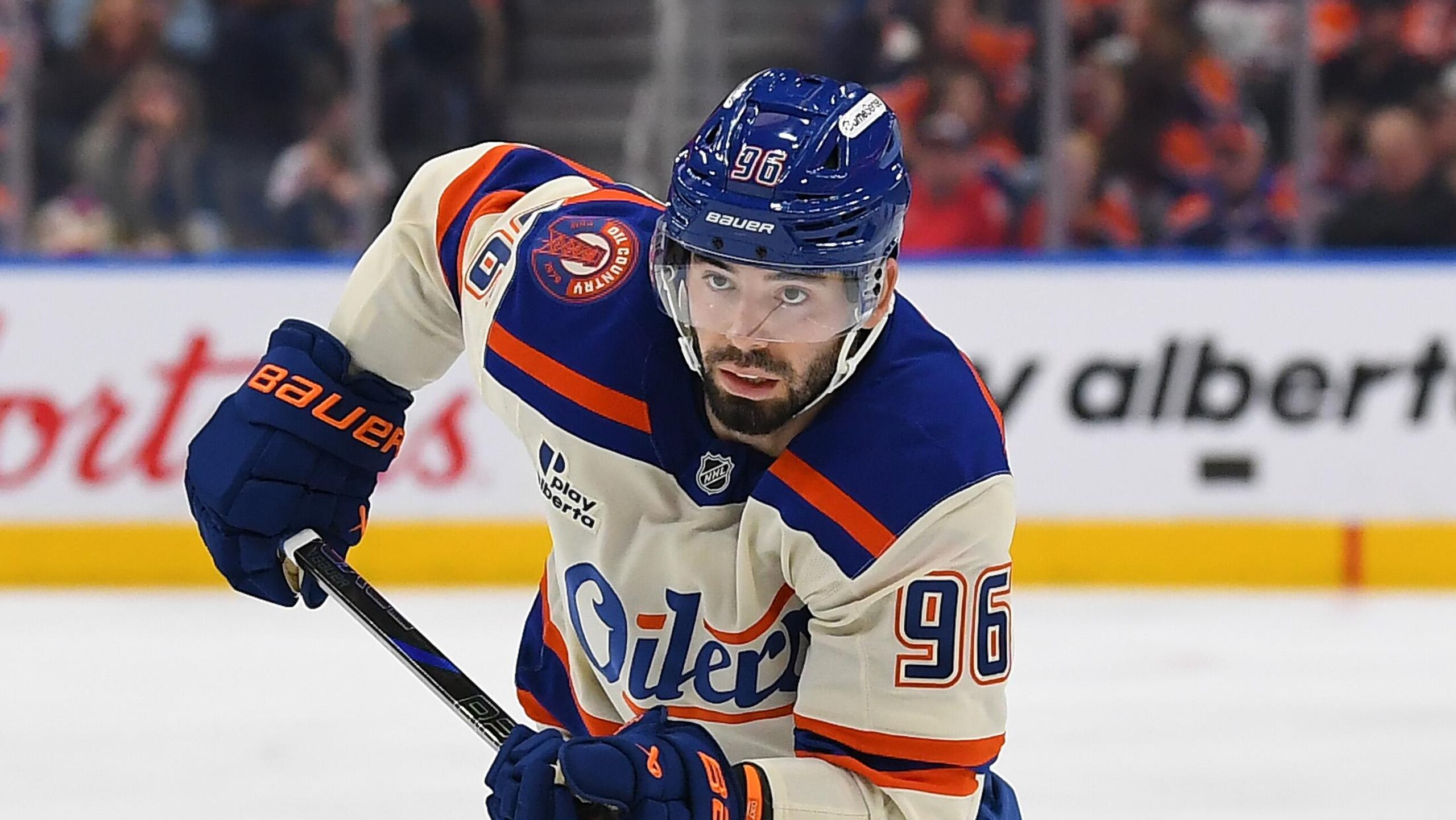
Seven years, $49 million; $7 million AAV
The biggest question we ask ourselves after watching Jake Walman blossom with the Edmonton Oilers is, "What were Detroit and San Jose thinking?"
Walman has been an ideal secondary puck mover on defense for the Oilers, and maybe that was the important part. While Evan Bouchard is the main guy in Edmonton, Walman doesn't necessarily have to deal with the most challenging matchups from opponents. With Detroit and San Jose, he was more or less forced into that lead role, and the ups and downs that came with it were difficult to handle. Their losses are the Oilers' gains because he's been superb.
Being really good in that role is one thing, but the Oilers paying out $7 million a year for Walman to do it still gives you a jolt to see it. The rapid rise of the cap plays a role in that, sure, and we're all about guys getting paid around here, but this contract is one that still gives our head a shake. Walman's been good, but is he good for that price?
Grade: C-plus
Kyle Connor, Winnipeg Jets
9 of 10
Eight years, $96 million; $12 million AAV
When a player like Kyle Connor produces so much offense at such a consistent rate for years, he's going to get paid when it's time, and since he was due to become a UFA this summer, now was that time for the Jets.
Connor becoming the highest-paid player on the team isn't a slight to Connor Hellebuyck or Mark Scheifele at all; it was just a matter of timing. Besides, it's not like those guys would argue. Connor routinely scores 30-or-more goals a season and has cracked 40 goals twice, including 41 last season. He's also twice scored 90 or more points, including a career-high 97 a year ago.
The Jets' attack works in many ways, but the engine that powers them comes from Connor's output and his ability to push the pace of the game with his quickness and skill. Very few players can score goals consistently at that kind of volume, and in this new cap world, that means getting paid —even if the big money comes after turning 30.
Grade: B
Mattias Ekholm, Edmonton Oilers
10 of 10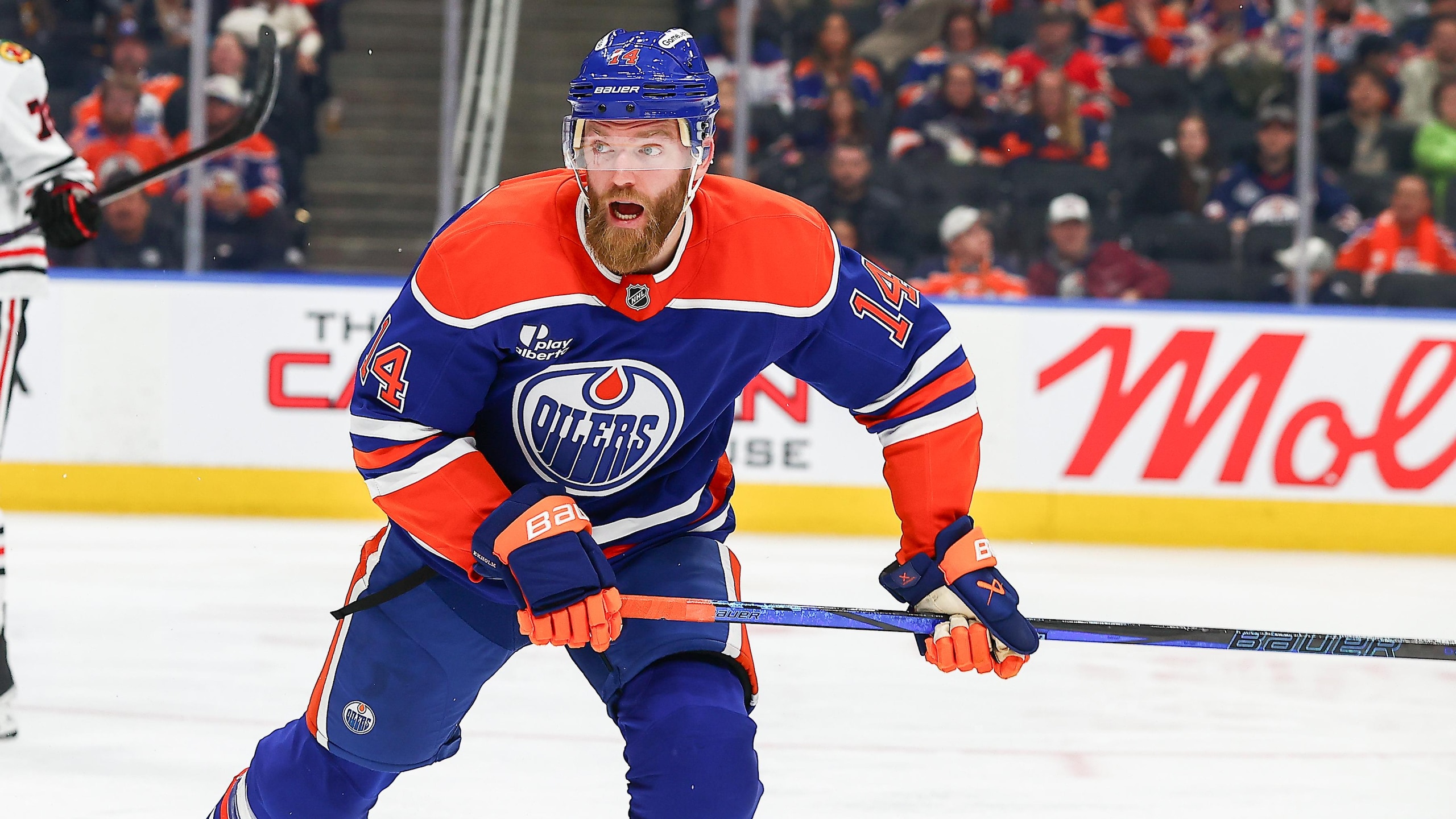
Three years, $12 million; $4 million AAV
Mattias Ekholm is a guy that you sometimes forget about, and not because his play isn't worth remembering, but because he's a classically defensive defenseman, where if you don't notice him, he's doing his job exceptionally well.
Ever since Ekholm landed with the Oilers from Nashville, he's been exactly what they needed on the blue line. What's remarkable is that he's now 35 years old and still handling his business on defense the same way he always has. That would be reason enough to lock him back in at what he was making already ($6 million a year), but to get more years, it likely meant taking a few dollars less.
Ekholm extending with the Oilers for three years is a solid amount of time, and doing so for slightly less money makes it team-friendly. If he can continue to be tough defensively and capable at the high pace they play at, it's more than a bargain. That said, he's 35 and played hard minutes throughout his career, and it's fair to worry about when the toll of that really kicks in.
Grade: B-minus
-(2).jpg?w=2560 "Bleacher Report")
.jpg?w=2560 "2 NFL Officials Suspended")



.jpg?w=2560 "Mahomes' Wife Trolls Kubiak 💀")

.jpg?w=2560 "Love's Body Already 'Tired'")

.jpg?w=2560 "Injury-stricken Seahawks signing veteran RB")