
Ranking Best Freshmen to Watch for 2025-26 Men's College Basketball Season
Gone from men's college basketball are yesteryear's one-and-done wonders such as Cooper Flagg, Dylan Harper and V.J. Edgecombe. But in their place come the likes of AJ Dybantsa, Cam Boozer and Darryn Peterson to dominate in 2025-26.
Just so we're all clear up front, this ranking is not meant to be any sort of way-too-early 2026 NBA mock draft. (We've got Jonathan Wasserman to handle that sort of thing.) Rather, these are the first-year phenoms who we feel will shine brightest this season, regardless of how well their game might translate to the next level.
All the same, the vast majority of our top 10 freshmen to watch likely won't be back as sophomores in 2026-27, so soak them up while you can.
10. Koa Peat and/or Brayden Burries, Arizona
1 of 10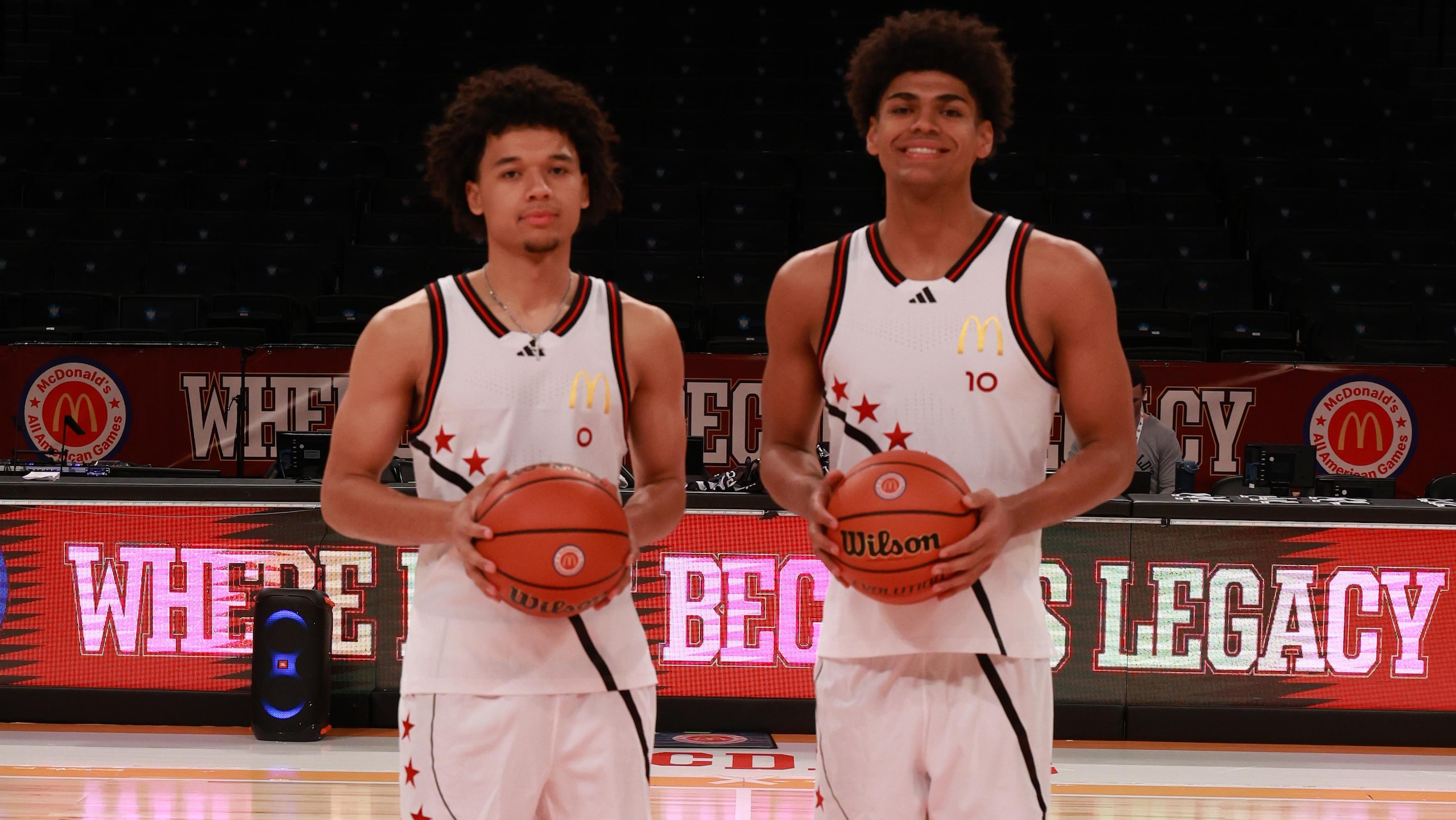
Over the past four years as the head coach of Arizona, Tommy Lloyd has been quite reluctant to put any real faith in freshmen. Despite landing several prized recruits like Kylan Boswell and Carter Bryant, the six leading scorers from each of those rosters summed out to eight seniors, seven juniors, nine sophomores and zero freshmen.
This has to be the year that changes, right?
Lloyd does have four key returnees in seniors Jaden Bradley, Tobe Awaka and Anthony Dell'Orso and junior Motiejus Krivas, but 5-star recruits and McDonald's All-Americans Koa Peat and Brayden Burries should be prominent members of the primary rotation, if not the two players Arizona is most heavily leaning upon by the time the NCAA tournament begins.
Of the two, 6'4" combo guard Burries is probably the surer bet to play a big role right away. He profiles as the much better perimeter shooter of the two, which is a void the Wildcats need to fill with Caleb Love out of the picture and neither Awaka (2-for-5 in 720 minutes played last season) nor Krivas (zero attempts in 125 minutes played) likely to even try to help out on that front.
However, the 6'8" Peat should have no shortage of opportunities, considering Awaka and Krivas are the only 'Cats taller than 6'6" with any collegiate experience. Peat probably won't start (at least initially), but he may well play 25-30 minutes per night off the bench, where his mid-range game could exploit a market inefficiency in a game that has become all about layups and triples.
9. Chris Cenac Jr., Houston
2 of 10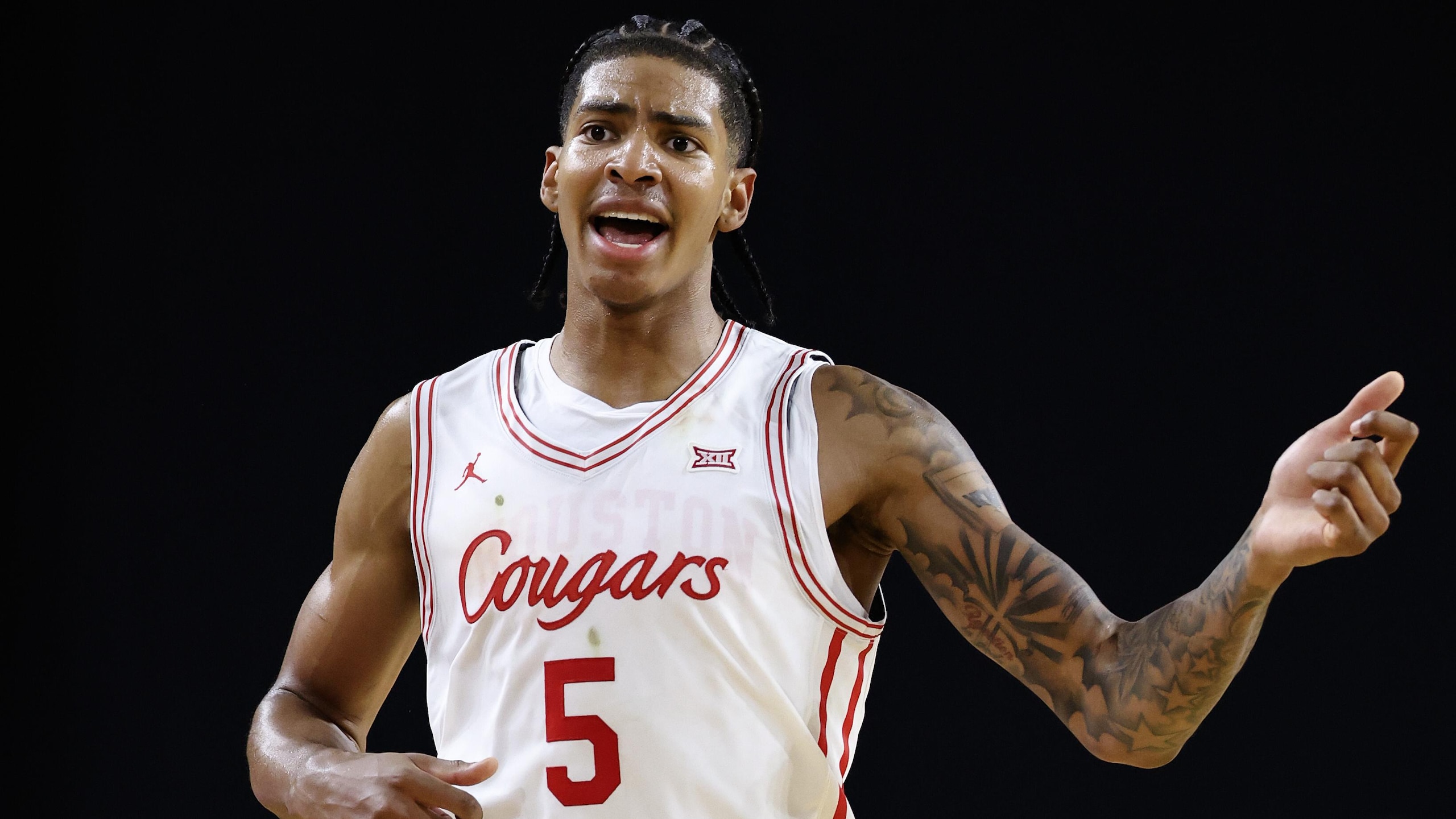
Much like Tommy Lloyd at Arizona, Houston's Kelvin Sampson has much preferred old souls to young bucks in recent years.
Jarace Walker was the lone freshman in the past four seasons to start at least three games for the Cougars, and he was a 6'7", 240-pound block of granite, practically built in a laboratory for Sampson's preferred style. Naturally, that guy who had been the highest-rated recruit in program history played a ton.
Emphasis on "had been," though, as 6'11", 240-pound big man Chris Cenac Jr. is now their top recruit of all time. He headlines a class that also features 5-star guards Isiah Harwell and Kingston Flemings among what is laughably the most stacked recruiting class Sampson has put together yet at Houston.
And Cenac is stepping into quite the void with the Cougars needing to replace both J'Wan Roberts and Ja'Vier Francis from last year's frontcourt.
They do still have JoJo Tugler, who figures to remain a godsend on the defensive end of the floor. But unless Tugler really blossoms as a scorer in his third season, Cenac is likely to be Houston's primary source of offense within 10 feet of the rim—and occasionally more like 25 feet from the rim, as he does have some "modern-day big man" range and handles.
Of course, at Houston, it all starts with defense, and Cenac should make a nice impact on that end of the floor with his pterodactyl-like 7'3" wingspan.
8. Caleb Wilson, North Carolina
3 of 10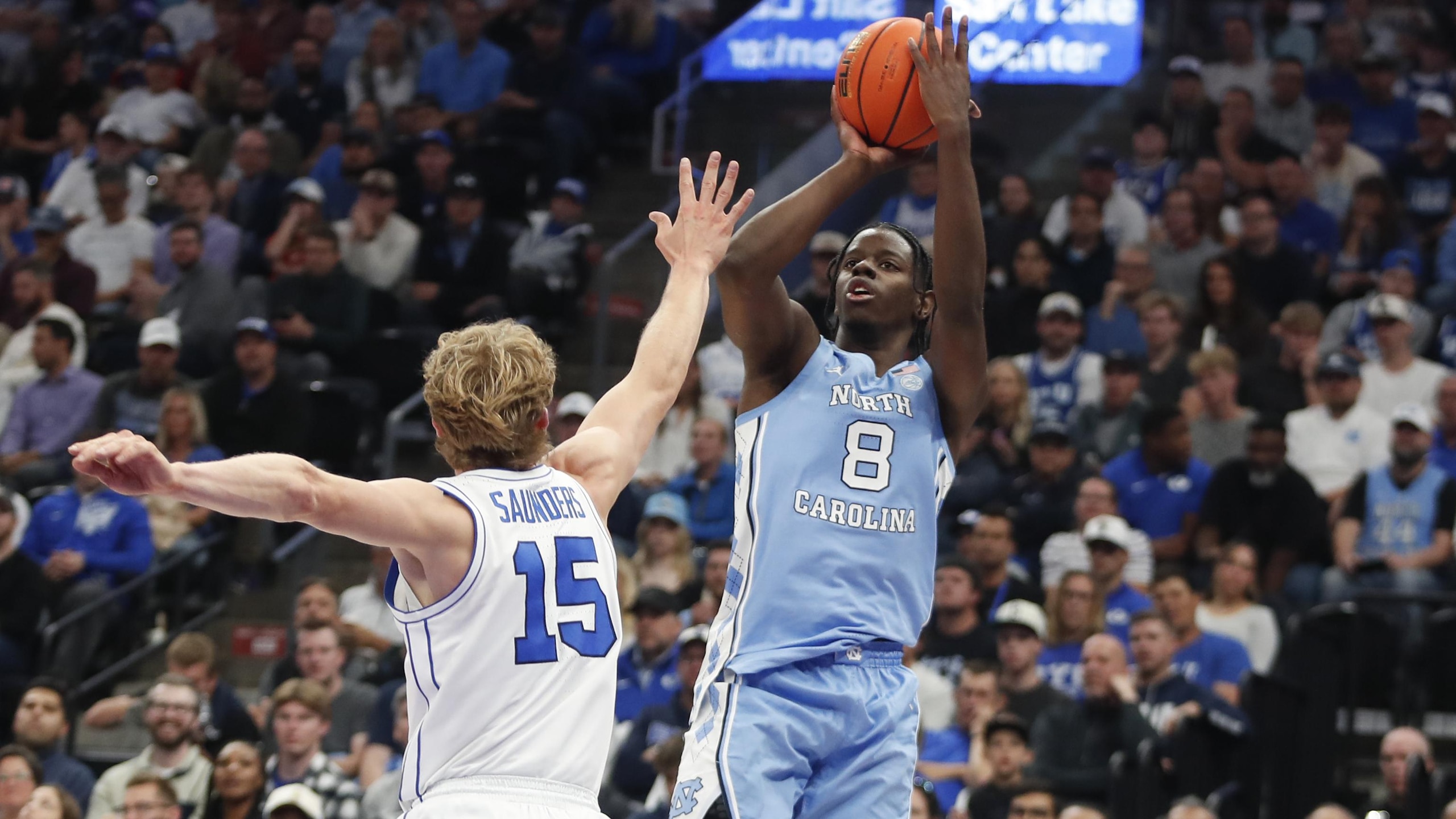
Will the third time be the charm for Hubert Davis? (And will he be out of a job if it isn't?)
Elliot Cadeau was a borderline top-10 recruit in the 2023 class who spent most of his freshman season starting at point guard for the Tar Heels, but he was replaceable pretty much all year long before riding the pine for the majority of UNC's tournament loss to Alabama.
Both Ian Jackson and Drake Powell were also in that borderline top-10 range in last year's class. But though the former did rank second on the team in scoring, he was a ghost in UNC's final six games, while Davis never quite figured out how to unlock the latter's potential.
Enter 6'10" PF Caleb Wilson, who has nothing but room to shine after the Tar Heels lost nine of last year's 10 leaders in minutes played, with only shooting guard Seth Trimble returning for another season.
Davis did pluck both Henri Veesaar (Arizona) and Jarin Stevenson (Alabama) from the transfer portal, but it was Wilson who went for 22 points, 10 rebounds and three blocks in UNC's exhibition game against BYU in what was a sign of things to come.
Wilson has drawn comparisons to Jonathan Isaac, Chris Bosh and Marvin Williams, all of whom were top-six draft picks after just one year of college hoops in the ACC.
Though, if Wilson is coming off the bench all season like Williams was for UNC's 2005 national championship team, something has likely gone horribly awry in Chapel Hill.
7. Tounde Yessoufou, Baylor
4 of 10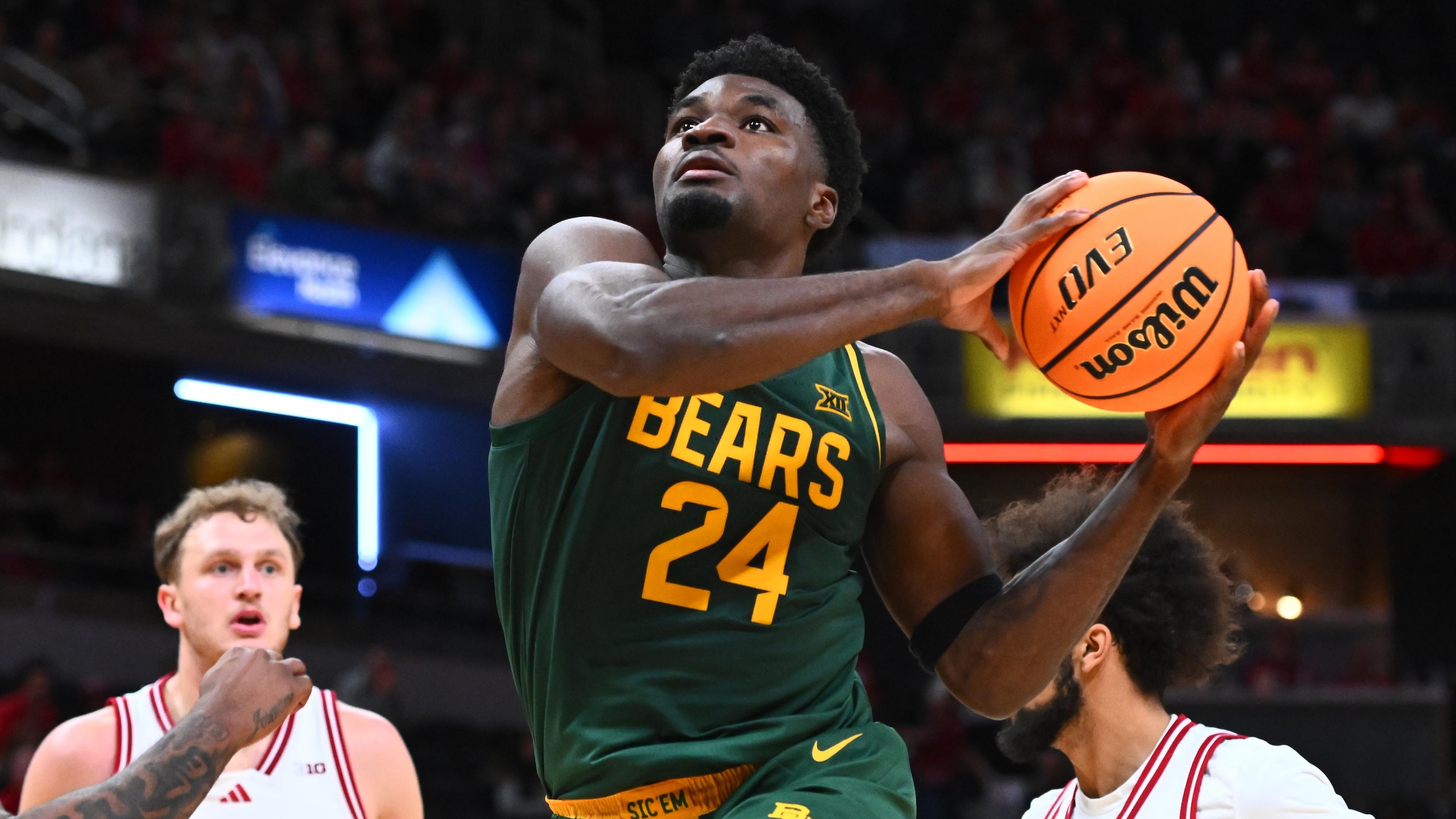
Unless you want to count Cameron Carr, who transferred from Tennessee to Baylor in late January and was not eligible to play in the spring, the Bears don't have a single returnee from last season.
For the most part, Scott Drew figures to lean upon transfers in the aftermath of that complete overhaul. He did put together quite the haul in Obi Agbim (17.6 PPG at Wyoming), Michael Rataj (16.9 PPG at Oregon State), JJ White (13.7 PPG at Omaha), Isaac Williams IV (10.8 PPG at Texas A&M-CC), Caden Powell (10.4 PPG at Rice), Daniel Skillings Jr. (9.2 PPG at Cincinnati) and Juslin Bodo Bodo (8.4 RPG and 1.4 BPG at High Point).
However, the exception to the rule will be Tounde Yessoufou, who was the only Bear not already mentioned who played in Baylor's exhibition against Indiana, going for 12 points, nine rebounds and three assists.
Having a freshman shooting guard play a key role is actually the furthest thing from the exception of the rule in Waco, though, isn't it?
They had V.J. Edgecombe last year, Ja'Kobe Walter the previous year and Keyonte George in 2022-23. Getting one of the highest rated 6'5"-ish wings in the recruiting class and letting him cook for a few months before becoming a first-round pick is simply what this program does.
And though Yessoufou is more of a slasher and rebounding presence and probably a bit less of a perimeter weapon than his trio of predecessors, he's in a great place to blossom into a star.
6. Mikel Brown Jr., Louisville
5 of 10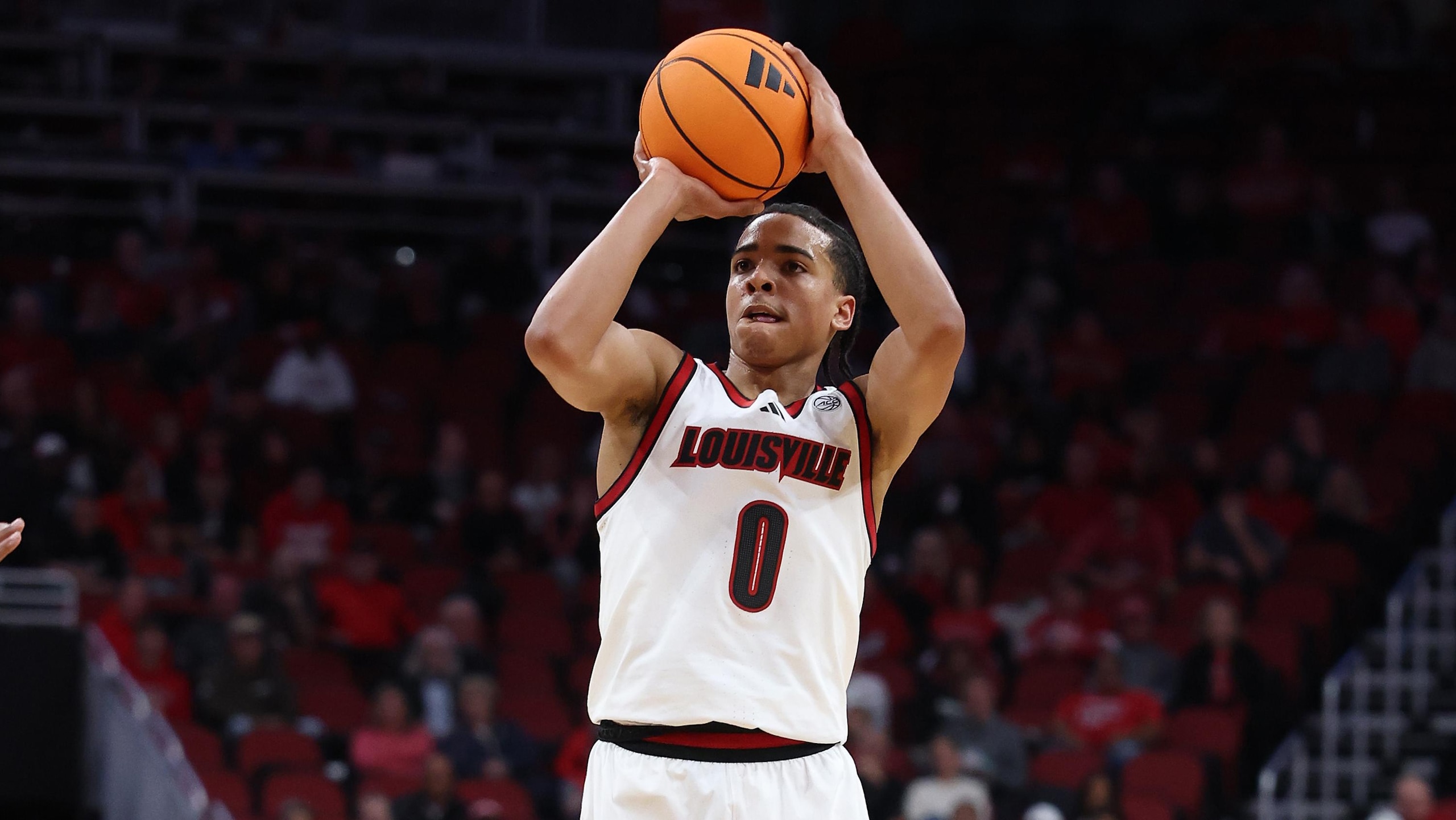
In Pat Kelsey's first 12 years of coaching between Winthrop and Charleston, he couldn't even dream of landing someone as talented as Mikel Brown Jr.
The only top-100 recruit he ever got to coach before last season was one who, coincidentally enough, began his career at Louisville—Zach Price, who transferred from the Cardinals to Missouri and landed at Winthrop only after getting dismissed from the Tigers following an arrest.
Well, now that he's got a budding lottery pick at his disposal, what can Brown do for Kelsey?
In Louisville's first exhibition game against Kansas, Brown struggled mightily, shooting 2-for-15 from the field for 10 points with two assists. But against Bucknell, he drained eight triples on his way to 28 points and six assists. And the latter is much more in line with what we expect to see on a regular basis from what might be the second-best guard in this year's class.
Seemingly every single scouting report on Brown lauds his court vision, his basketball IQ, his shooting touch and his "shiftiness," before drawing the line at questions of whether he has the physical strength—listed at 6'5" and 190 pounds, he's much more beanpole than bowling ball—to routinely finish in traffic and eventually cut the mustard as a lead guard in the NBA.
In Louisville's perimeter-oriented offense, though, he's liable to post more than a few Trae Young-like points/assists combinations this season.
5. Darius Acuff Jr., Arkansas
6 of 10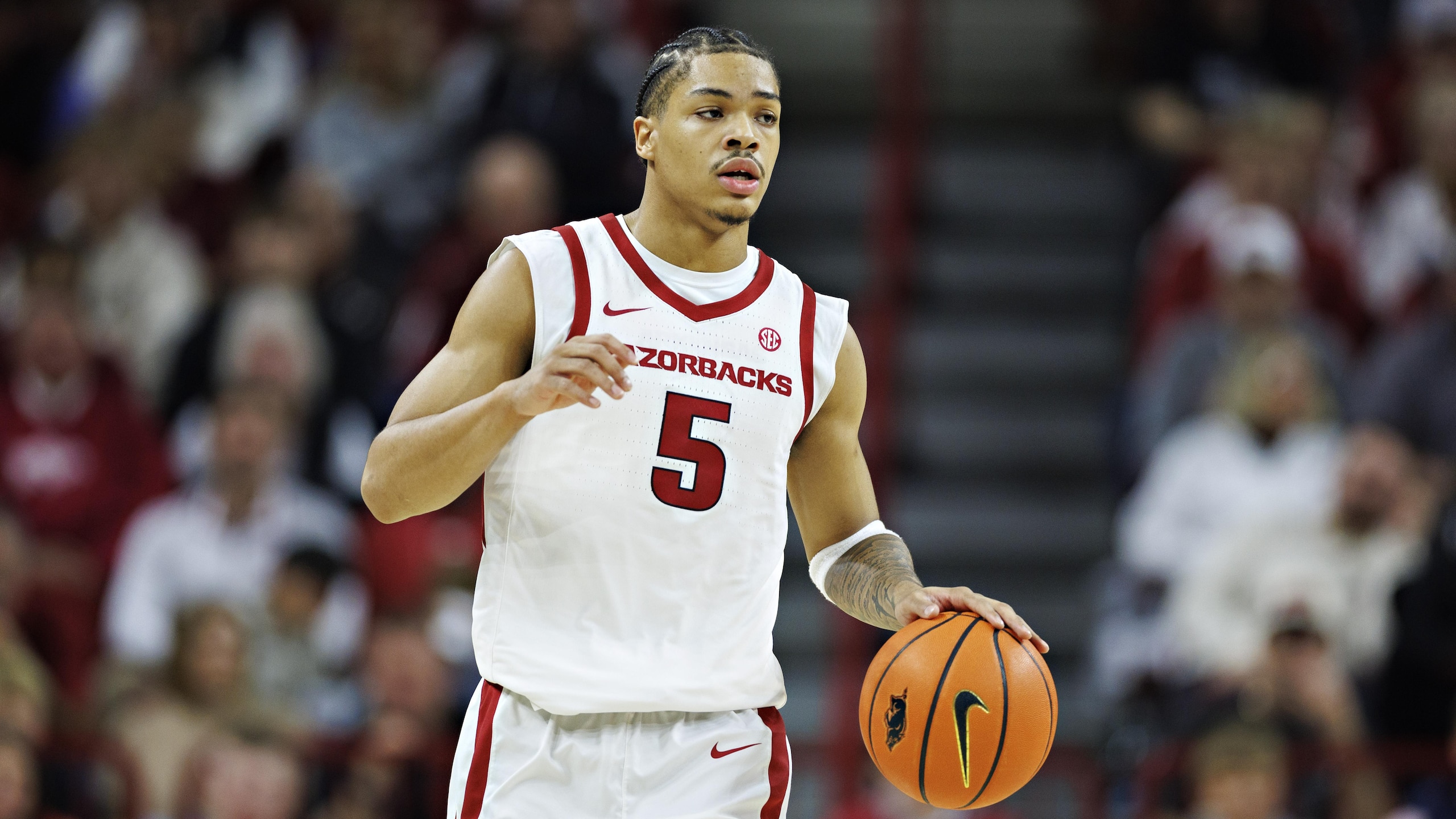
What's this you say? One of the best ball-dominant guards in this year's class committed to John Calipari and has been handed the keys to running his offense?
Well, color me shocked, because that only happens *checks notes* every single year.
Where will Darius Acuff Jr. land, though, in a lineage where we're almost forced to wonder annually if this one is going to be the next John Wall?
Acuff certainly has the scoring prowess to be special. We'll see about the reliability of the three-point stroke, but he can get into the lane pretty much whenever he wants. He also possesses a solid mid-range game that will forever keep the opposition guessing as to which of the three levels he's going to try to score from on that particular possession.
The unknown here is...all the other stuff a point guard needs to do.
He has great passing touch, especially on lobs—which could be all sorts of fun paired with Trevon Brazile and Karter Knox—but is he too much of a me-first player? And when the going gets tough, will he simply default to hero ball?
Will he be consistently engaged on the defensive end of the floor?
Basically, is he the total package, or is he more of a microwave scorer like Rob Dillingham was two years ago at Kentucky?
The latter still ended up being a mid-lottery draft pick, but Arkansas is going to be a certified problem if Acuff is the former.
4. Nate Ament, Tennessee
7 of 10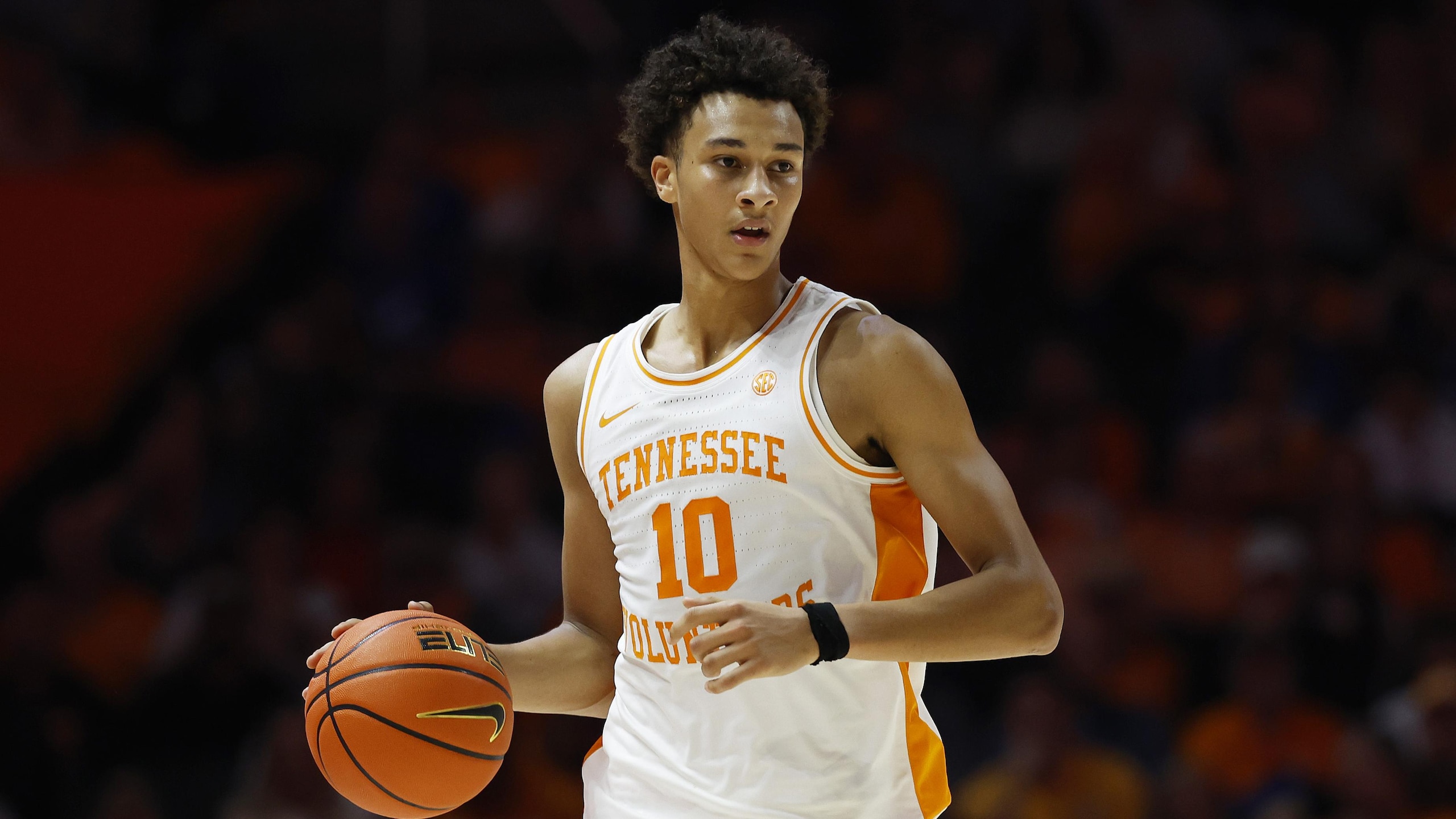
Even if you pay so little attention to recruiting that hearing "Peach Jam" just makes you hungry for a peanut butter sandwich, there's a good chance you've already heard of the top three freshmen on this list.
AJ Dybantsa, Darryn Peterson and Cameron Boozer are probably unanimously regarded as no worse than second-team preseason All-Americans, all in the mix for both the Wooden Award and the No. 1 overall pick in the 2026 NBA draft.
But tucked neatly behind that upper echelon and ahead of the rest of this year's class is Nate Ament—the most gifted freshman (at least in era of recruiting websites) to ever commit to Tennessee, and a young man who might be playing with a chip on his shoulder after repeatedly getting left out of all that All-American and No. 1 pick chatter.
In fairness, the reason he's behind those other three is because he's not quite at the same "physically ready to dominate from day one" level.
As a 6'9" combo forward with plenty of three-point range, Ament has ideal height/length. However, he needs to either develop the strength to play in the paint (especially on defense) or the court vision to become a Brandon Ingram type of wing at the next level.
Outside of maybe Houston, though, he couldn't have picked a better school for strength and conditioning. Ament has already packed on a decent chunk of mass since arriving in Knoxville, and his ceiling only gets higher if he blossoms into handling opposing power forwards on both ends of the floor.
3. Cameron Boozer, Duke
8 of 10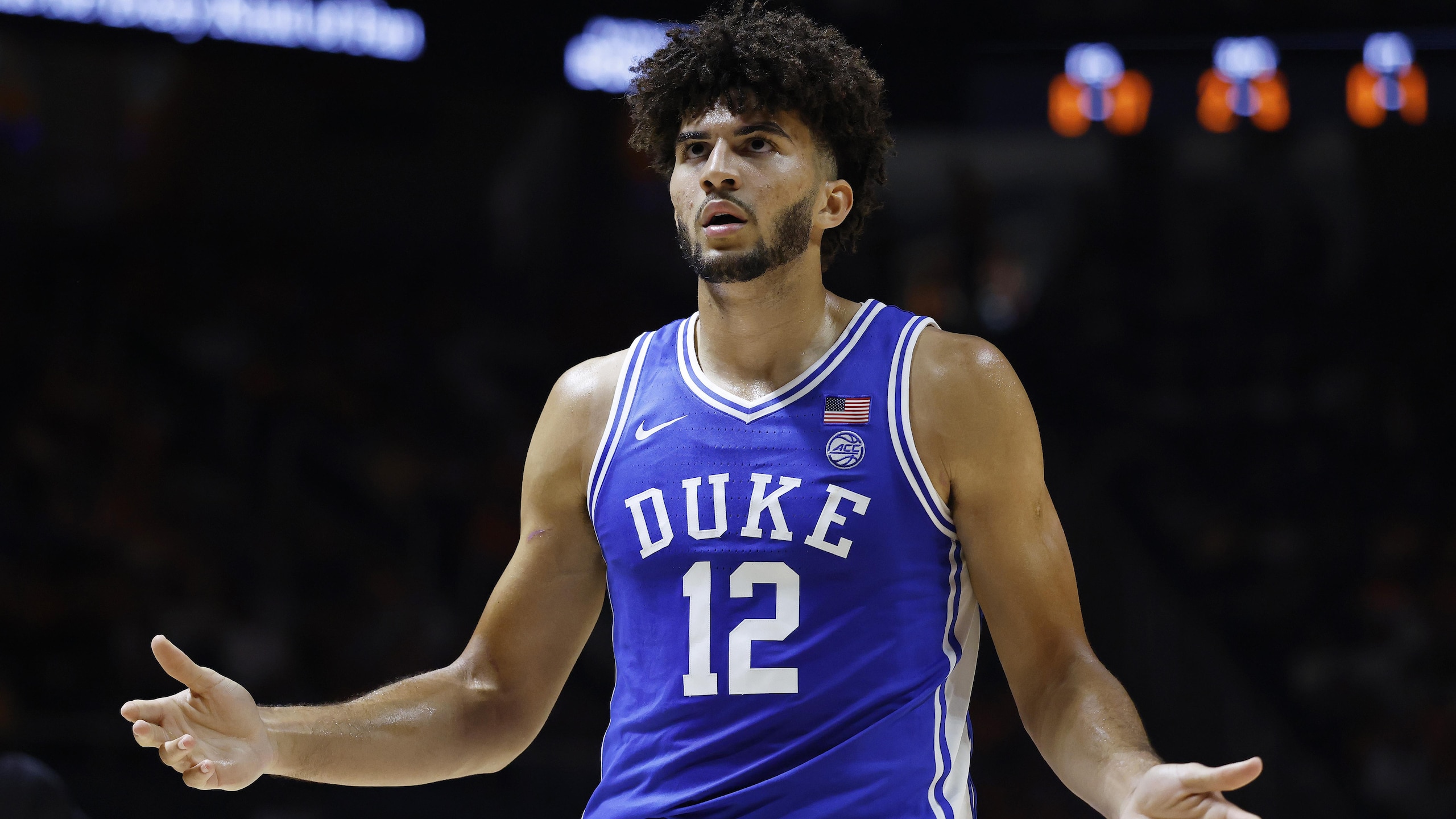
As mentioned, it's dealer's choice with these top three one-and-done studs. And if you want to factor "likelihood of playing in the Final Four" into the equation, Duke's Cameron Boozer probably edges out the stars at both Kansas and BYU.
Someone has to land at No. 3, though, and we'll go with Boozer, even after he preposterously averaged 28.5 points, 17.5 rebounds and 5.0 assists in the Blue Devils' pair of exhibition games against UCF and Tennessee.
Versatile strength is the name of the game with Boozer. Like recent Dukies who went No. 1 overall in the draft, Cooper Flagg and Paolo Banchero, Boozer can and will get buckets from anywhere, has the vision and IQ to rack up dimes when opponents sell out to limit his scoring and is big enough to man the 5 for stretches when the primary center needs a breather or gets into foul trouble.
Where Boozer figures to be even better than Flagg and Banchero, though, is on the glass.
His predecessors tallied 9.8 and 9.5 boards per 40 minutes, respectively, but Boozer could easily be more in the vicinity of 15-17. He has an Oscar Tshiebwe-like relentlessness for balls coming off the rim, and he's probably going to be the first Blue Devil to average a double-double since Marvin Bagley III went for 21.1 PPG and 11.1 RPG in 2018-19.
The only question with Boozer is his consistency from the perimeter. But if he shoots 40 percent on 3-4 three-point attempts per game, say hello to your Wooden Award winner.
2. Darryn Peterson, Kansas
9 of 10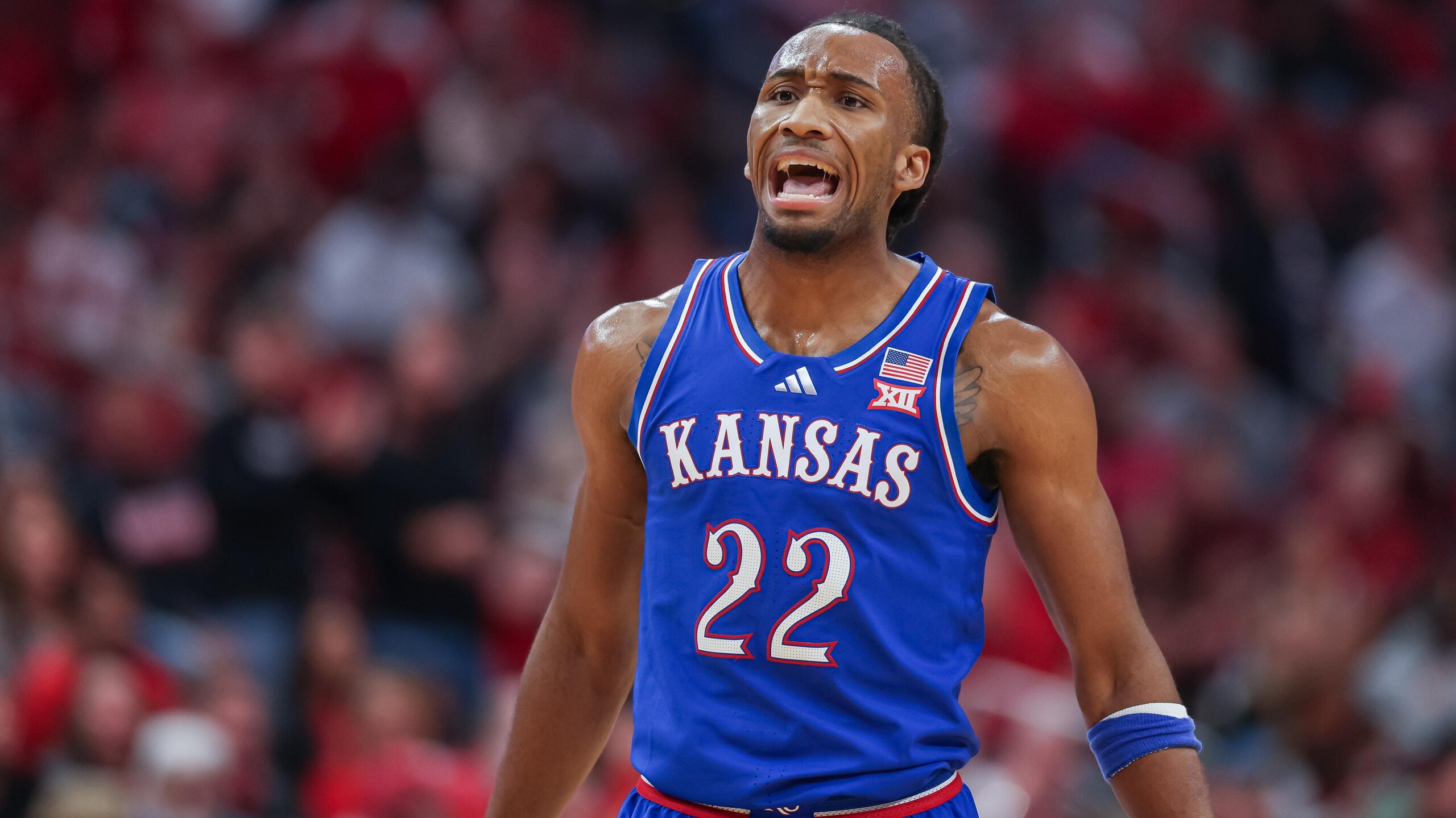
Outside of the year that the Frank Mason rap went viral and the subsequent season in which Devonte' Graham was a unanimous first-team All-American, ball-dominant lead guards have been few and far between in Bill Self's more than two decades at the helm in Lawrence.
However, the good news for Jayhawks fans who spent the past three years wishing Dajuan Harris could/would call his own number more often is that Darryn Peterson will not be shy about letting it fly.
In fact, you can almost take it to the bank that Peterson will attempt more free throws in his one season at Kansas than Harris did in his half-decade on the roster (188), because of how aggressive he will be with the ball in his hands and how adept he is at drawing contact.
And though Harris was named the Big 12 defensive player of the year in 2022-23, Peterson could be even better on that end of the floor. He had five steals in the exhibition win over Tennessee, and he's going to block a good number of shots throughout the regular season.
The question will be whether he can hone in on that right blend of aggressiveness. There's a fine line between consistently making the types of offensive plays that result in fouls and seeking out those trips to the free-throw line.
Keeping turnovers and fouls committed to a minimum will also be critical in determining whether he becomes the nation's brightest star.
1. AJ Dybantsa, BYU
10 of 10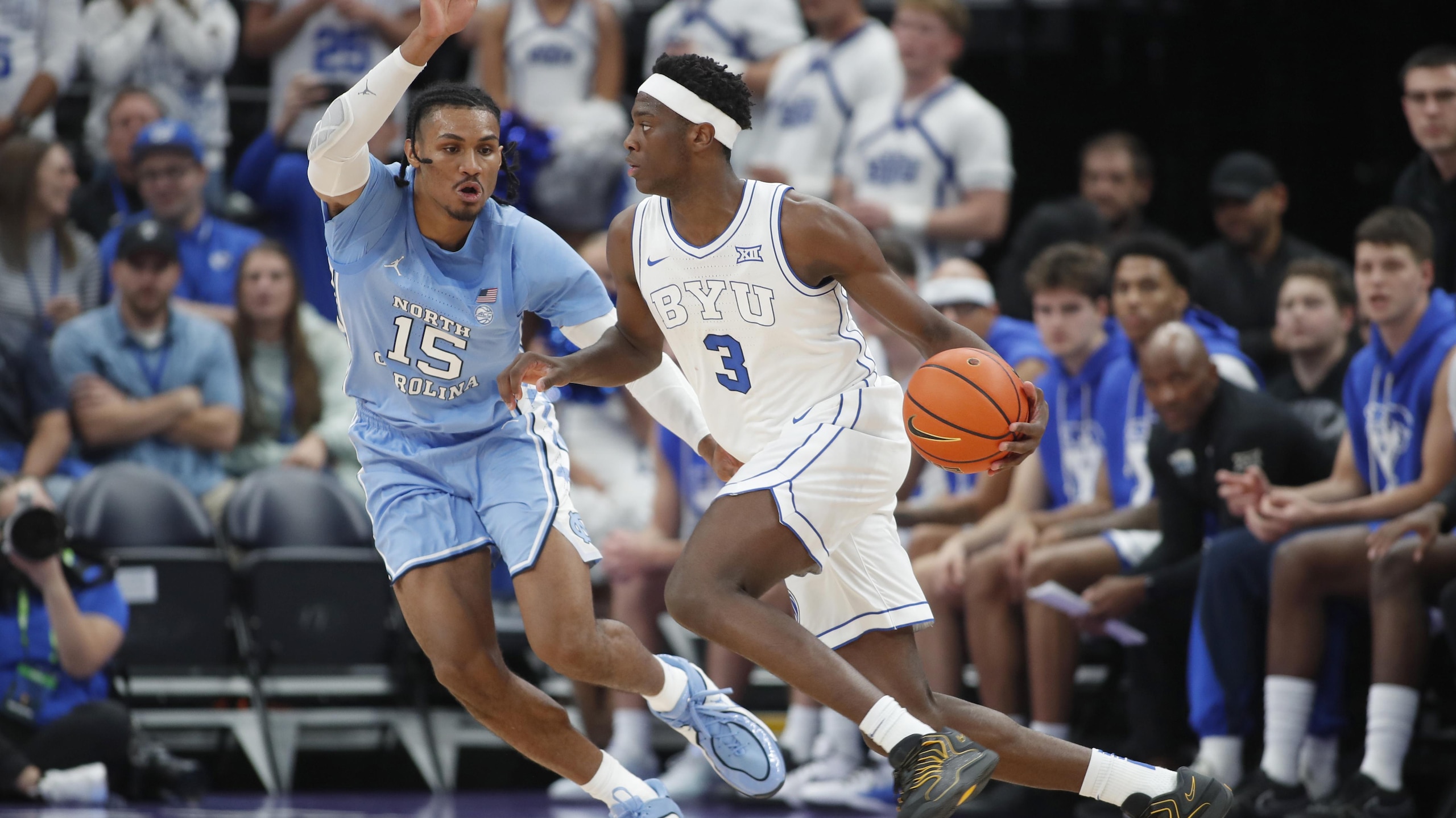
When AJ Dybantasa committed to BYU last December, Cooper Flagg was already 10 mostly impressive games into his journey to the No. 1 pick in the 2025 NBA draft.
And yet, 247Sports' Travis Branham and Adam Finkelstein both said at the time that Dybantsa was the better long-term, more gifted prospect than Flagg, owing to his higher ceiling as an "offensive alpha."
Basically, yes, Flagg is clearly exceptionally talented, but Dybantsa's the one you would rather have with the ball in his hands in a "down by one, 10 seconds to go" scenario.
High praise, no doubt, but just about the only thing BYU's well-compensated, soon-to-be superstar can't do is play basketball on Sundays.
Forced to put him into a positional box, the 6'9" Dybantsa is a jumbo wing, whose offensive game has already drawn comparisons to Tracy McGrady.
He's quicker than he probably should be for his height, and he has guard-like handles with good court vision. He's not exactly a point-forward, and there's no question Baylor transfer Rob Wright III will be the one primarily running the offense. Dybantsa will probably rank second on the Cougars in assists, though, while potentially leading the team in the other four categories.
As was the case last year with Flagg, the only real question mark is the consistency of his three-point shooting. But if he can make the mid-year leap Flagg made—8-for-36 (22.2 percent) through 10 games; 44-for-99 (44.4 percent) thereafter—he, too, could be winning every award imaginable.

.jpg?w=2560 "Terrell Owens Being Sued for Defamation")

.jpg?w=2560 "CJGJ Shares Cryptic Post 🤔")