
How Much Money Will CFB Teams Pay in Contract Buyouts After Franklin, Napier Firings?
The 2025 college football season is shaping up to be an expensive one for programs across the country.
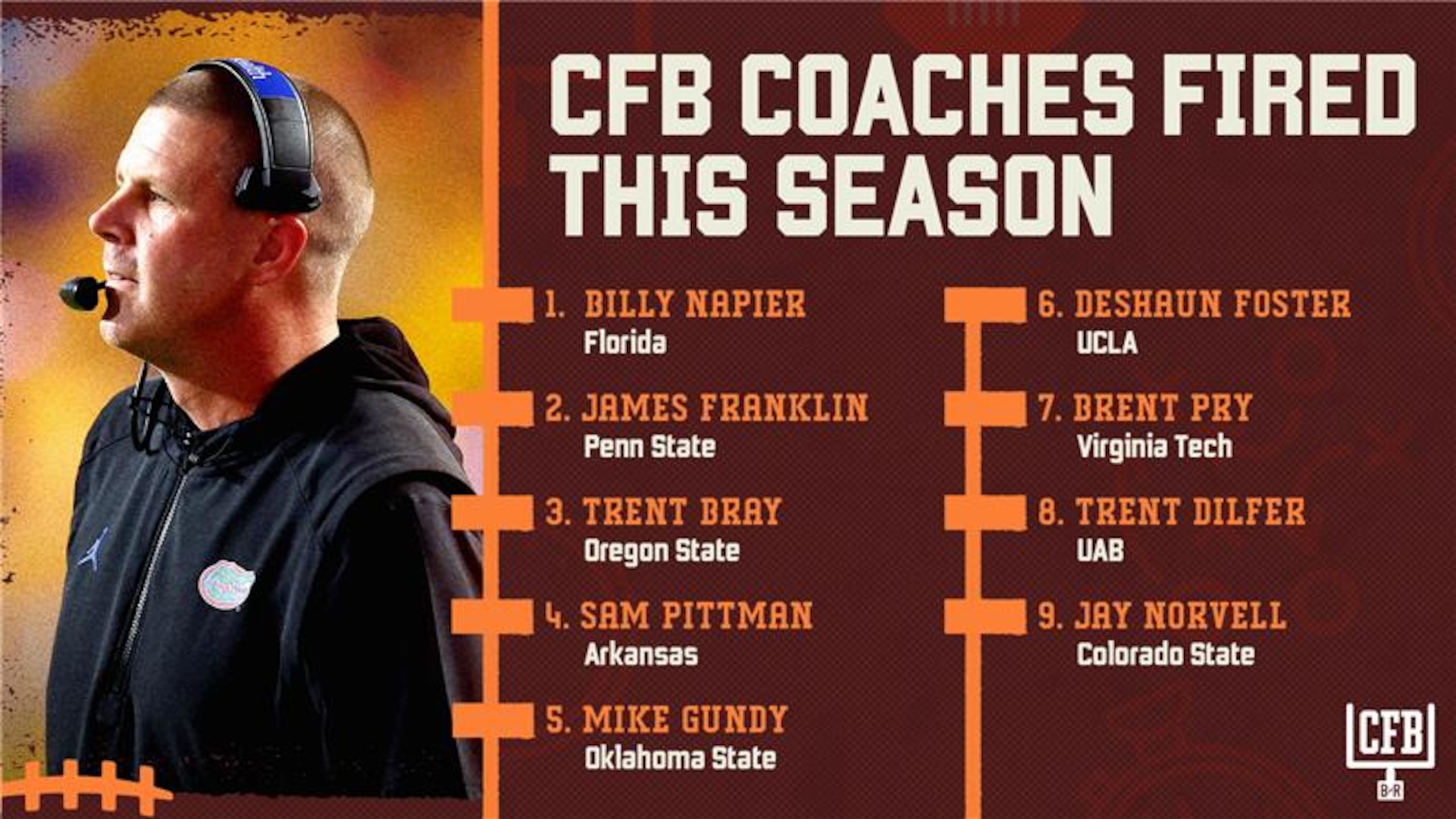
Steve Berkowitz of USA Today reported Florida fired head coach Billy Napier on Sunday, followed by Colorado State firing Jay Norvell, per ESPN's Pete Thamel.
This brought the total of FBS public schools who have fired their coach to eight. Those firings feature a combined buyout totaling $115 million, with Napier owed about $21 million and Norvell coming in at around $2 million.

Berkowitz noted that total is "subject to mitigation and offset, but not including amounts that also will be owed to assistant coaches and other staff."
Florida's decision to fire Napier and Penn State's decision to fire James Franklin are the two moves that have generated the most headlines, but they are far from the only coaches who have lost their job during the season.
Napier and Franklin joined a list that includes DeShaun Foster of UCLA, Brent Pry of Virginia Tech, Mike Gundy of Oklahoma State, Trent Bray of Oregon State, Sam Pittman of Arkansas and Trent Dilfer of UAB.
It would be anything but surprising if that list continues to grow by the end of the season as programs face the ever-present pressure of competing in the expanded College Football Playoff era.
And when that list does expand, so will the total amount owed in buyouts.
Franklin's buyout in particular is driving up that number, as ESPN's Pete Thamel reported his buyout of more than $49 million is the second-biggest in college football history. Texas A&M set the record when it fired Jimbo Fisher with a buyout of more than $76 million.
Such massive buyout numbers are even more noteworthy in the current era of college football with name, image and likeness opportunities, the transfer portal, and eventual revenue sharing only driving up costs for schools and programs.
Discussions about private equity have generated plenty of headlines around the sport of late as well as conferences and teams explore different ways to increase profits and keep up with the costs of doing business.
Perhaps the desire to avoid such significant buyout totals will motivate other programs to be less aggressive with their firings, but there have been no shortage of moves to this point.
.png?w=2560)
.jpg?w=2560 "AD Trolls Bears WR on IG 😂")
.jpg?w=2560 "Viral Dan Campbell Presser 💙")
.jpg?w=2560 "Buzz: MHJ Hired Agents for Trade")
.jpg?w=2560 "Report: Steelers WR to Miss 'Weeks'")
.jpg?w=2560 "Cam Ward Says He's Not A Loser")


.jpg?w=2560 "Chargers Fall to 0-5 🤢")