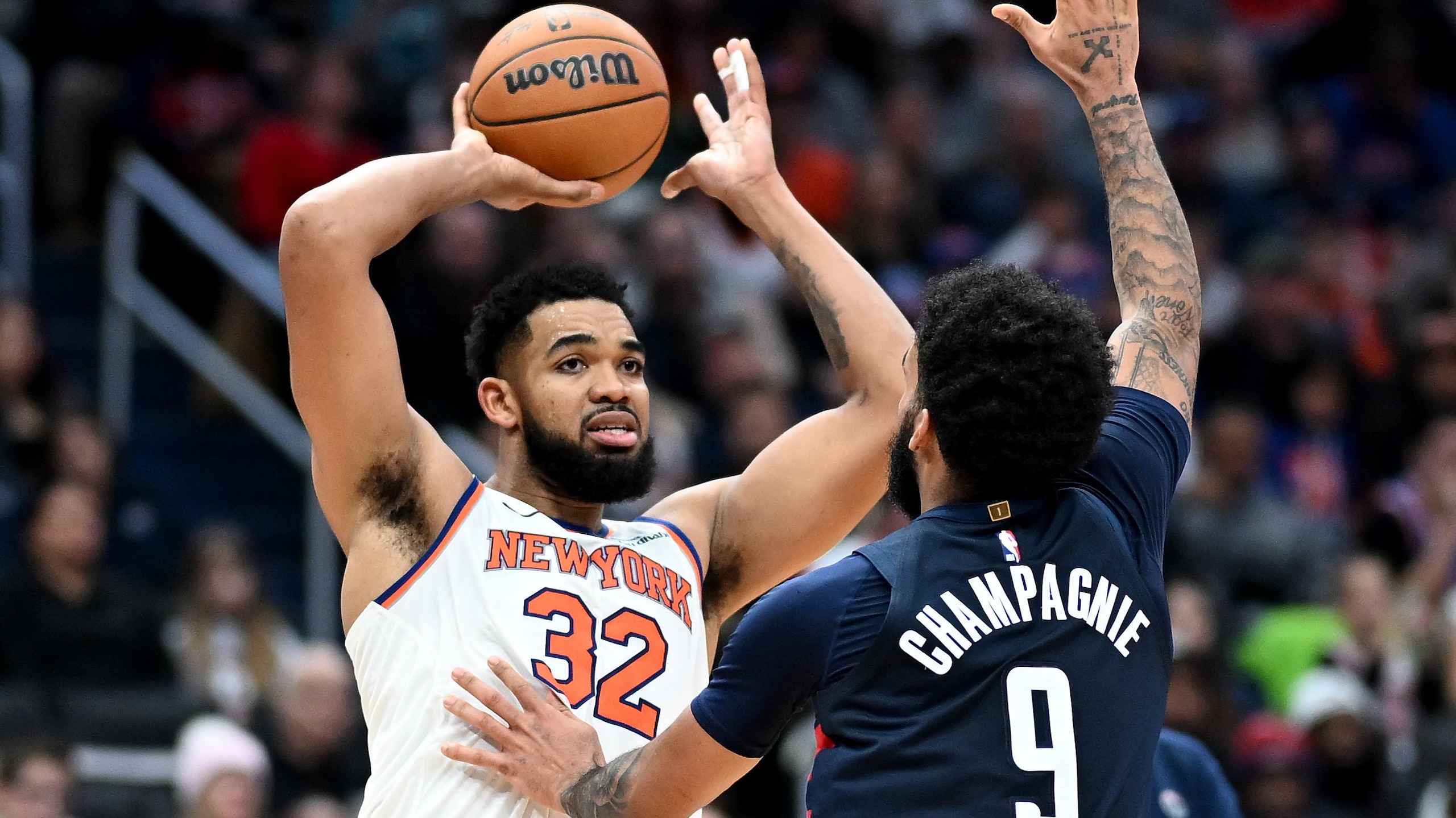

A Lowkey 3-Team Trade Idea That Could Shift the NBA Championship Landscape
Not all trades that impact the NBA's title-contention picture need to include a marquee name. Sometimes, teams ever-so-close to getting over the hump can futz and fiddle on the margins and make a big difference.
This idea we just cooked up for the New York Knicks is proof.
Media Day brought along some unpleasant surprises for fans of the Orange and Blue. Josh Hart revealed he re-aggravated a finger injury that he'll attempt to play through by wearing a splint, in hopes of avoiding what sounds like an inevitable surgical procedure until the 2026 offseason.
For a Knicks squad basically barren of rotation wings after OG Anunoby, Mikal Bridges and Hart himself, this hovers somewhere between not ideal and potentially disastrous. That all changes if they swing this trade.
Full Trade Details
1 of 5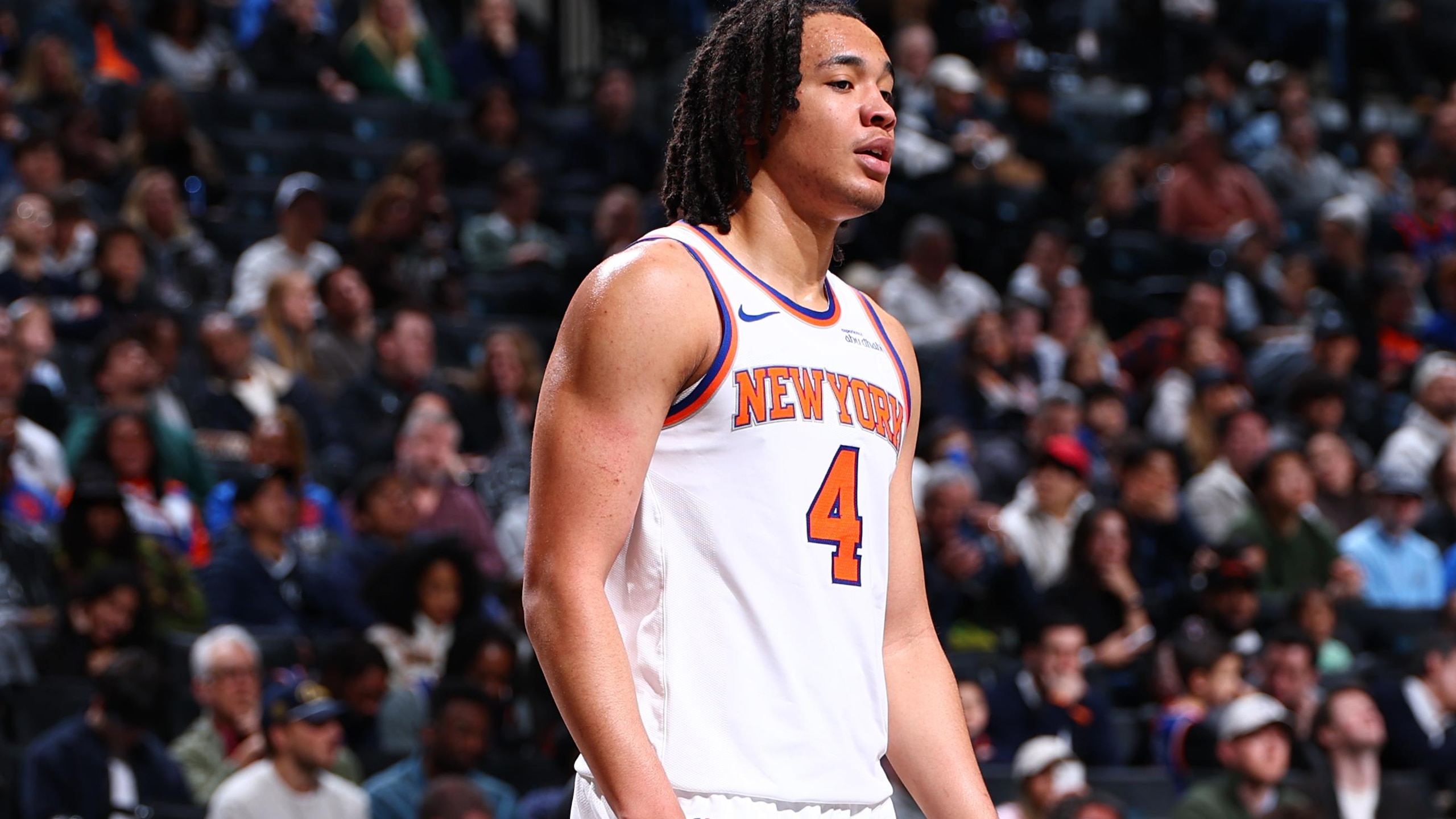
New York Knicks Receive: Justin Champagnie
Utah Jazz Receive: Pacome Dadiet
Washington Wizards Receive: Kevin Love, 2026 first-round pick (its own*, via New York) $1.8 million cash (via Utah)
*Washington's first-round pick in 2026 has top-eight protection. It turns into 2026 and 2027 second-rounders if the Wizards draft eighth or higher.
| Knicks get | Justin Champagnie |
| Jazz get | Pacome Dadiet |
| Wizards get | Kevin Love, 2026 first-round pick, $1.8M cash (via Utah) |
Why the New York Knicks Do It (Part 1)
2 of 5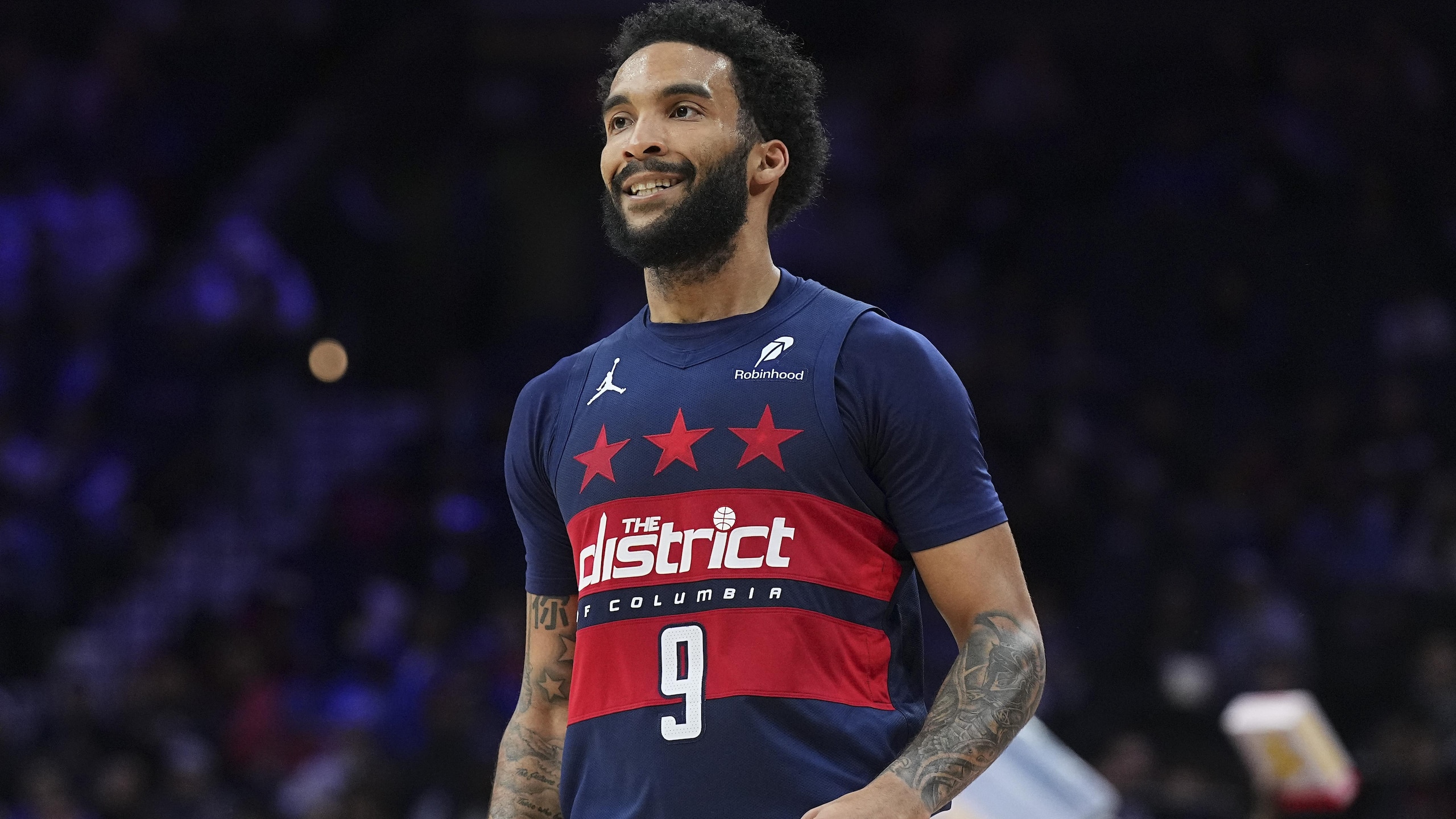
In: Justin Champagnie
Out: Pacome Dadiet, Washington's 2026 first-round pick (top-eight protection)
Don't mistake this as the Knicks giving up an outright first for Champagnie. The Wizards are going to be bad. New York is actually surrendering Washington's 2026 and 2027 seconds and Dadiet. That opportunity cost is well worth the return.
Dadiet is already considered on the chopping block by people around the league, as the Knicks look to squeeze both Landry Shamet and Malcolm Brogdon onto their roster, according to The Athletic's James L. Edwards III. Turning him into a 24-year-old 6'6" wing who can log significant rotation minutes beats paving the way for an extra minimum-contract signing.
Since finding his footing in Washington, Champagnie has routinely checked one of the opposition's two best players while delivering some help-side rim protection. He has also caught teams off-guard with his offensive rebounding and drilled threes at a respectable clip (almost 42 percent on spot-up triples last year).
This trade doesn't just see the Knicks acquire wing depth. It sees them land someone who could feasibly close games over Josh Hart or Mitchell Robinson if Mike Brown has to preserve five-out spacing.
Why the Knicks Do It (Part 2)
3 of 5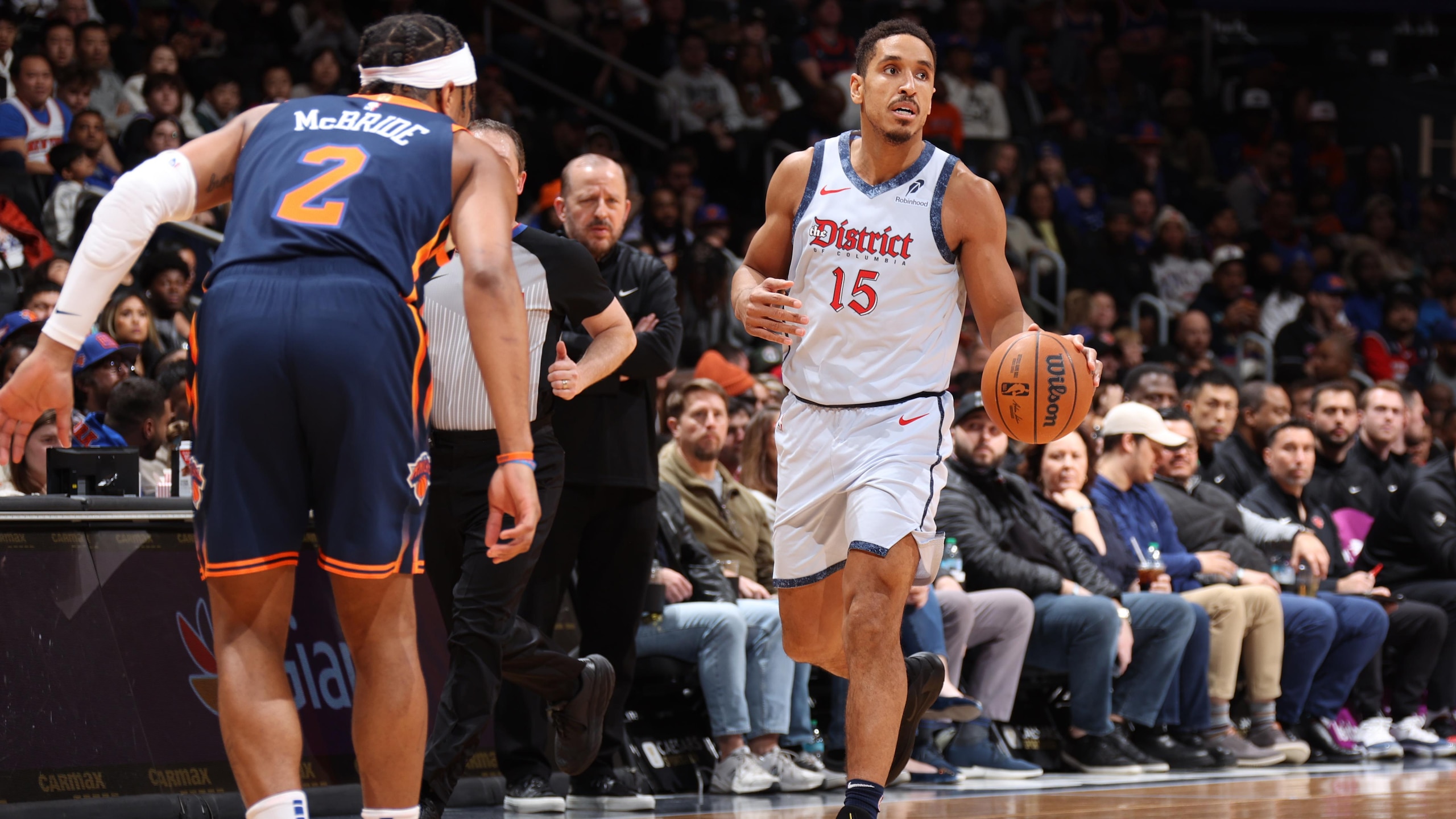
Potentially best of all, Justin Champagnie is so darn cheap moving forward. He's under team control for the next three seasons at a total of $8 million—around 1.6 percent of the salary cap on average. That is hugely valuable to a Knicks squad speeding toward a second-apron reckoning as early as 2026-27.
Exchanging Pacome Dadiet's 2025-26 salary for Champagnie's also saves New York around $500,000. That doesn't create enough room to fit both Landry Shamet and Malcolm Brogdon on the payroll, but it's pretty darn close. The Knicks need about $4.6 million beneath the second apron to make it work. This deal gets them to $4.2 million.
Another marginal move could get them there. Offloading Tyler Kolek would give them juuust enough space to sign Shamet, Brogdon and rookie Mohamed Diawara to complete the roster. They wouldn't have flexibility to do much else thereafter.
New York could also consider signing just one of Brogdon or Shamet with Champagnie in the fold. Or it could see if Deuce McBride-plus-seconds gets them someone like Keon Ellis.
Regardless of whatever (tiny) hoops the Knicks would need to jump through, bagging a rotation wing on a team-friendly deal is worth it—not just for what it does now, but the flexibility it gives them to look at moving others as they get more expensive in the future.



Why the Utah Jazz Do It
4 of 5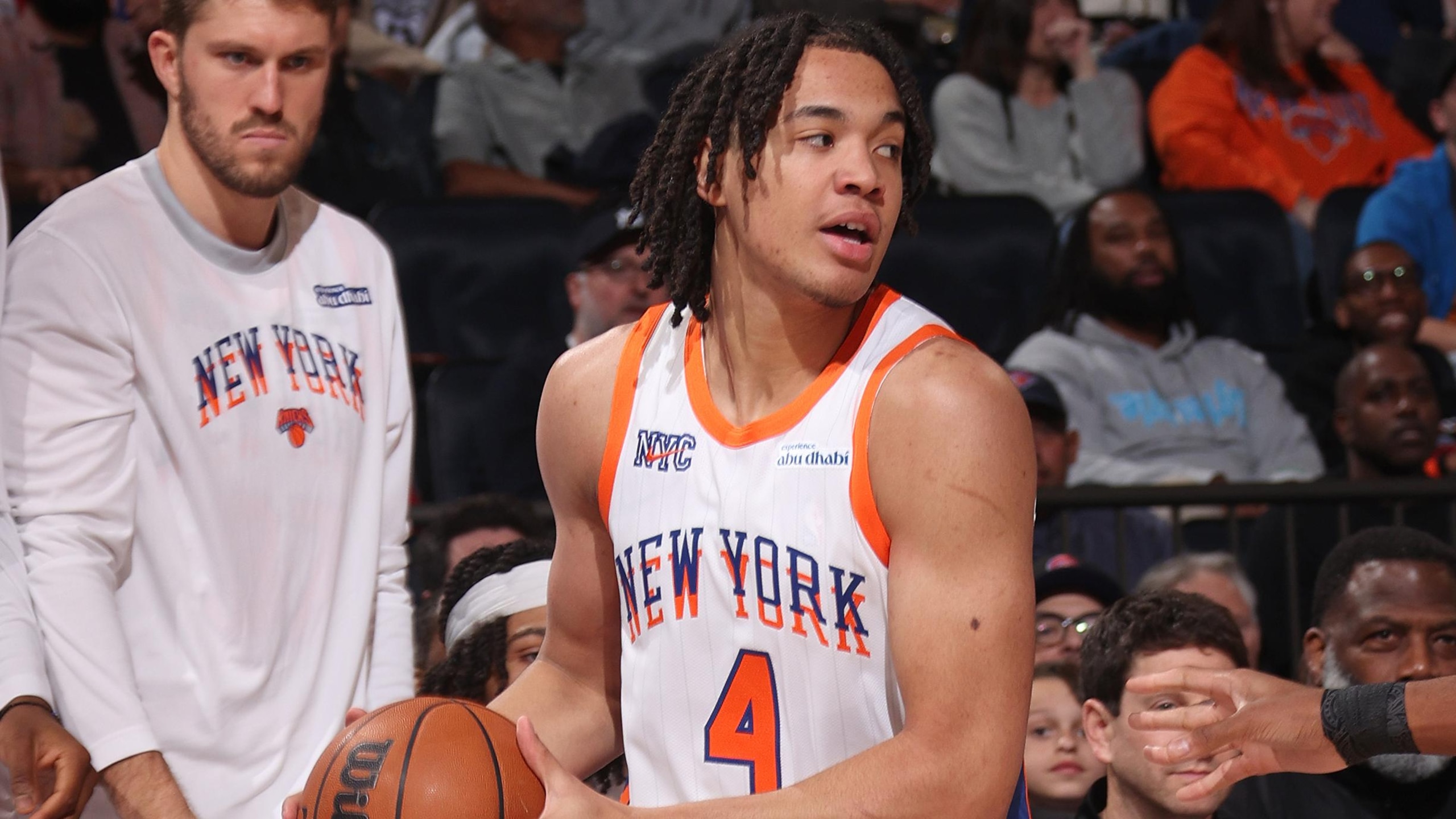
In: Pacome Dadiet
Out: Kevin Love, $1.8 million in cash
The Jazz are essentially paying $1.8 million for an extended look at Dadiet—a swap that's right up their alley.
For all the various youngsters on the roster, Utah's wing pool runs dry after Ace Bailey and Cody Williams. Dadiet has just 111 NBA minutes under his belt and hasn't turned too many heads through two summer-league stints. But he just turned 20 in July and has three years left on his rookie-scale contract. Time is on his side.
If the Knicks' practice-run metrics are to be believed, Dadiet is also an elite floor-spacer-in-waiting. Given that he stands 6'7" and the cost is minimal, the Jazz should be all over the chance to develop him—even if his best-case outcome is a long shot.
Utah's outgoing money, meanwhile, makes up the difference between salaries for Love ($4.5 million) and Justin Champagnie ($2.4 million). After already getting $2.5 million from the Los Angeles Clippers this past summer, the Jazz's cash considerations are still in the green.
Why the Washington Wizards Do It
5 of 5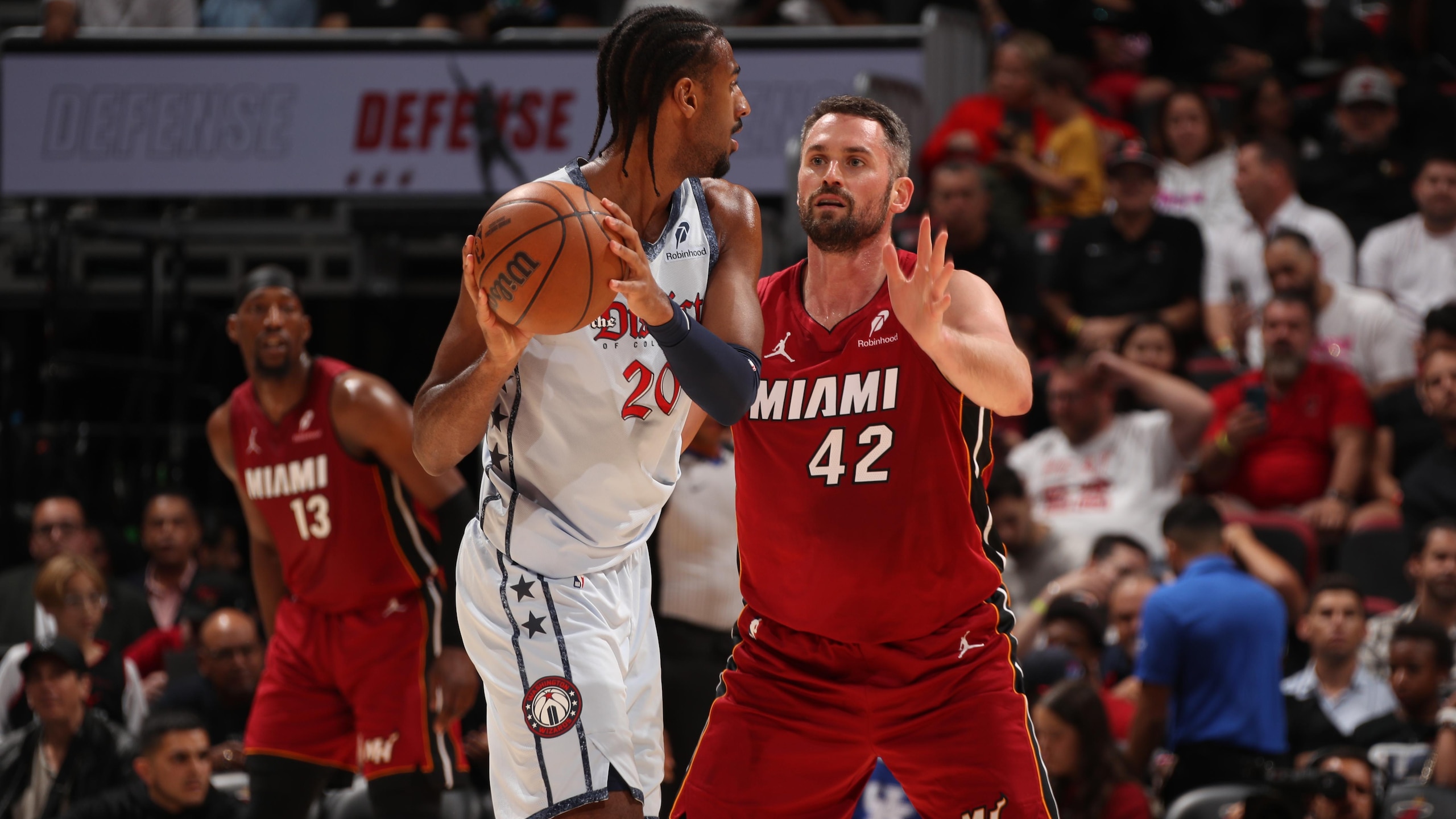
In: Kevin Love, 2026 first-round pick (its own), $1.8 million cash (via Utah)
Out: Justin Champagnie
Getting control back of next June's first-rounder has limited value to the Wizards. Top-eight protection won't faze a team that's not actively trying to win.
Still, this move protects Washington in the event it obliterates expectations. Worst-case scenario, it regains control over its 2026 and 2027 second-round picks, at least one of which could feasibly land in the 30s depending on how hard they push for improvement next summer.
Punting on a cost-controlled wing like Champagnie will sting. The Wizards have the personnel to get over it. Bilal Coulibaly, Kyshawn George and Cam Whitmore all warrant a ton of developmental reps. The same could go for Will Riley (No. 21) and Jamir Watkins (No. 43). Plus, the roster still features Khris Middleton and Cory Kispert.
Taking on Love should be no-muss-no-fuss. Washington has enough room under the tax and is being compensated for the salary increase. Love instantly becomes a buyout candidate but could also give the rotation a veteran big-man presence—something it sorely lacks unless you're the biggest Marvin Bagley III truther of all-time.
Dan Favale is a National NBA Writer for Bleacher Report. Follow him on Bluesky (@danfavale), and subscribe to the Hardwood Knocks podcast, co-hosted by Bleacher Report's Grant Hughes.


.jpg?w=2560 "Viral Rams Coach Vid 🖕")
.jpg?w=2560 "Injury-stricken Seahawks signing veteran RB")
.jpg?w=2560 "2 NFL Officials Suspended")

.jpg?w=2560 "Mahomes' Wife Trolls Kubiak 💀")
.jpg?w=2560 "Grading WWE Raw 🔠")