
Predicting Every NBA Team's Starting 5 After 2025 Free Agency
With all due respect to the unsigned free agents and trade candidates yet to be moved, the dust has mostly settled on the 2025 NBA offseason.
While the basketball world is still recognizable, the landscape clearly shifted in ways that will impact the 2025-26 campaign and seasons beyond.
Multiple blockbuster trades were brokered. Potential centerpieces arrived on draft night. Even free agency, which figured to be rather straightforward given a near-leaguewide lack of flexibility, managed to serve up a few stunners.
With so many puzzle pieces on the move, someone needs to take this scrambled board and figure out the final picture. Someone like...well, us.
Taking everything we now know about these reshaped rosters we're out to predict the opening night starting lineups of all 30 squads.
Just a few notes before getting started. Since we're eyeballing opening night, we won't be miracle-curing any injuries expected to carry over into the season. So, the Boston Celtics won't have Jayson Tatum, the Indiana Pacers will be minus Tyrese Haliburton—you get the idea.
Also, we're filling in these puzzles as they're currently constructed, meaning you won't see unsigned free agents added to rosters. Even if there are strong hunches about where things are headed (like restricted free agents Josh Giddey, Cam Thomas and, yes, even Jonathan Kuminga probably staying put), this offseason has already taught us plenty about the possible pitfalls of assuming anything in the Association.
With those parameters in place, let's start building some the fivesomes set to hit the hardwood for the opening tip.
Atlanta Hawks
1 of 30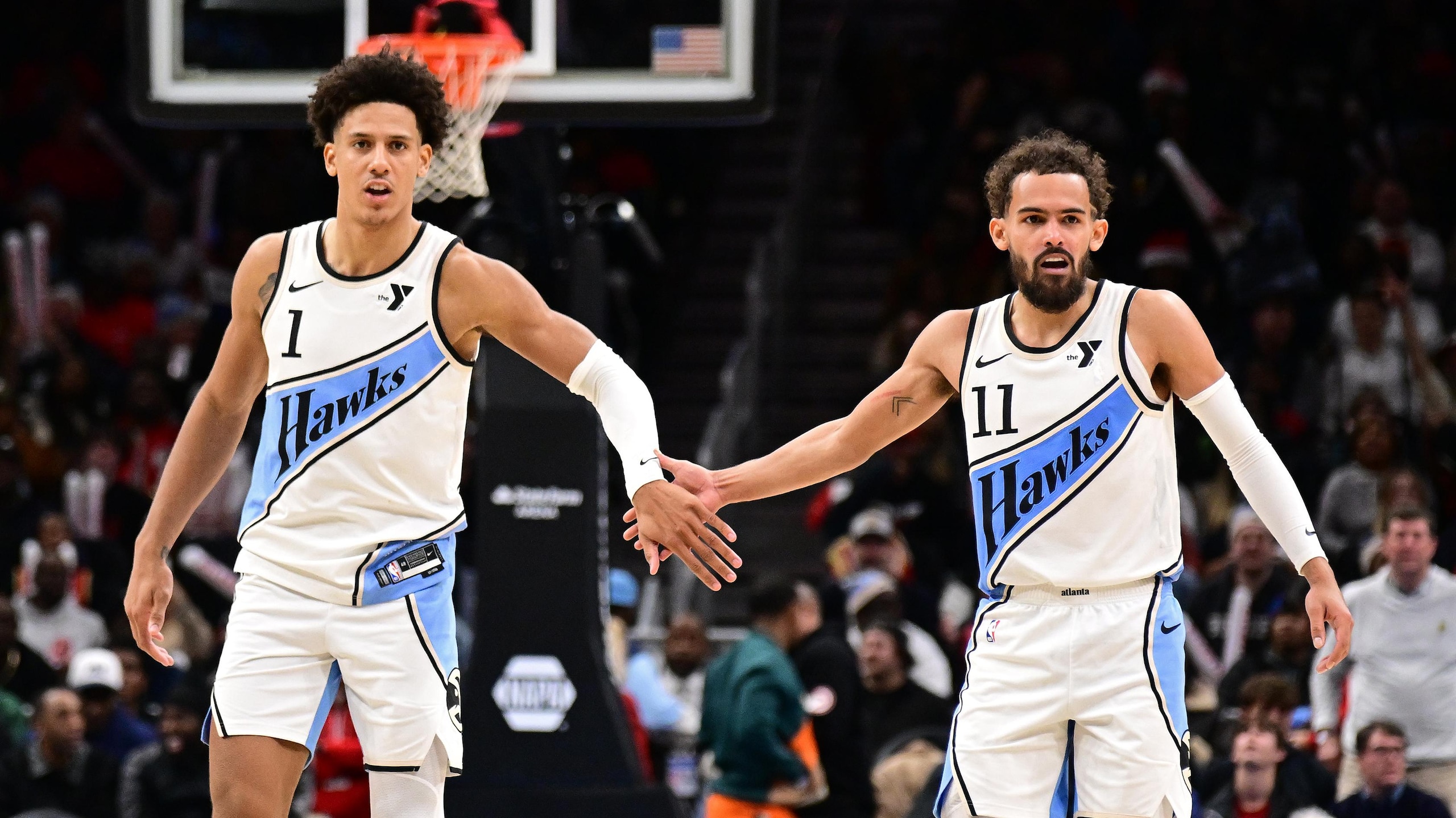
Predicted starters: Trae Young, Dyson Daniels, Zaccharie Risacher, Jalen Johnson, Kristaps Porziņģis
Atlanta's opening group feels, for the most part, pretty straight forward.
Young is the franchise centerpiece and a high-end floor general. Daniels and Johnson both had breakout 2024-25 seasons and help provide the defensive protection a Young-centric roster needs. All three could be longtime starters for the Hawks (assuming the front office is comfortable covering the cost of Young's next contract, of course).
That leaves two decision points for the coaching staff. One boils down to either sticking with Risacher, last year's No. 1 overall pick, or rolling with newcomer Nickeil Alexander-Walker, who arrived with a new $62 million deal in hand. The other revolves around starting the skilled-but-oft-injured Porziņģis or returning Onyeka Okongwu to the starting role he filled during this past season's second half.
So, why side with Risacher and Porziņģis here? We're wagering that the Hawks feel compelled to furthering the French player's development as best they can and might like the idea of having Alexander-Walker's playmaking off the bench, anyway.
The Porziņģis-Okongwu debate is trickier, but the former's shot-blocking and floor-spacing feel like the best fits with Young.
Boston Celtics
2 of 30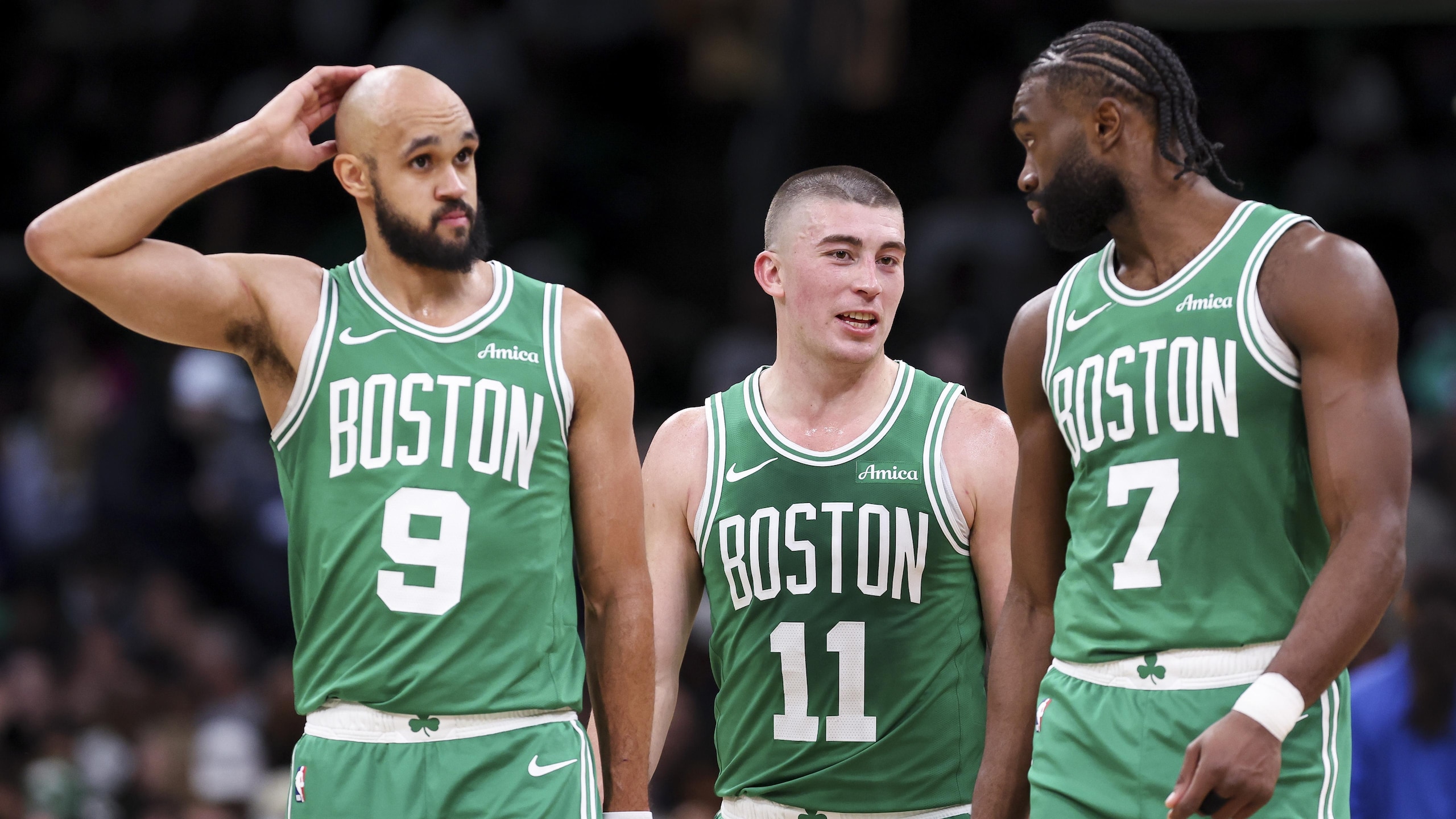
Predicted starters: Anfernee Simons, Derrick White, Jaylen Brown, Sam Hauser, Neemias Queta
Life in the NBA comes at you all too quickly under this collective bargaining agreement. Boston held dynasty potential coming off of its 2024 championship run, and it's now looking like it will have just 40 percent of that group's starting lineup on opening night.
As for the new predicted starters, we're about 60 percent confident in these picks. White and Brown are no-brainers, and Hauser feels like the preferred choice over newcomer Georges Niang.
Those financially-driven subtractions of Porziņģis and Jrue Holiday really created confusion at the other spots, though. It's the starting guard spot alongside White that comes down to a camp battle between Simons and Payton Pritchard, but we see Boston ultimately opting to keep the latter in his award-winning sixth man role.
The center rotation is painfully light, but Queta probably gets the nod right now for his size, energy and familiarity with the system.
Brooklyn Nets
3 of 30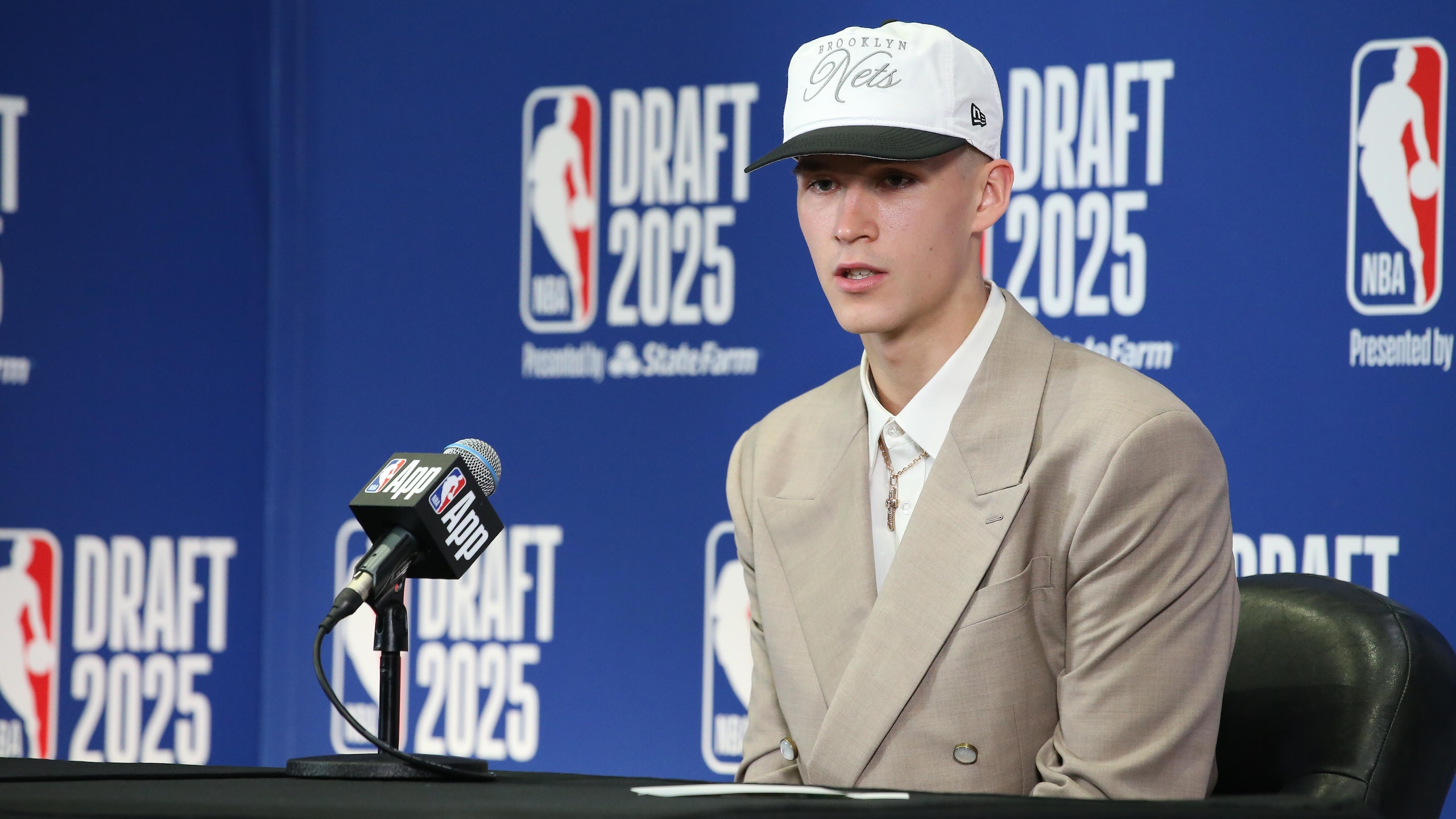
Predicted starters: Egor Demin, Terance Mann, Michael Porter Jr., Noah Clowney, Nic Claxton
The Nets aren't merely rebuilding, they're in the let's-just-draft-five-first-round-prospects-and-see-what-happens stage of a top-to-bottom, tank-tastic overhaul. To be fair, the 2026 draft looks loaded, so there's that.
But to be real, we just watched the Utah Jazz and Washington Wizards tank their way to the fifth and sixth draft picks, so the only guaranteed outcome of a current tanking strategy is a towering loss column.
Brooklyn invested its earliest selection in Demin (No. 8), who should get every possible chance to become the league's next big playmaker. Porter is too expensive to sit, and the Nets have to showcase him on the off-chance a shooting-starved suitor eventually comes calling and helps improve what was a pretty underwhelming return for Cam Johnson.
Speaking of Cams, the absence of Thomas in this exercise leaves the 2-spot open for someone, so we'll give Mann—another showcase candidate—the edge on Keon Johnson. Up front, it makes sense to keep starting Claxton until the right offer comes along and to see exactly what they have in Clowney, a toolsy 21-year-old who was the 21st pick in 2023.

Charlotte Hornets
4 of 30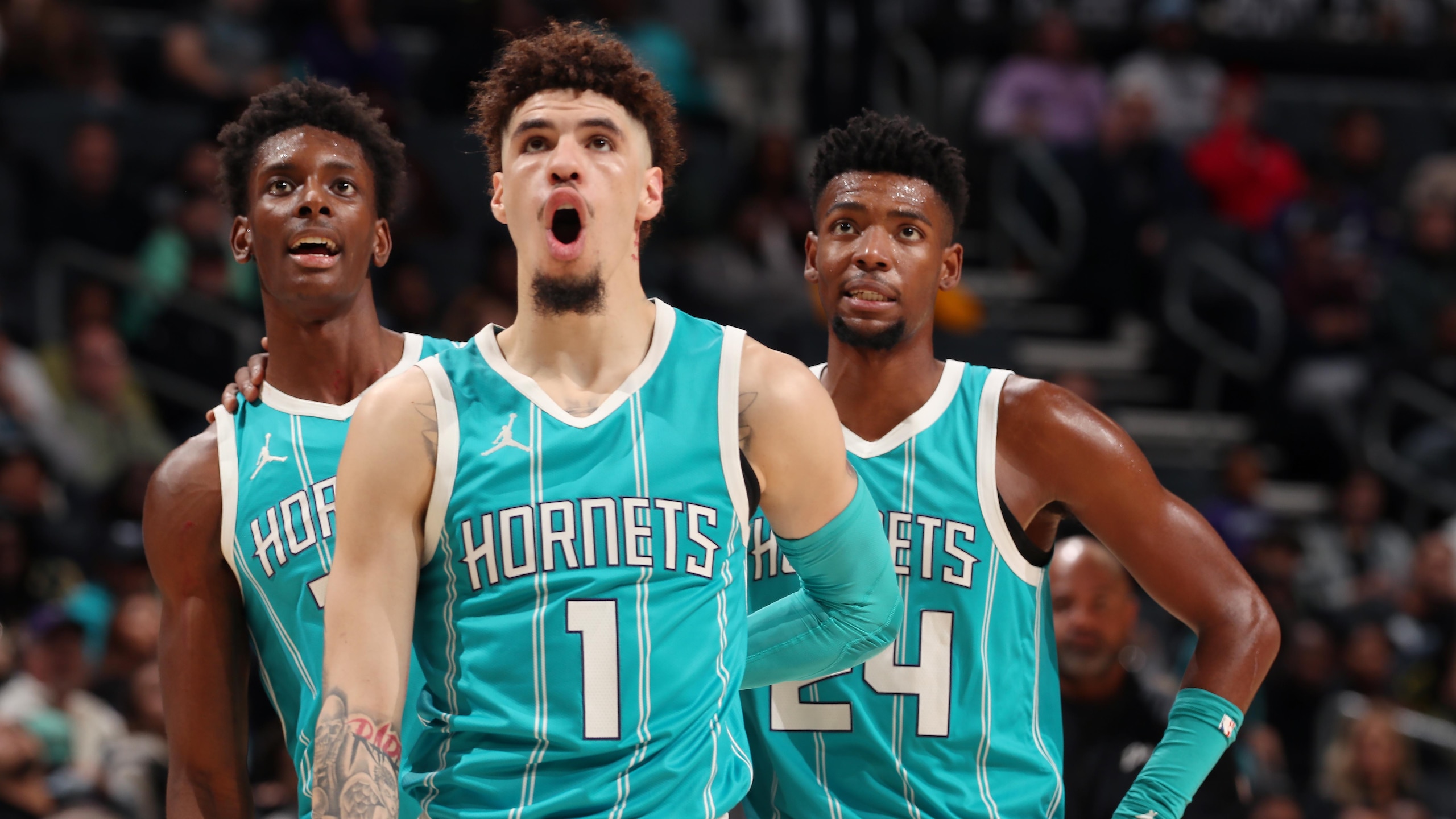
Predicted starters: LaMelo Ball, Brandon Miller, Kon Knueppel, Miles Bridges, Ryan Kalkbrenner
Don't be surprised to hear some legitimate buzz out of Buzz City this season. While the Hornets can't realistically hope for more than a play-in invite, their young core keeps expanding in intriguing ways.
Now, Ball and Miller both have to stay healthy for any kind of breakthrough to happen, but these are Charlotte's primary building blocks regardless. Knueppel, the No. 4 pick, has a chance to cement that status early on, too, as his advanced feel for the game and NBA-ready three-ball should make him an opening-night starter on a squad that had sub-.300 winning percentages each of the past two seasons.
Bridges, Charlotte's third-leading scorer last season, has no obvious threats to his starting role, unless the Hornets feel they'd have better two-way balance by giving Josh Green an opening spot instead.
The post-Mark Williams plans at center are unclear, but we'll give rookie Kalkbrenner the edge on Moussa Diabaté for offering superior size and paint protection.
Chicago Bulls
5 of 30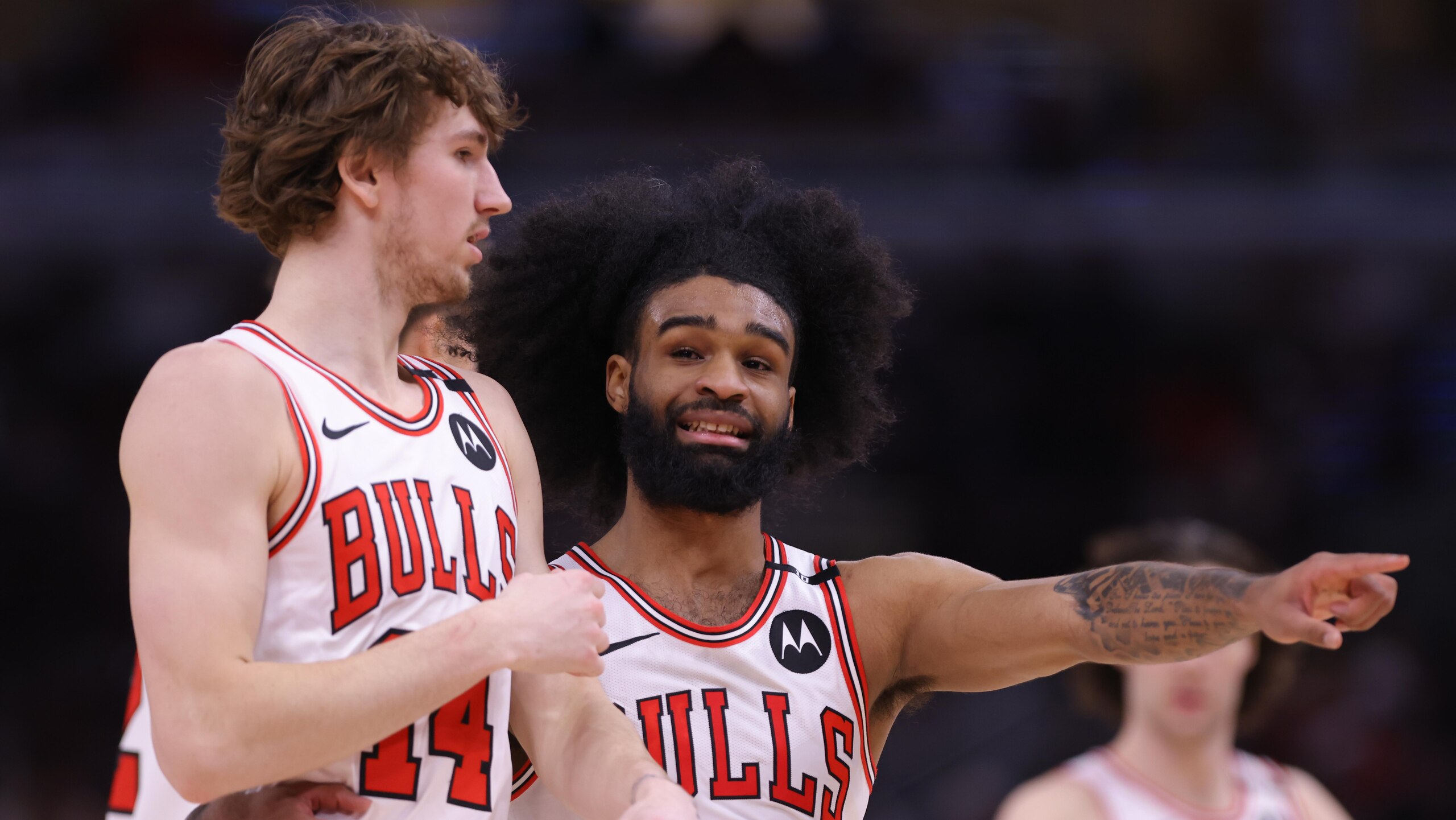
Predicted starters: Tre Jones, Coby White, Ayo Dosunmu, Matas Buzelis, Nikola Vučević
Congrats, Bulls brass. You have again built a roster that has a decent chance to push for play-in tournament participation.
This lineup feels depressing, frankly, though adding Josh Giddey would perk things up a bit. It's not the least talented quintet you'll find, but shouldn't Chicago have more than one obvious building block (Buzelis) by now?
Vučević is a trade candidate who hasn't been traded yet, and Jones is the placeholder for the unsigned Giddey. White is a fun scorer, and Dosunmu is a reliable energy source, but they aren't necessarily locked into the future since both will be on expiring deals.
That should leave the door open for Isaac Okoro or No. 12 pick Noa Essengue to potentially challenge for these spots, but they also might have too many question marks (Okoro's iffy spacing and Essengue's lack of polish) to unseat the incumbents.
Cleveland Cavaliers
6 of 30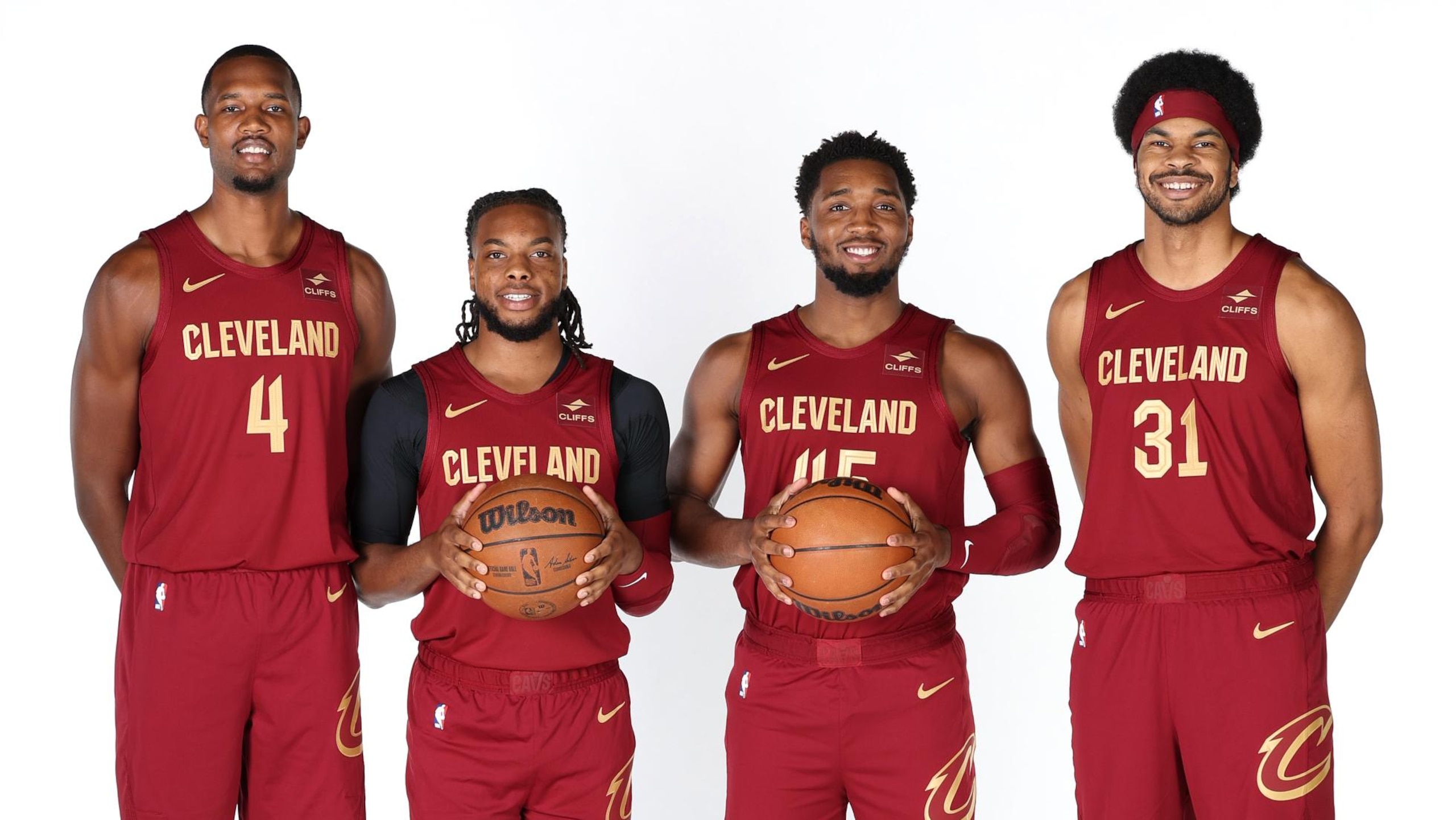
Predicted starters: Darius Garland, Donovan Mitchell, Max Strus, Evan Mobley, Jarrett Allen
Some of these puzzles are really difficult to crack. This is not one of them.
It would take a blockbuster trade to break apart the core four of Garland, Mitchell, Mobley and Allen. There might be some on-paper concerns about the logistics of this construction—size limitations in the backcourt, spacing limitations up front—but the talent is obvious and immense.
They played 773 minutes together this past season and blitzed opponents by 9.8 points per 100 possessions when they did.
While we might have interest in seeing what De'Andre Hunter could do in Strus' spot, the Cavaliers do not. Outside of easing Strus back into the starting group following the ankle injury that cost him all of October and November and most of December, Cleveland started him in all 37 regular-season games after and all nine of its playoff contests.
Dallas Mavericks
7 of 30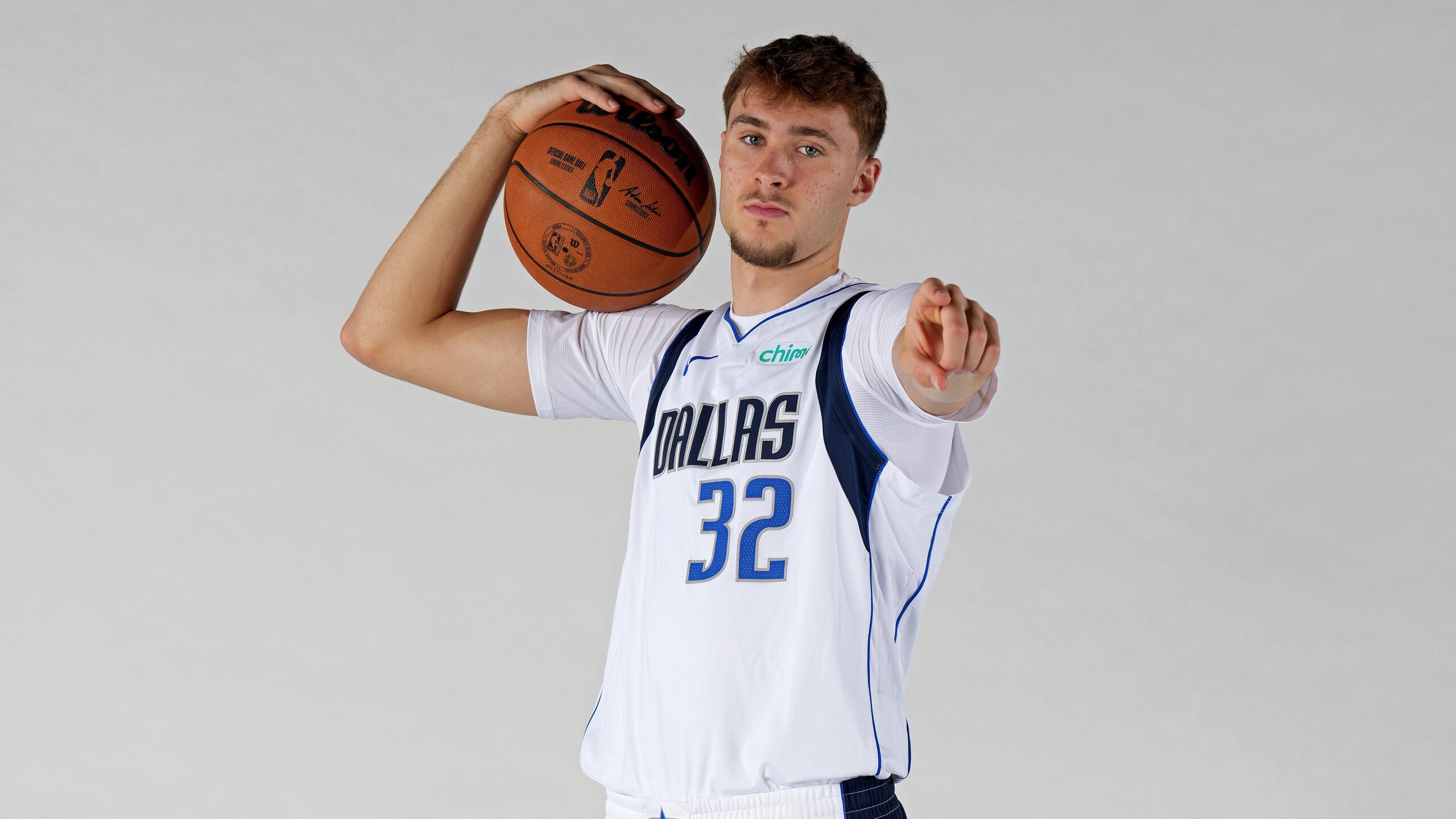
Predicted starters: D'Angelo Russell, Klay Thompson, Cooper Flagg, Anthony Davis, Dereck Lively II
The Mavericks are missing some oomph with Kyrie Irving still mending an ACL tear, but this is a fascinating fivesome for a lot of reasons.
Most of them have to do with Flagg, this year's No. 1 pick and one of the more buzzed-about prospects in recent memory. He looks like he'll be an elite defender and competitor from the start, and his scoring arsenal seemed ahead of schedule during his one-and-done run at Duke.
Sliding up the frontcourt, the Davis-Lively tandem should be one of the league's best defensive duos—for as long as they stay healthy.
Davis has cleared the 70-game mark in only three of his 13 NBA seasons, while Lively has made just 91 appearances over his first two campaigns. When they're on the hardwood, though, they'll lock down the defensive end and flush everything around the basket on offense.
That defensive protection will be critical, as the Russell-Thompson backcourt could be among the league's leakiest. Maybe the defensive concerns convince coach Jason Kidd to explore other options—Max Christie or PJ Washington—but the shooting punch of Russell and Thompson probably secures their spots, since Dallas' frontline looks light on spacing.
Denver Nuggets
8 of 30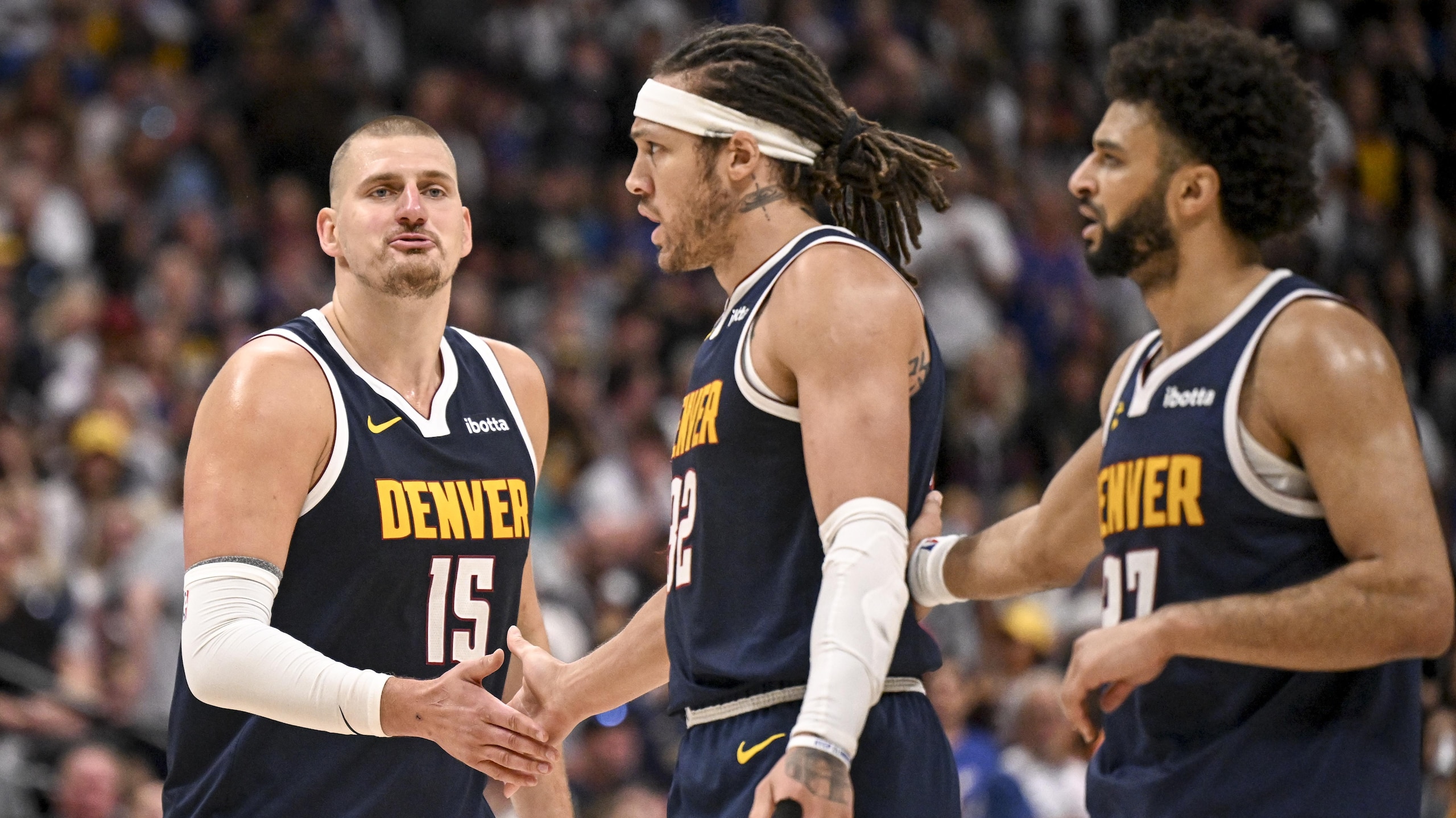
Predicted starters: Jamal Murray, Christian Braun, Cam Johnson, Aaron Gordon, Nikola Jokić
While the Nuggets were involved in one of the summer's biggest swaps—sending out Michael Porter Jr. and an unprotected 2032 first-round pick for Johnson—and have been busy reworking their bench, this feels like a debate-free prediction.
Murray, Braun, Gordon and Jokić were all effectively nightly starters this past season. Braun made two appearances off the bench but also started 77 regular-season games and then another 14 in the playoffs. Gordon played nine games as a reserve, but only easing back into action following injury layoffs. Otherwise, he was wreaking havoc alongside Jokić as a do-it-all defender and powerful lob-finisher.
Despite being a newcomer, Johnson feels like he's running unopposed for the final starting spot. He'll be tasked with replacing Porter's perimeter shooting while hopefully bringing better consistency and more value on the defensive end.
Detroit Pistons
9 of 30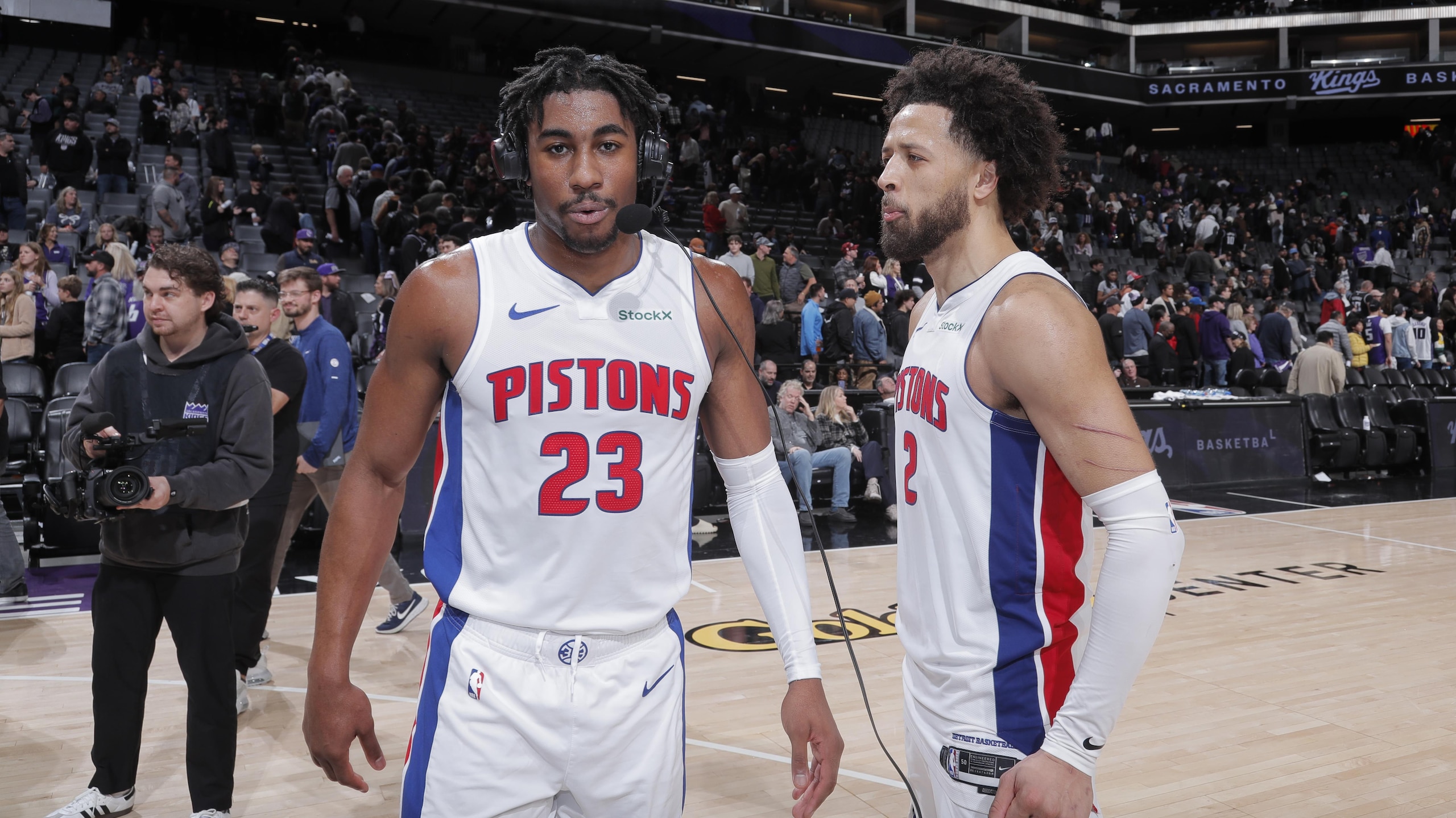
Predicted starters: Cade Cunningham, Jaden Ivey, Ausar Thompson, Tobias Harris, Jalen Duren
Do the Pistons have enough shooting here to give Cunningham the space he needs to operate? That probably depends on Ivey, who was an average-ish spacer in his first two seasons (33.9 percent) but a true marksman in his third (career highs of 2.1 threes and a 40.9 percent splash rate).
If the offense can breathe, this should be the group coach JB Bickerstaff rolls out. Duncan Robinson could salvage the spacing if needed, but he'd downgrade the defense too much to consider that a primary option. A Ron Holland II breakout would be massive for the Pistons' future, but he'd restrict the offensive end. Caris LeVert maybe gets some consideration, too, but his on-ball offense would be best utilized off the bench behind Cunningham and Ivey.
Assuming Bickerstaff sees this the same way, this look offers hope for two-way balance and maybe another substantial step forward.
Between Ivey's return from the broken left fibula that cost him the campaign's final three months and the obvious growth potential in every starter but Harris, the arrow is clearly pointing up for the Pistons.
Golden State Warriors
10 of 30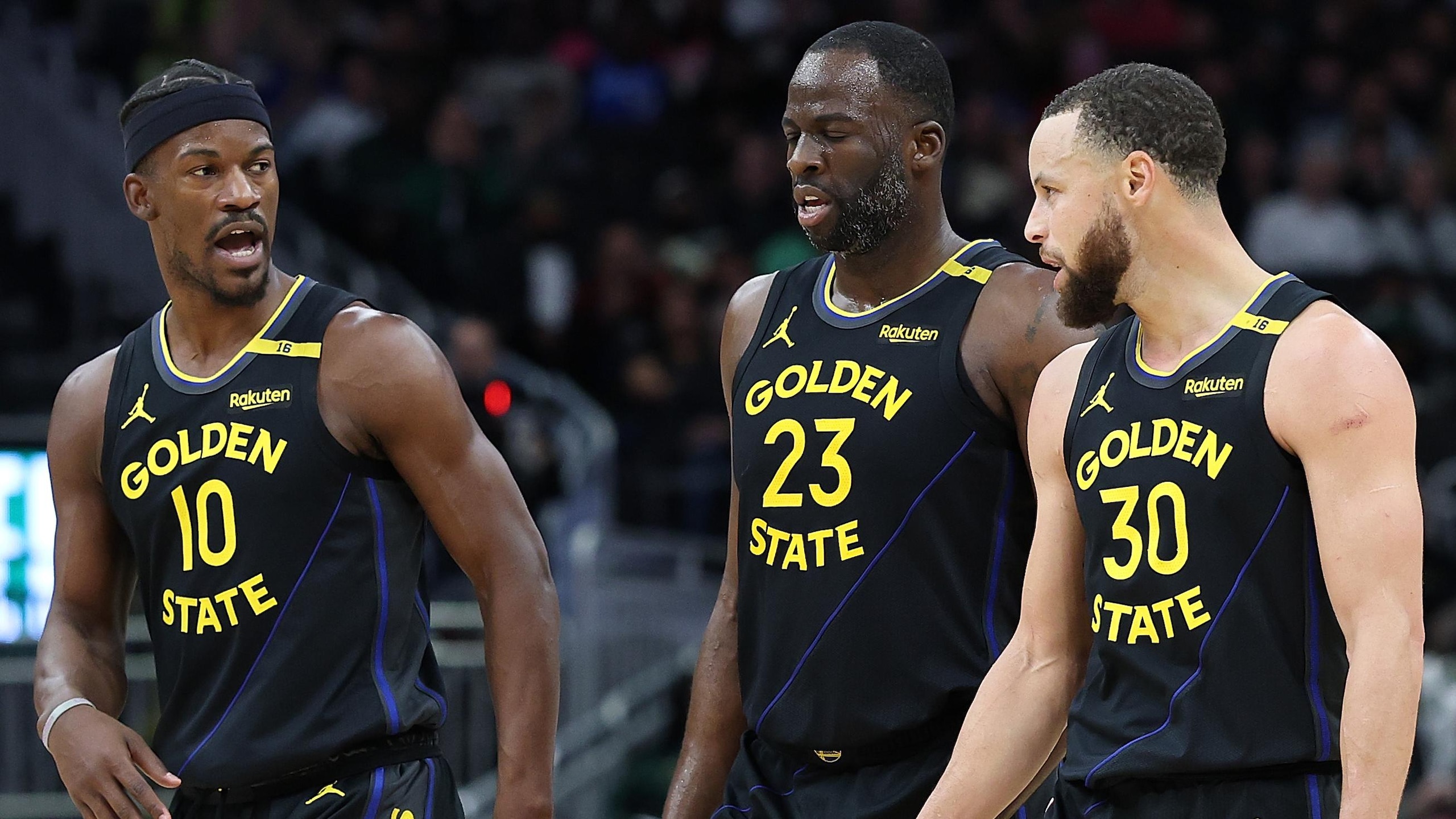
Predicted starters: Stephen Curry, Brandin Podziemski, Buddy Hield, Jimmy Butler, Draymond Green
This was a bit harder than it should've been. And it basically all comes down to one spot.
Curry, Butler and Green are obvious opening (and closing) lineup fixtures, and Podziemski is something awfully close to that. The defensive concerns of a Curry-Podziemski backcourt are glaring, but coach Steve Kerr basically rolled with this pairing whenever possible down the stretch. Including the playoffs, Podziemski started 32 of the 33 final games he played.
So, how about that fifth spot? We're going Hield with the presumption Kerr will attempt to maximize spacing around the Butler-Green frontcourt. But the coach could also try that by trotting out Quentin Post as a stretch 7-footer. Moses Moody theoretically offers better two-way balance, but the Dubs discarded him from their starting lineup pretty quickly into their playoff run.
Finally, the unresolved restricted free agency of Jonathan Kuminga creates additional confusion, although there's no obvious reason to think Kerr would have a starting spot awaiting him even if he re-signs.
Houston Rockets
11 of 30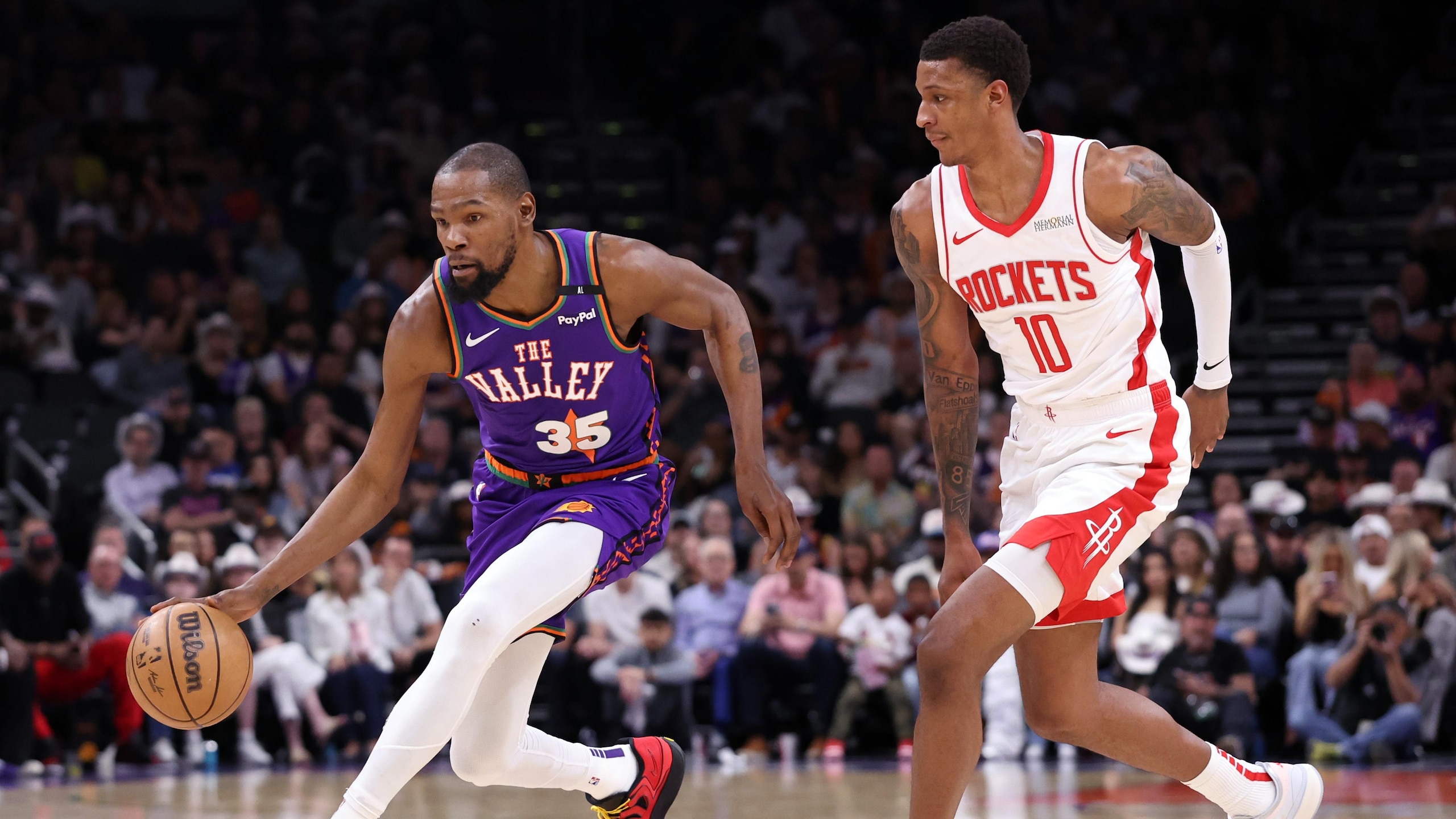
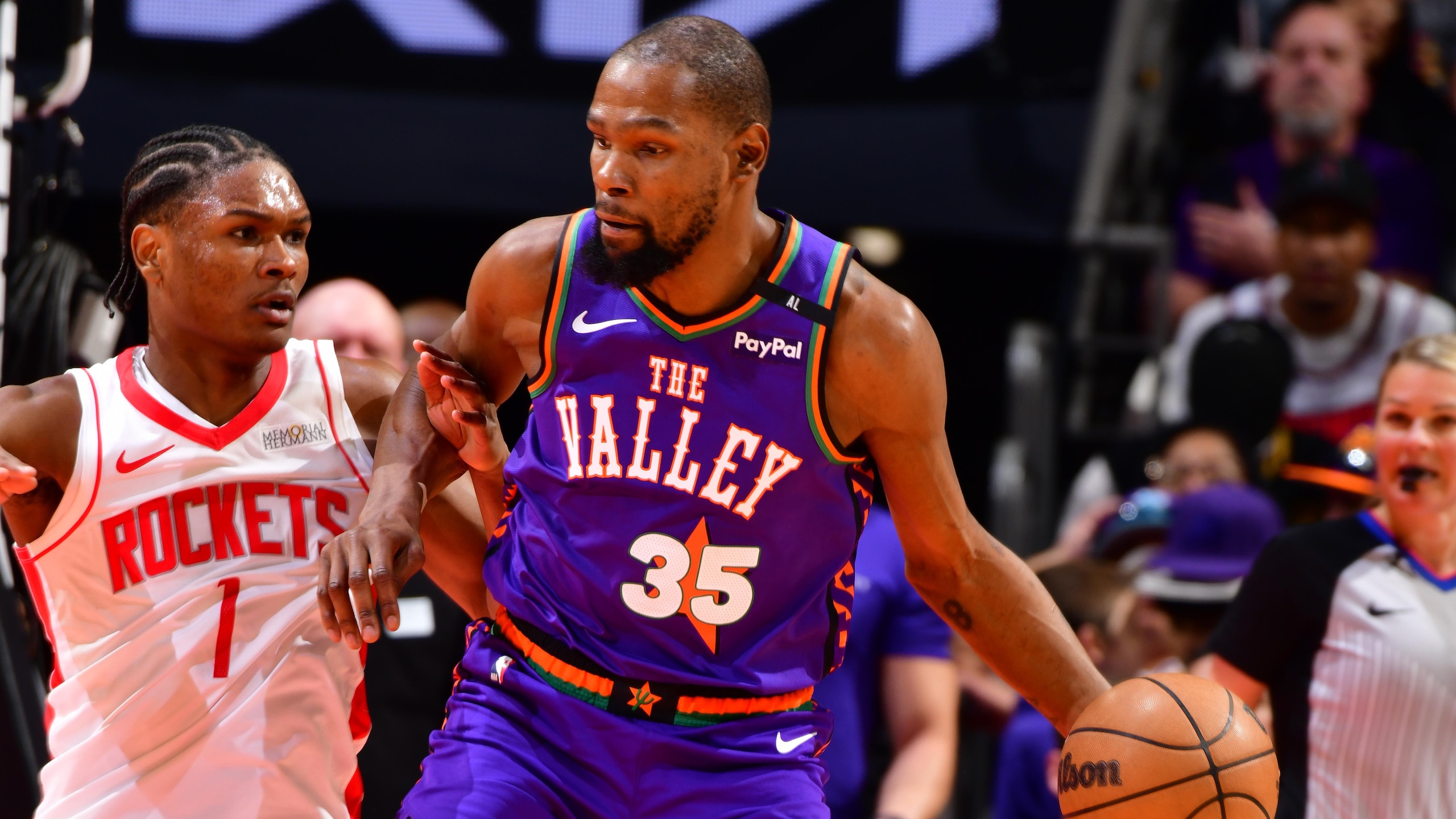
Predicted starters: Fred VanVleet, Amen Thompson, Kevin Durant, Jabari Smith Jr., Alperen Şengün
It's funny. While the deal for Durant seemingly launched the Rockets into Phase 3 of their post-James Harden roster restructuring, it hardly depleted their rich collection of trade assets.
In other words, they could go even bigger-game hunting if the right opportunity arose.
Houston will clearly give this group a lengthy runway first, though. It was a 52-win No. 2 seed just this past season despite being overloaded with youth and noticeably lacking a go-to scorer in the half-court. The deal for Durant might be all it needs to crash the championship party.
There still might be one thing for coach Ime Udoka to figure out with this lineup, and that's whether Smith belongs over either Tari Eason or newcomer Dorian Finney-Smith.
That's how we'd approach it, as Smith's length, defensive versatility and range shooting feel like the best complements to the other four, but there really isn't a bad way to handle this.
Indiana Pacers
12 of 30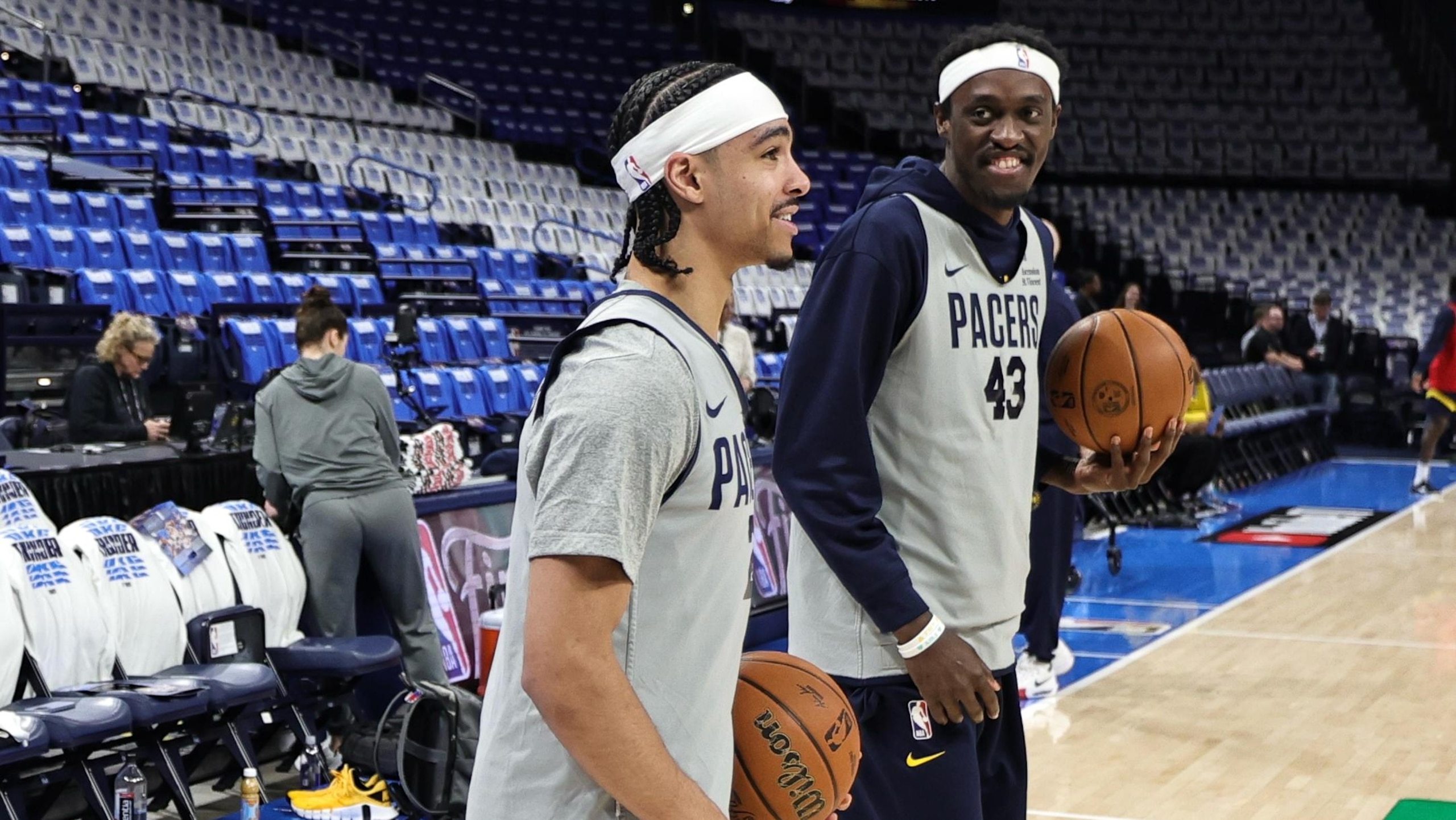
Predicted starters: Andrew Nembhard, Bennedict Mathurin, Aaron Nesmith, Pascal Siakam, Jay Huff
Injuries are the worst. If Tyrese Haliburton doesn't tear his Achilles in Game 7 of the NBA Finals, things would look dramatically different in the Circle City. Indy would have its star lead guard running the show and, presumably, still have Myles Turner anchoring the defensive interior and stretching out the offensive end.
"Heading into the summer as an unrestricted free agent, Turner indicated his intention was always to return to Indiana, and Pacers coach Rick Carlisle said after the Finals that re-signing him was the team's top priority," Eric Nehm, Sam Amick and Joe Vardon wrote for The Athletic. "However, Indiana was already facing the likelihood next season of playing without Haliburton...and decided it didn't want to 'overpay' for Turner now."
So, yeah, that's where things have gone since Indy's surprise run to the championship round. Haliburton is out, Turner is gone and Indy's new-look starting group probably looks like this.
Maybe Jarace Walker pushes for a spot or Carlisle picks Tony Bradley, James Wiseman or an unsigned-for-now Isaiah Jackson over Huff at the 5, but these are our five clubhouse leaders.
Los Angeles Clippers
13 of 30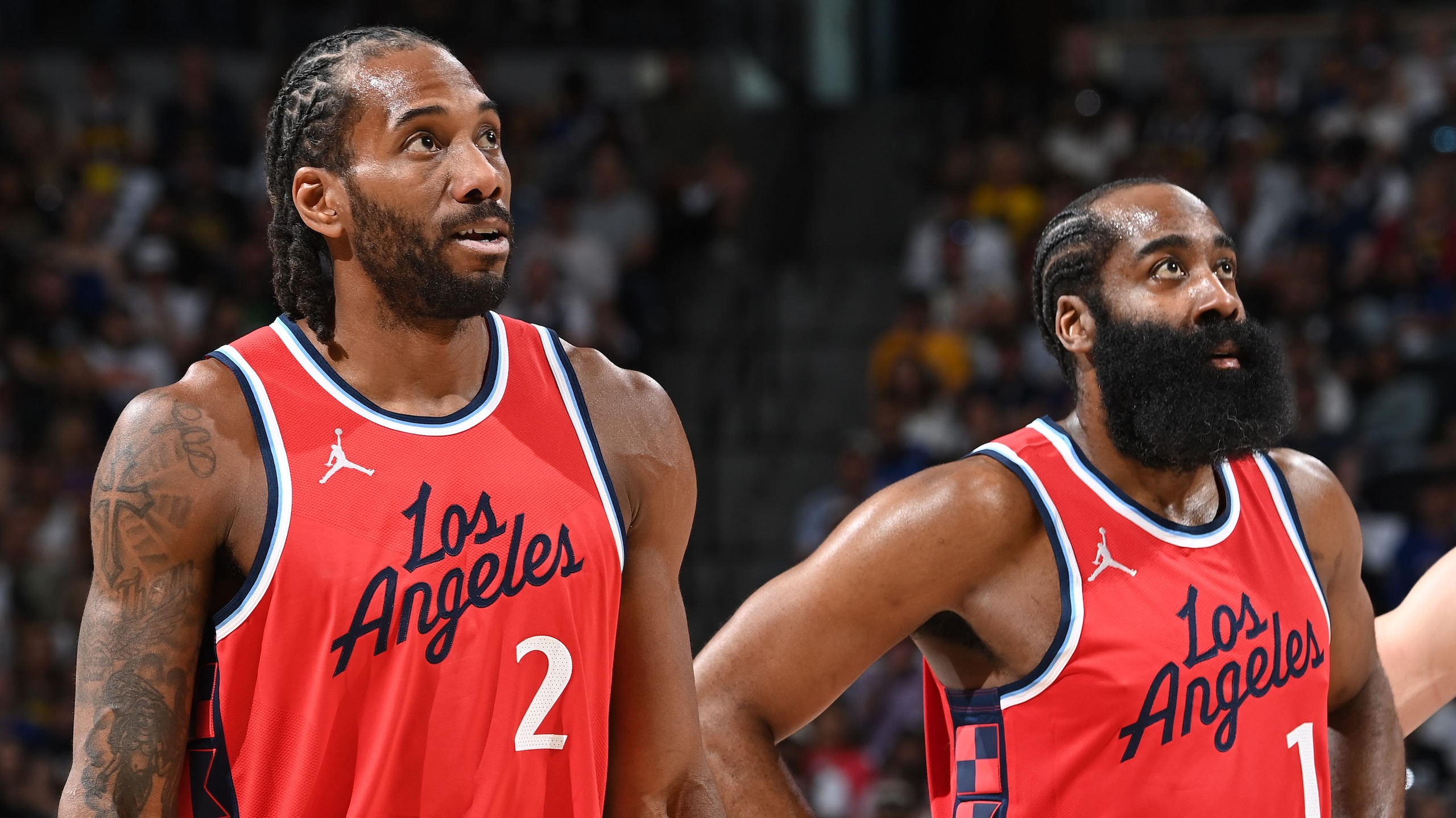
Predicted starters: James Harden, Bogdan Bogdanović, Kawhi Leonard, Derrick Jones Jr., Ivica Zubac
Had the Clippers not thrown a curveball by way of the recent trade that sent out Norman Powell and brought in John Collins, there'd be little to figure out here.
Honestly, we might be spending most of our time crafting some dumb joke about the chances Leonard will be available on opening night.
Instead, we're left to ponder how things shake out around Harden, Leonard and Zubac. And, as stated in the intro, we're not going to pencil Bradley Beal into the 2 spot despite all arrows pointing toward that outcome, so we'll go Bogdanović for his offense and passable defense over defensive specialist Kris Dunn there.
Up front, we're bypassing Collins—who looks like the perfect complement to new backup center Brook Lopez—to keep Jones out there for his defensive versatility and similar finishing ability.
Coach Tyronn Lue could go the other way, but after winning big with a dominant defense this past season, L.A. may not want to rethink the formula.
Los Angeles Lakers
14 of 30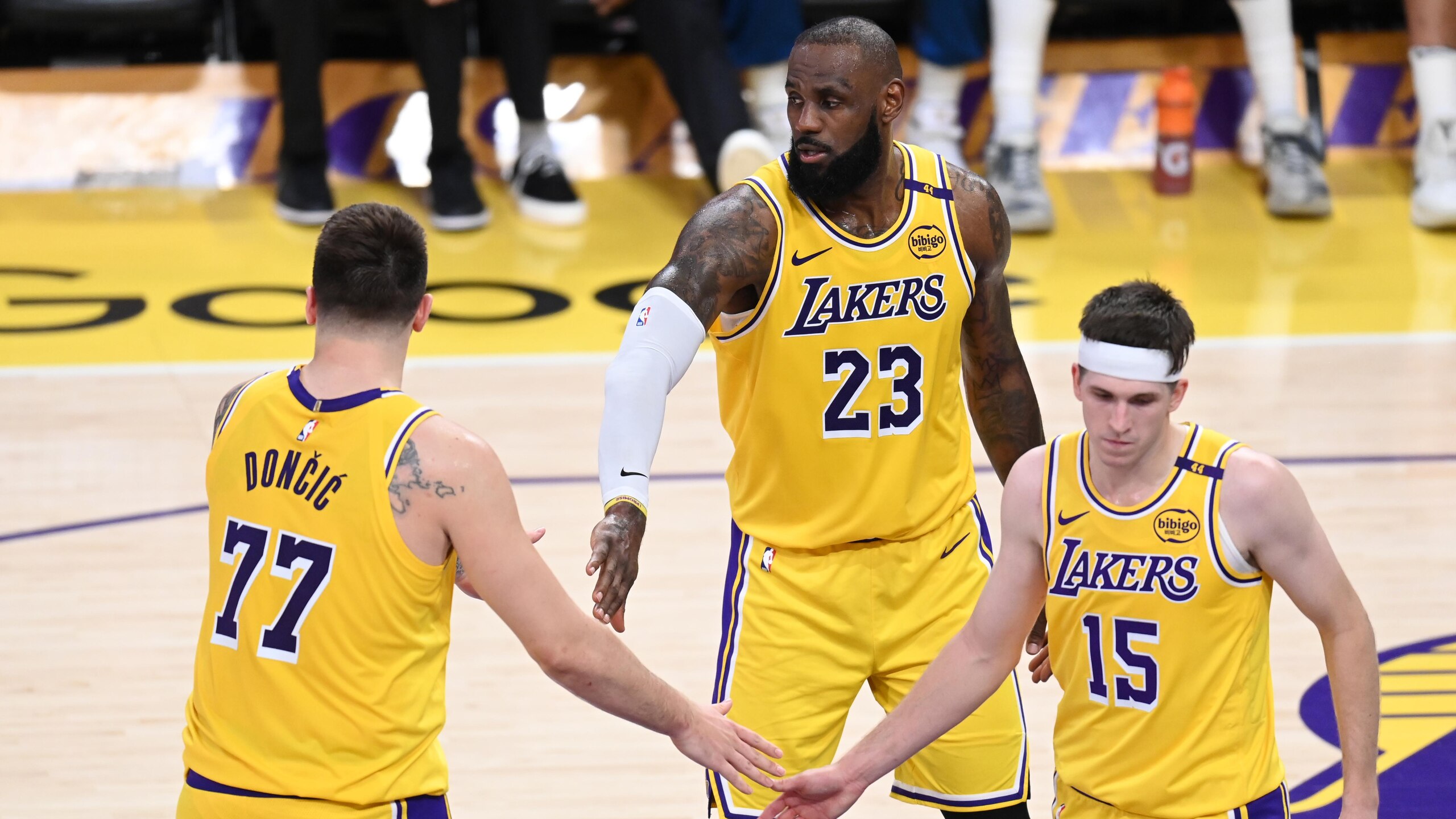
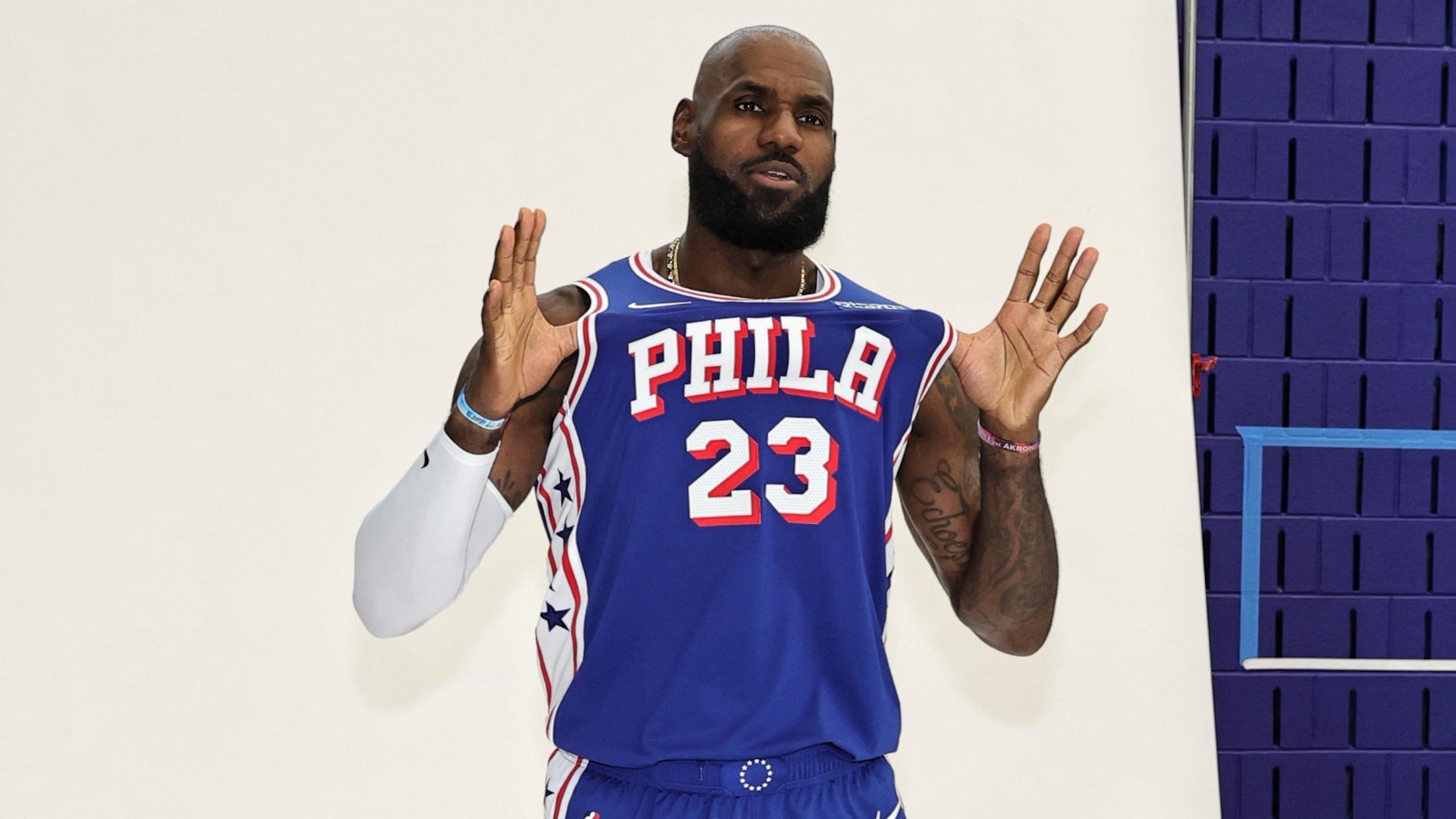
Predicted starters: Luka Dončić, Austin Reaves, Rui Hachimura, LeBron James, Deandre Ayton
While things feel less than comfortable in Laker Land, this starting group seems close to cemented.
Obviously, a LeBron blockbuster would change that, but folks are skeptical he actually wants out, and it isn't hard to see why. Beyond his family and business interests in L.A., there's also the reality of it being tricky to trade a player of his salary under the collective bargaining agreement, let alone a 40-year-old GOAT candidate with a single year left on his contract.
Barring some major shock, James is sticking with the Lakers. So, there's little (if anything) for coach JJ Redick to figure out.
Dončić and James became locked-in starters the second their careers started. Ayton has no obstacles in becoming this team's new starting 5. If L.A. wasn't a big believer in Reaves, it would've flipped him for a big man long before Ayton's arrival.
And while Hachimura isn't a perfect player, he's sort of a by-default answer as the likeliest source of defensive versatility and supplemental scoring alongside the other four.
Memphis Grizzlies
15 of 30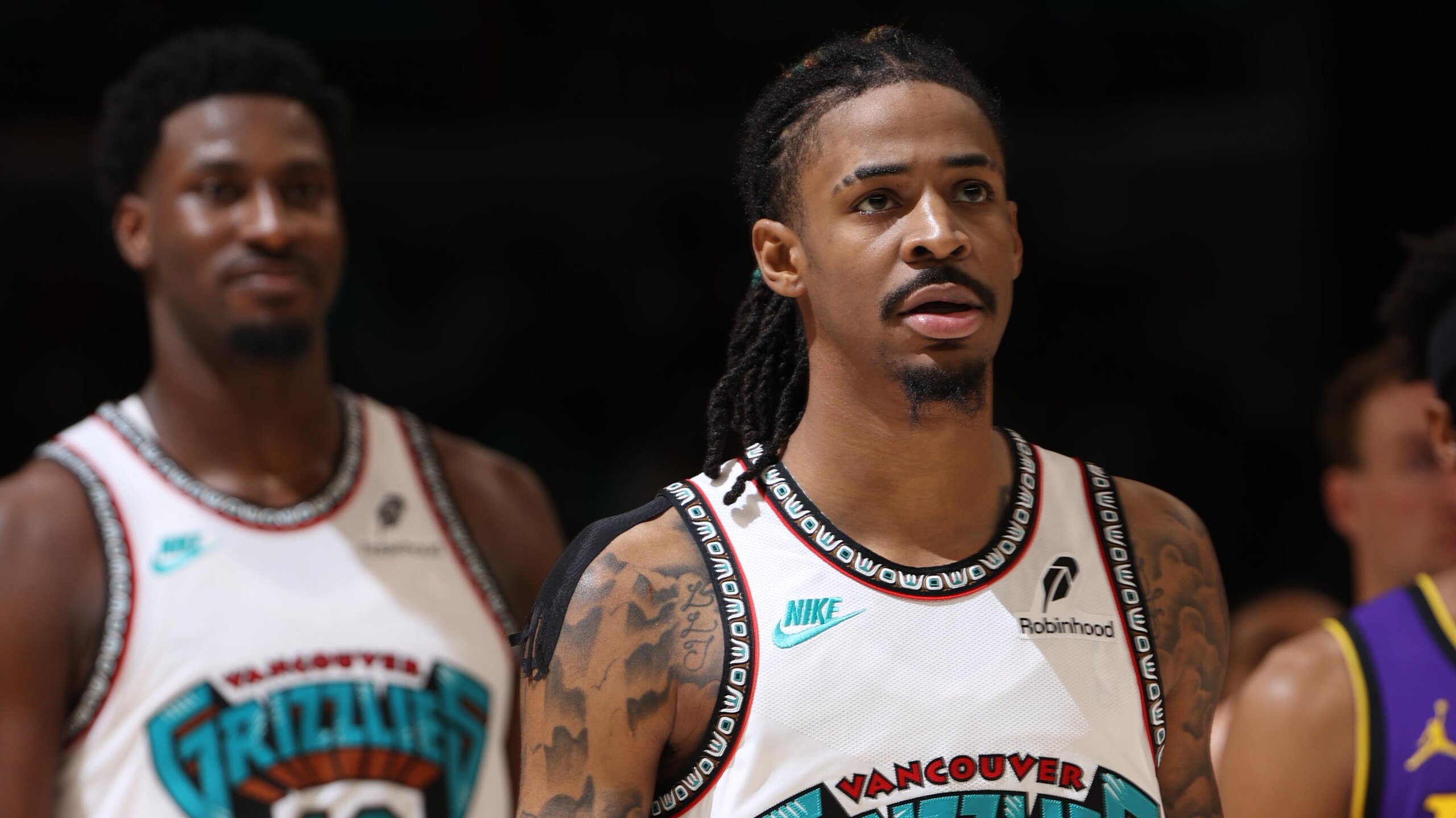
Predicted starters: Ja Morant, Kentavious Caldwell-Pope, Jaylen Wells, Jaren Jackson Jr., Zach Edey
Had the Grizzlies not made the bold decision to convert Desmond Bane into a mini-mountain of trade assets this summer, they might have nothing to figure out with their starting five.
Put Bane in Caldwell-Pope's place, and you're looking at the 23rd-most utilized lineup around the league this past season.
But Memphis, of course, did make that move, sending Bane to the Orlando Magic for Caldwell-Pope, Cole Anthony, four first-round picks and a first-round pick swap. As Grizzlies general manager Zach Kleiman later explained, they didn't feel as if they were "one guy away from winning the championship next season."
It's a fascinating long-term gamble for the franchise and the kind of trade that reverberated across the entire Association. It's also not the kind of trade that really complicated this prediction.
Unless No. 11 pick Cedric Coward pushes for a starting spot right away, Memphis should be set with Morant and Jackson serving as the stars and Caldwell-Pope, Wells and Edey filling in the cracks around them.
Miami Heat
16 of 30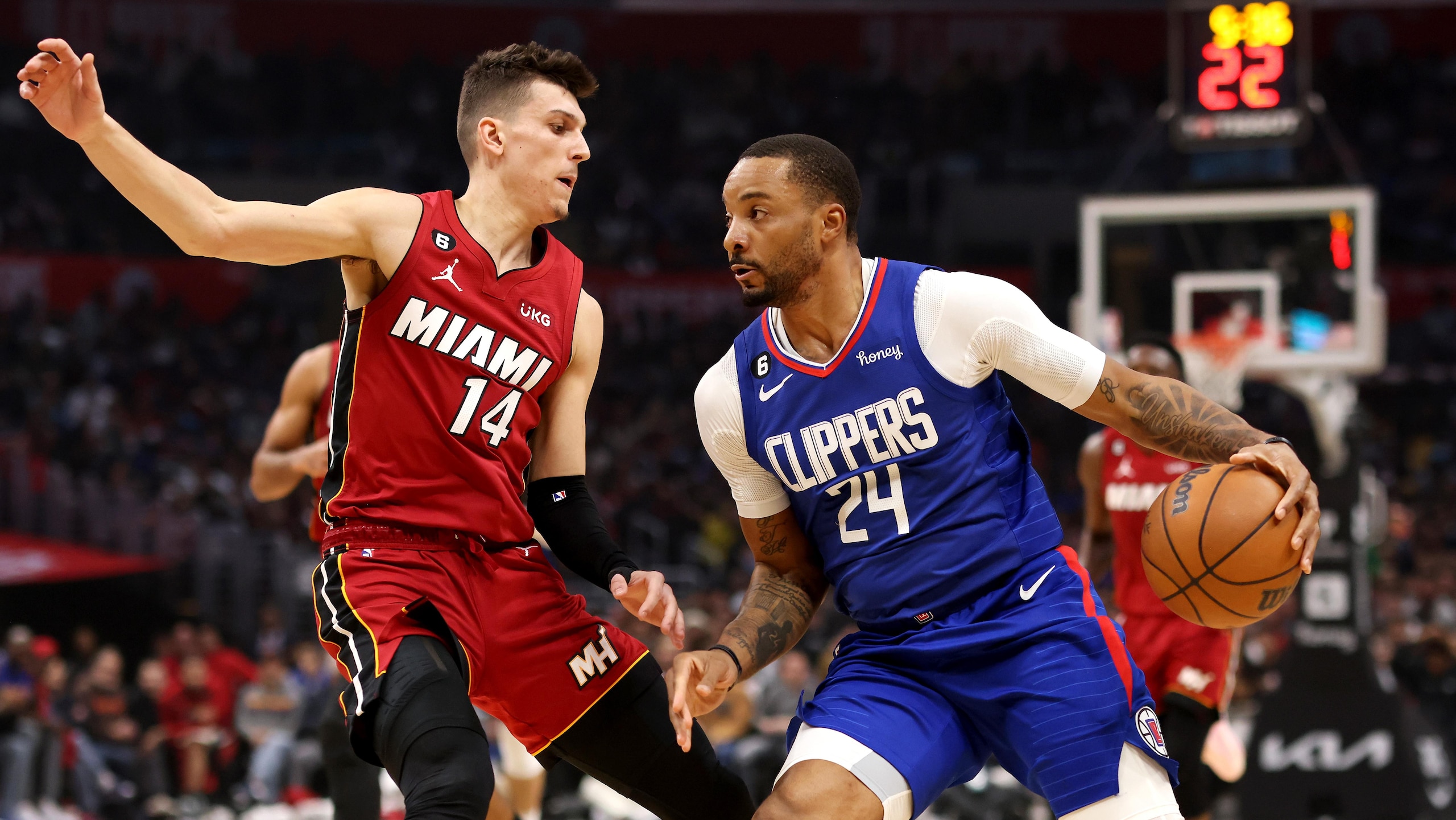
Predicted starters: Tyler Herro, Norman Powell, Andrew Wiggins, Bam Adebayo, Kel'el Ware
This exercise grew much simpler in Miami after its bargain-rate trade for Powell (which improbably cost the Heat only Kyle Anderson and Kevin Love).
Without that swap, we'd spend the bulk of this section debating whether Davion Mitchell, No. 20 pick Kasparas Jakučionis or the ghost of Terry Rozier should share the backcourt with Herro.
Since the deal went down, though, we can instead let the imagination run wild over what coach Erik Spoelstra—the best at his profession—might do with this suddenly well-balanced squad.
The Heat have a focal point at lead guard with Herro, a perennial Defensive Player of the Year candidate in Adebayo and three two-way support pieces in Powell, Wiggins and Ware.
While it's premature to suggest Powell's arrival has totally eased the half-court concerns with this offense, there's also a chance his scoring punch is exactly what this group needed to rejoin the East's elite tier.
Milwaukee Bucks
17 of 30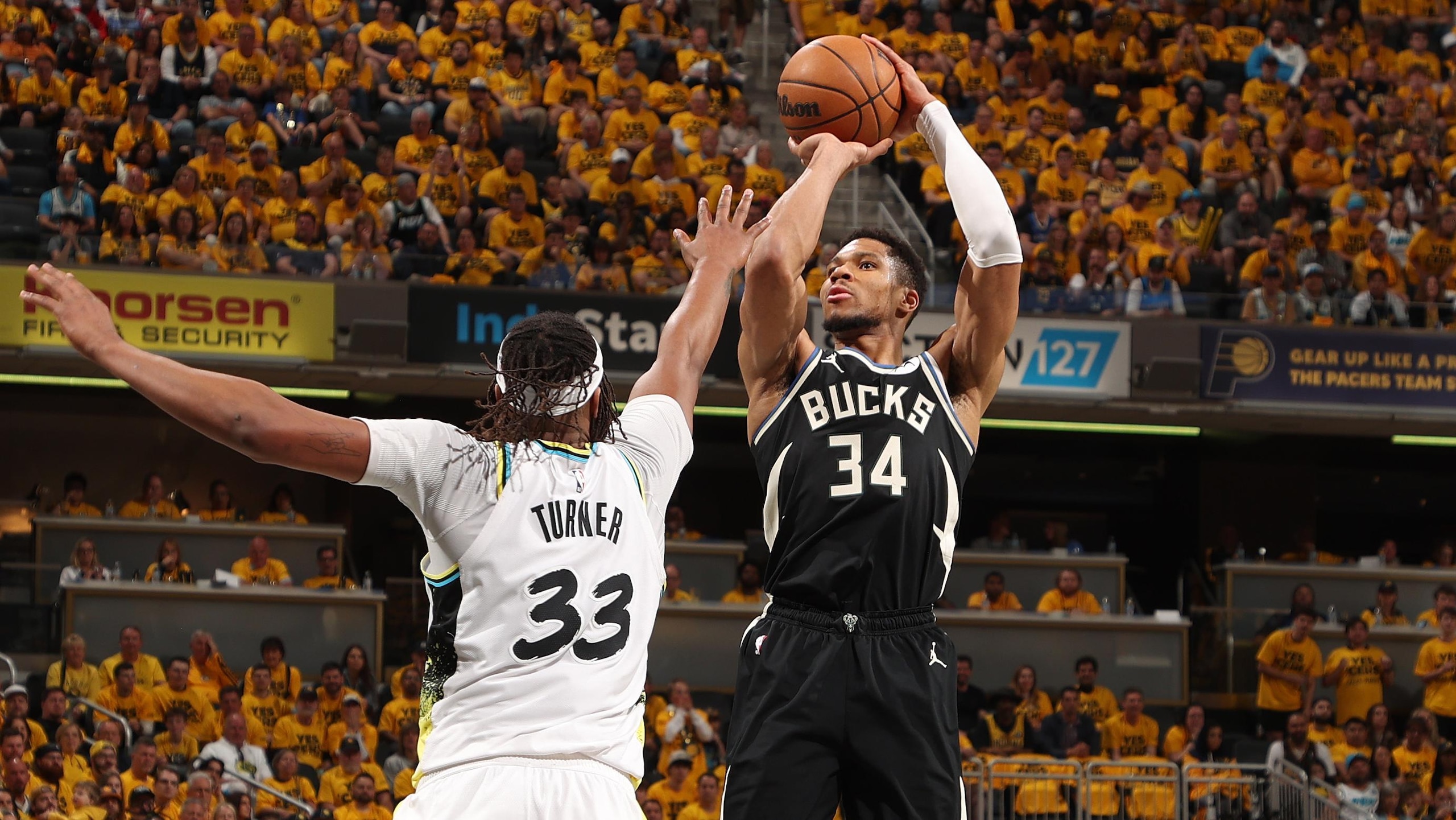
Predicted starters: Kevin Porter Jr., Gary Trent Jr., Kyle Kuzma, Giannis Antetokounmpo, Myles Turner
You know what would be fun? Adding a live-ball offensive threat like Bradley Beal to this roster. To be clear, nothing is suggesting that's how things will play out, but he should honestly give it some real thought.
Without Beal, there's some real worry about the players not named Antetokounmpo to get anything going off the dribble. There also isn't major competition for any of these spots.
Waiving-and-stretching Damian Lillard basically gave the starting point guard job to Porter (assuming no further additions are made, of course). And taking that kind of financial hit to get Turner onboard ensures the Bucks will feature the unicorn big man as heavily as possible. They already made an aggressive wager on Kuzma at the trade deadline, so the green flag clearly waves in front of him.
And while A.J. Green should push for Trent's spot, Trent saw more minutes in the regular season and playoffs this past season, so it's his job to lose until proved otherwise.
Minnesota Timberwolves
18 of 30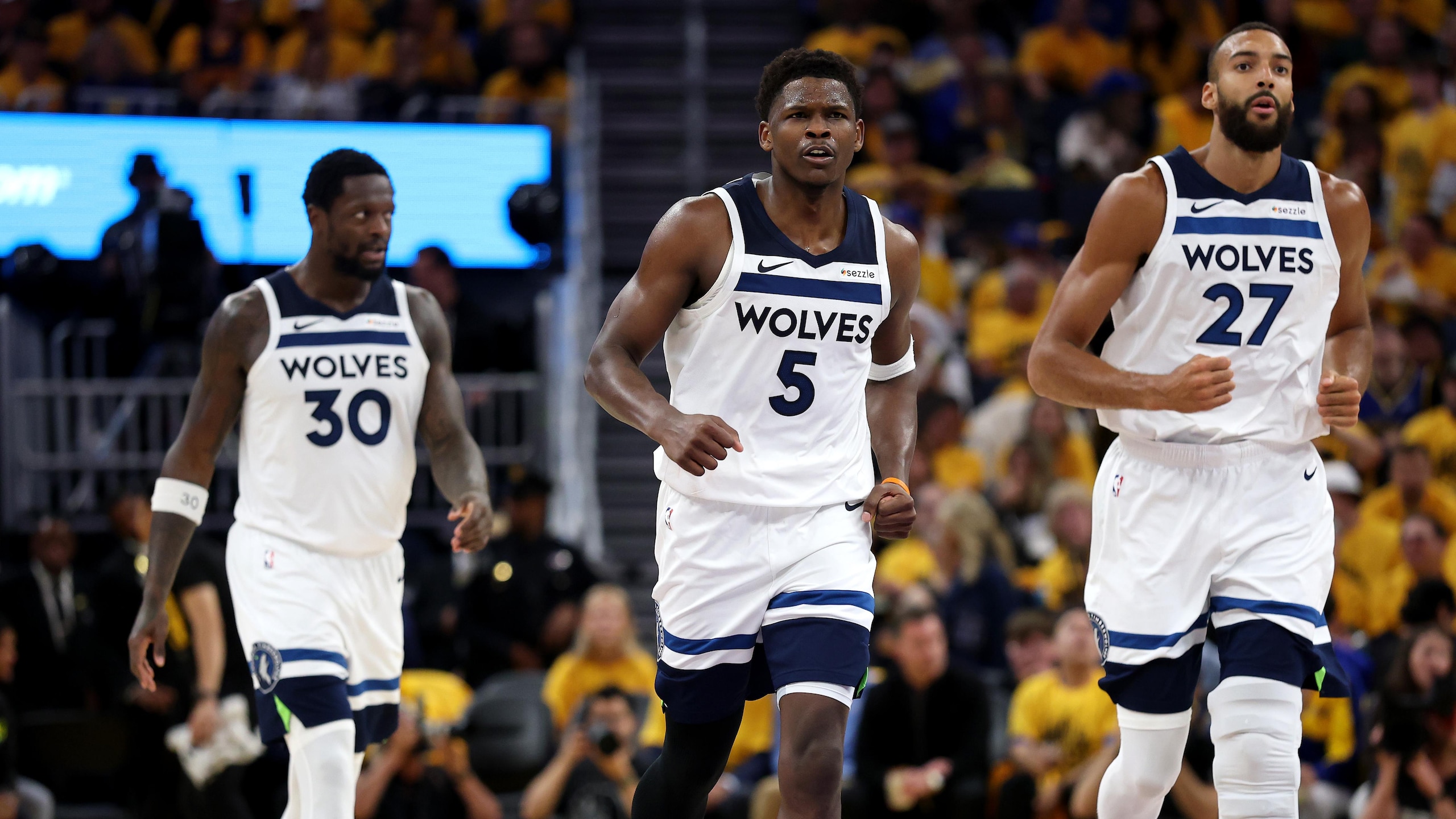
Predicted starters: Mike Conley, Anthony Edwards, Jaden McDaniels, Julius Randle, Rudy Gobert
There's a universe in which Minnesota wound up winning the Kevin Durant sweepstakes, but it's not this one. Here, the Wolves are essentially running back after Durant essentially said the Gopher State was a no-go.
Only the then-Tom-Thibodeau-coached New York Knicks starters logged more shared floor time than this Minnesota fivesome this past season. Maybe that number comes down with Conley trudging toward his 38th birthday, but the names likely won't change.
The Wolves have big long-term hopes for Rob Dillingham, but those could be a ways off from being realized (or dashed). Donte DiVincenzo has started in the past, but he's arguably most valuable when providing depth at both backcourt spots.
And while Naz Reid might be a capable starter elsewhere, he'll only see the opening tip from the sidelines as long as Randle and Gobert are around.
New Orleans Pelicans
19 of 30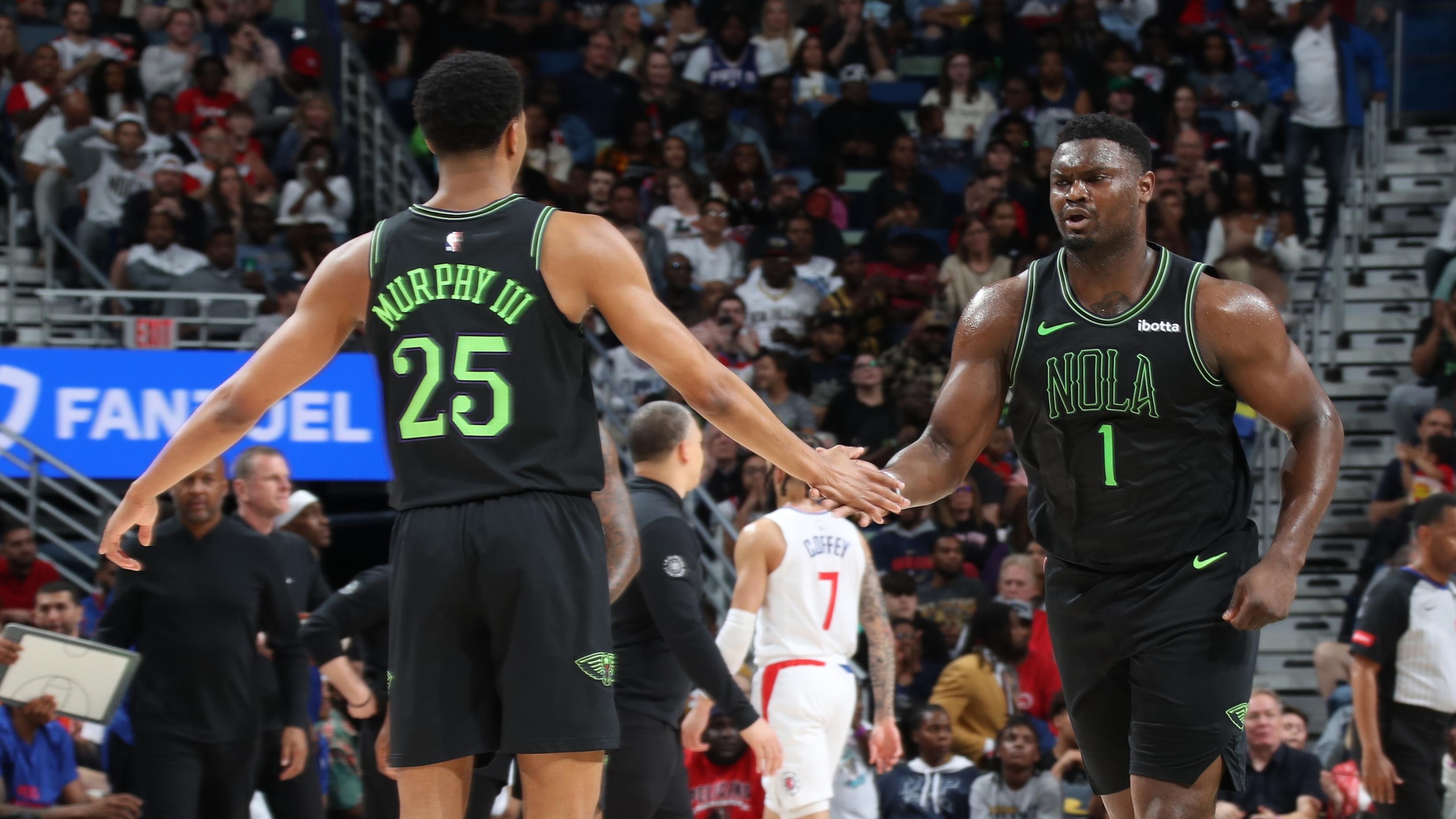
Predicted starters: Jordan Poole, Herbert Jones, Trey Murphy III, Zion Williamson, Yves Missi
The injury bug relentlessly punished the Pelicans this past season, resulting in them playing 25 different players and rolling out 47 different starting lineups. It's already a factor in their next campaign, too, as Dejounte Murray still faces a lengthy recovery from the Achilles tear he suffered in late January.
Without Murray to steer the ship, New Orleans doesn't have an obvious place to turn at point guard. It would be awesome if No. 7 pick Jeremiah Fears was ready for the role, but he's an 18-year-old who shot 28.4 percent from three and averaged nearly as many turnovers (3.4) as assists (4.1) at Oklahoma.
And while Jose Alvarado is a great energizer, his offensive limitations grow more glaring when he's with the first group.
So, coach Willie Green could basically split primary playmaking duties between Poole and Williamson, both of whom have handles and some passing ability but are also scorers first. If that's the look, it would make sense to load up on defense with Jones and Murphy on the wings.
The starting center job probably sticks with Missi, but No. 13 pick Derik Queen, whom New Orleans gave up a valuable asset to get, could make things interesting if he can rapidly expand his shooting range.
New York Knicks
20 of 30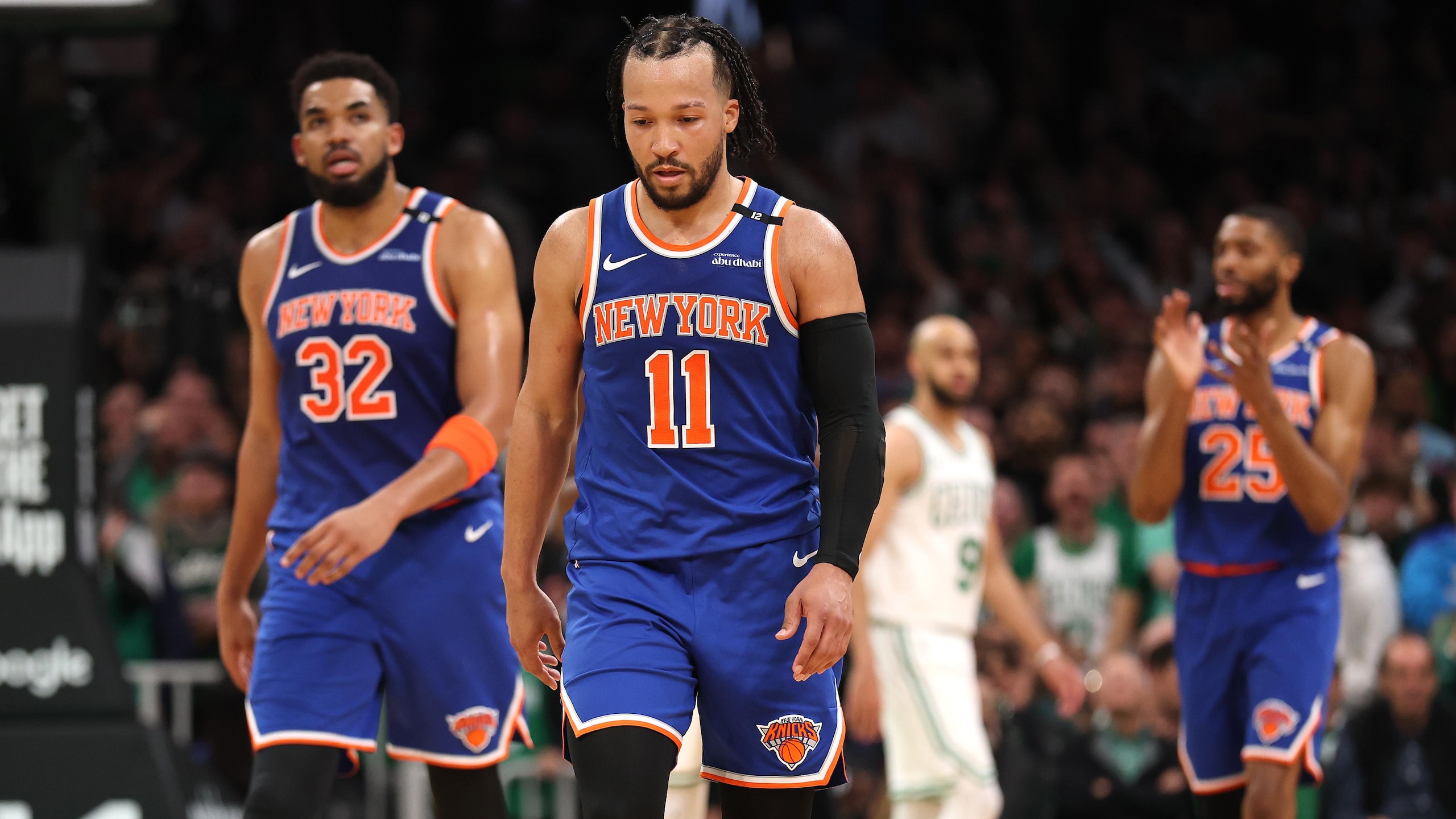
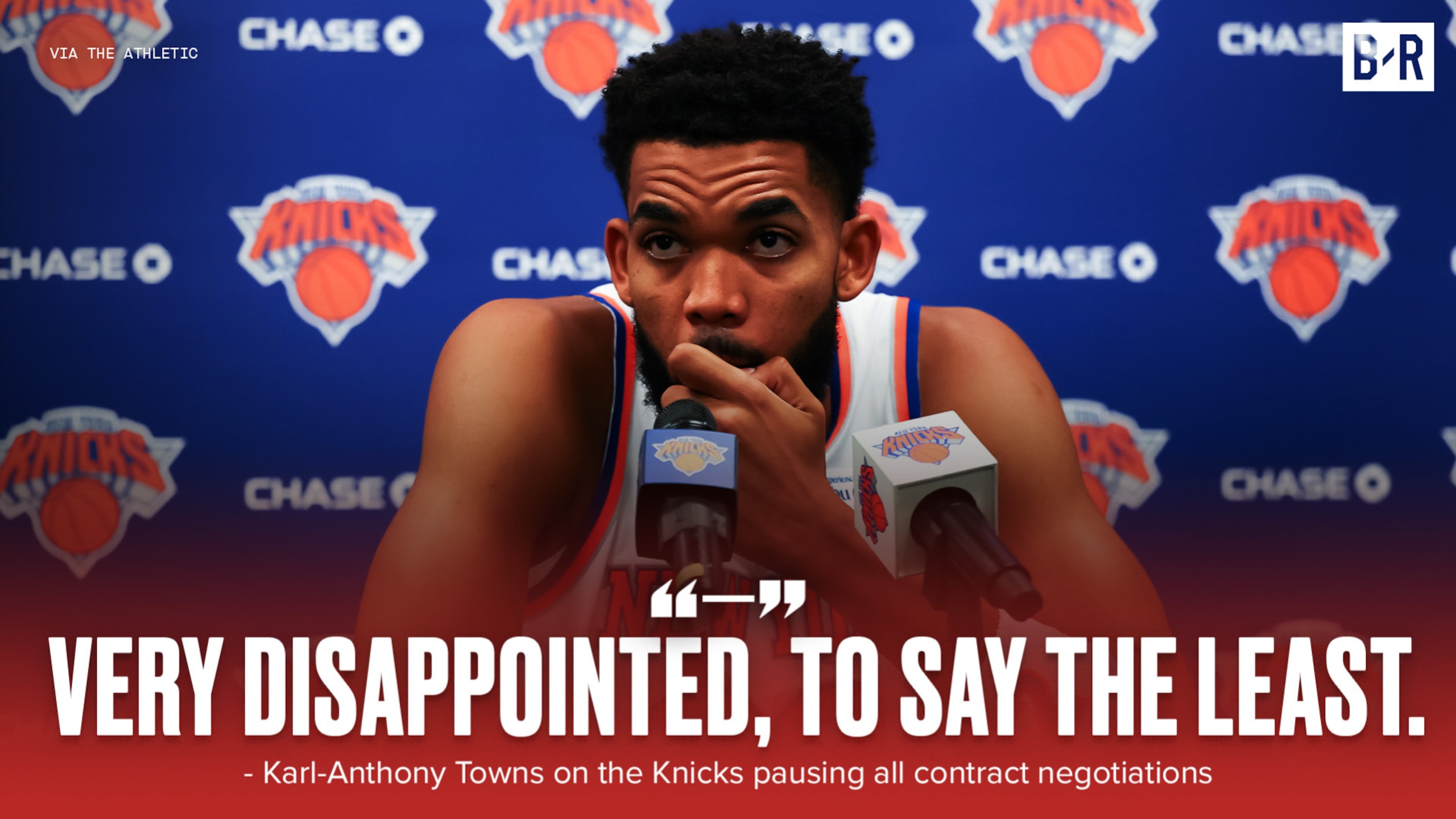
Predicted starters: Jalen Brunson, Josh Hart, Mikal Bridges, OG Anunoby, Karl-Anthony Towns
The Knicks are fully convinced this is a championship core. That was, in essence, the entire point of ousting Tom Thibodeau despite him having just coached the club to consecutive 50-win seasons and its first Eastern Conference Finals berth in a quarter-century.
"Our organization is singularly focused on winning a championship," Knicks president Leon Rose said in an official statement on their decision.
Other than the coaching change, New York kept pretty quiet this summer, even declining a possible Kevin Durant pursuit. The Knicks trust this quintet to take this franchise over the proverbial hump and claim its first NBA title since 1973.
New coach Mike Brown might handle his rotation differently than his predecessor, but he won't touch the first five.
Oklahoma City Thunder
21 of 30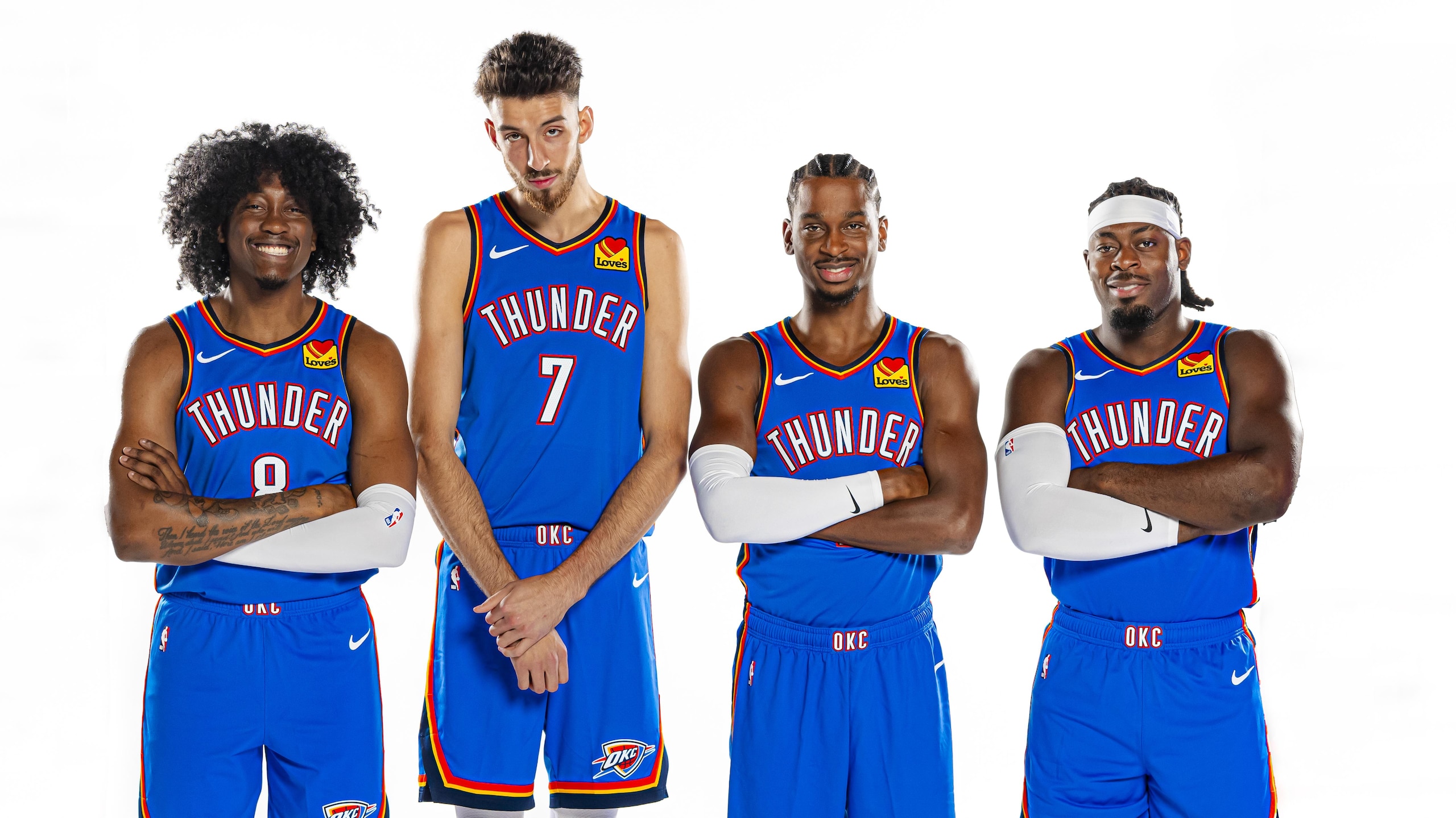
Predicted starters: Shai Gilgeous-Alexander, Lu Dort, Jalen Williams, Chet Holmgren, Isaiah Hartenstein
Four of these players—everyone but Hartenstein—started every game they played this past season. Hartenstein came off the bench four times in 57 appearances or seven times in 70 outings if you include the playoffs.
During said season, Oklahoma City had a franchise-record .829 winning percentage and won its first championship since moving to the Sooner State. The Thunder's plus-12.9 point differential was the best in NBA history.
Head coach Mark Daigneault might be perpetually ready to make changes, but this lineup requires none. This group already leads the best roster in basketball, and since Hartenstein is its senior member at just 27 years old, it's entirely possible this quintet hasn't even evolved into its best form yet.
Orlando Magic
22 of 30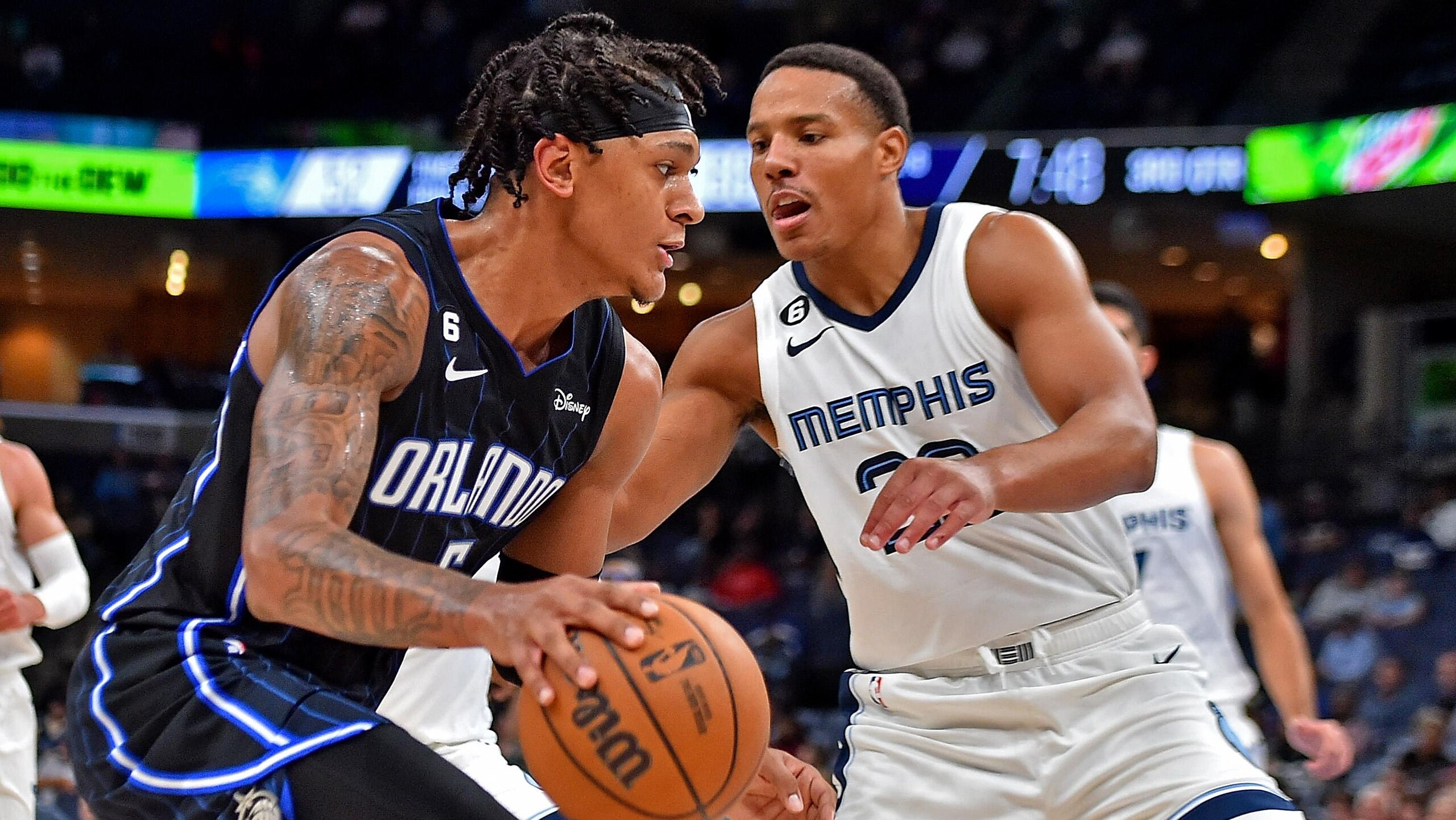
Predicted starters: Jalen Suggs, Desmond Bane, Franz Wagner, Paolo Banchero, Wendell Carter Jr.
Expectations are all the way up in Orlando. As they should be.
The Magic have a young, talented roster, but they were too imbalanced to make much noise in the past. After paying a small fortune for Bane to help correct that with his scoring punch and secondary playmaking, they're hoping to strike in the wide-open Eastern Conference.
"I think this roster has a chance to do some special things, more so than any other that we've had since I've been here," Magic president of basketball operations Jeff Weltman told Jason Beede of the Orlando Sentinel. "It looks good on paper."
If Bane checks as many boxes on the offensive end as the Magic think he can, they should be off and running. And this is the group that will set the stage, assuming there are no setbacks with Suggs' return from March knee surgery.
Carter is the least cemented of the five, but that's really only because someone has to wear that label. He has started 233 of the 264 regular-season games he's played since arriving in Orlando at the 2021 trade deadline.
Philadelphia 76ers
23 of 30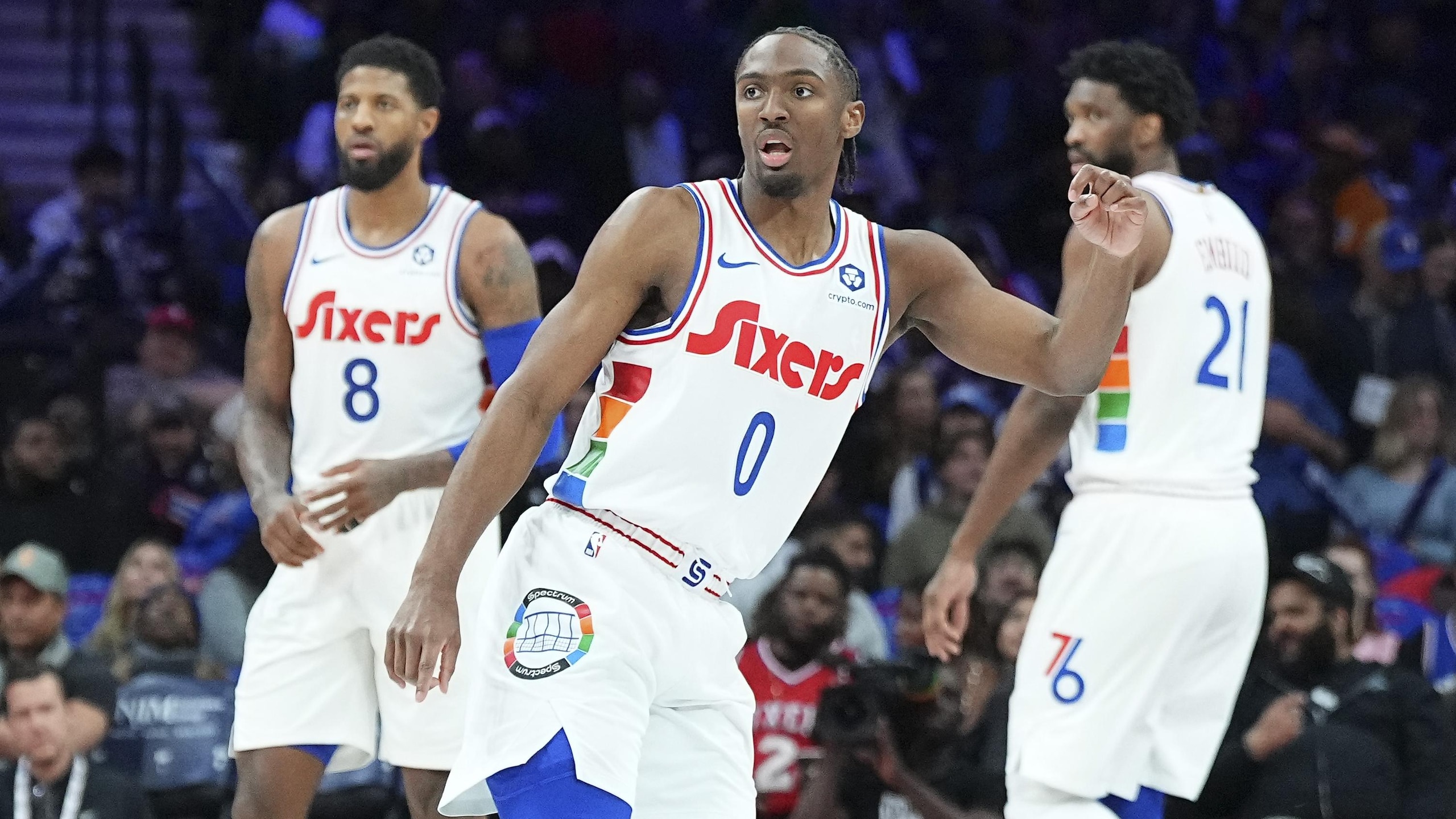
Predicted starters: Tyrese Maxey, Jared McCain, Kelly Oubre Jr., Paul George, Joel Embiid
Forget everything you remember about Philadelphia's 2024-25 season gone awry. Maybe.
Look, the injury bug might ravage this roster again. And perhaps Paul George really is in the midst of one of the swiftest declines in recent memory. But this group still makes sense on paper. The pieces still theoretically fit.
If everyone managed to stay healthy and play up to their potential—admittedly, a super-sized if—their ceiling might sit even higher than initially expected, since McCain obliterated expectations before his rookie season was cut short by a mid-December meniscus tear.
In Embiid's last healthy season, he was league MVP. In Maxey's last healthy season, he was Most Improved Player and an All-Star. In George's last two seasons with the Clippers, he was an All-Star. Throw a rising star in McCain into the mix, and you have one of the NBA's top quartets.
Philly could consider alternatives to Oubre for the final starting spot—either a fast-learning VJ Edgecombe or an eventually re-signed Quentin Grimes—but his combination of length, athleticism, finishing and defensive tools seem like the best way to supplement this group.
Phoenix Suns
24 of 30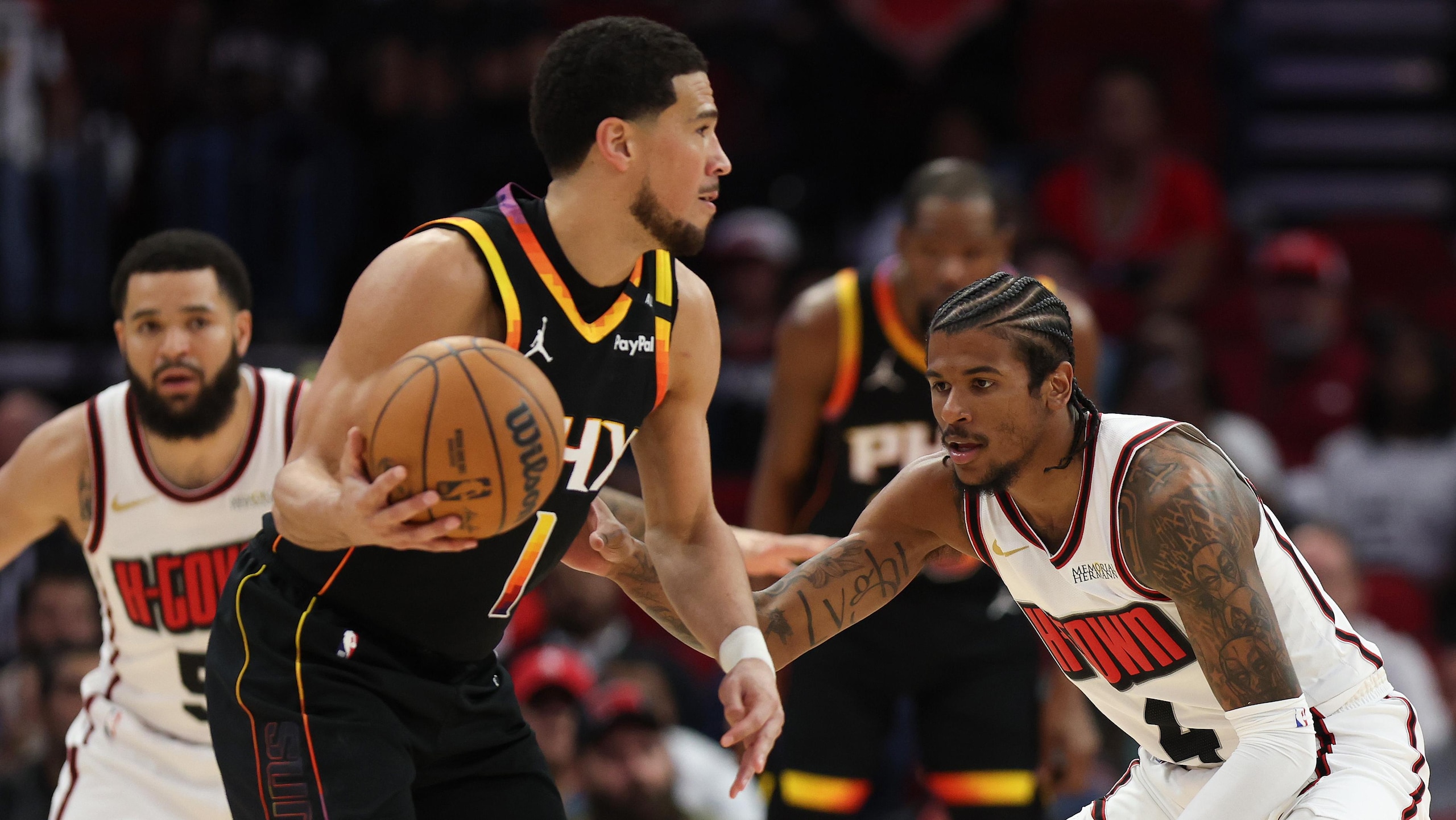
Predicted starters: Devin Booker, Jalen Green, Dillon Brooks, Ryan Dunn, Mark Williams
After the Kevin Durant blockbuster and the draft-night move for Williams, the Suns are suddenly swimming in 2-guards and centers. And that's without really including Bradley Beal, who, along with the franchise, is said to be "increasingly optimistic" about reaching a buyout agreement, per The Athletic's Fred Katz.
This roster leads like that of a team in transition, and that's sort of where the organization is at. Only, the Suns aren't interested in bottoming out and starting over, rather they're still trying to build a winner around the 28-year-old Booker, who just inked a historic extension that ties him to the team through the 2029-30 season.
Phoenix's redundancies up the challenge of making sense of this roster, but Booker is obviously starting, and the Suns have to see what they have in Green, the No. 2 pick of the 2021 draft.
From there, Brooks arguably offers their best blend of shooting and defense, Dunn is their best stopper overall, and Williams either takes the starting center spot and runs with it or at least fills it until No. 10 pick Khaman Maluach is ready to take over.
Portland Trail Blazers
25 of 30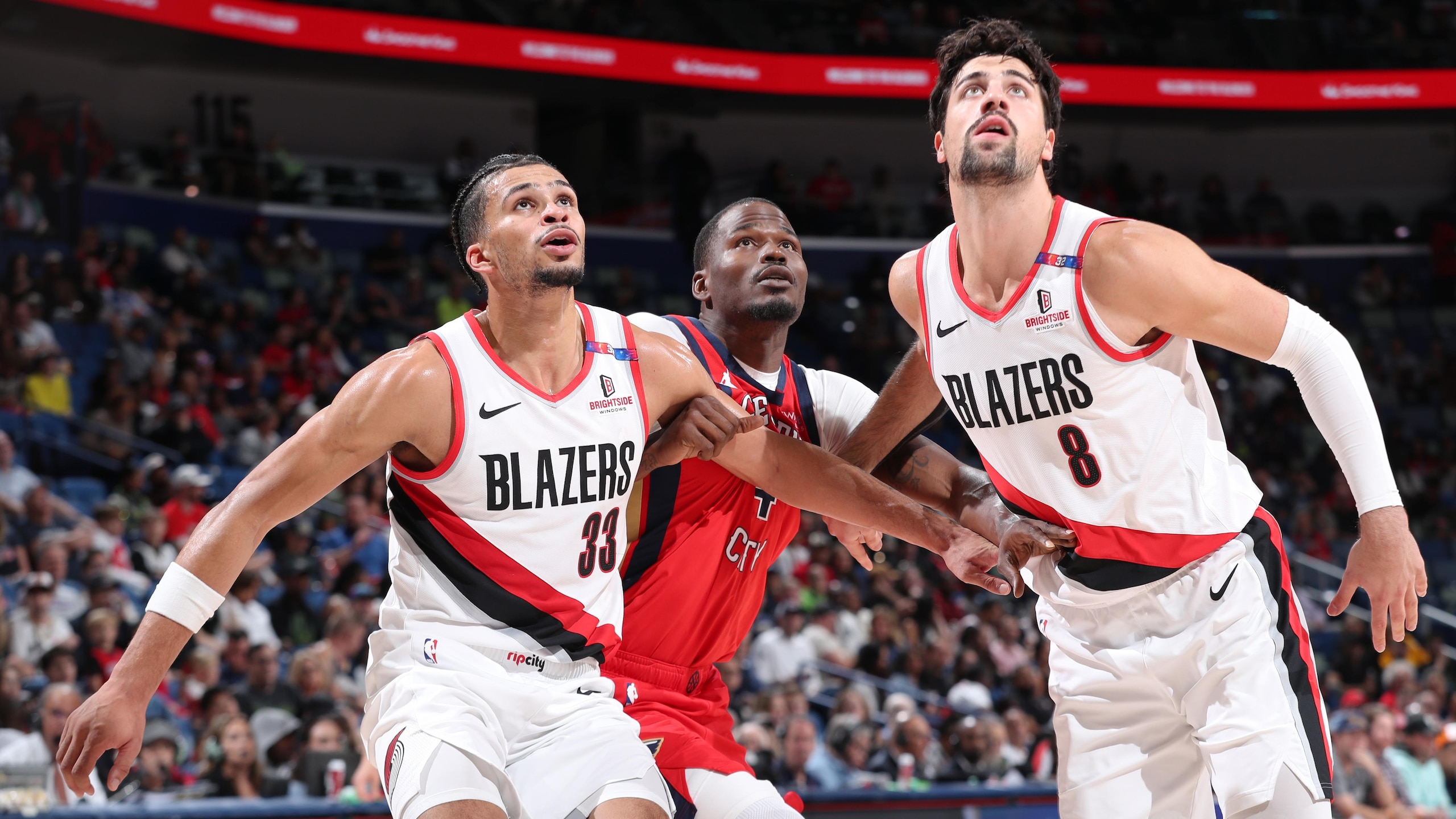
Predicted starters: Jrue Holiday, Shaedon Sharpe, Toumani Camara, Deni Avdija, Donovan Clingan
Difficult decisions and uncomfortable conversations are on the horizon for head coach Chauncey Billups. While neither of those sound fun, it's still a good thing they're on the to-do list. It means this talent base is growing.
That said, adding Jrue Holiday to the roster will require having either him, Sharpe or Scoot Henderson out of the starting lineup. While Portland has plenty riding on Henderson's long-term development, Holiday's defense and experience likely get him the nod. The hope would be he offers the best bet for maximizing the rest of the roster.
Up front, Clingan should be cleared to take-off with Deandre Ayton out of the way, but the forward spots are still crowded. Setting the starting group this way would mean bringing Jerami Grant—Portland's second-highest-paid player—off the bench, but that feels like the right call after Camara and Avdija both earned building-block statuses this past season.
Sacramento Kings
26 of 30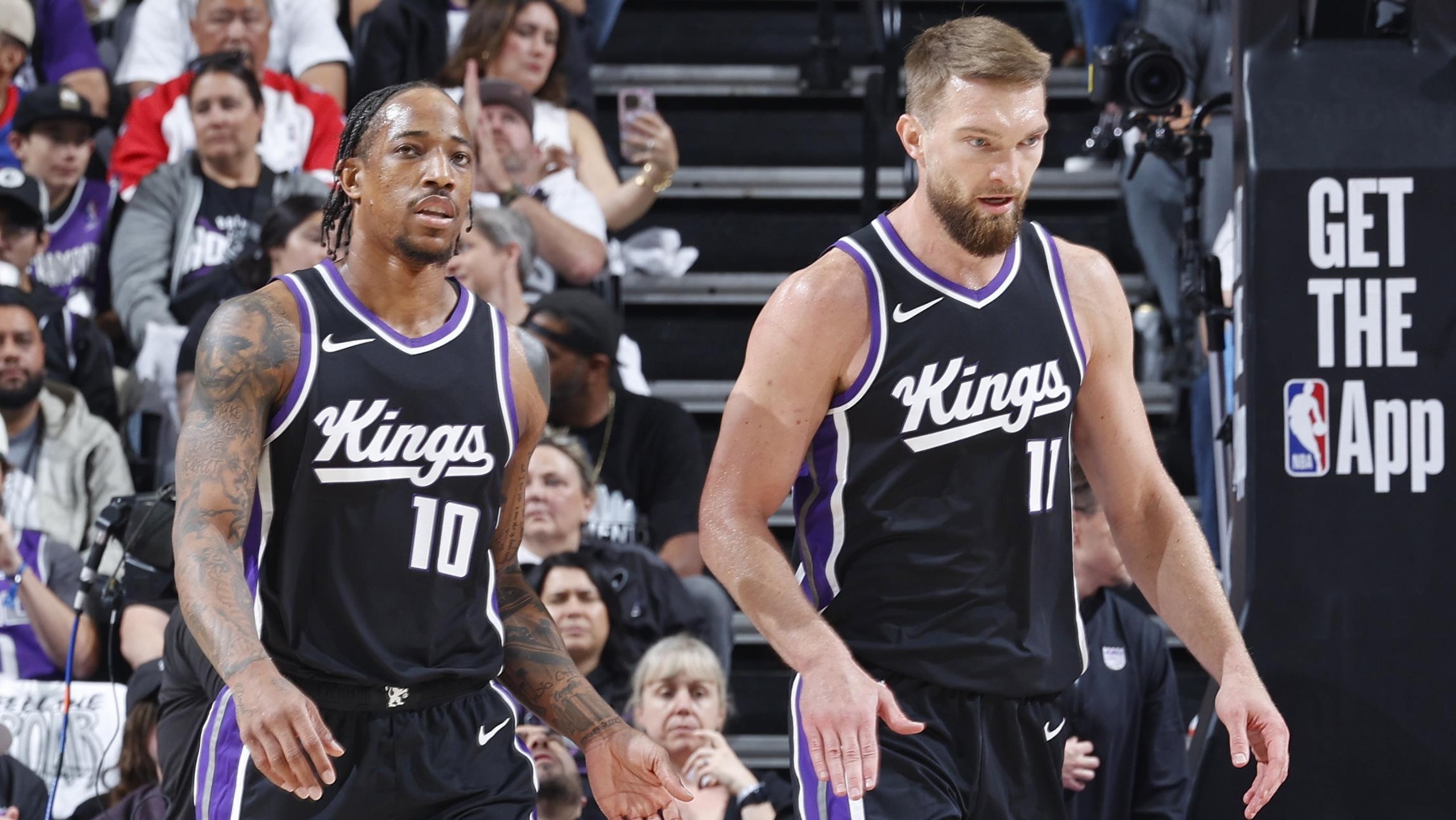
Predicted starters: Dennis Schröder, Zach LaVine, DeMar DeRozan, Keegan Murray, Domantas Sabonis
It was only last summer that the Kings brought in DeRozan, and just a handful of months since they reunited him with LaVine at the deadline. And yet, you wonder whether Sacramento might have lost belief in this bunch already.
Earlier this offseason, Jason Anderson of the Sacramento Bee reported the Kings were "expected to explore trades" for DeRozan and "could also test the market" for Sabonis.
Then again, the Kings also tasked the 31-year-old Schröder with filling the void left behind De'Aaron Fox, so maybe they're still chasing win-now dreams? There are also trade rumblings around Malik Monk, though, so maybe assets are the aim? As per usual, things in Kangz country are confusing.
However, with the roster as is, the starting jobs are fairly easy to disperse. If Monk sticks around, he figures to battle Schröder for the lead guard spot. Maybe Devin Carter, last year's 13th pick, even makes it a three-man fight (but probably not).
Value-wise, Monk and Schröder are almost identical (their career VORPs are within 0.1 of each other), but the latter wins out for being a slightly more natural passer.
San Antonio Spurs
27 of 30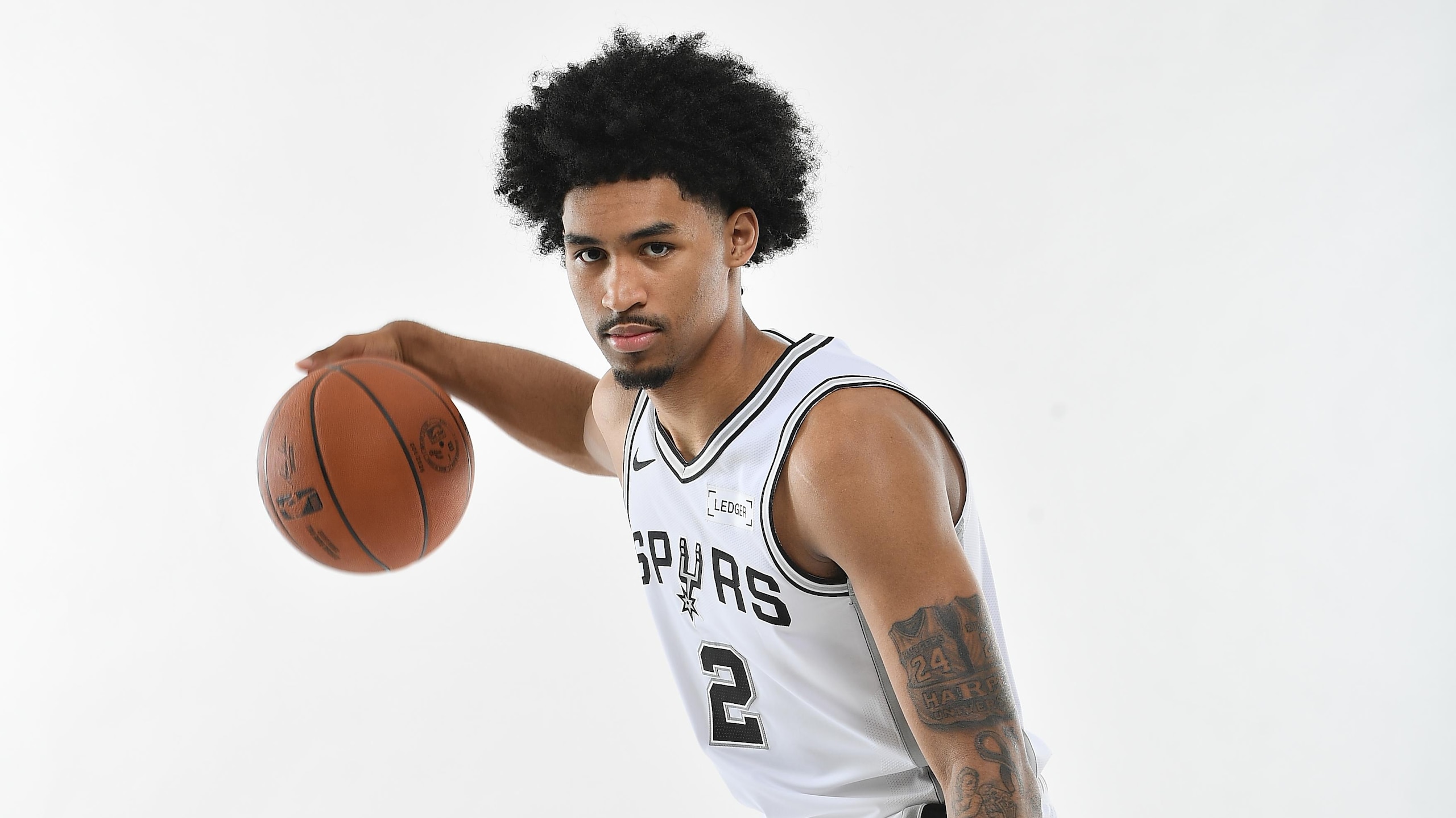
Predicted starters: De'Aaron Fox, Dylan Harper, Devin Vassell, Harrison Barnes, Victor Wembanyama
The Spurs might be stockpiling high-end prospects, but they aren't totally playing for the future. Their deadline deal for Fox had obvious win-now intentions, and, to a lesser extent, so did them beefing up their backup center ranks with veterans Luke Kornet and Kelly Olynyk.
The new bigs will surely spend some time alongside Wembanyama in jumbo looks, but San Antonio figures to start smaller to take advantage of its athleticism. And if Wemby keeps progressing as a perimeter shooter (1.8 makes on 32.5 percent shooting as a rookie; 3.1 on 35.2 as a sophomore), a frontcourt with him, Vassell and Barnes could be key in helping San Antonio manage the logistical concerns with its backcourt shooting.
If either Harper or reigning Rookie of the Year Stephon Castle was a steady spacer, that player would likely get locked into the starting role alongside Fox.
Since there isn't, this could come down to a camp competition, but we're wagering that San Antonio ultimately wants to unleash Harper, this year's No. 2 pick, as soon as possible and seeing how close he can come to his monstrous ceiling.
Toronto Raptors
28 of 30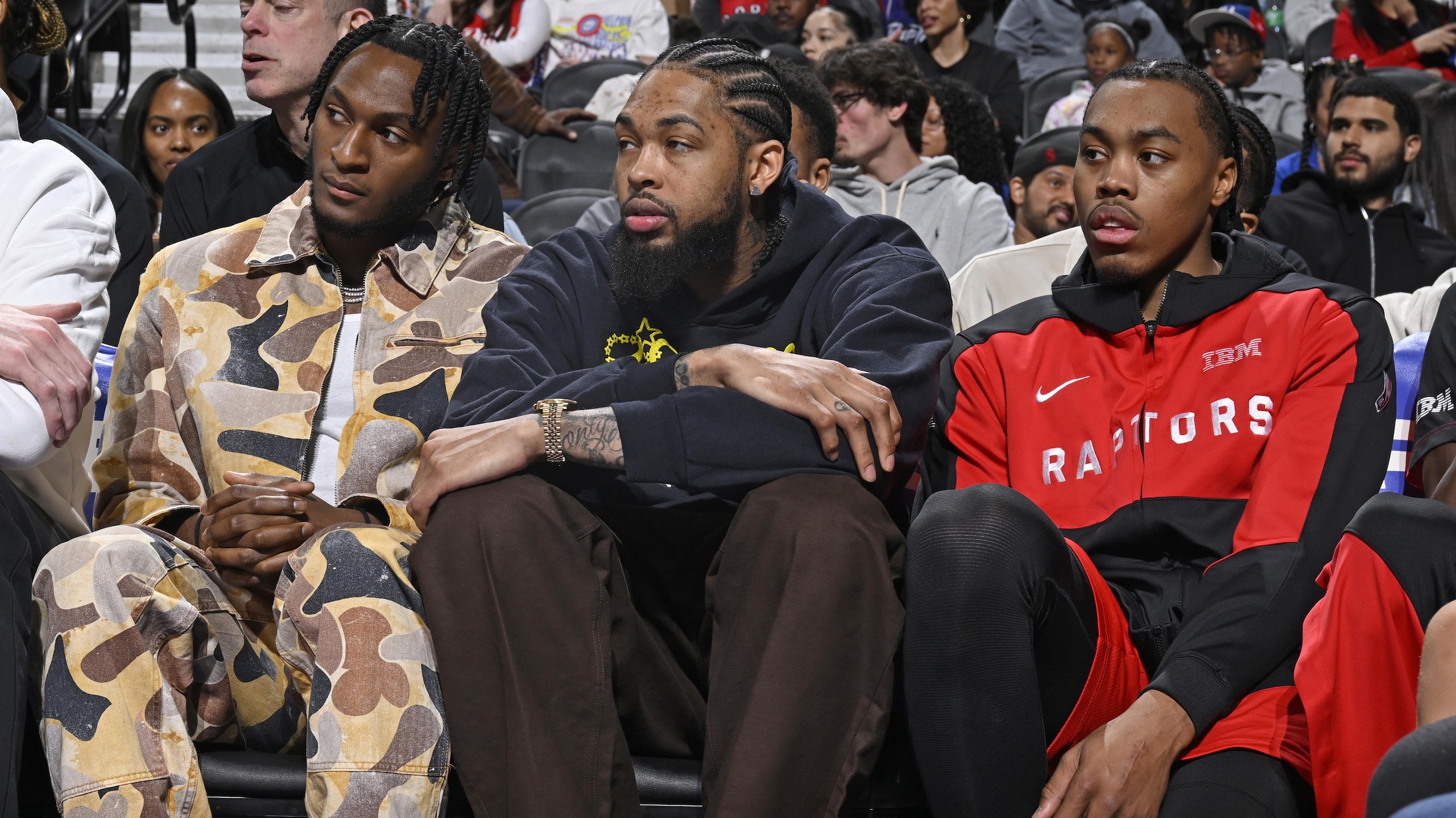
Predicted starters: Immanuel Quickley, RJ Barrett, Brandon Ingram, Scottie Barnes, Jakob Poeltl
Toronto's commitment to this core in its entirety isn't entirely clear. On one hand, all five have salaries north of $19 million and will cost a combined $156.5 million next season. On the other, trade winds swirled around both Quickley and Barrett this summer. Adding to the uncertainty, the next time Ingram suits up for the Raptors will be the first.
Since Ingram hasn't debuted, though, Toronto will give this group a sink-or-swim opportunity before doing anything major. Unless, of course, the right all-in opportunity happens to surface.
This is a talented quintet, but there are worries about the ball getting sticky and the offense not having any breathing room. That might require an internal pivot at some point, maybe allowing Gradey Dick to reclaim the starting role he filled this past season.
For now, though, the Raptors need to see what the sum of these individual parts actually is.
Utah Jazz
29 of 30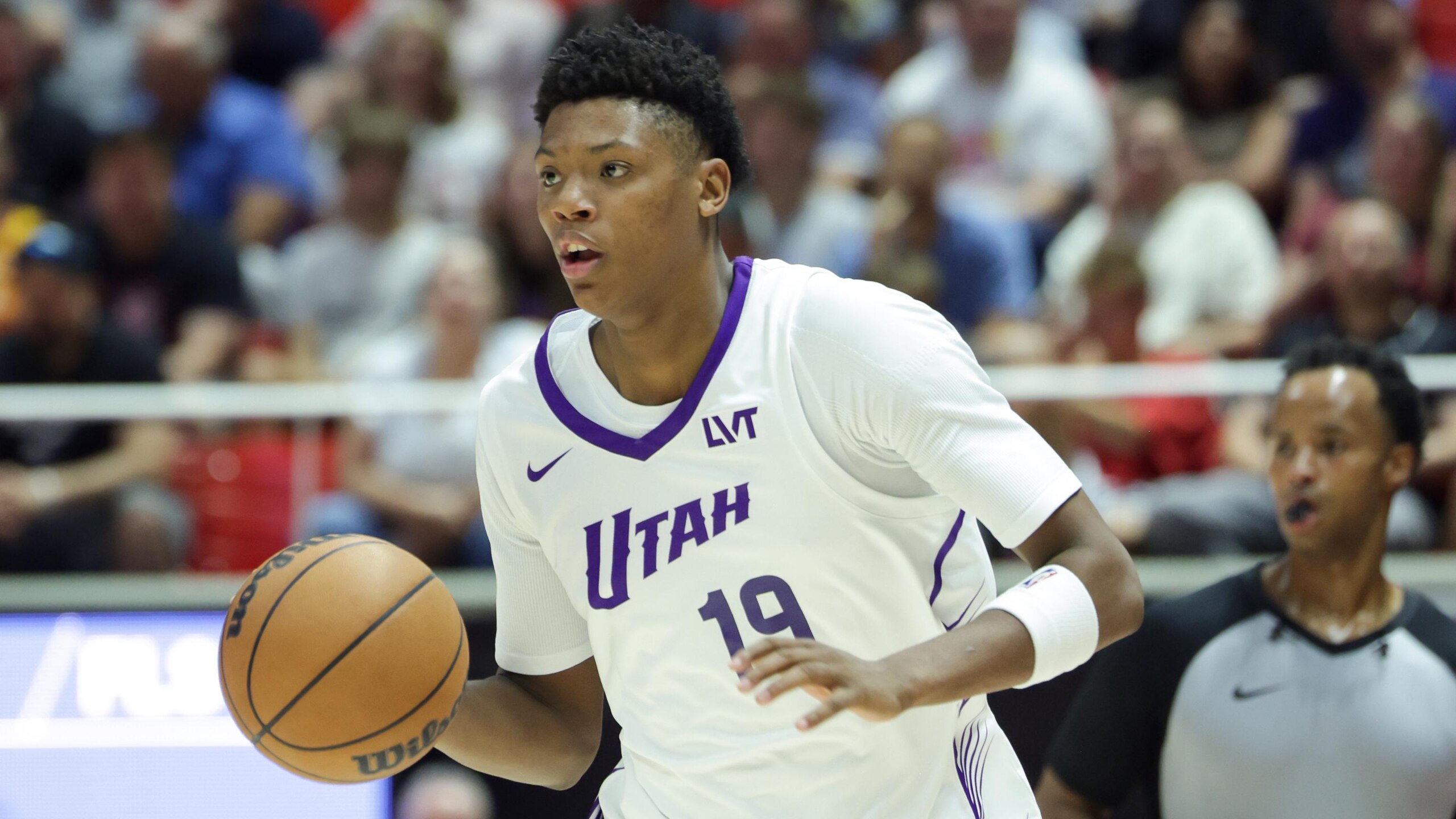
Predicted starters: Isaiah Collier, Walter Clayton Jr., Ace Bailey, Lauri Markkanen, Walker Kessler
The Jazz clearly won't let their draft lottery misfortunes shy them away from another outright tank job. They've ridded themselves of almost every recognizable veteran not named Markkanen this offseason and brought back virtually nothing.
Collin Sexton was sent out (with a future second-round pick) for Jusuf Nurkić. John Collins was let go for Kevin Love, Kyle Anderson and a 2027 second-round pick. Jordan Clarkson was simply bought out. This is an extreme version of deck-clearing, and one loudly suggesting Utah's front office fully believes the hype around next summer's draft class.
The Jazz figure to feature all the youth it can, while still finding the requisite minutes and touches to either keep Markkanen and Kessler happy or to ensure their trade values stay up. Bailey, perhaps the biggest boom-or-bust prospect in this draft, should feast on offensive chances buffet-style to try tapping into his immense offensive potential.
Keyonte George will fight for a starting job, but Collier's passing and Clayton's shotmaking probably gets them the edge—if only because those traits could make life easier on Bailey.
Washington Wizards
30 of 30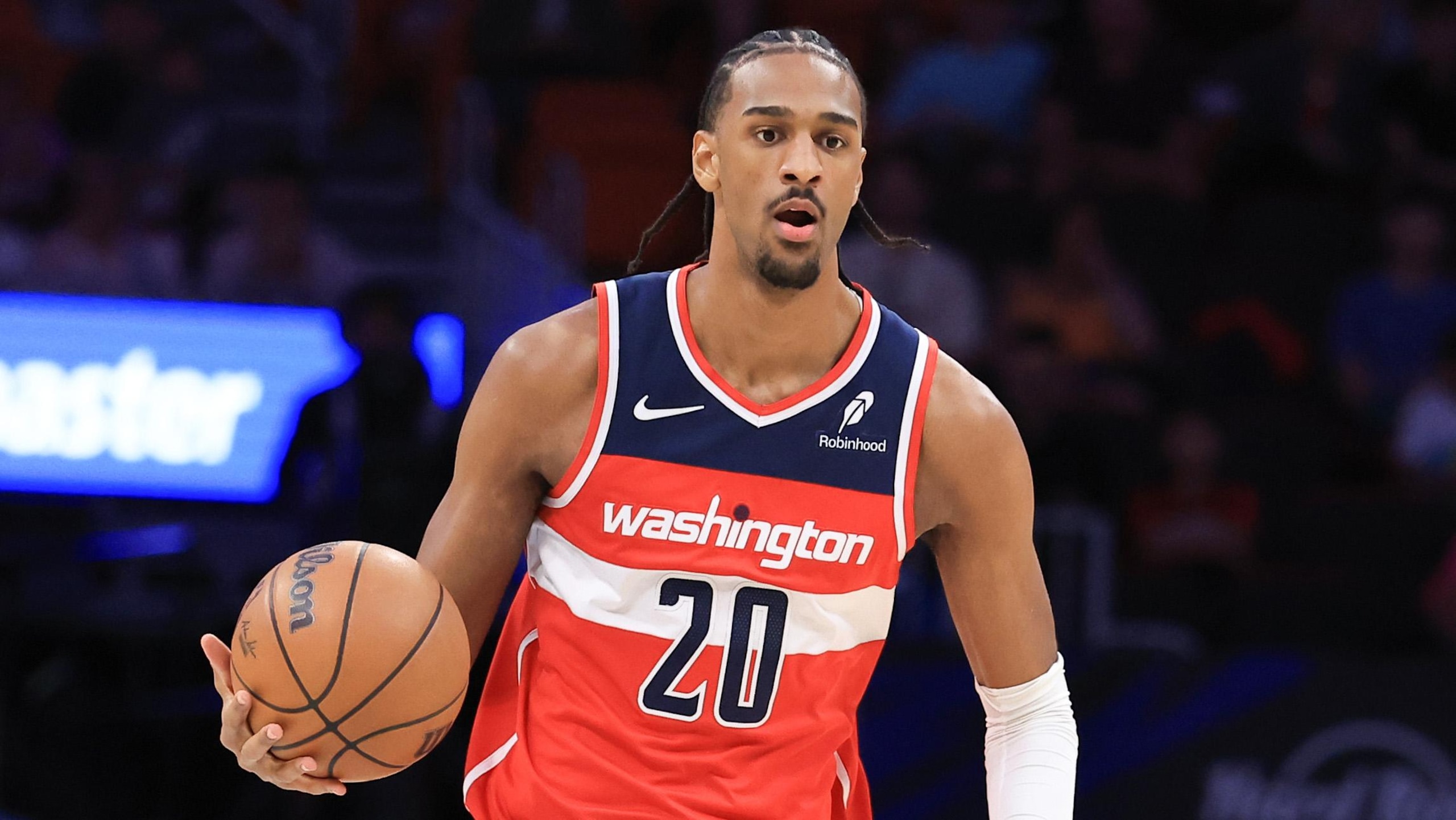
Predicted starters: Bub Carrington, CJ McCollum, Khris Middleton, Bilal Coulibaly, Alex Sarr
The Wizards might have a few more familiar faces than your typical rebuilder, but their commitment to a youth movement is clear. They have seven different first-round picks from the last two drafts—Carrington, Sarr, Tre Johnson, A.J. Johnson, Kyshawn George, Will Riley and Dillon Jones—plus 2023 first-rounders Coulibaly and Cam Whitmore.
While player development is their top priority from this point forward, that doesn't mean they have to unleash all of their youth at once. It would make sense, at least early in the season, to keep a few savvy veterans like McCollum and Middleton with the opening group to ensure the offense has flow and purpose. Marcus Smart could be utilized in a similar role, though his defense is probably less helpful than the other vets' offense with this specific group.
Remember, this is a prediction for opening night. By season's end, Washington might (and probably should) be overloaded with youth in its opening five, especially if that means the veterans—who are all on expiring contracts—were sent out for anything of substance between now and the deadline.
We're guessing this is how it goes, though, with Carrington and McCollum facing the stiffest challenge from Tre Johnson, this year's No. 6 pick and a tremendous offensive prospect.

.jpg?w=2560 "Cam Ward Says He's Not A Loser")
.jpg?w=2560 "🚨 Texans Trade for MHJ")
.jpg?w=2560 "Grading MHJ Trade 📝")
.jpg?w=2560 "Chargers Fall to 0-5 🤢")

.jpg?w=2560 "MHJ Bought Own Jugs Machine")