NBA Players Who Were Somehow Overpaid During Summer Before Cap Spike
You didn't need a degree in meteorology to notice the cash clouds set to rain down on the 2015 NBA free-agent class.
Teams were incentivized to throw lucrative deals at players this summer. The salary cap is scheduled to burst like a faulty fire hydrant with the new TV money in the coming years. Projections peg the cap climbing to $89 million in the 2016-17 campaign and $108 million for the following year, sources told ESPN.com's Marc Stein.
Those are game-changing spikes. Under last season's $63.1 million cap, a $12 million commitment chewed up more than 19 percent of a club's available funds. But that same $12 million salary would only take up 11.1 percent of a $108 million cap.
That impending rise made valuations harder to calculate. When present investments are scheduled to increase in value moving forward, it isn't easy to overpay a player today.
Yet, that's precisely what happened to the five guys on this list. Even with that rising cap in mind, they'll all collect salaries that their statistics can't justify.
Using a combination of past production, future potential and market rates, we have been able to identify the biggest overpays of 2015 NBA free agency.
Rajon Rondo, PG, Sacramento Kings
1 of 5
Agreement: One year, $10 million, per Yahoo Sports' Marc J. Spears
2014-15 Notable Numbers: 8.9 points, 7.9 assists, 5.5 rebounds, 13.5 PER
Had Rajon Rondo hit the free-agent market a few years back—prior to his ACL tear in Jan. 2013 and disastrous stint with the Dallas Mavericks—he could have easily received a salary north of what he'll collect from the Sacramento Kings.
But there is no way to erase what has transpired over the past two seasons.
It's not the career 47.0 percent shooter hitting just 41.8 percent of his field-goal attempts since the start of the 2013-14 campaign. It's also not his free-throw percentage bottoming out to a ghastly 39.7 percent this past season. It's especially not his own admission in January that he "hasn't played defense in a couple years," per ESPN.com's Chris Forsberg.
This is the Rondo the Kings just made an eight-figure commitment to. And they seemingly entered a bidding war with themselves to bring him on board.
"Sacramento outbid precisely no one to overpay Rondo on a one-year deal; by the time he accepted Sacramento's handout, there were no teams left with cap room and interest in Rondo," Grantland's Zach Lowe wrote.
Rondo's 2014-15 season was a mess, even if you look past the clashes he had with Mavs coach Rick Carlisle. Rondo's player efficiency rating dipped to its lowest level since his rookie year. He generated a smaller percentage of his shots within three feet of the basket than at any point of his career (30.9). Dallas was 3.0 points per 100 possessions better when he didn't play.
Nothing about last season suggested Rondo is a $10 million player. And since this is only a one-year pact, the rising cap does nothing to improve its value.
Iman Shumpert, SG, Cleveland Cavaliers
2 of 5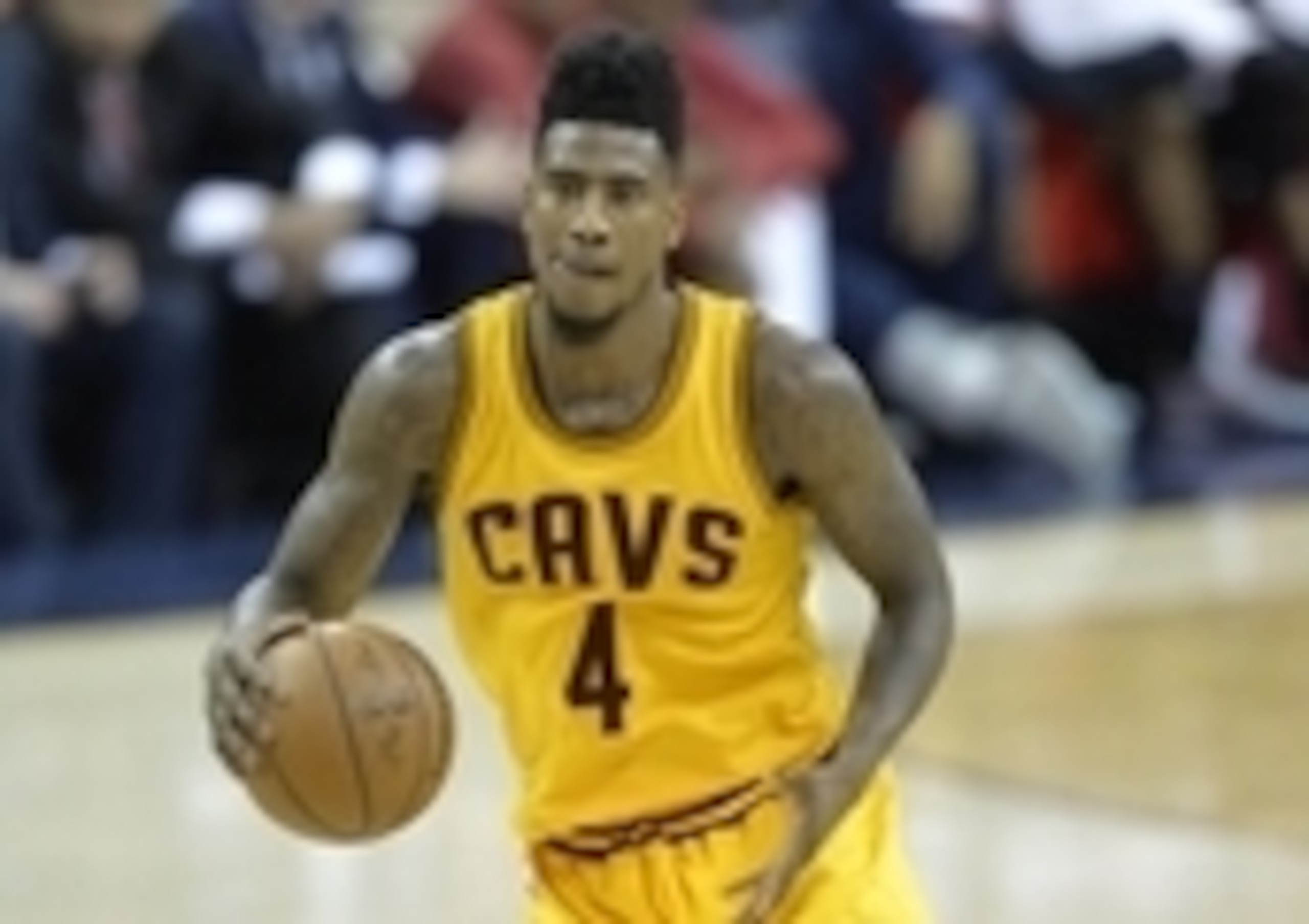
Agreement: Four years, $40 million, per Yahoo Sports' Adrian Wojnarowski
2014-15 Notable Numbers: 8.0 points, 3.6 rebounds, 2.2 assists, 11.4 PER
"Iman Shumpert's new contract with the Cleveland Cavaliers has nothing to do with the player he is now," wrote Bleacher Report's Dan Favale. "It has everything to do with the player Cleveland is banking on him to become later."
That's a nice way of saying that Shumpert's statistics don't measure up to his salary.
See if this sounds like someone who's worth an annual investment of $10 million.
Shumpert owns career shooting percentages of 39.6 from the field and 34.2 from long range. His PER has never checked in above 11.7, which is several notches below the league-average 15.0 mark. He has missed 65 games over the past three seasons, and his athleticism still doesn't look how it did before he suffered a torn ACL in April 2012.
Clearly, the Cavs didn't keep Shumpert for his offensive ability. But if they're paying him to be a defensive specialist, then the market says they spent too much. Just two years back, the Memphis Grizzlies locked up perimeter stopper Tony Allen on a four-year deal. But the four-time All-Defensive selection only collected half of what Shumpert will get from Cleveland.
Not to mention Shumpert grades out more as a good defender than a great one. His 1.92 defensive real plus-minus ranked 56th overall, per ESPN.com. For comparison, Allen was third with a 4.92. Shumpert also allowed opposing 2-guards to post a 12.9 PER against him, via 82games.com, which isn't a high number, but it's still better than the one he posted at the opposite end.
Like Favale said, the 25-year-old Shumpert has a chance to eventually earn this deal. But for now, this is a lot of money to pay for potential when the production hasn't been there during his first four NBA seasons.
Omer Asik, C, New Orleans Pelicans
3 of 5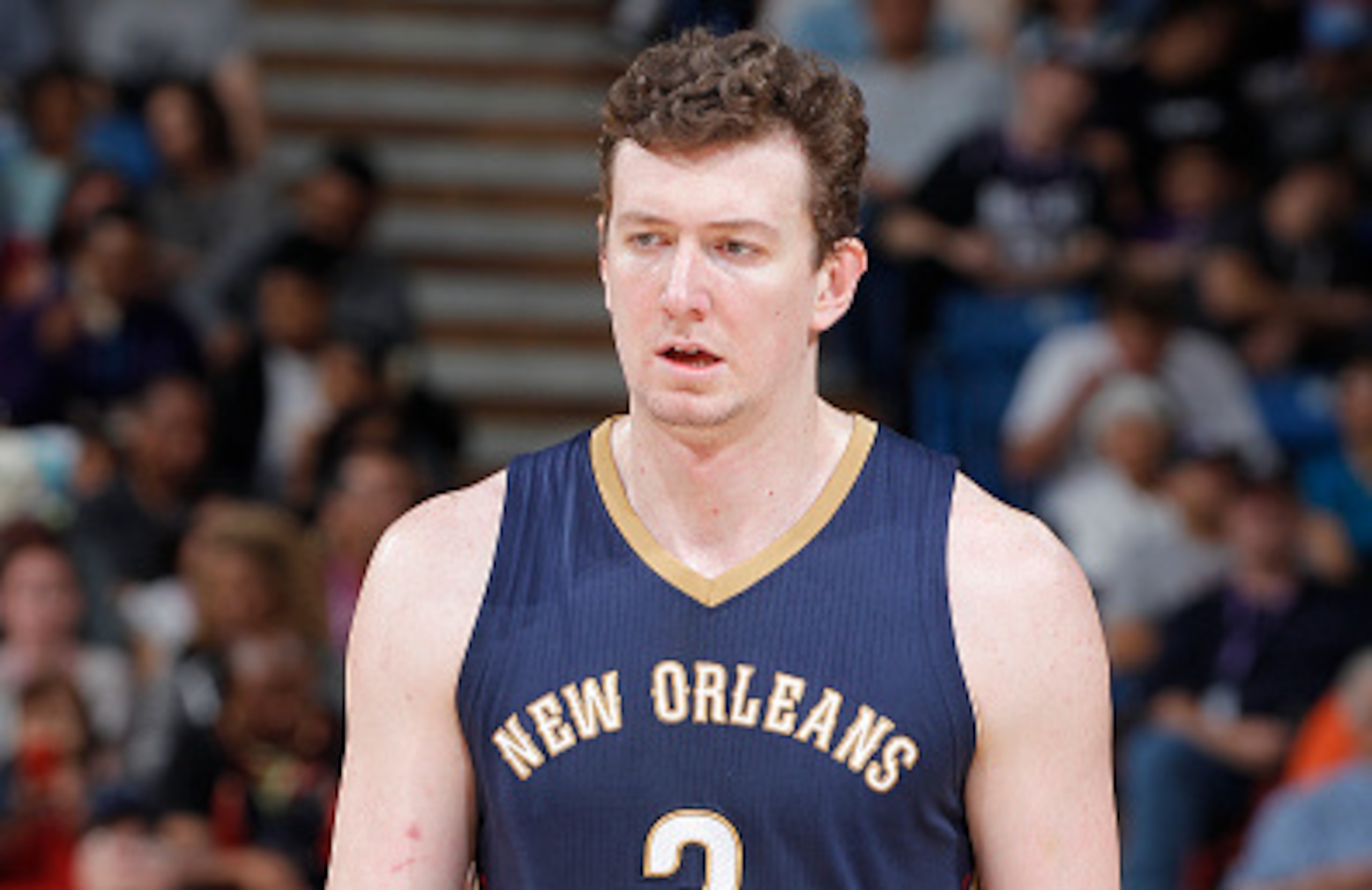
Agreement: Five years, $60 million, per Yahoo Sports' Adrian Wojnarowski
2014-15 Notable Numbers: 9.8 rebounds, 7.3 points, 0.7 blocks, 15.5 PER
In April, the New Orleans Pelicans decided they were better off without starting center Omer Asik. During their first-round matchup with the Golden State Warriors, the Pellies sliced Asik's playing time from 26.1 minutes per game down to only 19.8.
The box score said even that was too much. The Pelicans were outscored in that series by 22.5 points per 100 possessions with Asik on the floor. When he sat, New Orleans actually won the scoring battle by 2.1 points per 100 possessions.
Everything about that series made Asik seem expendable. He congested the paint on offense and struggled defensively. But rather than move on from the lumbering big man, the Pelicans threw $60 million to keep him around for the next five seasons.
"Asik is a solid player—but he's not a star. Why pay him like one?" wrote Bleacher Report's Thomas Duffy. "... For a player whose offensive game is about as sophisticated as a first-grade math class, that's too much."
Asik rebounds well. Finding his strengths outside of that isn't easy. While he's perceived as a defensive anchor, he just posted the worst block percentage of his career (2.1) and defended at the rim about as well as noted sieve Kevin Love (51.1 field-goal percentage allowed, compared to Love's 52.6).
Asik doesn't have an offensive repertoire to speak of, isn't a good passer and seems to slather his hands in butter before stepping inside the lines. His speedometer doesn't go high enough to fit new coach Alvin Gentry's uptempo attack, and whatever help Asik provides franchise face Anthony Davis at the defensive end is negated when they switch sides.
At 29 years old, it's hard to imagine Asik rewriting his scouting report. The total package isn't changing, and neither is the fact that it isn't worth $60 million under any salary cap.

DeMarre Carroll, SF, Toronto Raptors
4 of 5
Agreement: Four years, $60 million, per USA Today's Sam Amick
2014-15 Notable Numbers: 12.6 points, 5.3 rebounds, 1.7 assists, 15.9 PER
For the Toronto Raptors to force their way into title contention, they had to fix their broken defense. Two-way balance is a necessity in the championship race, and the Raptors didn't have anything close to it last season, ranking third in offensive efficiency and 23rd on the opposite side.
"(Defense) starts on the ball," Raptors coach Dwane Casey said, per Eric Koreen of the Vancouver Sun. "You've got to get the ball under control before you can even think about your bigs protecting the rim. That was our issue, it's going to be where we start training camp and in training camp, guys guarding the ball."
DeMarre Carroll knows how to guard the ball. Aptly labeled as the "Junkyard Dog," he is a tenacious, disruptive defensive presence.
But the Raptors didn't place that $60 million wager on Carroll's defensive ability alone. He's now being played like a two-way star, and there isn't much evidence suggesting he's built for that role.
Even when narrowing the focus to Carroll's two seasons spent with the Atlanta Hawks—by far the most productive stretch of his six-year career—he played like a complementary piece. He had the fourth-lowest scoring average and PER of Atlanta's five starters. Carroll's shots were nearly all created by others. More than 72 percent of his two-point field goals and 99 percent of his threes were assisted.
The Hawks seemingly discovered how to maximize Carroll's offensive impact, and they did it with a style unlike what the Raptors run. Atlanta had the league's highest assist percentage at 67.6. Toronto ranked 28th in the category with a 54.7.
Not everyone sees Carroll as a costly reach for the Raptors. Bleacher Report's Adam Fromal wrote that Carroll could be "a bargain at that price, both because of the changing financial landscape in the Association and his ideal fit with the Raptors."
But if Carroll has to fend for himself offensively, his stat sheet could lose both quantity and quality. As much as Toronto needed his defense, the 28-year-old's offensive output must substantially improve to justify his price tag.
Reggie Jackson, PG, Detroit Pistons
5 of 5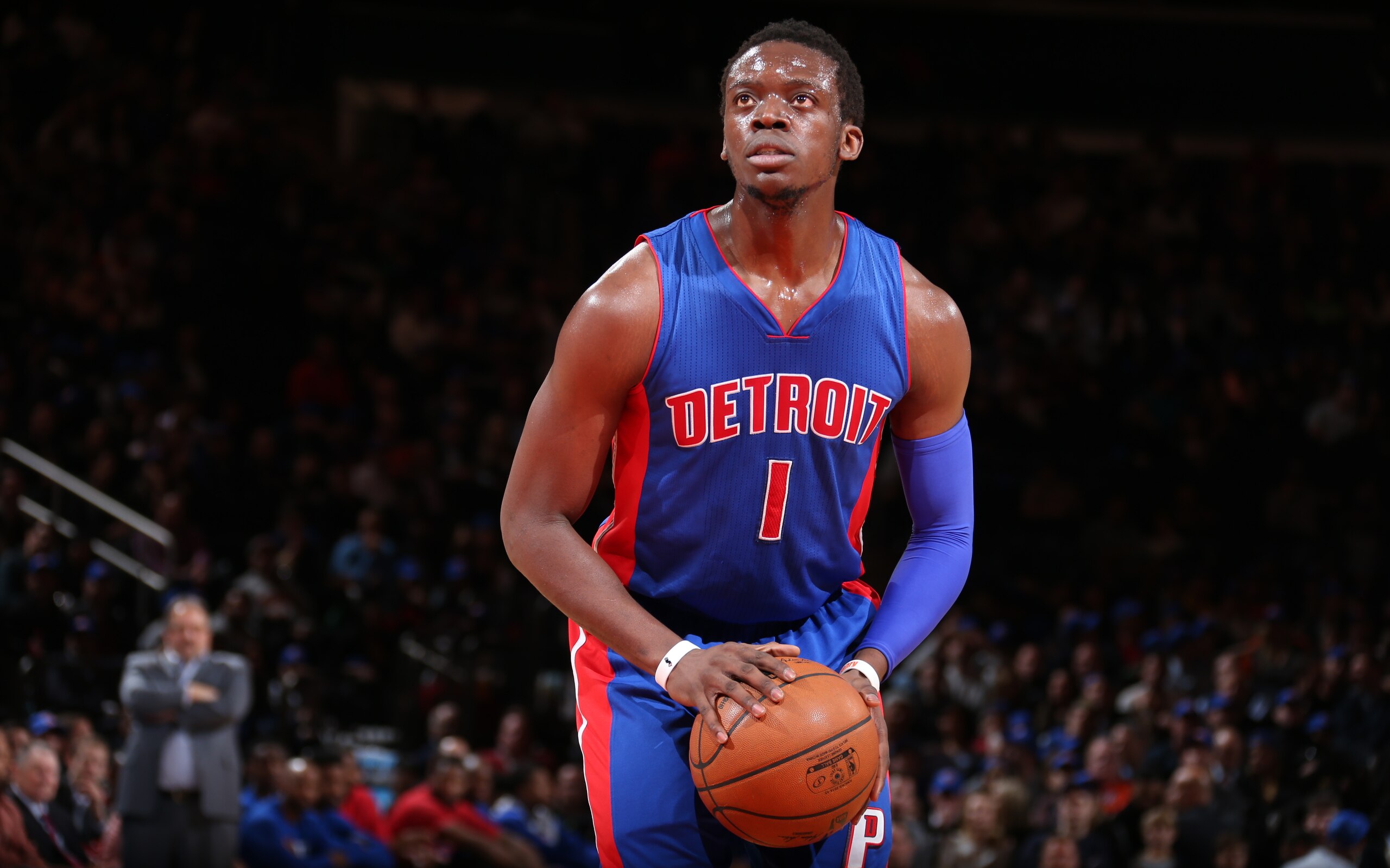
Agreement: Five years, $80 million, per ESPN.com's Brian Windhorst
2014-15 Notable Numbers: 14.5 points, 6.0 assists, 4.2 rebounds, 17.2 PER
After a deadline deal sent Reggie Jackson from the Oklahoma City Thunder to the Detroit Pistons, the explosive point guard turned into a per-game monster. Over his final 27 outings of the 2014-15 campaign, he piled up 17.6 points, 9.2 assists and 4.7 rebounds a night.
But volume production has never been his problem. Even though he spent his first three-plus NBA seasons behind perennial All-Star Russell Westbrook, Jackson still owns career per-36-minute averages of 16.0 points, 5.9 assists and 5.1 boards.
Where Jackson's numbers run into trouble is in the efficiency department. He's a shaky shooter from distance (career 29.4 three-point percentage) and not the most accurate gunner inside the arc (43.2 field-goal percentage). Of the 108 players who averaged at least 29 minutes last season, Jackson ranked 82nd with a 51.1 true shooting percentage.
"Five years and $80 million...is an awful lot for Reggie Jackson, a point guard outside the top 15 at his position who has shown no ability to hit the 3 with consistency," wrote ESPN.com's Kevin Arnovitz. "... Was there a robust market for Jackson we weren't hearing about? If not, why go the full five years and at that number?"
Since Jackson was a restricted free agent, the Pistons had some control over the situation. Not to mention, by the time this deal came to fruition, a lot of teams had already spent their money and few point guard vacancies remained.
It makes sense for Detroit to keep Jackson. He wasn't the cheapest acquisition, and he might have more upside than a typical 25-year-old since he spent so much time as a reserve.
But this was a longer, richer deal than the Pistons needed to give him. If his shooting never significantly improves, this contract could turn into a costly overpay.
Unless otherwise noted, statistics used courtesy of Basketball-Reference.com and NBA.com.
.jpg?w=2560 "Dart Believed to Have Sprained MCL")
.jpg?w=2560 "WWE Raw Live Grades 🔠")

.jpg?w=2560 "Ertz Returning to Eagles")
.jpg?w=2560 "Dak Addresses 'Dumb' Old Romo Tweet 🤣")