
Anonymous Resume: Which Teams Are Most Deserving of a 2025 Men's NCAA Tournament Bid

Championship week in men's college basketball means the time has finally come for America's (least) favorite game of deceptively partial information: anonymous NCAA tournament resumes.
In theory, the selection committee tries to compare team resumes without any sort of bias. That is both impossible and impractical, because if you've watched as much basketball as these committee members have, all it takes is a quick glance at the list of opponents faced to know whose resume it is.
But we actually can strip away the names and talk almost exclusively in metrics to compare two (or more) teams in anonymity.
.jpg?w=2560 "Texans Jaguars Football")
.jpg?w=2560 "Jets Saints Football")
On these resumes, you'll find the following acronyms/abbreviations:
NET: NCAA Evaluation Tool. This is the primary sorting metric by which quadrant records are determined. Generally speaking, a team's NET isn't as important as the NET of its opponents, but it still matters to some extent. (For instance, you need to scroll pretty far down that sorting tool to find Memphis.)
RES: Resume or results-based metrics. This is the average of Kevin Pauga Index (KPI), strength of record (SOR) and wins above bubble (WAB). The lower the number, the better.
QUAL: Quality or predictive metrics. This is the average of KenPom, BPI, and Torvik. Margin of victory is a huge factor here, and again, the lower the number, the better. As a bracketology rule of thumb, RES is much more important when it comes to deciding if a team belongs in the field, while QUAL starts to play a factor in where teams should be seeded. (Frankly, the NET should be a part of this average as well, since it is also a predictive metric. But it is viewed separately as its own sorting tool.)
SOS/NCSOS: Strength of schedule/nonconference strength of schedule. For the most part, this is not important as a standalone data point, as schedule strength is kind of baked into the numbers. But a team with a top-10 schedule might get some benefit of the doubt, while a team that's 300th or worse in NCSOS might get penalized for that lack of effort. More on that shortly.
Q1/Q2/Q3/Q4: The quads. Back in the day, we used to just talk about records against top 50, top 100, etc., but they changed up the team sheets a few years ago to more adequately account for where the games were played.
Quadrant 1 consists of home games against the NET top 30, neutral-site games against the NET top 50 and road games against the NET top 75. Q2 is home vs. 31-75, neutral vs. 51-100 and road vs. 76-135. Q3 is home vs. 76-160, neutral vs. 101-200 and road vs. 136-240. And Q4 is everything else. But don't worry about those actual numbers. Just know that Q1 wins are good and Q4 losses are bad. (Q1A is the top half of Quad 1, or home vs. 1-15, neutral vs. 1-25 and road vs. 1-40. Those are extra nice to have.)
Notably, these records that can change overnight when the NET refreshes, making a team suddenly look more attractive or less appealing for no readily apparent reason.
With those glossary notes out of the way, let's dive into the muck, all data current through the start of play on Wednesday.
Anonymous Resume Comparison #1: At Least One of You Tried
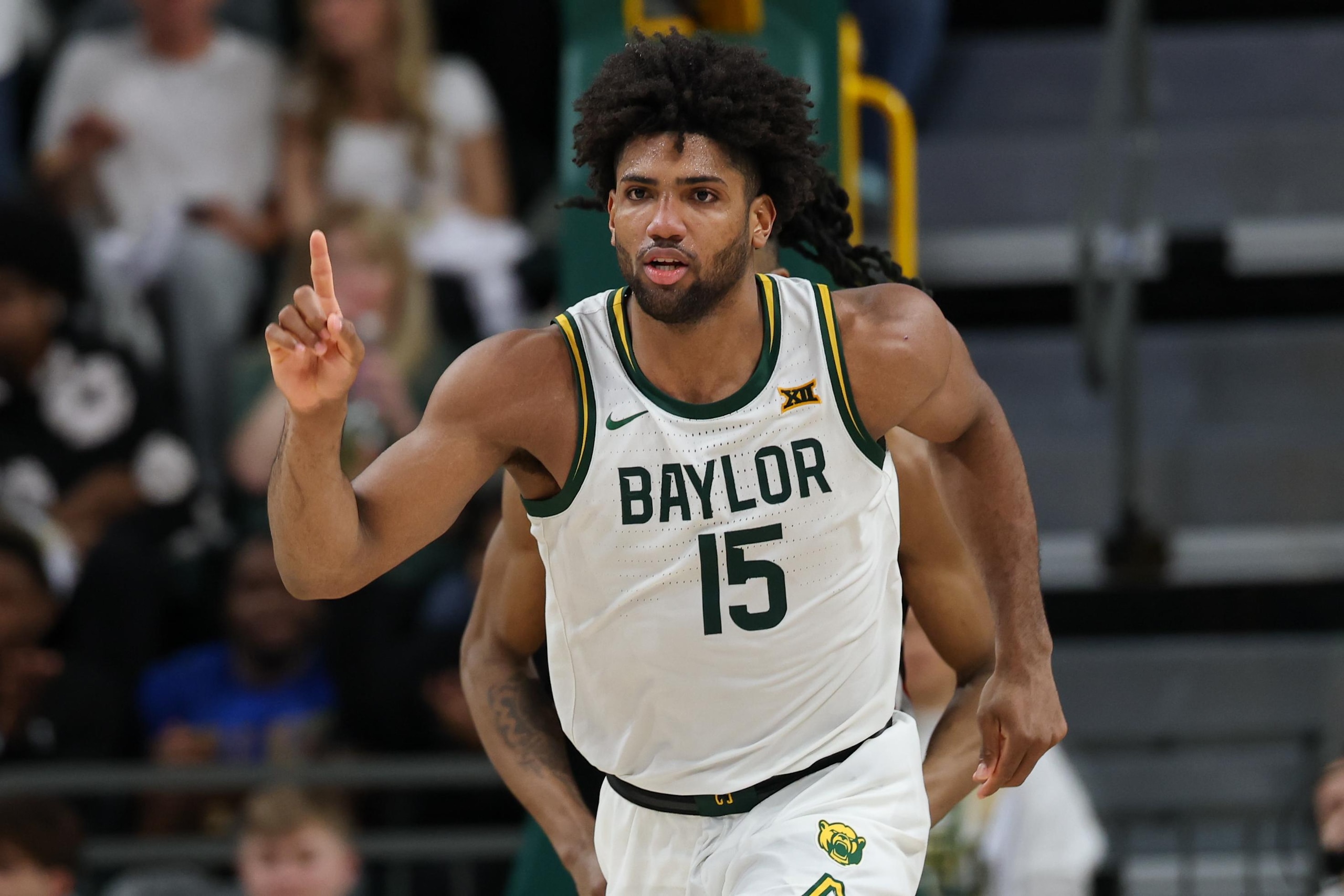
Team A: 18-13, NET: 33, RES: 44, QUAL: 27, 1-10 vs. Q1A, 5-11 vs. Q1, 6-1 vs. Q2, 1 Q3 loss, NCSOS: 12
Team B: 20-11, NET: 43, RES: 38, QUAL: 46, 3-7 vs. Q1A, 5-8 vs. Q1, 4-3 vs. Q2, 0 Q3 losses, NCSOS: 331
Several things stand out when comparing these two resumes, the first being Team B's upper echelon wins, going 3-for-10 against Quad 1A while Team A went just 1-for-11. Notably, all four of those combined wins came against teams likely headed for No. 3 seeds or better.
There's also the simple difference in total number of losses, as well as the fact that Team A took a Quad 3 loss. (Though, we'll tell you that was a home game against a team just barely outside the NET Top 75, and not a terrible result as far as Quad 3 missteps go.)
But it's the continental divide at the end of the resumes that we'd like to draw to your attention.
12 vs. 331 in NCSOS.
Team A played five Quad 1 games in the nonconference, four of those presently landing in Quad 1A. And they did win two of those five games, so this isn't a situation like Arizona's where the NCSOS looks good even though the best win came against Davidson.
Meanwhile, Team B played no Quad 1 nonconference games, and lost the only one it played against the top half of Quad 2. Despite a 12-1 record at the start of league play, Team B had accomplished just about nothing until the second half of January.
Does that matter? Or should it?
After Team B went 8-10 in the historically loaded SEC—with its double dips coming against Tennessee, Kentucky and Missouri, no less—its overall SOS is up to 22nd-toughest in the nation. And though it started out as Cream Puff Central, going 20-11 against a top-25 schedule is tournament-worthy, right?
Texas ended up with SOS marks (21 overall, 285 NCSOS) very similar to those of Team B, but only went 17-14 and is likely to miss the tournament because of it.
Though NCSOS is often used by the selection committee to hammer a team right on the bubble, Team B (Vanderbilt) is probably too far above the cut line for that one data point to be their undoing.
But Team A (Baylor) taking its 13 losses against the fifth-toughest SOS in the country should be OK, even though the Bears have come under a ton of bubble scrutiny while going 7-9 over the 'back nine' of their regular season.
Michigan State was in a similar boat last year, going 18-13 during the regular season with a couple of quality wins and even more questionable losses than Baylor has, and the Spartans ended up with a No. 9 seed.
Both of these teams should be dancing, but it wouldn't be a surprise if Baylor lands somewhat comfortably ahead of Vanderbilt, even as everyone tries to scrub the Bears to the cut line.
Anonymous Resume Comparison #2: What does history say?
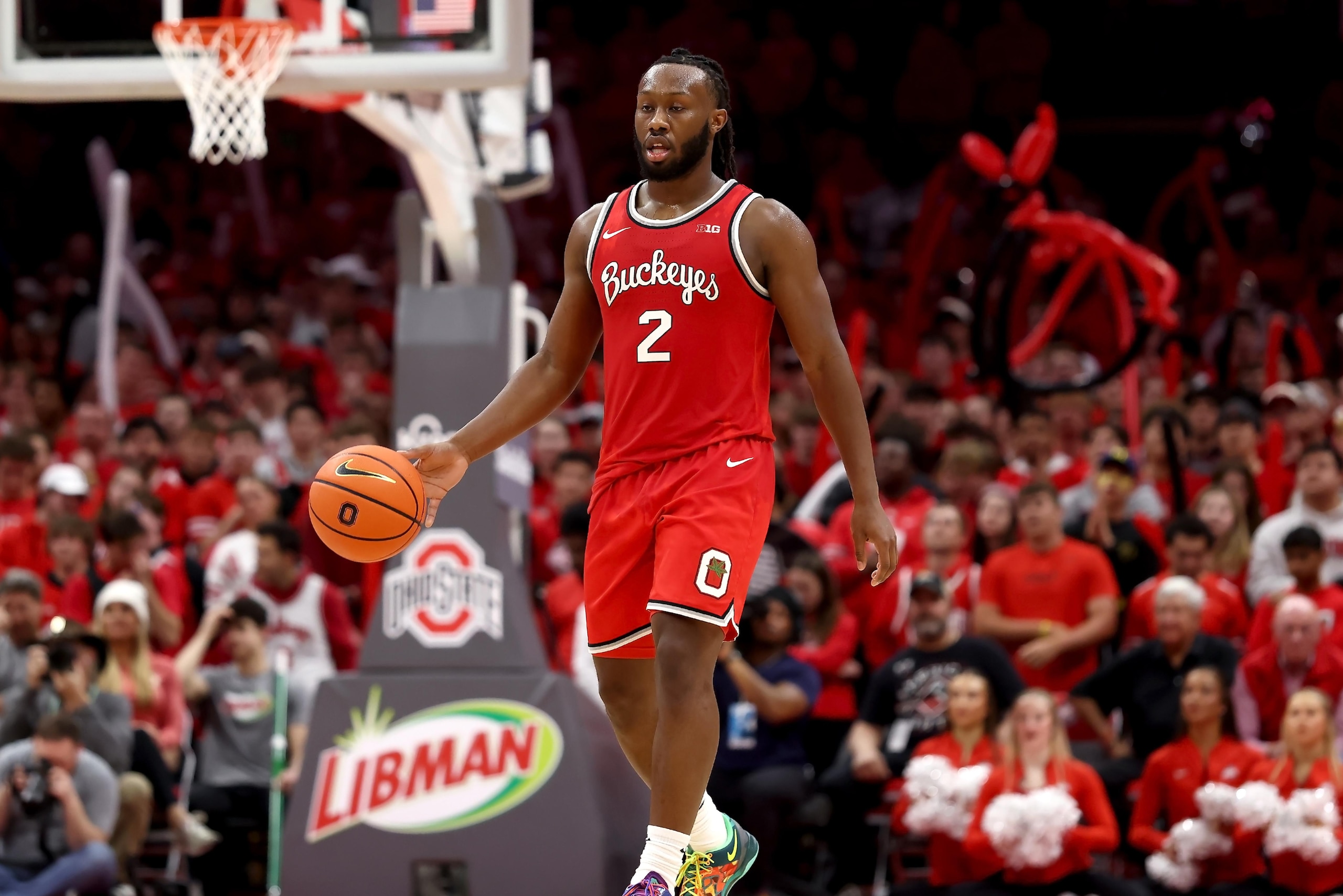
Team C: 17-14, NET: 37, RES: 49, QUAL: 37, 6-11 vs. Q1, 3-3 vs. Q2, 0 Q3/Q4 losses
Team D: 19-15, NET: 31, RES: 49, QUAL: 28, 4-12 vs. Q2, 4-1 vs. Q2, 2 Q3 losses
Team E: 18-15, NET: 43, RES: 47, QUAL: 38, 6-12 vs. Q1, 4-2 vs. Q2, 1 Q3 loss
Team C still has some conference tournament games to play while Teams D and E have long since concluded their seasons. Of course, that's a double-edged sword for Team C, which is able to pick up some more wins but is destined for a 15th loss if we're still talking about them as a bubble team in a few days.
And since the switch from RPI to NET for the 2019 NCAA tournament, only one team has received an at-large bid with 15 or more losses.
That would be Team D, 2019 Florida, which earned a No. 10 seed.
Now, it's been six years, so I don't remember the exact circumstances that led to the Gators getting in. But they ended up with just three wins over at-large teams: vs. No. 8 seed Ole Miss in overtime, at No. 3 seed LSU in overtime and a three-point win over LSU in the SEC tournament quarters.
As far as KenPom strength of schedule data is concerned, both Team C and Team D faced the 14th-toughest schedule in the country. And if Florida's three best wins were enough to make up for all the losses—including a home loss to Georgia that was closer to Quad 4 than Quad 2—Team C's wins over Kentucky, Maryland and Purdue sure do look nice.
Team D was the exception to the rule, though.
Team E (2023 Oklahoma State) suffering 15 losses against the nation's eighth-toughest schedule didn't fly.
Those Cowboys swept No. 6 seed Iowa State and won home games against No. 6 seed TCU and No. 9 seed West Virginia, but they were unable to overcome suffering three losses to non-tournament teams within the first 10 games of their schedule.
Team C (2025 Ohio State) suffered no terrible losses, though. Yes, the home loss to Pitt is a blunder in hindsight, but that game against team No. 61 in the selection committee's sorting metric was the Buckeyes' worst loss from a NET perspective.
Winning three games against teams that look like No. 4 seeds or better surely helps counterbalance losses to the likes of Pitt, Northwestern and Nebraska, doesn't it?
Now, there's no denying that the cut line changes from one year to the next. The 37th-best at-large resume one year may be stronger or weaker than the previous year's, and whether you need the 37th-best or the 32nd-best at-large resume to get into the dance is left to the mercy of bid thieves. That's why historical comparisons like these always need to be taken with a grain of salt.
But on a bubble that we pretty much all agree is nauseatingly weak, maybe the Buckeyes have done enough, as we have seen a few 15-loss teams make the cut (and with some room to spare) in years past.
[As a reminder, this was written prior to the slate of games on Wednesday, in which Ohio State suffered a loss to Iowa that almost certainly squashes the Buckeyes' case for a bid. But put Texas in Ohio State's place after the Longhorns knocked off Vanderbilt and it's a similar argument.]
Anonymous Resume Comparison #3: How the (Mountain) West Was Won?
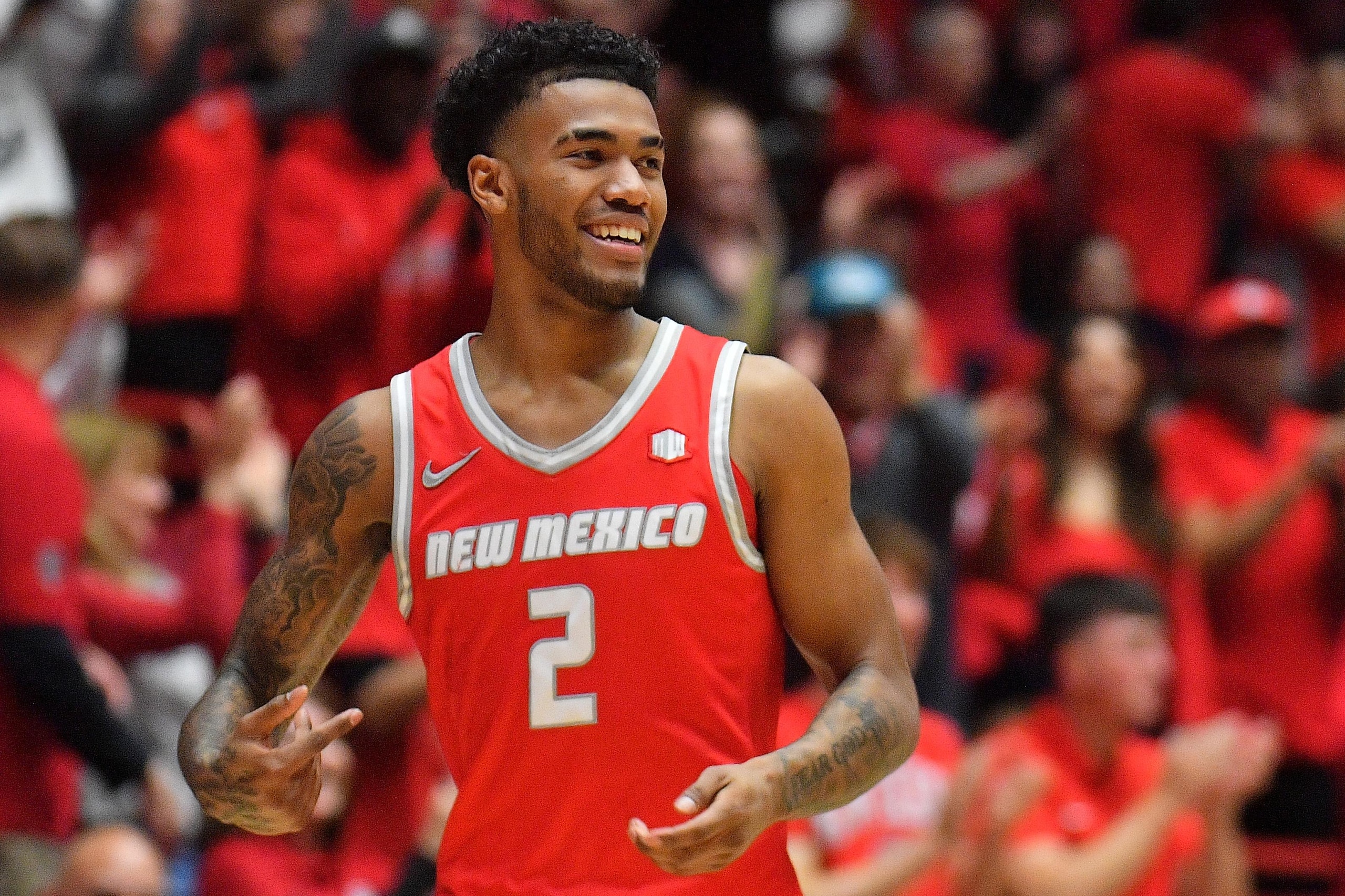
Team F: 24-6, NET: 36, RES: 36, QUAL: 47, 2-3 vs. Q1, 7-3 vs. Q2, 0 Q3/Q4 losses, SOS: 88, NCSOS: 111
Team G: 24-6, NET: 41, RES: 30, QUAL: 43, 3-3 vs. Q1, 8-1 vs. Q2, 2 Q3 losses, SOS: 80, NCSOS: 62
Team H: 21-9, NET: 45, RES: 57, QUAL: 48, 2-5 vs. Q1, 4-2 vs. Q2, 1 Q3 loss, 1 Q4 loss, SOS: 87, NCSOS: 121
Team I: 20-8, NET: 51, RES: 42, QUAL: 48, 3-5 vs. Q1, 5-2 vs. Q2, 1 Q3 loss, SOS: 63, NCSOS: 7
Team J: 22-9, NET: 54, RES: 55, QUAL: 51, 1-5 vs. Q1, 6-2 vs. Q2, 2 Q3 losses, SOS: 92, NCSOS: 142
We're only partially putting up the veil of secrecy on this one, letting you know up front that all five of these are Mountain West teams.
But we can still throw them in NET order, strip away the names and have some fun here with resumes that aren't particularly dissimilar.
We can probably all agree that even with the pair of Quad 3 losses, Team G is the best choice of the bunch—and that's without telling you it went 2-1 vs. Quad 1A and was the only team in the quintet with multiple wins of that ilk.
As the only team that is .500 or better against Quad 1 and with an impressive 11-4 record against the top two Quads, Team G (New Mexico) is at least half a step ahead of the field here as the one most likely to dance no matter what happens in the MWC tournament.
Team F is also in reasonably good shape by virtue of its clean resume. Not only does this team not have any Quad 3 or Quad 4 losses, but it was also unblemished against Quad 2B. Its worst losses (at UNLV, vs. New Mexico and vs. UC San Diego) weren't actually bad, and the Quad 1A road win over Saint Mary's is a pretty big deal. Team F (Utah State) might end up a seed line behind New Mexico, but it's looking very likely to dance.
From there, it starts to get a little ugly, but Team I is almost certainly ahead of Teams H and J.
NET and the other predictive metrics view all three as equals, but Team I has as many Quad 1 wins as the other two teams combined, as well as just the one loss outside of the top two Quads. Also, Team I's best win (Houston on a neutral floor) beats the heck out of anything Team H or Team J did. So even though getting swept by UNLV has brought Team I (San Diego State) down close to the bubble, the Aztecs are most likely still in and surely ahead of the two remaining unidentified squads.
Team H vs. Team J is a really tough call which ultimately might not matter anyway. With resume metrics in the mid-50s, they're on the brink of not being seriously considered for a bid, as the worst to ever make the cut as an at-large was Rutgers in 2022 with a 57.5 resume metrics average. And that Rutgers team had some serious feathers in its cap, going 5-5 vs. Quad 1A. These two MWC teams went a combined 1-2 vs. Quad 1A and 3-10 against Quad 1.
But let's assume for now the order of these two teams will matter, because it might. They're both among my First Five Out at the moment.
Notably, Team J (Colorado State) swept Team H (Boise State) during the regular season and picked up home wins over Utah State and San Diego State. But that's pretty well the end of the list of achievements for the Rams, unless you want to point out that they finished second in the MWC standings at 16-4.
However, conference record isn't supposed to matter, and we did once see a 14-4 Pac-12 champion miss the NCAA tournament (2012 Washington). And what a coincidental note, as losing on a neutral floor to Washington was one of CSU's Quad 3 losses this year, the other a home game against UC Riverside.
At least the Rams don't have a Quad 4 loss, though. The Broncos do, losing on a neutral floor to NET 204 Boston College, in addition to their Quad 3 neutral loss to Washington State.
The flip side of that coin is Boise State scored big nonconference wins over Saint Mary's (in Idaho Falls) and Clemson (at home). Pair that with the home wins over Utah State and New Mexico, and the Broncos have four wins over likely tournament teams, two of whom are in the mix for a No. 5 seed.
Despite the head-to-head sweep and despite the Quad 4 loss, Boise State may be slightly ahead of Colorado State. But perhaps this will all get sorted out a little bit more over the next 48 hours in the MWC tournament.
Anonymous Resume Comparison #4: The Road is Hard (But Necessary)
Team K: 19-12, NET: 52, RES: 41, QUAL: 50, 4-12 vs. Q1, 5-0 vs. Q2, 6-0 vs. Q3, 4-0 vs. Q4, 5-8 away from home
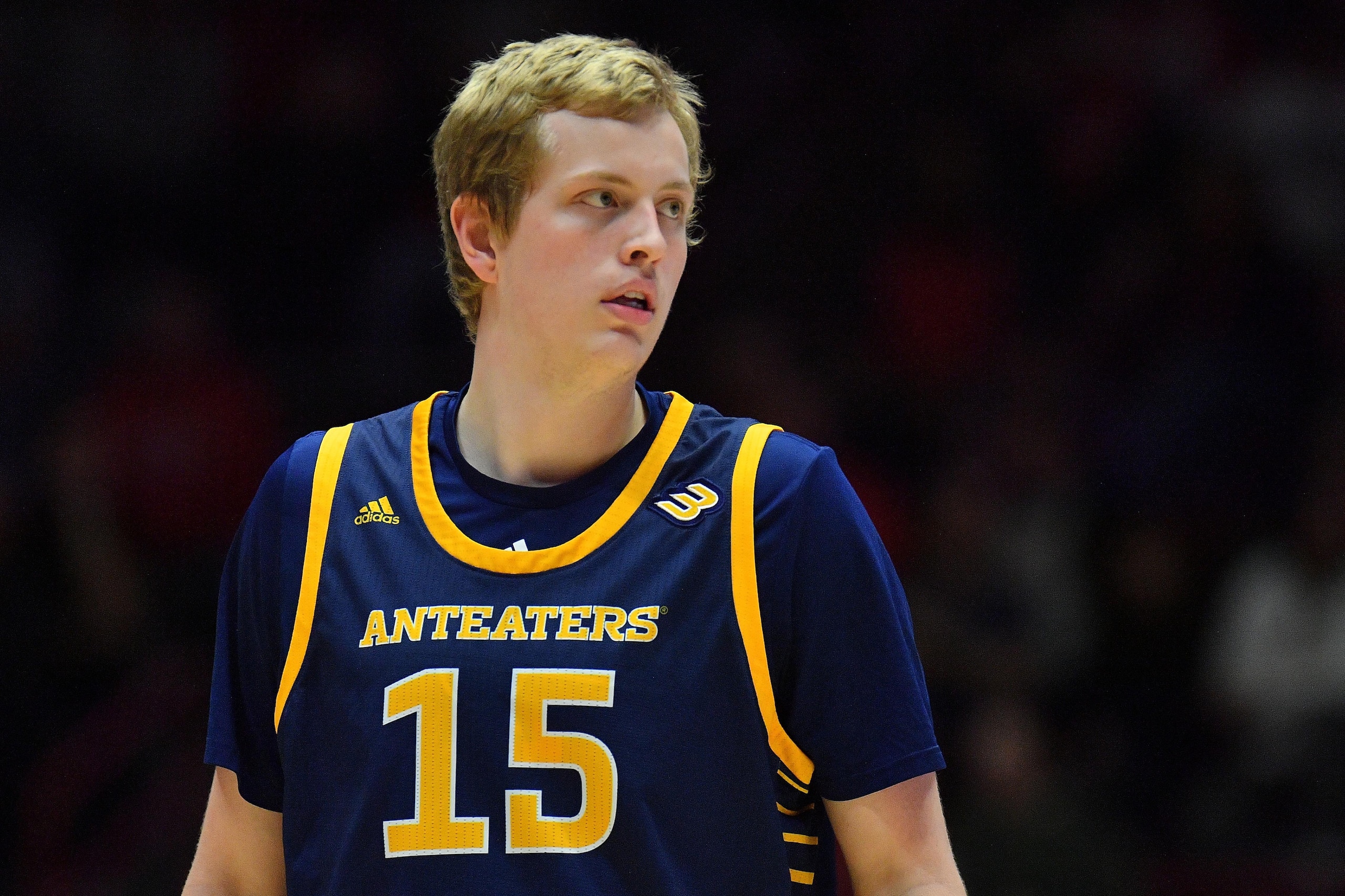
Team L: 26-5, NET: 62, RES: 48, QUAL: 81, 1-0 vs. Q1, 3-3 vs. Q2, 11-2 vs. Q3, 11-0 vs. Q4, 17-3 away from home
There's almost always that one bubble team whose inability to win on the road becomes a massive talking point during this week of resume dissection.
Not a particularly compelling "only wins at home" bubble team this year, though.
For a while, it looked like that team was going to be Georgia. However, the Bulldogs picked up back-to-back wins at Texas and South Carolina in early March, bringing their overall road record up to an almost palatable 3-7. They did also beat St. John's on a neutral and Grand Canyon on a semi-neutral (in Atlanta), so it's not like they only won in Athens.
That neutral record is a colossal selling point for Oklahoma, too. In fact, if you combine road (2-7) and neutral (5-0), the Sooners entered the SEC tournament with a .500 record away from home, with all seven of those victories coming against top-100 foes. Granted, both Oklahoma State (NET 95) and Providence (NET 98) barely qualify there, but the other five wins were Quad 1, including neutrals against Arizona, Michigan and Louisville.
But we'll roll with Team K as the 'bad' example here, going 5-8 away from home, despite playing six of those 13 games against teams with little to no case for an at-large bid.
Team K does have an impeccably clean resume devoid of losses outside of Quad 1, and it did score one major road win over a team still in the hunt for a No. 1 seed in Michigan State. That's why Team K (Indiana) has solid resume metrics and looks to be in reasonably good shape for a bid. But aside from that win over the Spartans and a miracle one-point OT win at Ohio State, the Hoosiers didn't do anything impressive away from home.
And then there's Team L, this year's road/neutral warrior.
It is, of course, a mid-major team, as the teams who end up playing 20 regular-season games away from home are always mid-majors. And this particular mid-major traveled remarkably well, winning games in Iowa, Tennessee, Utah, Hawaii, all throughout California and even three in Alberta, Canada.
Only one of the wins, at UC San Diego, ended up being particularly valuable for Team L (UC Irvine), but at a certain point, you just have to marvel at 17 wins away from home, 14 of them on the road.
Not only that, but you almost have to be willing to discount their worst loss of the season (at Duquesne) when you consider the circumstances.
That game was played on Dec. 21, in Pittsburgh, tipping off about 41 hours after the Anteaters finished off a frantic come-from-behind win over Belmont in Nashville. It was the final game before their brief Christmas break, subsequently idle until the Dec. 30 game at Cal Baptist. And it was a sharp contrast, going from up-tempo Belmont to snail-paced Duquesne. UCI just never got into anything resembling a rhythm while the Dukes couldn't miss, shooting 14-for-25 from distance.
Not trying to say that loss doesn't count. It most certainly does, and UCI voluntarily put itself in that predicament. But if that's the one thing most threatening to keep the Anteaters out of the dance, one would hope the selection committee at least discusses the innate difficulty of a California team playing a 2:30 p.m. ET slog of a game in Pennsylvania, less than two days after surviving a track meet in Tennessee.
Now, that's probably not the one thing keeping UCI out. Barely ranking top-100 in BPI and not landing in the top 60 in any of the predictive metrics is surely the bigger issue. Getting 17 wins away from home (and maybe one or two more in the Big West tournament) is wild, though, and hopefully the Anteaters at least get a fair shake from the committee.
Anonymous Resume Comparison #5: Was That One Quality Win Enough?
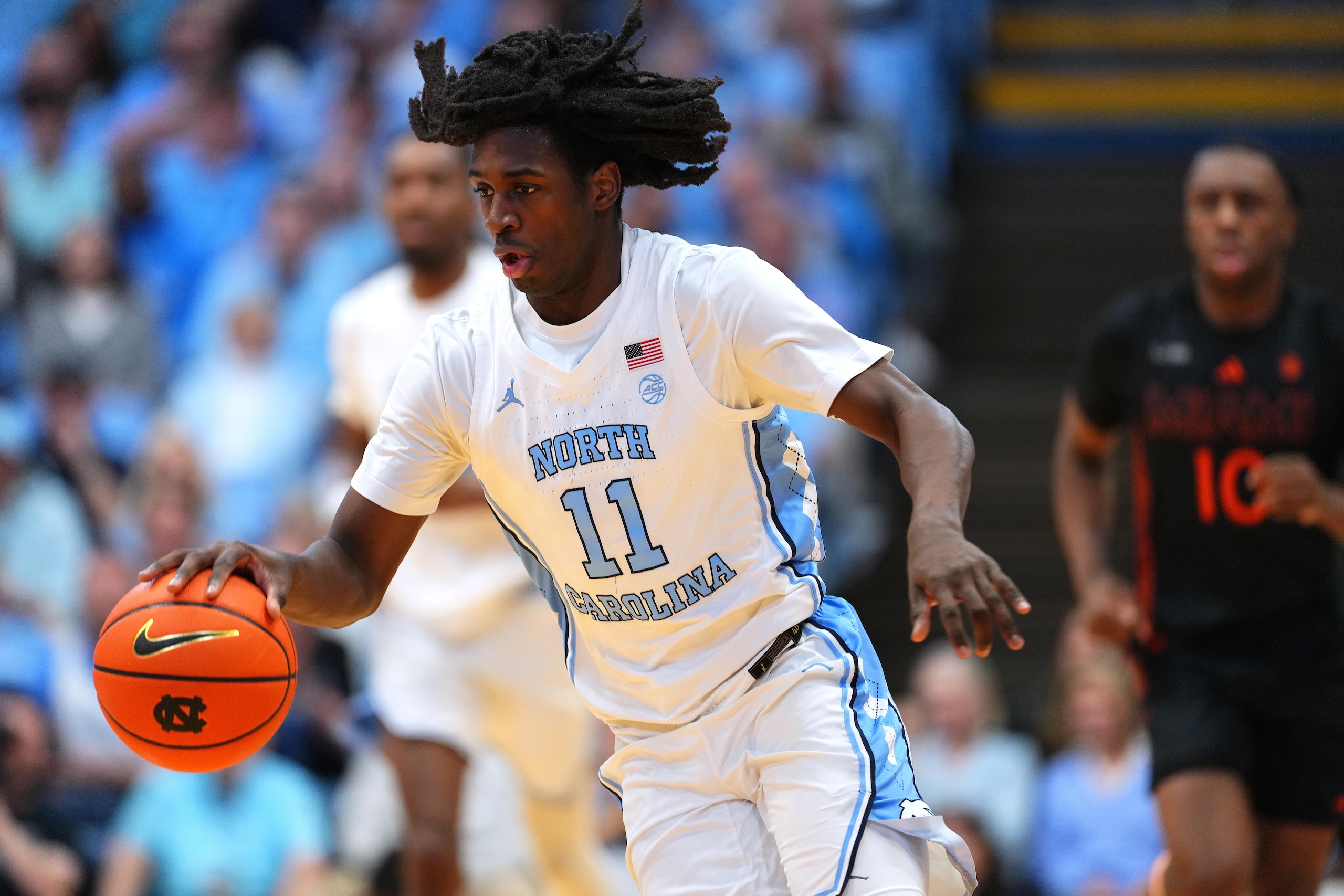
Team X: 21-10, NET: 44, RES: 48, QUAL: 39, 1-3 vs. Q1A, 2-8 vs. Q1, 7-2 vs. Q2, 0 Q3/Q4 losses
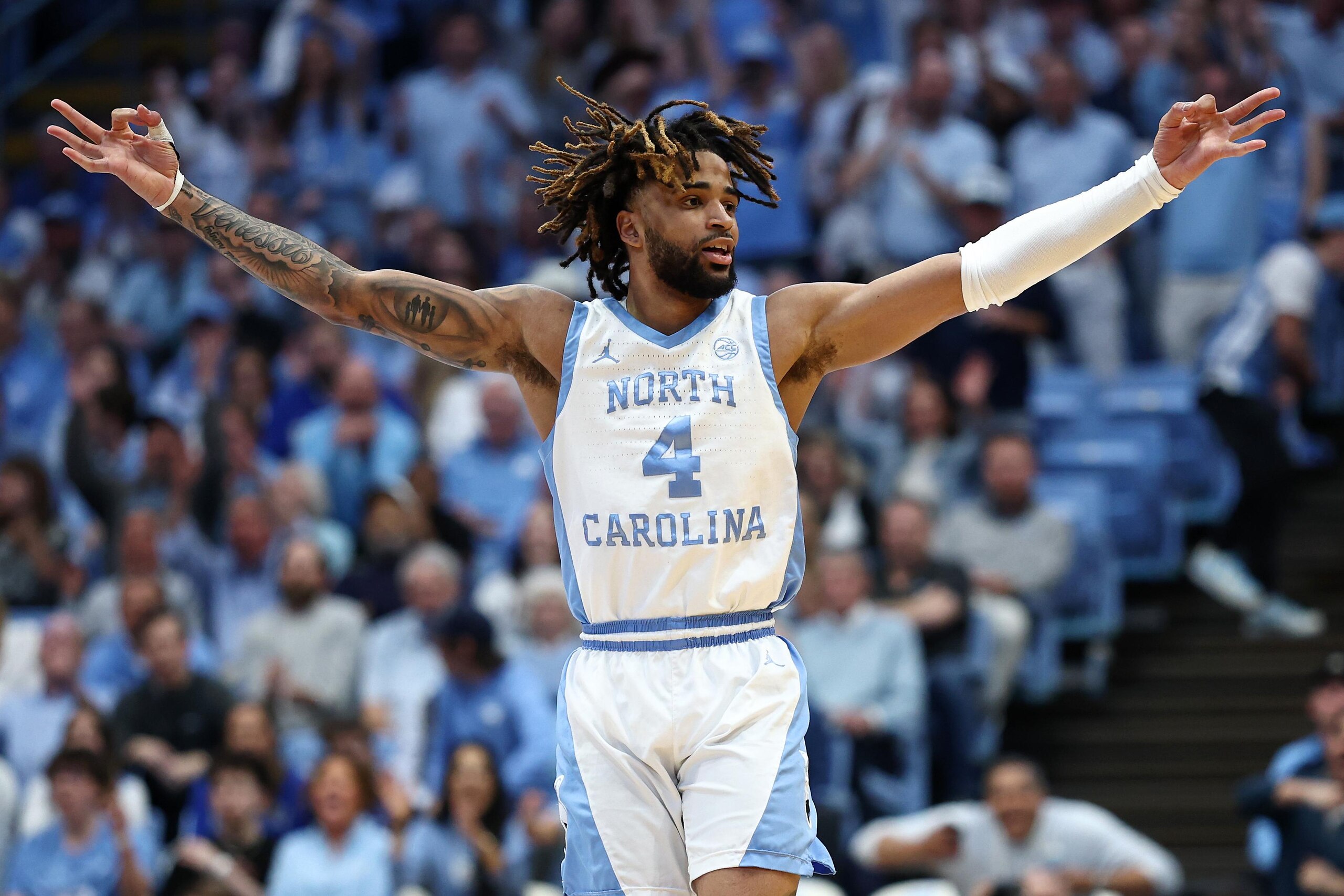
Team Y: 20-12, NET: 40, RES: 48, QUAL: 34, 1-9 vs. Q1A, 1-11 vs. Q1, 7-0 vs. Q2, 1 Q3 loss
Let's wrap up this exercise with the annual bubble dilemma: Are we seriously putting one of these teams in the field after it blew chance after chance after chance at quality wins?
From a purely metrics perspective, both of these teams are in surprisingly good shape.
Over the past four seasons, there have been 143 teams that ended up top-40 in QUAL as well as top-50 in RES, and 141 of those teams made the tournament. The two exceptions were the previously mentioned 15-loss Oklahoma State team in 2023 (RES: 47, QUAL: 38), as well as 13-loss, one-Q1-win North Carolina (RES: 49, QUAL: 39) that same year.
How interesting it is that Team Y (North Carolina) is once again one of the teams right on this chopping block for not getting enough quality wins.
It's great that the Tar Heels are 7-0 vs. Quad 2 with only one particularly problematic loss (vs. Stanford). But come on, 1-11 vs. Quad 1? With that one win being a two-point neutral-site victory over UCLA four days before Christmas? If you're only going to get one win in 12 tries, it had better be a great one. And UCLA on a neutral would be like the 10th-best win on Auburn's resume.
But let's not let Team X (Xavier) off the hook, either.
The Musketeers did "add" a Quad 1 win recently when Connecticut sneaking up to 30th in the NET pushed X's previous home win over the Huskies into that top grouping. Their top win, though, was the road game against Marquette—back before the Golden Eagles started falling apart at the seams.
Not only is that win more impressive than North Carolina's best win, but Xavier has three wins over the field (Marquette, UConn and Creighton) to UNC's one, as well as no losses outside the top half of Quad 2 while Carolina has that one against the Cardinal.
Big opportunities still ahead for both teams, but Xavier does appear to be in better shape for now. Though, it should probably be noted that only one of these teams has an AD who is the selection committee's chair this season. Whether Bubba Cunningham's presence does anything to help North Carolina's case for a bid remains to be seen, but it is most definitely a thing worth knowing.
.png?w=2560 "CFB Top 25")
.jpg?w=2560 "Ref Slips on Wet Turf in London 🎥")
.jpg?w=2560 "Texans Beat Jags in London")