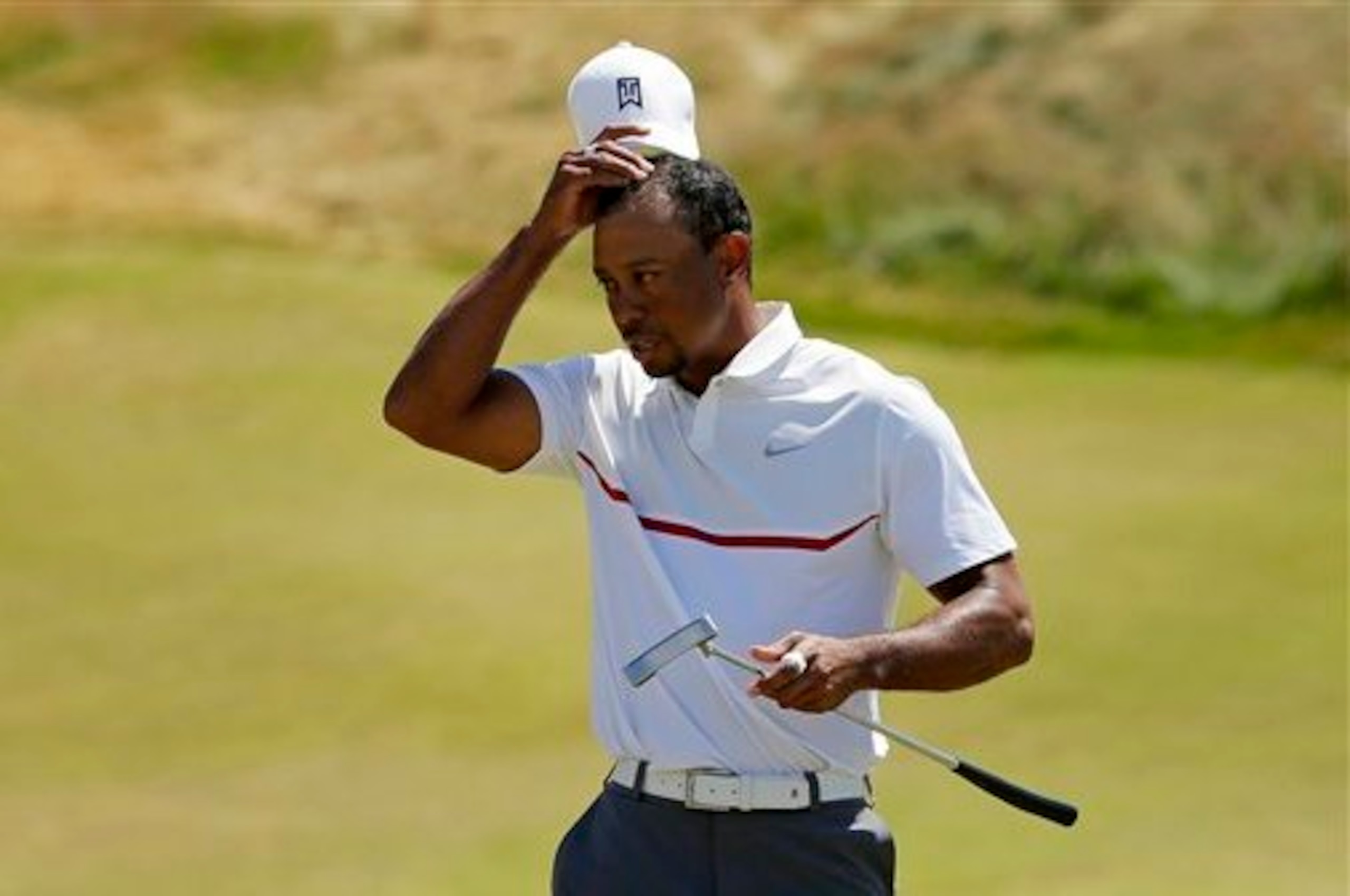

Final Grades for Tiger Woods at the 2015 U.S. Open
We’re running out of adjectives to describe Tiger Woods—and that’s his fault as much as it is ours.
For the first decade, PGA Tour analysts struggled to find fresh superlatives to characterize his greatness. Now, after he missed the cut at the 2015 U.S. Open at Chambers Bay, they’re scrambling to find adjectives to describe his play at the other end of the spectrum.
Tiger was 10 shots over par after Round 1. That 80 saw him tied for 152nd in a field of 156, leaving him 15 shots behind leader Dustin Johnson. What’s more, Woods was outplayed by Cole Hammer: a 15-year-old amateur who carded a 77 in Round 1.
After an abysmal first day, Tiger had it all to do in Round 2. Though he held it together better on Friday, he failed to muster a real response and stayed firmly mired in the dregs of the scoreboard at six over par for the second round. He finished the tournament tied for 150th.
Here, we will break down the three-time U.S. Open champion’s 36 holes at this year’s event into the categories of driving, iron play, greens play, decision-making and overall play. We’ll assess Tiger in each category and assign him a letter grade based on the traditional A-to-F scale.
As you might expect, Woods didn’t exactly make the honor roll. But despite his overall performance, there were some (small) positive takeaways for Tiger.
Driving: D+
1 of 5
Tiger found the fairway just six times from 14 attempts on Thursday, which translates to 42.9 percent driving accuracy. For comparison, the rest of the field clocked in at 77.34 percent, per usopen.com. He outdrove the field by an average of a little over one yard, but the slight distance advantage couldn’t come close to compensating for his woeful inaccuracy.
In Round 2, he managed to hit 10 of 14 fairways (71 percent), which was slightly below the average of 74.9 percent on the day. His average driving distance on Friday, though, was more than 15 yards below the field’s average.
In some cases, Tiger was able to benefit from wayward drives simply because of the distance he achieved off the tee. For example, see his attempt to drive the green on No. 12 in Round 2 that found a bunker but still resulted in a birdie.
In most cases, though, his poor drives left him stranded in a forest of fescue or teetering off the side of a hill. Those are not ideal situations for setting up a scoring approach shot. Tiger improved noticeably on Friday, but his horrific Round 1 driving kept his overall grade in the D-range.
Iron Play: C+
2 of 5
Chambers Bay is a special kind of struggle when players attempt to evaluate their approach shots. Given the dramatic contours of the greens and the alterations in firmness as the day goes on, there’s no surprise that even accurate irons can trickle off and leave a difficult chip.
Woods only managed to find half the greens in regulation (9-of-18) in Round 1, compared to the field average of 68.77 percent. If you can’t hit the greens, you can forget about dropping birdies.
In Round 2, Tiger made considerable improvement with his irons. He hit 12 of 18 greens (67 percent) and actually surpassed the field’s average of 64.3 percent. That’s still not good—for comparison, leader Jordan Spieth hit 14 of 18 greens (78 percent)—but it was an improvement that led to better scoring.
Woods had two birdies and eight bogeys in Round 2. Compared to one birdie, eight bogeys and one triple bogey in Round 1, Friday’s iron play was also an improvement. However, the fact that Tiger continued to leave himself with lengthy birdie and par putts shows he still needs a great deal of fine tuning to get into the B-range.
Greens Play: F
3 of 5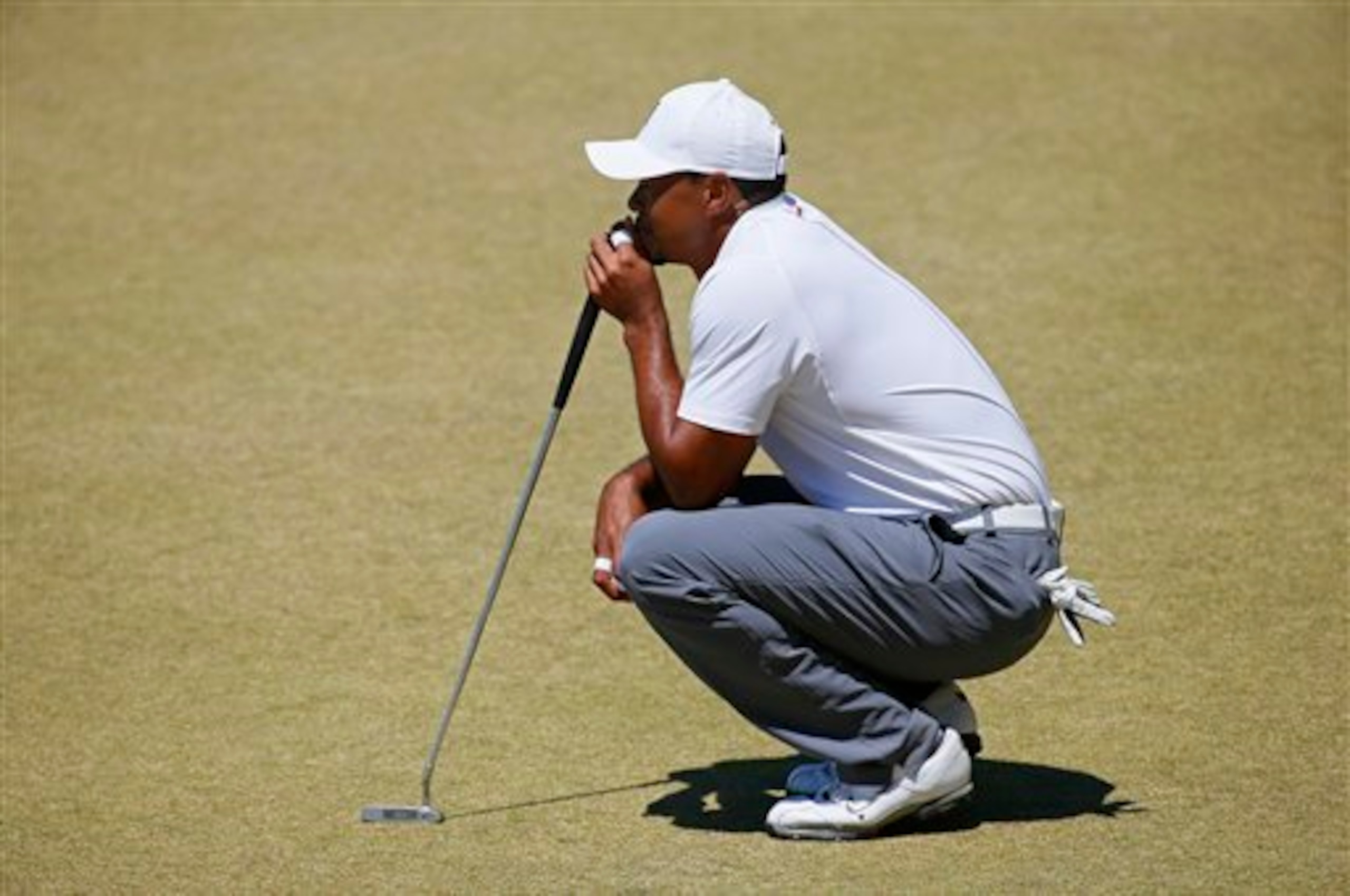
Tiger’s putting prevented him from capitalizing on the relatively few occasions in which he was able to escape the gnarly stuff with par (or a rare birdie) putt on the line.
In Round 1, he averaged 2.0 putts per hole—noticeably worse than the field average of 1.83 putts per hole. Even when he found himself with a rare birdie opportunity and measured the pace correctly, Tiger’s ball almost always drifted insultingly wide of the hole.
It would be easy to say Woods just didn’t have his putting mojo this week, but even the mojoless start to figure out the greens eventually.
In the second round, Tiger actually managed to get worse at putting. His average went from 2.0 to just a shade under 2.1, while the field’s average improved from 1.83 to 1.81 putts per hole.
Woods consistently two-putted on almost every hole. On most PGA Tour courses, putting that poorly would earn him even par (at best) only if he managed to play all the other aspect of his game flawlessly. At Chambers Bay this week, not one facet of his game was anywhere near his best—but his putting was the worst.
.jpg?w=2560 "Seahawks Chiefs Football")


Decision-Making: C-
4 of 5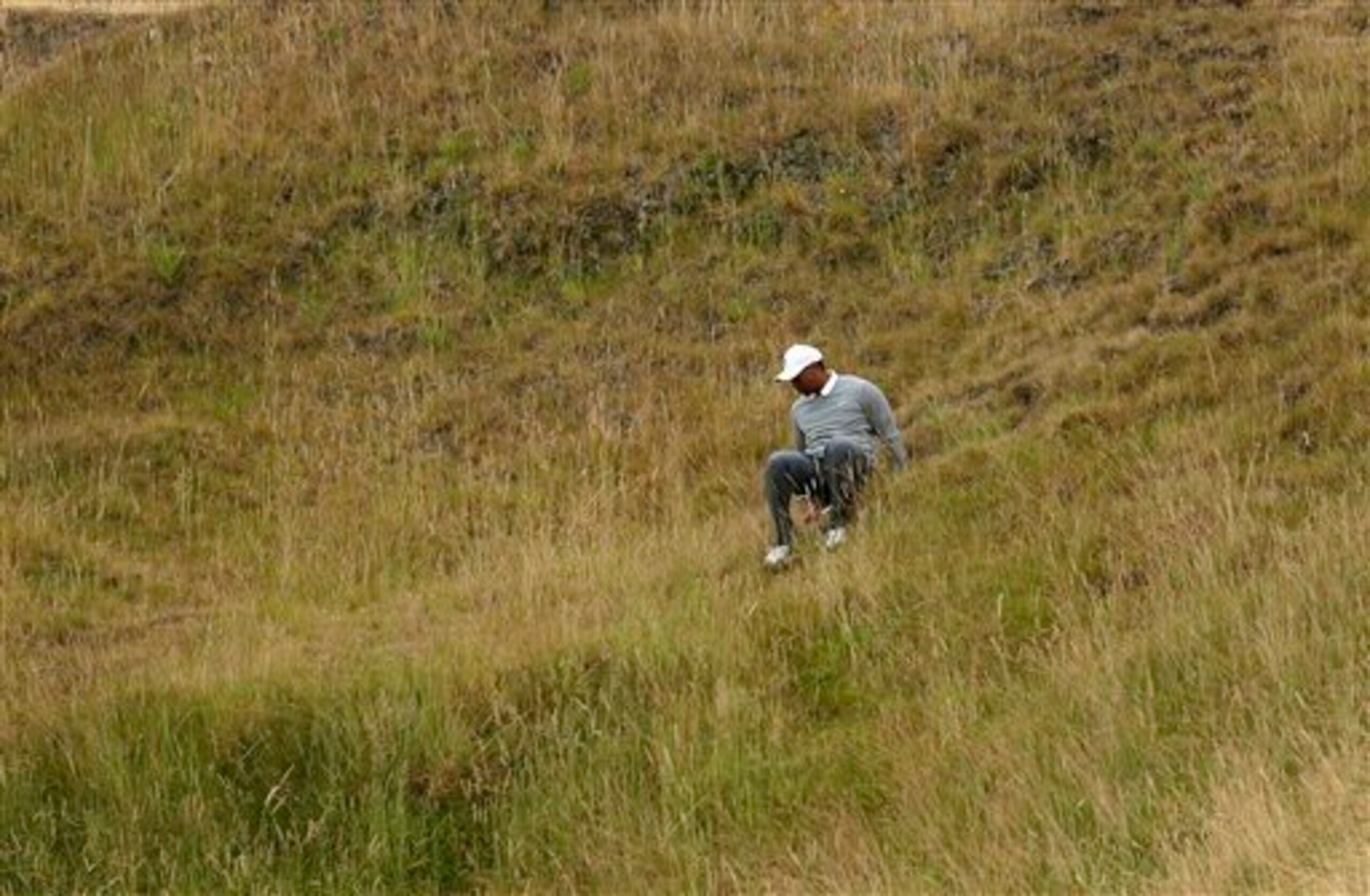
“Woods spent his Thursday doing a zombie-like stagger,” said ESPN’s Ian O’Connor, “wincing over missed putts and muttering to himself over bounces gone bad.”
The course at Chambers Bay is certainly a strange beast, but at no point did Tiger look like he was trying to tame it by playing his trademark aggressive game. Instead, Woods looked more like a wary biologist studying a dangerous new creature from afar.
“It's one of those things; just got to work through it,” Woods said, per ESPN’s Bob Harig. “I'm trying as hard as I can to do it, and for some reason, I just can't get the consistency that I'd like to have out there.”
It was a grind all the way that all began with his bogey on the first hole. Instead of dismissing his false start and beginning anew on hole No. 2, Woods seemed to embrace the grind as inevitability: A storm he, like a wayward sloop, could only hope to ride out rather than rally against.
When Tiger did get aggressive (like going for the green on the aforementioned par-four No. 12 in Round 2), he was able to steal a defiant birdie. These meager advances, however, were more than reversed the moment he decided to take a tentative iron off the tee and ended up in the rough.
The old Tiger would have tenaciously stuck to his trusted swing and powered through a bad hole or two in an attempt to break the course. But the 2015 Tiger at Chambers Bay seemed intent on finishing his march toward the cut without ruffling the course’s feathers.
By playing conservatively off the tee when he should have been bold and playing recklessly around the bunkers when he should have played smarter, Woods undid most of the brownie points he gained from driving any of the par-fours.
Overall Round: D-
5 of 5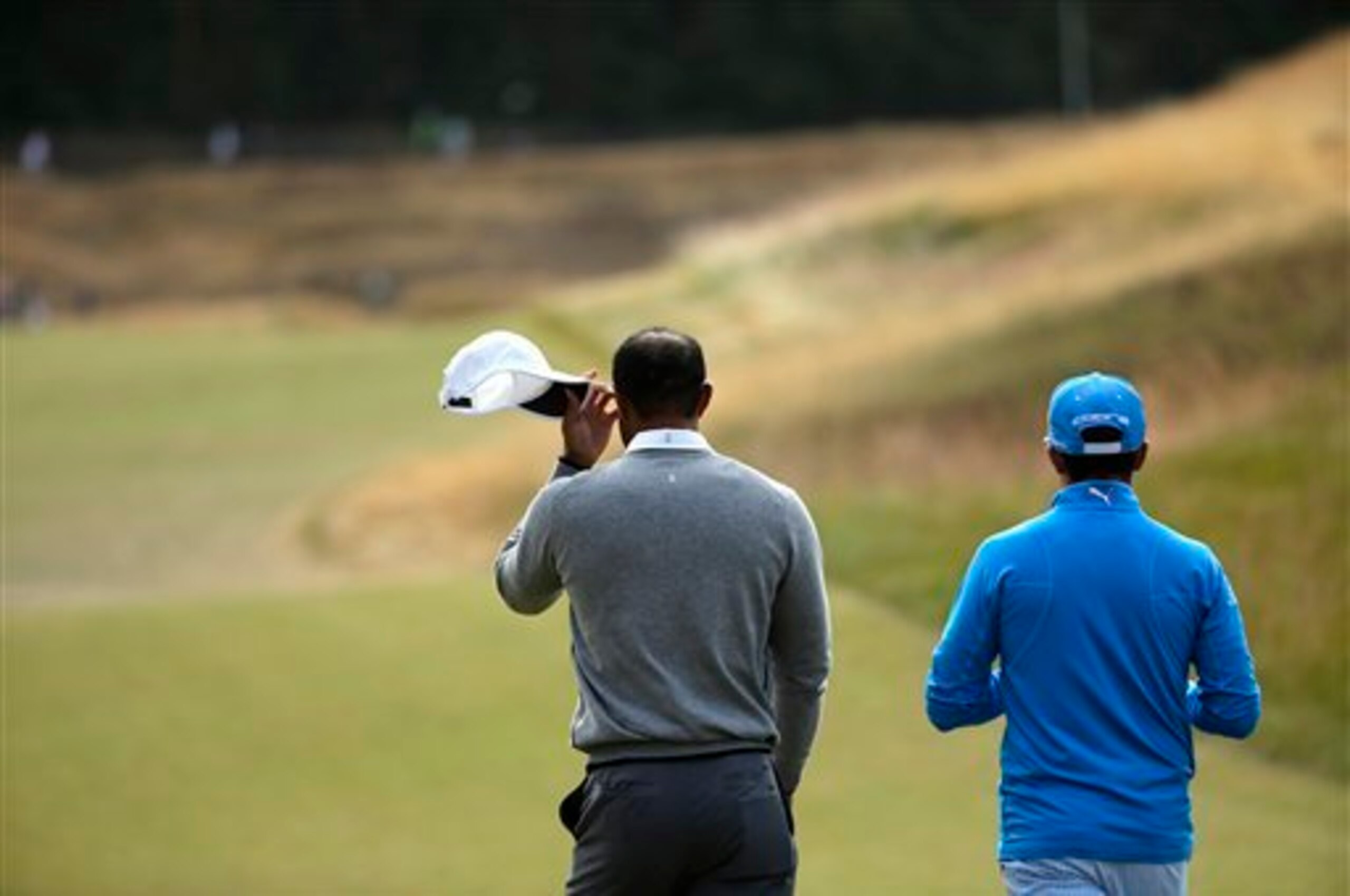
The fact that Tiger went 16 over par through just two rounds makes it difficult to give him anything but a failing grade for the 2015 U.S. Open. However, he earned the most minimal of reprieves by being slightly better in Round 2 than he was in Round 1.
There’s something to be said for hitting rock bottom and bouncing even a little the next day. Going from bad to worse warrants an F. Hitting rock bottom and duplicating the feat the next day deserves an F.
But finding a new low and climbing just one step higher the next day deserves a 1-point promotion from 59 percent to 60 percent.
Besides, if we didn’t pass him with a D-, then he’d have to repeat the course again next year—and we think we speak for everyone when we say no one wants to see that.