
Formula 1's Latest Rumours and Talk: Lift and Coast, Kimi Raikkonen, More
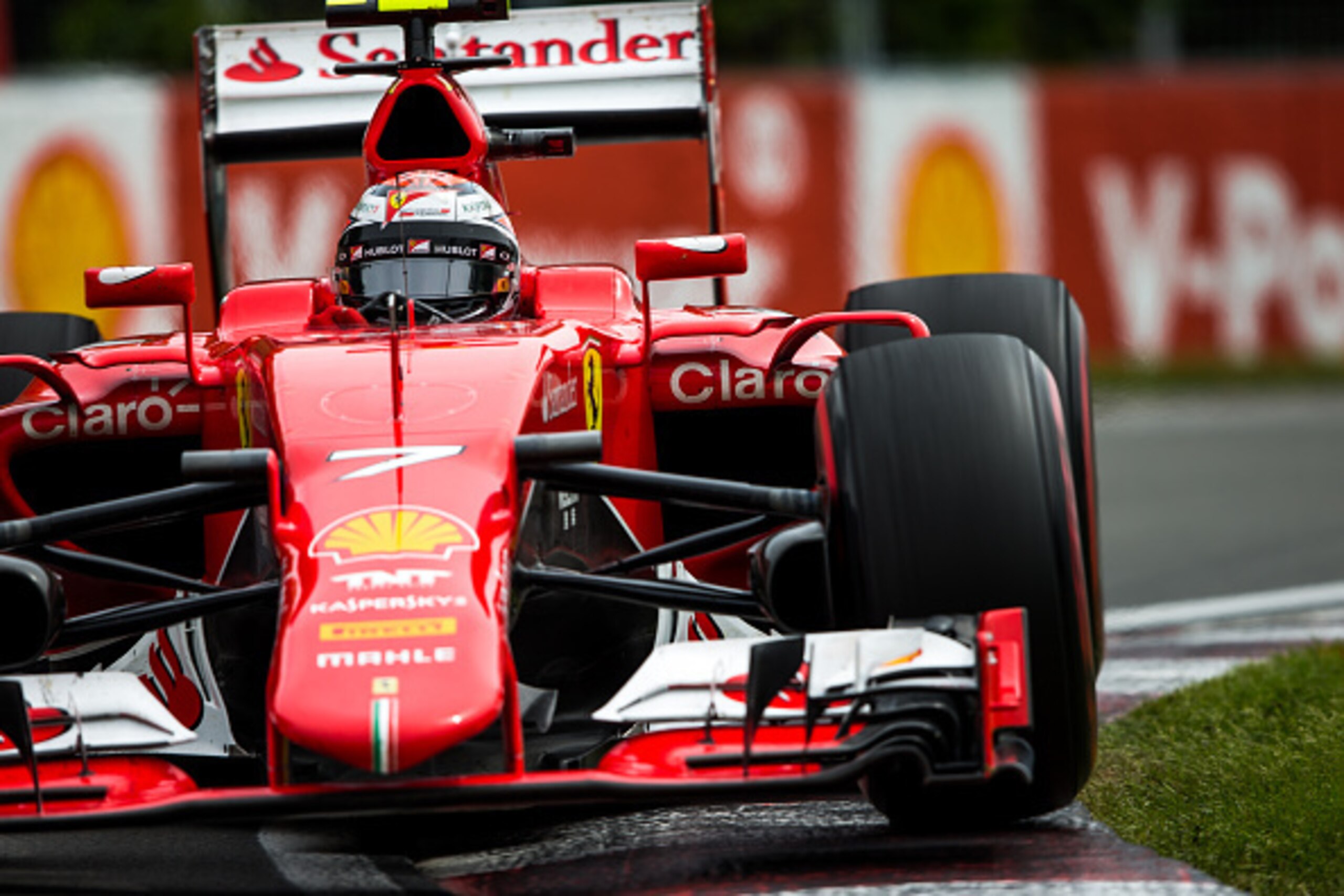
Ferrari boss Maurizio Arrivabene has revealed Kimi Raikkonen must perform to a certain standard if he wishes to keep his seat at the team in 2016.
The Finn has been outperformed by team-mate Sebastian Vettel thus far in 2015, largely due to poor qualifying displays. But Arrivabene says points, not poles, are what will matter when any decision on his future is made.
Raikkonen two-stopped in Sunday's Formula One Canadian Grand Prix, but most of his rivals opted for a single stop. Pirelli boss Paul Hembery admits this should not have been a realistic option but his company's tyres proved too durable.
With changes to the compounds highly unlikely before the end of the season, Pirelli may attempt to make things more interesting on the tyre front by introducing steps between the compounds—a selection of super-soft and medium, for example.
Elsewhere, McLaren racing director Eric Boullier believes Mercedes are willing to let their rivals catch up a little in the power-unit department, Christian Horner wants an end to fuel-saving and Red Bull drivers Daniel Ricciardo and Daniil Kvyat may face starting the Austrian Grand Prix from the back row of the grid.
Read on for a full roundup of the top stories from the last few days.
Kimi Raikkonen Must Work to Save His Ferrari Seat
1 of 5
Ferrari team principal Maurizio Arrivabene has indicated he is willing to keep Kimi Raikkonen for the 2016 season—but only if the Finn proves himself on the track.
Speaking to the official F1 website, Arrivabene said that providing Raikkonen met the targets given to him, he had every chance of being retained. Questioned on what those targets are, he said:
"A good performance. To add points to the team tally. I am working for a team with a strong tradition and Enzo Ferrari dictated this tradition. For Enzo Ferrari the constructors’ championship was always of greater value than the drivers’ title. So for us the constructors’ championship is very important.
To win this title you need both drivers delivering. I talked with Kimi straightforwardly, and he knows very well: the more points he can deliver, the better his chances to stay!
"
This response suggests Ferrari do not see Raikkonen as a driver who will challenge for the drivers' title; his primary target appears to be similar to that of drivers like Rubens Barrichello and Felipe Massa in the past, to simply add points to the team tally.
Given he has been outperformed by Sebastian Vettel, who the team brought in as their new star for 2015 onward, this isn't surprising.
Arrivabene was also asked whether he was looking at other drivers as potential replacements for Raikkonen. He didn't confirm or deny interest in others, responding:
"I am concentrating on our two guys right now and I know very well that if needed you can have a driver that is ready to jump in a Ferrari any minute. That is not a problem. The problem is to work with the driver that we have and make sure that he is giving us the best performance.
"
Though Raikkonen hasn't performed badly enough to warrant a lot of speculation over his seat—apart from in qualifying—it's possible that a younger replacement driver would perform to a higher level.
They would also jump at the chance to drive one of the red cars—something Arrivabene made a point of saying—and potentially provide the team with three or more years of stability. Such a driver would also be cheaper.
But Ferrari are in a good place with their current lineup. Their seemingly appointed "title challenger"—Vettel—gets on well with Raikkonen and appears happy with how things are.
Even if they think someone like Valtteri Bottas would be a significant improvement, it may be in their interests to hold off any boat-rocking decisions until the end of 2016.
Pirelli Boss Admits His Tyres Are Too Durable
2 of 5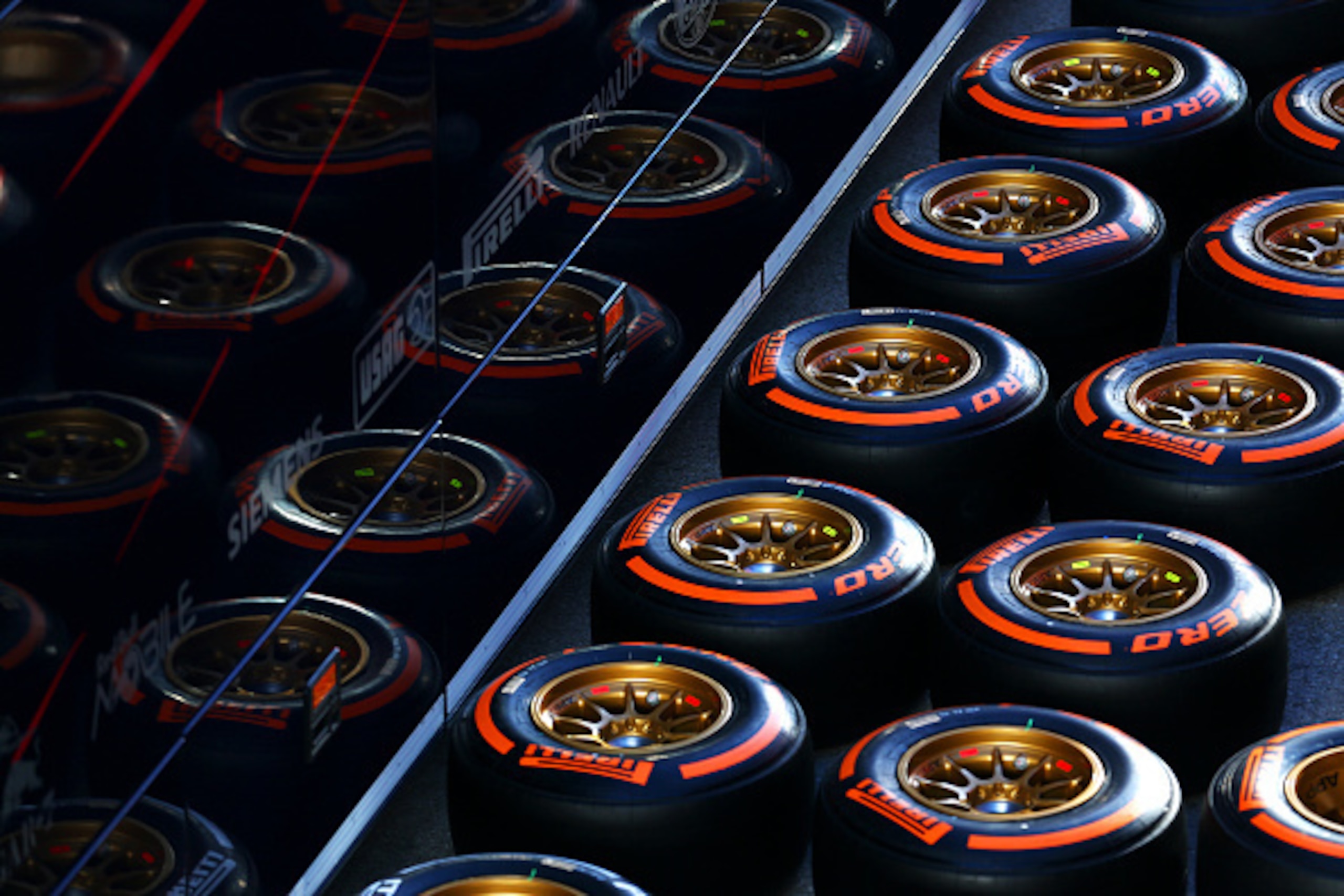
Pirelli boss Paul Hembery admits the tyre manufacturer may have made their tyres, especially the super-soft, too durable and could need to resort to unusual combinations to inject some drama into certain races.
The super-soft tyre performed extremely well in Canada, with Felipe Massa able to do a 33-lap stint on his way to sixth. The Brazilian was quicker than the two soft-tyre-shod Mercedes' over the duration of the stint and suffered no significant degradation.
Other drivers easily managed 25 to 30-lap stints on their own super-softs.
Speaking to F1i's Chris Medland about the tyres, Hembery indicated some selections may need to be changed from last season, saying:
"There’s not a lot you can do in reality this season. There’s maybe one or two races where you can do a step, that’s for sure, maybe you could do a double step to open up the gap between the compounds.
But by and large it looks like wear levels have been reduced so then people are getting even out of the softer tyres a lot more laps than we had anticipated this year.
"
A "double step" would mean a selection such as super-soft and medium, creating a much larger difference in the durability and speed of the two nominated compounds. More strategic variation would therefore be expected.
Judged on what they are supposed to be doing—producing fast-wearing tyres that lead to races with at least two stops—Pirelli got it right in 2014. One stop was the favoured strategy for only three races—Monaco, Italy and Russia.
The 2015 season has already seen three races in which one stop was sufficient—Australia, Monaco and Canada. But both Malaysia and Spain, races that saw the medium and hard compounds used, were split between two or three stops.
With such a wide variety of circuits, getting it right for all of them with just four different tyre compounds to choose from is proving impossible.
The medium and hards appear to "work" at the circuits they're designed for, while the soft and super-soft are too conservative for some of their target tracks—but not all of them.
Allowing Pirelli to create a fifth compound step, softer than the current super-soft, may be a simple and effective solution.
Christian Horner Calls for an End to 'Lift and Coast'
3 of 5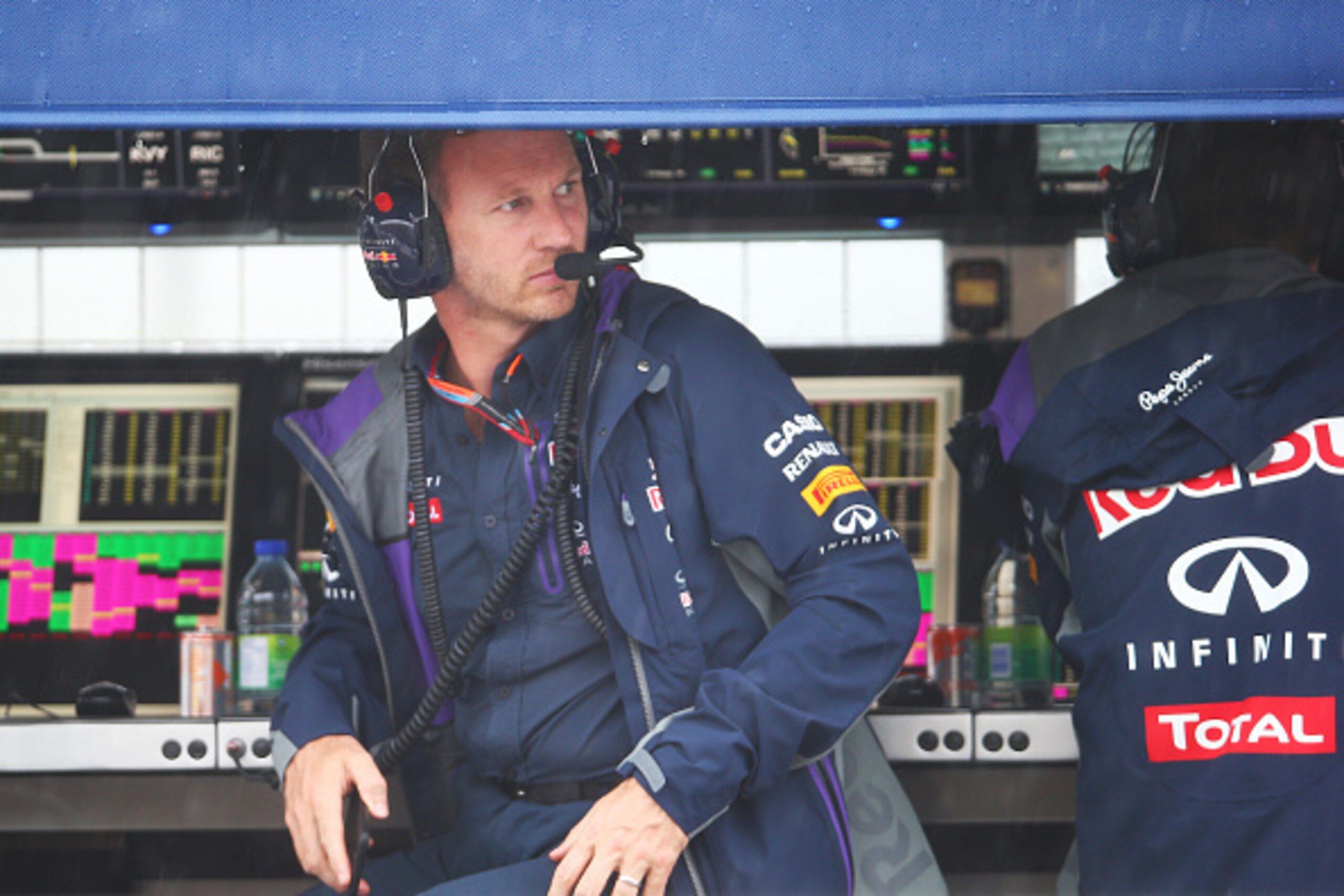
Red Bull team principal Christian Horner has hit out at the ever-increasing importance of fuel-saving in F1.
The Canadian Grand Prix was blighted by drivers being forced to "lift and coast" for large portions of the race. This involves lifting off the throttle long before the corner and "coasting" in before applying the brakes.
It's an effective way to reduce fuel consumption but does not produce exciting, on-the-edge racing and reduces the lap-by-lap challenge for the drivers.
Horner feels this is wrong. After also stating he felt one-stop races were bad for the sport, he was quoted by Autosport saying:
"The other thing not good for Formula One is fuel-saving. It should be a sprint race. Lift and coast doesn't belong in a sprint race. That's not the message Formula One should be putting across.
I'd either shorten the race by five laps, or whatever, or increase the amount of fuel, but it needs to be a flat-out sprint race from start to finish.
If you are a fan sitting at home watching that, you don't want to hear that [lift and coast radio messages].
You want to see the guys going flat-out racing each other, so it's something we need to take on board and react to.
"
Canada was unusual because the entire 100-kilogram maximum fuel allowance is needed to complete the distance—this made everyone marginal on fuel and with no option to add a bit more for safety. The lack of a safety car, often a feature in Montreal, didn't help.
Almost every other race on the calendar needs less than the limit, but lift and coast and fuel management still happens. This is because fuel adds weight, and weight adds tenths to lap times—under-fuelling the car and saving some during the race is quicker than starting with enough fuel to push all race long.
Were race lengths reduced by five laps, the teams wouldn't use the extra fuel to push—they'd just take five laps of fuel out of the car.
The only way to eliminate fuel-saving entirely (or almost entirely) would be to force the teams to carry more from the start—there would need to be a conservative minimum fuel load as well as a maximum. It wouldn't be at all difficult to decide what this figure would be on a race-by-race basis—for example, a lower minimum would be needed for Monaco than for Canada.
If Horner truly wants sprint racing, maybe he could bring this up at the next Strategy Group meeting. It could be something everyone agrees on.


Eric Boullier Believes Mercedes Will Agree to Engine Upgrade Changes
4 of 5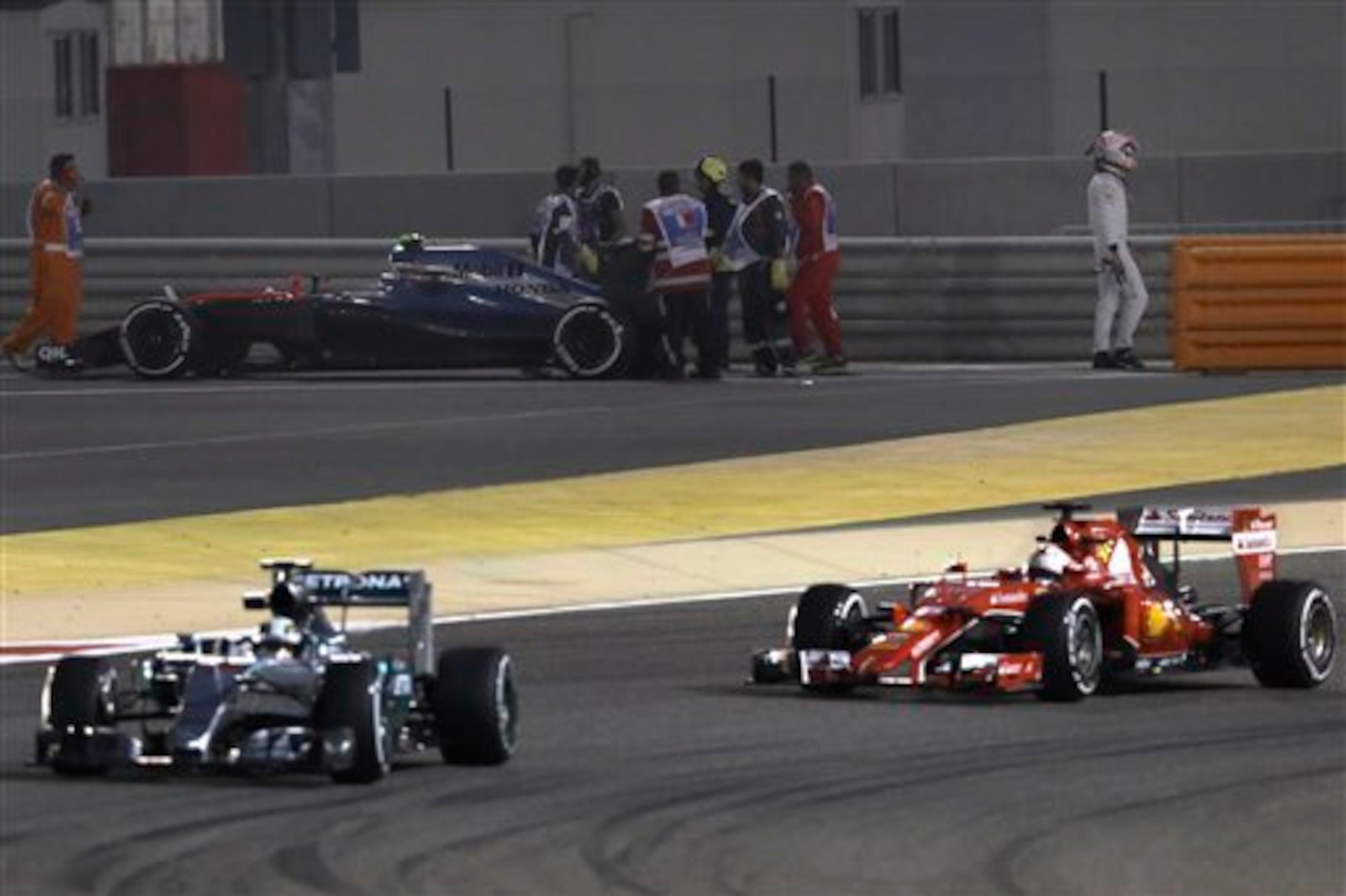
McLaren racing director Eric Boullier believes Mercedes will accept that something needs to be done to allow the other engine manufacturers to catch up.
Under the current regulations, any development is highly restricted. A token system is used, allowing each manufacturer to make a certain number of changes each year. This was agreed by all parties with the primary aim of cost-saving.
However, Renault and Honda have found themselves a long way behind Mercedes, who possess the best engine, and Ferrari. Catching up under the token system—especially as in-season development will not be possible in 2016—could prove impossible for these manufacturers.
With development on next year's engines ceasing on February 28th, they'll be locked in for another season with no hope of competing.
But Boullier is confident some kind of compromise can be agreed. He is quoted by Autosport, saying:
"It's all about negotiating. They are willing to listen, to be honest. They are already, and having talked to Toto and Niki they are concerned about Formula 1 itself.
I'm sure there is some room for change. You just need to look at the whole picture. The position is clear. We want to have as much room as possible because F1 has become an engine formula, and it's too much now.
Looking at the situation, with the chassis you can develop that when you want; engine, you are locked into a situation and now engine manufacturers cannot recover or compete fairly, let's say.
Of course, the regulation is the same for everybody, and everybody knew the regulation beforehand, but there needs to be a degree of flexibility for that. It needs to be changed. We cornered ourselves in Formula One with this regulation, but now we need to be clever to rethink how to change it.
"
Mercedes—and to a degree in 2015, Ferrari—earned their advantage. They did the best job under regulations agreed by everyone and deserve the success their hard work and investment has produced.
However, this advantage cannot be locked in indefinitely. As Boullier says, some flexibility is needed if we're to avoid the situation of certain teams being permanently hamstrung because their engine partner was slow out of the blocks.
If Honda and Renault are capable of catching up under the existing regulations, they should get their heads down and do it. That's what Ferrari did.
But if it truly is not possible for them to make up the ground, it's reasonable to throw them a bone at some stage. Not the "equalisation mechanism" that ESPN reported Red Bull's Christian Horner calling for at the start of the season, but a system that at the very least allows them to make up some of the power deficit.
As long as the cost of whatever development they do is not passed on to their customer teams, such a move would do no one any harm.
Red Bull Could Be Set for the Back Row at the Austrian Grand Prix
5 of 5
Red Bull could be set to start the Austrian Grand Prix—their home race—on 21 June from the back row of the grid.
Boss Christian Horner had said before the Canadian weekend that he hoped to avoid penalties at the next two rounds. He told the BBC (h/t motorsport.com) taking a penalty in Canada would be better than in Austria, adding:
"Especially as it's our home race! That will go down well, two cars at the back of the grid. Yes you're right, but the bottom line is we've got to take them as and when they're required.
We didn't expect to have used four engines to this point.
Hopefully now they've [Renault] understood the issues a bit better and the engines are behaving a bit more normally we should be able to get through this, and possibly one more race.
"
However, it seems this is not the case. Auto Motor und Sport (h/t Grandprix.com) quotes Horner stating that a "tactical" penalty in Austria makes sense. He is further quoted, "We must expect that we will be on the last row of the grid."
Despite his optimistic words pre-race, this isn't entirely unexpected.
Sky Sports F1's David Croft reported during the channel's televised live coverage of Friday's first practice for the Canadian Grand Prix that Horner had told him the team were aiming to take engine penalties in Austria.
Croft's colleague Ted Kravitz then theorised that Red Bull could be doing this for non-sporting reasons, saying, "I think they want to make a point on home ground."
Who would benefit from having such a point made is unclear, but it'll be interesting to see if the two RB11s do indeed line up 19th and 20th at the Red Bull Ring.



.jpg?w=2560 "Latest Peyton-Colts Rumors")