Mike Tyson and 5 Other Heavyweights Who Carried on for Too Long
Mike Tyson was given the nickname "The Baddest Man on the Planet" for a reason.
In his prime, he was the undisputed heavyweight champion of the world. He won his first 37 professional fights, the vast majority of them inside the distance.
He was a fearsome puncher, but the one opponent Iron Mike couldn't beat was Father Time.
Financial problems (Tyson had to file for bankruptcy) forced him to carry on his career when he was well past his peak, leading to defeats that tarnished both his record and reputation.
On June 11, 2005, the American quit on his stool against Kevin McBride. It was the end of the line—he retired after his 58th fight, a shadow of the man who had once dominated the division.
However, Tyson is not the only heavyweight who opted to keep extending their careers beyond their expiry date.
Here we look at five big men who, like Tyson, carried on boxing when their best years were behind them.
Evander Holyfield
1 of 5(Warning: The above video contains profanity).
Evander Holyfield was an undisputed champion at cruiserweight before making the move up.
As a heavyweight he was just as dominant, at one stage holding the IBF, WBA and WBC titles.
He registered two wins over Mike Tyson, albeit the second of them came about due to a disqualification after he had been bitten by his rival.
However, an ageing Holyfield was well over the hill by the time he was beaten by former middleweight world champion James Toney (more on him to come) in 2003.
The problem was, though, that the Real Deal needed to keep going for financial reasons.
He lost nearly all of his earnings, telling Martha Kelner of the Daily Mail: "You make a lot of money but you don’t know how money works, you don’t know how to calculate. I gave more than I should have. I gave, gave, gave. People talk you into doing things that you’re not accustomed to doing."
Carrying on to cover maintenance payments for his 11 children, Holyfield fought until he was 48 years old.
He actually finished with a win, beating Brian Nielsen in Denmark, meaning his final record stood at 44-10-2 with one no-contest.
James Toney
2 of 5James Toney started out at middleweight but worked his way all the way up to the top division.
Lights Out had appeared to follow in the footsteps of Bob Fitzsimmons and long-time rival Roy Jones Jr. in moving through the ranks to win a world title at heavyweight.
However, his victory over John Ruiz for the WBA title was later changed to a no-contest by the New York State Athletic Commission after Toney tested positive for a banned substance.
He returned after a 90-day ban but defeats began to pile up. There were two in a row to Samuel Peter, while a trip to Russia to take on Denis Lebedev saw him shut out on the scorecards.
Toney carried on fighting until 2013, his last appearance coming as a contestant in the Prizefighter series in England.
At the age of 45, the American came through a quarter-final against Matt Legg before losing to compatriot Jason Gavern on points.
It was a sorry sight to see him as the shell of the man who had been so dominant in the early years, albeit at a lighter weight.
Larry Holmes
3 of 5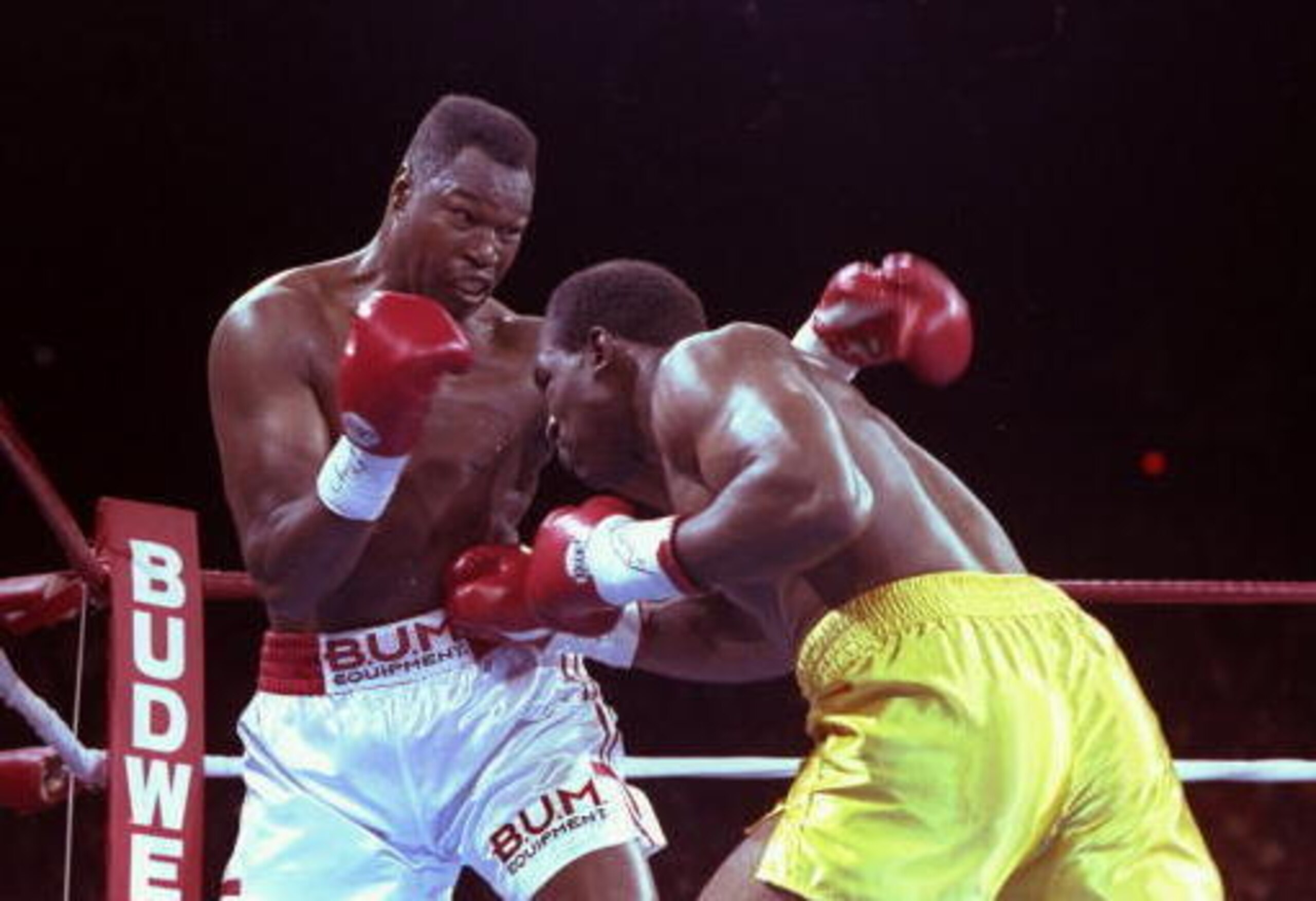
Larry Holmes was 42 when he lost to Evander Holyfield in 1992. It would be another decade before the Easton Assassin would finally hang up his gloves.
A victory over Eric "Butterbean" Esch was the final chapter in Holmes' never-ending story, meaning the man with the meanest left jab, per Thomas Gerbasi of boxingscene.com, finished with a 69-6 (44 KO) record.
He had won his first 48 professional fights, only falling short of equalling Rocky Marciano's 49-0 mark when he lost to Michael Spinks in 1985.
A rematch saw Holmes fail to regain the IBF title after an extremely close fight, and he decided to call it quits.
Holmes said after the second loss to Spinks, per the LA Times: "I'm 50-0. People know it. They can question the 49th (the outcome of the first Spinks fight), but they can't question the 50th."
However, retirement wouldn't last long. He was tempted back into the ring in 1988 to fight Mike Tyson, but he suffered the first stoppage defeat of his career.
He hung up his gloves again, only to be back in action in 1991. He worked his way into a position to challenge Holyfield for the IBF, WBA and WBC belts, but he could not live with the younger fighter.
Holmes would also lose to Oliver McCall and Brian Nielsen in bids to become WBC and IBO champion respectively, before seeing out his career in a series of 10-rounders.

.jpg?w=2560 "Seahawks Chiefs Football")
Audley Harrison
4 of 5When Audley Harrison struck gold at the 2000 Olympics in Sydney, it seemed only a matter of time until he would become a world champion as a professional.
The British boxer signed an exclusive contract with the BBC when he joined the paid ranks in 2001, then proceeded to reel off 19 straight victories.
Yet Harrison never hit the same heights in the heavyweight division. Instead, he began to hit the canvas.
His first loss came at the hands of Danny Williams in 2005, and although he avenged that defeat, the signs were there that his amateur talents were not going to translate into success as a pro.
He was knocked out by Michael Sprott in 2007, leading to promoter Frank Warren saying, per Ben Dirs of BBC Sport: "If he decides to fight on, it'll be a long, hard road."
Harrison did fight on, yet his best moments came in the Prizefighter Series, an eight-man tournament that took place on one night. The format—three-round bouts—suited the southpaw to a tee.
Twice he won the event, raising his profile again. His success also opened doors, but he was badly beaten by British rivals David Haye and David Price.
Deontay Wilder flattened him inside a round in 2013, leading to Harrison announcing his retirement.
He threatened a comeback, but health issues ruled out a return to the ring.
Muhammad Ali
5 of 5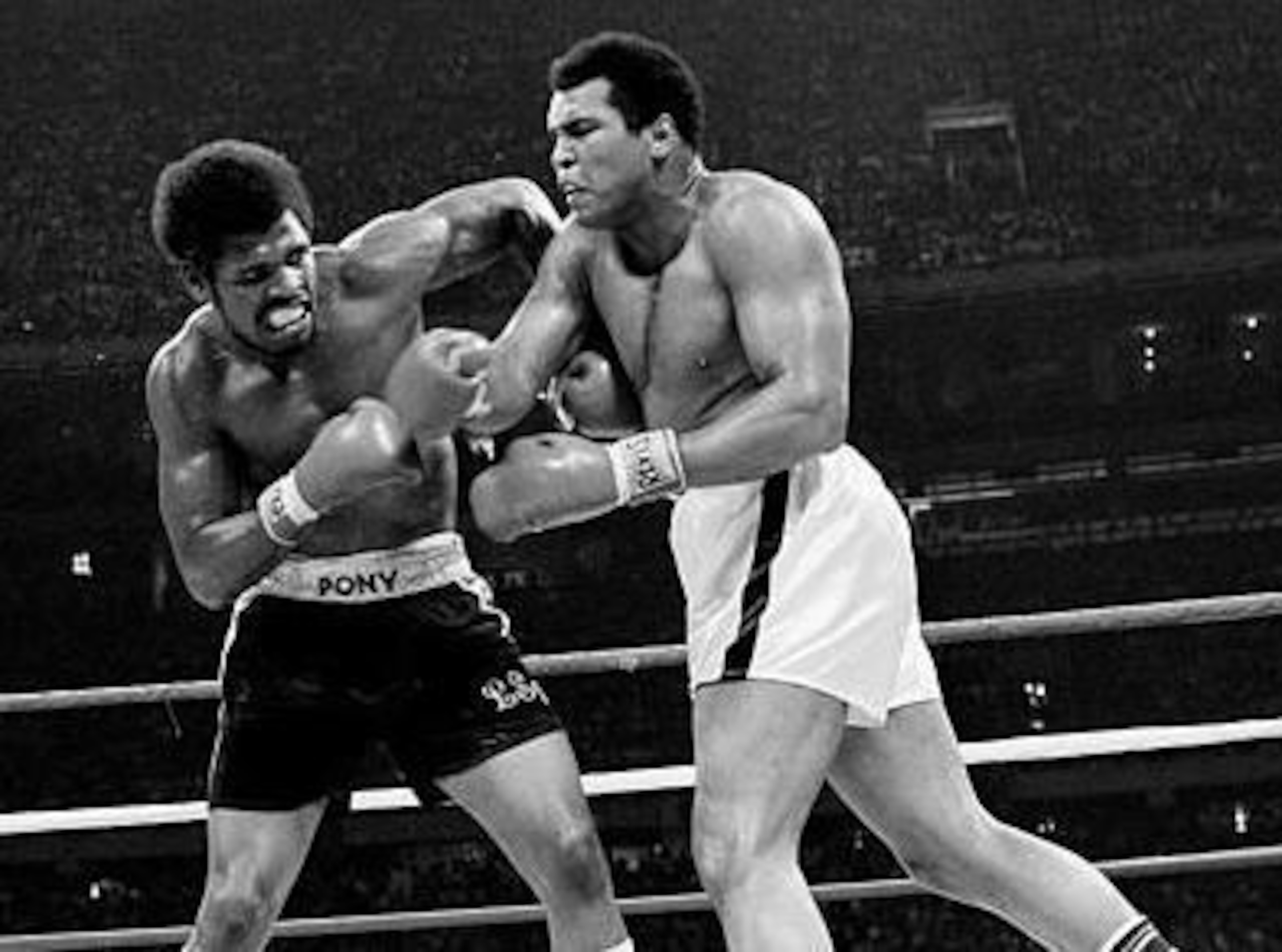
The story of Muhammad Ali's career is well known: the rise into a sporting icon, the stints as world champion, the historic wins and classic fights and, sadly, the decline.
The Greatest made history when he avenged a defeat to the inexperienced Leon Spinks, in the process regaining the WBA and WBC titles and becoming the first three-time lineal champion.
He announced he was hanging up his gloves in the summer of 1979, though his retirement did not last for long.
In 1980, at the age of 38, he returned to action to take on Larry Holmes, a former sparring partner who now held the WBC belt.
The boxer from Louisville did, as ever, talk the talk before the first bell. He said ahead of the bout with Holmes (h/t Thomas Hauser in the Guardian):
"I'm dedicating this fight to all the people who've been told, 'you can't do it'.
People who drop out of school because they're told they're dumb. People who go to crime because they don't think they can find jobs. I'm dedicating this fight to all of you people who have a Larry Holmes in your life.
I'm gonna whup my Holmes, and I want you to whup your Holmes.
"
But, as Hauser noted in the same article, it was a "horrible night" as Holmes hammered away until Ali retired after the 10th round.
Sadly, that wasn't the end of the line. Ali fought just once more, in 1981. His opponent was Trevor Berbick, with the event staged in the Bahamas.
It went the full 10 rounds, with Berbick winning easily by decision. Ali afterwards said, per Gareth A. Davies of the Telegraph: "Father Time has finally caught up with me and I'm gonna retire. And I don't think I'm gonna wake up next week and change my mind."