
Ranking the Greatest Le Mans Races in History
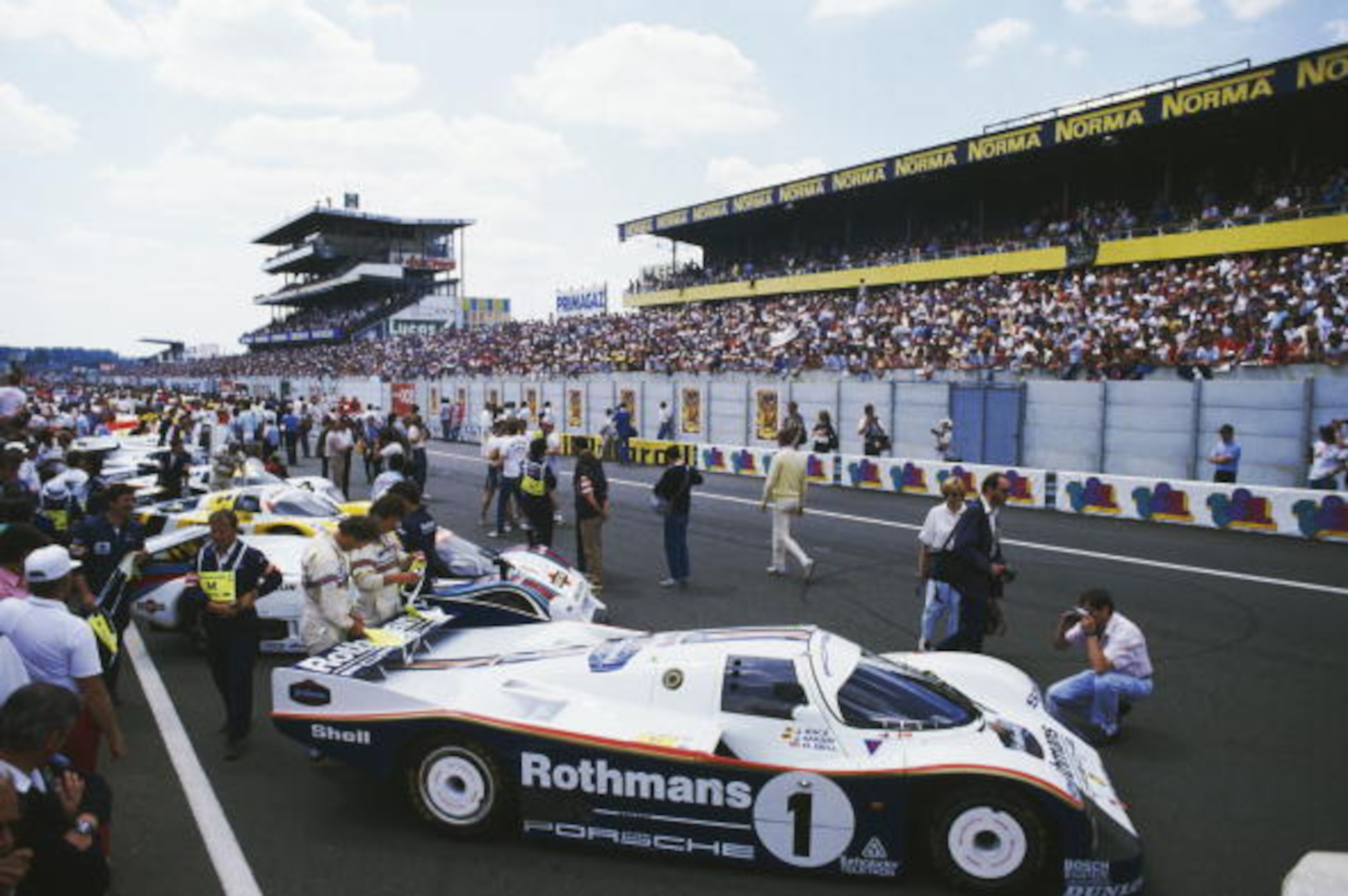
The 24 Hours of Le Mans is one of the most prestigious events in the annual motorsport calendar, and the clock is ticking down before Saturday sees the 83rd running of the event get underway.
The oldest endurance car race in the world sees Circuit de la Sarthe open its gates to the elite this weekend, and fans can only hope for another classic to unfold.
Le Mans demands its drivers balance speed and composure in equal measure, a pursuit that's led to a long list of memorable moments down the decades.
Read on for a countdown of those greatest editions ever to have materialised from the 24 Hours of Le Mans, with excitement and drama alike in no short supply.
9. Audi Demonstrate Dominance in Record-Breaking Clean Sweep, 2010
1 of 9Winner: Audi
Audi may have been latecomers to the spectacle of Le Mans, but they're certainly making up for lost time since discovering a dominant streak over the past 15 years.
Twelve of those races at La Sarthe have been claimed by an Audi team, but 2010 was a particularly memorable win, not least because it saw the distance record broken—and it's yet to be surpassed.
That year reached a new record of 5410.71 kilometres, almost 30 kilometres more than what was managed at the 2014 edition, but Audi will remember it for another reason, too.
The manufacturer took a clean sweep of the top prizes to clinch a 1-2-3 finish and only three laps separated first from third; to put their daunting pedigree into context, Team Oreca in fourth finished 25 laps further back (369).
Having now won the last five 24 Hours in succession, Audi are showing no signs of relinquishing their grip on the competition, and it was five years ago in particular that their rise reached a considerable peak.
8. The Bentley Boys Fly Britain's Flag, 1924
2 of 9Winner: Bentley
The French unsurprisingly dominated the field of the inaugural 24 Hours of Le Mans in 1923, but in fourth spot sat the rebellious pair of Capt. John Duff and Frank Clement, determined to do better.
It would take them only one more attempt to do so, and as the Canadian/British pair took to the Circuit de la Sarthe once more in their Bentley 3-Litre Sport, this attempt turned up huge rewards.
The 1924 race clocked up a total distance of just over 2077 kilometres, the lowest ever recorded at Le Mans and less than half what drivers rack up in today's incarnations.
It was a simpler time, but Britain's "Bentley Boys" by no means valued their glory any less, giving the manufacturer the first of five victories before World War II.
7. Tom Kristensen Makes It Six in a Row, 2005
3 of 9Winner: Champion Racing
It used to be that Jacky Ickx's old record of six victories at Le Mans was looked upon as something of a superhuman feat, but Tom Kristensen left that accolade in his rear-view mirror long ago.
Most recently emerging as winner in 2013, the Dane has a total nine crowns to his name, but 2005 will go down as an especially memorable triumph—the last of his six in succession, starting in 2000.
"Mr. Le Mans" gave America their first winning team at the Circuit de la Sarthe since the Shelby band of 1967, and what made the result quite special is that even with Kristensen recruited, they were still marked underdogs.
The 2005 edition was also the close of a chapter, one might argue. A decade on and factory teams have a monopoly over Le Mans, with there being no place for private, smaller groups, it seems.
In that sense, the race has lost some of its spirit, some of the humility that always made it such a spectacle for the public to enjoy, but Kristensen, alongside driving partners JJ Lehto and Marco Werner, will savour 2005.

6. Mazda Enter Japan into the History Books with Rotary Engine, 1991
4 of 9Winner: Mazda
If ever there was a fitting depiction of David triumphing over Goliath at Le Mans, Mazda's maiden victory of 1991 told a story of the underdog turning the tide after more than a decade of trying in vain.
With Mercedes, Porsche, Jaguar and Peugeot all in the field, Mazda weren't given much hope in the buildup to that year's 24 Hours, especially with a rotary engine many perceived to be significantly inferior to the normal piston design.
However, what transpired was Japan's first and only Le Mans victory, not to mention the only victory ever recorded by a rotary engine, with that design being banned after the 1991 result.
Johnny Herbert, Bertrand Gachot and Volker Weidler were the team behind the wheel of the Mazda 787 and the accompanying R26B, which was late arriving.
For everything that seemed to go wrong for Mazda prior to the race, it all of a sudden seemed to come together when it mattered most, a race of firsts and lasts in equal measure.
5. Graham Hill Completes the Triple Crown, 1972
5 of 9Winner: Matra
Manufacturer Matra had a historic day of ups and downs at La Sarthe in 1971, claiming the top prize on offer thanks to Graham Hill's prolific steering but also seeing one of their teams out before even three laps were complete.
Jean-Pierre Beltoise and Chris Amon led from the start, but their V12 broke and caused disarray among the other Matra teams, Hill and Henri Pescarolo included.
Heavy title-contender Joakim Bonnier looked likely to challenge in his Lola T280 and was on track to do so as Hill exchanged the lead overnight, but tragedy struck in the early hours of Sunday, June 11, 1972.
Heading toward Indianapolis Curve, Bonnier came into contact with Florian Vetsch's Ferrari GTB4, going over the barriers and to his death after colliding with the trees below.
This allowed Hill to take the win and complete his Triple Crown, having also won the Formula One championship and Indianapolis 500 in his career.
The accolades clearly didn't go to Hill's head, though, as he allowed team-mate Pescarolo to take the last session of 1972 and "officially" win France's greatest race in a French-made car.
4. Star-Studded Field Aligns for 'Greatest Line-Up Ever,' 1999
6 of 9Winner: BMW
As thrilling as it is to see a superpower in full flight, competition is what's at the very core of racing, and in that sense, things don't get much better than 1999.
Audi were only in their infancy as a competing brand, while Mercedes-Benz, Toyota, Nissan and eventual winners BMW completed what was a grid stacked with quality.
BMW's V12 LMR beat Toyota by just a single lap, and Audi could be proud with their finish of third, showing just how open the race was throughout.
The 1999 race is also infamous for the design flaw present in Mercedes' CLR, which saw drivers Mark Webber and Peter Dumbreck take flight at different points in the warm-up and race, respectively.
3. The Beginning of the Porsche Revolution, 1970
7 of 9Winner: Porsche
No team has had greater success at the Circuit de la Sarthe than Porsche, proud owner of 16 Le Mans trophies, the most recent of which fell all the way back in 1998.
It's therefore staggering to believe the brand didn't clinch its first Le Mans title until 1970, where the team's 917K was leagues ahead of the competition, a phenomenal way to announce their arrival as serious contenders.
The victory had major sentimentality behind it. Just a year previous, John Woolfe died at the 1969 edition of Le Mans largely as a result of the aerodynamic instability of the 917.
With those concerns mostly resolved, Hans Herrmann and Richard Attwood rose to capture the title in 1970 by a distance of five laps, the first of Porsche's 16 wins across the next 28 years—a remarkable record.
2. The McLaren F1 GTR Turns the Tables, 1995
8 of 9Winner: McLaren (Lanzante Motorsport)
Winning the 24 Hours of Le Mans is something that requires a team of world-class driving skills, obviously, but it also requires the tools necessary for victory—or at least so was thought until 1995.
The McLaren F1 GTR was viewed as different to the rest of the field for all the wrong reasons; a glorified road car in essence that shouldn't have stood any hope of competing against the prototypes.
Such was the general disposition, but rain conditions lent themselves well to the GTR, which emphasised its strengths in reliability over sheer speed alone.
The team of Yannick Dalmas, Masanori Sekiya and Lehto trailed the David Price team of Derek Bell, son Justin and Andy Wallace for much of the race, but a bearing failure gave the victors their opening—and the rest is history.
1. Jacky 'The Tortoise' Ickx Takes It Slow and Steady, 1969
9 of 9Winner: J.W. Automotive Engineering
The 1969 race is as well-remembered for its start as much as its finish, where Ickx famously walked across the dangerous track and took his time belting up in an act of defiance against the old safety regulations.
Up until that year, cars were parked opposite the pit wall and it was a race to even get off the line before one's competitors, but such distractions didn't faze Ickx.
With full intent, the Belgian set off in the Ford GT40 from the back of the field, but somehow managed to defy the odds and claim first place, proving his point in the process.
The Le Mans start was revised the following year, and 1970 saw drivers start the race already sat and belted into their vehicles, arguably one of the most positive advancements for safety in the sport.
It was also incredible Ickx had the guile to pull the stunt given this race brought him the first of his six Le Mans titles, the beginning of a motorsport legacy.

.jpg?w=2560 "Weather Channel Trolls Texans-Titans 💀")

.jpg?w=2560 "Report: Seahawks Not Signing Mixon 😯")