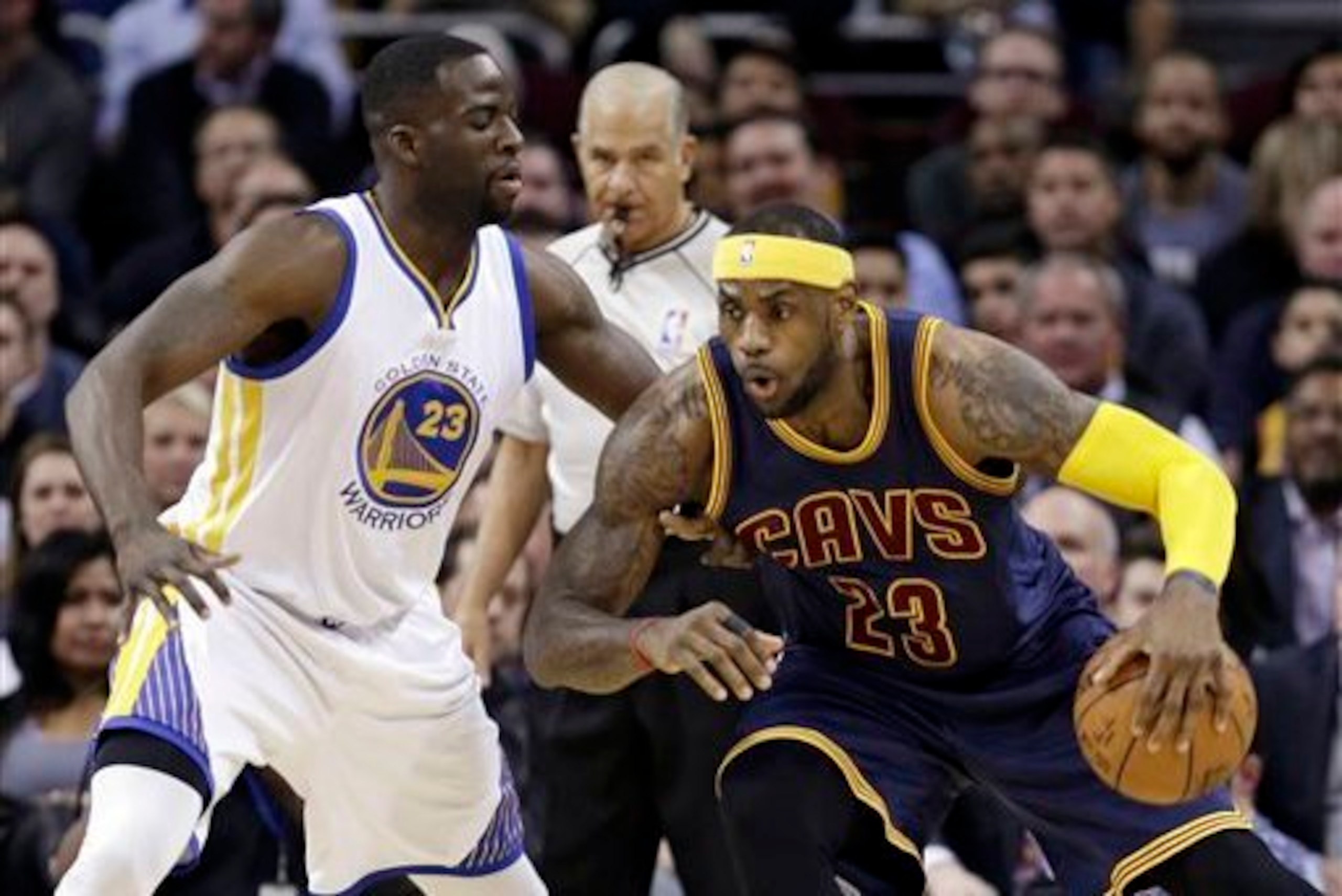

NBA Finals 2015: Complete Preview and Breakdown of Warriors vs. Cavaliers
The 2015 NBA Finals isn't a place for Davids.
The playoffs have been long, painful and, at times, downright brutal to watch, but the two best teams emerged from the fray, basketball's two Goliaths: the Cleveland Cavaliers and Golden State Warriors.
LeBron James is four wins away from the perfect homecoming tale. The city of Cleveland is just four wins away from the end of a 41-year stretch of futility and agony.
The Warriors are back in the NBA Finals for the first time since 1975, carried by a babyfaced 27-year-old with the sweetest stroke anyone's ever seen.
Both cities hunger for a crown, for a parade, for a banner that proclaims their team "NBA Champions."
The upcoming battle will be like nothing we've witnessed in NBA Finals history.
Neither head coach has ever coached a single NBA Finals game in his life, though Steve Kerr has a handful of rings from his years playing with the Chicago Bulls and San Antonio Spurs, while David Blatt claimed last year's Euroleague championship.
Our two stars consist of the League's newest hero and MVP and a divisive King still looking to ascend to the highest of all thrones.
It's the matchup basketball deserves, but it's also the matchup basketball needs.
With both teams resting and planning before Game 1's June 4 tip, here's a look at some of the most intriguing matchups, storylines and trends heading into the basketball world's ultimate showdown.
All statistics courtesy of NBA.com and Basketball-Reference.com unless otherwise noted.
Golden State's Three-Point Shooting vs. Cleveland's Defensive Discipline
1 of 6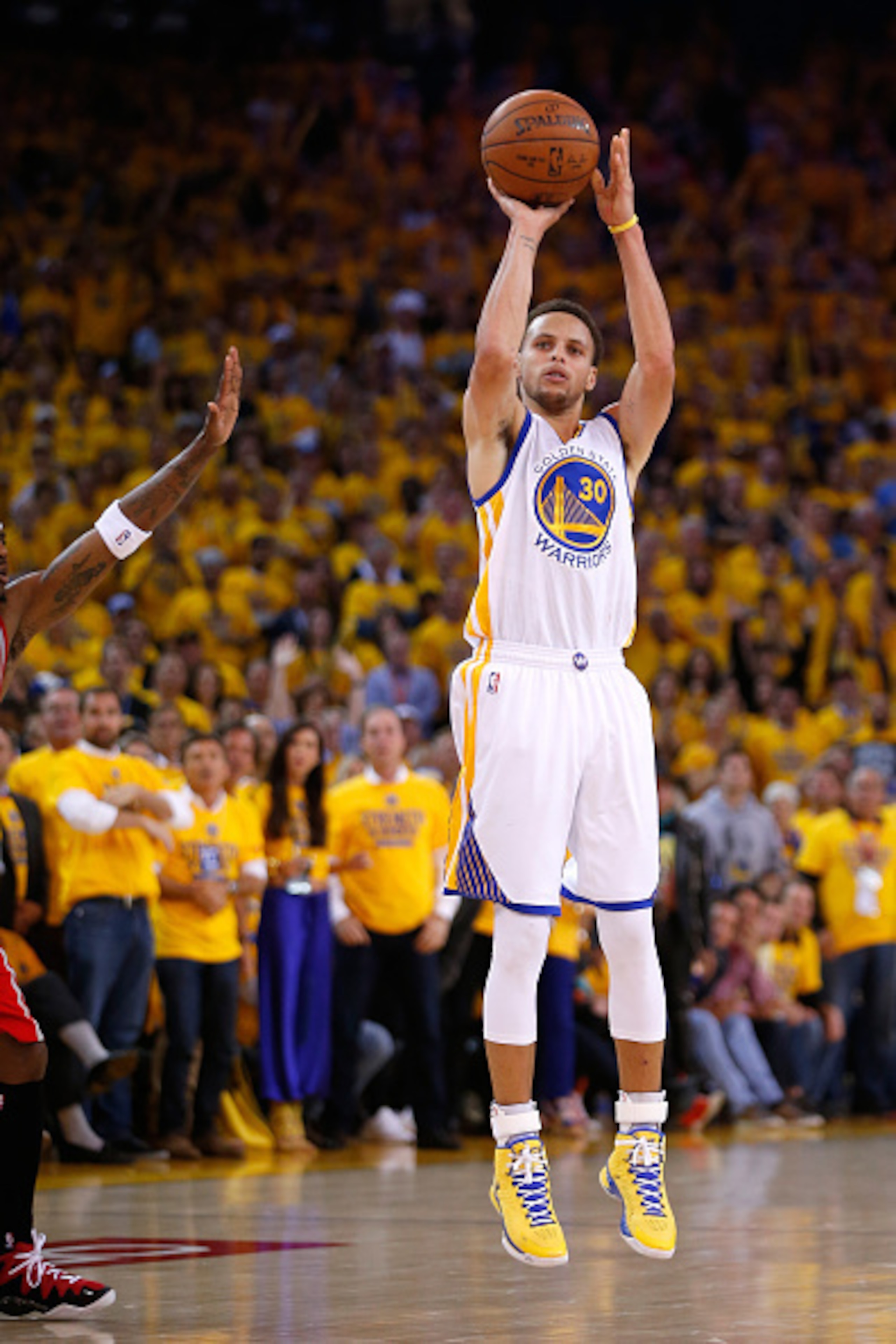
The Warriors are a frightening shooting team. The Splash Brothers are the stuff of coach's nightmares, two Freddy Krugers running around the arc making shots that really should only be made in dreams.
Stephen Curry and Klay Thompson possess a supernatural ability to make shots even when they're tightly guarded. If they're left open with even a sliver of daylight, a made bucket is as automatic as the sunrise.
Cleveland's defense was strong against the Hawks in the Eastern Conference Finals, but it was also lucky.
The Hawks attempted 32 three-point attempts in their Game 4 loss to the Cavs, 30 of which were designated by SportVU's tracking data as uncontested. Atlanta shot just 5-of-32 in that closeout game, going 4-for-30 on uncontested triples.
Steve Kerr and his Warriors look at those numbers and salivate; David Blatt looks and shivers.
Curry has already set the NBA record for most three-pointers made in a single postseason. Thompson may have the most dangerous flick of the wrist in the game when he's feeling it. The duo inspire dread in the opposition, but they're not the only shooters on the team.
Over one-third (35.7 percent) of the Warriors shots come from that magical land behind the arc, the highest percentage in the NBA this postseason. They connect on 38 percent and average 11.5 triples per game, the most of any playoff team this year.
As you might expect, Golden State is even better with a clear look at the rim. The Warriors have averaged 10.7 uncontested threes per game this postseason, connecting on 40.6 percent, once again tops among all playoff teams.
Harrison Barnes, Draymond Green, Leandro Barbosa and Andre Iguodala are all capable three-point shooters unafraid to take big shots.
They're not perfect, but when your team already has two perfect shooters, asking for anything more would just be selfish.
Iguodala runs hot-and-cold, and Barbosa isn't likely to see much playing time unless Thompson is unable to go for long stretches. Green has struggled in the playoffs, shooting just 26.4 percent on 4.8 attempts per game, but he can at least keep the defense honest and will knock down the open look. Barnes shot over 40 percent in the regular season, though he's been far more efficient attacking the rim this postseason.
The Warriors can move the ball quickly and effectively, and Curry is one of, if not the best in the league, at drawing multiple defenders in and dishing it to an open man, seemingly without even seeing him.
Cleveland's defenders will need to be disciplined and sticky. They must attach themselves to the hips of their assignments to avoid getting stuck behind big screens from the likes of Andrew Bogut, Festus Ezeli and Green.
If the Warriors are allowed to get anything near 30 uncontested threes in a game against Cleveland, the Cavs are going to find themselves in a hole with no way out.
Can Golden State Contain LeBron?
2 of 6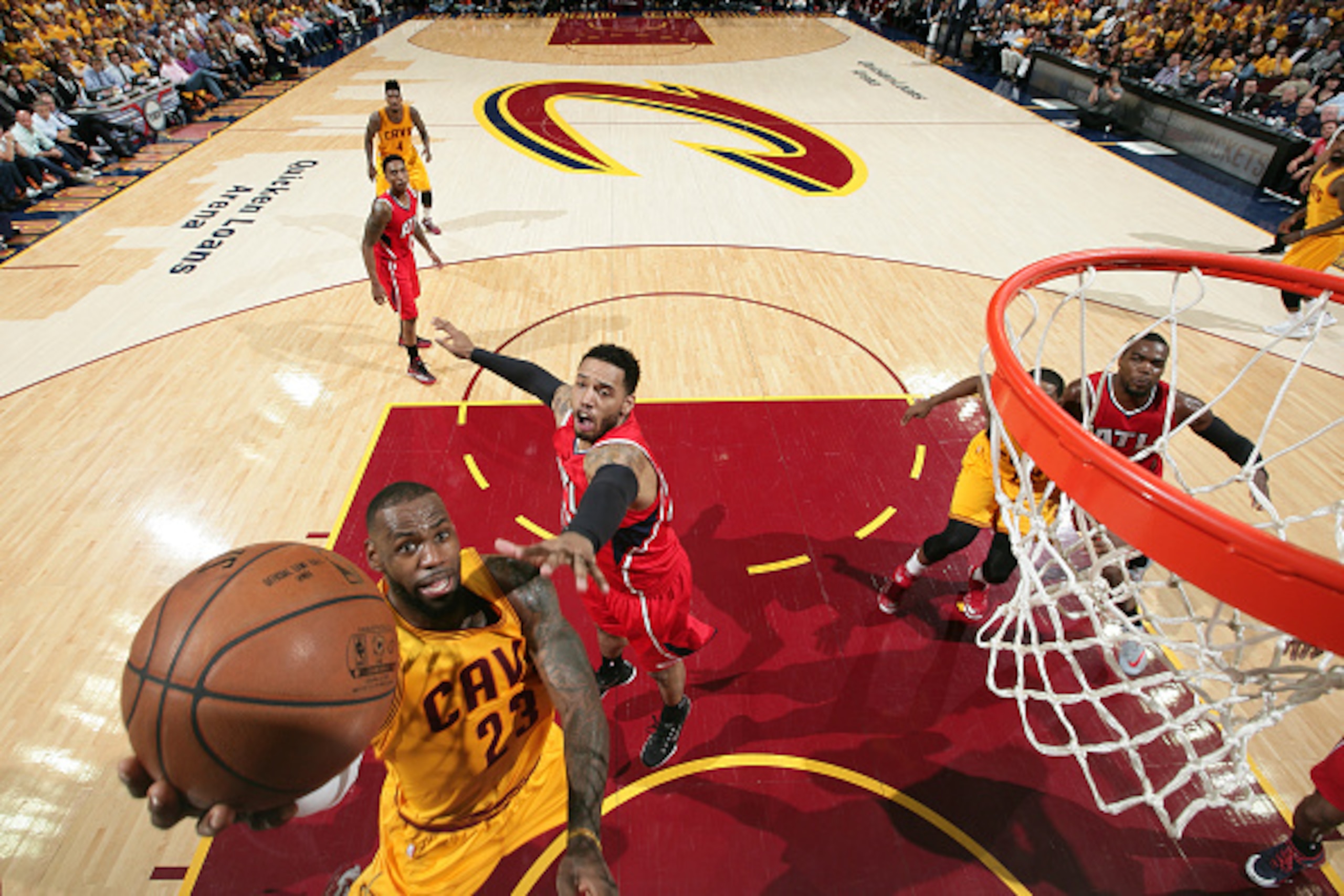
There's no stopping LeBron James.
He's a cosmic force that cannot be contained by earthly means, a beast that can only be slowed, not halted.
He's too big, too strong, too smart, too savvy to be held down for long, even if his shot abandons him, as it has in these playoffs. Steve Kerr needs to devise some sort of game plan to not only prevent James from getting to the hole but also stop him from getting the ball to his teammates in open-look situations.
LeBron's one "weakness" has always been his shooting. He's improved greatly over the years, but those jump-shooting woes have come back to haunt him this postseason.
LeBron is shooting just 42.8 percent from the field, the second-lowest percentage in his career. Augment that with the worst three-point shooting performance in his postseason career (17.6 percent on 4.9 attempts per game), and you have one viable aspect of his game to exploit.
Turn LeBron into a jump-shooter, and you give yourself a chance to win. This is the strategy Kerr and his players must live by.
The Warriors will have to guard LeBron by committee, with the likes of Harrison Barnes, Andre Iguodala and Draymond Green manning up while Andrew Bogut and Festus Ezeli provide protection back at the rim, much like San Antonio did with Kawhi Leonard and Tim Duncan in last year's NBA Finals.
It's possible we could see a little bit of Klay Thompson and Sean Livingston on James in smaller lineups, though neither is big enough to contend with the four-time MVP for more than a possession at a time. Plus, Thompson is too essential to get into foul trouble, making the risk far greater than the reward.
Most likely, Cleveland will see a lot of the 6'8" Barnes on James.
CBS Sports' Zach Harper broke down what the Warriors might hope to accomplish with the former Tar Heel as the team's primary defender on LeBron:
"Obviously, the Warriors are going to build a wall of defenders behind LeBron's primary defender and try to force the ball out of his hands while recovering quickly to shooters, and Barnes will get a lot of help from Golden State's endless reservoir of like-sized perimeter defenders (Igoudala, Livingston, Thompson, Draymond Green). When switches do happen, Barnes is capable of adjusting to bigger assignments.
"
The Warriors will want to cut James' path to the rim off early. If the bigs are in—Bogut or Ezeli—they'll need to keep one foot in the paint at all times to be able to deter the King's attacks.
LeBron is averaging 14.7 drives per game this postseason, the most of any player in the 2015 playoffs. Those dangerous gallops to the hoop net the Cavs an average of 18.3 points per game, making him once again first among all players this postseason.
LeBron rarely does anything fancy with the ball; he just puts his head down and charges to the rim, determined to get to the bucket using his strength and speed.
James' propensity for driving through the lane means Bogut will have to play a key role whenever he's in. Bogut is allowing opponents to shoot just 39.5 percent at the rim on 7.9 shots per game in the playoffs, content to dominate defensively while his teammates put up points.
Green has had similar success in stifling his man, holding opponents to 45.6 percent shooting on 7.6 attempts at the rim per game, a number that bests those of DeAndre Jordan and Tim Duncan.
Golden State will need Bogut and Green, plus Barnes and whoever else draws the unfortunate assignment of sticking to the world's best basketball player, to prevent James from getting a full head of steam. A jump-shot-launching LeBron is a good LeBron for Golden State.
But if he's anything like the man we saw last round—30.3 points, 11.0 rebounds and 9.3 assists per game—Cleveland will likely lay claim to a long-awaited title.
Battle of the Basketball Wizards: Steph vs. Kyrie
3 of 6
The Uncle versus the Chef. Two men who control the ball like a yo-yo, stringing together moves and making shots that most can't even pull off on their video game consoles.
The 2015 league MVP and the 2014 All-Star MVP going toe-to-toe amid "oohs" and "aahs."
Yeah, this is going to be fun.
Unfortunately, there's a bit of a caveat to the fun here, as both are dealing with injuries.
Curry's fall in Game 4 was felt by the entire Warriors' fanbase, but the damage was, thankfully, not nearly as bad as it could have been.
The terrifying tumble over Trevor Ariza's back left Curry with a neck contusion and bruising on the entire right side of his body. He played well in Golden State's closeout game against Houston but was visibly bothered by an arm sleeve that he eventually ditched en route to shooting just 7-of-21 from the field and 3-of-11 from three.
Chances are, with a full week to recover, Curry should be at or near 100 percent for Game 1.
Things aren't as simple for Cleveland.
Irving has been dealing with a litany of medical issues, so much so that he might soon start feeling like the graying, grizzled Uncle he plays in Pepsi commercials.
Irving has been hampered by knee tendinitis for weeks, which has limited his time, production and explosiveness on the court.
Each has plenty of time to heal before the final showdown, but will Irving be able to handle Curry or Klay Thompson, or even role players like Sean Livingston and Harrison Barnes, on defense?
There simply aren't many "safe" places for the Cavaliers to hide Irving against a deep, long Warriors team.
Then there's this: The Cavaliers defense has a 93.0 defensive rating when Irving is off the floor, but a 101.7 rating when he's on the court. They still hold a plus-7.1 net rating with Irving on the floor because of his high offensive rating, but the Warriors have many more players who can make a poor defender pay than any team Cleveland faced in the East.
CBS Sports' Zach Harper questioned how Irving's injury and defensive shortcomings might affect the Cavaliers' game plan:
"One major question for the Cavs will be how much they can get away with Irving defending Curry. That will be a big deal in this series. You can't put Irving on Klay Thompson and you definitely don't want to put him on an athletic Harrison Barnes if he's struggling at all with the knee. It's not the worst idea to make Barnes beat you, but Kyrie shouldn't have to go through that kind of pounding. If Irving can get through the screens of Andrew Bogut with relative success and stay with Curry on pick-and-rolls, that could be a big deal for the Cavs' defense. They also need Irving to be healthy to force Curry to work on defense.
"
Curry utilizes pick-and-rolls as the lead ball-handler about 30 percent of the time he's on the court, according to SportVU data. That means Irving will be chasing the best shooter in the world through picks nearly one out of every three trips down the court, and that isn't even counting all the off-ball screens Curry runs through to find open space along the arc.
Offensively, Irving relies on pick-and-rolls even more than Curry, utilizing them 42.4 percent of the time while averaging 0.99 points per possession when acting as the ball-handler, though the tendinitis could limit him in such situations should it continue to act up.
Irving isn't as effective shooting the ball as Curry, but both are exceptionally dangerous playing this cat-and-mouse game with the opposition.
Irving's health, along with Curry's, will be something to monitor as we await the start of the NBA Finals next Thursday. We can only hope they're both near 100 percent so we can witness the type of wizardry they're accustomed to providing us.



How Much Small Ball Will We See?
4 of 6
The Warriors and Cavs are capable of playing the game both ways.
Each can be big and aggressive: Cleveland with Timofey Mozgov and Tristan Thompson, Golden State with Andrew Bogut or even Festus Ezeli flanked by Draymond Green and a litany of longer wings.
But both can go small-ball because of the versatility of LeBron James and Draymond Green.
David Blatt has found a ton of success using 6'9" Tristan Thompson at center with LeBron at power forward and surrounding the two with more versatile wing players and shooters like Kyrie Irving, Iman Shumpert, J.R. Smith, James Jones and Matthew Dellavedova.
In fact, four of Cleveland's six most effective lineups this postseason have featured Thompson and James flanked by such players, with a five-man unit consisting of Thompson, James, Shumpert, Smith and Dellavedova producing a plus-29.2 net rating in 50 minutes of court time in these playoffs.
Essentially, these James-Thompson lineups have been smashing the opposition like the Hulk smashes, well, everything.
The Warriors can play that game too, though.
Three of the Warriors' six most effective units this postseason don't feature a traditional big man, instead depending on Green and Harrison Barnes to hold their own on defense against bigs, knowing that the opposition will have to conform to their playing style or risk being run out of the gym.
These units worked well against the Grizzlies, with Green and Barnes doing a solid enough job on defense against Zach Randolph and Marc Gasol while making them pay on the offensive end.
But as good as Gasol and Randolph are, neither is as talented and ferocious an offensive rebounder as Thompson.
The Cavs collect an astonishing 30.4 percent of all available offensive rebounds with Thompson on the floor, compared to 24.2 percent when he sits.
The last thing the Warriors want to do is give James extra chances to score or find his shooters. Green and Barnes will need to box out and be aware of the omnipresent Thompson in these smaller lineups.
That's not to say Mozgov and Bogut won't have their times to shine in this series.
As I discussed earlier, Bogut is simply too good of a rim protector to abandon in the game plan, while the same goes for Mozgov, whose 92.9 defensive rating while on the court (compared to 104.7 while off) leads all Cavaliers.
It will largely come down to which type of unit is performing better and which key players can stay out of foul trouble, but I expect we'll see more small-ball type lineups with these two teams.
The Bench X-Factors: J.R. Smith and Andre Iguodala
5 of 6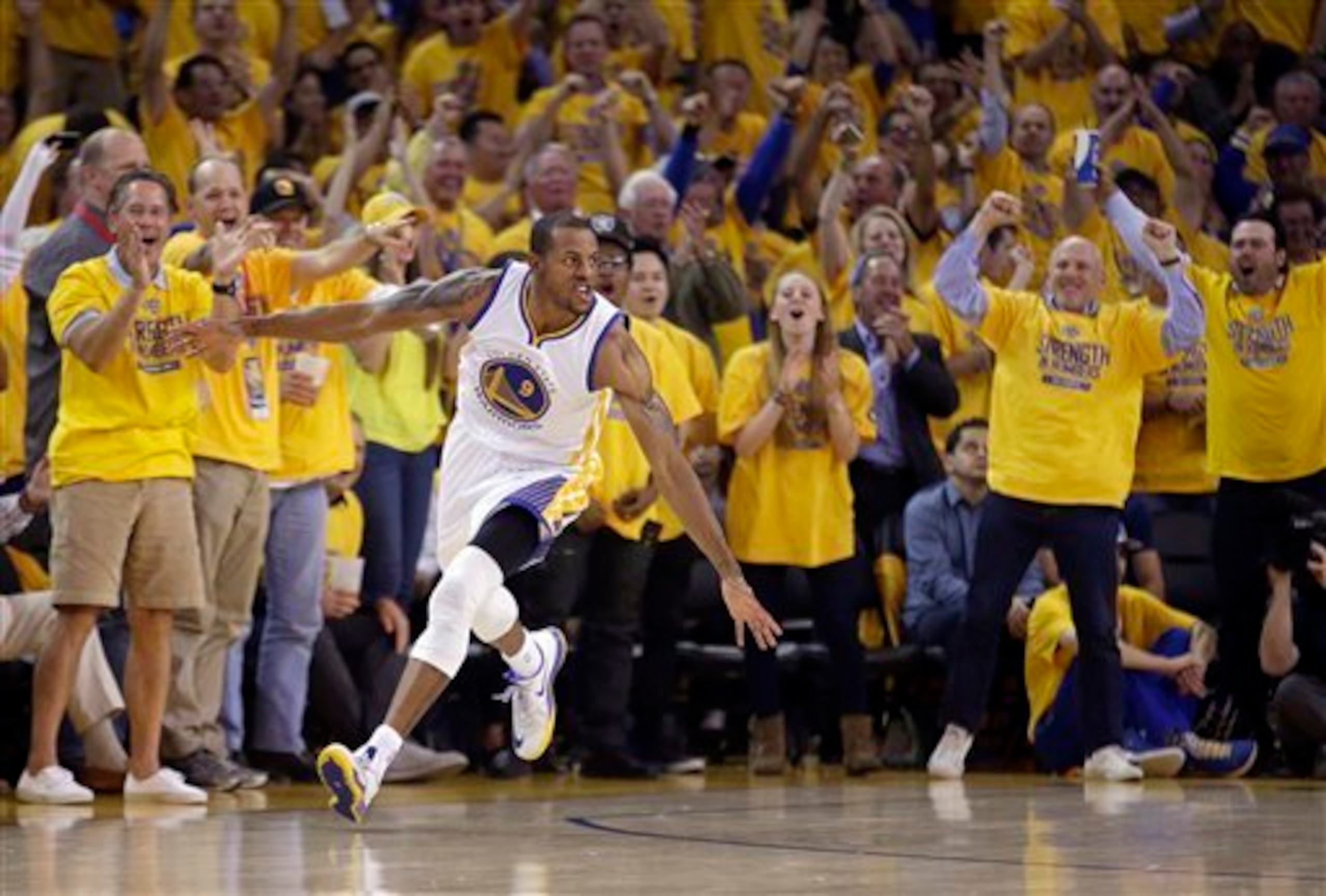
It's still difficult to comprehend that J.R. Smith has an entire city relying on him for its first NBA Finals title ever.
No, he's not the first or second option, and the outcome of this series won't be on him, but the mercurial Smith is Cleveland's most important offensive player not named LeBron or Kyrie.
Smith has the third-best—second-best, if you disregard Kevin Love, who will be seen in a suit for the entirety of this series—net rating of any Cavalier, at plus-13.6. Cleveland is still a plus-6.1 with Smith on the bench, but that means Cleveland is 7.5 points better with Smith on the court.
It's incredible, but the New York Knicks exile has become the perfect complementary piece to this potential championship team.
Following his two-game suspension—remember, this is still J.R. Smith—Blatt thrust Smith into a sixth-man role rather than return him to his starting position. The returns have been better than any could have expected, as noted by the New York Post's Marc Berman:
"Since taking on that role, in eight games, Smith has averaged 15.4 points on .500 shooting from the field, .459 shooting from 3-point land, in 31.4 minutes. In Game 4, Smith hit an impossible stepback 3-pointer in the first half as the Cavs pulled away. He set up Thompson for a brilliant alley-oop pass and showed his connection with James by cutting without the ball down the lane where James made the perfect feed for a layup.
"
Smith isn't just shooting—don't be too alarmed, he's still doing plenty of that—but also playmaking, rebounding and engaging on defense.
He can carry the offensive burden if LeBron and Irving need some rest and can roam freely and find his shooting spots while they're in.
Most impressively, the 29-year-old gunner is shooting a remarkable 44.7 percent from three when defenders are within four feet since returning from his suspension. Hands, bodies, limbs, conscience, coaches; nothing deters Smith.
There will be moments in this series where J.R. enters heat-check mode, and when he does, the Warriors better quell the fire immediately.
Golden State has a secret bench weapon of their own, though he's a completely different player than Cleveland's Mr. Smith.
Andre Iguodala isn't a chucker or an instant-offense type of bench player. He hasn't been the focal point of an offense or team since he left the 76ers following the 2011-2012 season, but he brings a valuable, calming, steadying influence to the Warriors whenever he enters the game.
His veteran leadership and defense are invaluable, as SB Nation's Tom Ziller explained:
"Iguodala is one of the league's very best wing defenders, despite a relative lack of official honors for his work on that end. (Iguodala earned just one All-Defense nod in Philly and one in Golden State.)
He did work on James Harden in Game 5. While Iguodala never covered Harden full-time in the series, he had his battles. He won every single one on Wednesday. That's what Iguodala brings off the bench for Golden State: elite wing defense plus that offensive versatility that will more often see him in a creator role than scoring.
"
Iggy can come in and run the offense while checking James or spot up and hit open threes if need be. He can still throw down vicious dunks and has never met a defensive battle he fears.
With so much of the focus on first-name stars like LeBron, Kyrie, Steph and Klay, it is men like Iguodala and J.R. Smith who can end up making the little plays that turn the tide of the game.
Plus, who doesn't want to see heat-check J.R. Smith in the NBA Finals?
LeBron's Legacy
6 of 6
A sports debate, especially over legacy, is often one that has no answer.
It's difficult for fans to simply sit back and appreciate the basketball genius and athletic splendor that is LeBron James.
Everything in our society is a hot take. We're bombarded by social media, podcasts, sports radio, talk shows, blogs and media mouthpieces every hour of every day.
They all ask questions. Sometimes they answer, and sometimes they just shout a little louder.
Will a third ring and a third NBA Finals MVP award catapult LeBron into some invented hierarchy of basketball greatness? Will a loss and a 2-4 record in NBA Finals tarnish all he's achieved?
Can he be Jordan? Would he be tough enough for the brutal basketball world of yesteryear?
Those are all undoubedtbly fun questions that can be debated for hours on end with no definitive answer.
But there is one question that needs to be answered above all: What do we see when we look at the King?
We see statistical domination.
We see a four-time MVP with the second-most MVP award shares of all time, according to Basketball-Reference.com. He has been selected to the All-NBA first team nine times, two less than all-time leaders Kobe Bryant and Karl Malone.
For his career, he ranks second in player efficiency rating, fourth in points per game (27.35) and 14th in win shares (178.89), according to Basketball-Reference. No one in NBA history can match his statistical versatility.
Yet, we also see a 2-3 record in the NBA Finals. We see, somehow, failure.
Yes, failure, the sports world's most evil seven-letter word. But don't let anyone fool you into thinking he's alone in his deficiencies.
Michael Jordan. Larry Bird. Magic Johnson. Oscar Robertson. Kobe Bryant. Tim Duncan. Kareem Abdul-Jabbar. Even Bill Russell. They all tasted disappointment at one time or another.
So we look deeper. We see not playoff failure, but utter domination.
But still, these are just statistics. Surely, there's more to the man.
So we look deeper still, to what he is.
We see a bully and a scientist, a running contradiction of scoring prowess and passing acumen and defensive intensity. We see a basketball chimera combining the greatest parts of the greatest players.
He's everything we've ever seen, and at the same time something we've never, ever seen before.
Then we look all around him, at his past, present and future.
We see "The Chosen One." We see "The Decision." We see the Heatles and the breakup and finally, "The Return."
We see a legacy as complicated as any that has ever been written, a sprawling tome of success and failure and pain and joy and everything in between.
LeBron has been the hero, the villain and the reformed. He's the King of the basketball world, of the post-Jordan era.
So, what's the answer to our question, then? What do we see when we look at the King?
We see a player who must be watched. A talent that must be appreciated. A journey that must be followed.
So let the talking heads chatter over his place in the game's hierarchy. Let the haters degrade him and the lovers lift him up.
The man is just 30 years old. His legacy still has chapters to be written. Lots of them.
Until then, just sit back and enjoy all the King has to offer.

.jpg?w=2560 "Raiders Could Start Mendoza")

.jpg?w=2560 "Rodgers Iced Out on Plane 💎")
.jpg?w=2560 "Packers Safety Slams Refs 🤬")
.jpg?w=2560 "🚨 Week 8 AP Top 25 Poll")
