
Every Power 5 College Football Team's Most Explosive Playmaker
Every college football team has a number of reliable players it can turn to on any given play and count on for a big contribution here and there. But not everyone can provide fireworks whenever he has the ball in his hand or is involved in the play on defense or special teams.
Given the opportunity, the players on this list will do more than get the yards needed for the first down or prevent the opponent from keeping its drive alive: they'll stretch or flip the field while turning momentum in their team's favor.
Here's our look at the most explosive player from every power-conference team (as well as Notre Dame). We chose them for their big-play ability and tendency to come through in the clutch.
Alabama
1 of 65
Derrick Henry, Jr., RB
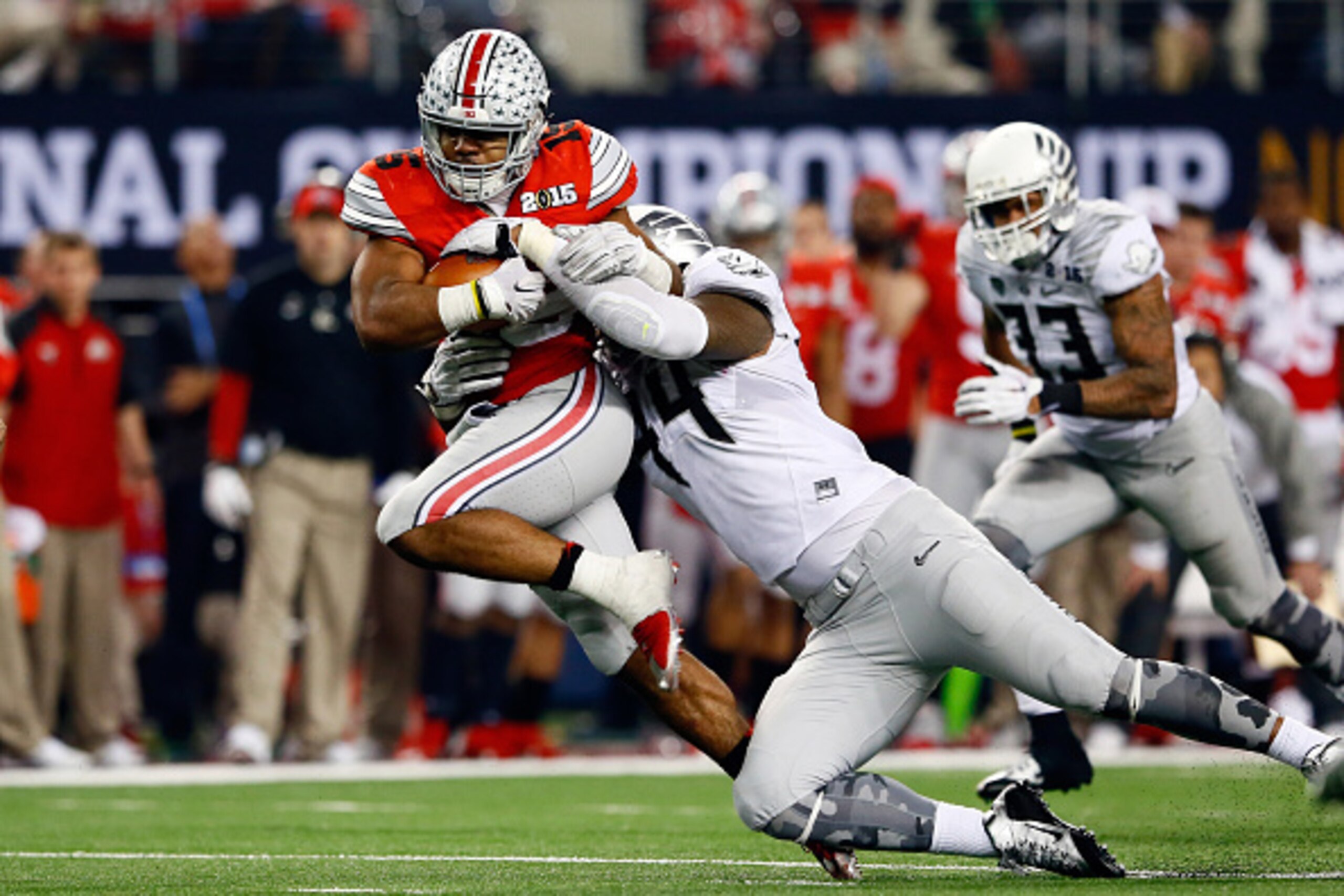
When it came to explosive plays for Alabama in 2014, wide receiver Amari Cooper handled the bulk of that work with his record-setting numbers. But when the Crimson Tide wanted to do damage on the ground, Henry was the punisher they gave it to in order to crush opposing defenders.
Along the way, he ended up blowing up for a team-best 990 rushing yards and 11 touchdowns despite only getting 12 carries per game.
Henry became more involved in Alabama's offense toward the end of last season, and over his last four games he averaged eight yards per carry with six touchdowns. And though it didn't result in a victory for the Tide, his dominant performance in the Sugar Bowl against Ohio State (149 all-purpose yards on 15 touches) was quite notable.
Arizona
2 of 65
Scooby Wright, Jr., LB
Arizona's offense is overloaded with young weapons like quarterback Anu Solomon, running back Nick Wilson and receiver Cayleb Jones, all of whom are capable of making big plays on every snap. But the key to the Wildcats winning the Pac-12 South last season was the huge stops that Wright made on defense, as he almost single-handedly propped up that side of the ball at times.
Wright led the nation in tackles (163), tackles for loss (29) and forced fumbles (six) in 2014, which contributed to his winning the Bednarik, Lombardi and Nagurski awards. He also had more sacks (14) than any other three Arizona players, with the biggest of those takedowns coming late in the upset win at Oregon when he stripped eventual Heisman winner Marcus Mariota to thwart a comeback.
Arizona State
3 of 65
D.J. Foster, Sr., WR
After three seasons establishing himself as one of the best pass-catching running backs in the country, Foster heads into his senior year looking to further develop those receiving skills into an NFL career as a slot option. The 5'11", 205-pounder can also use this opportunity to show off his great acumen in the open field, which he displayed last year by tallying 65 plays of 10 or more yards.
That broke down to 34 long run plays and 31 receptions that went for at least 10 yards. He had 21 touches that gained at least 20 yards for the Sun Devils—10 on the ground and 11 via the pass.
Despite being ASU's leading rusher in 2014, Foster managed to gain more yards as a receiver than as a runner in six games.
.jpg?w=2560 "AP Poll Top Five Week 9")
.jpg?w=2560)

Arkansas
4 of 65
Alex Collins, Jr., RB
There were 57 FBS running backs who topped 1,000 rushing yards in 2014, but only Arkansas had the good fortune of boasting two such players. Having the choice to go with Collins or Jonathan Williams on nearly every play was a luxury that the Razorbacks made the most of to the tune of 218 rushing yards per game.
Williams got slightly more carries than Collins and finished with more yardage, but it was Collins who tended to break off the bigger run. He topped 20 yards on 10 rushes, with four of those going for at least 30 yards, while Williams had eight runs of 20-plus yards.
Arkansas can't go wrong with either runner, and it's apt to feed the tandem equally again the season. But when the team is in need of a big play, the 5'11", 215-pound Collins has shown more explosiveness than the 6'0", 223-pound Williams.
Auburn
5 of 65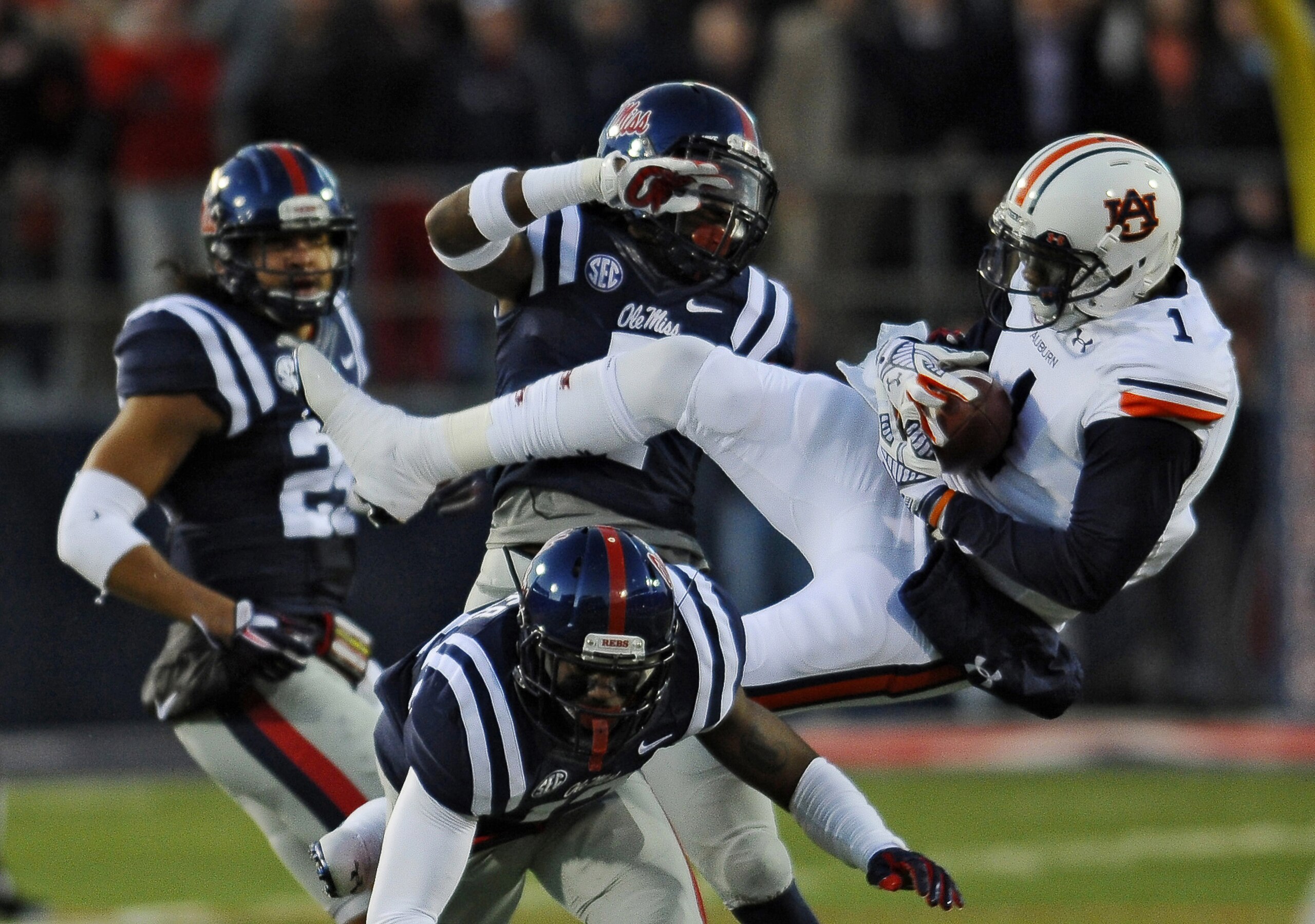
D'haquille Williams, Sr., WR
Injuries and a bowl-game suspension kept Williams from fully showing what he was capable of for all of his first season with Auburn, but the top-rated junior college prospect in the 2014 class, per 247Sports, is primed for a huge senior year.
"Duke Williams will be the elite guy you would think and you would hope next year," Kiper told James Crepea of the Montgomery Advertiser, listing him as the top receiver on his 2016 big board.
There were glimpses of this last season, when Williams had a team-high 45 receptions for 730 yards and five touchdowns. He had four 100-yard games, and his 39-yard reception on a 3rd-and-long late in Auburn's win at Kansas State sealed that victory.
Baylor
6 of 65
Corey Coleman, Jr., WR
With so many weapons to choose from, nearly every skill player in Baylor's arsenal is capable of producing an explosive play. The Bears had 44 offensive plays that went for at least 30 yards in 2014, and Coleman was involved with 13 of those.
The 5'11", 190-pound speedster didn't play in Baylor's first three games last year because of injury, but then he made up for lost time with 12 catches for 154 yards and a touchdown in his debut against Iowa State. That was one of five 100-yard receiving games for Coleman, including a 15-catch, 224-yard performance in the Bears' first-ever win at Oklahoma in November.
"When he makes a play, it makes the rest of us feel like we're going to win," Baylor receiver KD Cannon told Jake Trotter of ESPN.com. "He's the tone-setter, that's how he is."
Boston College
7 of 65
Jon Hilliman, So., RB
Boston College's offense has shown the ability to adjust to the personnel that the Eagles have available each season, which is why in 2013 they had a 2,000-yard rusher (Andre Williams) and then last year relied on a mobile quarterback (Tyler Murphy).
Now it's Jon Hilliman's turn, and after a solid freshman season in which he ran for 860 yards and led BC with 13 rushing touchdowns, he's poised to be the next offensive focal point.
A strong sign that he is on the brink of a breakout year came during the Pinstripe Bowl, when he ran for 148 yards and a touchdown against a Penn State defense that ranked third nationally against the run.
California
8 of 65
Jared Goff, Jr., QB
The Air Raid offense requires great receivers who can get open quickly and catch passes in traffic, but without someone to throw it to the right place at the right time, the system can misfire. Goff was rarely off target last year, completing more than 62 percent of his 509 pass attempts and completing 51 throws for 20 or more yards.
He had six 300-yard passing games and threw for at least three touchdowns seven times. When the Golden Bears were playing their best during a 4-1 start, Goff had one four-game stretch where he had 19 TD passes (including seven in an overtime win over Colorado) on just 147 pass attempts.
Clemson
9 of 65
Deshaun Watson, So., QB
Had Watson been able to stay on the field all season, Clemson might have done far better than its 10-3 record in 2014. But injuries kept the electric freshman quarterback from playing in five games and completing several others, and when he wasn't available, the Tigers offense suffered.
Watson had 1,666 yards of total offense on 200 snaps, for an average of 8.33 yards per touch. The rest of the team gained 4.61 yards per play.
Knee surgery kept Watson out of Clemson's bowl game as well as spring practice, but his rehab has him in line to be running the offense again this fall. If he can resemble his same explosive self, look for the Tigers to compete for the ACC title and a spot in the playoffs.
Colorado
10 of 65
Nelson Spruce, Sr., WR
The contributions that Spruce made over and over again last year might not fit the textbook definition of someone with the ability to make explosive plays, but with as many catches as he made, there is always a chance he'll break one free.
Only 42 of Spruce's 106 receptions went for 10 or more yards in 2014, but seven went for at least 30 yards, and he had a pair of 70-yard catches for good measure. Mostly a possession receiver whom quarterback Sefo Liufau could aim for whenever needed, Spruce had three games with at least 13 catches including a whopping 19 in an overtime loss to California.
Duke
11 of 65
DeVon Edwards, Jr., S/KR
With the contributions he's made on defense and special teams in his Duke career, Edwards has been involved in most of those unit's big plays the past two years. He has scored five touchdowns—three on kickoff returns and two on interceptions.
Edwards averaged more than 30 yards on kickoff returns in 2013 and more than 25 yards last season, bringing one back for a score against Pittsburgh in Duke's wild 51-48 road victory in November.
If Duke's offense is in need of a spark this year, it might want to give the 5'9", 175-pounder a shot at doing something with the ball in his hands.
Florida
12 of 65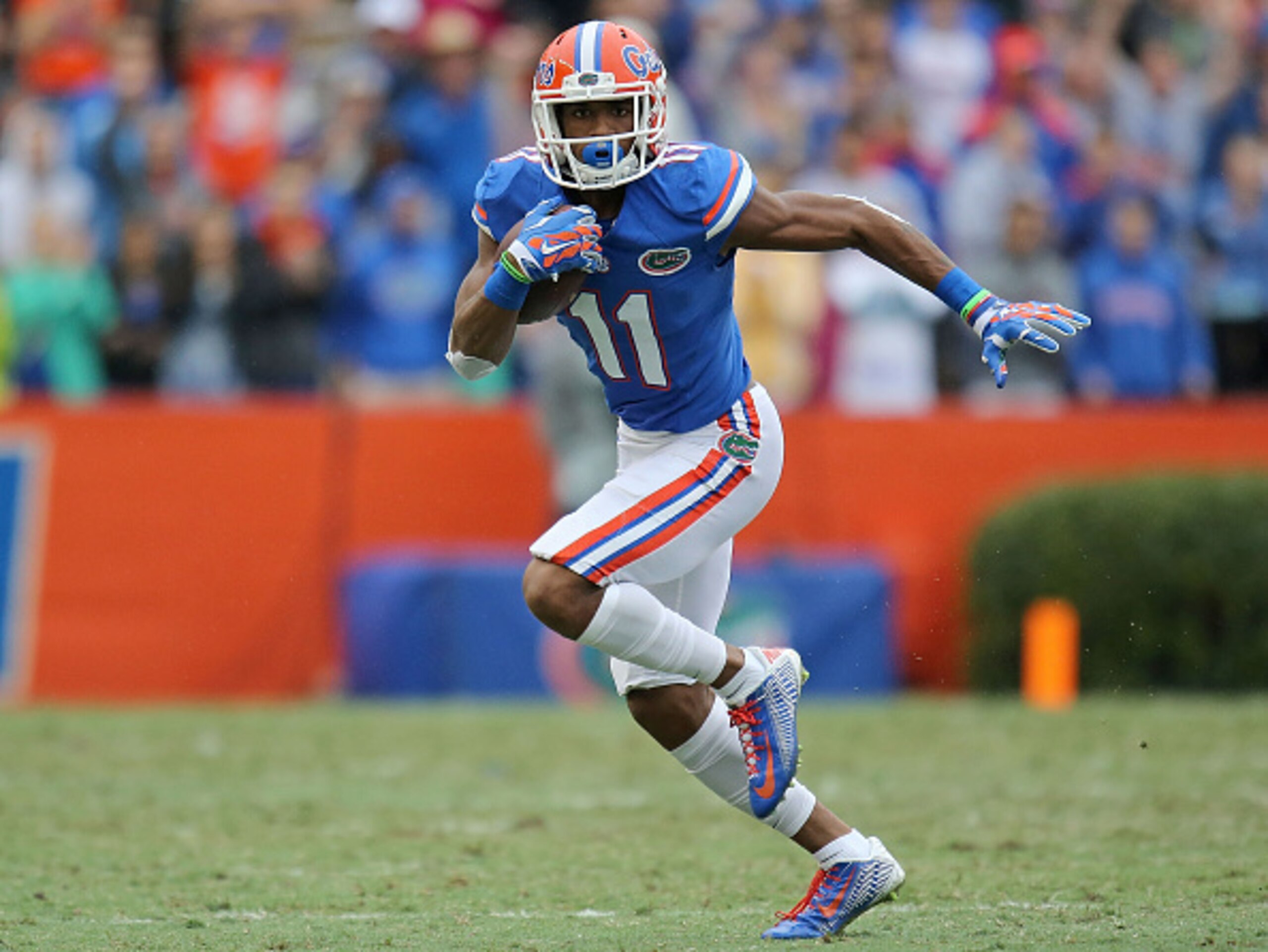
Demarcus Robinson, Jr., WR
While Florida's offense as a whole was pathetic last season, it wasn't devoid of some potential stars who came through in big moments. Robinson handled several of those situations, as his 53 receptions, 810 yards and seven touchdowns were all more than any other two Gators combined.
Robinson's biggest game came early in the year when Florida looked like it still had a shot in the SEC East, as he had 15 receptions for 216 yards and two touchdowns in a triple-overtime win over Kentucky. In that game he had five catches of at least 20 yards, while both of his TDs came in the red zone including one on 4th-and-goal to extend the contest into a second OT.
Florida State
13 of 65
Travis Rudolph, So., WR
Florida State graduated its top two receivers from 2014, so there's a major opportunity for the Seminoles' many young wideouts to become big-time players. Rudolph got an early start on his audition with a strong freshman year, catching 38 passes for 555 yards and four touchdowns.
His first career reception didn't come until the fourth game of the season, and it went for 40 yards. A week later his first touchdown went for 59 yards, and in one of FSU's many comebacks he contributed a 68-yard TD reception.
Georgia
14 of 65
Nick Chubb, So., RB
A chiseled piece of destruction, Chubb was as explosive a player as any in FBS during his freshman year in 2014. The only thing that kept him from making even more of an impact was his lack of chances during Georgia's first five games of the season, when Heisman contender Todd Gurley was handling the bulk of the work.
But once Gurley was lost to an NCAA suspension (and later a season-ending knee injury) it became time for the 5'10", 228-pound Chubb to burst onto the scene. His first start saw him carry the ball 38 times for 143 yards, and then a week later he had 202 yards and two touchdowns in Georgia's second straight road win.
Chubb topped 100 yards in every start, topping things off with a 266-yard performance in the Belk Bowl win over Louisville. He ended up with 41 runs of more than 10 yards—nearly 19 percent of his 219 carries—with 18 runs going for at least 20 yards.
Georgia Tech
15 of 65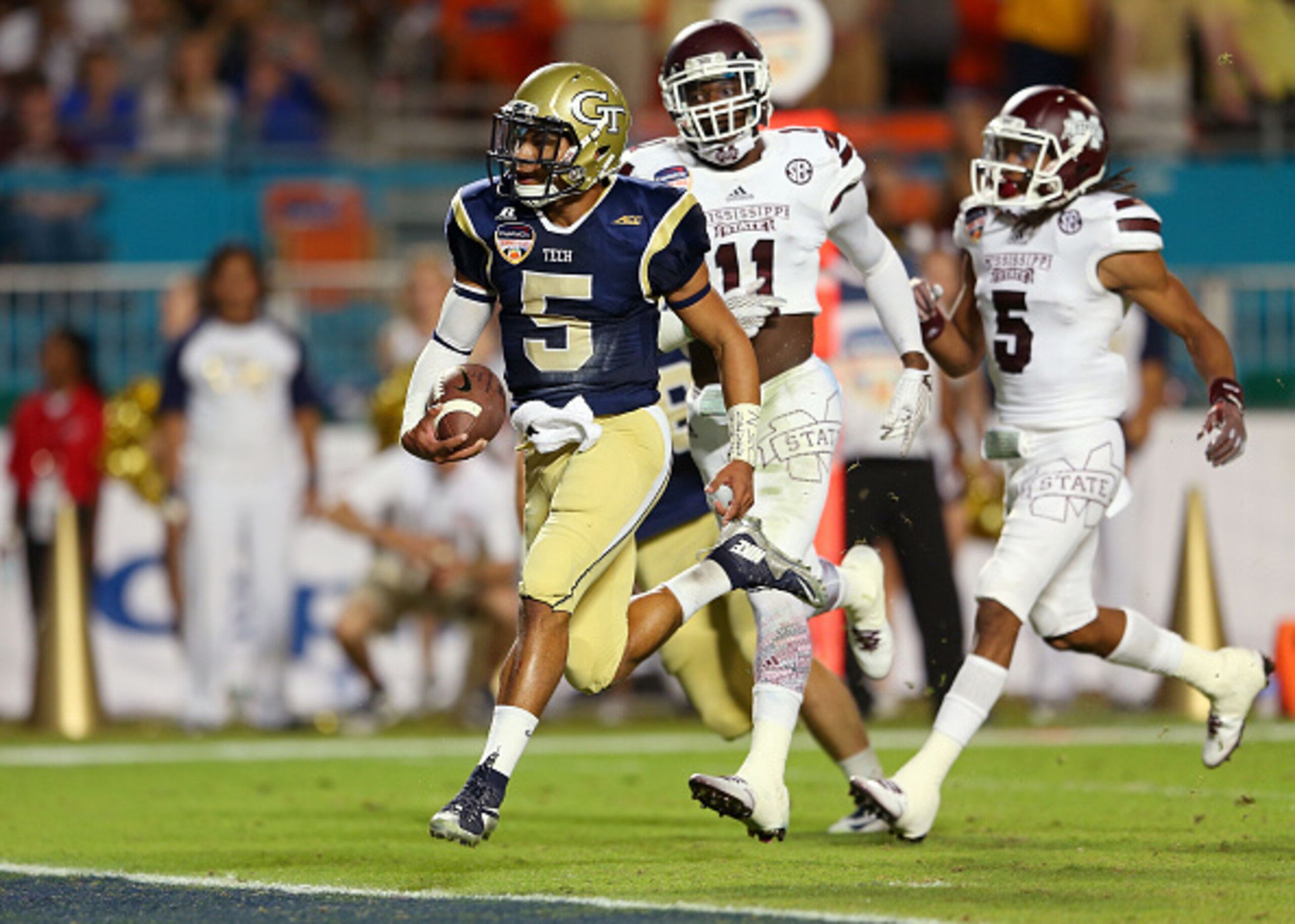
Justin Thomas, Jr., QB
The key to an effective triple-option run game is efficiency and consistency from all of its many working parts, most critically the quarterback. That player is responsible for making all the right reads and deciding which direction the run should go to get the biggest gain.
Thomas realized early on last season that he should call his own number most often, which led to him rushing for a team-high 1,086 yards and more than 5.7 yards per carry. This running ability, which included 48 gains of at least 10 yards, also enabled him to throw over the defense to the tune of 1,719 yards and 18 touchdowns on only 13.4 pass attempts per game.
Illinois
16 of 65
Josh Ferguson, Sr., RB
Had wideout Mike Dudek not suffered a knee injury in spring ball, knocking him out for several months, we'd be highlighting his big-play ability in the receiving game. But even with Dudek as an option, Illinois would have been wise to turn to Ferguson as often as possible when in need of a big play.
Last season he had 24 runs of 10 or more yards but also another 15 as a receiver, which included seven receptions of more than 20 yards. Ferguson's ability to contribute on the ground and in the passing game makes him a dangerous weapon, though to this point he hasn't gotten much notoriety because the Fighting Illini have only won 12 games over the past three seasons.
"In a spread offense built to open seams for speedy backs with great hands, Ferguson is going to make a killing," Mark Primiano of SB Nation wrote prior to the 2014 season, when Ferguson had 1,162 all-purpose yards and 10 touchdowns.
Indiana
17 of 65
Jordan Howard, Jr., RB
Indiana may have lost a 2,000-yard rusher (Tevin Coleman) to the NFL draft, but it hit the jackpot on the transfer wire by virtue of UAB dropping its program. That enabled Jordan Howard to come to Bloomington and bring with him the skills he showed off last year for the Blazers in their breakout season.
The 6'1", 228-pound Howard averaged more than 132 rushing yards per game in 2014, seventh-most in FBS. He had 50 runs of 10 or more yards for the Blazers, averaged more than five yards per carry and topped 100 yards in eight different games.
Iowa
18 of 65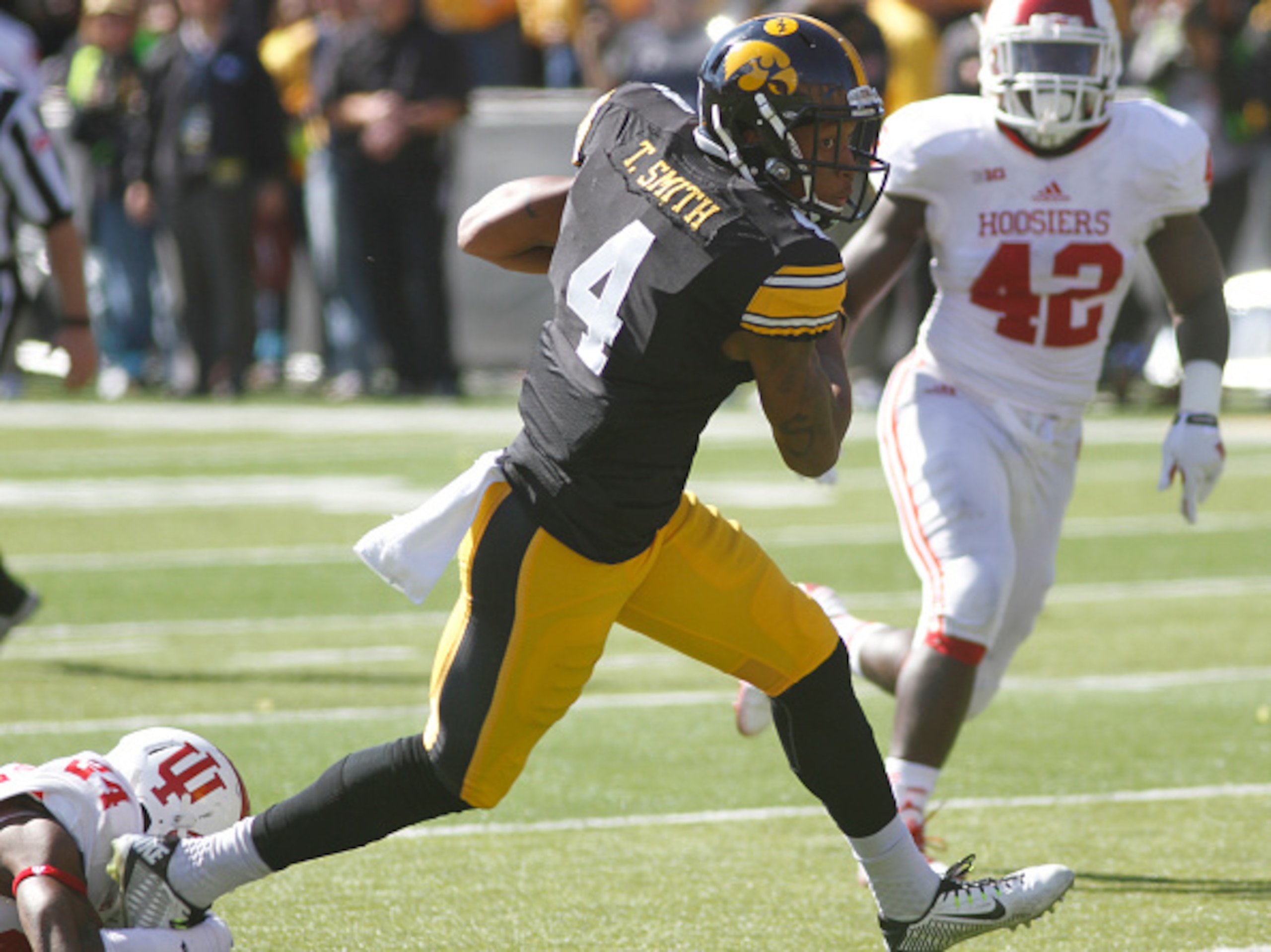
Tevaun Smith, Sr., WR
Though its offense as a whole didn't often resemble the kind that highlight reels are made of, Iowa did manage to put together a decent number of explosive plays in the passing game in 2014. Tevaun Smith was a key ingredient in that recipe, especially in the second half of the season.
He led the Hawkeyes with 43 receptions and 596 yards. He contributed 20 catches for 344 yards in the final six games, including a pair of touchdowns that went for more than 30 yards.
Iowa State
19 of 65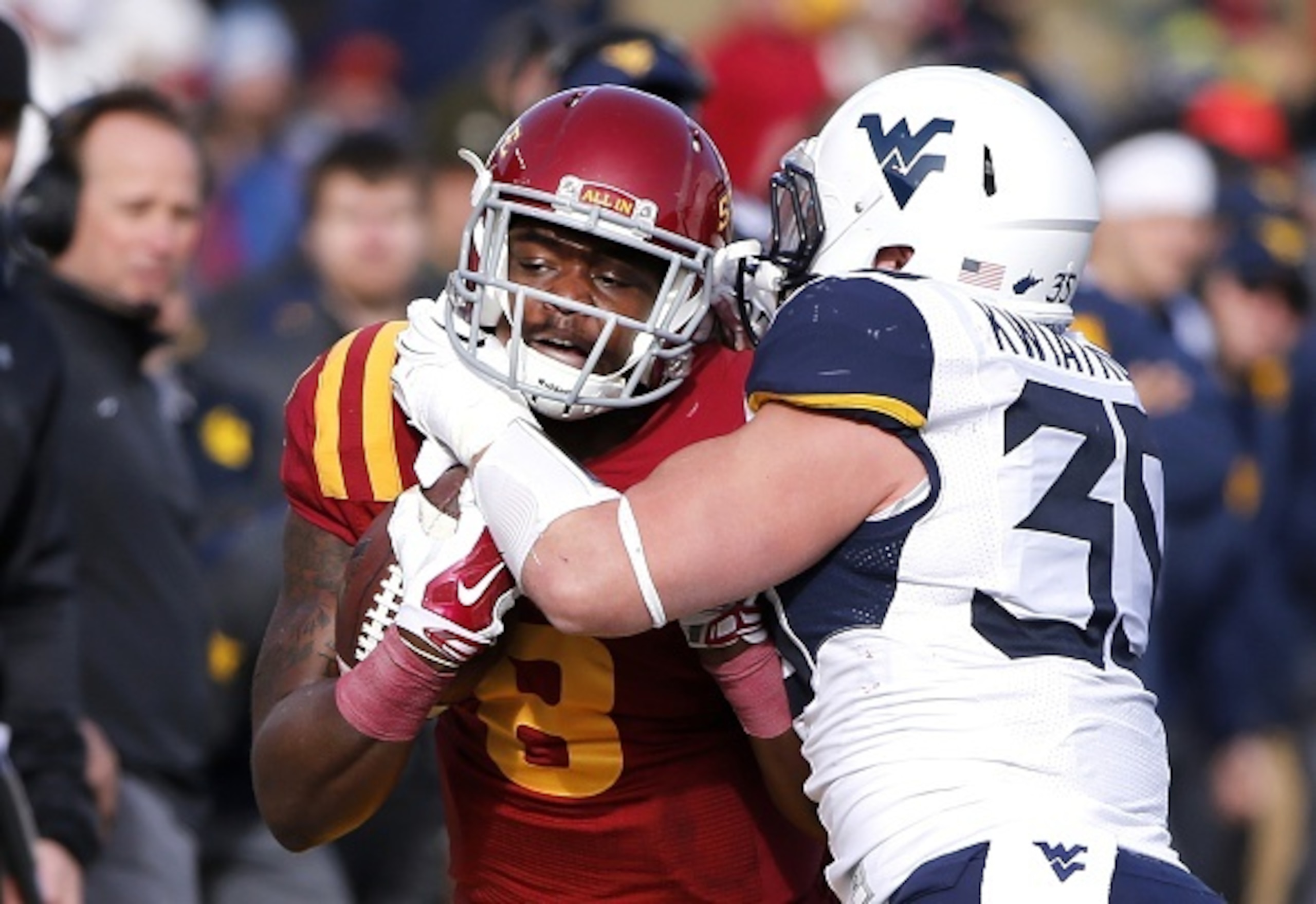
D'Vario Montgomery, Jr., WR
When Quenton Bundrage suffered a season-ending knee injury early in Iowa State's 2014 opener, the Cyclones had to turn to other receivers to try to replace that production. Montgomery was one of those who emerged to fill the void, and the South Florida transfer heads into this season as the top receiving option.
With 44 catches for 605 yards, Montgomery was Iowa State's top option despite only having three catches in the first five games. He started six of the Cyclones' last seven games, during which he averaged more than 80 yards per game and had a pair of 100-yard performances.
Kansas
20 of 65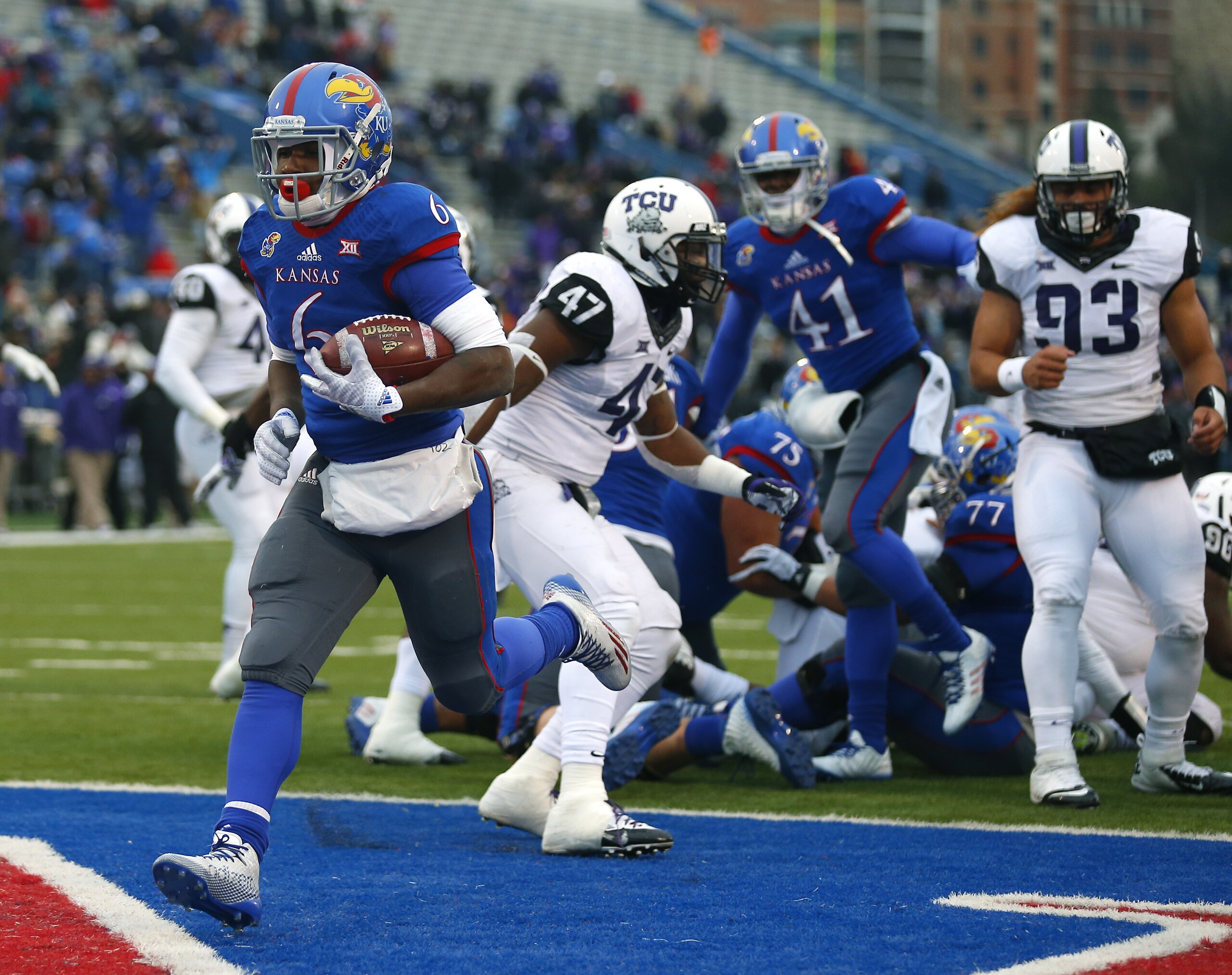
Corey Avery, So., RB
Almost every notable player from Kansas' offense who had the capability to make a big play in 2014 is no longer available, either because of graduation, early NFL entry or injury. Avery is the best remaining option, but even his status is uncertain for this season after the team suspended him just prior to the Jayhawks' spring game.
If he's able to play this year, Avery brings with him the most experience of any returning player. He led the team with 631 rushing yards and five touchdowns, and his 18 receptions for 217 yards also make him Kansas' top returning receiver.
Kansas State
21 of 65
Charles Jones, Jr., RB
The run game wasn't a major part of Kansas State's offense in 2014, and when it was, quarterback Jake Waters handled much of it via scrambles or designed draws. While Jones was the Wildcats' leading rusher with 540 yards and 13 touchdowns, he only had 133 carries for the season.
Eleven of his TD runs came via the Wildcat formation, where he got direct snaps and took those into the end zone. It was a heck of a way for Jones to make his debut as part of K-State's offense after redshirting in 2012 and seeing no action the following season.
Kentucky
22 of 65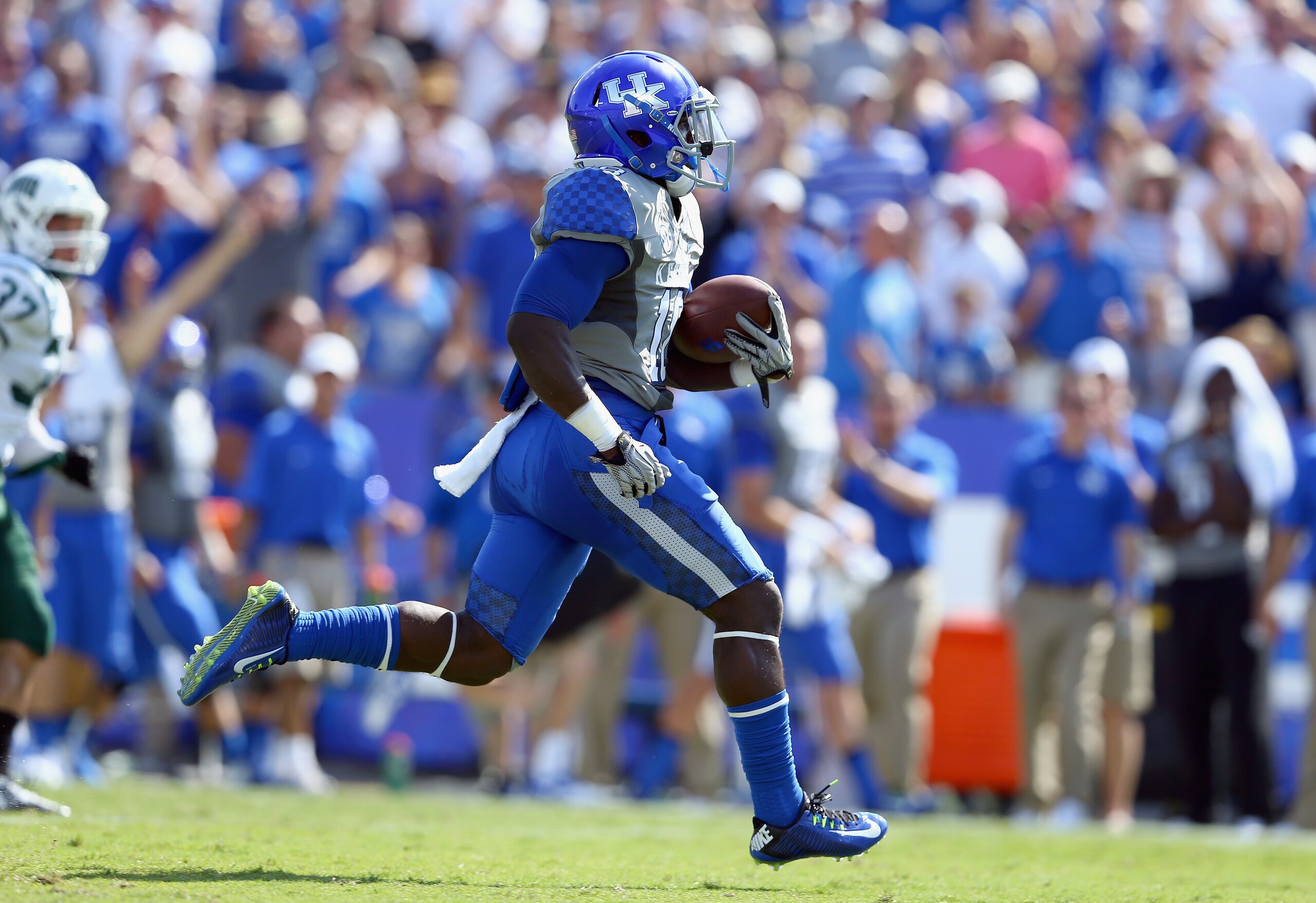
Stanley Williams, So., RB
Known more commonly as "Boom," Williams lived up to his combustible nickname in 2014 by leading Kentucky with 1,159 all-purpose yards split between running and receiving plays and kickoff returns.
He averaged 6.5 yards per carry and scored five times on the ground. He also had a 32-yard TD reception and averaged nearly 27 yards on kick returns.
Louisville
23 of 65
Brandon Radcliff, Jr., RB
At 5'9" and 214 pounds, Radcliff has the build of a runner who can blow through blockers but also the speed to get around them. Either way, he possesses the ability to explode on nearly every run.
Radcliff started five games last year, and in those games he had seven of his 12 rushing touchdowns and two of his three 100-yard games. He also went for 136 yards and a TD in a relief role in Louisville's big win at Notre Dame in November.
LSU
24 of 65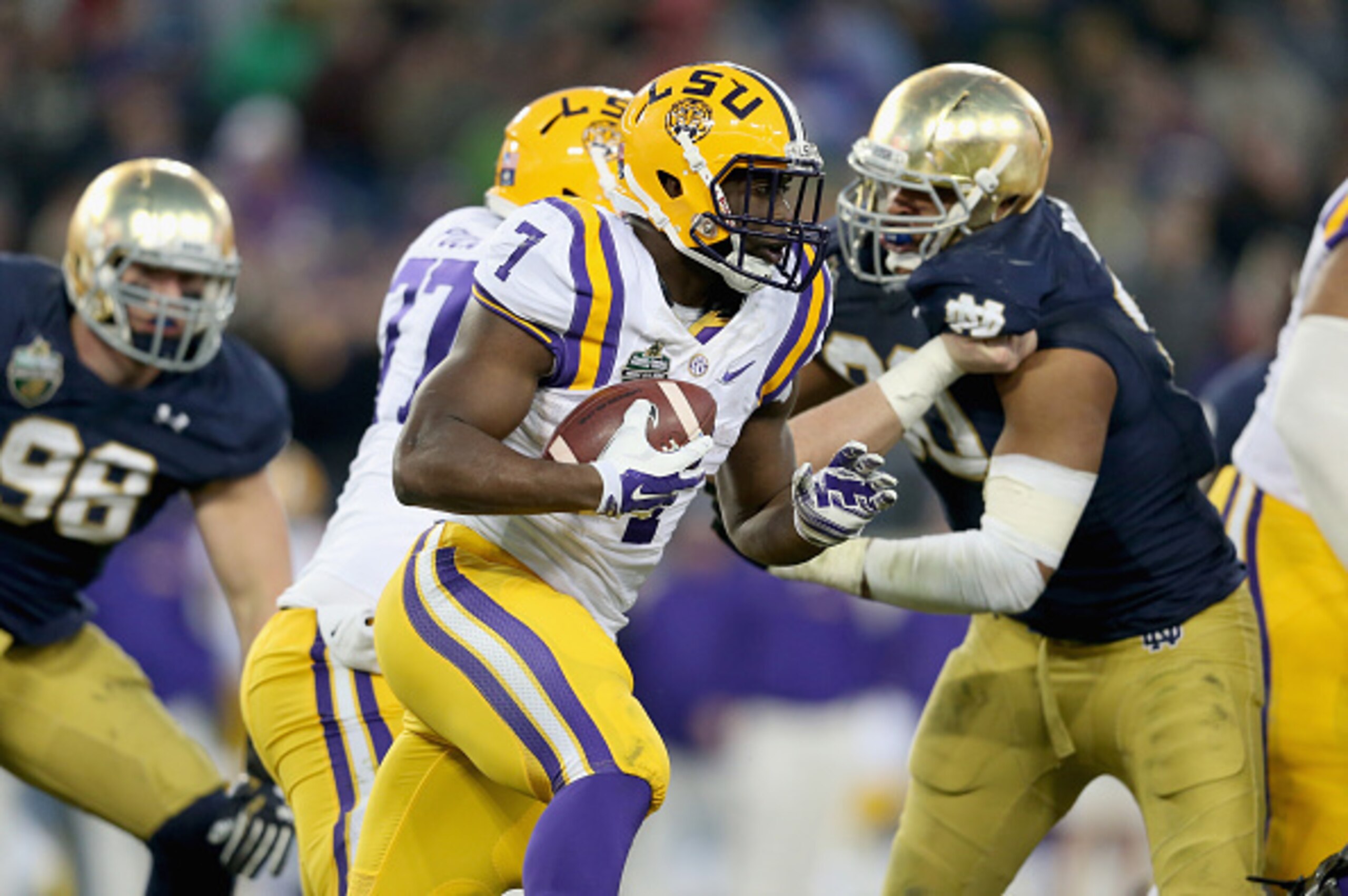
Leonard Fournette, So., RB
Despite all of the hype in the world placed on his sizable shoulders coming into college, Fournette had about as strong a freshman year as one could have realistically hoped for in 2014. He set LSU's freshman rushing record with 1,034 yards along with 10 touchdowns, and most importantly he showed his strongest efforts down the stretch.
That's also when Fournette was the most explosive, rushing for 289 yards and three touchdowns in the last two games while also returning a kickoff 100 yards for a TD in the Music City Bowl. In that game he had 264 all-purpose yards on just 13 carries.
Now Fournette heads into his sophomore year "lighter, faster (and) stronger," according to coach Les Miles via Sam Khan of ESPN.com, which likely means he's going to be even more explosive and involved in even more big plays.
Maryland
25 of 65
William Likely, Jr., DB/KR
Though never involved in Maryland's offense last season, Likely was still the Terrapins' most productive player with the ball in his hands. Thanks to his return skills and knack for intercepting passes, he showed that it's not just the skill guys who can make a huge impact.
Likely scored four defensive or special teams touchdowns in 2014, returning two of his six picks for TDs while also scoring once apiece on punt and kickoff returns. He averaged 31 yards on kickoff returns, which was fourth-best in the country, and his 11.05 average on punt returns ranked 13th in FBS.
Miami (Florida)
26 of 65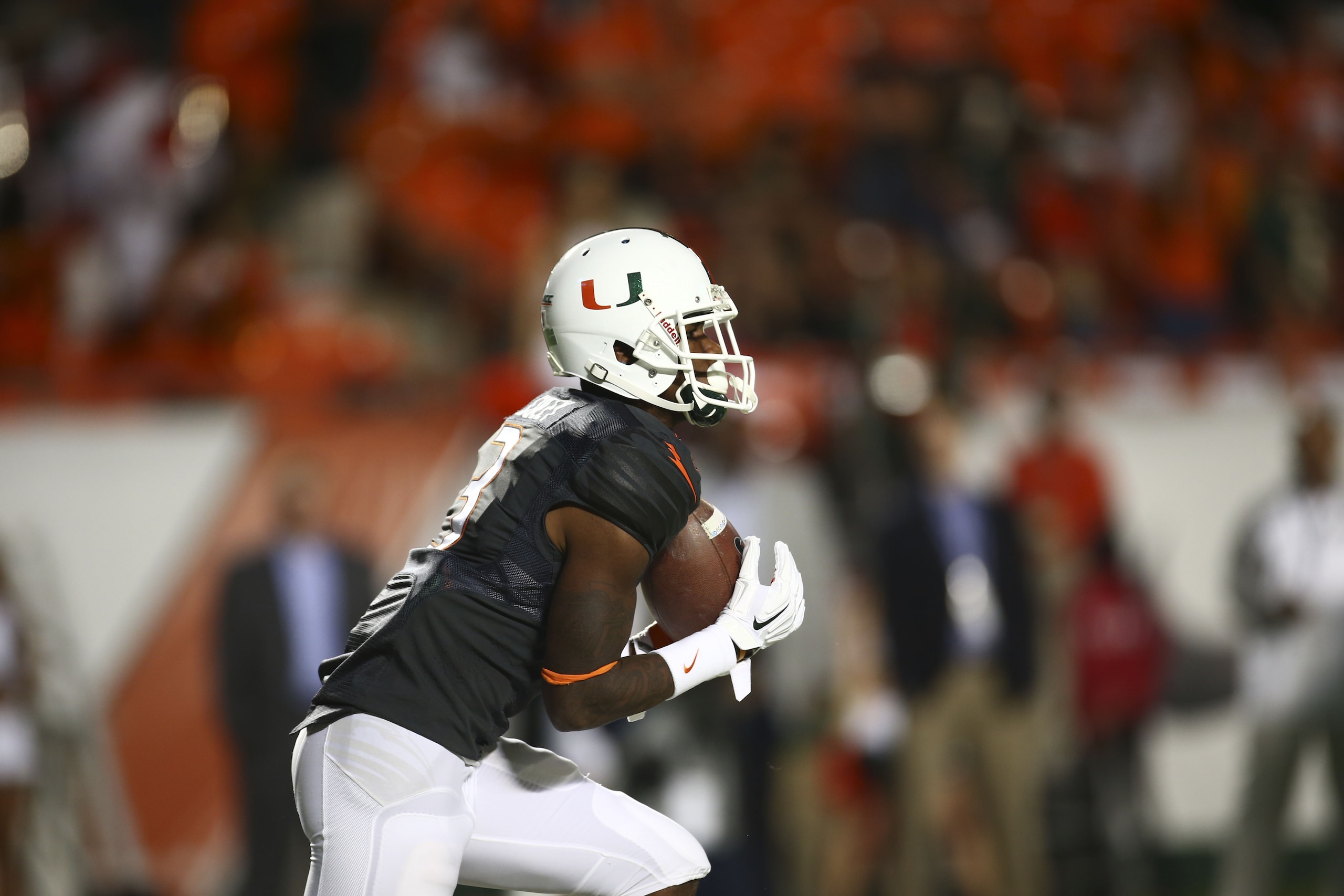
Stacy Coley, Jr., WR/KR
Coley was a supporting player in Miami's passing game last season, but he had a great view of what Phillip Dorsett was able to do with his chances. Dorsett averaged more than 24 yards per catch with 10 touchdowns on just 39 receptions.
Coley could be this year's Dorsett for the Hurricanes, especially if he's able to parlay his return skills into more production as a receiver.
Last year he only averaged eight yards on his 23 catches, but he averaged more than 22 yards on kickoffs.
Michigan
27 of 65
Amara Darboh, Jr., WR
When Michigan wanted to throw the ball last year, it was pretty much Devin Funchess and then everyone else. He has gone into the NFL now, and Darboh is likely to be the next man up as the primary receiving weapon.
Darboh was second on the team with 36 receptions for 473 yards, and his 13.1 yards-per-catch average topped all other Wolverines with at least four catches. His longest catch went for 36 yards—part of a career-best nine-reception, 107-yard effort against Indiana.
Michigan State
28 of 65
Shilique Calhoun, Sr., DE
Though senior quarterback Connor Cook will be making plenty of big plays this season on offense, he will be doing so with the help of blockers and receivers. Calhoun won't have the same luxury on defense, yet expect the massive end to still manage to wreak havoc and disrupt opponents.
The 6'5", 256-pound Calhoun has 16 sacks and 29 tackles for loss in his career, and in 2013 he scored three defensive touchdowns in the Spartans' first two games on interceptions or fumble returns.
Minnesota
29 of 65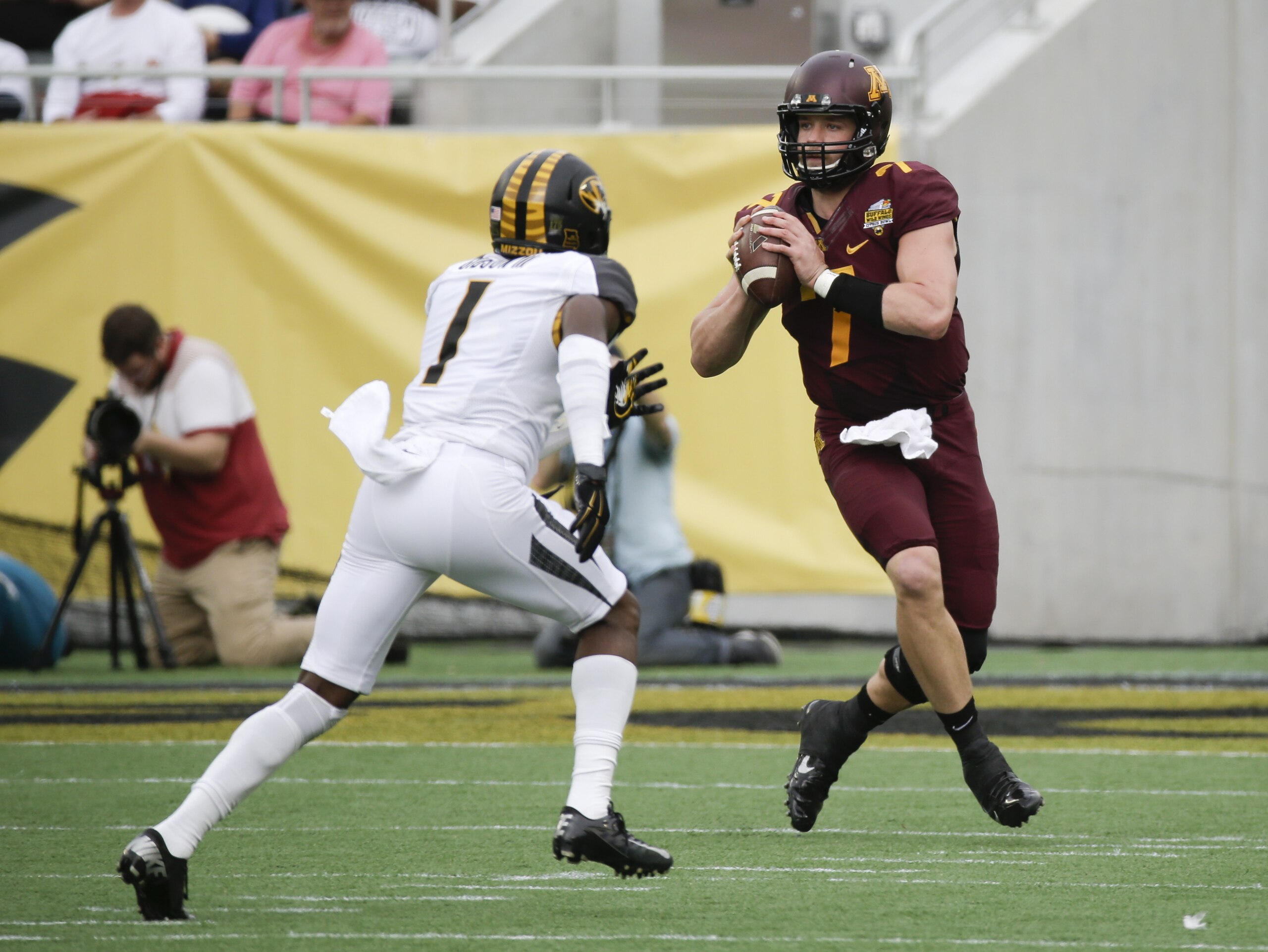
Mitch Leidner, Jr., QB
No longer blessed with a reliable, experienced running back (David Cobb) or a big-play target (tight end Maxx Williams), Leidner will become far more involved in Minnesota's offense this fall. He should be up to the challenge, as his ability to create both through the air and with his legs helped him win the starting job as a freshman midway through the 2013 season.
Last year Leidner had 2,250 yards of total offense including 452 rushing yards, which was second-best on the Golden Gophers. He was one of 12 quarterbacks in in FBS with at least 10 rushing TDs, scoring at least two in four different games.
Mississippi State
30 of 65
Dak Prescott, Sr., QB
Even though he was far and away Mississippi State's most high-profile player in 2014 and will be again this season, that didn't make game-planning to stop Prescott any less unnerving. Trying to stop a player who is equally dangerous throwing the ball or tucking it and running isn't tops on many defensive coaches' wish lists.
Prescott threw for more than 3,400 yards but also ran for 986, accounting for 42 total touchdowns if you include the 24-yard TD catch he had early last season against South Alabama. Nearly 20 percent of his runs went for at least 10 yards, and if sacks weren't factored in, he would have averaged more than six yards per carry.
With 608 touches out of Mississippi State's 1,001 offensive snaps, it wasn't hard to guess where the ball was going to last season. But Prescott didn't make it easy on his defenders despite the predictability of the Bulldogs' play-calling.
Missouri
31 of 65
Russell Hansbrough, Sr., RB
Missouri nearly joined Arkansas in the elite group of having two 1,000-yard rushers last season, but Marcus Murphy fell 76 yards short of the milestone that Hansbrough reached in the Tigers' bowl win over Minnesota.
Murphy has since graduated, which leaves Hansbrough to do all the heavy lifting in the backfield and by proxy get to make all the big plays.
Last year he averaged more than five yards per carry and scored 10 times. He logged four 100-yard games including a 199-yard, two-touchdown effort in a road win over Texas A&M that helped secure Missouri's second consecutive SEC East title.
Nebraska
32 of 65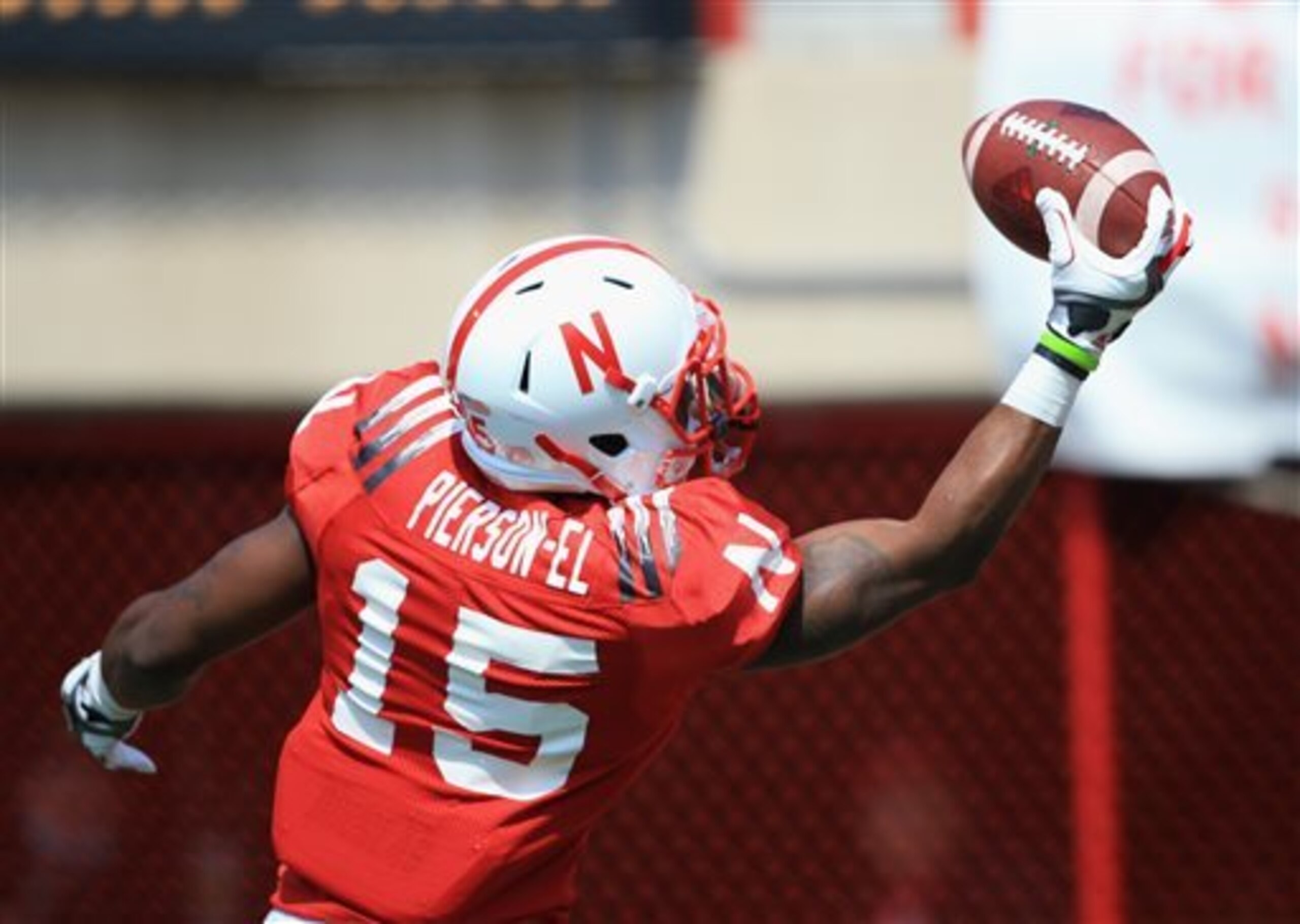
De'Mornay Pierson-El, So., WR/KR
Used primarily as a return specialist for much of the season, Pierson-El eventually couldn't be kept out of the rotation at receiver and got his opportunity to shine in live-game action. He responded by catching three touchdown passes in Nebraska's final six games while still continuing to dominate in the return game.
Lining up to return punts was Pierson-El's specialty, as he ranked third in FBS with a 17.53 average aided by three touchdowns. One of those helped swing the momentum in the Cornhuskers' favor in their regular-season finale win at Iowa, as he ran one back 62 yards for a score in the 37-34 victory.
North Carolina
33 of 65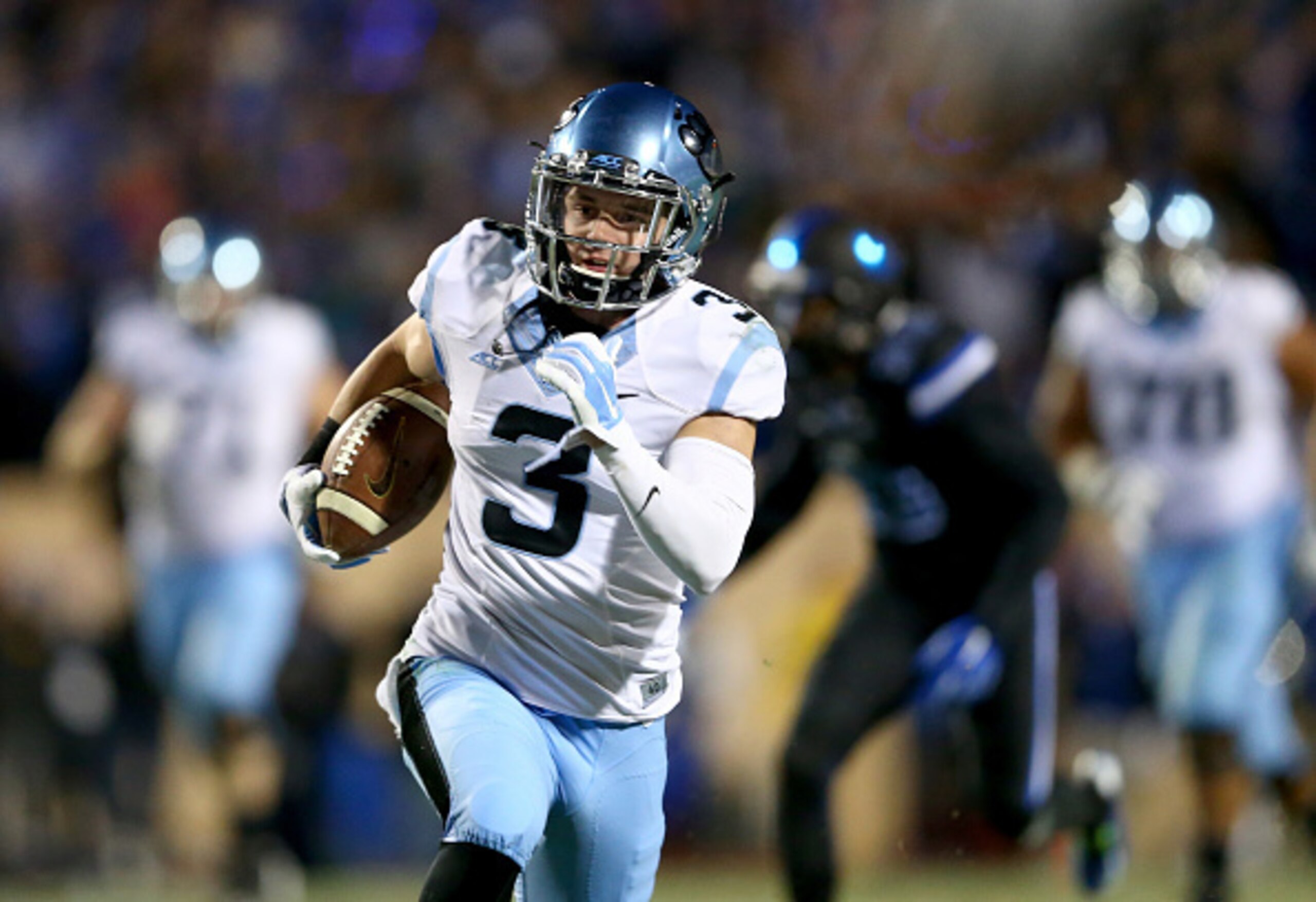
Ryan Switzer, Jr., WR/PR
Switzer's sophomore year could technically be considered a slump, despite leading North Carolina with 61 receptions and 762 yards. But after he wowed the country as a freshman by tying the FBS single-season punt-return touchdown record, not being able to come close to matching that feat seemed like a letdown.
Though Switzer wasn't able to add to his five TD returns from 2013, instead only averaging 4.65 yards on 37 returns last year, he was still someone whom every opponent game-planned for heading into the contest. Knowing he could break one off at any second, and that he was the kind of player who would take risks to make the big play on special teams, made him almost as dangerous even when he didn't come through.
North Carolina State
34 of 65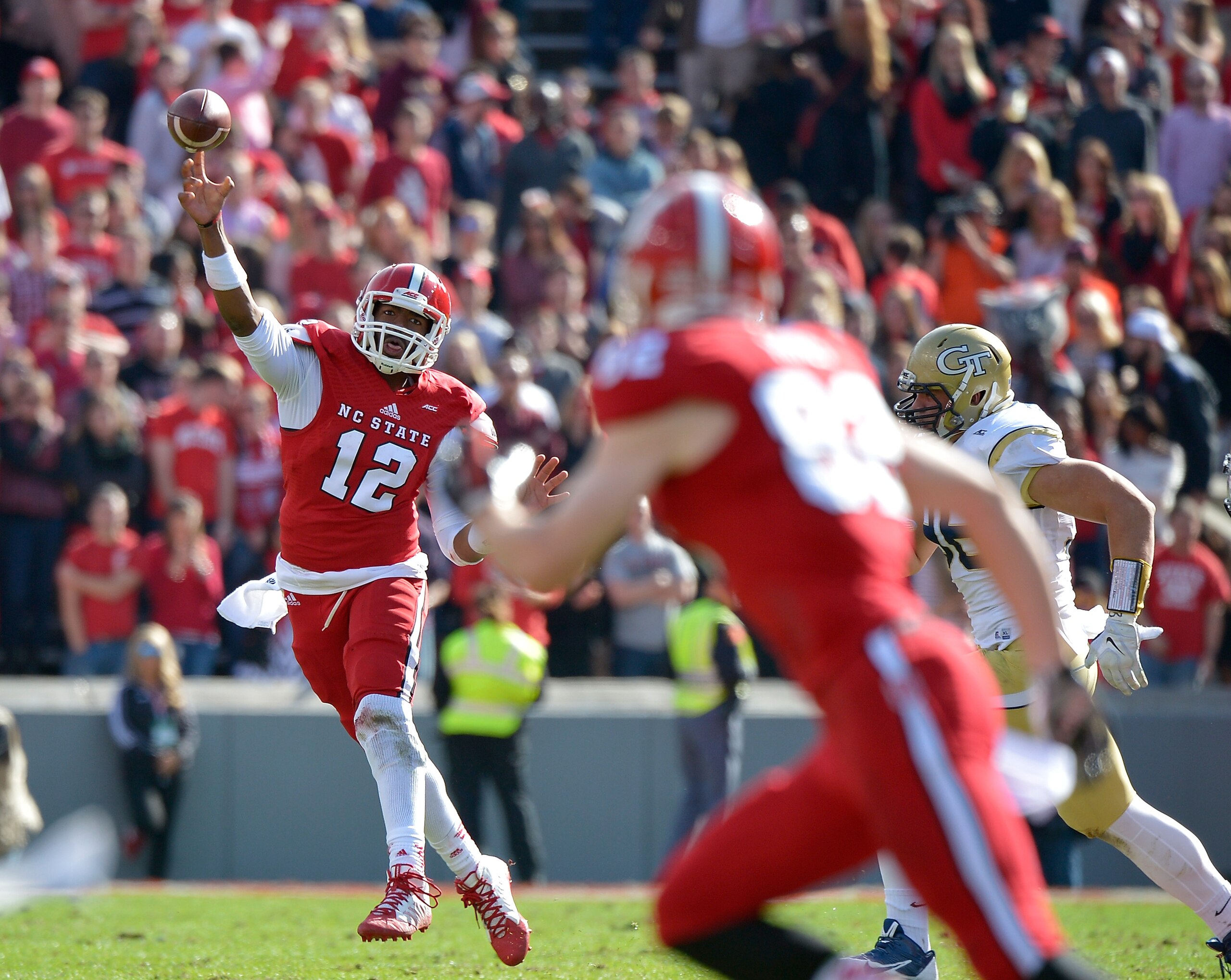
Jacoby Brissett, Sr., QB
Unable to stay in the lineup during his two years at Florida, Brissett resurrected his career last year when he helped North Carolina State win nine games and nearly knock off defending national champion Florida State. Though the Wolfpack lost that game, the nation saw for the first time what Brissett was capable of doing.
He had 397 yards of total offense in that 56-41 loss, throwing three touchdown passes that included one in which he seemed to elude nearly every FSU defender before finding Johnathan Alston for an eight-yard score.
"It looked…um, just like Jameis (Winston) last year," ESPN's ACC Twitter account tweeted during that game.
Northwestern
35 of 65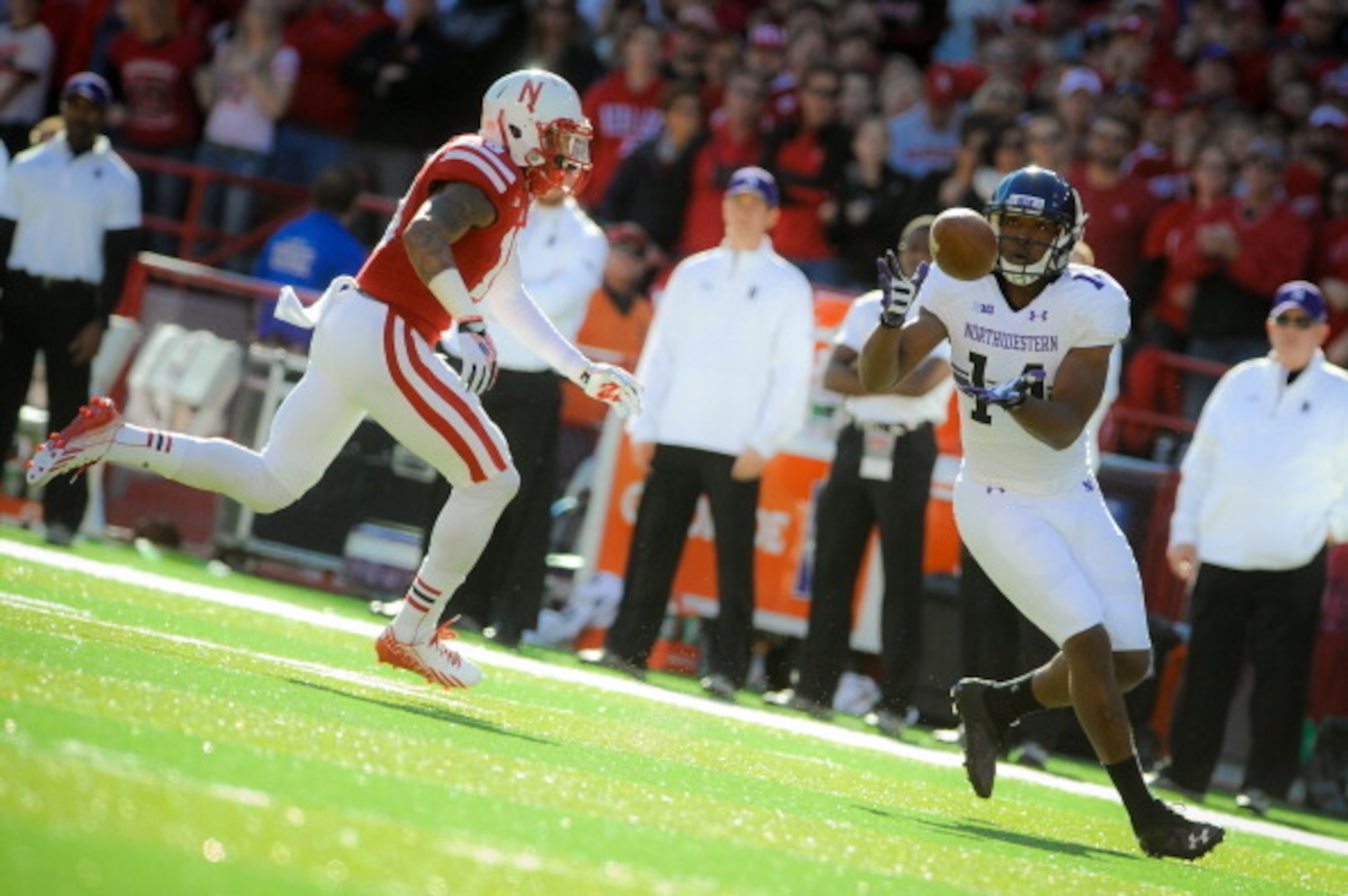
Christian Jones, Sr., WR
There was something noticeably missing from Northwestern's offense in 2014—that being the presence of Jones as the go-to weapon in the receiving game. He tore his ACL during the preseason, and without him the Wildcats ranked 78th in passing at 216.5 yards per game.
Jones, who had 54 receptions for 668 yards in 2013, is still not out of the woods when it comes to returning from that injury. In April he had surgery to repair torn cartilage in his knee, with the hope that he'll be back by the start of this season.
If Jones can go, he'll be a welcome addition to the offense in a critical year for Northwestern.
Notre Dame
36 of 65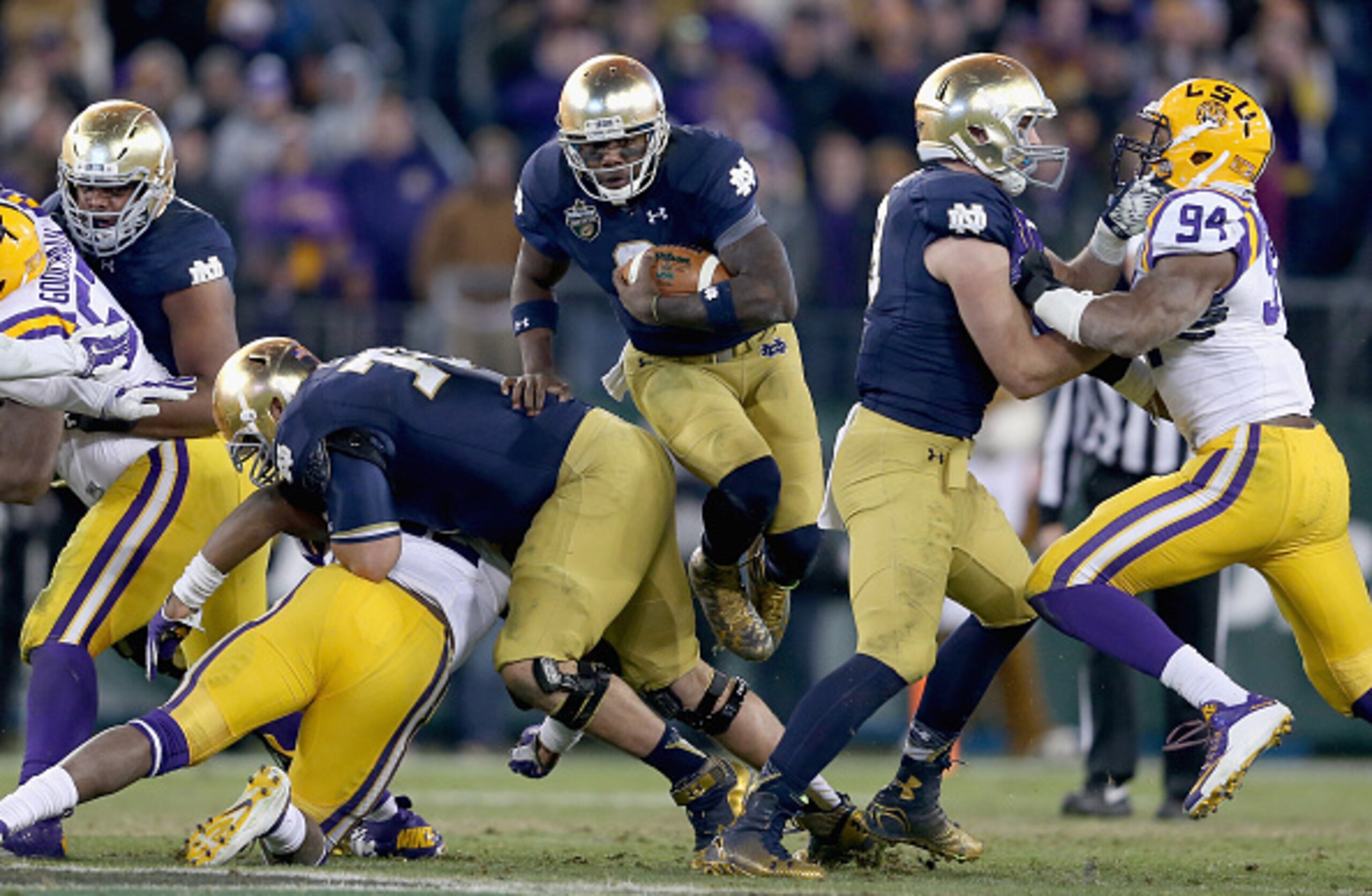
Malik Zaire, So., QB
Everett Golson didn't choose to transfer from Notre Dame for his final year of eligibility because he wanted to pursue a different course of study in a new environment. He knew that Zaire's playmaking ability was going to keep him from seeing much action in 2015.
Zaire showed what he was capable of when he had meaningful carries late last season, first in relief of Golson in Notre Dame's blowout loss at USC and then by taking the bulk of the snaps in the Fighting Irish's Music City Bowl win over LSU. In that game he had 96 rushing yards and 96 passing yards, contributing a score with his arms and legs.
Ohio State
37 of 65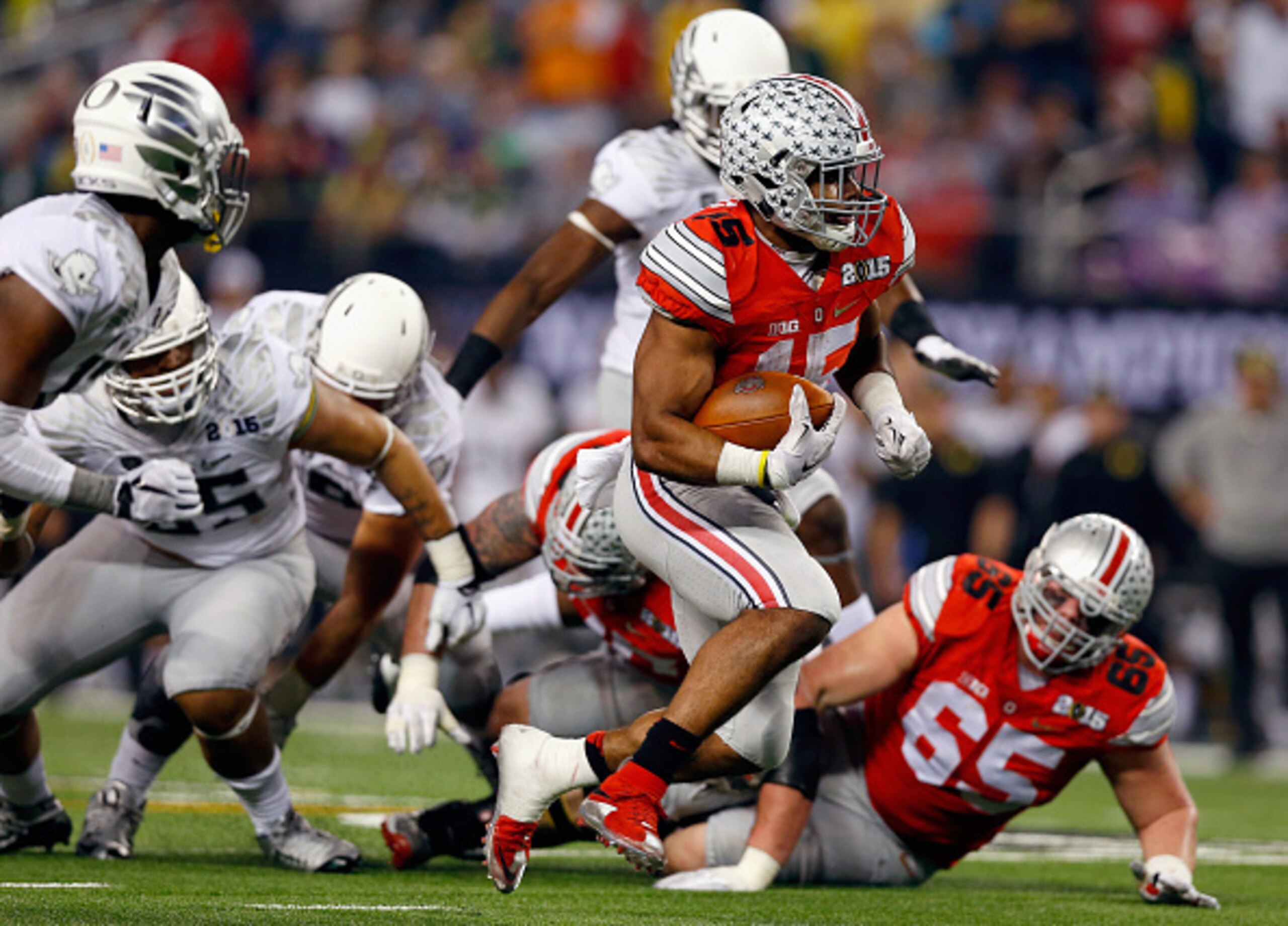
Ezekiel Elliott, Jr., RB
When Ohio State coach Urban Meyer needs an explosive play, his roster must look like an armory with all of the different weapons his team possesses. But the one that he knows will erupt most often is the running back who more or less blew up on every play during last year's postseason.
Elliott ran for 696 yards and eight touchdowns during the Buckeyes' wins over Wisconsin in the Big Ten championship game, over Alabama in the Sugar Bowl and then against Oregon in the national title game. During those three games he carried the ball 76 times, and nearly 25 percent of those (18) went for at least 10 yards. Another five went for at least 30 yards.
Now Elliott enters 2015 as the Heisman front-runner, per Odds Shark. And his hype video, created by a former OSU player, is the perfect accompaniment to this explosive player.
Oklahoma
38 of 65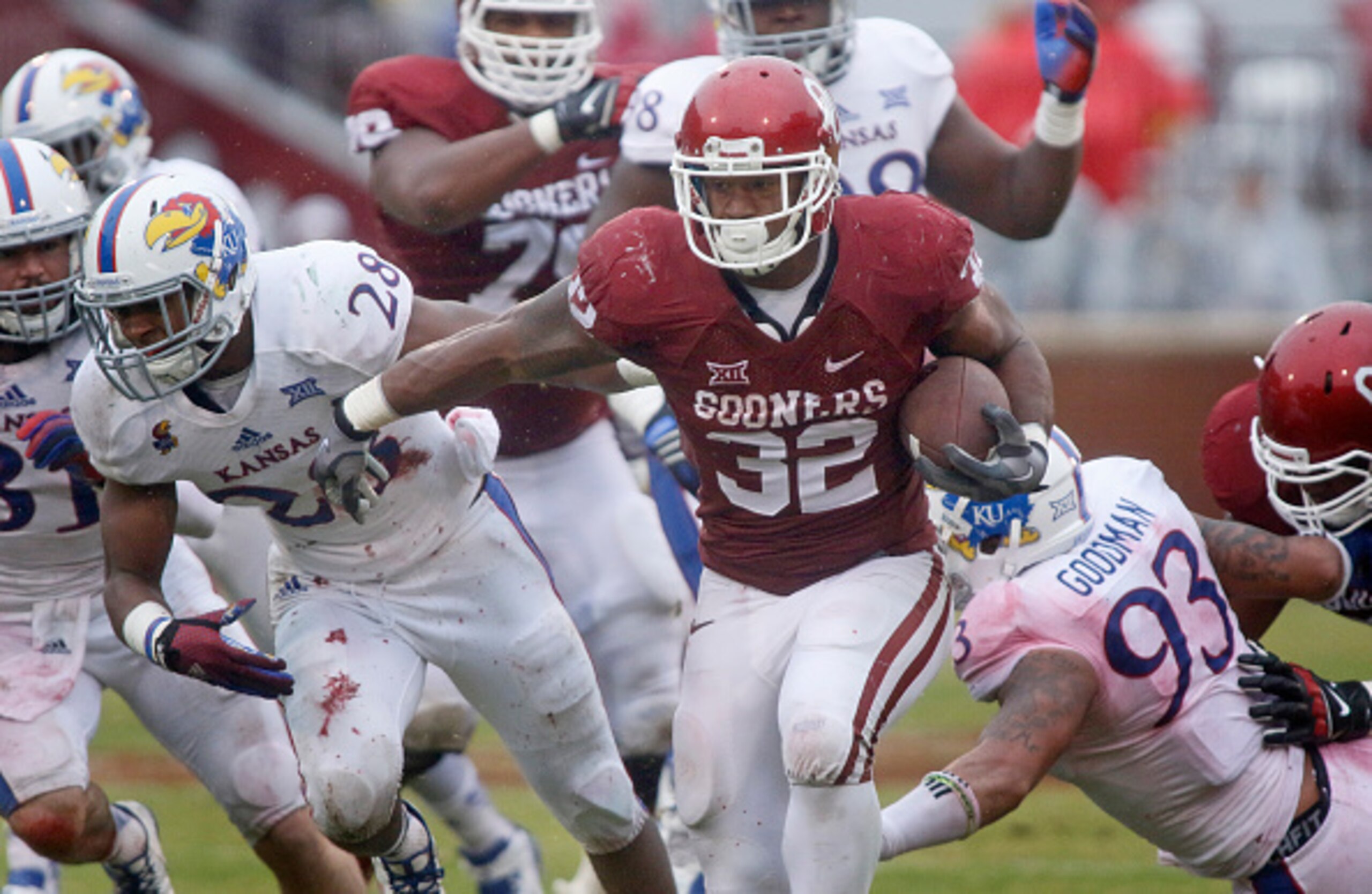
Samaje Perine, So., RB
Stuck in a three-headed competition to be Oklahoma's primary running back last season, in order for Samaje Perine to get more carries and a greater role in the offense he needed to do something to separate himself from the pack. A 242-yard, four-touchdown performance in a huge road win over West Virginia proved to be just the spark he—and the Sooners—needed.
When all was said and done, Perine finished with the most yards by an Oklahoma running back since DeMarco Murray. But Murray, Adrian Peterson and all other great Sooner rushers weren't able to do what Perine did against Kansas, setting the FBS single-game record with 428 rushing yards and five touchdowns last November.
"That guy is just so exceptional in everything he does," Oklahoma coach Bob Stoops told Rustin Dodd of the Kansas City Star.
Oklahoma State
39 of 65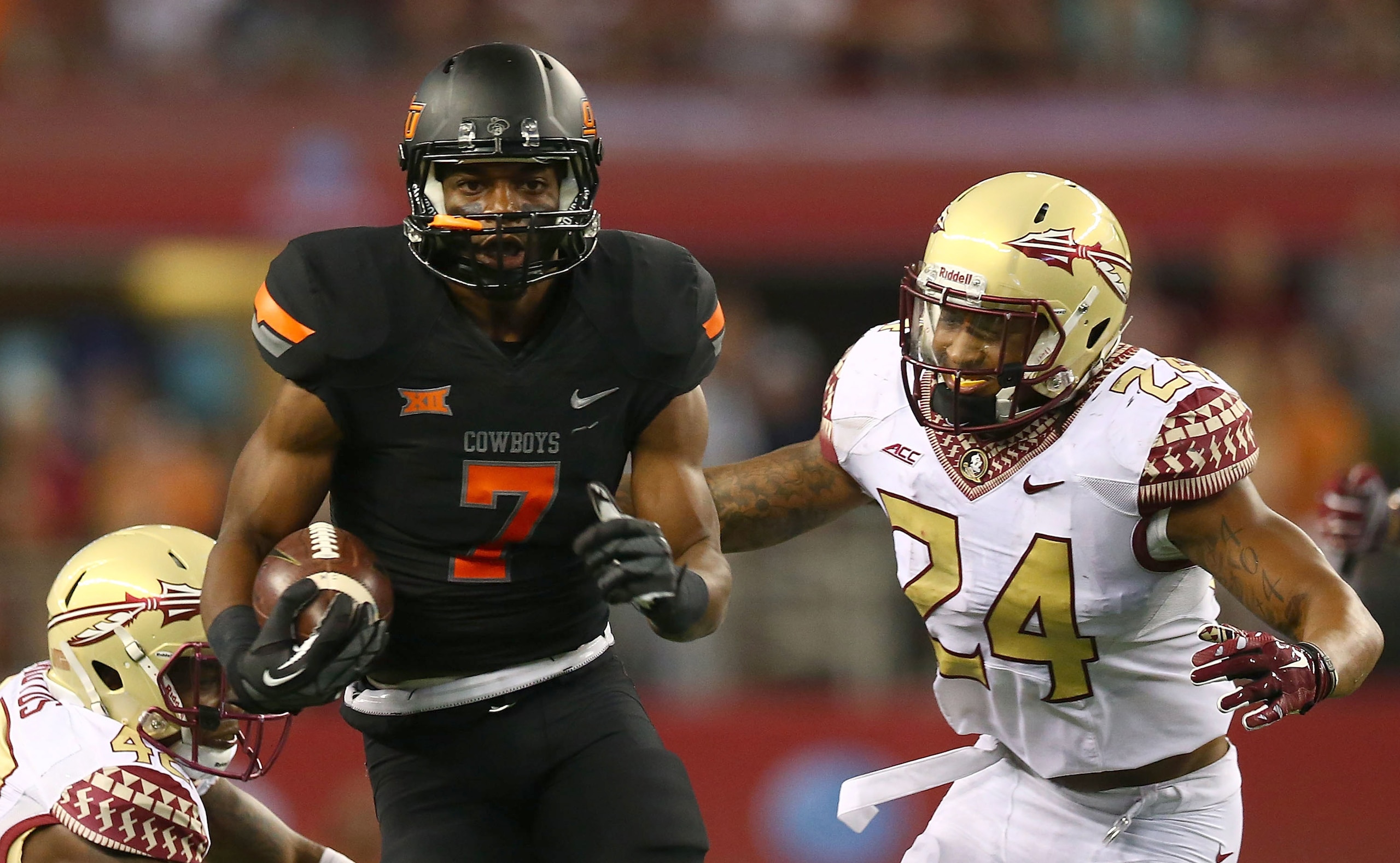
Brandon Sheperd, Sr., WR
Oklahoma State's offense didn't click in 2014 like it had in years past, but Sheperd's play at times gave hope that the team can return to the forefront in 2015. His 12 plays of 20 or more yards were more than any other teammate, and his 737 receiving yards were also best on the team.
At 18.9 yards per reception, the 6'1", 195-pound Sheperd was the player whom OK State's many quarterbacks turned to for big plays. All but four of his 39 catches went for a first down, per his school online bio, and his 156 yards and two touchdowns were integral to the Cowboys' upset win at Oklahoma that secured bowl eligibility.
Ole Miss
40 of 65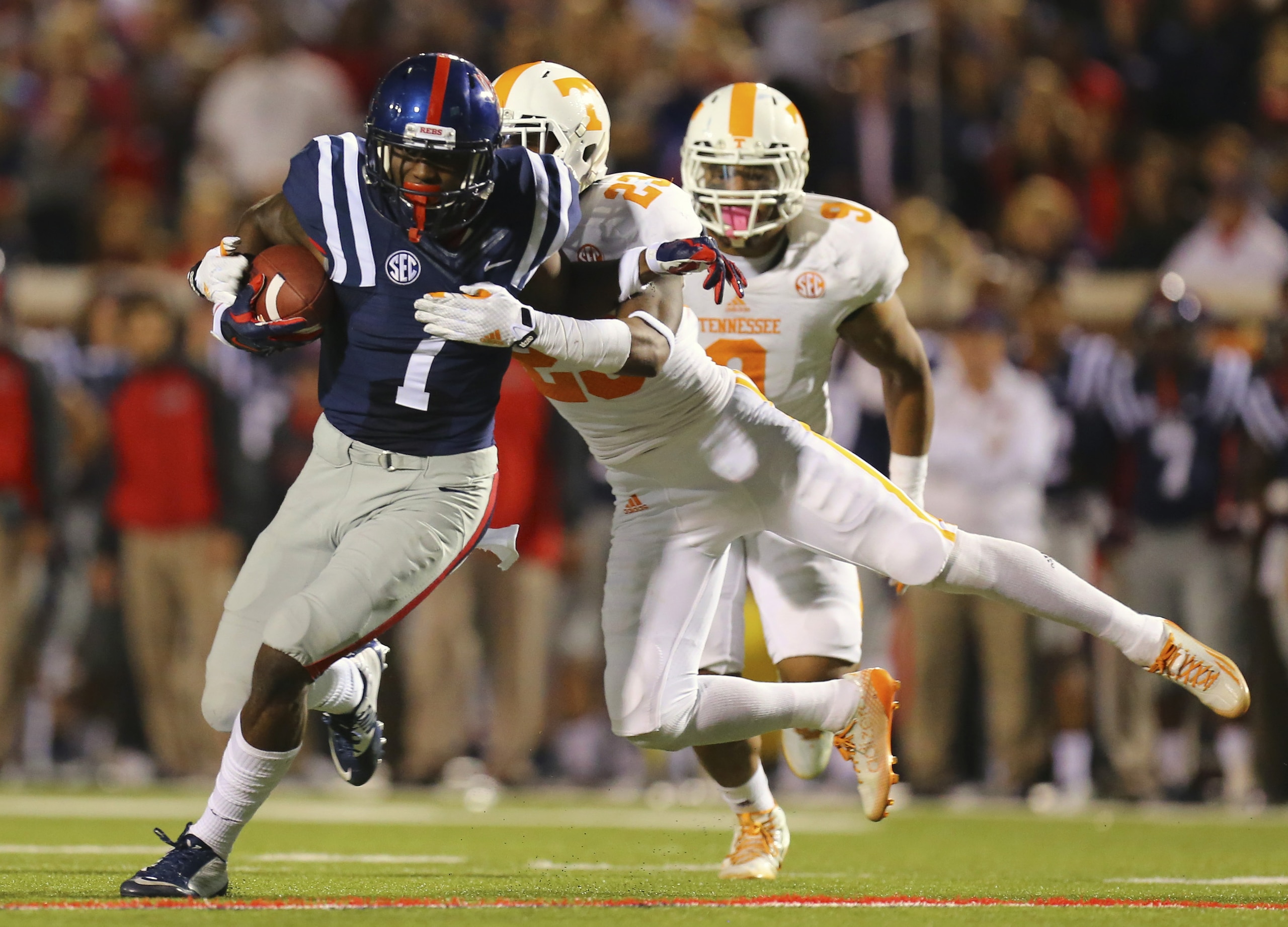
Laquon Treadwell, Jr., WR
Before going down with a horrific leg injury late in a season-turning loss to Auburn, Treadwell was by far Ole Miss' most explosive weapon. He still led the Rebels with 48 receptions despite missing their final four games, and his 632 yards and five touchdowns were both third-best.
Treadwell was hurt as he was stripped just short of the end zone, a play that signaled the start of Ole Miss' late-season downfall and the point from which its offense wasn't the same. The lack of his explosiveness was evident, and getting him back for 2015 is key.
Video of him on Instagram doing backflips on a trampoline might have freaked out Hugh Freeze, but the coach acknowledges that's also a sign that "it's time to turn him loose," per Bleacher Report's Barrett Sallee.
Oregon
41 of 65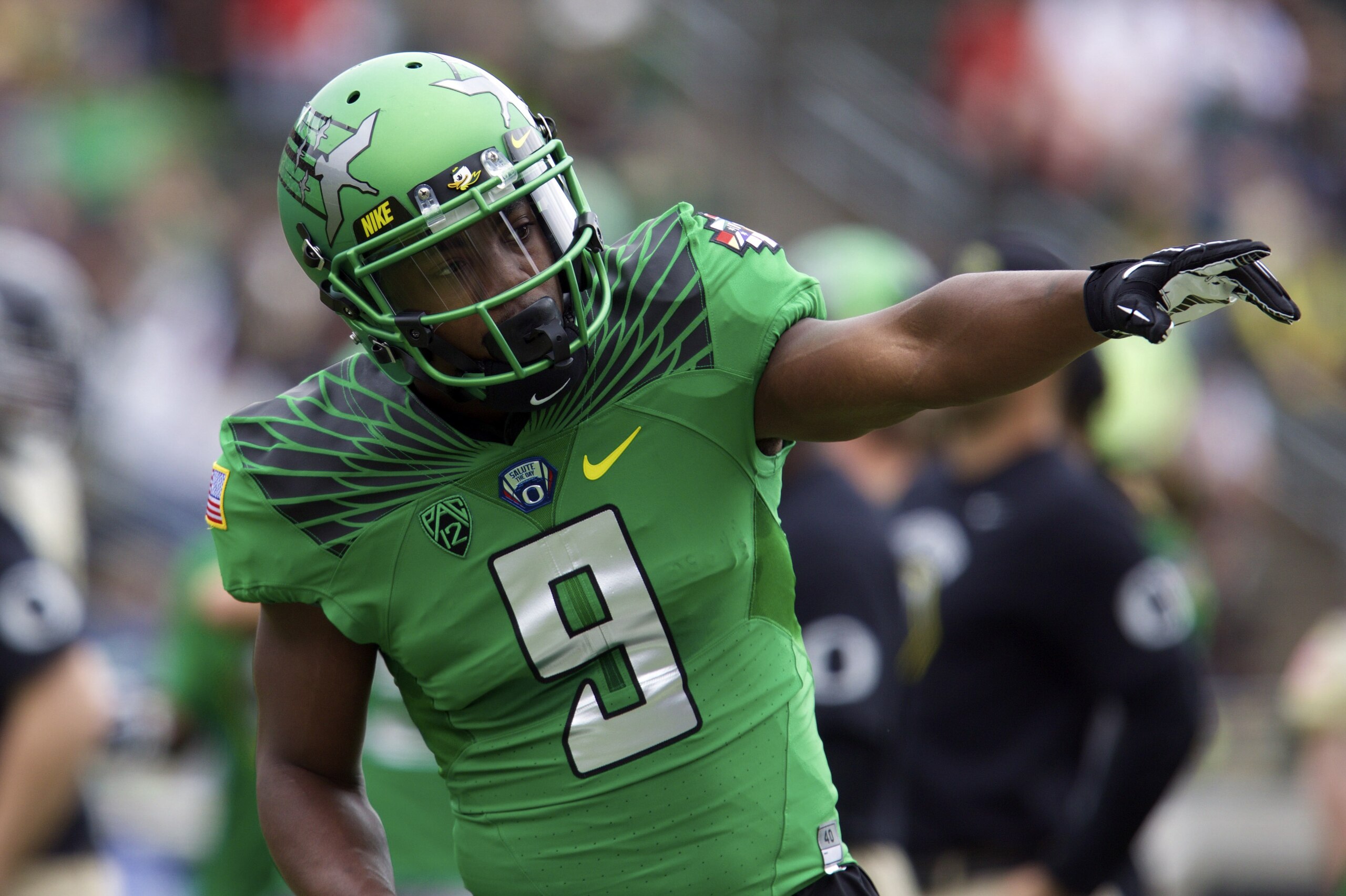
Byron Marshall, Sr., RB
Based on what he's done in past games against FBS competition, we could have gone with Eastern Washington transfer quarterback Vernon Adams as Oregon's most explosive playmaker. But seeing as Adams has yet to practice with the Ducks and still must beat out Jeff Lockie for the starting job, we chose to go with a player who guaranteed to be involved in big plays this season.
Marshall has the unique distinction of being one of the few players ever to have both a 1,000-yard rushing and receiving season. He didn't do them in the same year, though; after rushing for 1,038 yards as a sophomore in 2013, he was converted to receiver and led the Ducks with 1,003 receiving yards.
Oregon State
42 of 65
Victor Bolden, Jr., WR
In 2013 Oregon State had the best wideout in the country in Brandin Cooks, who won the Biletnikoff Award and has since moved into a prominent role as part of the New Orleans Saints' receiving corps. Bolden, who was Cooks' understudy two years ago, has put himself in position to be the Beavers' next great pass-catcher.
In 2014 he had a breakout sophomore year with 72 receptions and 798 yards but only scored two touchdowns. At 5'9" and 175 pounds he's not an over-the-top receiver but instead one who does most of his damage after the catch.
Penn State
43 of 65
DaeSean Hamilton, So., WR
Penn State quarterback Christian Hackenberg spent much of last season running for his life behind an offensive line that struggled to hold a pocket and ended up yielding 44 sacks. That often meant he just had to sling it up there and hope something good would happen, and while that resulted in 15 interceptions, it would have been far worse had Hamilton not been out there to save the day.
Hamilton had 82 receptions for 899 yards in 2014, the most catches of any freshman in FBS and the sixth-most yardage. He had a monster collegiate debut with 11 receptions for 165 yards; it was the first of four 100-yard receiving games.
Pittsburgh
44 of 65
Tyler Boyd, Jr., WR
In his two seasons in Pittsburgh, Boyd has put himself high on the list of the most dynamic weapons in school history. Considering the Panthers have produced the likes of Tony Dorsett and Larry Fitzgerald makes this distinction even more noteworthy.
Boyd has 17 career touchdowns—15 through the air and one apiece on a run and punt return. Last season he averaged 16 yards per reception and more than 27 yards on kickoff returns, with 20 of his 90 offensive touches going for at least 20 yards.
Purdue
45 of 65
Danny Anthrop, Sr., WR
Even though he missed Purdue's final three games after suffering a knee injury against Nebraska, Anthrop still ended up as the Boilermakers' leading receiver with 616 yards. Without him, their offense fell apart, and they finished the year on a six-game losing streak while averaging only 15.3 points per game in his absence.
Ready to go in 2015, Anthrop's senior year should see him return to the form that saw him emerge as Purdue's No. 1 receiving option. Before getting hurt, he had two 100-yard games and numerous catches of 20 or more yards.
Rutgers
46 of 65
Leonte Carroo, Sr., WR
Rutgers is facing its first season without Gary Nova as a passing option since 2010. But the Scarlet Knights don't have to worry about who its new quarterback will be throwing to, since Carroo is far and away the best target the Scarlet Knights have available.
He's also their most explosive player, coming off a season in which he averaged nearly 20 yards per reception and scored 10 touchdowns on just 55 catches. In seven of Rutgers' games, his per-catch rate was above 20 yards, and he had three games with at least two TD receptions.
South Carolina
47 of 65
Pharoh Cooper, Jr., WR
Though Cooper only contributed 13 touchdowns for South Carolina last season, it sometimes seemed like he was the only player capable of producing any offense. Seeing as he caught nine TD passes, ran for two scores and threw two TDs on just 104 offensive touches, this makes sense.
Cooper has been responsible for 16 TDs in his career, 10 on receptions and three each via the pass and run. Last season against Tennessee he had one of each, including two among his 11 catches for 233 yards.
Stanford
48 of 65
Christian McCaffrey, So., RB/WR
Stanford had one of the best all-purpose players in the country the past few seasons in Ty Montgomery, who for his career gained more than 5,000 yards as a receiver, ball-carrier and return specialist.
McCaffrey might not match that overall number, but following a solid freshman season that saw him contribute in all of the same areas as Montgomery did, he's at least shown he is capable of making big plays in a variety of ways.
In 2014 McCaffrey averaged more than seven yards per carry as a backup running back while averaging nearly 15 yards per reception with two touchdowns. His nine punt returns went for more than 17 yards apiece, and his five kickoff returns went for 18.2 yards per try.
Syracuse
49 of 65
Terrel Hunt, Sr., QB
Before breaking his leg in early October, Hunt was the only thing keeping Syracuse's season from going downhill. Once he was lost for the year, he wasn't able to prevent the Orange from spiraling to their worst record in 11 years at 3-9.
Even though he only played in the first five games in 2014, Hunt still led Syracuse in total offense with 1,275 yards, which included three 200-yard passing games and six rushing touchdowns. He threw for 219 yards and ran for 156 in a loss to Maryland, and after he got hurt, the Orange only topped 20 points in one contest.
TCU
50 of 65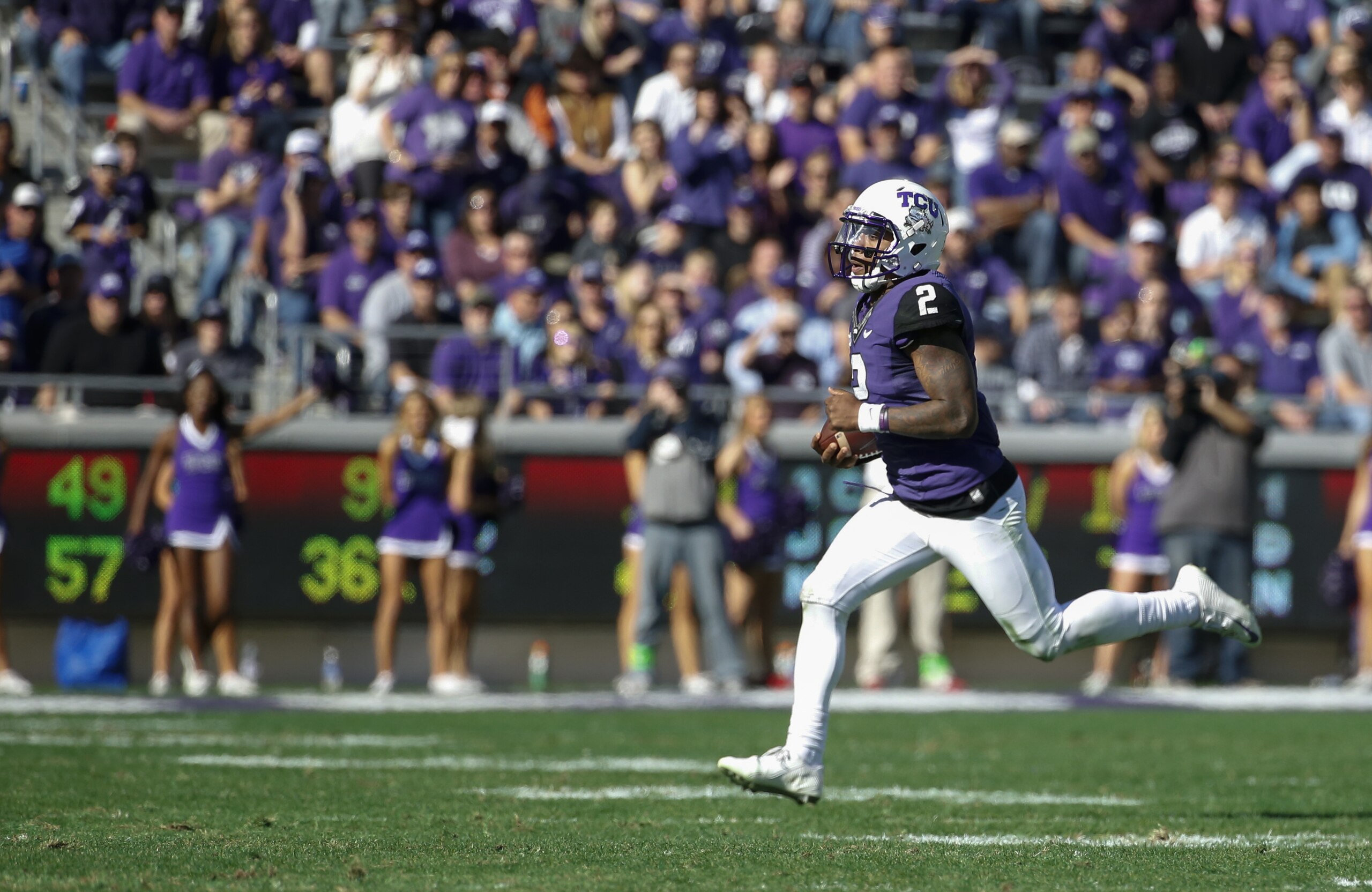
Trevone Boykin, Sr., QB
TCU's offense underwent a major renovation in 2014, and Boykin was the key to that improvement. With the ball in his hands, the Horned Frogs went from averaging 344.8 yards in 2013 to 533 yards last season.
Boykin was responsible for much of that boost, tallying 4,608 yards of total offense that included 707 rushing yards and 42 total touchdowns. He even showed off his receiving skills with a 55-yard TD catch against Iowa State in the same game that he threw for a career-high 460 yards.
A year after being a player who had to shuffle between playing quarterback, running back and receiver just to get involved, Boykin turned that versatility into an all-inclusive skill set that makes him capable of blowing up on every play.
Tennessee
51 of 65
Joshua Dobbs, Jr., QB
Through two late-starting seasons with Tennessee, Dobbs has managed to turn himself into one of the most explosive weapons in the country. We saw glimpses of this as a freshman when he made his debut in a late-October loss to Alabama and went on to participate in the Volunteers' final five games, and then again in 2014 when the team pulled his redshirt again against the Crimson Tide.
This second time, though, Dobbs' return to the field sparked an offensive resurgence for the Vols, who were averaging 325 yards per game before he saw action and 421 yards per game with him.
He contributed 279.2 yards per game of total offense over Tennessee's final six games, as the Vols won four to finish with seven victories for the first time since 2009.
Texas
52 of 65
Malik Jefferson, Fr., LB
We've chosen a player who's yet to appear in a real game for Texas for two reasons: Most of the Longhorns' top playmakers from last season have moved on, and Jefferson looked so good during spring ball that it seems inevitable he's going to be an integral part of what happens in 2015.
"Malik Jefferson already has everybody's attention as a potential starter and playmaker for years to come," wrote FoxSports.com.
Jefferson has big shoes to fill, as more than half of last year's solid defense has graduated, left early for the NFL or is out for the season due to injury.
Texas A&M
53 of 65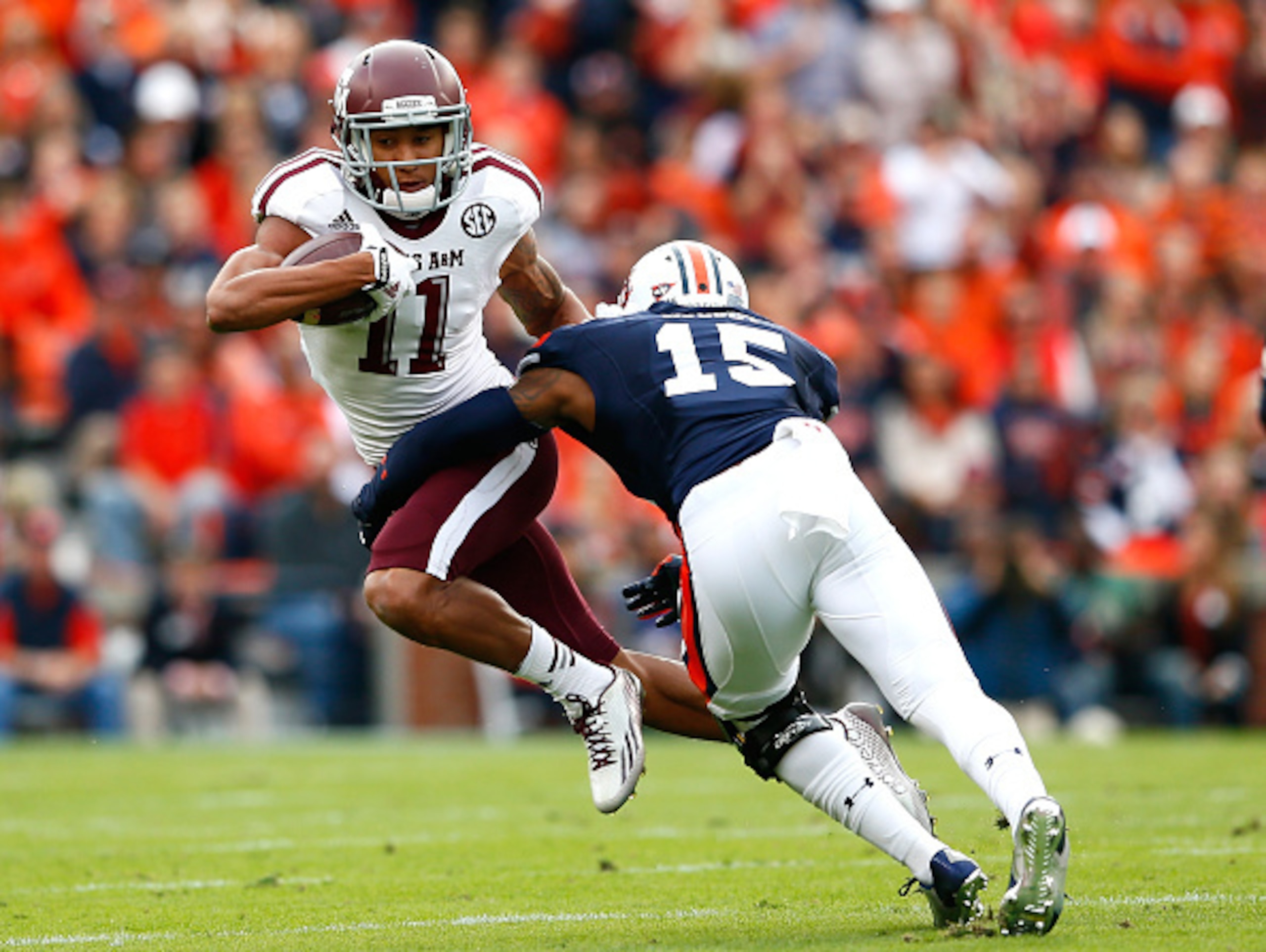
Josh Reynolds, Jr., WR
It's somewhat of a pick-your-poison scenario when it comes to Texas A&M's options for big plays, especially in its receiving corps. Last season the Aggies had six players with at least 29 receptions and four who hauled in 40 or more passes.
Topping them all, though, was Reynolds, who managed to effortlessly replace the production lost from Mike Evans in 2012-13. He broke Davis' school record for touchdowns in a season with 13, including a 59-yard score with just over two minutes left in a comeback win over Arkansas in overtime.
Texas Tech
54 of 65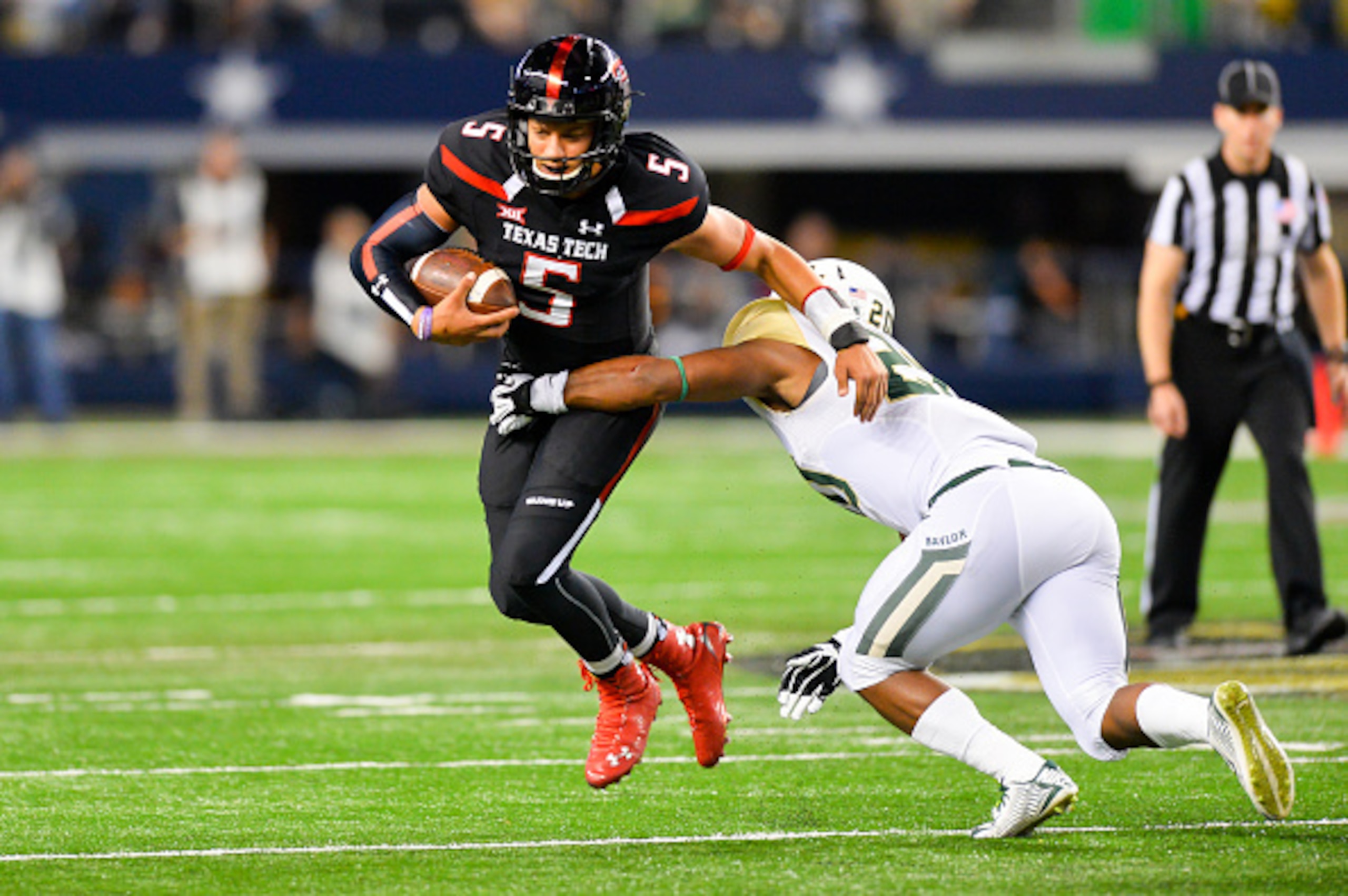
Patrick Mahomes, So., QB
Kliff Kingsbury's two seasons in charge of Texas Tech have seen near-constant change at the quarterback position because of injuries and ineffectiveness. But once Mahomes settled into this role late last year, the QB carousel should be over.
Though he only went 1-3 as a starter, the production that Mahomes had in those final three outings was nothing short of spectacular. He averaged just less than 440 passing yards per game with 14 touchdowns and two interceptions, nearly leading the Red Raiders back against Baylor in the regular-season finale.
UCLA
55 of 65
Paul Perkins, Jr., RB
Perkins led the Pac-12 in rushing last season with 1,575 yards, and while he showed great consistency with at least 78 yards in every game (and six games with more than 100 yards), he also had a number of big plays in huge moments.
The first of those came during UCLA's rally to beat Texas in September. With quarterback Brett Hundley injured and out of the game, Perkins' 58-yard run on the first play of the second half set up a game-tying touchdown. He ended up with a then-career-high 126 rushing yards as well as five receptions for 69 yards.
A month later, Perkins' two TD catches against California helped the Bruins escape with a two-point road win. And then he wrapped up his breakout year with 194 rushing yards and two scores in the Alamo Bowl win over Kansas State.
USC
56 of 65
Adoree' Jackson, So., WR/CB/KR
USC no longer has to deal with recruiting restrictions that for the past few years had affected its depth at various positions, but if that were still the case, the Trojans would at least know that Jackson's versatility could fill the gap at several spots.
A starter for much of his true freshman season at cornerback, Jackson also delved into the receiver mix toward the end of 2014 and ended up starting on both sides of the ball against California. Throughout the year he was USC's primary kick returner, averaging 29.7 yards per return with touchdowns against Utah and in the Holiday Bowl win over Nebraska.
At 23.3 yards per touch, Jackson was a threat to do damage whenever he had the ball.
Utah
57 of 65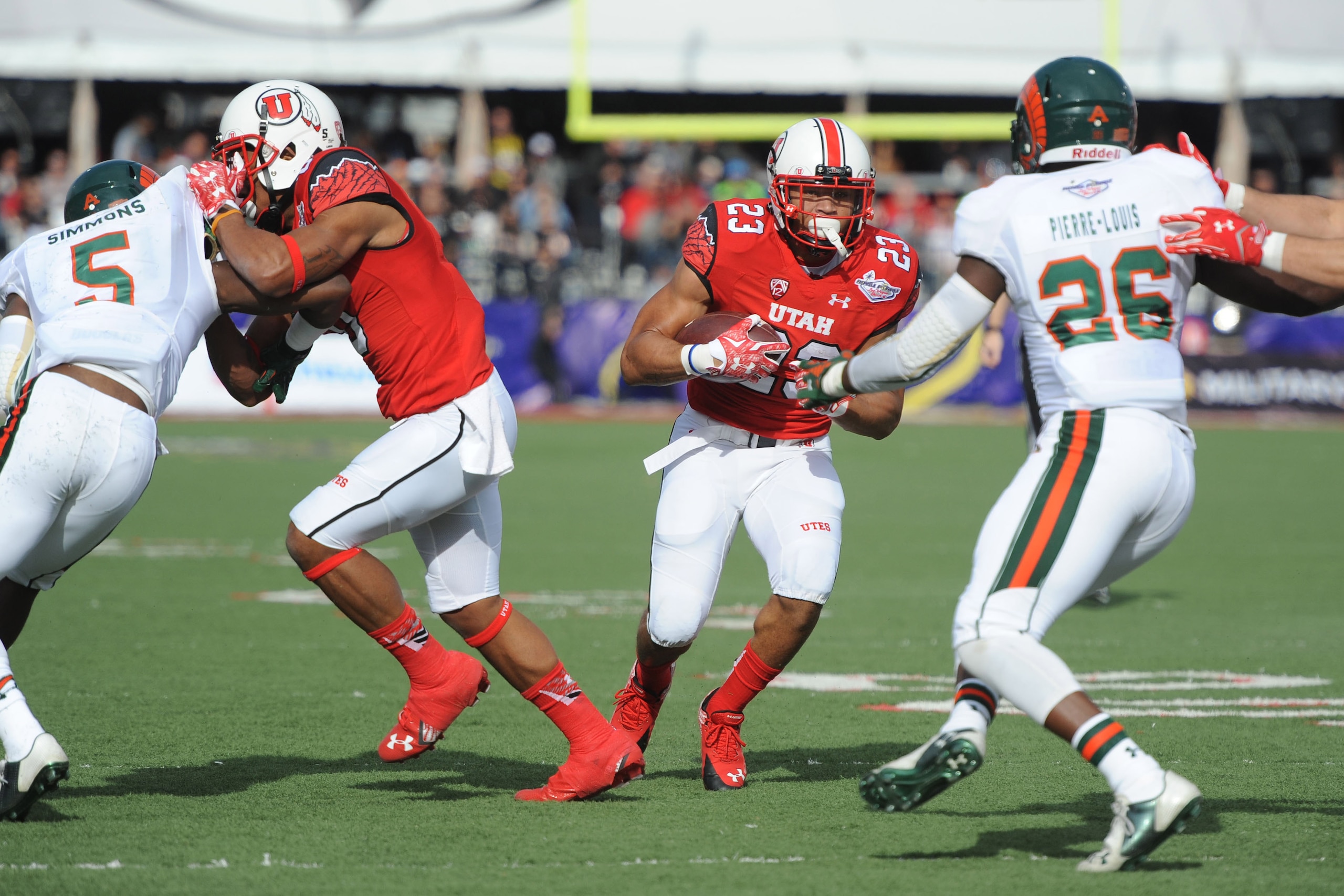
Devontae Booker, Sr., RB
No one was going to describe Utah's overall offense as explosive in 2014, not when it ranked 79th nationally in yardage. But once the Utes got Booker more involved in the attack, things became far more incendiary.
He had six games with a per-carry average of at least six yards and topped 100 rushing yards in seven games. He became a workhorse as the season went on but still showed the ability to break off big runs on a regular basis rather than just be a short-yardage gainer. He was one of 17 players in FBS who had at least three runs at least 60 yards.
Vanderbilt
58 of 65
Stephen Weatherly, Jr., LB
With an offense that averaged only 288 yards per game and cycled through four quarterbacks, there weren't many players on Vanderbilt who could be characterized as explosive. At least not on that side of the ball.
If the Commodores were to let their defense take over and try to generate points, Weatherly would be a great player to build around. The 6'5", 250-pound outside linebacker could make a mean fullback or bruising lead rusher, but instead he's made his mark as a guy who gets into the backfield and disrupts.
Last season Weatherly set a school record with five tackles for loss against rival Tennessee, part of his 12.5 tackles for loss for the year.
Virginia
59 of 65
Quin Blanding, So., S
Part of a highly regarded duo of in-state prospects for 2014 along with defensive tackle Andrew Brown, Blanding made an immediate impact with Virginia's defense and played with the poise of a seasoned veteran in leading the Cavaliers with 123 tackles.
Sixty of those takedowns were of the solo variety, as he prevented opponents from making big plays in the open field and as a result helped his own team get its offense back into the game. Blanding also had three interceptions.
Virginia Tech
60 of 65
Bucky Hodges, So., TE
Virginia Tech had one of the youngest receiving corps in the country in 2014, with juniors and seniors accounting for only 81 of the Hokies' 271 pass receptions. That should make for a far more experienced and effective group this season, with Hodges and his sizable frame leading the charge.
The 6'6", 244-pounder was second on the team with 45 receptions and 526 yards last year and had a team-best seven touchdown catches. Six of those came in Tech wins, including the game-winning scores in the fourth quarter to beat Duke and Virginia.
Wake Forest
61 of 65
Cam Serigne, So., TE
The most offensive offense in FBS last season was played by Wake Forest, which averaged less than 15 points per game and topped 300 total yards just three times. Yet from that rubble emerged a potential star in Serigne, who was the Demon Deacons' top receiver in his first college season.
With 54 receptions, 531 yards and five touchdowns, the 6'3", 235-pound Serigne was a consistent source of production who had at least three catches in 11 of 12 games. He was a big part of Wake's best offensive showing, when he caught two TD passes in a loss to Clemson.
Washington
62 of 65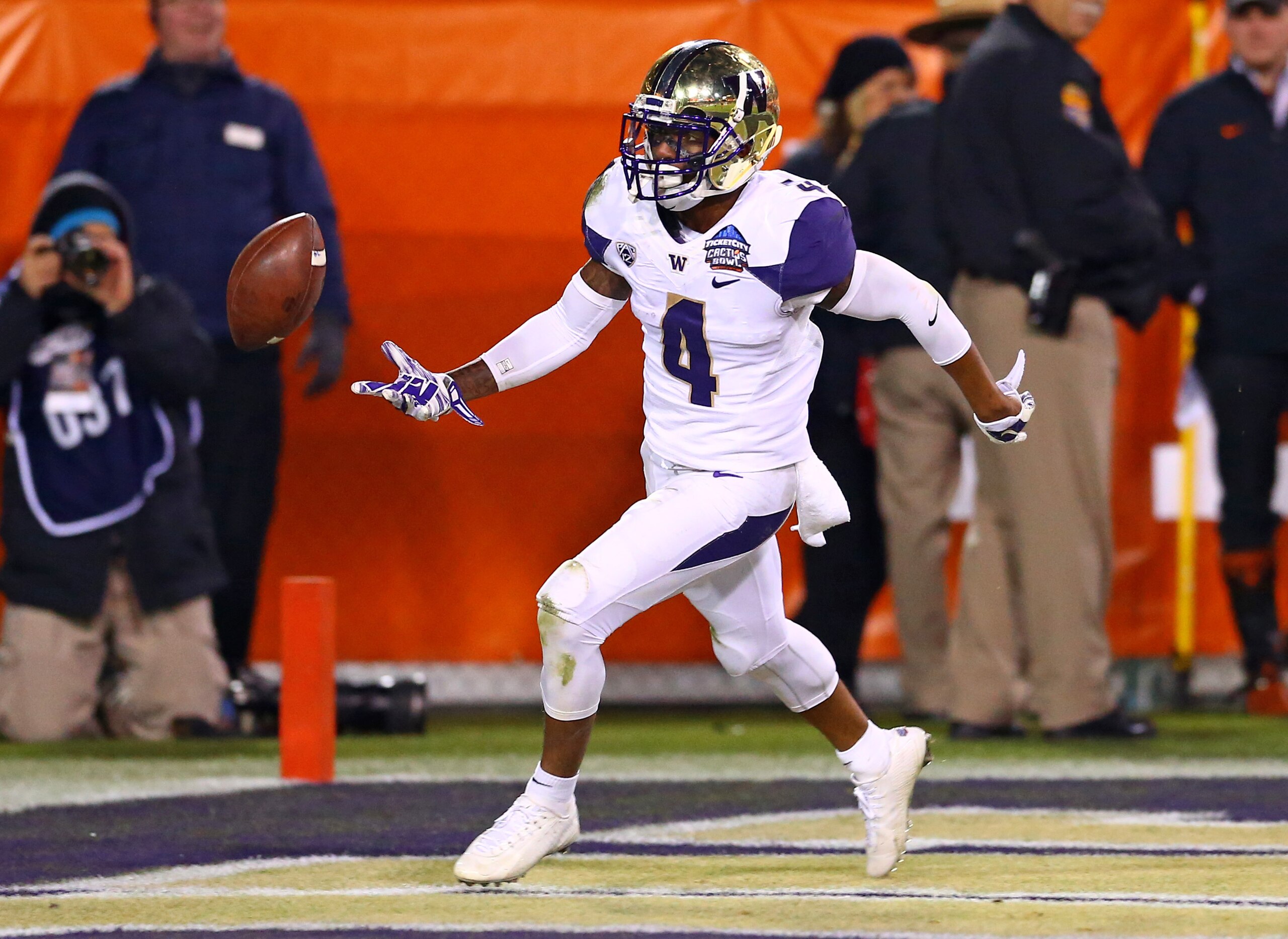
Jaydon Mickens, Sr., WR
The loss of do-everything star John Ross III to a knee injury in spring ball will sap Washington's playmaking abilities in 2015, since he was the Huskies' deadliest weapon on offense and special teams and had been developing into a lockdown cornerback.
Washington still has Mickens, who was the team's leading receiver with 60 receptions for 617 yards. With Ross unavailable, Mickens will be called on to go deep for big yardage.
He did not have a 100-yard game in 2014, but once Ross shifted over to defense, Mickens production went up. He averaged 71.5 yards per game over the Huskies' final four contests.
Washington State
63 of 65
Dom Williams, Sr., QB
Washington State's pass-heavy offense is one that doesn't need to have just one receiver handle all of the production, as it showed last year with six players who had at least 40 receptions and four with at least 60. It is good to have a player who can make the biggest plays when needed, though, and with the Cougars' top two targets from 2014 no longer around, the onus falls on Williams to be the main man.
He demonstrated he'll be someone who deserves a chance after looking sharp in WSU's spring game, when he had eight catches for 164 yards and two touchdowns.
"I throw a three-yard pass, and he gets 60 yards for you," quarterback Luke Falk said of Williams, per Jacob Thorpe of the Spokane Spokesman-Review. "It makes my job really easy."
Williams had 43 catches for 656 yards and nine touchdowns last year, and for his career he has 19 TD catches.
West Virginia
64 of 65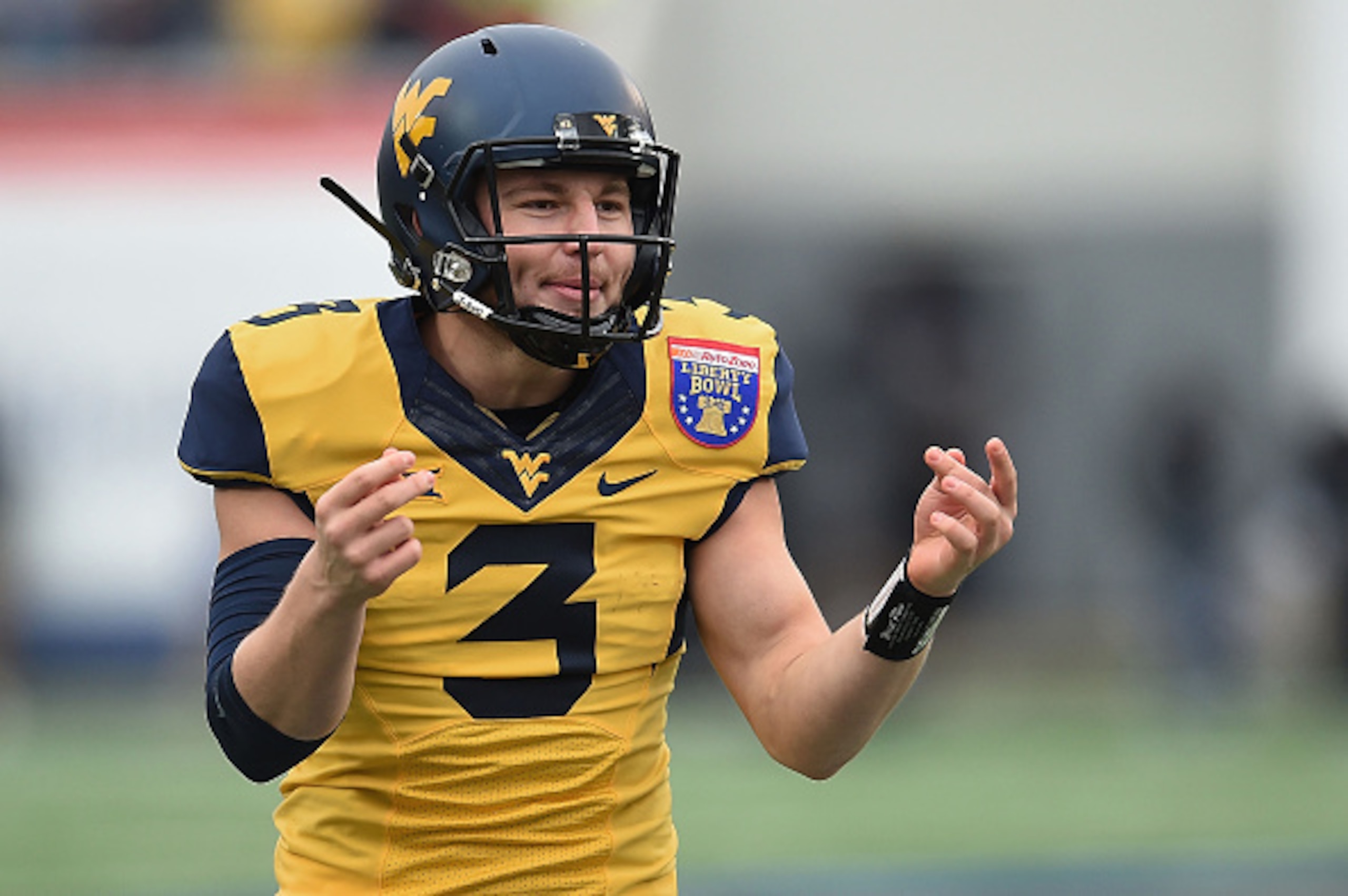
Skyler Howard, Jr., QB
There's no longer the safety net of big-play receivers Kevin White and Mario Alford to help out West Virginia's passing game, which will put much more pressure on the quarterback position in order for the Mountaineers to have success in 2015. Howard has shown the confidence to be a star, though he's also shown the ability to be erratic.
He replaced Clint Trickett in the lineup midway through West Virginia's 11th game last year and ended up throwing for 829 yards and eight touchdowns in fewer than three contests. But his completion percentage dropped each game, bottoming out at 44.4 percent in the Liberty Bowl loss to Texas A&M.
In that game Howard threw for 346 yards and three touchdowns on just 20 completions, so when he connects it's usually for big yardage.
Wisconsin
65 of 65
Corey Clement, Jr., RB
The loss of a running back who gained more than 2,500 yards and (briefly) held the FBS single-game rushing record isn't something that just gets brushed aside as easy to deal with. But thanks to having arguably the best backup rusher in the country, Wisconsin's offense shouldn't suffer even after Melvin Gordon moved on to the NFL.
Clement, who served as Gordon's understudy the past two years, has made the most of the carries he's gotten by rushing for 1,496 yards and 16 touchdowns while averaging nearly seven yards per carry. He's gone over 100 yards on seven occasions despite not being a starter until his most recent outing, when he went for 105 yards in the Badgers' Outback Bowl win over Auburn.
Nearly 18 percent of Clement's 147 carries went for at least 10 yards in 2014, including 10 runs of more than 20 yards and six that went for at least 30 yards.
Statistical information courtesy of CFBStats.com.
Follow Brian J. Pedersen on Twitter at @realBJP.


.jpg?w=2560 "Raiders Could Start Mendoza")


.jpg?w=2560 "Rodgers Iced Out on Plane 💎")

.jpg?w=2560 "Fantasy Waiver Wire Stars 🤩")
.jpg?w=2560 "Packers Safety Slams Refs 🤬")
