

Why Roberto Soldado Was Tottenham's Most Surprising Player in 2014/15
Perhaps the writing was on the wall for Roberto Soldado at Tottenham Hotspur when he scored just once after January in his first Premier League campaign.
The Spaniard had netted 10 times prior to then (albeit intermittently) but had been somewhat undermined by inadequate service. From the turn of the year into 2014, the chances were coming, but his finishing touch cruelly deserted him.
TOP NEWS

Final Men's Ballon d'Or Rankings 📊
Highlights and Viral Moments 🍿

J-Dub Suffers Gruesome Injury
That one goal, though—a composed and delicate finish to a break which ultimately saw off Cardiff City—was a reminder of the player Tottenham had paid Valencia £26 million to sign. Just over a year on, the failure of that striker to truly emerge makes him his club's most surprising player of 2014-15.
Despite those first-season difficulties, Soldado still struck 11 goals and assisted a further five, per ESPN FC. Not an outstanding return given his cost, but coupled with his mostly good work rate, it's enough to suggest he could improve in his second year in England.
Indeed, the benefit of keeping faith with foreign arrivals needing time to settle in a new country and league was seen at Spurs this season with Nacer Chadli, and to a lesser extent Erik Lamela. While the latter still has some way to go for his own expensive price tag to be truly justified, Chadli's good campaign has shown why being patient with him was worthwhile.
That optimistic view has not come to fruition with Soldado. Five goals and four assists were all he had to show from year two, with just one strike in 24 Premier League appearances—again confirmed via ESPN FC.
Some might regard his iffy first year in England as a warning sign now. At various points in the season just gone, however, there were hints Soldado was about to find the form which had made him one of La Liga's leading forwards.
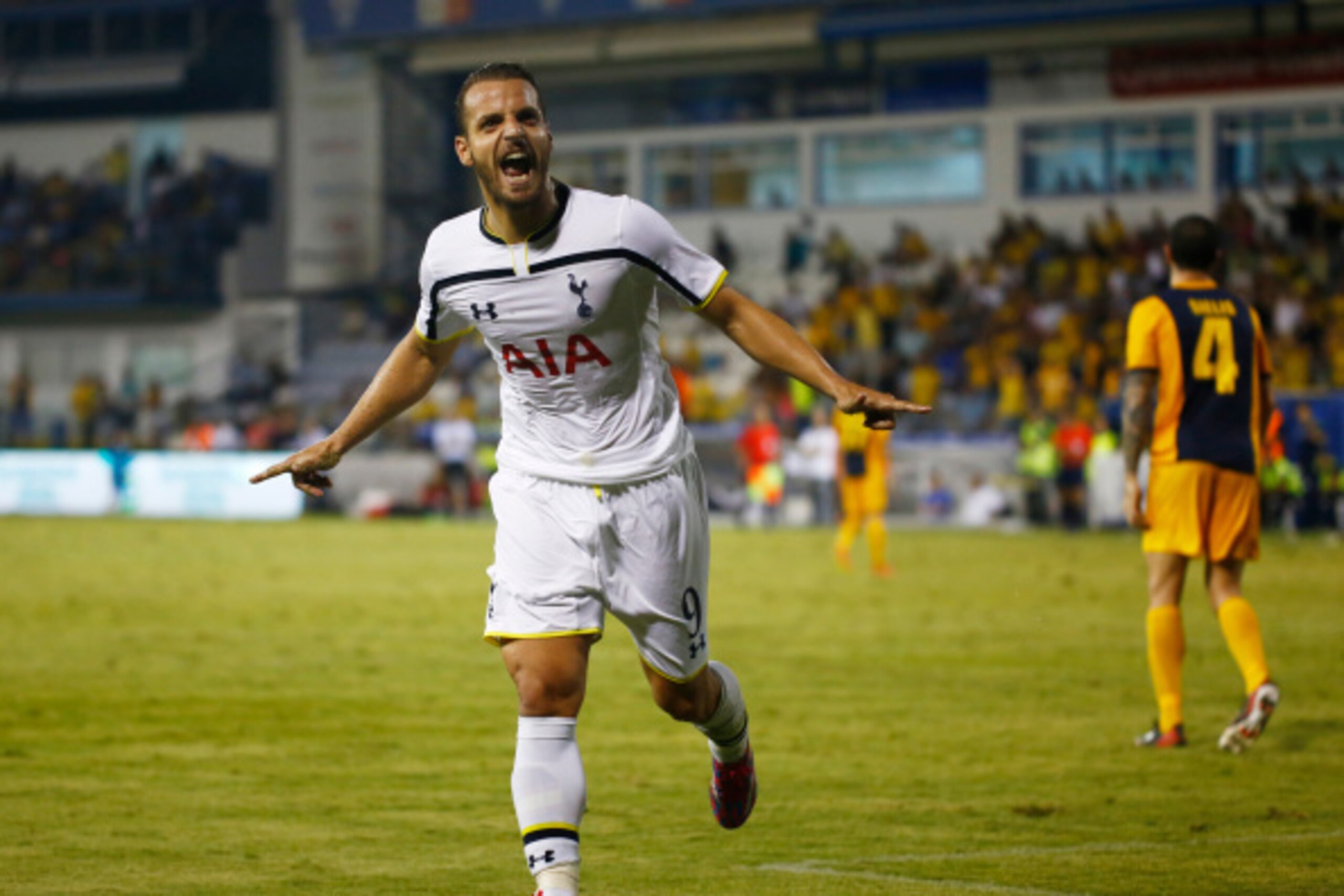
He was unluckily injured just days after scoring in his first appearance of the season, away at AEL Limassol in the Europa League. The disruption ensured Emmanuel Adebayor kept the initiative in the competition for the lone striker role in head coach Mauricio Pochettino's predominantly used 4-2-3-1 formation.
That's understandable, as that decision was in early September—Adebayor had just scored himself in the 4-0 win over Queens Park Rangers—Soldado had more reason to feel aggrieved a month later.
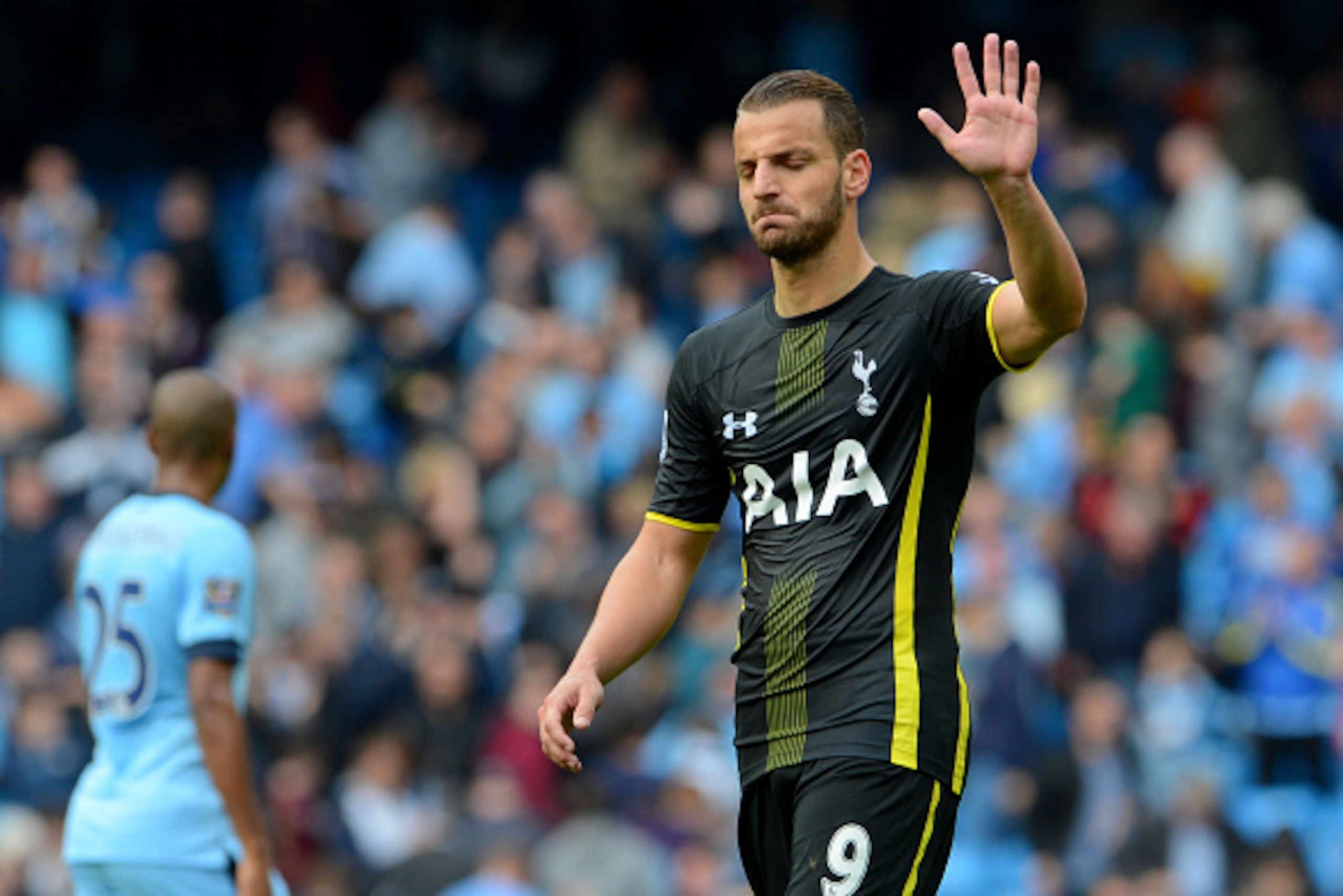
Starting away at Manchester City, he did fine work linking up with Christian Eriksen in a spirited Spurs attacking display (undermined by porous defensive work, Spurs lost 4-1). Although he missed a penalty, Soldado played well enough that a further look in place of the, by then, inconsistent Adebayor was worth a shot.
Pochettino instead stuck with Adebayor.
The Togo international would soon lose his place, but he would do so to Harry Kane, a player whose performances in cup games were too good to ignore.
Therein lay the frustration with Soldado. Hard done by though he might have been following Man City, subsequent hints and glimpses of the player he can be were never followed up on—not in the way Kane would do time and time again.
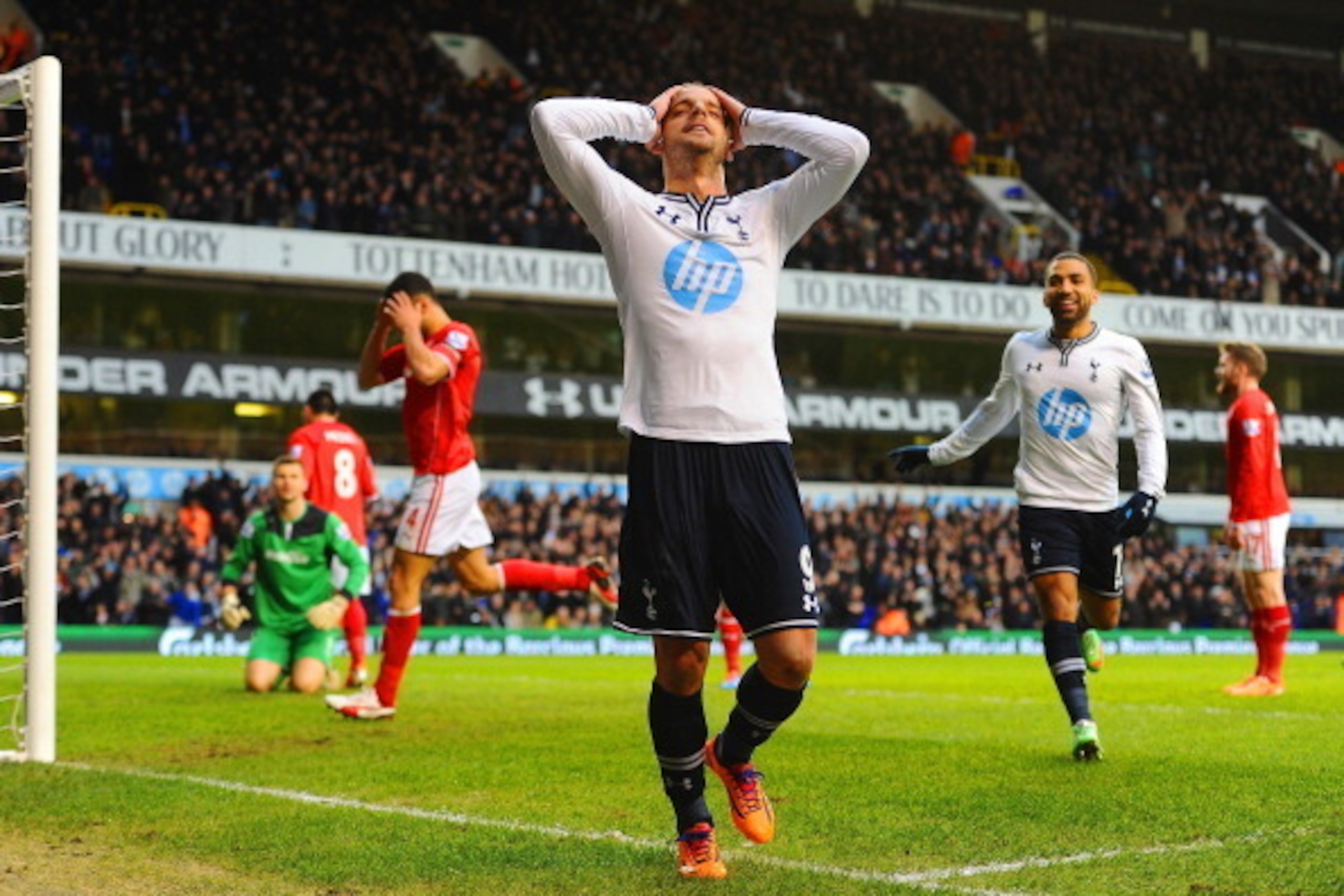
The 2-1 win over Everton in November was a turning point for the team after a tricky first few months of the Pochettino regime. After he scored what proved to be the winner, it felt like one for the former Spain international, too. His emotional response (see above) to the White Hart Lane crowd's support of him was a genuinely heartwarming moment.
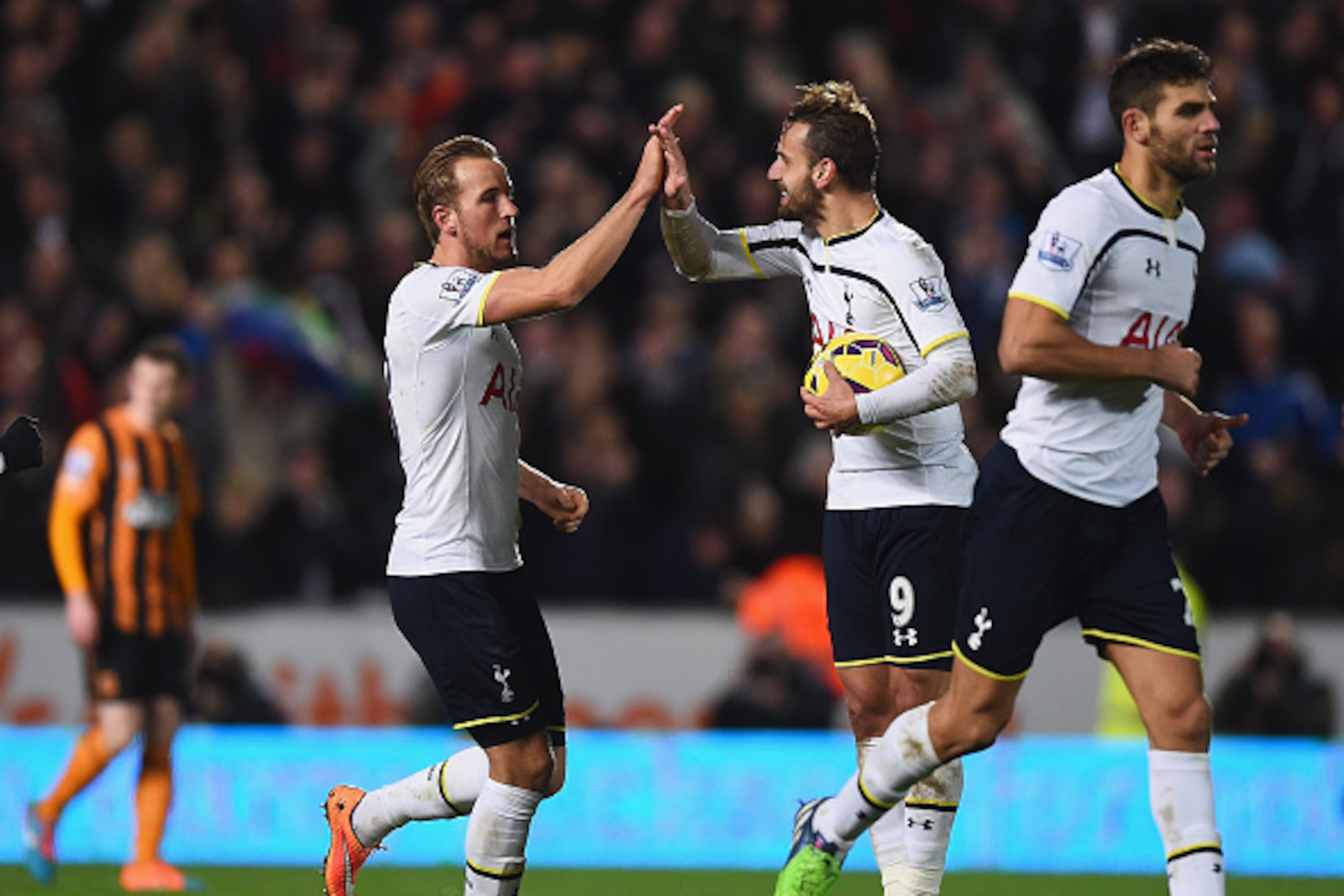
Though dropped for the following game at Chelsea, it was a sensible, strategical concession to the eventual champions' might, rather than a knock on Soldado (albeit an unsuccessful one, as Spurs lost 3-0 anyway). He was selected for Crystal Palace a game later as Pochettino put back together the fledgling partnership with Kane.
Decent as they were in tandem, it quickly became apparent that Soldado's presence was more hindrance than helpful to his improving young team-mate—a fact reinforced again in January when the duo was briefly reunited against Sunderland, relegating Kane to a deeper-positioned supporting role.
Although not helped by mixed service from midfield, Kane still made things happen for himself. In comparison, Soldado was tentative and overly reliant on others. Even accounting for physical and stylistic differences, the experienced Soldado was capable of more.

Kane was now the main man in Tottenham's attack, but there was still scope for Soldado to contribute. Again in February it looked like he might be about to do so again when he scored against Fiorentina and came off the bench to help earn a point against West Ham United a few days later.
A blown chance in front of goal out in Florence abruptly halted any gathering momentum. Pochettino brought him off the bench eight times thereafter. Spurs' attack had creative issues in this period, but the now-29-year-old showed little inclination to try to remedy them.
Earlier in May, Pochettino offered up a defence of his misfiring striker, per Mail Online's Dylan LeGrand, citing the challenges of life in a different country for a footballer. Such an argument had some merit a year earlier. For a player of Soldado's proven class, it is harder to buy into with the ample time to impress he has received.
His substitute appearance in the final-day win over Everton looks likely to be his last for Tottenham Hotspur. The club need new ideas in attack to help Kane, and Soldado needs a fresh start to try and revitalise his career.
Less than two years on from his arrival in Spain, this is not what Spurs thought they were going to get from Soldado. He would likely say the same.
.jpg?w=2560 "Rams Raiders Football")

.jpg?w=2560 "Rodgers Iced Out on Plane 💎")

.jpg?w=2560 "Packers Safety Slams Refs 🤬")

.jpg?w=2560 "🚨 Week 8 AP Top 25 Poll")
