

The NBA playoff field is thinning as the second round winds down, which is making it easier to pick out the truly influential stars at each position.
Here, we'll run down the top three contributors at each spot, eliminating candidates whose teams were sent packing after the first round. To make our distinctions, we'll focus on a combination of statistical production, intangible impacts and series-altering moments.
Recent performance will matter a little more than a player's overall body of postseason work because the second round features tougher competition and added pressure. Strong efforts in more difficult circumstances deserve extra recognition.
Finally, volume counts.
Injuries are an issue for every team, and there are more than a few marquee talents who've been sidelined for health reasons. To crack the top three spots on this list, you've got to stay on the court. Although, at the same time, we'll acknowledge players who've fought through injury to keep playing.
We're almost halfway through the 2015 NBA postseason. These are the positional leaders so far.
Point Guards
1 of 5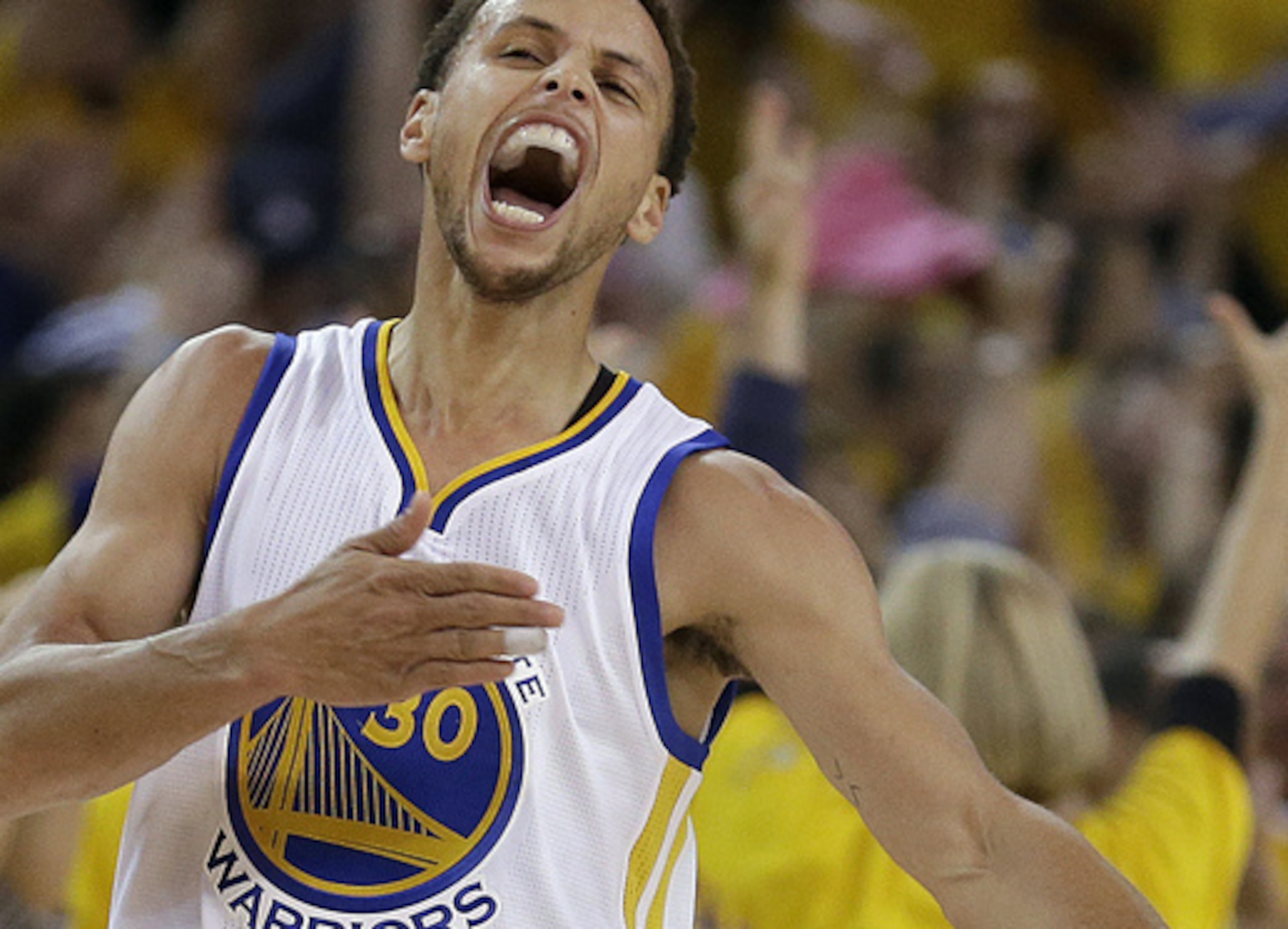
3. Kyrie Irving, Cleveland Cavaliers
Per-Game Stats: 19.8 points, 3.3 rebounds, 3.3 assists, 1.2 steals, 0.8 blocks
Despite a pair of flat tires (right foot, left knee), Irving is cruising along as the secondary scoring option his game has always indicated he should be. His off-ball shooting against the Bulls has been critical to a Cavaliers club in need of offensive punch with Kevin Love out.
Though limited in his mobility and, as a result, more defensively generous than usual, Irving has knocked down 45.7 percent of his playoff triples and picked his spots as a penetrator.
"This has been the biggest mental challenge of my career thus far and just because I want to do more," Irving told Chris Haynes of Northeast Ohio Media Group. "I want to be that guy for my teammates as well as for 'Bron ... So when you can't do that, when you're limited to certain things, you have to come to grips with it."
Injuries have decimated the point guard spot (Chris Paul, Mike Conley and John Wall, for example, would be in this discussion if not for the games they've missed lately), but Irving has somehow kept playing.
2. Derrick Rose, Chicago Bulls
Per-Game Stats: 20.3 points, 4.8 rebounds, 6.5 assists, 1.2 steals, 0.5 blocks
Add Rose to the list of wounded point guards.
He aggravated a sore shoulder in the Bulls' Game 5 loss to the Cavs, which contributed to a rough shooting night down the stretch.
For the most part, Rose's efficiency has been wanting; he only shot 39.6 percent from the field in the postseason. But he carried Chicago's clunky offense for long stretches and flashed the aggression that defined his early career. Because he's played a more critical role as a lead dog, he earns a spot ahead of Irving.
1. Stephen Curry, Golden State Warriors
Per-Game Stats: 27.8 points, 5.0 rebounds, 6.4 assists, 2.0 steals, 0.1 blocks
Curry wouldn't have won MVP playing like this, but because the Warriors point guard swung Games 4 and 5 against the Grizzlies when things looked suddenly dire for his team, he earns top honors.
It's not that Curry's been bad, as you can tell from his per-game stats. It's that he hasn't been incomprehensibly good over the balance of the series. Credit Conley and Tony Allen for that.
Now, though, with the threes falling and the pace picking up, Curry is looking more like his old self. His three triples in a span of two minutes and 47 seconds to close the first quarter of Game 5 sparked a 12-2 run that stole Memphis' lead and broke its spirits.
Vintage Curry, basically.
Shooting Guards
2 of 5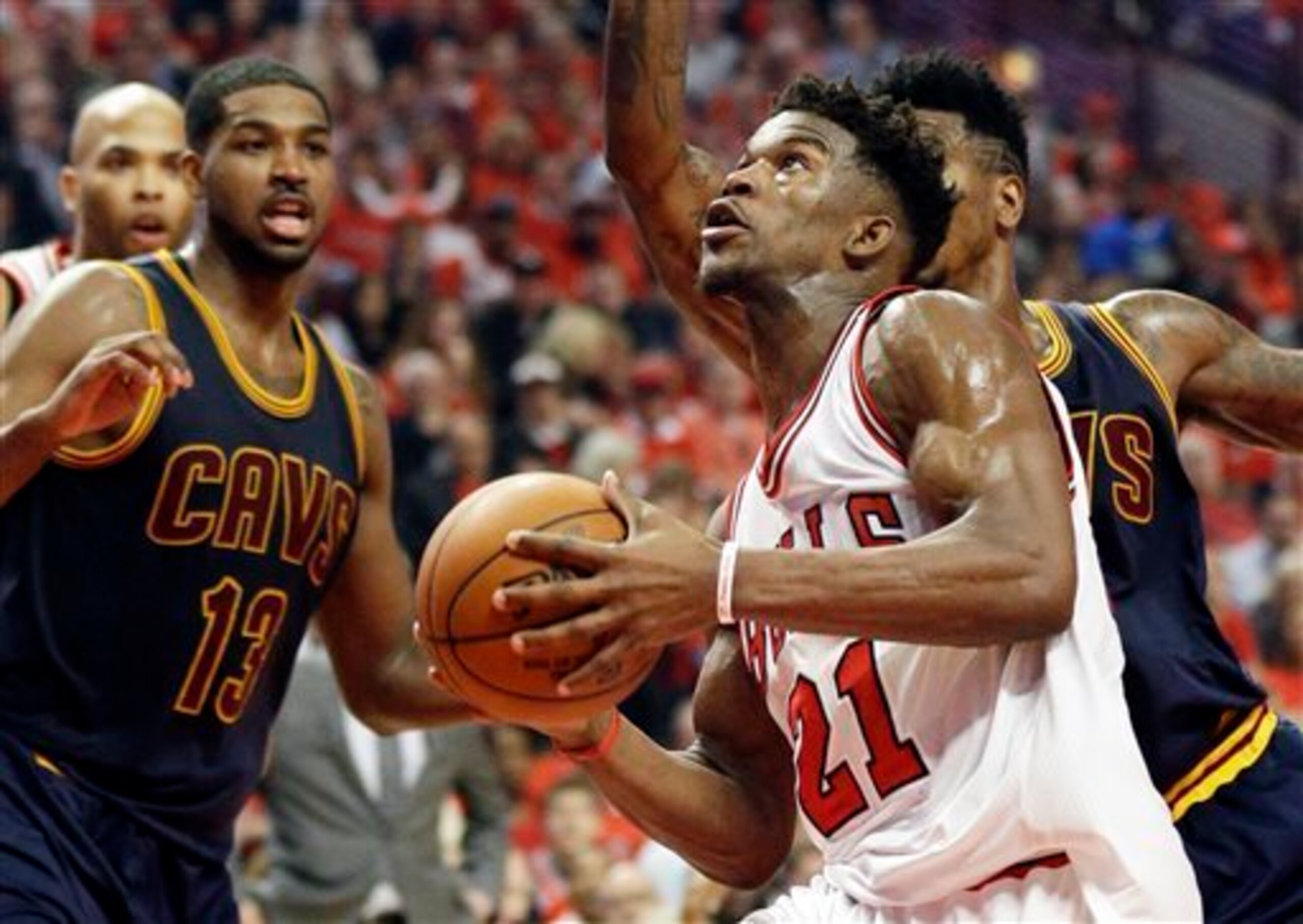
3. Bradley Beal, Washington Wizards
Per-Game Stats: 22.8 points, 5.4 rebounds, 4.8 assists, 1.7 steals, 0.8 blocks
These playoffs, and particularly this second round, have taught us a few things about Beal.
Well, maybe reinforced is the better word. Because we had some reason to believe that Beal was much more than a one-dimensional shooter with a perfect stroke. We saw him run the pick-and-roll and attack in transition a few times during the year.
But Wall's absence for much of the Wizards' series against the Hawks gave Beal a chance to prove his all-around game was real.
Beal has forced us to reconsider the height of his ceiling, as his defensive intensity and clear chops as a primary ball-handler now mark him as a complete player. Integrating his full set of skills with the necessarily ball-dominant Wall might be a challenge going forward.
But as challenges go, that's one the Wizards will be happy to meet.
2. James Harden, Houston Rockets
Per-Game Stats: 26.3 points, 4.6 rebounds, 8.0 assists, 1.2 steals, 0.3 blocks
Harden got whatever he wanted in the Rockets' easy first-round matchup against the Dallas Mavericks, but until his triple-double in an elimination-avoiding blowout win against the Los Angeles Clippers in Game 5 earlier this week, he hadn't found things nearly as easy.
A microcosm of Houston as a whole, Harden has at times looked defensively disinterested and offensively stagnant. But he remains a potent one-on-one scorer who doubles as Houston's only creative facilitator. Watch him long enough, and you'll notice some warp-speed skip passes that make you think, just for a second, that someone such as Wall or Paul threw them.
Harden has shouldered a massive load on offense during the postseason, and he gets credit for (mostly) carrying it well.
1. Jimmy Butler, Chicago Bulls
Per-Game Stats: 22.9 points, 5.6 rebounds, 3.2 assists, 2.4 steals, 0.8 blocks
We've seen better scorers, more able passers and bigger breakouts at the shooting guard spot in these playoffs. But we haven't seen any single player at that position make the across-the-board contributions Butler has.
When the Bulls needed buckets, Butler got them. When they needed someone to harass LeBron James, they turned to Butler for that too.
The recently named Most Improved Player has scored efficiently and defended ably while playing absurd, Thibodeau-ian minutes. No player who made it to the second round has logged more court time than Butler.
If only to acknowledge the ridiculous degree to which his team has leaned on him, Butler earns the top spot here.
Small Forwards
3 of 5
3 (tie). Harrison Barnes, Golden State Warriors, and DeMarre Carroll, Atlanta Hawks
Barnes Per-Game Stats: 10.9 points, 5.2 rebounds, 1.7 assists, 0.7 steals, 0.8 blocks
Carroll Per-Game Stats: 16.4 points, 6.5 rebounds, 2.3 assists, 1.0 steals, 0.3 blocks
Recency bias does Barnes some favors here, as he was solid in the Warriors' first-round series but often spectacular in their second-rounder.
Barnes has spent ample time guarding Marc Gasol and Zach Randolph, a tall order for anyone, let alone a 6'8" small forward. And he's done well, all things considered.
More than that, Barnes has upped his aggressiveness against Memphis, trying to dunk just about everything around the rim and firing away accurately from long range. He also survived a brutal and unintentional yoga exhibition in Game 5, emerging from the episode somehow unscathed.
Carroll has posted better numbers than Barnes on balance but hasn't had to face the herculean task of guarding guys with a 40-pound weight advantage. So we'll call this a tie, celebrate the versatility of two great small forwards and move on.
2. Paul Pierce, Washington Wizards
Per-Game Stats: 15.8 points, 4.1 rebounds, 1.0 assists, 0.6 steals, 0.7 blocks
Nobody has been more important in Washington's postseason offensive overhaul than Pierce, who has connected on a ridiculous 54.1 percent of his threes in the nine games he's played so far.
Pierce's ability to handle power forwards on defense has allowed the Wizards to go smaller on offense, space the floor and fire off treys at rates they never approached during the year.
Tons of trash talk, game-winning jumpers and still-inspiring old-man moves don't hurt Pierce's case either.
1. LeBron James, Cleveland Cavaliers
Per-Game Stats: 26.5 points, 10.2 rebounds, 7.9 assists, 1.9 steals, 1.6 blocks
If you didn't know better, you'd think you were watching the 2009 version of James.
Ball-dominant, orchestrating pick-and-roll sets and isolations from the top, doing just about everything himself—this is a version of LBJ we just haven't seen since his last go-round with the Cavs. It's not efficient, and it's not always pretty (although, sometimes it is), but it's probably necessary.
Cleveland is without Kevin Love, and Irving is hurting. That leaves James to score and set up others on his own.
He's carried the Cavs in these playoffs with game-winners and huge statistical efforts. No other small forward comes close.
But you already knew that.



Power Forwards
4 of 5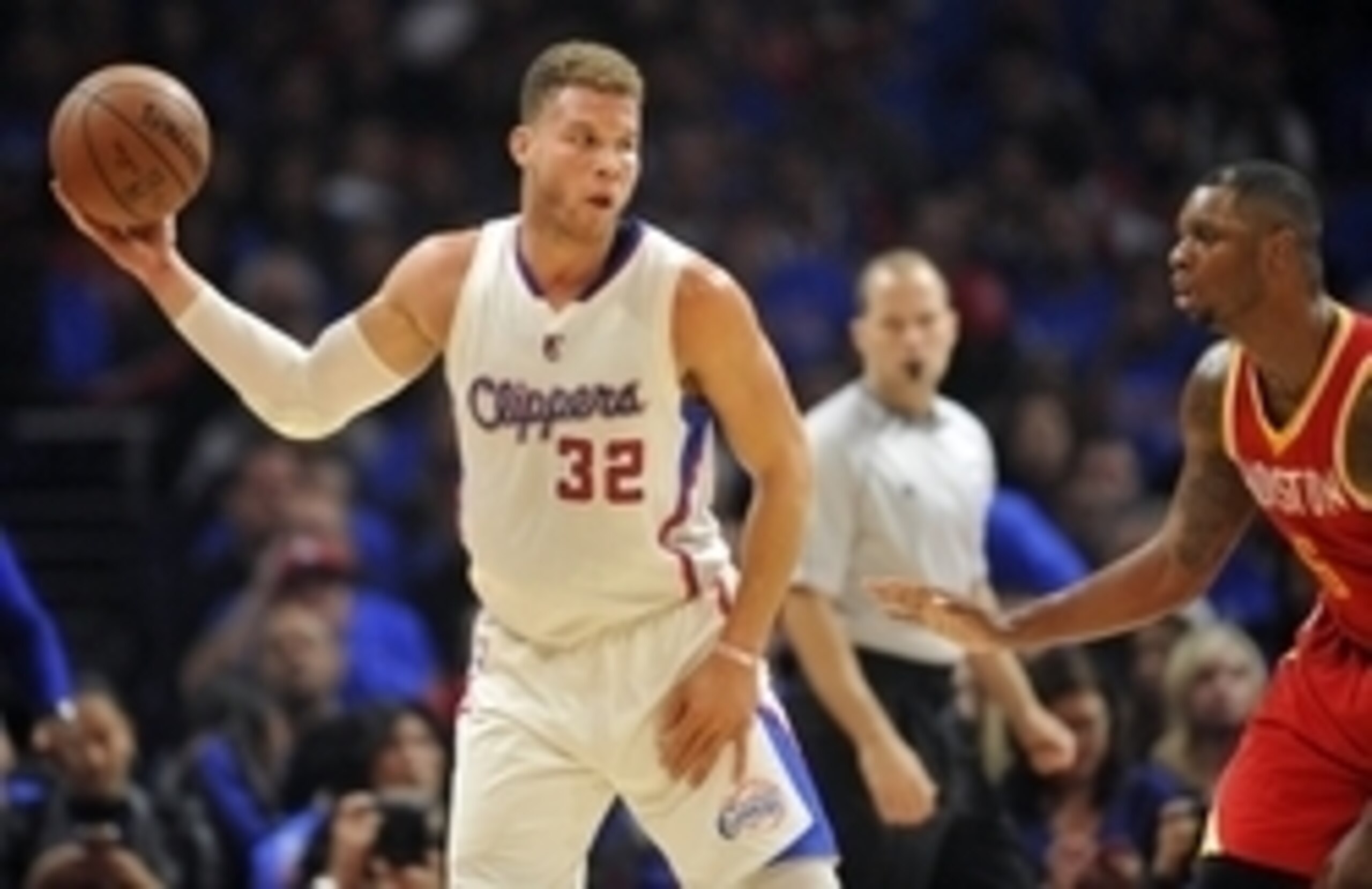
3. Zach Randolph, Memphis Grizzlies
Per-Game Stats: 15.7 points, 8.7 rebounds, 2.2 assists, 0.5 steals, 0.0 blocks
It's tempting to rank Randolph ahead of Draymond Green because the surface narrative of the Warriors-Grizzlies series is that Z-Bo is just too tough for any Dubs defender (Green included) to handle. And it's true that Randolph has been a load down low.
But the Warriors are also targeting him relentlessly with pick-and-rolls on the other end, where he's a massive liability. Overall, Memphis has been outscored in the postseason with Z-Bo on the court, per NBA.com.
This isn't a knock on Randolph. He's been critical to keeping a struggling Grizzlies offense afloat, and there's no question he's been a beast offensively. He just hasn't been better than Green.
2. Draymond Green, Golden State Warriors
Per-Game Stats: 13.2 points, 9.9 rebounds, 5.4 assists, 2.2 steals, 0.9 blocks
The list of players averaging at least 13 points, nine rebounds and five assists in these playoffs is short: James, Blake Griffin and Green. And you could easily make the case that neither of those other two high-profile players has come close to matching Green's defensive contributions.
Remember, the undersized power forward spent the first round hassling Anthony Davis, and he's been matched up with Marc Gasol and Randolph in the second.
Green has been doing it all, and his threat as a three-point shooter has been instrumental in attacking a Grizzlies defense devoted to getting the ball out of Curry's hands. As was the case all year, Green is the second-most important player on the league's best team.
The only reason he's not at the top of this list is because nobody at any position has been better in this postseason than the guy ahead of him.
1. Blake Griffin, Los Angeles Clippers
Per-Game Stats: 25.4 points, 12.8 rebounds, 6.2 assists, 1.1 steals, 1.0 blocks
These playoffs have belonged to Griffin.
We'd known about the athleticism and scoring for years, and we saw glimpses of an all-around game last season. But now we're getting a sustained look at Griffin as the total-package superstar.
Seerat Sohi of Rolling Stone explained the phenomenon: "Those of us who saw hallucinatory flashes of LeBron James in Griffin's rookie season have been punishing him for it ever since. Now that those visions are truly bearing out, the LeBron comparison has regained traction."
Yeah, he's been that good.
He's running the break, functioning as a hub at the elbows, hitting jumpers, finding cutters, throwing lobs and, of course, scoring at a healthy clip. Paul's hamstring afforded Griffin a do-it-all stage, and he used it to prove his stardom was genuine.
Whatever happens with the Clippers as the postseason progresses, we're going to remember the 2015 playoffs as Griffin's arrival.
Centers
5 of 53. DeAndre Jordan, Los Angeles Clippers
Per-Game Stats: 12.8 points, 13.1 rebounds, 1.2 assists, 0.9 steals, 2.3 blocks
If you've got an itchy DVR trigger finger, you best recognize Jordan as the guy you skip past 20 times a game when he's shooting free throws after being intentionally fouled. Nobody has attempted more than Jordan's 12 foul shots per game in these playoffs, and that average doesn't do justice to the charity-stripe frequency he's been logging against the Rockets.
He shot 34 freebies in the Clips' Game 4 win.
Coma-inducing boredom aside, Jordan has been wildly effective. He's finished lobs, intimidated drivers and, most of all, managed to avoid being mentally smashed into dust by all those demoralizing trips to the free-throw line.
2. Marc Gasol, Memphis Grizzlies
Per-Game Stats: 19.6 points, 9.8 rebounds, 4.5 assists, 1.0 steal, 1.4 blocks
On a team almost entirely bereft of facilitators, it's hard to overstate Gasol's value. Offensively, he's indispensable as a passer, and his sheer size makes a difference on the offensive glass as well. He may not always come away with offensive boards, but the defenders he occupies allow others to get into the fray.
The stats do a lot of the talking, but Gasol's greatest value may be intangible. He's a steady decision-maker when needed, a scorer when called upon and an elite interior defender at all times. Whatever the Grizzlies need, he provides.
And the organizing effect of having such a clear anchor, such a reliable fulcrum on both ends, is a major reason for Memphis' success.
1. Al Horford, Atlanta Hawks
Per-Game Stats: 15.8 points, 10.2 rebounds, 4.1 assists, 1.1 steals, 1.7 blocks
Yes, I think he's a center. And no, it doesn't really matter if he's not.
Horford has been the most consistent performer on a Hawks team riddled with unpredictability. Throughout the playoff ups and downs, he's been the constant—conspicuously so.
His game-winning putback gave Atlanta much-needed breathing room and a 3-2 lead in Game 5 against the Wizards, and the Hawks were only in a position for that basket to matter because Horford also buried a corner three during a late-game run.
Gasol's numbers may be superior, but I'll take Horford's timely plays and invaluable consistency.

.jpg?w=2560 "Raiders Could Start Mendoza")

.jpg?w=2560 "Rodgers Iced Out on Plane 💎")
.jpg?w=2560 "Packers Safety Slams Refs 🤬")
.jpg?w=2560 "🚨 Week 8 AP Top 25 Poll")