San Francisco 49ers: Trent Baalke Versus Conventional Wisdom in the 2015 Draft
It’s easy to criticize the San Francisco 49ers’ 2015 draft class. Football Outsiders reports that draft graders gave them the second-worst grade this year, with only the Buffalo Bills being less well-received. The highest grade they found was a B- from Sports Illustrated’s Doug Farrar, and they even got the worst grade possible from a draft guru: a D from the Sporting News.
It will also be easy to criticize the draft five years from now, because there are always late-round picks that bloom more than expected. That’s essentially what any “reevaluating drafts X years later” articles are. Yes, if Trent Baalke was clairvoyant, he could have ended up with Earl Thomas, Geno Atkins and Antonio Brown in 2010, but so could any franchise if it had possession of a crystal ball.
As it stands now, the 2015 draft class will either fail, allowing draft graders to say that they were right, or it will succeed, causing draft graders to praise Baalke for his foresight. That’s just the nature of the game.
It doesn’t seem fair, however, to point out that “in hindsight, the 49ers should have picked X” after players have taken the field. If I say, for example, that I don’t believe Jaquiski Tartt will be a starting safety in the NFL, that’s all well and good. However, if it turns out the player I would have taken instead also doesn’t succeed in the NFL, then Baalke hasn’t done any worse. It’s one thing to say that, for example, Aaron Rodgers is better than Alex Smith a decade into their careers; it’s another to identify that on draft day itself.
With that in mind, I decided to assemble a draft for the 49ers that the graders would have more or less universally praised. Using the draft boards from NFL.com, ESPN and CBS, we can put together the theoretical ideal draft for the 49ers—the draft that pundits would have said, in retrospect, was the best the 49ers could have possibly done.
We can use this as a baseline for grading the progress of the 49ers’ actual 2015 class. If the draft class does well, then Baalke was right. If the draft class does poorly, and this mock does well, then you can make a stronger argument that the draft graders are right. If both the real draft class and this mock does poorly, then there’s a stronger argument that this year’s draft was difficult to accurately predict.
If nothing else, it should be a fun argument to come back to during the Week 10 bye or after the season and gives a comparison baseline for judging the development of the 2015 class.
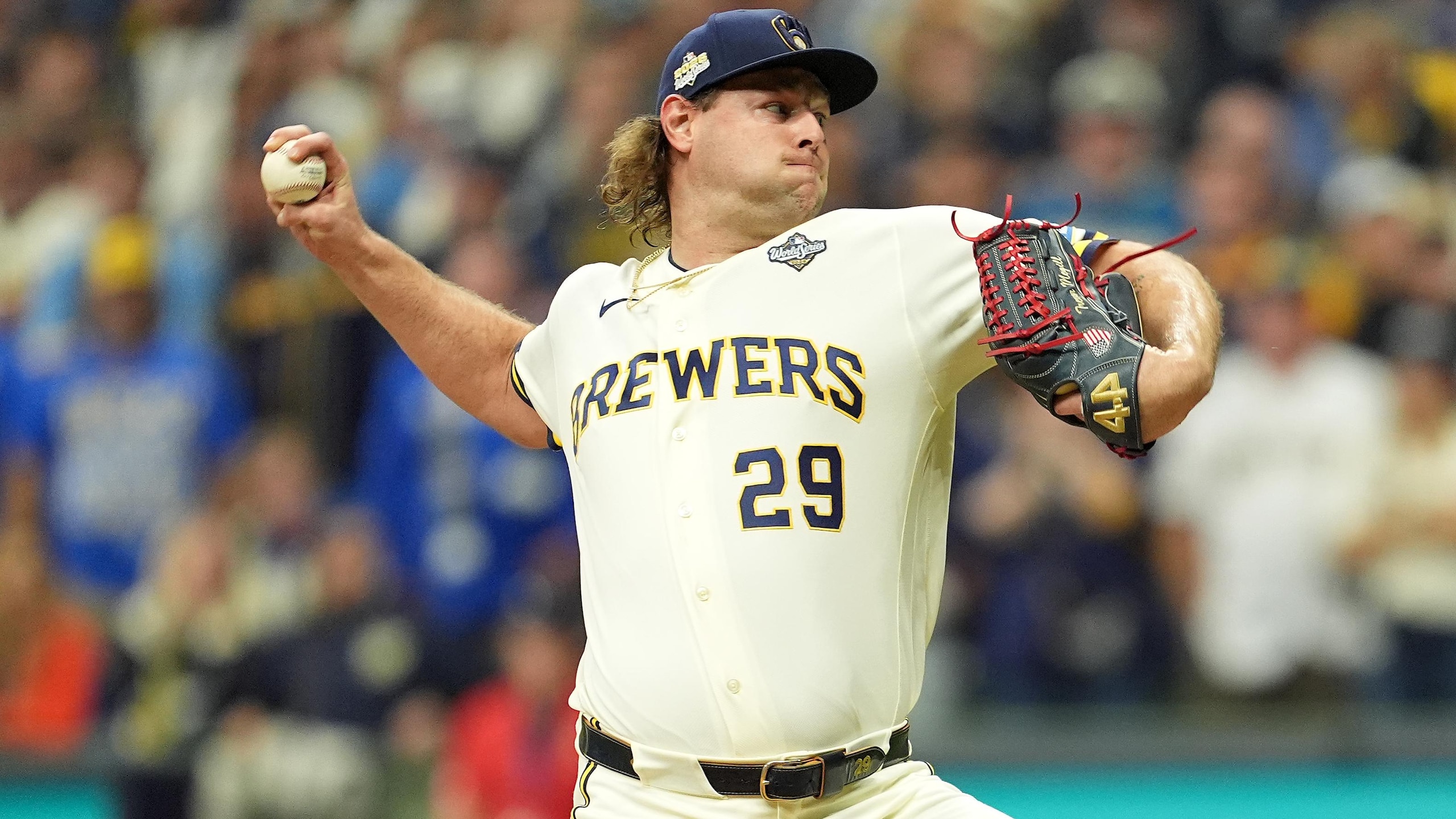
Round 1: Breshad Perriman, WR, UCF (No. 26 to Baltimore)
1 of 10
Actual pick: Arik Armstead, DE, Oregon
It’s a swapping of players with potential rather than production with the first-round pick.
According to Mel Kiper, Arik Armstead is the “definition of potential over polish, as he has all the physical talent and size you want, but he really needs to go to school…if he wants to become great.” Rob Rang isn’t sure if Armstead is “hungry enough to be great." No one doubts his measurables or his potential, only his polish.
In addition, there’s question as to his fit on the 2015 team. The 49ers have usually dressed five defensive linemen on game day over the past four years, though six isn’t unheard of. With Darnell Dockett, Glenn Dorsey, Ian Williams, Tank Carradine, Justin Smith and Quinton Dial already currently on the roster, Armstead would likely have to squeeze someone out. It’s a tight fit.
Instead, we’ll add to the depleted receiver corps with a potential day-one starter in Breshad Perriman. He has too many drops for my liking, but his size and speed make him the most dynamic player on San Francisco’s roster.
Kiper loved the Perriman selection, saying that he “could have been off the board by No. 14” and saying that there’s “some Dez Bryant to his game.” The lovefest isn’t just limited to Kiper, either—Pete Prisco “loves” Perriman’s fit in Baltimore, and the general consensus is that he’ll be a steal at the end of the first round. It’s safe to say they would be giving similar praise to the 49ers, had they drafted him. He’s a similar player to Torrey Smith, but with more upside.
Personally, I think Armstead will end up as a slightly better player than Perriman in the long run. However, the needs and fit of the roster make Perriman the selection I would have made on draft day.
Round 2: Denzel Perryman, ILB, Miami (No. 48 to San Diego)
2 of 10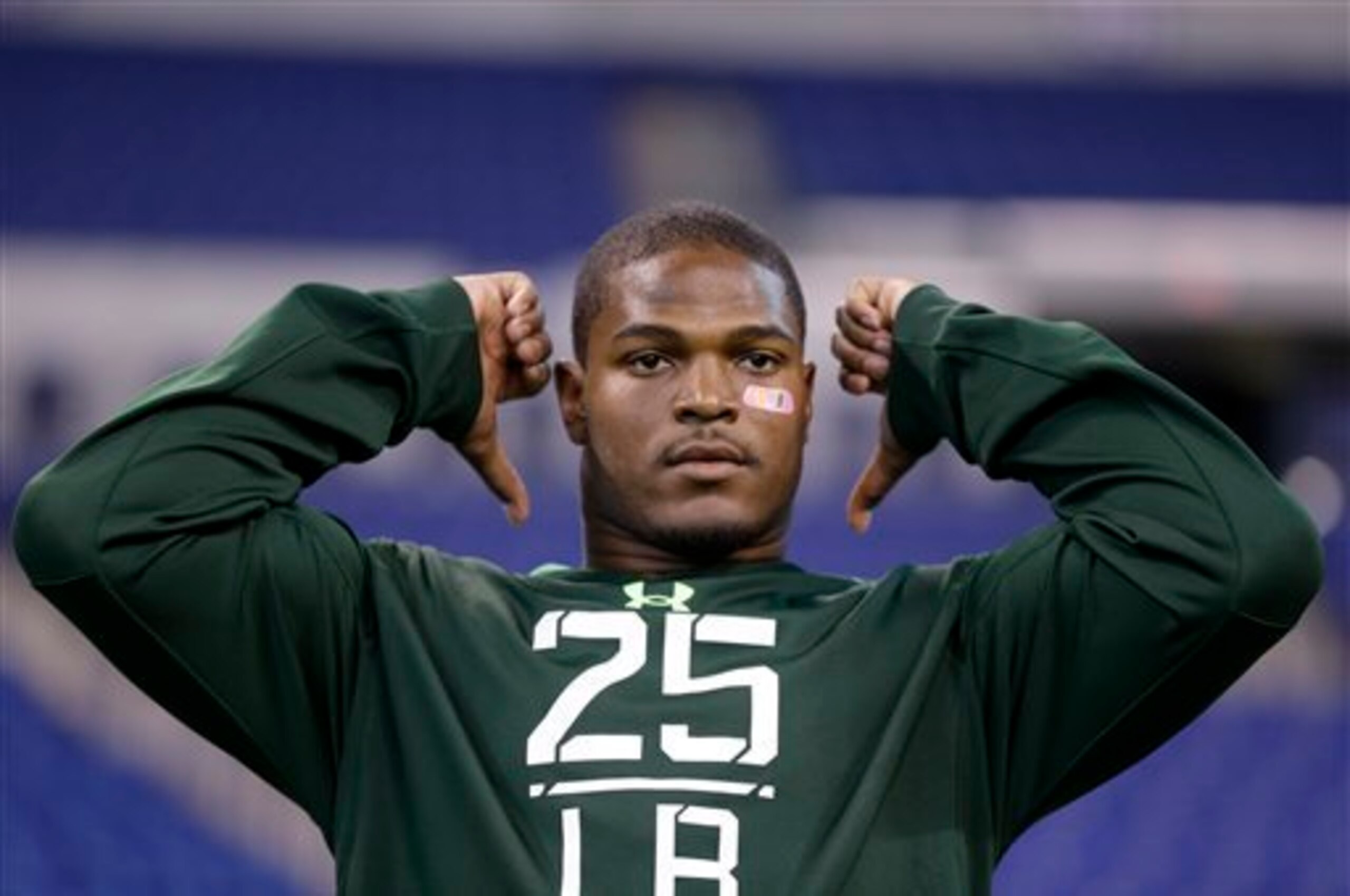
Actual pick: Jaquiski Tartt, S, Samford
I’m stunned the 49ers didn’t address their hole at inside linebacker with at least one of 10 selections on draft day. They may be fine with NaVorro Bowman and Michael Wilhoite as their starting linebackers, but you’d think that, with the loss of both Patrick Willis and Chris Borland, they would have at least tried to replenish the position somewhat.
Instead, they took a small-school prospect at a position where they already have two Pro Bowl starters penciled in. Evan Silva notes that Tartt will just be a “special teamer this season," and Doug Farrar questions “where Tartt will play” with Antoine Bethea and Eric Reid in the lineup.
I’m a little harder on the Tartt selection than most people, as I really don’t think he’s going to succeed as a cover safety in the NFL. Even those higher on Tartt than I am, though, acknowledge that he was probably a reach by a round or two.
Instead, we’ll drop two picks and take the second Perriman/Perryman of the draft for the team, in Miami’s inside linebacker. The 49ers took Tartt because he’s a big hitter inside; well, so is Perryman. He has a powerful punch, diagnosing plays and blowing them up before they can develop. He’d also contribute significantly on special teams while having a real shot to win the starting job from Wilhoite this season.
Perryman was one of Kiper’s “favorite picks of Round 2," and Rang called him the “best traditional run-stuffing thumper in this class." He’s not Patrick Willis, but then, who is? What he is is a very solid, sideline-to-sideline player who has a chance to develop into a starter for years to come.
Round 3: Eli Harold, OLB, Virginia (No. 79 to San Francisco)
3 of 10
Actual pick: Eli Harold, OLB, Virginia
I’m not going to change what was, in my opinion at least, the best value pick the 49ers made in the draft.
Kiper praised Harold’s “shot-out-of-a-cannon explosiveness" and noted he “has the chance to be a disruptor” and could’ve been a “first-rounder in 2016." Rob Rang praised Harold’s burst. Even Evan Silva, who gave the 49ers a D+ overall, praised the Harold pick, noting he offers “double-digit sack potential as a developmental pass rusher.” Considering that Armstead is a developmental player and Tartt’s buried behind safeties, Doug Farrar says that Harold has “the best chance to get serious reps right away with his combination of speed and strength.”
It’s odd that Silva notes that Harold wasn’t a favorite of draftniks, because almost all of them went out of their way to praise the 49ers for taking him, even as they panned the draft overall. In some cases, he’s the only player a draft grader would even look at positively, taking a break from slamming the rest of the class to note that he stands head and shoulders above the rest.
I think Harold was the best player on the board when the 49ers were on the clock in the third round. I think that he’s actually better than their second-round pick, Tartt. I think, considering Aldon Smith’s off-field issues last year and the fact that Ahmad Brooks was just accused of sexual assault, that there is a better chance than not that a starting slot will open at outside linebacker in the not-too-distant future. Was it the most pressing need the team had? No, probably not. The combination of talent and moderate need, however, has me loving the Harold pick.
.jpg?w=2560 "Rams Raiders Football")

.jpg?w=2560 "Steelers Saints Football")
Round 4, Pick 117: Za’Darius Smith, DE, Kentucky (No. 122 to Baltimore)
4 of 10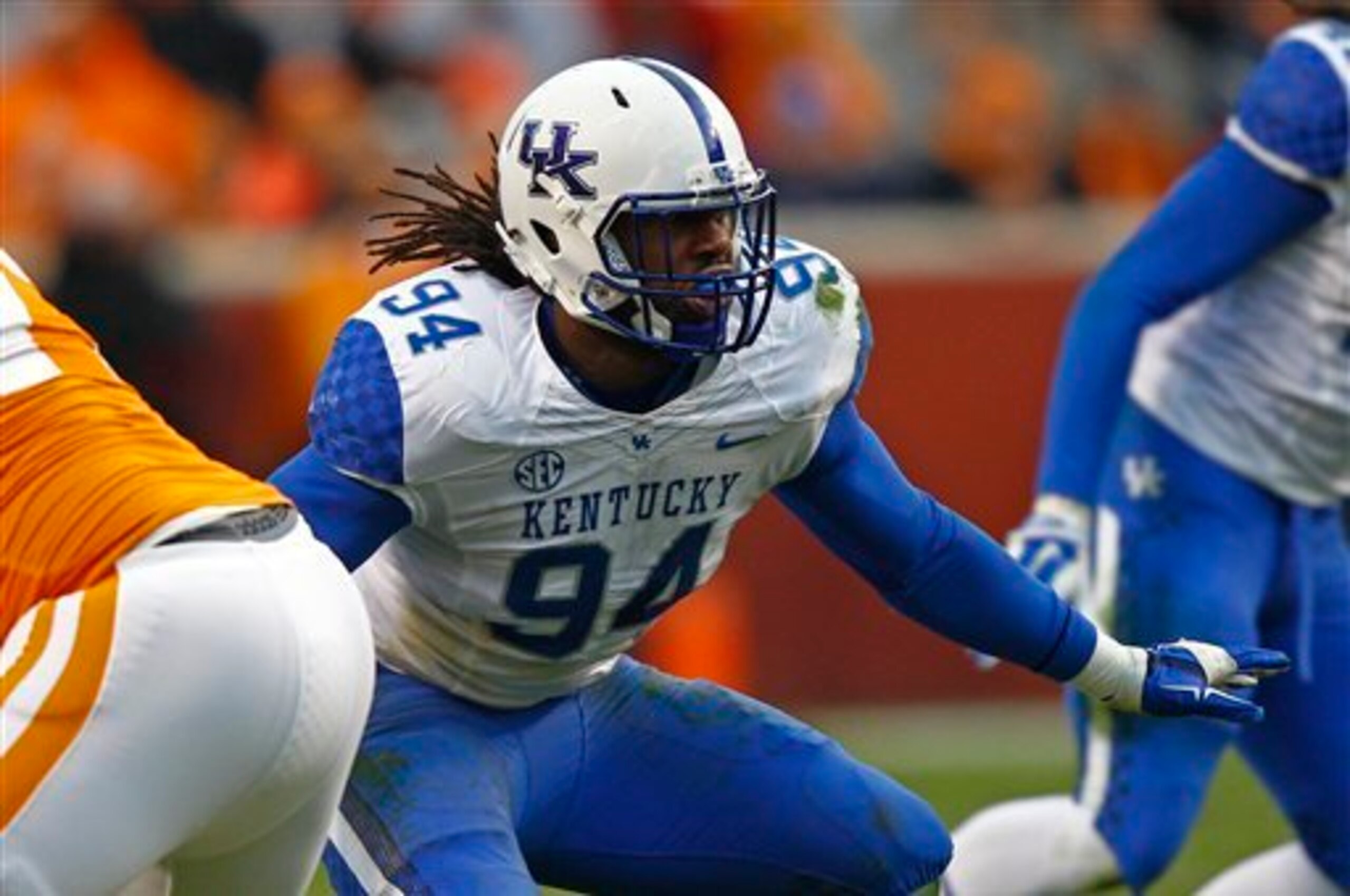
Actual pick: Blake Bell, TE, Oklahoma
There are two reasons I’m making this change. The first, obviously, is the fact that in this scenario, the 49ers haven’t addressed the defensive line yet. Justin Smith may well retire, and Ray McDonald is gone. While there are a number of interesting names on the line, more talent could be added. I actually did like the Arik Armstead pick in the first round, even if wasn’t the player I would have chosen.
The other reason is that Bell isn’t ready to be an NFL tight end yet, as he’s still converting from quarterback. Rob Rang notes that Bell is talented, but he doesn’t have breakaway ability and is still learning the basics of the position. Evan Silva doesn’t think Bell is talented enough to become anything more than a “little-used, role-playing tight end in the pros."
Instead, we’ll raid Baltimore’s draft class for the second time and grab Za’Darius Smith out of Kentucky. Admittedly, the fit isn’t perfect; he’s a little undersized for your ideal 3-4 defensive end, though I think he still projects as a defensive end in a 3-4 system, rather than being moved to outside linebacker. He can set the edge and is strong enough at the point of attack.
He’d just be a rotational piece, rather than a potential future starter, but using the first-round selection on a weapon in the receiving game and a fourth-round pick on defensive line depth is more in tune with the team’s needs than what it actually did.
Honestly, I think I’d swap the 49ers’ entire actual class for the Ravens’ bunch. They got their potential No. 1 receiver in Perriman, two good mid-round values on the defensive line in Smith and Carl Davis, depth on the offensive line with Robert Myers, two potential tight end replacements for Vernon Davis in Maxx Williams and Nick Boyle, depth to help replace the departed Chris Culliver with Tray Walker, my favorite receiver sleeper in the class in Darren Waller, and even a solid depth running back in Buck Allen. They hit almost all of San Francisco’s major needs except inside linebacker—and the 49ers didn’t draft an inside linebacker themselves.
Round 4, Pick 126: Jay Ajayi, RB, Boise State (No. 149 to Miami)
5 of 10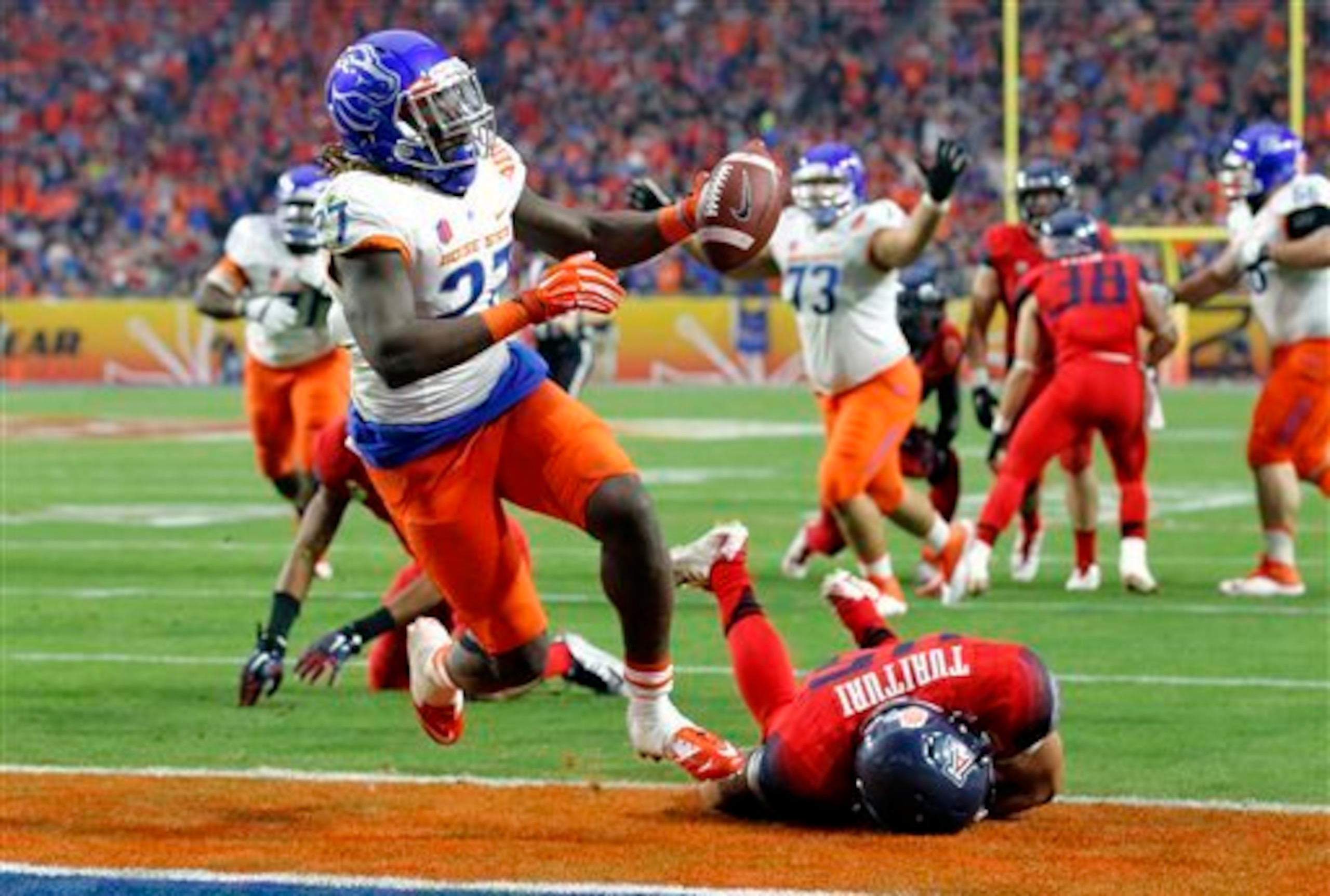
Actual pick: Mike Davis, RB, South Carolina
At this point, we’re not questioning the positions that the 49ers took, but rather which player they chose. Each of the next two selections stays with the position the 49ers grabbed but suggests a different player they could have taken—that makes for apples-to-apples comparisons.
I do actually like Mike Davis. He’s gritty and tough, even if he’s nothing particularly explosive or special. Evan Silva is less enthused, calling him a “straight-linish grinder," and Dan Kadar notes that he “battled injuries last season," explaining his drop-off in numbers from 2013.
When it comes to running backs who battled through injuries last year, I actually preferred Boise State’s Jay Ajayi. Davis is the back you give five to 10 carries to spell your starter; Ajayi has the potential to be your workhorse starting back. He can play all three downs and has great lateral movement and quickness. His ceiling is higher than Davis’, in other words.
He has injury concerns, which dropped him to the third day of the draft, as teams are concerned about his right knee. The last time the 49ers picked an injured running back was Marcus Lattimore, and that didn’t pan out at all.
Ajayi’s not like Lattimore, though—he’s at least able to play right now, even if you worry about his long-term health. That would scare me away from a second-day pick, but you’re looking at ceilings, not floors, when you are drafting on Day 3. Ajayi has “franchise-back talent," according to Rob Rang, and most experts praised the Dolphins for finding someone with his talent in the fifth round. They’d surely do the same for the 49ers.
Round 4, Pick 132: Rashad Greene, WR, Florida State (No. 139 to Jacksonville)
6 of 10
Actual pick: DeAndre Smelter, WR, Georgia Tech
Smelter has talent and measurables, but he’s a massive project. He played in Georgia Tech’s triple-option offense, which basically asks its receivers to block and run a limited route tree. That doesn’t mean good receivers can’t come out of there—Demaryius Thomas, for example, came out of that triple-option setup—but Smelter still has a lot to learn about playing the position.
He also tore his ACL in December, so he won’t see the field in 2015, in all likelihood. For a team that really needed an immediate talent infusion at receiver, it’s disappointing to only come away with Smelter, regardless of his potential. He’s a “scratch-off ticket with million-dollar upside," according to Mel Kiper, and “needs a lot of polish," per Rang.
Normally, that’s fine for third-day picks—I’m a big fan of swinging for the fences as the draft gets further and further along. However, receiver needs someone who can contribute sooner rather than later, so I’m going with a more sure-fire pick here in Rashad Greene, who I think can be an NFL starter.
Greene’s a very different player than Smelter. Smelter dwarfs Greene’s 5’11” and 182-pound frame. Also, Greene actually produced in college. Smelter finished his college career with 56 receptions for 1,060 yards; Greene topped those career numbers in each of the last two seasons on his way to over 3,800 college yards.
He’d also step in and be the punt returner right away. This draft would give the 49ers a starting threesome of Anquan Boldin, Torrey Smith and Breshad Perriman in 2015, with former fourth-round picks Greene, Quinton Patton and Bruce Ellington battling for the fourth receiver role in 2015 and Boldin’s job when he retires, likely after this season. That’s a receiving unit filled with potential.
Round 5: Charles Gaines, CB, Louisville (No. 189 to Cleveland)
7 of 10
Actual pick: Bradley Pinion, P, Clemson
A punter. I still can’t get over it. You get punters as undrafted free agents, not fifth-round draft picks. Nothing against Pinion, who I think can develop into a very good player, but the value is just mind-boggling.
Most draft experts pinged the 49ers for not addressing the need at cornerback, with Chris Culliver and Perrish Cox both leaving during the predraft process. While I never agreed that the need was big enough to address with a first-round pick—as Jimmie Ward, Tramaine Brock and Dontae Johnson serve as a serviceable top three—I didn’t think they’d ignore the position entirely.
Instead of taking a punter who might not even make the roster, we’ll go with the lightning-fast Charles Gaines from Louisville. Gaines wowed at the combine with a 4.44-second 40-yard dash. He pays for that with a small frame, being just 5’10” and 180 pounds, but he has great ball skills. You’d expect that from a former wide receiver. He’s not great at covering the deep ball but has good instincts to jump routes and take away underneath stuff.
Draftniks would no doubt continue to wonder why the 49ers didn’t take a cornerback earlier than Day 3, but this would at least stem those concerns some.
Round 6: Ifo Ekpre-Olomu, CB, Oregon (No. 241 to Cleveland)
8 of 10
Actual pick: Ian Silberman, OT, Boston College
Silberman wasn’t even on most draftnik’s draft boards, so no one had very nice things to say about the 49ers taking him. Walter Cherepinsky even used the selection to accuse Baalke of not caring and only enjoying the praise and adulation of his hand-picked coaching staff, while calling Silberman undraftable. That’s a bit harsh.
Instead of an unknown prospect, we can pump the 49ers’ draft-day grade by giving them one of the most talked-about prospects in Ekpre-Olomu.
Ekpre-Olomu was considered a potential first-round pick before tearing his ACL, according to Rob Rang. He’d be a medical redshirt in 2015 before hopefully being healthy enough to complete in 2016.
Why would I propose drafting an injured player like Ekpre-Olomu here when I criticized the Smelter pick earlier? Two reasons.
First of all, a sixth-round pick is a much different investment than a fourth-round selection. Most sixth-rounders end up not making a notable impact in the NFL and frequently don’t even make the team out of training camp. Fourth-rounders, on the other hand, generally serve as useful depth players for at least a year or two. The expectations are higher.
Secondly, while the 49ers need a talent infusion at receiver, they’re kind of filled up on cornerbacks for 2015. At the moment, they have Tramaine Brock, Chris Cook, Shareece Wright, Leon McFadden, Jimmie Ward, Dontae Johnson, Kenneth Acker, Marcus Cromartie and Keith Reaser all listed at the position. Add in Charles Gaines, drafted in this scenario, and there’s no more room for healthy cornerbacks in 2015.
Stashing injured players allows you to artificially expand your roster. With no pressing need for another cornerback, the 49ers could stash Ekpre-Olomu and hope that his knee is ready for the year after. It’s a low-risk, high-reward play and a great use of a sixth-round selection.
Round 7, Pick 244: La’El Collins, OT, LSU (UDFA to Dallas)
9 of 10
Actual pick: Trenton Brown, OT, Florida
This is probably not really fair. Collins’ legal issues made him almost untouchable during the draft, and the projected first-rounder fell all the way out of the draft, only signing with the Dallas Cowboys on Thursday, according to Ian Rapoport.
There is also a question as to whether or not Collins would have signed if he was drafted. He said he would re-enter the draft in 2016 if he didn’t go in the first three rounds. As an undrafted free agent, he actually couldn’t do that, but as a late draft pick, he would have that right, if he so chose.
If the 49ers could convince him to sign a contract, he’s an obvious draft pick. It is coming out now that Collins, who has not been a suspect in the shooting death of Brittney Mills from the very beginning, is also not related to Mills’ child, according to Baton Rouge police. It seems more and more likely that Collins had nothing to do with the Mills situation and is just a victim of massively unfortunate timing.
We didn’t know that for sure on Saturday, during the seventh round of the draft. There was still a chance, at least in NFL teams’ minds, that Collins could be linked to Mills' death in some way and have to be released immediately.
That is certainly a major blow if you’ve spent a first-round pick on the player, but seventh-rounders are basically just dibs on undrafted free agents—it’s a way to get a player to come into camp for your team without having to compete with other teams for their rights. Of last year’s seventh-round picks, for example, 19 have yet to actually appear in a game in any capacity. If Collins had to be released, it’s not exactly a massive loss—and he has the upside of being a first-round talent picked with selection 244 if he is, you know, innocent.
This draft would have given the 49ers three first-round talents, then: Perriman, Ekpre-Olomu and Collins. Collins likely moves inside to guard with the 49ers, replacing Mike Iupati. Considering Collins’ complete lack of red flags leading up to the Mills situation (according to ESPN), the fact that he was never considered a suspect by police and the relative low risk involved in using a seventh-round pick, I would have lauded the Collins selection.
Round 7, Pick 254: Anthony Harris, S, Virginia (UDFA to Minnesota)
10 of 10
Actual pick: Busta Anderson, TE, South Carolina
My safety rankings were clearly very different than those of NFL scouts and evaluators—and when in doubt, go with the professionals, and not a random columnist on the Internet.
Still, when the 49ers picked Jaquiski Tartt in the second round, part of my argument as to why that pick was bad was that Harris was still available on the draft board. Clearly, NFL evaluators didn’t agree with my evaluation of Harris, and they do play different roles—Tartt is a hard-hitting strong safety, while Harris does not have the bulk to play in the box in the NFL. So, my initial reaction of Harris over Tartt seems to leave me alone on an island.
Even if I had him too high, however, surely a former first-team ACC safety and productive three-year starter is worth a seventh-round flyer? Harris led FBS in interceptions in 2013 and had over 100 tackles last year, but shoulder surgery kept him from working out much in the predraft process.
Chris Burke listed Harris as one of the top undrafted free agents available, and Todd McShay went one step further, calling him the best around outside of La’el Collins. He said he has a “natural feel for playing in space and big-time playmaking instincts.” The 254th pick in the draft is essentially an undrafted free agent anyway, so picking the best of the remaining crop seems like a plan that most draftniks would support.
The draft that I’ve laid out here would likely have received a much higher grade from draft evaluators. Every pick was near the top of all three major draft boards at the time the 49ers were on the clock, and they fill most of San Francisco’s major needs, as listed by the same draftniks.
Is the class actually better than Baalke’s, however? Only time will tell. This can give you a baseline comparison to work with, however—it’s not fair to grade Baalke for not being clairvoyant and finding whichever seventh-rounders end up vastly overplaying their draft position. It is fair to judge him against what conventional wisdom would have called a successful draft, however.
We’ll just have to see how it all plays out.
Bryan Knowles is a featured columnist for Bleacher Report, covering the San Francisco 49ers. Follow him @BryKno on Twitter.
.jpg?w=2560 "Cowboys Packers Football")




.jpg?w=2560 "🚨 Week 8 AP Top 25 Poll")