

AC Milan Treads Thin Line in Development of Rising Star Hachim Mastour
AC Milan is in the midst of one of its worst seasons in recent memory. The team is bereft of game-changing quality and the starting XI is often populated with aging veterans who don't give much to the team.
Milan's fans are desperate for some sign of life from their team. In that quest for a spark, one name keeps popping up. It comes up in conversation, in forums and often on the comment section of this column.
That name is Hachim Mastour.
TOP NEWS
Highlights and Viral Moments 🍿

Final Men's Ballon d'Or Rankings 📊

Carrick Replacement Options 📝
His name is spoken in reverent tones on the red side of Milan. For Milanisti, Mastour represents the future, a savior for a floundering franchise.
And he very well could be. Milan is in desperate need of an exciting home-grown talent to get the fans back into the fold. Mastour has oodles of talent, and as an added bonus, he's an attacker, who can excite in ways that the defenders Milan is traditionally known for producing often can't.
But while some fans have been pressing for Mastour to see the field as a major part of Milan's team next year, the club may be better off introducing the youngster gradually.
Mastour may be a talented kid—but that's just it, he's a kid. Legitimately. He's 16. Sixteen. He's never played a game at the senior level on any level of the league pyramid. He's so inexperienced he doesn't even have an English-language Wikipedia page—or an Italian one for that matter.
That's what makes it all the more puzzling that Mastour was promoted to the first team at the end of last season despite only playing a few Primavera games. The only game tape you can find of him is from friendlies against Real Madrid and San Lorenzo. The videos are a total of about three-and-a-half minutes of the youngster mostly making simple passes and pressing on defense. If he does find the field in the near future, he will literally be a boy among men.
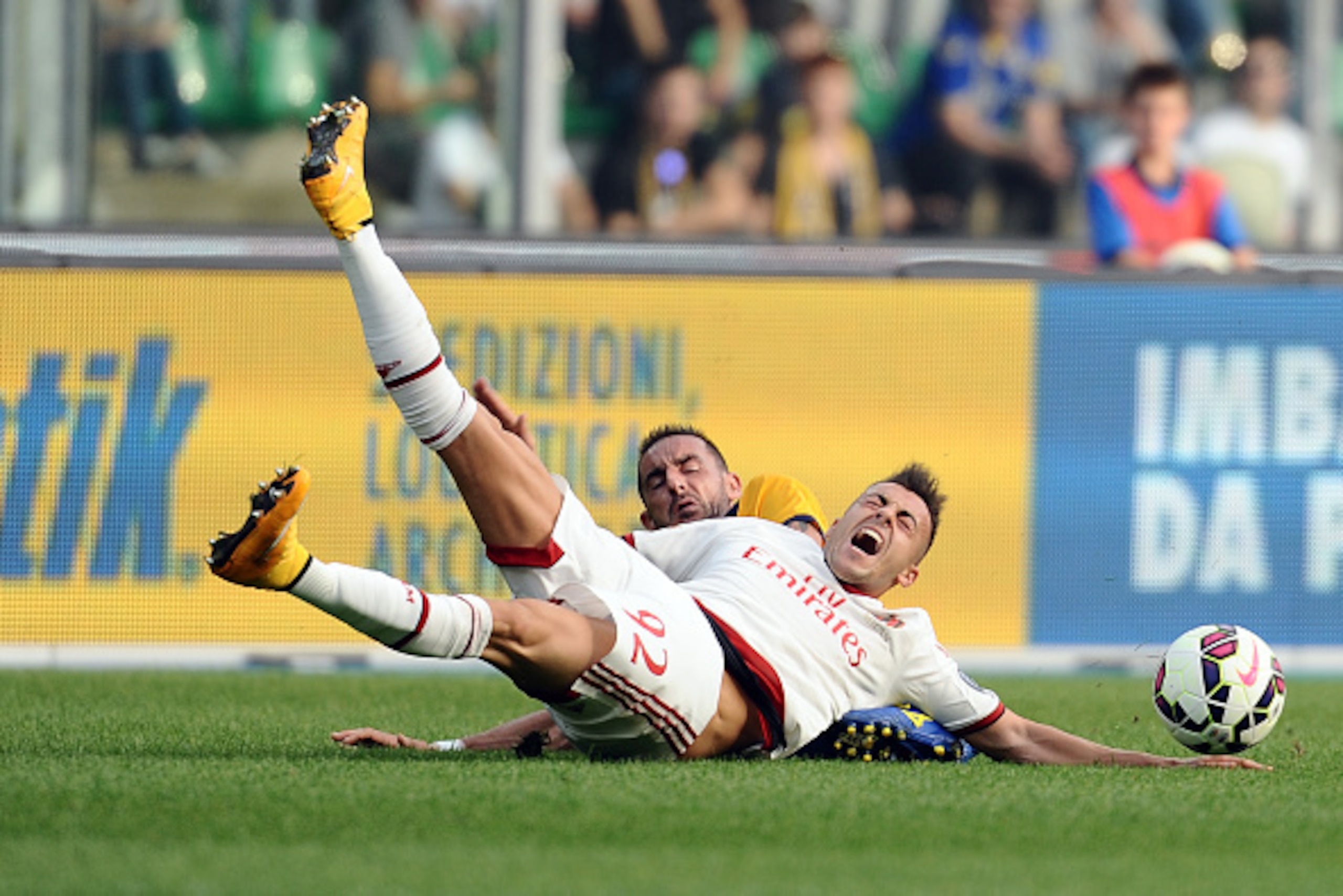
All of Mastour's natural ability will go to nothing if Milan forces him into a large workload before he's physically ready. Milan has had a rocky history with young phenoms of late. Stephan El Shaarawy was driven into the ground by Massimiliano Allegri in 2012. In the coach's defense, he had few alternatives after the sale of Zlatan Ibrahimovic, but such heavy use on a body that was only 20 years old and of slight build led to a myriad of injury problems that he has yet to shake.
Even sadder is the case of Mattia De Sciglio. Hailed as little as 18 months ago as the successor to the legacy of Franco Baresi and Paolo Maldini, De Sciglio was pulled out of his preferred place at right back to the left to accommodate incumbent Ignazio Abate, and in bouncing back and forth his play suffered. He has regressed so badly that he's practically irrelevant at this point in the season.
Cautionary tales both of them, and ones Milan should learn from.
The model for introducing Mastour into first team action should be the way Antonio Conte treated Paul Pogba in his first season at Juventus in 2012-13. Pogba started 18 games that year, but came on as a sub for the majority of the first two-thirds of the season as he got used to the physical and tactical demands of the game.
When Claudio Marchisio was injured in the Supercoppa Italiana in August of 2013, Pogba's year of apprenticeship had put him in position to seize the opportunity and stake his claim to a spot in the starting XI that, until his recent injury, he has not relinquished.
Ideally, Mastour would get loaned to a lower division club to get some experience sometime soon, but given the hype surrounding the player Milan may feel pressured to let him develop in red and black rather than elsewhere. One way or the other, he should be eased into the picture—not, as El Sha was, thrown into the deep end without knowing whether or not his arms will eventually give out.
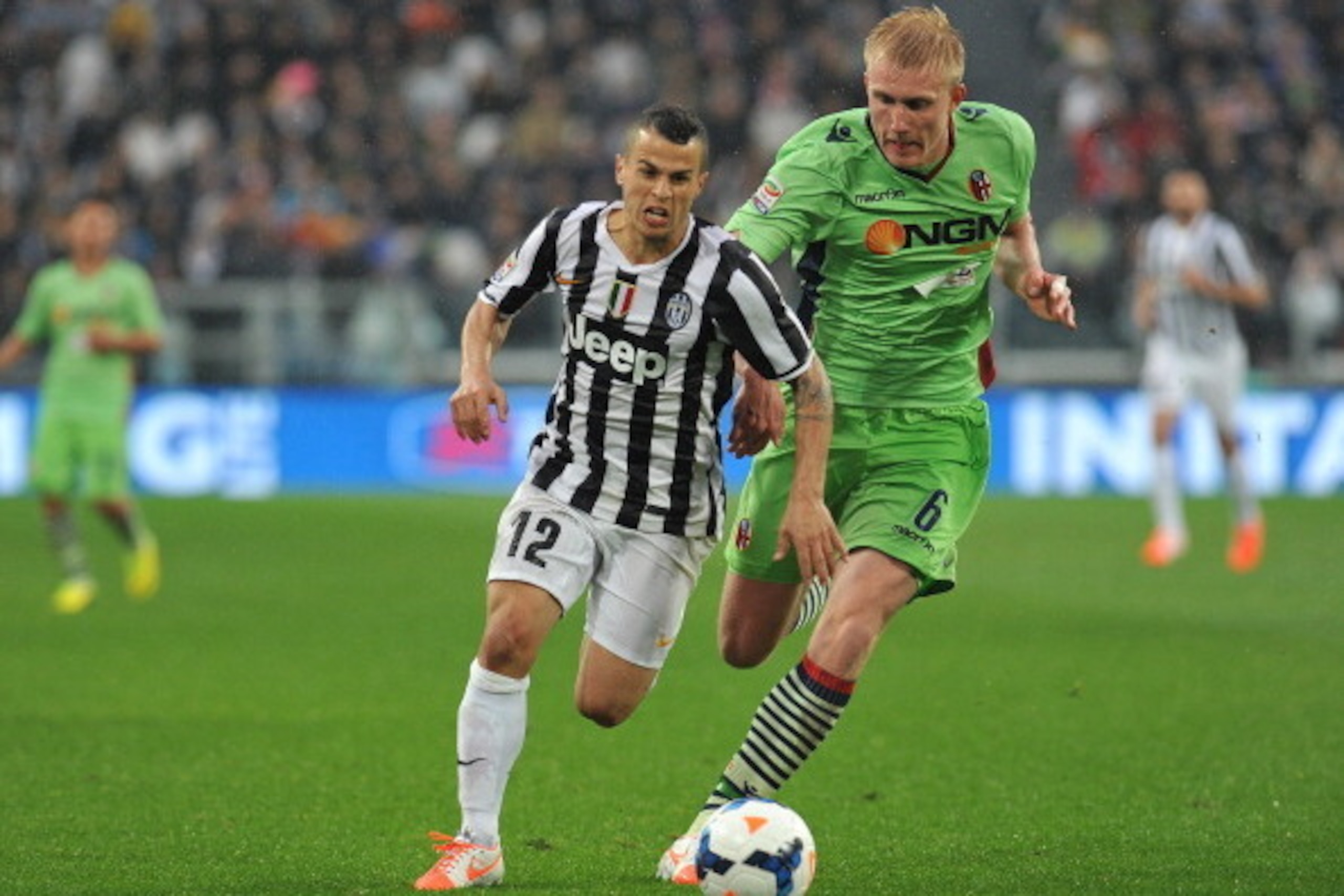
Speaking of hype, that's another aspect of Mastour's development Milan needs to keep a close eye on. The club has seen the damage it can do up close with De Sciglio. It can also use Juventus as a model again, although here it's not for what to do but what not to do.
It was during Juve's season of exile in Serie B after Calciopoli that Sebastian Giovinco made his debut for the Bianconeri. The Atomic Ant had been the talk of Juve's academy for some time, and soon after he supplied a marvelous assist for David Trezeguet on his debut, Juve fans openly and gleefully declared him the successor to Alessandro Del Piero.
The pressure to follow up a legend—first when he came out of the academy and again when he returned to the club from Parma in 2012 after Del Piero's emotional departure—ended up being too much for him. He showed moments of absolute brilliance, but far too much time came in between them. The "Next Del Piero" will be playing out the prime of his career in MLS.
The pressure on Mastour is not to replace one man, but to lift an entire club from the dirt and back into the ranks of the Italian and European elite. That can be absolutely suffocating—as Giovinco and De Sciglio learned the hard way. For Mastour, the hype machine is only just cranking up.
Milan needs to keep a close eye on Mastour. So far all we've seen of him are skills videos and the occasional training-ground footage—but those images hint at massive potential that, if properly tapped, could give the Rossoneri a strong leg-up toward regaining its former prestige.
The key words there, of course, are "properly tapped." If Milan work Mastour too hard too fast or crush him under the weight of expectation early, it will waste another good prospect—and at a time it can least afford to do so.

.jpg?w=2560 "Steelers Saints Football")
.jpg?w=2560 "Raiders Could Start Mendoza")

.jpg?w=2560 "🚨 Week 8 AP Top 25 Poll")
.jpg?w=2560 "Packers Safety Slams Refs 🤬")
.jpg?w=2560 "Lamar Being Out Shocked Ravens")
.jpg?w=2560 "Mahomes Told Teammate to Leave Meeting")

